Our readers keep the lights on and my smoothie glass nicely filled. As an Amazon Associate, I earn from qualifying purchases.
Plaster walls look beautiful and historic, but they crumble, crack, and explode the moment you drive a standard plastic anchor into them. Unlike drywall, plaster is a hard, brittle shell over a hollow cavity—one wrong screw and you’ve got a fist-sized hole and a falling shelf. The fix is not a plastic anchor; it’s a molly bolt—a metal sleeve that cinches tight behind the plaster to distribute load across the entire surface.
I’m Mohammad Maruf — the founder and writer behind WellFizz. I’ve spent the last several years analyzing hundreds of hollow-wall anchor kits, focusing on failure modes in brittle substrates like plaster, the tensile strength of carbon steel sleeves, and the ergonomic mechanics of setting tools that don’t bend the screw on the first squeeze.
Every kit below uses a metal expansion sleeve, not plastic, and includes a dedicated setting tool to prevent the twisting damage that kills a plaster wall install. That’s the decisive difference when shopping for the best anchors for plaster walls.
How To Choose The Best Anchors For Plaster Walls
Plaster walls are harder and more brittle than drywall. A plastic anchor will often spin out or crack the surrounding plaster. The correct anchor type is a metal molly bolt, which uses a collapsible sleeve that expands behind the wall to grip the back surface. Here are the factors that separate a secure mount from a repair project.
Metal Sleeve Material and Heat Treatment
Cheap zinc-plated sleeves can buckle before they fully expand. Look for packs that specify heat-treated carbon steel or alloy steel for the sleeve and screw. The hardness rating—often Grade 8 in premium kits—prevents the sleeve from deforming under the setting tool’s pressure. A sleeve that crushes rather than expands will pull straight out of the plaster.
Setting Tool Design (Ergonomics and Leverage)
A setting tool is not a nice-to-have; it’s the only method that stops the bolt from spinning and chewing up the plaster face. The best tools use a lever-action mechanism with an ergonomic non-slip grip and a hardened steel impact head. Tools with handles that start close together allow you to pre-load the assembly in a tight space. A tool that bends its own screws is useless—read reviews for any mention of screw deformation before buying.
Sleeve Length Range vs. Wall Thickness
Plaster thickness varies from 0.12 inches (thin skim coat over drywall) to 1.52 inches (thick three-coat plaster over wood lath). The ideal kit includes sleeves from 32mm to 65mm long. A 32mm sleeve is too short for a thick plaster assembly—it won’t reach the cavity. A 65mm sleeve is too long for a thin partition—it will bottom out. Kits with six to eight sleeve sizes cover the range homeowners actually encounter.
Quick Comparison
On smaller screens, swipe sideways to see the full table.
| Model | Category | Best For | Key Spec | Amazon |
|---|---|---|---|---|
| FOREVTL Molly Kit | 32-Piece Kit | All-day DIY sessions with multiple fastener sizes | 8 sleeve sizes (M4 to M6), heat-treated carbon steel | Amazon |
| AKKTOL Molly Bolts | 36-Piece Kit | Contractors needing high-volume, consistent installs | 6 sleeve sizes, reinforced 2.5mm tool body | Amazon |
| Hillman Borefast | Self-Drilling Screw | Heavy masonry or concrete behind thin plaster | 200 lbs in concrete, 50 lbs in drywall | Amazon |
| Paick Molly Kit | 30-Piece Kit | First-time users wanting a plier-style setting tool | Drop-forged carbon steel upper handle | Amazon |
| LIBRATON Molly Bolts | 30-Piece Kit | Delicate tile or thin plaster requiring pressure dispersion | Aluminum body tool with 360° swivel expansion | Amazon |
In‑Depth Reviews
1. FOREVTL Molly Bolts Kit (32-Piece)
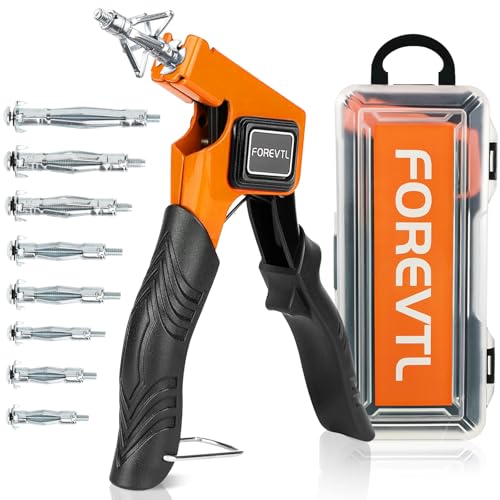
The FOREVTL kit supplies 32 molly bolts across eight separate sleeve lengths—from 32mm to 65mm—covering plaster thicknesses from 0.12 inches up to 1.52 inches. That granularity is rare; most kits stop at five or six sizes. The sleeves are made from 2.5mm heat-treated reinforced carbon steel, which resists buckling when you squeeze the setting tool. Customers report the tool handles the M4 through M6 sizes without bending the screw threads, a failure mode that plagues cheaper tools.
One edge the FOREVTL tool has is the non-slip ergonomic grip. Plaster wall installations often require sustained pressure in awkward arm positions—above a window, behind a toilet, inside a shallow cabinet. The grip reduces hand fatigue during repeated squeezes. The double-sided storage box keeps the 32 pieces organized so you aren’t digging for the right 46mm sleeve mid-project.
The kit rates its holding capacity at 65 lbs per anchor in hollow wall material. Real-world customer feedback confirms that towel racks, jewelry cases, and curtain rods that previously pulled out of drywall stayed put after using these molly bolts. The only caution is that inserting the assembly requires a straight push into the drilled hole—any wobble can cause the mushrooming strips to bend inward, which you can correct by pulling out and straightening.
Why it’s great
- Eight sleeve sizes cover the full range of plaster and drywall thicknesses without guesswork
- Heat-treated carbon steel sleeves resist buckling under the setting tool’s pressure
- Setting tool has ergonomic grip that reduces hand fatigue during repetitive installation
Good to know
- A few users report the tool occasionally bends the screw if the anchor is not perfectly aligned before squeezing
- Some sleeves require straightening the mushroom strips after the tool spreads them
2. AKKTOL Molly Bolts Kit (36-Piece)

The AKKTOL kit contains 36 anchors in six sizes, plus a setting tool built from 2.5mm thickened reinforced carbon steel. That thicker body gives the tool a heavier feel and more leverage than ultra-light aluminum tools, which can flex under high pressure. The lever-action design expands the molly sleeve by using a hammer-and-lever motion—essentially pulling the sleeve backward against the wall instead of twisting it—which prevents the rotational shear that cracks plaster.
Experienced users report installing over 100 anchors with this tool without a single failure. A smart trick shared by one long-term user is to glue a small magnet inside the handle to hold the tension loop, making one-handed operation far easier. The included anchors are metric-thread, which is important to note if you plan to swap in standard-thread machine screws later; for the supplied fasteners they work perfectly.
The holding capacity is rated at 40-65 lbs per anchor depending on wall thickness. The kit lacks a printed drill-bit size chart in the box, though the seller will provide one if contacted. The anchors themselves are softer than the premium LIBRATON batch—some customers could collapse them with two fingers before installation. That softness doesn’t affect final grip once expanded inside the wall, but it means you need to handle them gently during insertion.
Why it’s great
- Extra-thick 2.5mm tool body provides robust leverage for consistent expansion cycles
- Hammer-and-lever action prevents twisting damage common with screw-in anchors
- High quantity (36 anchors) is ideal for large jobs or stocking a contractor’s truck
Good to know
- Anchors are made of softer steel that can deform with finger pressure before installation
- No drill-bit size reference card included in the box
3. Hillman Borefast Drywall Anchors (75-Pack)

The Hillman Borefast anchors are not traditional molly bolts; they are self-drilling, zinc-plated steel screws with aggressive threads that tap directly into the substrate without a pre-drilled pilot hole. This is the best option when you are mounting into plaster-over-concrete or plaster-over-masonry, where a molly sleeve has no cavity to expand into. The screw cuts its own thread into the solid backing, delivering 200 lbs of holding power in concrete and 50 lbs in standard drywall.
For plaster walls attached to wood lath, these screws can be driven directly into the lath behind the plaster. The pan head sits flush against the surface, and the white painted head blends with most wall colors. The kit includes 75 screws, which is a high volume for the price bracket—enough to hang a row of heavy shelves or an entire curtain track system. The Philips drive means you can use a standard drill/driver bit without switching to a hex or square drive.
Customers consistently note that no pre-drilling is required and that the threads hold firmly without spinning out. The reusability factor is a bonus: if you reposition a shelf, you can unscrew the anchor and reuse it in a new location. However, these are not suitable for hollow plaster walls where there is no solid backing—the threads need something dense to grip, otherwise they will just spin in the cavity.
Why it’s great
- No pilot hole or pre-drilling required for most wall types, saving time
- 200 lbs holding capacity in concrete makes it a heavy-duty solution
- Reusable—unscrew and reposition without losing holding power
Good to know
- Not designed for hollow plaster—requires a solid substrate behind the plaster
- White painted head can chip if over-torqued with a power driver
4. Paick Molly Bolts Kit (30-Piece)

The Paick kit differentiates itself with a plier-style setting tool instead of the scissor-lever tool found in most competing kits. The upper handle is drop-forged carbon steel, and the lower jaw uses a chromium alloy wrench. This design mimics the mechanical advantage of a pair of locking pliers, giving you controlled incremental squeeze force rather than a single hard-clamp action. That control is useful when setting anchors in delicate plaster that might crack from a sudden impact.
The kit includes 30 molly bolts in five sizes (M3 to M6), which is slightly fewer sizes than the FOREVTL or AKKTOL kits. For most household tasks—hanging a coat rack, a lamp, a photo frame—five sizes are sufficient, especially since the M5 and M6 sleeves cover the majority of curtain rod and shelf brackets. The anchors are hex-head, which means you need a hex driver or socket to tighten the screw after the sleeve is set; the kit does not include a driver bit.
Customers highlight that the tool solved the problem of heavy objects pulling out of plaster. One user secured a heavily loaded coat rack to plaster where standard screws had failed twice before. The learning curve is minimal: drill a quarter-inch hole, push the anchor through, back the screw out slightly, place the tool jaws around the assembly, and squeeze until the sleeve collapses flat against the back of the wall. Some users note the tool is solid and well-made, but the included screws are metric, so standard-thread bolts won’t work.
Why it’s great
- Plier-style tool provides fine control over sleeve expansion, reducing wall cracking risk
- Drop-forged carbon steel upper handle resists wear over repeated use
- Suitable for hollow plaster, tile, and hollow block surfaces
Good to know
- Only five sleeve sizes, which may not cover very thick plaster assemblies
- Metric threads limit fastener compatibility without buying separate screws
5. LIBRATON Molly Bolts Kit (30-Piece)
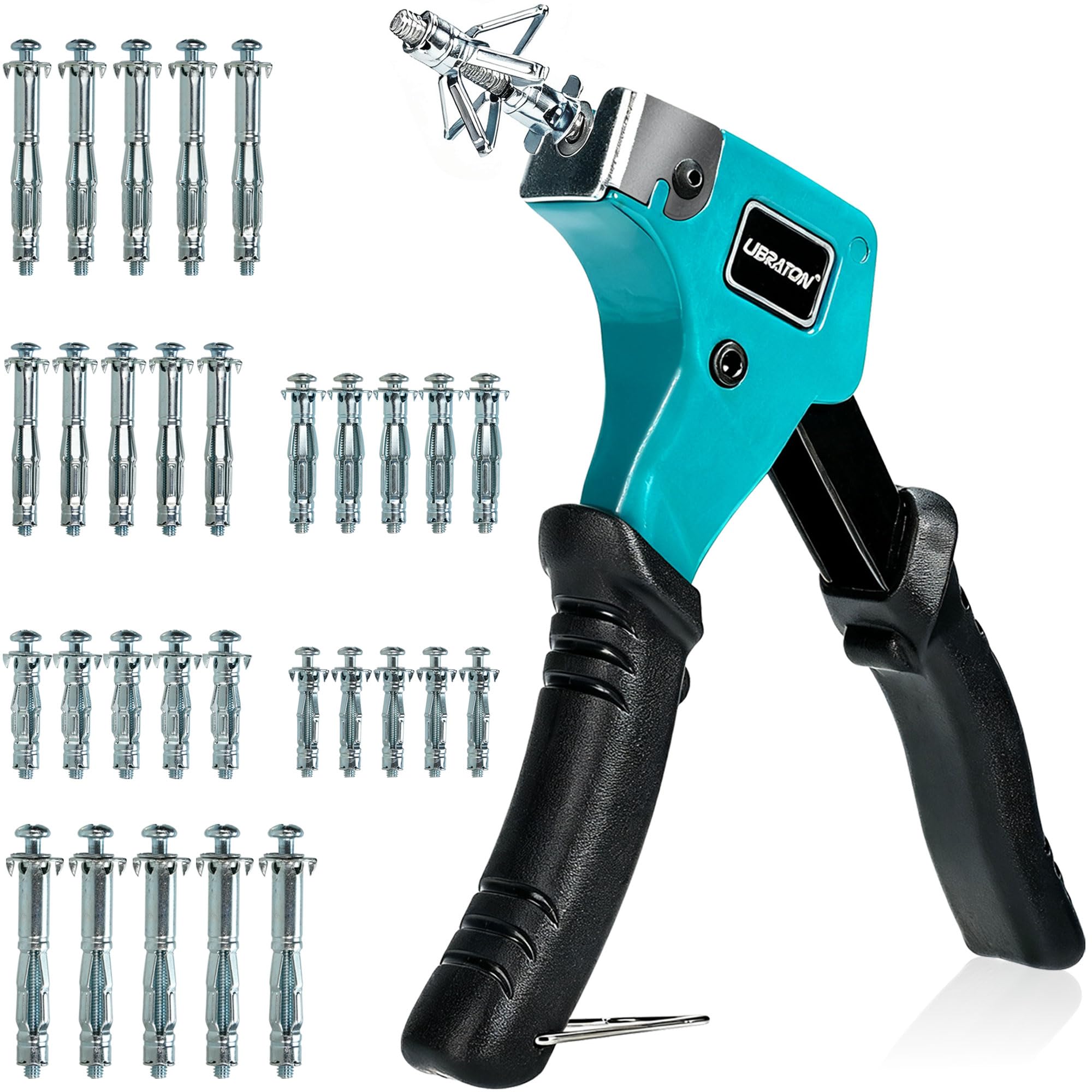
The LIBRATON kit uses a lightweight high-strength aluminum setting tool with an A3 steel impact head. The aluminum body reduces hand fatigue during long sessions, while the steel impact head survives repeated high-force contact. The tool employs a lever-action design that the manufacturer claims is 50 percent faster than hammering a molly bolt by hand. One squeeze expands the sleeve, and the 360-degree swivel expansion ensures force is distributed evenly around the circumference of the sleeve—critical for thin plaster that can snap under point loads.
The 30 anchors come in six sizes from M4x32mm up to M6x65mm, covering wall thicknesses from 0.12 inches to 1.52 inches. The sleeves are corrosion-resistant, making the kit suitable for outdoor applications like mounting a hose reel to a stucco wall or attaching signage to a plaster-over-block exterior. The holding capacity is rated at 65 lbs, and the pressure-dispersion system is marketed specifically as a wall protection technology for delicate surfaces including tile and thin plaster.
Customer feedback is split between users who found the tool effective and those who reported the hardware breaking. One experienced DIYer noted the included screws bent or sheared during installation, and another had the anchor pull straight out of the wall. A third user found the tool easy to use and the holding strength excellent. The variance suggests quality control may be inconsistent across batches. If you get a good set, the aluminum tool is among the lightest and fastest available. If you get a bad set, the hardware will fail.
Why it’s great
- Lightweight aluminum tool reduces fatigue during high-volume installs
- 360° swivel expansion distributes force evenly, protecting delicate plaster
- Six sleeve sizes cover the full domestic plaster thickness range
Good to know
- Quality control issues reported—some batches contain brittle hardware that snaps in the wall
- Tool may not fit very tight spaces due to its lever-arm geometry
FAQ
Can I use plastic anchors in plaster walls?
What size pilot hole do I need for a molly bolt in plaster?
Will molly bolts work behind tile or backsplash?
Final Thoughts: The Verdict
For most users, the best anchors for plaster walls winner is the FOREVTL Molly Bolts Kit because its eight sleeve sizes cover every plaster thickness from skim coat to three-coat lath, and the heat-treated carbon steel sleeves resist buckling better than any other kit in its range. If you want a plier-style tool for fine control on delicate surfaces, grab the Paick Molly Kit. And for solid-backed walls where the plaster sits on concrete or masonry, nothing beats the Hillman Borefast self-drilling screws for outright holding power without requiring a cavity.

Mo Maruf
I created WellFizz to bridge the gap between vague wellness advice and actionable solutions. My mission is simple: to decode the research and give you practical tools you can actually use.
Beyond the data, I am a passionate traveler. I believe that stepping away from the screen to explore new environments is essential for mental clarity and physical vitality.