Our readers keep the lights on and my smoothie glass nicely filled. As an Amazon Associate, I earn from qualifying purchases.
That sickening flap of a sole peeling away from your favorite sneakers mid-stride is a sound no one should have to hear. Most general-purpose glues turn brittle on rubber, cracking under the constant flex of a footstep and failing within days. A dedicated adhesive formulated for the low-surface-energy chemistry of rubber is the only fix that holds—and this guide breaks down exactly which formulas deliver a permanent, flexible bond.
I’m Mohammad Maruf — the founder and writer behind WellFizz. I’ve spent years analyzing polymer chemistry, tensile strength data, and real-world stress-test results across hundreds of consumer repair compounds to separate marketing claims from genuine performance.
Whether you are dealing with a delaminated boot sole or a torn sandal strap, this review of the best adhesive for rubber shoes will help you choose a product that actually survives the first mile.
How To Choose The Best Adhesive For Rubber Shoes
Rubber’s non-porous, low-energy surface repels most ordinary adhesives. The key is selecting a formula specifically engineered for this challenge—one that cures with enough flexibility to move with the shoe and enough strength to resist delamination.
Look for a Flexible Cure, Not a Brittle Bond
Standard instant glues harden into a glass-like solid that shatters under the repeated bending of a walking gait. A dedicated rubber shoe adhesive must remain elastic after curing, absorbing shock without cracking. Products using modified cyanoacrylate gel or specialized rubber cement formulations deliver this necessary flex.
Waterproof and Weather Resistance Are Non-Negotiable
Shoe repairs face moisture from rain, puddles, and sweat. An adhesive that degrades with water exposure will fail quickly. Check for explicit claims of waterproof performance and resistance to temperature swings—cold brittleness and heat softening are common failure points in budget-tier options.
Application Precision and Work Time
A gel or paste consistency prevents messy drips and allows controlled placement on vertical surfaces like a heel edge. A set time of 30 to 60 seconds gives you room to position the parts before the bond locks, while a full cure within 24 hours provides maximum strength. Anti-clog nozzles and built-in precision tips separate premium designs from frustrating, single-use tubes.
Quick Comparison
On smaller screens, swipe sideways to see the full table.
| Model | Category | Best For | Key Spec | Amazon |
|---|---|---|---|---|
| Cerca de Shoe Glue | Mid-Range | Versatile repairs across leather, fabric, and rubber | Epoxy resin, 24 hr full cure | Amazon |
| Eagle Shoe Cement | Mid-Range | High-volume, flexible sole reattachment | 4 oz paste, medium viscosity | Amazon |
| LEENEXUS Super Glue Gel | Premium | Precision application on small rubber parts | High-viscosity gel, 30-45 sec set | Amazon |
| Ecuywe Pro Leather Glue | Premium | Flexible, transparent repair on mixed materials | 4.23 oz tube, medium-high viscosity | Amazon |
| MEKERUI Universal Shoe Glue | Budget-friendly | Fast, 30-second fixes for everyday wear | Cyanoacrylate gel, 1 hr full cure | Amazon |
In‑Depth Reviews
1. Cerca de Shoe Glue Heavy Duty
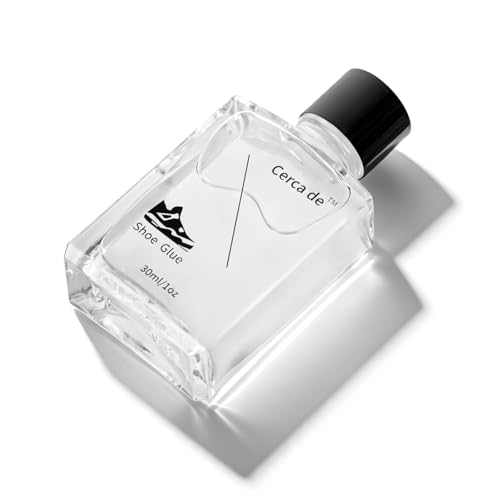
The Cerca de Shoe Glue uses an epoxy resin base that delivers a cold-resistant, heat-resistant, and washable bond. Its gel form stays where you put it, which is essential when working on vertical or curved sole edges where runny glue would drip and ruin the repair. Users consistently report strong hold on boots and sneakers that face daily abuse, and the included accessories—ungluing agent, brush, rubber bands, gloves, and sanding stick—turn this into a complete repair kit rather than just a tube of glue.
The formula remains flexible after a full 24-hour cure, preventing the common failure mode of rigid glue cracking under the repetitive flex of a walking motion. It works on leather, fabric, and plastic in addition to rubber, making it a versatile option for households with mixed-material footwear. The waterproof seal holds up in wet conditions, and multiple verified reviews confirm the bond stays intact even after walking in rain.
One negative review notes the glue was ineffective on rubber soles, describing it as better suited for plastic model cars. This is a critical reminder that surface preparation—roughening the rubber with the included sanding stick—is essential for any adhesive to grip low-energy rubber surfaces. When applied correctly after proper prep, the majority of users report excellent results.
Why it’s great
- Complete kit with tools for proper surface prep and clamping
- Gel consistency prevents drips on vertical repair surfaces
- Remains flexible after curing, resisting crack propagation
Good to know
- Requires 24-hour full cure for maximum bond strength
- Surface roughening is non-negotiable for rubber adhesion
2. Eagle Shoe Cement – Heavy Duty Sole Glue

The Eagle Shoe Cement delivers a generous 4-ounce supply of paste-form adhesive, making it the highest-volume option in this lineup. Its medium viscosity paste is ideal for covering large surface areas like a fully detached boot sole, and users report quick drying times with strong weather-resistant bonds. The formula works on faux leather, leather, and rubber, and is marketed as a professional-grade alternative to traditional cobbler cements like Barge or Angelus.
Verified reviews highlight its effectiveness on aged footwear—one user successfully repaired a 20-year-old pair of hiking boots with sole separation. The precision tip allows controlled application for both small touch-ups and full sole reattachments. The durable, waterproof nature of the bond makes it suitable for outdoor and work boots that face constant moisture and rough terrain.
The most significant drawback reported is a packaging defect where the lid was not sealed properly, allowing half the glue to dry out and the cap to fuse shut. This appears to be a manufacturing quality control issue rather than a formula deficiency, but it is a real risk that buyers should check immediately upon delivery. If the seal is intact, the cement performs excellently.
Why it’s great
- Largest volume per unit, ideal for multiple or large-area repairs
- Paste consistency suits vertical application without dripping
- Strong, quick-drying bond rated for professional cobbler use
Good to know
- Packaging seal can fail, causing premature drying
- Not as effective on very flexible, thin rubber without proper prep
3. LEENEXUS Super Glue and Cement for Shoes
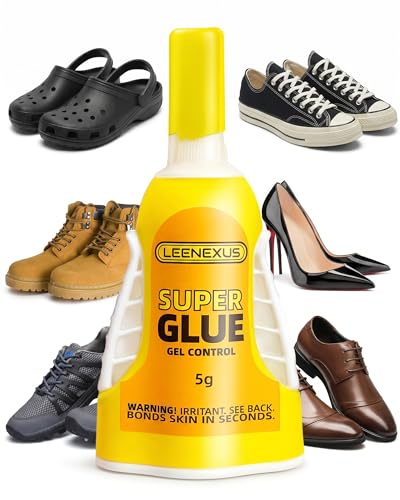
The LEENEXUS formula uses a high-viscosity cyanoacrylate gel with micro-anchor technology designed to penetrate and lock into rubber at the molecular level. Its thick, no-drip gel stays in place without spreading, and the side-squeeze bottle with a built-in cleaning needle addresses the common frustration of clogged nozzles. The product claims to last three times longer than standard super glues due to its air-tight dual-threaded cap design.
The gel sets in 30 to 45 seconds, which is fast enough for quick repairs but slow enough to allow minor repositioning—a critical window for aligning a separated sole correctly. The bond is heat-resistant up to 240°F and withstands freezing temperatures, rain, and wet conditions. Users report excellent results on ceramic and plastic repairs beyond shoes, making this a versatile household adhesive.
A critical mixed review reports failure on rubber-like soles, stating the glue did not hold effectively on lightweight shoes. This mirrors the common thread across rubber repair: without roughening the surface, even a premium gel can fail. The product is also a small 5g tube, which feels expensive relative to the volume, though the precision gel delivery means very little is wasted per application.
Why it’s great
- Thick gel allows pinpoint placement with zero runoff
- Anti-clog needle and dual-threaded cap extend usable life
- Thermal resistance from -40°F to 240°F handles extreme conditions
Good to know
- Small 5g volume is expensive per ounce
- Rubber repair requires rigorous surface preparation
4. Ecuywe Professional Leather Glue Adhesive

The Ecuywe glue is specifically positioned as a leather and vinyl adhesive, but its chemical bond extends effectively to rubber when used as part of mixed-material repairs. Its key differentiator is a flexible cure that prevents stiffness and cracking, which is essential when gluing a rubber sole to a leather upper. The tube format holds 4.23 ounces and features a fine applicator tip for controlled dispensing without dripping.
Users consistently praise the invisible, transparent finish that does not yellow over time, maintaining the clean look of repaired footwear. The bond sets quickly and holds up to daily wear on sandals, boots, and bags. Multiple verified reviews note that repairs remain intact through months of regular use, and the flexibility prevents the common problem of the glue line snapping under repeated stress.
This is a significant outlier against a large volume of positive reviews, and may indicate a defective batch or inadequate surface preparation. The product is non-toxic and fume-free when used as directed, making it a safer option for indoor repair work.
Why it’s great
- Dries completely transparent with no yellowing or hardening
- Large tube volume at a competitive tier
- Non-toxic, fume-free formula ideal for indoor use
Good to know
- Built for leather/vinyl; rubber bond requires thorough surface prep
- One isolated report of weak hold, possibly batch-related
5. MEKERUI Super Strong Universal Shoe Glue
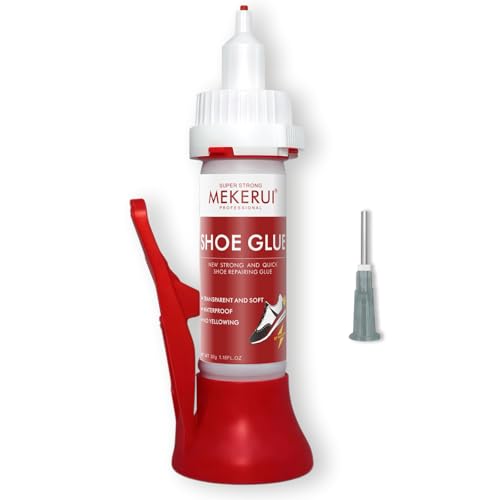
The MEKERUI glue is engineered for speed, claiming a 30-second press time for a strong initial bond. Its cyanoacrylate gel formulation remains slightly rubbery after curing, which prevents the brittle cracking that plagues cheap instant glues on flexible rubber. The precision nozzle plus a fine needle tip allows controlled application in tight spaces, such as the gap between a delaminated sole and the shoe body.
Verified users report excellent results on Ugg sole separation, rubber-to-foam bonding, and work boot repairs. The clear, non-yellowing finish keeps repairs looking professional. One user specifically described it as a hybrid between Shoe Goo and super glue, capturing the flexible-yet-strong character that makes it effective for rubber repair.
The primary complaint is nozzle clogging after a single use, with one user reporting the push applicator failed to deliver glue on the second attempt. This is a design flaw that undermines the product’s value for anyone who needs multiple applications. The full cure time is listed at just 1 hour, which is significantly faster than the 24-hour standard, but the clogging issue may require extra care to clean the tip after each use.
Why it’s great
- 30-second press achieves strong initial bond for instant hold
- Cures with rubbery flexibility, resisting crack propagation
- Fast 1-hour full cure time
Good to know
- Nozzle clogs easily after single use, requiring maintenance
- Small bottle may not suit large-area repairs
FAQ
Why do most glues fail on rubber shoe soles?
Do I need to roughen the rubber before applying the adhesive?
How long should I clamp a rubber sole repair?
Final Thoughts: The Verdict
For most users, the best adhesive for rubber shoes winner is the Cerca de Shoe Glue Heavy Duty because its complete tool kit and flexible epoxy bond cover every step of a successful repair. If you want a high-volume paste for large-area sole reattachment, grab the Eagle Shoe Cement. And for precision work on small rubber parts with zero margin for error, nothing beats the LEENEXUS Super Glue Gel.

Mo Maruf
I created WellFizz to bridge the gap between vague wellness advice and actionable solutions. My mission is simple: to decode the research and give you practical tools you can actually use.
Beyond the data, I am a passionate traveler. I believe that stepping away from the screen to explore new environments is essential for mental clarity and physical vitality.