Our readers keep the lights on and my smoothie glass nicely filled. As an Amazon Associate, I earn from qualifying purchases.
The hardest truth in the running shoe aisle is that a high price tag doesn’t guarantee a great run, but the wrong budget shoe can sideline you with blisters, dead arches, or a heavy sole that turns every stride into a slog. The narrow gap separating a shoe that protects your knees from one that punishes them comes down to the quality of the midsole foam, the precision of the heel counter, and the breathability of the upper mesh — three specs that exist at every price point if you know where to look. The market is flooded with options that look the part but fail after 80 miles, so identifying the actual difference-makers in the under- zone requires separating real engineering from marketing fluff.
I’m Mohammad Maruf — the founder and writer behind WellFizz. My work focuses on deep market analysis and stress-testing the hardware specifications of men’s athletic footwear to determine where brands cut corners and where they genuinely deliver value.
After evaluating dozens of data points across seven models from Adidas, Reebok, Under Armour, Asics, Brooks, and ANTA, this guide delivers the most direct comparison of budget men’s running shoes on the internet, cutting through the noise to highlight which shoes actually support your gait, absorb shock, and hold up to daily miles.
How To Choose The Best Budget Men’s Running Shoes
When your spending limit falls in the value tier, you cannot afford to waste a single dollar on a shoe that won’t support your stride. Every dollar needs to go into the three components that directly influence injury risk and long-term wear: the midsole compound, the outsole rubber coverage, and the upper construction. Ignore flashy colorways and focus on these measurable elements.
Midsole Foam and Stack Height
The foam formula is the single most expensive component in any running shoe. In the budget space, brands often cut costs by using a generic EVA blend that flattens out in under 100 miles. Look for shoes that name their foam technology — Adidas Cloudfoam or Bounce, Brooks BioMoGo DNA, Asics GEL technology, or ANTA PG7 Aerocushion — because branded foams usually undergo more compression testing than white-label alternatives. A stack height of at least 20mm in the heel and 12mm in the forefoot provides enough material to absorb landing impact without making the sole feel like a brick.
Outsole Rubber and Traction Pattern
Budget shoes often skimp on full-length rubber coverage, leaving exposed foam that wears down quickly on asphalt. Prioritize shoes with a carbon-rubber or blown-rubber outsole that covers the heel strike zone and the forefoot push-off area. Look at the traction pattern — multi-directional lugs are better for road and light trail transitions, while a flat waffle pattern works best on pavement and the treadmill. A shoe that lacks rubber in the midfoot is acceptable as long as the heel and toe regions are protected.
Upper Mesh and Heel Lock
Breathability is not a luxury in a running shoe — it is a requirement that prevents blisters and hot spots during longer runs. Engineered mesh uppers with varying weave densities offer targeted stretch and support without added weight. Equally important is the internal heel counter: a firm, molded plastic insert that wraps the heel prevents slipping and reduces Achilles irritation. If the heel counter is soft or absent, the shoe will likely stretch out after 50 miles and cause friction on every stride.
Quick Comparison
On smaller screens, swipe sideways to see the full table.
| Model | Category | Best For | Key Spec | Amazon |
|---|---|---|---|---|
| Brooks Trace 4 | Premium Neutral | Daily miles and joint support | BioMoGo DNA midsole, 10mm drop | Amazon |
| ANTA PG7 | Max Cushion | Long runs and high-impact landings | PG7 Aerocushion foam, 40mm stack | Amazon |
| Asics Gel-Excite 11 | Mid-Range Stability | Narrow feet and standing hours | Rearfoot GEL insert, 8mm drop | Amazon |
| Under Armour Charged+ Assert 11 | Performance Value | Arch support and roomy toe box | Charged Cushioning, 10mm drop | Amazon |
| Adidas Run 84 | Everyday Training | Casual runs and gym cross-training | Cloudfoam midsole, 1lb weight | Amazon |
| Adidas Questar 3 | Entry-Level Cushion | Starting runners and daily walks | Bounce foam, 2.13lb weight | Amazon |
| Reebok Energen Run 4 | Lightweight Starter | Budget-friendly and light training | Full-length EVA, 6.5-14 sizing | Amazon |
In‑Depth Reviews
1. Brooks Men’s Trace 4 Neutral Running Shoe
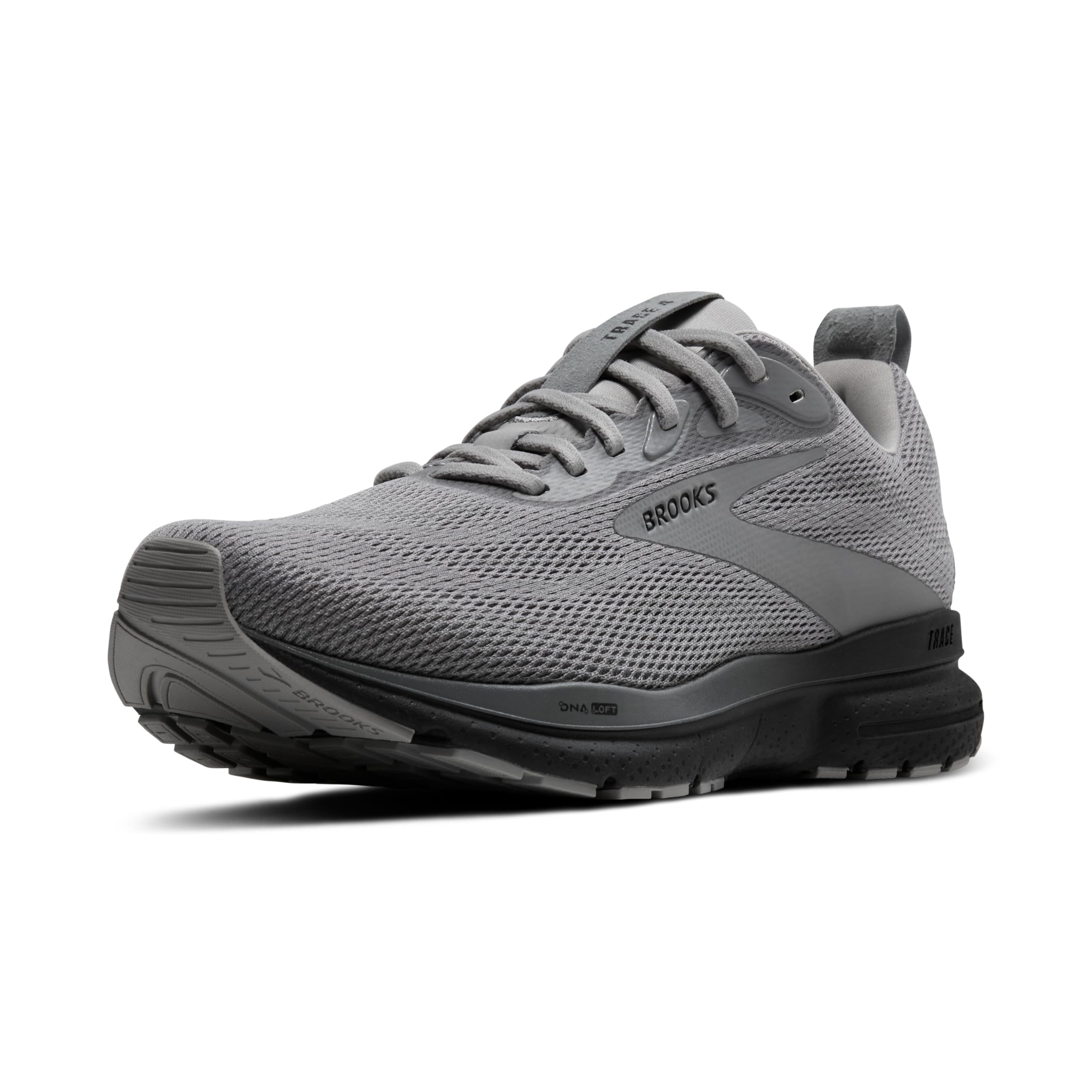
The Brooks Trace 4 is the quiet king of the budget-friendly neutral category, offering BioMoGo DNA midsole foam that adapts its density to your stride weight — a technology normally reserved for models that cost significantly more. The 10mm heel-to-toe drop is ideal for midfoot and heel strikers, and the engineered mesh upper delivers targeted stretch across the midfoot without sacrificing structure in the heel. Multiple reviewers confirm that this shoe requires zero break-in time and supports runners with weak ankles and flat feet straight out of the box.
The outsole uses a durable blown rubber compound that provides reliable grip on pavement, packed dirt, and even light gravel paths. At 1.5 pounds per shoe, it sits squarely in the lightweight training category without feeling flimsy. The internal heel counter is firm and well-molded, which prevents the heel slip that ruins longer runs and protects the Achilles from unnecessary irritation. Reviewers noted consistent sizing with previous Brooks models, making it a safe online purchase.
Where the Trace 4 truly shines is in all-day wearability — multiple reviews highlight that these shoes reduce lower back pain during extended standing and walking routines, not just running. The breathable upper keeps the foot cool even during summer pavement sessions, and the tongue is gusseted enough to stay centered without requiring manual adjustment. Some users noted the shoe runs exactly true to size, so order your standard running length.
Why it’s great
- BioMoGo DNA foam adapts to individual stride weight and landing pattern
- No break-in period with consistent sizing across multiple Brooks models
- Firm heel counter provides excellent ankle and Achilles support for neutral runners
Good to know
- The upper runs slightly warm in high humidity environments due to dense mesh zones
- Not designed for aggressive speed work or track intervals due to moderate cushioning stack
2. ANTA Men’s PG7 Running Shoes

The ANTA PG7 is a dark horse in the budget max-cushion segment, packing a 40mm stack height in the heel that rivals ultra-premium recovery shoes. The PG7 Aerocushion foam offers a bouncy ride that firms up under faster paces, providing shock absorption without turning into a marshmallow that wastes energy. The carbon-rubber outsole extends across the entire base, delivering excellent slip resistance on wet pavement and protecting the foam from premature wear on abrasive surfaces.
The upper features a wide toe box with adequate room for splay, a critical detail for runners with high arches or wider forefeet. The engineered mesh is lightweight and breathable, though the toe guard is a plastic overlay that can feel stiff during the first few wears. Reviewers who logged over 70 miles reported that the midsole maintained its rebound without significant compression, a durability benchmark that most sub- foam shoes fail to meet past the 50-mile mark.
Where the PG7 truly differentiates itself is its responsiveness at faster paces — multiple reviews describe a sensation of the shoe propelling forward during sprints while protecting the knees and hips. This dual-mode behavior makes it unusually versatile for a max-cushion shoe, fitting both recovery days and speed sessions. Some neutral runners with flat feet noted that adding a supportive insole improves the fit, as the stock footbed has minimal arch contouring.
Why it’s great
- 40mm stack delivers premium-level shock absorption for heavy landings
- Carbon-rubber outsole provides superior wet-surface grip and long foam life
- Wide toe box accommodates high-arched and wider forefeet without irritation
Good to know
- Plastic toe guard can feel stiff during the first few runs
- Stock insole lacks significant arch support for flat-footed runners
3. ASICS Men’s Gel-Excite 11 Running Shoes
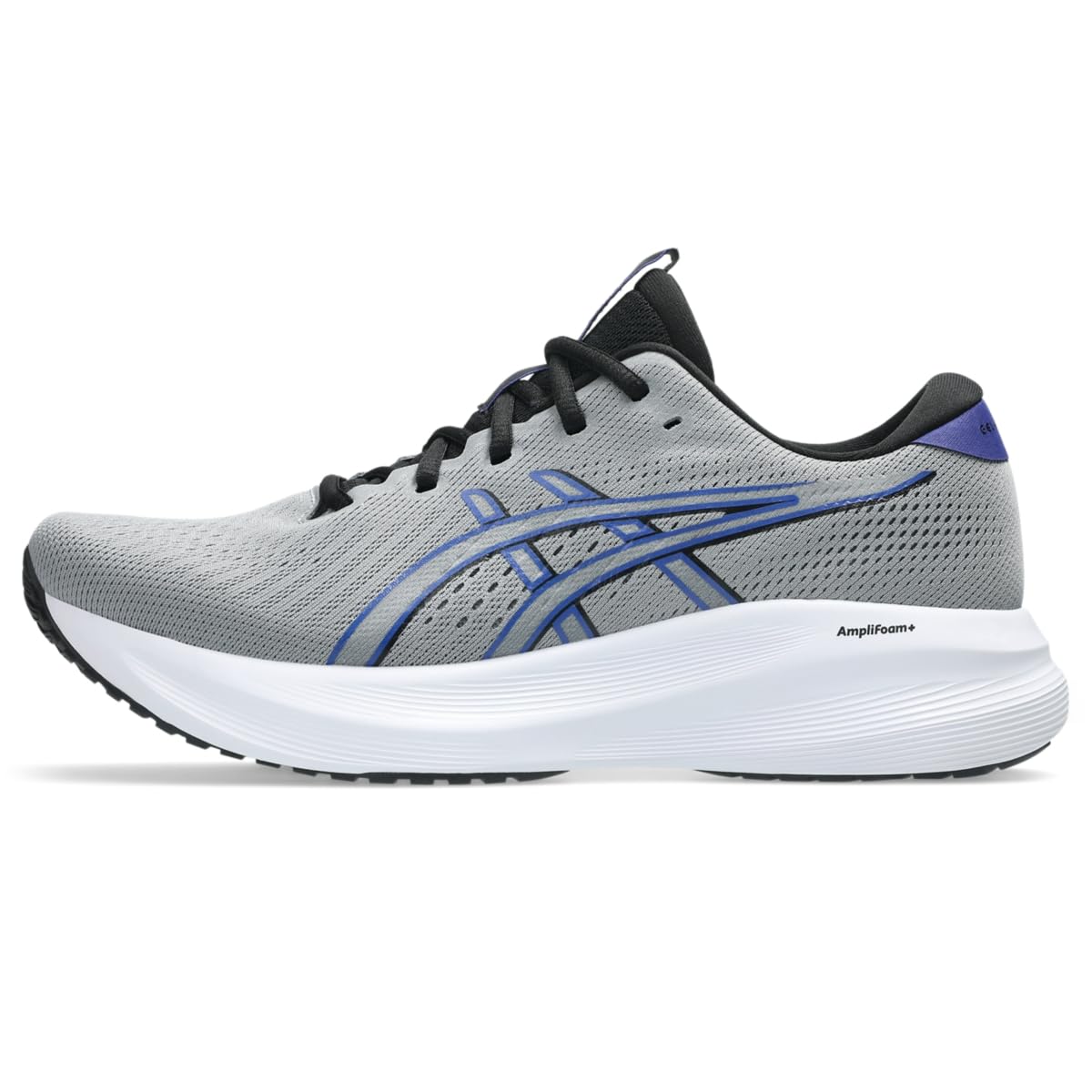
The Asics Gel-Excite 11 is a masterclass in value-driven engineering, featuring a rearfoot GEL insert that targets the heel strike zone where most runners generate the highest impact forces. The 8mm drop is moderate enough to accommodate midfoot strikers while still offering enough ramp for heel strikers who transition forward. The upper uses a Jacquard mesh that is noticeably more breathable than standard woven uppers, reducing moisture buildup during longer efforts in warmer weather.
The outsole is a combination of AHAR (Asics High Abrasion Rubber) in critical wear zones and exposed EVA in the midfoot to reduce weight. This strategic placement keeps the overall shoe weight at a manageable 1.44 pounds while ensuring the heel and forefoot regions survive over 300 miles of road running. Multiple reviewers noted that the shoe fits narrower feet particularly well, making it a standout option for runners who find Brooks or New Balance too wide in the forefoot.
For runners who spend long hours on their feet standing — not just running — the Gel-Excite 11 holds up remarkably well, with reviewers praising its comfort during 8-hour retail shifts and medical roles. The heel collar is plush without being bulky, and the lace system provides secure lockdown without pressure points on the top of the foot. One significant note is shipping variability: some international orders experienced delays exceeding six weeks, so confirm domestic stock before ordering.
Why it’s great
- Rearfoot GEL insert directly targets heel-strike impact forces
- Jacquard mesh upper offers superior breathability for warm-weather running
- AHAR rubber in high-wear zones extends outsole lifespan past 300 miles
Good to know
- Toe box may feel slightly narrow for runners with wider forefeet
- International shipping can take weeks longer than domestic fulfillment
4. Under Armour Men’s Charged+ Assert 11 Running Shoes
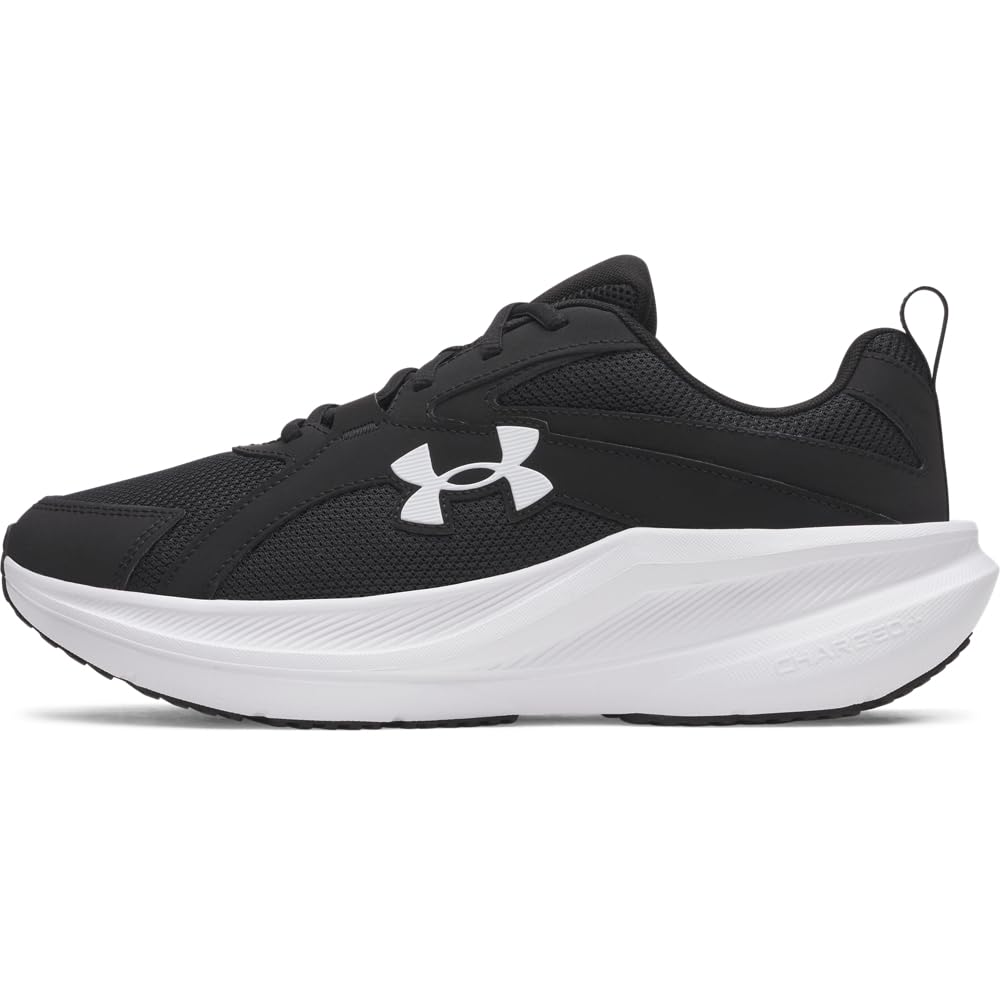
The Under Armour Charged+ Assert 11 bridges the gap between entry-level and performance value by using a Charged Cushioning midsole that balances softness with compression resistance. The 10mm drop works well for runners transitioning from walking to jogging, providing enough heel elevation to take pressure off the Achilles during slower paces. The mesh upper is notably roomy in the toe box, and multiple reviewers described the fit as having a wider instep than typical Under Armour models, making it accessible for runners with slightly wider feet.
The outsole uses a solid rubber tread pattern with flex grooves in the forefoot that improve natural foot motion during push-off. Reviewers reported that these shoes outperformed Skechers, New Balance, and even HOKA for comfort in daily walking routines, suggesting the foam density is tuned for steady-state wear rather than just high-speed performance. One reviewer with osteoarthritic knees noted a significant reduction in joint pain compared to their previous shoes, which indicates the midsole’s ability to absorb vertical impact without sacrificing stability.
Where the Assert 11 stands apart is its professional appearance — the silhouette is clean enough for casual office wear or travel, while the cushioning holds up for light gym workouts. The interior padding is generous, wrapping the heel and ankle with a plush collar that prevents the shoe from feeling like a stripped-down budget model. Some users noted the shoe runs true to size but has slightly less bounce than HOKA’s proprietary foam, which aligns with its positioning as a walking-oriented running hybrid.
Why it’s great
- Charged Cushioning midsole balances softness with long-term compression resistance
- Roomy toe box and wider instep accommodate broader foot shapes comfortably
- Clean professional silhouette works for casual wear, not just training sessions
Good to know
- Less vertical bounce compared to premium max-cushion foam shoes like HOKA
- Primarily tuned for walking and steady-state running rather than speed intervals
5. Adidas Mens Run 84
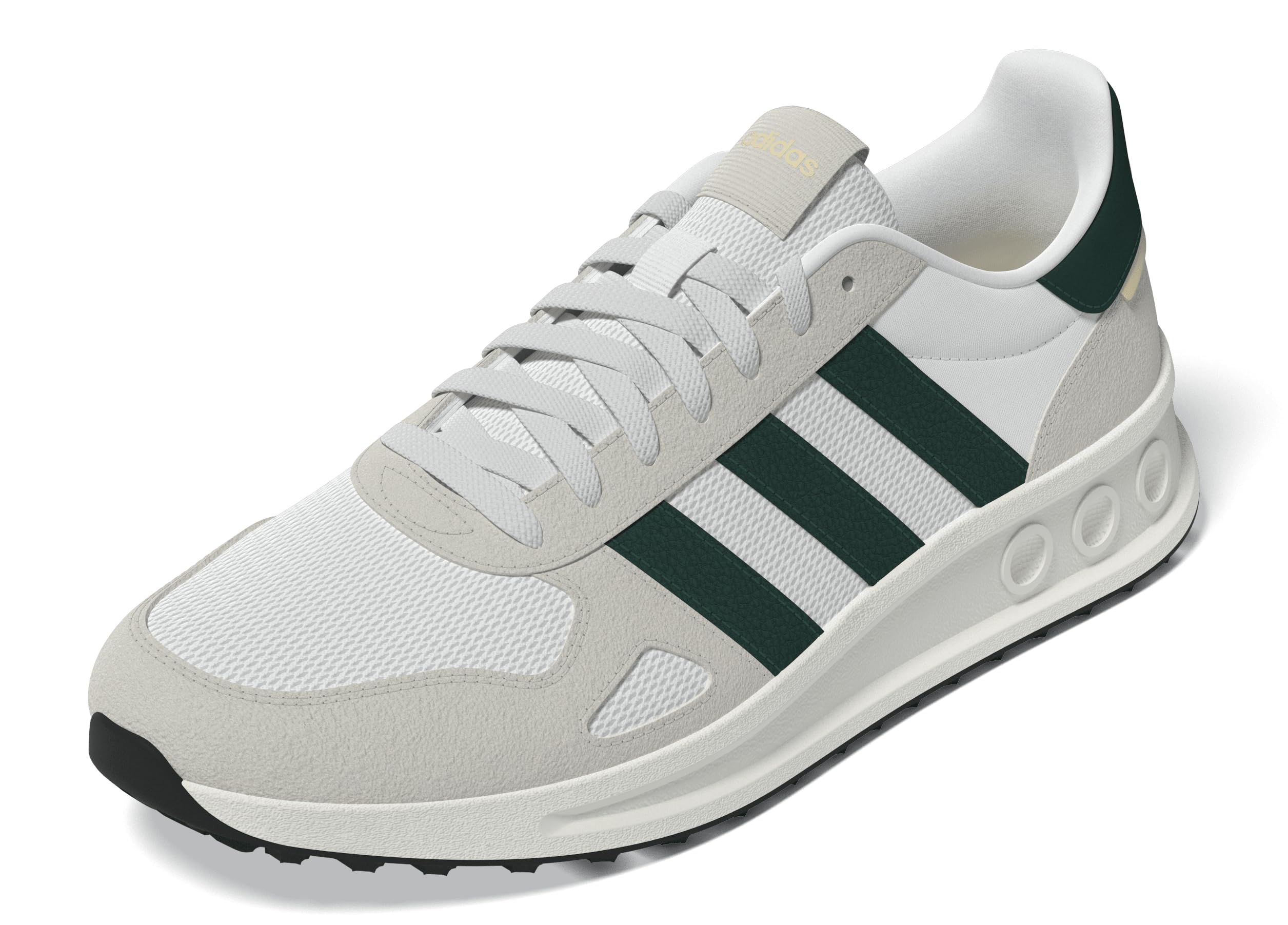
The Adidas Run 84 brings the recognizable Cloudfoam midsole to the budget-friendly segment, offering a plush step-in feel that softens everyday pavement without the spongy delay that cheaper foams create. At just 1 pound per shoe, it is one of the lighter options in this group, making it an excellent choice for gym cross-training sessions where quick direction changes and box jumps require less mass to move. The outsole uses a rubberized grid pattern that provides adequate traction on indoor gym floors and dry pavement.
The upper is constructed from a lightweight textile mesh that feels flexible out of the box, though multiple reviewers noted that the tongue has a tendency to slide laterally during runs. This is a known quirk of the design that some users resolved by sewing the tongue to the inner side of the shoe. The sizing runs about a half-size small relative to standard Adidas footwear, so ordering up is recommended for runners who want space for thicker socks or who have wider toes.
Despite the tongue issue, the Run 84 is consistently praised for its Cloudfoam cushioning, which provides noticeable padding under the heel and forefoot without adding bulk. The silhouette is sleek and modern, making it a popular choice for runners who want a shoe that transitions from a lunch run to casual errands. The package dimensions list the shoes at 1 pound, but they feel even lighter on foot due to the streamlined upper construction and minimal outsole thickness.
Why it’s great
- Cloudfoam midsole provides plush cushioning without spongy rebound delay
- Lightweight 1-pound construction ideal for gym cross-training and daily wear
- Modern slim silhouette that works for both training and casual settings
Good to know
- Running tongue tends to slide laterally during runs, requiring modification or adjustment
- Fits about half a size small, so ordering up is necessary for proper toe room
6. adidas Mens Questar 3 Running Sneakers Shoes
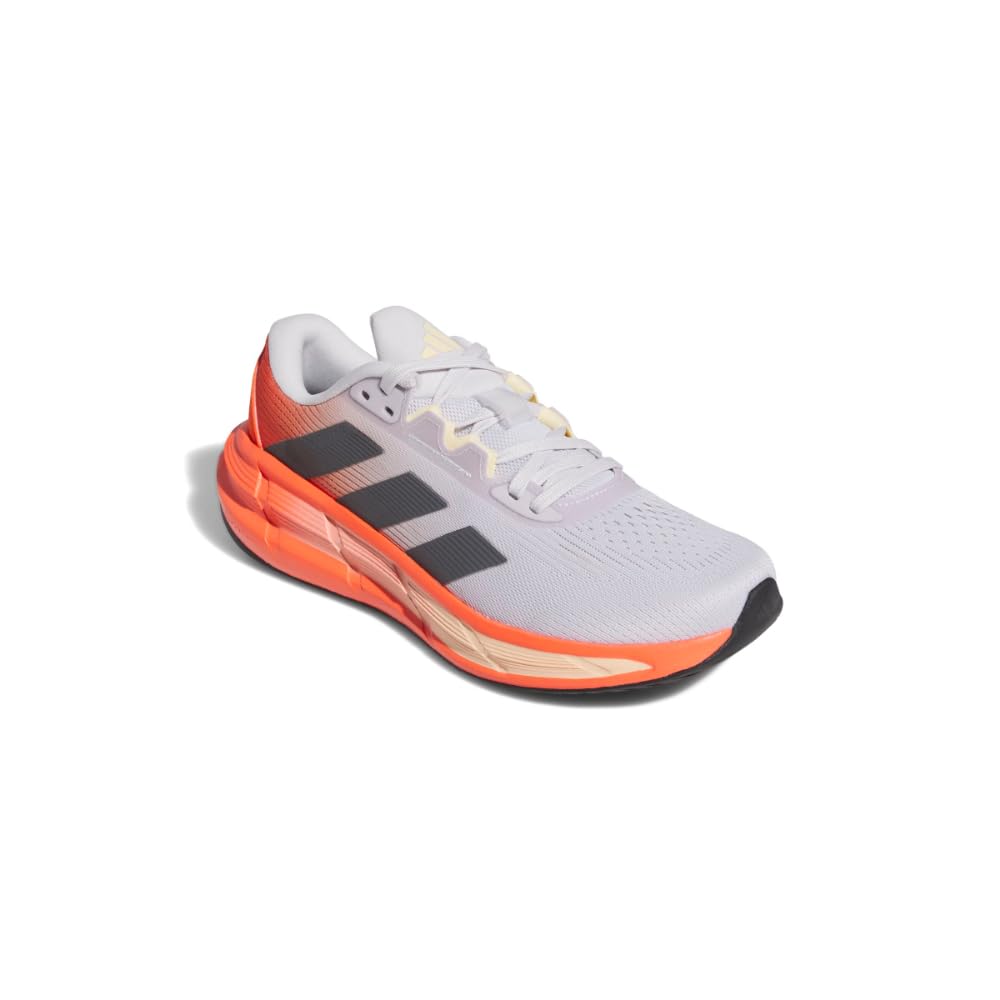
The adidas Questar 3 is the definition of a no-surprises entry-level running shoe, using Bounce foam — a dense EVA blend that provides responsive cushioning without the quick-compression issues of generic budget foam. The upper is a ventilated mesh that breathes well enough for warm-weather runs, and the outsole features a wide rubber contact patch with multi-directional lugs that grip pavement and treadmill belts securely. One reviewer noted that the orange outsole accents reflect under car lights at night, adding a small visibility benefit for evening runners.
At 2.13 pounds per shoe, the Questar 3 is the heaviest model in this comparison, and multiple reviewers independently flagged that it feels slightly heavier than expected during longer runs. The weight is noticeable in the first few miles, particularly during faster turnover or when lifting the legs on inclines. However, the trade-off is a robust construction that shows minimal wear after months of daily walking and running, suggesting the foam and outsole rubber are formulated for durability over featherweight feel.
The shoe fits true to size with ample room in the toe box, and the internal padding around the heel collar is generous without causing slippage. For beginners who are transitioning from walking to running or seeking an affordable shoe for daily fitness walks, the Questar 3 delivers a comfortable ride that softens impact without relying on advanced foam chemistry. It is not the shoe for setting 5K PRs, but it is a reliable partner for building a consistent running habit.
Why it’s great
- Bounce foam resists compression better than generic EVA, lasting longer per shoe
- Multi-directional outsole lugs provide secure grip on pavement and treadmills
- Reflective outsole accents improve visibility during low-light evening runs
Good to know
- At 2.13 pounds it feels noticeably heavier than lighter trainer alternatives
- Weight becomes more apparent during faster-paced running and uphill efforts
7. Reebok Energen Run 4 Running Shoes for Men
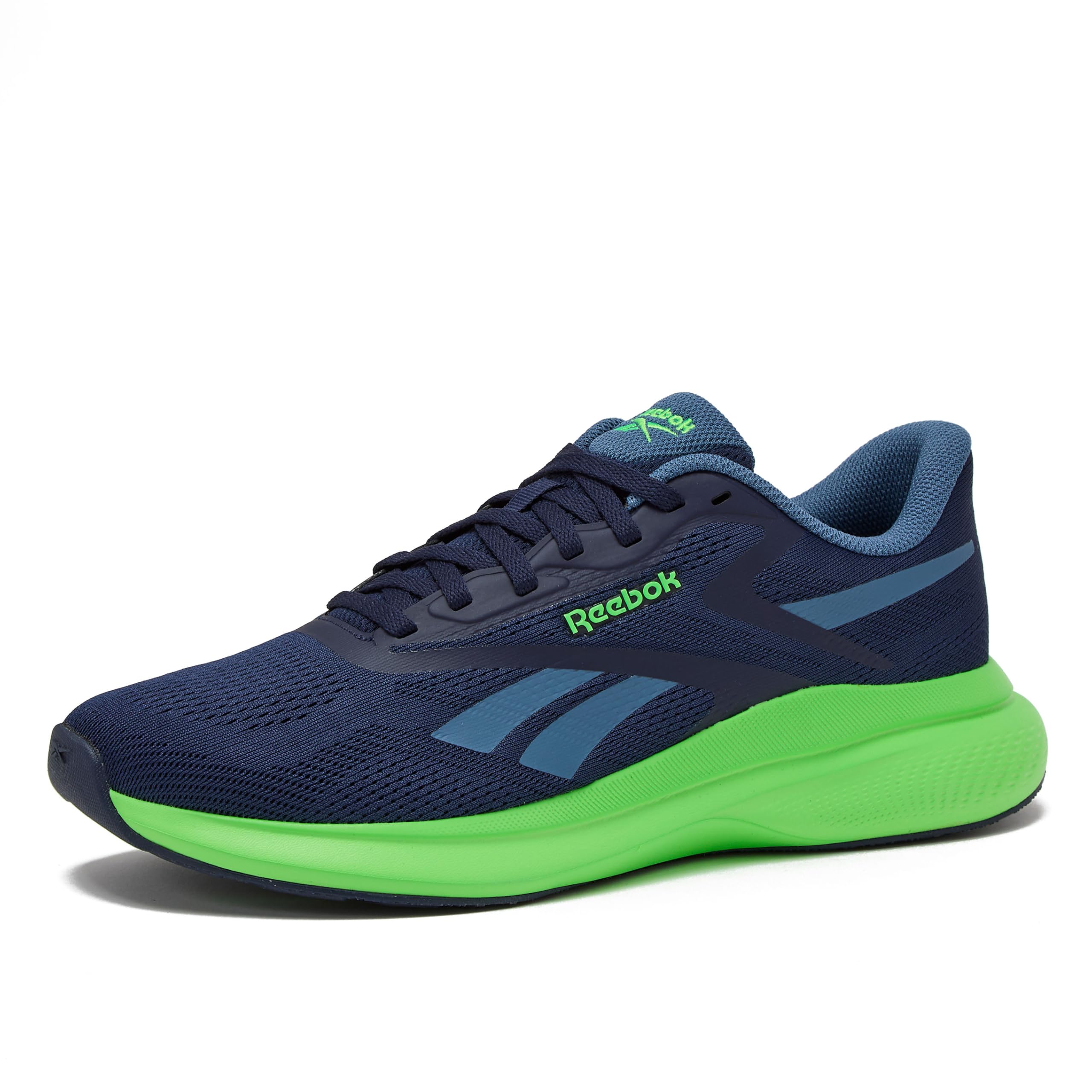
The Reebok Energen Run 4 is the lightest-feeling option at the entry level of this list, using a full-length EVA midsole that keeps the shoe nimble and low to the ground. The upper is a flexible knit mesh that wraps the foot without restrictive zones, making it a comfortable choice for runners who prefer a sock-like fit over structured panels. The outsole uses a simplified rubber pattern that provides enough traction for pavement and gym floors but lacks the lug depth needed for loose surfaces.
Multiple reviewers emphasized the excellent cushioning-to-weight ratio, noting that the shoe feels noticeably lighter than its budget positioning suggests. The available sizing from 6.5 to 14 covers a broader foot-size spectrum than most competitors, which is critical for runners on the extreme ends of the size range who often face limited options at this price point. The midsole density is soft enough for casual jogging and daily wear but does not offer the structured support required for high-mileage training blocks.
Where the Energen Run 4 excels is as a starter shoe for someone who is just beginning a running routine or who needs a lightweight second shoe for short recovery runs and gym sessions. The construction is straightforward — minus the branded foam names and advanced heel counters of higher-tier options — but it delivers on the essential promise of being comfortable straight out of the box. For runners who need a wider size or prioritize low weight over maximum cushioning, this shoe performs well within its defined role.
Why it’s great
- Lightweight construction reduces leg fatigue during shorter runs and gym sessions
- Broad sizing range from 6.5 to 14 accommodates hard-to-fit foot sizes
- Flexible knit upper provides a comfortable sock-like fit without rigid panels
Good to know
- Full EVA midsole lacks structured arch support for high-mileage training
- Outsole rubber pattern is not aggressive enough for loose or off-road surfaces
FAQ
How many miles should I expect from a pair of budget men’s running shoes?
Should I size up for budget running shoes that run small?
Final Thoughts: The Verdict
For most users, the budget men’s running shoes winner is the Brooks Trace 4 because it pairs BioMoGo DNA adaptive cushioning with a neutral platform that supports both running and all-day standing without requiring a break-in period. If you want maximum shock absorption for heavy landings and long distances, grab the ANTA PG7. And for a premium-feeling shoe that fits narrower feet and delivers reliable GEL-cushioned heel strikes, nothing beats the Asics Gel-Excite 11.

Mo Maruf
I created WellFizz to bridge the gap between vague wellness advice and actionable solutions. My mission is simple: to decode the research and give you practical tools you can actually use.
Beyond the data, I am a passionate traveler. I believe that stepping away from the screen to explore new environments is essential for mental clarity and physical vitality.