Our readers keep the lights on and my smoothie glass nicely filled. As an Amazon Associate, I earn from qualifying purchases.
The moment you spot a bed bug, the clock starts ticking. The wrong aerosol “bomb” can scatter them deeper into your walls, turning a small problem into a nightmare. You need a formula that kills on contact and leaves a residual barrier that catches the stragglers.
I’m Mohammad Maruf — the founder and writer behind WellFizz. I’ve spent years analyzing pest control formulations, comparing EPA registration details, and studying active ingredient profiles to separate the sprays that work from those that just smell like lemons.
Whether you’re treating a mattress, baseboard, or couch, the best bed bug bomb is the one that combines fast knockdown with a lasting defense you can trust indoors.
How To Choose The Best Bed Bug Bomb
Not every can of spray is created equal. Some formulas rely on pyrethroids that bed bugs have developed resistance to, while others use desiccants or insect growth regulators that work over days. Understanding the active ingredient, the delivery method (aerosol vs. pump vs. powder), and the residual claim is the difference between a one-treatment win and a six-month war.
Contact Kill vs. Residual Protection
A spray that kills on contact provides immediate relief when you see a bug, but it won’t protect you from the nymphs hiding in the box spring. Look for a product that leaves a thin film that remains active for weeks, killing insects that cross its path after you’ve gone to bed.
Water-Based vs. Aerosol Formulas
Water-based sprays are odorless, non-staining, and safe on mattresses and upholstery. Aerosol formulas often penetrate deeper into cracks and crevices but may contain solvents that can streak walls or smell strongly. For indoor use near sleeping areas, a water-based solution is usually the wiser choice.
EPA Registration and Safety
Only use products that display an EPA registration number on the label. This certification means the formula has been tested for safety and efficacy in homes with people and pets. Products without an EPA number may contain unregulated ingredients that are either ineffective or hazardous.
Quick Comparison
On smaller screens, swipe sideways to see the full table.
| Model | Category | Best For | Key Spec | Amazon |
|---|---|---|---|---|
| Harris 5 Min Kill Spray | Spray | Fast knockdown on contact | 5-minute kill time | Amazon |
| Bedlam Insecticide | Aerosol | Professional-grade treatment | Kills pyrethroid-resistant bugs | Amazon |
| Harris DE Powder | Powder | Long-term residual barrier | 48-hour kill time | Amazon |
| JT Eaton Spray | Spray | Multi-pest outdoor/indoor use | Gallon size with sprayer | Amazon |
| Good Night Spray | Spray | Budget-friendly daily spot spray | Water-based, odorless | Amazon |
In‑Depth Reviews
1. Harris 5 Minute Kill Time Bed Bug Killer Spray

Harris claims a five-minute kill window, and real-world testing supports that speed. The water-based formula dries clear on mattresses and upholstery, leaving no sticky residue or chemical odor. With a 30-day residual barrier, it keeps working long after you’ve finished spraying, catching newly hatched nymphs that emerge from hidden eggs.
The 32-ounce bottle covers baseboards, bed frames, and cracks without needing multiple cans. Users report that combining this with the full Harris product line—including mattress encasements and the DE powder—can end an infestation in roughly a month, saving hundreds compared to professional extermination.
One trade-off: the residual effect is water-soluble, so any wet mopping or steaming will wash it away. Reapply after deep cleaning. The spray also requires direct contact to kill eggs, so you’ll need to be thorough on seams and tufts.
Why it’s great
- Kills visible bugs within five minutes of contact
- Odorless and non-staining on fabrics
- Provides up to 30 days of residual protection
Good to know
- Residual lost after wet cleaning or steam
- Requires direct spray on eggs for full elimination
2. Bedlam Insecticide Spray

Bedlam is the aerosol that professional exterminators reach for when dealing with pyrethroid-resistant bed bugs. The 17-ounce can delivers a fine mist that penetrates deep into mattress seams, box spring folds, and headboard crevices where eggs hide. It doesn’t kill instantly, but it contaminates the nesting environment so that hatched nymphs die before they can feed.
The formula is labeled for use in commercial settings—hospitals, hotels, and nursing homes—which speaks to its reliability and safety profile when applied correctly. Users typically need three to five treatments spaced a week apart to break the egg cycle, and many combine it with diatomaceous earth and mattress encasements for a full-coverage strategy.
Note: the aerosol can streak painted walls if oversprayed, and you should keep pets away for about four hours after application. The red-label version is the one to seek out; some users report receiving the old white-label can, which may have a weaker formulation.
Why it’s great
- Effective on pyrethroid-resistant bed bugs
- Penetrates deep into cracks and seams
- Professional-grade formulation for serious infestations
Good to know
- Can streak painted walls if over-sprayed
- Requires 3 to 5 treatments for egg cycle
- Pets should avoid area for 4 hours
3. Harris Bed Bug Killer, Diatomaceous Earth Powder
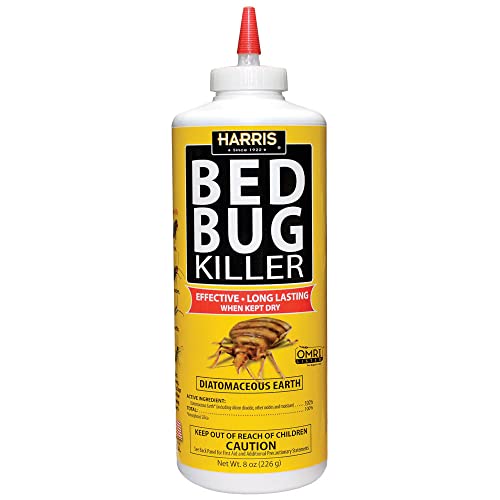
This is not a spray, but it’s the most effective residual weapon you can pair with any liquid formula. The 1/2-pound bottle comes with a puffer tip that dusts powder into baseboards, behind outlet covers, and under furniture legs. Once dry, the microscopic silica shards slice through the bug’s waxy exoskeleton, causing dehydration and death within 48 hours.
The OMRI listing means it’s approved for organic use, and the EPA registration (No. 73739-1-3) confirms it’s safe in homes with people and pets when applied as directed. Users report that sightings drop from dozens to one or two per day within the first week, and the powder stays active indefinitely as long as it remains dry.
The main downside: it’s slow. You won’t see instant kills, and the puffer requires some practice to avoid clumping. Avoid breathing the dust during application, and vacuum up any visible piles after a few days to prevent the bugs from simply walking around them.
Why it’s great
- Works for weeks as long as it stays dry
- OMRI listed for organic use
- Effective on hard-to-reach areas
Good to know
- Kills slowly over 48 hours
- Dispenser puff can be tricky to master
- Not effective if powder gets wet
4. JT Eaton 209-W1G Bed Bug, Tick, and Mosquito Killer Spray
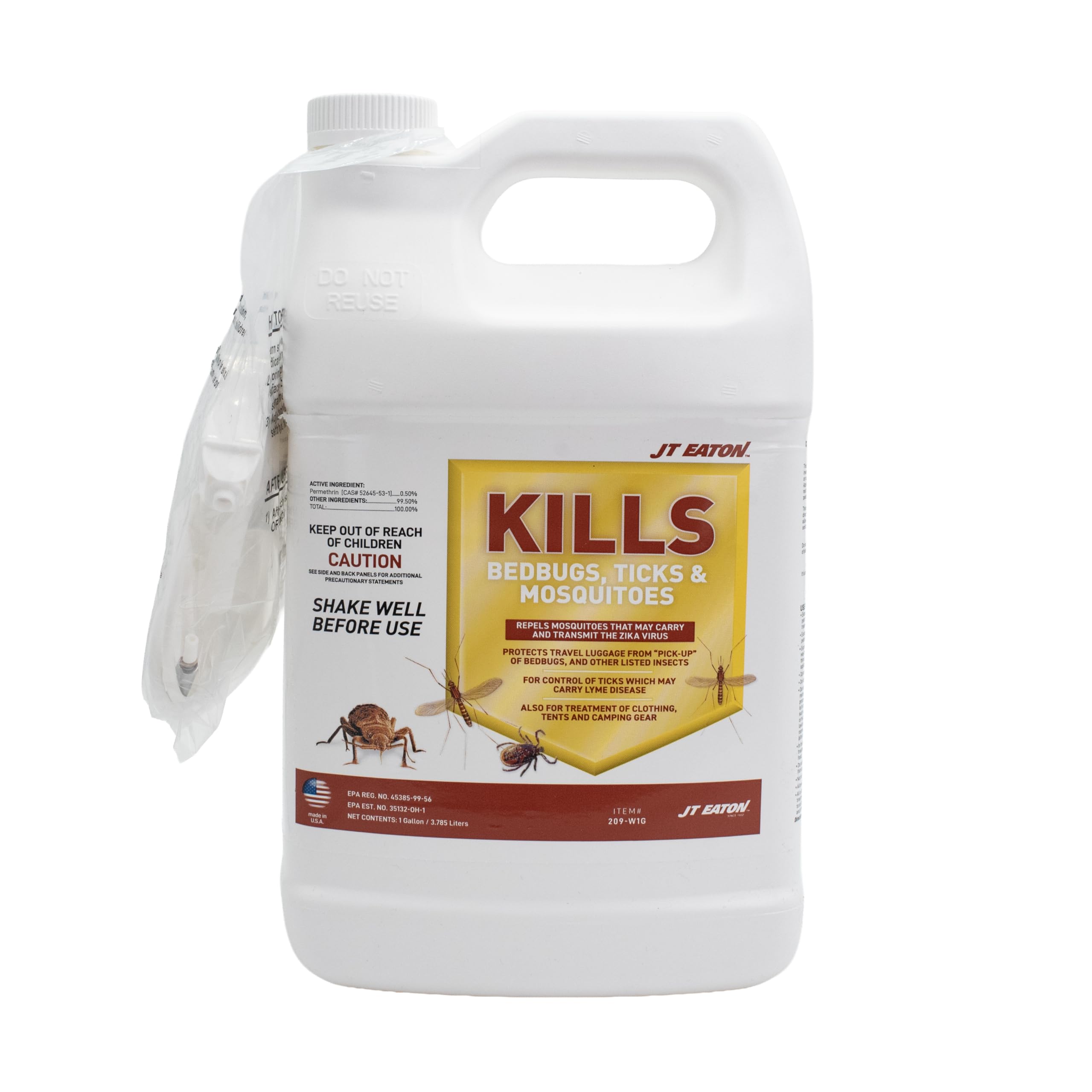
JT Eaton brings a full gallon of water-based spray with a separate pump sprayer, making it the best choice if you need to treat large areas or multiple rooms. The formula is odorless and dries like water, so it’s safe on mattresses, tents, clothing, and even dog gear. Users report that a single application on clothing and backpacks can repel ticks and mosquitoes for up to six weeks through multiple washes.
For bed bugs specifically, the spray kills adults within an hour of contact. The residual lasts several days on porous surfaces and up to a week on non-porous materials. Because it’s water-based, it won’t stain or leave a chemical smell, making it comfortable to use in bedrooms and living spaces.
Be cautious: the product is toxic to cats even after drying, so avoid treating areas where felines sleep or roam. It’s also less effective on fleas than bed bugs, so if your infestation includes multiple pests, you may need a targeted follow-up.
Why it’s great
- Gallon size covers large areas and multiple rooms
- Odorless and non-staining on fabrics
- Repels ticks and mosquitoes for weeks on clothing
Good to know
- Toxic to cats even when dry
- Weak residual on fleas
- Sprayer nozzle can clog over time
5. Good Night Bed Bug Spray, 16oz

Good Night is the smallest and most affordable entry in this lineup, but it punches above its weight for light, localized infestations. The water-based, odorless formula kills bed bugs, lice, ticks, fleas, and dust mites on contact, making it a solid choice for a daily spot spray on a single mattress or sofa cushion. Users with long hair report it effective against lice and fleas without causing skin irritation.
The 16-ounce bottle fits easily under a sink or in a travel bag, and the sprayer produces a fine mist that coats surfaces evenly. One reviewer with allergic sensitivities noted fewer reactions after regular use, suggesting the formula helps reduce dust mite populations in bedding.
Don’t expect this to handle a severe, multi-room infestation on its own. The small volume runs out quickly if you’re treating an entire apartment, and the residual effect is shorter than premium options. Pair it with a powder or a larger spray for comprehensive coverage.
Why it’s great
- Odorless and safe on mattresses and skin
- Effective against multiple pests including fleas and mites
- Compact size for quick spot treatments
Good to know
- Small volume runs out fast on large areas
- Short residual compared to premium sprays
- Not sufficient for severe infestations alone
FAQ
Can I use a bed bug bomb on my mattress?
How often should I reapply a residual bed bug spray?
Do bed bug bombs work on bed bug eggs?
Final Thoughts: The Verdict
For most users, the best bed bug bomb winner is the Harris 5 Minute Kill Spray because it combines fast knockdown, a 30-day residual, and an odorless, non-staining formula that’s safe on mattresses. If you’re battling resistant strains, grab the Bedlam Insecticide for its professional-grade penetration. And for long-term barrier protection without repeated spraying, nothing beats the Harris Diatomaceous Earth Powder.

Mo Maruf
I created WellFizz to bridge the gap between vague wellness advice and actionable solutions. My mission is simple: to decode the research and give you practical tools you can actually use.
Beyond the data, I am a passionate traveler. I believe that stepping away from the screen to explore new environments is essential for mental clarity and physical vitality.