Our readers keep the lights on and my smoothie glass nicely filled. As an Amazon Associate, I earn from qualifying purchases.
A cardiac monitor that misfires or misreads your heart rhythm is worse than no monitor at all — it breeds false alarms, missed alerts, and erodes the trust you need to manage your cardiovascular health daily. Whether you are chasing AFib detection at rest or precise heart rate zones during a HIIT session, the line between a clinical-grade tool and a toy hinges on sensor architecture, lead count, and how the device handles motion artifact.
I’m Mohammad Maruf — the founder and writer behind WellFizz. Over a decade of parsing medical-grade sensor specs, ECG signal processing algorithms, and chest-strap versus optical-armband trade-offs has taught me exactly which numbers separate a dependable cardiac monitor from a data-dump that ends up in a drawer.
This guide breaks down seven distinct cardiac monitors — from FDA-cleared EKG recorders to premium chest straps with internal memory — so you can pick the best cardiac monitor for your specific need, whether that is spot-checking for arrhythmias or broadcasting real-time HR to your cycling computer.
How To Choose The Best Cardiac Monitor
Selecting the right cardiac monitor means matching the sensor type to your primary use case — clinical-grade rhythm analysis, workout heart rate fidelity, or convenient daily spot-checking. Three factors dominate the decision: lead configuration, sensor location on the body, and wireless protocol compatibility.
Lead Count and ECG Certification
Single-lead EKG monitors (like the KardiaMobile) capture a rhythm strip that detects AFib, bradycardia, and tachycardia. They are FDA-cleared for arrhythmia detection and require you to sit still for 30 seconds. Multi-lead or full clinical EKG devices provide more axis views but are bulkier and significantly more expensive. For home use, a single-lead FDA-cleared device is the gold standard for detecting atrial fibrillation.
Optical vs. Electrical Heart Rate Sensing
Optical heart rate sensors (armbands and wrist devices) use LEDs to measure blood volume changes. They are comfortable for all-day wear but lag during rapid heart rate changes and can be thrown off by motion, tattoos, or sweat. Electrical sensors (chest straps) measure the heart’s electrical activity directly, matching EKG accuracy within 1-2 milliseconds. If you need precise heart rate variability (HRV) data or training zone accuracy, choose an electrical chest strap.
Wireless Connectivity and App Ecosystem
Bluetooth 5.0 and ANT+ enable real-time heart rate broadcasting to bike computers, fitness equipment, and smartphone apps. A monitor that supports dual Bluetooth connections (e.g., connect to a watch and a phone simultaneously) offers flexibility. Some devices store data internally and sync later, while others require constant proximity to a paired device. Consider which apps you already use — Wahoo Fitness, Polar Beat, Garmin Connect, or a third-party HRV analyzer — and verify compatibility before buying.
Quick Comparison
On smaller screens, swipe sideways to see the full table.
| Model | Category | Best For | Key Spec | Amazon |
|---|---|---|---|---|
| KardiaMobile 1-Lead | EKG Monitor | AFib detection at home | FDA-cleared, 30-sec results | Amazon |
| Polar H10 | Chest Strap | Training accuracy & HRV | Dual Bluetooth + ANT+ | Amazon |
| Wahoo TRACKR | Chest Strap | Rechargeable performance | 200-hour battery life | Amazon |
| Garmin HRM-Fit | Chest Strap | Women’s sports bra use | Clip-on bra design | Amazon |
| COOSPO HW9 | Armband | Optical HR with zones | ±1BPM optical accuracy | Amazon |
| HaSoCare EKG | EKG Monitor | Portable ECG tracking | Hand-to-chest & leg modes | Amazon |
| Withings ScanWatch Light | Smart Watch | Daily HR & sleep tracking | Hybrid analog + digital | Amazon |
In‑Depth Reviews
1. KardiaMobile 1-Lead EKG Monitor
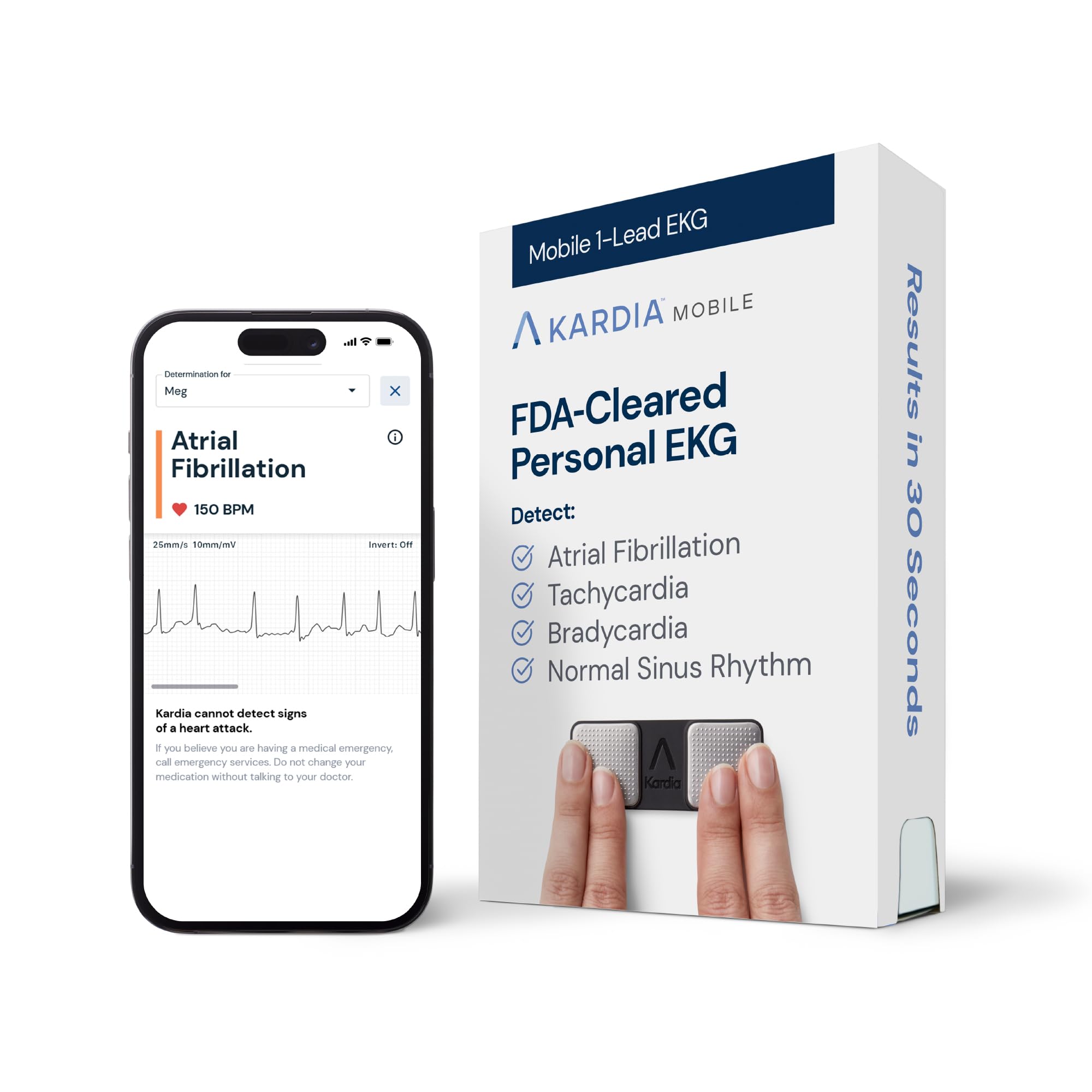
The KardiaMobile is the only device on this list that combines FDA clearance for detecting AFib, tachycardia, and bradycardia with a pocket-sized form factor that weighs under one ounce. It requires no Bluetooth pairing, Wi-Fi, or charging cable — the sensor transmits audio tones through your smartphone’s microphone, and the free Kardia app displays a medical-grade rhythm strip within 30 seconds. Cardiologists recommend this brand more than any other personal EKG device, and over 350 million recordings have been logged through its ecosystem.
Placement matters: rest your arms on a table or your knees during recording to eliminate muscle tremor artifact. The replaceable CR2016 battery lasts up to two years with daily use, making it effectively maintenance-free. It does not check for heart attacks, and it is not tested for use with pacemakers or ICDs, but for detecting intermittent AFib at home, it is the most clinically validated option available.
Users consistently report that the KardiaMobile catches rhythm irregularities that more expensive handheld monitors miss, especially in the gray zone where premature atrial contractions (PACs) mimic AFib. The optional KardiaCare subscription adds unlimited EKG storage and physician reviews, but the device works fully without it — you can email any EKG PDF to your doctor directly from the app.
Why it’s great
- FDA-cleared for AFib, bradycardia, and tachycardia detection
- No Bluetooth, Wi-Fi, or charging needed — works via audio
- Pocket-sized at less than an ounce
- Replaceable battery lasts up to two years
Good to know
- Requires still arms during 30-second recording
- Not compatible with pacemakers or ICDs
- Basic app limits long-term storage without subscription
- Fragment risk if stepped on — recommend a protective case
2. Polar H10 Heart Rate Monitor Chest Strap
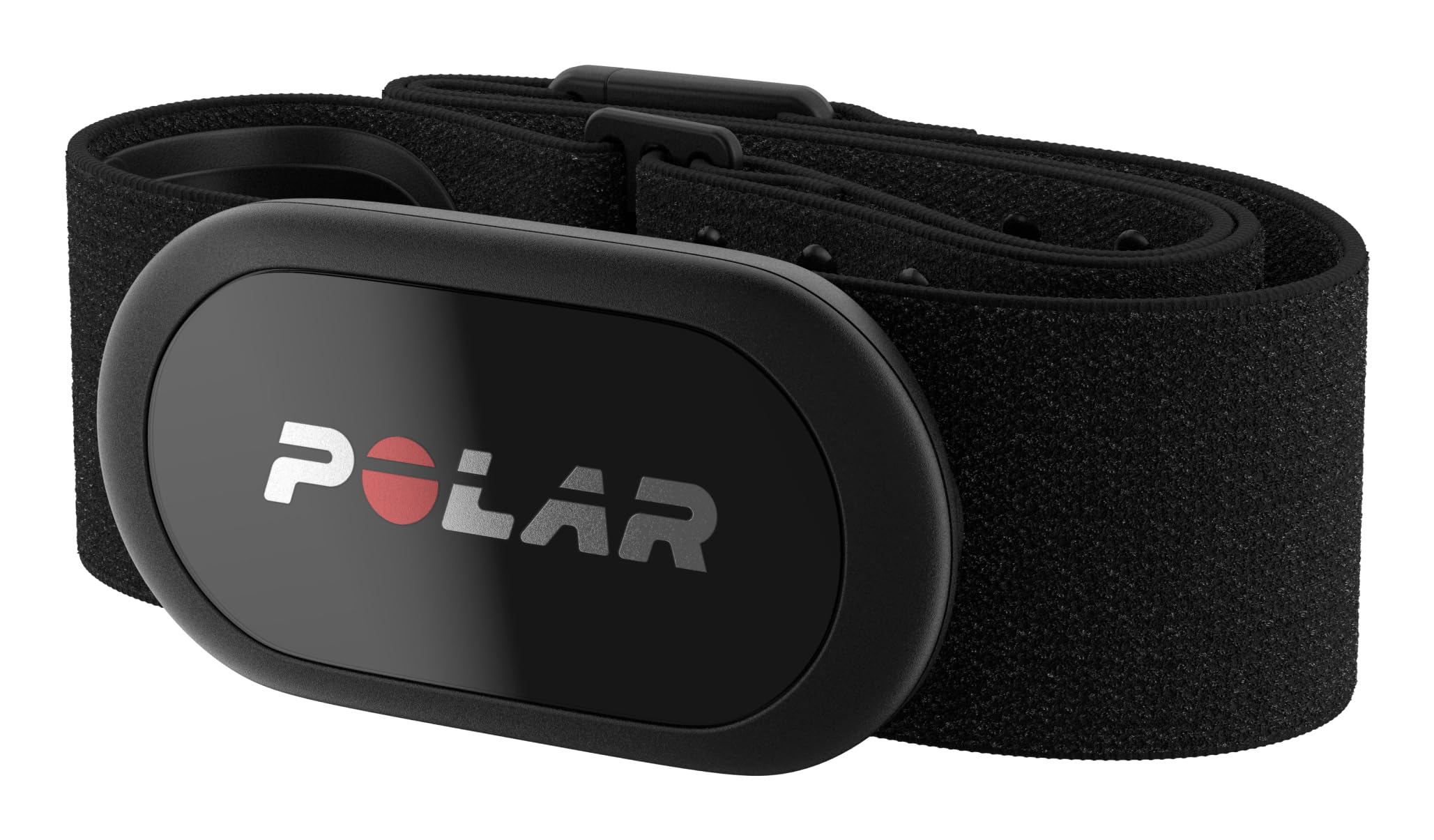
The Polar H10 is widely recognized as the most accurate heart rate sensor in Polar’s history, with ECG-level precision that measures R-R intervals within 2 milliseconds. It supports simultaneous dual Bluetooth connections and ANT+ broadcasting, so you can pair it with a Garmin watch, an iPad running Zwift, and a smartphone recording HRV data all at once. The internal memory stores one full workout, and the 5 kHz signal allows compatibility with legacy gym equipment that older chest straps cannot reach.
The included Polar Pro chest strap uses silicone grippers and improved electrodes that stay in place without gel or pre-wetting. It is fully waterproof to 30 meters, and the CR2025 battery delivers up to 400 hours of use. Elite HRV, Kubios, and third-party HRV analysis apps all list the H10 as their reference device for clinical-grade interval data, making it the top choice for researchers and serious endurance athletes who need raw ECG waveforms.
Users who transition from Garmin HRM-Dual or Wahoo TICKR consistently note that the H10 strap is firmer, does not roll up during sweaty sessions, and delivers zero dropouts during intense intervals. The only recurring caveat is that the standard strap maxes out around a 42-inch chest, requiring an XXXL strap purchase directly from Polar for larger frames.
Why it’s great
- ECG accuracy within 2ms for HRV analysis
- Dual Bluetooth + ANT+ simultaneous connections
- Internal memory stores one full workout
- Waterproof to 30 meters
Good to know
- Standard strap too small for chests over 42 inches
- Battery life far less than 400 hours with heavy dual-connection use
- Strap degradation after 6-8 months can cause erratic readings
- Customer service responsiveness inconsistent
3. Wahoo TRACKR Heart Rate Monitor

The Wahoo TRACKR eliminates the single biggest annoyance of chest-strap ownership — hunting for CR2032 batteries mid-workout — by packing a high-capacity rechargeable lithium-ion cell that lasts up to 200 active hours. Charging via USB-C takes roughly two hours, and the LED indicator on the pod confirms heart rate detection, battery status, and Bluetooth connectivity at a glance. The slim, soft strap keeps the sensor flush against the sternum without shifting during dynamic movements like burpees or sprint intervals.
ANT+ and Bluetooth 5.0 connectivity mean the TRACKR pairs instantly with Zwift, Peloton, Wahoo ELEMNT bike computers, and most gym cardio machines. It also works with Apple Health and Strava for automatic data sync. The pod is water-resistant and the strap can be rinsed with soap and water after sweaty sessions. Wahoo’s ecosystem integration is seamless — the TRACKR appears in the Wahoo app as a recognized device with no manual pairing steps required.
Reviewers who upgraded from the older Wahoo TICKR report that the TRACKR eliminates the finicky connectivity drops that plagued the battery-powered predecessor. The strap hook mechanism takes a few tries to master, but once seated, the sensor stays put. Larger users note that the stock strap runs short; a third-party extended strap solves that easily. At this feature-to-price ratio, the TRACKR is the strongest rechargeable chest strap on the market.
Why it’s great
- USB-C rechargeable — no coin cell batteries to replace
- 200-hour active battery life
- Instant pairing with Zwift, Peloton, and Wahoo ecosystem
- LED indicators for HR detection and connection status
Good to know
- Strap may be too short for larger chests
- Strap hook mechanism is initially tricky to fasten
- Higher entry cost than disposable-battery alternatives
- Pod is water-resistant, not fully submersible
4. Garmin HRM-Fit Heart Rate Monitor

The Garmin HRM-Fit is purpose-built for women who find traditional chest straps uncomfortable or impractical. Instead of an elastic band around the ribcage, it clips directly onto the center seam of a medium- or high-support sports bra, using the bra’s compression to maintain skin contact. The sensor pod transmits real-time heart rate and heart rate variability data to compatible Garmin watches, the Tacx Training app, and third-party fitness equipment via ANT+ and Bluetooth.
Beyond heart rate, the HRM-Fit captures running dynamics — vertical oscillation, ground contact time, stride length, and vertical ratio — when paired with a compatible Garmin watch like the Forerunner 945 or Fenix series. It also computes pace and distance for indoor treadmill runs, and stores activity data when out of watch range. The replaceable coin cell battery lasts approximately one year based on 1 hour of use per day.
Users transitioning from traditional chest straps praise the HRM-Fit for eliminating chafing and strap slippage during HIIT classes and long runs. The clip-on design works best with tight, well-fitting sports bras; loose or longline bras fail to maintain consistent electrode contact, causing dropouts. At this price point, the HRM-Fit is a specialized solution for women who prioritize comfort during high-intensity training without sacrificing Garmin ecosystem data depth.
Why it’s great
- Clip-on bra design eliminates chest strap discomfort
- Captures running dynamics with compatible Garmin watches
- Provides pace and distance for indoor treadmill runs
- Stores data when out of watch range
Good to know
- Requires tight, high-support sports bra for consistent contact
- Bulky pod visible under thin tops
- Battery life indicator dropped quickly in early unit reviews
- Not comfortable for floor exercises or yoga
5. COOSPO HW9 Bluetooth Armband Heart Rate Monitor

The COOSPO HW9 is an optical armband heart rate monitor that achieves ±1 BPM accuracy using photoplethysmography (PPG) sensors — a rare spec for an armband, which typically struggles with cadence lock during running. Instead of a chest strap, it wraps around your forearm or bicep with a breathable, adjustable nylon band, making it ideal for users who dislike chest pressure or need freedom of arm movement for activities like rowing, cycling, or DDP Yoga.
Bluetooth 5.0 and ANT+ allow dual simultaneous connections, so you can broadcast to a Garmin Edge computer and a smartphone running Strava or Wahoo Fitness at the same time. The five-color LED ring on the sensor face shows your heart rate zone instantly — blue for recovery, green for fat burn, yellow for aerobic, orange for threshold, and red for peak. The vibration alert activates when your heart rate exceeds a customizable maximum, adding a safety layer for high-intensity training.
The rechargeable battery delivers up to 35 hours per charge via a magnetic USB cable, and the HW9 pairs with over 200 apps including CooSporide, Elite HRV, and Polar Beat. Some units have reported premature failure within the first five weeks, typically manifesting as falsely low heart rate readings in the 50s BPM during exertion. The strap also tends to stretch out after heavy use, requiring replacement every few months. For the price, the HW9 offers exceptional features if you get a reliable unit.
Why it’s great
- ±1 BPM optical accuracy — rare for an armband sensor
- Five-color LED zone indicator for instant intensity feedback
- Vibration alert for max heart rate exceeded
- Comfortable, breathable armband for high-motion sports
Good to know
- Some units fail within 5 weeks (false low HR readings)
- No automatic shut-off — drains battery if left on
- Strap stretches out and requires replacement
- Optical sensor less accurate than chest strap for HRV
6. HaSoCare Portable ECG Monitor

The HaSoCare EKG monitor is a compact, rechargeable single-lead ECG recorder that weighs just 3.2 ounces and fits in a small purse or jacket pocket. It supports three recording configurations — hand-to-hand, hand-to-chest, and hand-to-leg — the chest and leg modes capture a cleaner signal than hand-to-hand alone because they place the sensor closer to the heart’s electrical axis. Results display on the built-in LCD screen within 30 seconds, and the device stores multiple readings for later review or sharing with a physician.
Data transfers to a computer via USB cable or to a smartphone through Bluetooth, though early units shipped without iOS compatibility. The manufacturer has since corrected this with a software update, but Android users report a smoother out-of-box experience. No subscription is required to store or share your EKG traces, and the sampling time and lead mode can be adjusted from the phone or computer app. The device is lightweight enough for travel and does not require gel or skin preparation.
Reviewers praise the bright LCD screen and the ease of downloading and printing rhythm strips. However, a significant minority report the device failing completely after two to three weeks, with customer service offering little more than automated responses. The HaSoCare is a budget-friendly entry point for home ECG monitoring, but the reliability concerns make it best suited as a secondary or trial device rather than a primary cardiac management tool.
Why it’s great
- Multiple lead modes (hand-to-chest, hand-to-leg) for better signal
- Built-in LCD screen shows results without a phone
- Rechargeable — no disposable batteries
- No subscription fee for data storage or sharing
Good to know
- Reliability concerns — some units fail within weeks
- iOS compatibility required a post-release software patch
- Only a single-lead device, not a diagnostic EKG
- Customer service responsiveness is weak
7. Withings ScanWatch Light

The Withings ScanWatch Light is a hybrid smartwatch that hides continuous heart rate monitoring, sleep stage analysis, and step tracking behind a classic stainless steel analog dial and a small PMOLED display. It looks like a traditional timepiece — not a rectangular smart screen — making it suitable for professional settings or users who prefer discreet health tracking. The 48-hour battery life charges via a proprietary cradle and typically lasts a full month between charges with moderate use.
The optical heart rate sensor on the underside of the case measures HR throughout the day and night, and the watch automatically detects walking, running, and swimming. Sleep tracking breaks down light, deep, and REM stages, and the Withings Health Mate app consolidates the data into a daily readiness score. The fluoroelastomer band is comfortable for 24/7 wear and the watch is water-resistant to 50 meters. FSA and HSA eligibility makes it an attractive option for users with flexible spending accounts.
Reviewers consistently praise the ScanWatch Light for its beautiful design and accurate step count, but note that workout tracking only triggers when you manually select an activity from the watch — the app cannot initiate a workout. The optical HR sensor is not intended for high-intensity interval training or real-time zone-based coaching; it is designed for baseline heart rate and trends. The most serious complaint involves the app authentication process — if you get a new phone, recovering access may require uploading a photo ID and waiting days for support.
Why it’s great
- Classic analog watch design hides heart rate tracking
- FSA/HSA eligible
- Sleep stage tracking with automatic detection
- Water-resistant to 50 meters
Good to know
- Optical HR not accurate for high-intensity intervals
- Workout tracking requires manual watch launch
- App recovery issue if phone changes — poor support response
- Proprietary charger, not USB-C
FAQ
Can a single-lead EKG monitor detect a heart attack?
Why does my armband heart rate monitor show 50 BPM when I am running?
Do I need a subscription for the KardiaMobile to work?
Final Thoughts: The Verdict
For most users, the best cardiac monitor winner is the KardiaMobile 1-Lead EKG Monitor because it combines FDA clearance for detecting AFib, bradycardia, and tachycardia with a pocket-sized form factor that works without Bluetooth pairing, Wi-Fi, or charging — delivering a clinically valid rhythm strip in 30 seconds with zero ongoing cost. If you need real-time heart rate accuracy for structured training, grab the Polar H10 for its dual-channel ECG precision and raw HRV data. And for a discreet hybrid watch that tracks daily heart rate trends and sleep stages without looking like a smartwatch, nothing beats the Withings ScanWatch Light.

Mo Maruf
I created WellFizz to bridge the gap between vague wellness advice and actionable solutions. My mission is simple: to decode the research and give you practical tools you can actually use.
Beyond the data, I am a passionate traveler. I believe that stepping away from the screen to explore new environments is essential for mental clarity and physical vitality.