Our readers keep the lights on and my smoothie glass nicely filled. As an Amazon Associate, I earn from qualifying purchases.
The difference between a great camping trip and a miserable one often comes down to a single decision: whether you wake up rested and warm or cold, sore, and desperate for coffee. Sleeping directly on the ground saps body heat through conduction and leaves your spine twisted against uneven soil. A dedicated bed lifts you off the cold floor, isolates your body from thermal loss, and provides a flat, supportive surface — but only if you choose the right format for the tent floor space you are working with.
I’m Mohammad Maruf — the founder and writer behind WellFizz. I analyze hundreds of outdoor gear spec sheets and real user reports each season to isolate which materials, structural designs, and R-values actually translate into better sleep performance for tent campers.
This guide ranks the most dependable options on the market to help you find the best beds for camping in a tent based on real capacity, weight, and insulation data rather than marketing claims.
How To Choose The Best Beds For Camping In A Tent
The three dominant bed architectures for tent camping — cots, air mattresses, and foam pads — each solve a different set of constraints. Your choice depends on the tent’s floor geometry, the expected overnight temperature, your body size, and whether you are carrying the gear on foot or driving to the site.
Tent Fit and Height Clearance
A cot that is 14 inches tall may not fit under a low-sloping dome tent wall. Measure the vertical clearance at the head and foot locations inside the tent before buying. Conversely, an air mattress that fits wall-to-wall leaves no room for gear storage. A cot that sits 8 to 15 inches high allows you to stow duffels and coolers underneath, maximizing usable floor area.
Insulation and R-Value
Air mattresses without foam have almost zero inherent insulation — the cold air from the ground circulates inside the chamber and pulls warmth out of your body. Foam pads and foam-filled air pads carry an R-value rating (1 to 10+). For three-season tent camping, an R-value of 4 to 6 is adequate. For winter tent camping, target R-Value 8 or higher. Cots block ground chill by creating an air gap, but the air moving underneath still cools the fabric — adding a reflective blanket or closed-cell foam pad on top fixes this.
Weight Capacity and Frame Material
Steel-framed cots typically support 300 to 400 pounds but weigh 12 to 14 pounds. Aluminum-framed cots cut the weight to 6 to 8 pounds while supporting similar loads, but cost more. Check the maximum weight rating against your body weight plus any sleeping pad or bedding you place on top. Air mattresses should list a maximum fill pressure rather than a weight limit — excess pressure stresses the seams and accelerates delamination.
Quick Comparison
On smaller screens, swipe sideways to see the full table.
| Model | Category | Best For | Key Spec | Amazon |
|---|---|---|---|---|
| ONETIGRIS SUPRAGRIS | Aluminum Cot | Car campers wanting ultralight strength | 7075 aluminum, 396 lbs capacity | Amazon |
| Sportneer Camping Cot | Steel Cot | Families needing width and stability | 28.7″ wide, 330 lbs capacity | Amazon |
| Naturehike GreenWild | Wide Aluminum Cot | Sleepers who want extra hip room | 29.5″ wide, 7075 aluminum | Amazon |
| NYECHTO Self Inflating Pad | Foam + Air Pad | Cold-weather tent campers | R-Value 9.5, 3.14″ memory foam | Amazon |
| Luxchoice Air Mattress | Air Mattress | Car campers wanting push-button setup | Built-in rechargeable pump, 9″ thick | Amazon |
| TIMBER RIDGE Quick Set | Lightweight Folding Cot | Small tent users and scouts | 7.1 lbs, 20-second setup | Amazon |
| HAPPY TRAVEL 6 Person Tent | Cabin Tent | Groups needing a shelter for beds | 10×9 ft floor, 79″ center height | Amazon |
In‑Depth Reviews
1. ONETIGRIS SUPRAGRIS Camping Cot

The ONETIGRIS SUPRAGRIS hits the sweet spot where strength meets portability. The 7075 aluminum frame weighs only 5.7 pounds yet supports up to 396 pounds — a load-to-weight ratio that few steel cots can match. The 27.5-inch width and 74.8-inch length accommodate most adults without the claustrophobic feel of narrower cots. The pillow pocket and side pockets keep a headlamp, phone, and water bottle within reach inside the tent.
The 300D Oxford fabric sheds dirt and resists water splash from tent walls. Assembly involves inserting two cross-poles into sleeves — most users get it done in about two minutes after the first try. The folded package dimensions are compact enough for a trunk or even a large backpack if you are doing base-camp hiking.
Side sleepers report that the fabric surface feels supportive without sagging, though adding a thin foam pad underneath improves comfort for those who sleep on their hip. Compared to military-style cots, the SUPRAGRIS offers better packability and a noticeably more stable feel when shifting weight at night.
Why it’s great
- Ultralight 5.7 lb aluminum frame
- High 396 lb weight capacity for larger campers
- Pillow pocket and side storage built in
Good to know
- Low 7-inch height may feel low for some users
- Requires minor assembly with cross-poles
2. Sportneer Camping Cot
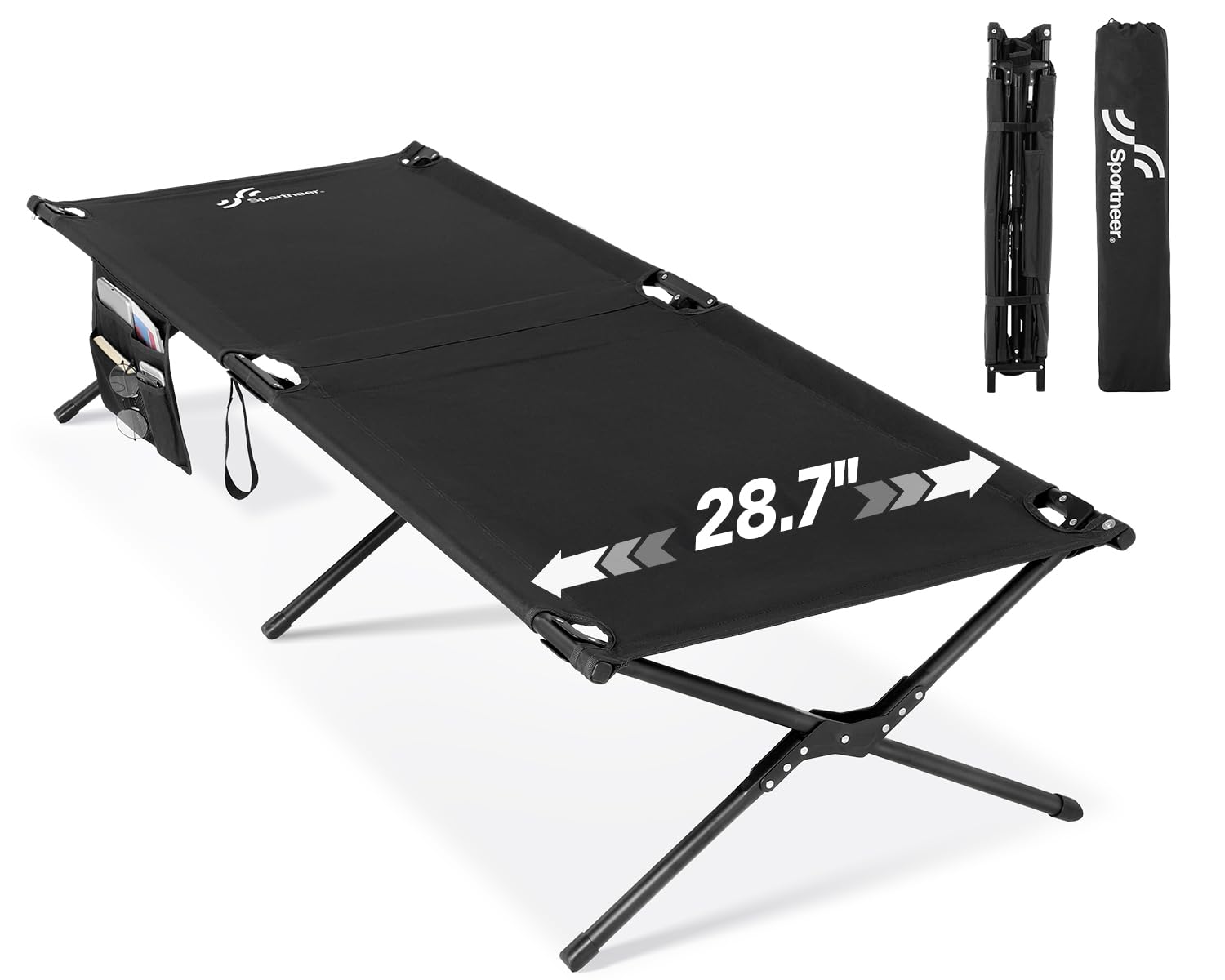
The Sportneer cot uses a heavy-duty steel frame and a 600D Oxford cloth bed surface to create a sleeping platform that feels rock-solid under 330 pounds. The 28.7-inch width is among the widest in the steel-cot category, giving shoulders and hips room to spread out. The 14.6-inch ground clearance is high enough to store medium-size duffels underneath, which makes it a smart choice for tents with limited vestibule space.
The leg rotation lock prevents accidental folding when shifting weight, and the X-shaped leg bracket distributes load evenly across the steel tubes. Setup is a true 30-second operation — unfold the frame, lock the legs, and the cot is ready. The 3-in-1 storage bag includes a side pocket for small items and a clip for hanging a lantern.
The main tradeoff is weight: at 13.8 pounds, this is a car-camp-only item. Hikers or backpackers will find it too heavy to justify the space in a pack. Adding a 2- to 3-inch memory foam topper turns the surface into something close to a guest bed, as several long-term users have noted in their sleep reports.
Why it’s great
- Extra-wide 28.7-inch sleeping surface
- Quick 30-second tool-free setup
- High 14.6-inch ground clearance for under-cot storage
Good to know
- Heavy at 13.8 lbs — not for hiking
- Some users report slight front-to-back wobble
3. Naturehike GreenWild Camping Cot
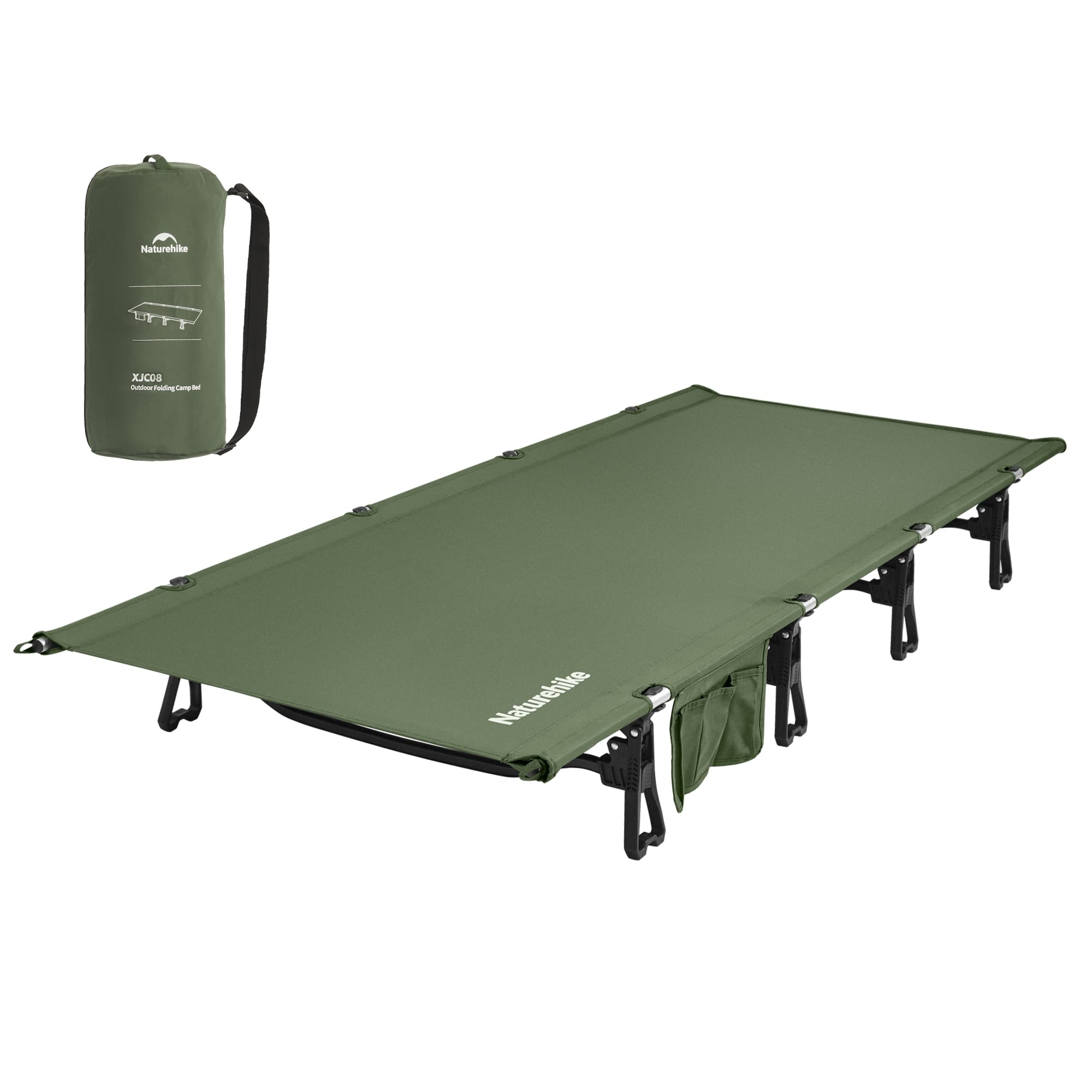
The Naturehike GreenWild stands out for its 29.5-inch width — the widest in this lineup — combined with an aircraft-grade 7075 aluminum frame that keeps the total weight at just under 8 pounds. The fixed 8.3-inch height is deliberately lower than steel cots, which helps the cot fit inside smaller dome tents and reduces the center of gravity for side sleepers. The 300D Oxford fabric breathes well enough to minimize condensation buildup on the underside.
The lever-locking mechanism requires minimal force to engage. Users insert the two rail poles, push the levers, and the frame locks rigid. A built-in side pocket keeps a phone or flashlight accessible without having to grope around on the tent floor. The included carry bag is relatively compact, roughly the size of a folded camp chair.
Some users report that the 8.3-inch leg height makes getting in and out slightly awkward for those with limited mobility — you are essentially sitting down from tent-floor level rather than standing. A small number of reliability reports mention leg bracket failure after repeated use, though the majority of feedback points to durable performance over multiple seasons.
Why it’s great
- Widest surface at 29.5 inches for unrestricted sleep
- Lightweight 7075 aluminum frame (approx. 8 lbs)
- Breathable 300D fabric reduces moisture
Good to know
- Low height can be difficult to enter/exit
- Isolated reports of leg bracket failure
4. NYECHTO Self Inflating Sleeping Pad

The NYECHTO pad is the only option in this list with an R-value of 9.5, which places it in the four-season insulation category. The 3.14-inch memory foam core uses 28D resilient foam that retains its shape after compression, combined with an internal air chamber that adjusts firmness through the built-in pump. The 50D elastic knit cover resists tearing and wicks moisture away from the skin.
The detachable rechargeable pump uses USB-C charging and inflates the pad in roughly 45 seconds. The same pump handles deflation, pulling the pad to a vacuum-packed 0.7-inch thickness for storage. The pump battery lasts for about seven inflation cycles on a full charge. A built-in pillow at the head end eliminates the need for a separate camp pillow.
At 5.95 pounds and a packed size of 26 by 9 inches, this is not an ultralight backpacking pad, but it is ideal for car campers and winter tent dwellers who prioritize warmth over pack weight. Users consistently report zero air loss overnight and no pressure points when sleeping on their side, even at 220 pounds.
Why it’s great
- Exceptional R-Value 9.5 for cold-weather camping
- Fast USB-C rechargeable pump (45 sec inflation)
- Built-in pillow and 3.14-inch memory foam comfort
Good to know
- Packed size is larger than foam-only pads
- Not suitable for backpacking due to weight
5. Luxchoice Air Mattress Twin
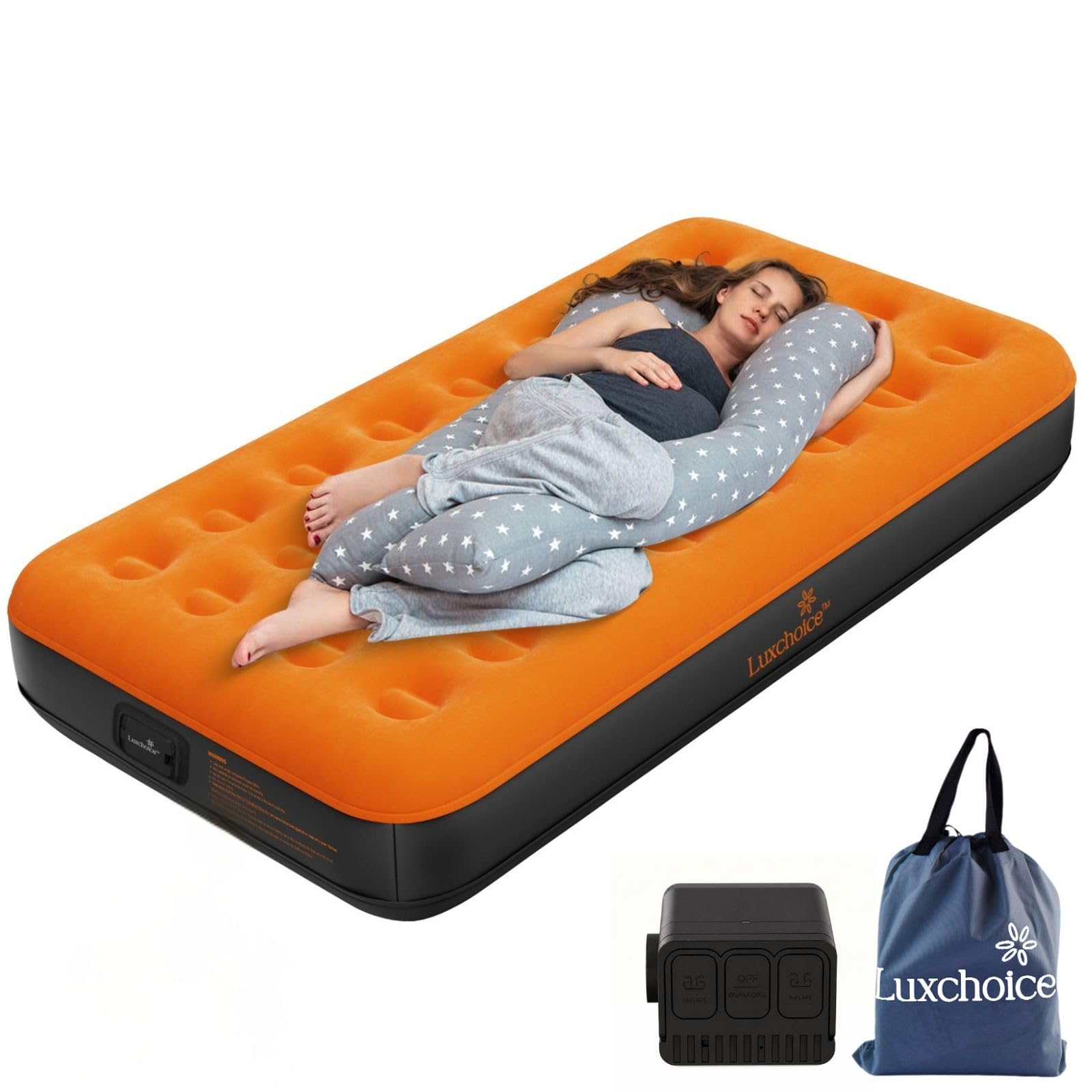
The Luxchoice air mattress solves the most annoying part of inflatable bedding: the pump tether. The cordless rechargeable pump is built into the mattress and inflates the 9-inch air coil structure in under two minutes with a single button press. The flocked surface feels soft against bare skin and adds some friction to keep sheets from sliding off during the night.
The 74.8 by 40.2 inch twin footprint fits comfortably inside most cabin tents and all but the smallest dome tents. The internal air coil beam design provides even support across the entire surface, which reduces the hammock effect that older air mattresses create when only the seams hold tension. The puncture-resistant PVC material has held up well against smooth tent floors, though users report that placing a ground cloth underneath is essential for rocky surfaces.
Battery life is a consideration: the pump can handle about four full inflation cycles before needing a recharge. The USB-C port allows recharging from a power bank or car lighter. A small number of users experienced deflation issues after five to twelve uses, although the manufacturer replacement process was described as fast and responsive in reports.
Why it’s great
- No external pump or power cord needed
- Flocked top feels warm and prevents sheet slippage
- Fits inside most cabin and dome tents
Good to know
- Battery limited to ~4 cycles per charge
- Some durability concerns after repeated use
6. TIMBER RIDGE Quick Set Camping Cot
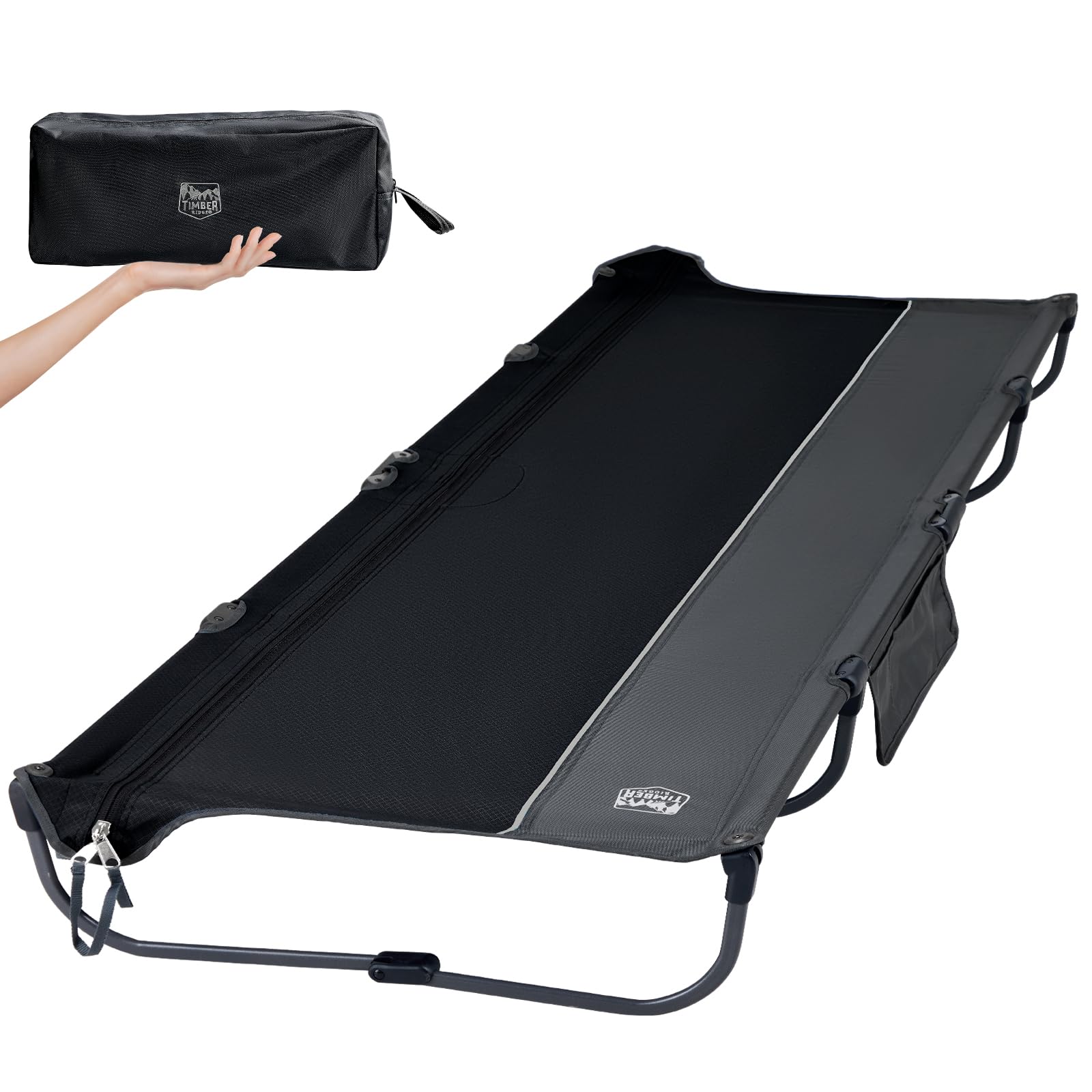
The TIMBER RIDGE cot eliminates poles entirely in favor of a pre-attached frame that opens like a book. The user simply unzips the carry bag, unfolds the frame, and pulls the zipper closed to tension the fabric — the whole process takes about 20 seconds. The 20mm by 10mm aluminum pipes keep the weight at just 7.1 pounds, making this the lightest cot in the lineup by a significant margin.
The 76.4 by 26.8 inch sleeping surface sits 7.9 inches off the ground, which is low enough to fit inside 1-person and 2-person tents where taller cots would press against the walls. The U-shaped frame uses distributed tension rather than crossbars, so there are no hard bars pressing into your back from underneath. The fabric surface is taut enough to prevent sagging for users up to the 225-pound capacity limit.
The tradeoff for the featherweight and packability is a lower weight limit and a more compact sleeping surface. Users over 6 feet tall may find their feet extend beyond the fabric edge. The industrial-grade zipper is durable, but the pinch hazard when collapsing the legs requires careful attention — the manufacturer advises watching setup videos before the first use.
Why it’s great
- Fastest setup at 20 seconds with no poles
- Ultralight at 7.1 lbs for car and scout camping
- Low 7.9-inch height fits small tents
Good to know
- Weight capacity limited to 225 lbs
- May be short for users over 6 feet tall
7. HAPPY TRAVEL 6 Person Tent
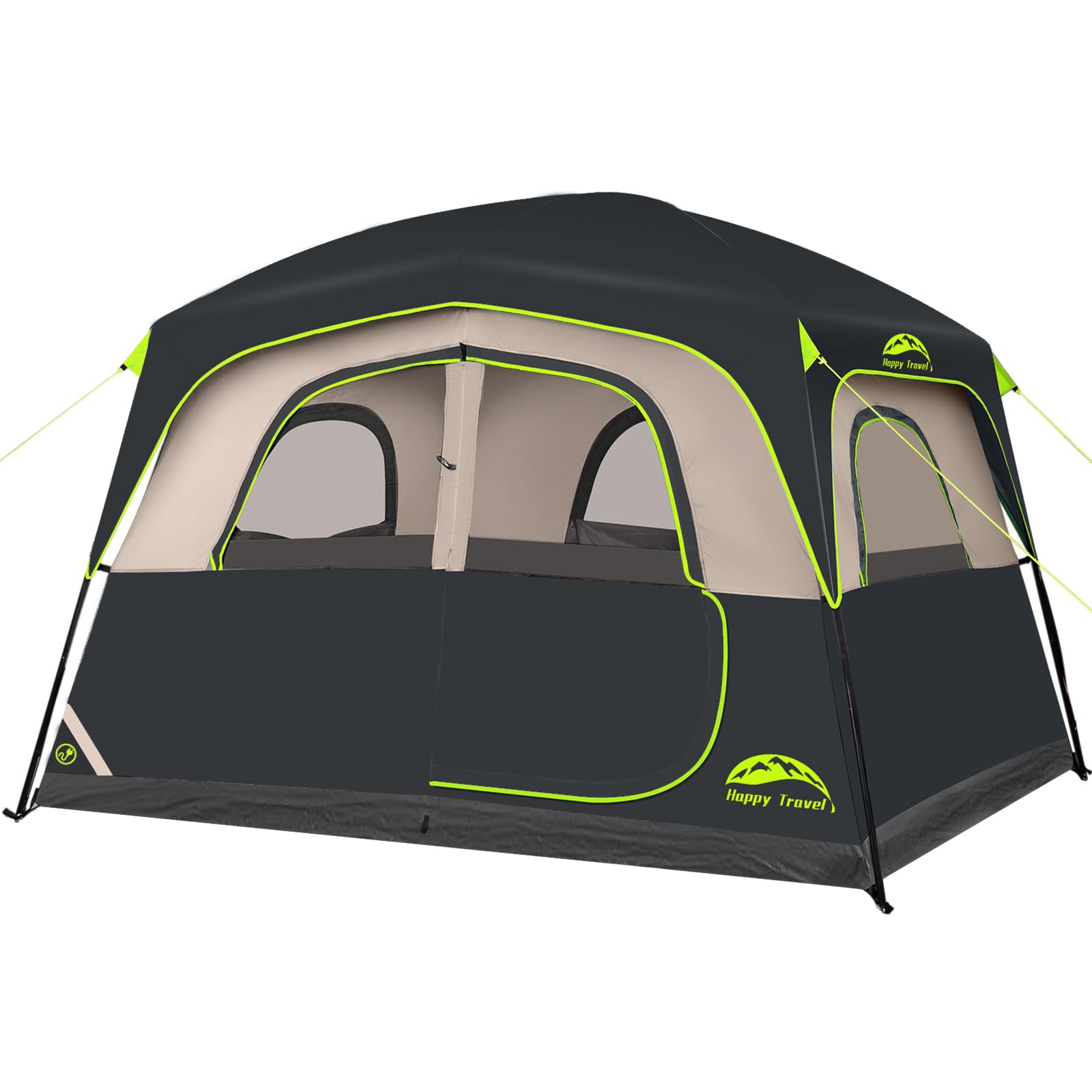
The HAPPY TRAVEL cabin tent provides the envelope that makes the previous beds usable. The 10 by 9 foot floor area offers 90 square feet of space, enough for two queen-size air mattresses or three cots side by side. The 79-inch center height allows a 6-foot-tall person to stand fully upright without stooping, which makes changing clothes and moving around inside comfortable.
The construction uses 190T polyester taffeta with a 3000mm PU coating on the fly and a 4000mm PE tub floor. Five large mesh windows plus the mesh ceiling provide cross-ventilation — removing the rainfly converts the tent into a stargazer shelter. The 19mm steel poles and four guylines handle moderate wind, and the electrical access port lets you run a USB cable to a power bank outside the tent.
Setup takes about three minutes with two people. The all-in-one pole design reduces confusion, though the pole tension is high and requires some hand strength. The packed weight of 16.5 pounds and storage size of 17.5 by 8.6 inches are reasonable for car camping. Some reports note water ingress at the front zipper during sustained rain, so orienting the door away from prevailing wind is recommended.
Why it’s great
- Generous 79-inch center height for standing room
- Large mesh ceiling for ventilation and stargazing
- Fast 3-minute setup for two people
Good to know
- Front zipper may leak water in heavy rain
- Pole tension is high; requires strength to assemble
FAQ
Can a folding cot fit inside a standard dome tent?
How important is R-Value for a self-inflating pad in summer?
Should I place a sleeping pad on top of my camping cot?
Final Thoughts: The Verdict
For most users, the best beds for camping in a tent winner is the ONETIGRIS SUPRAGRIS because it combines a 7075 aluminum frame, 5.7-pound weight, and 396-pound capacity in a package that fits car trunks and large packs equally well. If you need extreme cold-weather insulation, grab the NYECHTO Self Inflating Pad with its R-Value 9.5 and built-in pump. And for a budget-friendly wide cot that works for families, nothing beats the Sportneer Camping Cot with its 28.7-inch width and 330-pound capacity.

Mo Maruf
I created WellFizz to bridge the gap between vague wellness advice and actionable solutions. My mission is simple: to decode the research and give you practical tools you can actually use.
Beyond the data, I am a passionate traveler. I believe that stepping away from the screen to explore new environments is essential for mental clarity and physical vitality.