Our readers keep the lights on and my smoothie glass nicely filled. As an Amazon Associate, I earn from qualifying purchases.
Standard super glues and epoxys slide right off silicone’s non-stick surface, leaving you with a mess and a broken bond. Finding an adhesive for silicone rubber that actually grips, flexes, and stays waterproof requires a formula engineered for low-energy materials — not a general-purpose tube.
I’m Mohammad Maruf — the founder and writer behind WellFizz. I’ve spent years analyzing material-specific bonding agents, from platinum-cure silicones to neoprene contact cements, digging into cure chemistry, peel strength, and real-world water resistance data rather than marketing claims.
The five adhesives reviewed here were selected based on their ability to handle silicone rubber’s unique challenges: surface energy, flexibility, and moisture exposure. Whether you are repairing a wetsuit, resealing a fish tank, or bonding costume prosthetics, this guide to the best adhesive for silicone rubber will show you which formula matches your specific project.
How To Choose The Best Adhesive For Silicone Rubber
Silicone rubber is notoriously difficult to bond because of its low surface energy and natural release agents. General-purpose glues sit on top rather than penetrating the material. The right adhesive must match the silicone’s cure system, tolerate movement, and withstand whatever environment — wet, hot, UV-exposed — the joint will face.
Match the Cure System: Tin vs. Platinum
RTV (room-temperature vulcanizing) silicones come in tin-cure and platinum-cure formulations. Tin-cure silicone accepts a broader range of adhesives, while platinum-cure requires a 100% compatible bonding agent to avoid cure inhibition. If your project involves platinum-cure moldmaking or medical-grade silicone, ensure the adhesive is explicitly labeled for platinum-cure compatibility. Mismatching can leave the adhesive tacky or uncured indefinitely.
Flexibility and Elongation at Break
Stiff epoxy bonds shatter when the silicone rubber stretches. Look for adhesives with high elongation — typically above 300% — so the bond line moves with the substrate. For applications like wetsuit repairs, costume prosthetics, or vibration-prone machinery, a flexible RTV silicone adhesive outperforms rigid glues every time.
Waterproof Rating and Full Cure Time
Not all waterproof adhesives cure the same way. Some form a skin in minutes but require 24 hours to 7 days for full strength. For submerged applications — aquariums, pond liners, marine seals — check the manufacturer’s cure schedule before exposing the bond to pressure. Accelerated curing with heat or humidity can reduce wait times, but rushing immersion risks delamination.
Quick Comparison
On smaller screens, swipe sideways to see the full table.
| Model | Category | Best For | Key Spec | Amazon |
|---|---|---|---|---|
| Smooth-On SIL-Poxy | Silicone-Specific | Repairing silicone molds & prosthetics | 0.3 oz tube; bonds platinum/tin-cure | Amazon |
| Liquid Rubber Caulk | Hybrid Sealant | Roof & pond liner sealing | 10.2 fl oz; non-slumping formula | Amazon |
| RH Adhesives S-18 | Contact Cement | Bonding neoprene rubber to metal | 4 oz can; water-resistant solvent | Amazon |
| Akfix 100AQ | Aquarium Silicone | Saltwater/freshwater tank resealing | 10.1 fl oz; fish-safe & VOC-free | Amazon |
| AG Adhesive Guru | Aquarium Silicone | Budget-friendly tank repair | 10.5 fl oz; low-odor formula | Amazon |
In‑Depth Reviews
1. Smooth-On SIL-Poxy Rubber Silicone Adhesive
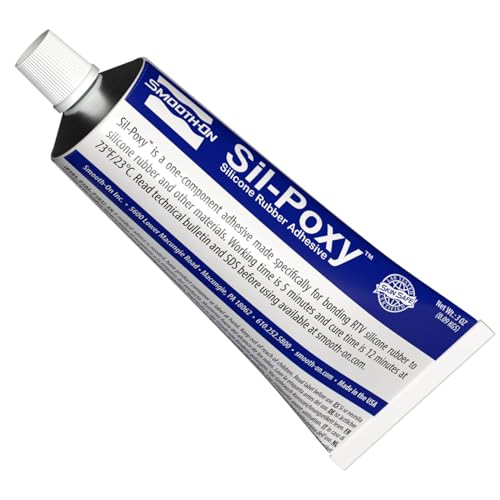
The Smooth-On SIL-Poxy is the only adhesive in this roundup specifically engineered to bond silicone rubber to itself and to other substrates like fabric, glass, and ceramic. It works with both tin-cure and platinum-cure RTV silicones, eliminating the compatibility guesswork that plagues generic glues. Users report seamless, invisible bonds on everything from torn silicone breast plates to mermaid tails, with adhesion that survives hot water and repeated flexing without cracking.
Its gel-like consistency stays where you apply it rather than running into unwanted areas — a critical advantage for precision repairs on costume prosthetics or animatronics. The 0.3-ounce tube is small, but a little goes a long way: a single bead across a 4-inch tear uses only a fraction of the tube. Full cure happens at 24 hours, producing a high-elongation joint that stretches with the surrounding silicone rather than snapping under tension.
One notable trade-off is the odor. Several users note it “stinks up the room for a day,” which is typical of solvent-based silicone adhesives. Proper ventilation is mandatory. Also, the tiny tube size means you will want a multi-pack for larger projects like full-body suits or multiple mold repairs. For dedicated silicone-on-silicone work, this is the benchmark.
Why it’s great
- Chemically bonds to both tin-cure and platinum-cure silicones
- Invisible, flexible bond that withstands stretching and washing
- Precision gel application with no dripping or slumping
Good to know
- Very small tube size — not economical for large surface areas
- Strong solvent odor requires good ventilation during cure
- Full 24-hour cure needed before exposing to water or tension
2. Liquid Rubber Caulk – Hybrid Silicone Adhesive
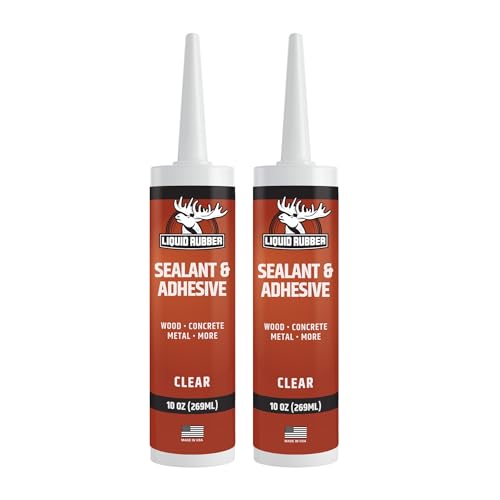
The Liquid Rubber Caulk is a hybrid silicone sealant designed for sealing and waterproofing rather than flexible bonding. Its non-slumping formula holds its shape on vertical and overhead surfaces, making it ideal for sealing camper roof tears, AC vents, and pond liner seams. Users report it held up against two days of continuous rain after sealing ice-damaged RV roofs, and it bonds firmly to EPDM rubber when used with seam tape and primer.
This caulk is noticeably thicker than standard silicone — a double-edged sword. On one hand, it fills larger gaps and cracks without running; on the other, hand fatigue can set in during extended use. It reaches a tack-free state quickly, but full waterproof integrity takes the standard 24 hours. Another key feature is paintability after 24 hours, which matters for visible repairs where color matching is needed.
The main limitation is that it is not a precision adhesive for thin silicone sheet or delicate repairs. It functions best as a gap-filling sealant on thicker rubber membranes and demanding outdoor waterproofing tasks. For those scenarios, its UV resistance and lasting flexibility deliver results that standard silicone caulks cannot match.
Why it’s great
- Non-slumping, overhead application without sagging
- Paintable and UV-resistant after full cure
- Excellent adhesion to rubber membranes with seam tape
Good to know
- Thick consistency causes hand fatigue on long beads
- Requires dry surface for proper adhesion — won’t work in rain
- Not formulated for thin silicone sheet bonding
3. RH Adhesives S-18 All-Purpose Adhesive
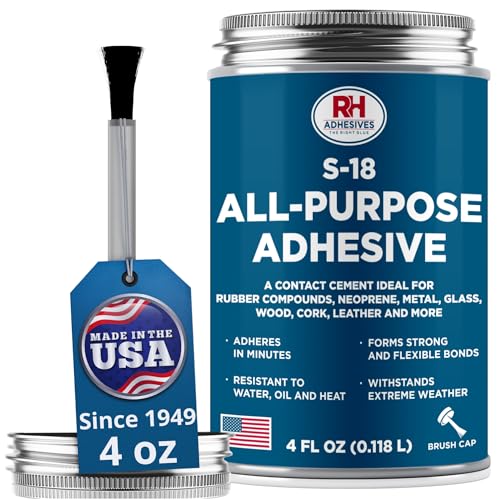
The S-18 is a solvent-based neoprene contact cement that bonds SBR rubber, neoprene, leather, felt, and metal. Its water-resistant formula and heat tolerance make it a go-to for marine upholstery, boot repairs, and automotive gasket fixes. Users confirm it holds strong after thorough surface prep (cleaning and sanding old glue), with one application surviving full boot repairs and another gluing neoprene hail guards onto car panels.
Application requires brushing or dabbing onto both surfaces, letting the solvent flash off, then pressing together for an instant initial bond. The 24-hour cure brings the heat and water resistance up to full strength. The 4-ounce can is generously sized for multiple small jobs, but the solvent evaporates quickly if the can is left open, so reseal tightly after each use.
One reviewer reported that the bond failed after heavy rain and heat when used outdoors on a car — a reminder that solvent-based neoprene cement is best suited for indoor or sheltered applications where moisture exposure is occasional rather than constant. Also, the solvent fumes are potent; this is strictly a well-ventilated-area product. For budget-conscious buyers needing a versatile rubber cement, the S-18 punches above its size.
Why it’s great
- Instant initial grip after solvent flash-off
- Strong water and heat resistance after full cure
- Versatile bonding to neoprene, rubber, metal, and fabric
Good to know
- Solvent-based — strong fumes require good ventilation
- Can dry out in the can if not sealed properly
- Not recommended for continuous outdoor submersion
4. Akfix 100AQ Aquarium Sealant Clear
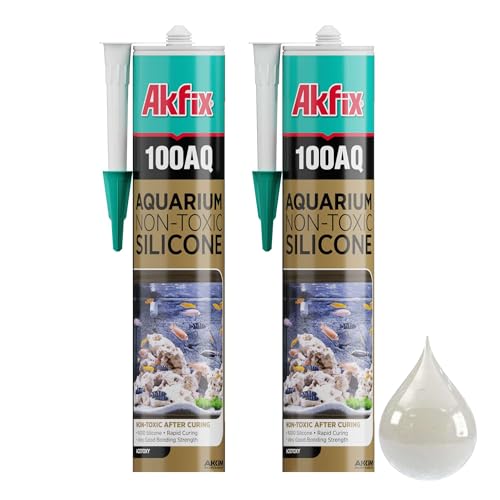
The Akfix 100AQ is a 100% silicone sealant formulated specifically for fish-safe environments. It contains no additives or fungicides that could harm aquatic life, making it suitable for freshwater and saltwater aquariums, reptile enclosures, and terrariums. Users report successful resealing of 55-gallon tanks that held water for months with zero leaks, as well as use in dart frog vivariums without adverse effects on the inhabitants.
The curing process is where this sealant demands patience. While skin forms in 7 to 13 minutes, the manufacturer recommends waiting up to 21 days before filling an aquarium — a longer timeline than many novices anticipate. Some users misinterpreted the “rapid cure” marketing and ended up using it for reptile enclosures instead, where the shorter cure is acceptable. For glass-to-glass seams, the bond strength is excellent, and the clear finish produces nearly invisible joints.
The two-pack provides excellent value for medium-to-large tank projects, but the 21-day curing window is a serious planning consideration. If you need a tank sealed and operational within a week, you will need to accelerate cure with heat and low humidity — or choose a faster-curing aquarium silicone. For patient builders, the Akfix delivers professional results at a reasonable cost per tube.
Why it’s great
- 100% fish-safe with no toxic additives or VOCs
- Crystal-clear finish for invisible aquarium seams
- Excellent adhesion to glass and non-porous surfaces
Good to know
- Full 21-day cure recommended before aquarium use
- “Rapid cure” claims can be misleading without reading fine print
- Cartridge requires a standard caulk gun for application
5. AG Adhesive Guru Aquarium Silicone Sealant Clear

The AG Adhesive Guru is a 100% silicone sealant designed for aquarium and terrarium applications, free from fungicides and additives that could harm fish. Its most praised feature is the low odor — users describe only a faint vinegar smell during application, which is a significant advantage over many solvent-heavy silicone adhesives. The rapid skin formation (5 minutes) and full cure within 24 to 48 hours make it one of the fastest-setting aquarium silicones on the market.
Practical reviews demonstrate its versatility: one user resealed a 40-gallon tank with lasting results, and another repaired an old concrete bird bath that now serves local wildlife. The adhesive holds a permanent, flexible seal that resists cracking and shrinking, and the 10.5-ounce bottles offer generous coverage for multiple projects. A first-time aquarium resealer noted the sealant sets up quickly — recommending one seam at a time for beginners to avoid rushing.
On the downside, the tensile strength is listed at only 1.5 PSI, which is lower than some competing aquarium silicones. For large, high-pressure tanks (75+ gallons), some users prefer black silicone to hide novice imperfections. Still, for budget-conscious hobbyists and small-to-medium aquariums, this sealant delivers reliable, fast-curing performance without the premium price tag.
Why it’s great
- Low vinegar odor compared to typical silicone sealants
- Faster cure (24-48 hours) than many aquarium silicones
- Safe for fish, plants, and reptiles with no additives
Good to know
- Lower tensile strength (1.5 PSI) limits very large tank use
- Sets up quickly — novice users should do one seam at a time
- Clear finish can show imperfections; black version advised for beginners
FAQ
Will standard super glue bond silicone rubber?
How do I prepare a silicone rubber surface before applying adhesive?
Can I use aquarium silicone sealant for non-aquarium silicone rubber repair?
Final Thoughts: The Verdict
For most users, the best adhesive for silicone rubber winner is the Smooth-On SIL-Poxy because it is the only formula chemically designed to bond both tin-cure and platinum-cure silicones with a flexible, waterproof joint that rivals the original material. If you need a paintable sealant for large outdoor rubber repairs, grab the Liquid Rubber Caulk. And for budget-friendly aquarium resealing where patience is an option, the AG Adhesive Guru Aquarium Silicone offers fast cure time and low odor at an entry-level price.

Mo Maruf
I created WellFizz to bridge the gap between vague wellness advice and actionable solutions. My mission is simple: to decode the research and give you practical tools you can actually use.
Beyond the data, I am a passionate traveler. I believe that stepping away from the screen to explore new environments is essential for mental clarity and physical vitality.