Our readers keep the lights on and my smoothie glass nicely filled. As an Amazon Associate, I earn from qualifying purchases.
Buying a first interchangeable-lens camera on a tight budget is a landscape of conflicting priorities. You want a large sensor for shallow depth of field, decent autofocus to catch fleeting moments, and a lens system with room to grow — all without exceeding what you planned to spend. The wrong choice locks you into dated technology and limits your creative potential before you even start learning.
I’m Mohammad Maruf — the founder and writer behind WellFizz. I analyze dozens of camera specifications monthly, comparing sensor sizes, autofocus point counts, frame rates, and lens mount ecosystems, to separate real value from marketing hype in the sub- photography market.
This guide delivers a curated, no-nonsense selection of the best budget camera for photography, rigorously compared across sensor performance, autofocus capability, build quality, and long-term system value.
How To Choose The Best Budget Camera For Photography
Making a smart decision here means looking beyond the price tag. You need to understand how sensor size, autofocus technology, stabilization, and the available lens system will affect your photography as your skills develop. Focus on the long-term value of the system, not just the upfront body cost.
Sensor Size and Image Quality
The sensor is the heart of the camera. Larger sensors like full-frame and APS-C capture more light per pixel, yielding cleaner images in low light, greater dynamic range, and more control over depth of field. Micro Four Thirds sensors are smaller but allow for more compact body and lens designs. Don’t fixate on megapixel count alone — a 16-megapixel Micro Four Thirds sensor can outperform a 24-megapixel smartphone sensor because of its physically larger surface area.
Autofocus System
Autofocus performance determines whether you catch the decisive moment. Phase-detection autofocus, which uses dedicated pixels on the sensor, is faster and more reliable for moving subjects than contrast-detection. More autofocus points generally mean better subject tracking across the frame. Look for systems with 9 points or more and support for continuous autofocus (AF-C) if you shoot sports or action. Eye and face detection are also valuable for portrait work and family photography.
Stabilization and Handling
In-body image stabilization (IBIS) is a major advantage, allowing you to shoot at slower shutter speeds without blur from hand shake. It works with any lens you mount and is especially useful for video. Without IBIS, you rely on lens-based optical stabilization. Also consider the physical grip size, button layout, and viewfinder quality — you will handle this camera thousands of times, and an ergonomic design makes a real difference in day-to-day use. A comfortable grip and intuitive controls keep you shooting longer without fatigue.
Quick Comparison
On smaller screens, swipe sideways to see the full table.
| Model | Category | Best For | Key Spec | Amazon |
|---|---|---|---|---|
| Canon EOS R6 Mark II | Full-Frame Mirrorless | High-Speed & Low-Light Action | 24.2MP, 40fps, 8-Stop IBIS | Amazon |
| Canon EOS RP | Full-Frame Mirrorless | Entry-Level Full-Frame Travel | 26.2MP, 5-Stop IS, Compact | Amazon |
| Sony ZV-E10 | APS-C Mirrorless | Vlogging & Real-Time Eye AF | 24.2MP, 425 AF Points, 4K | Amazon |
| Canon EOS R100 | APS-C Mirrorless | Beginner Mirrorless Simplicity | 24.1MP, Dual Pixel CMOS AF | Amazon |
| Panasonic LUMIX G85 | Micro Four Thirds Mirrorless | Stabilized Hybrid Shooting | 16MP, 5-Axis IBIS, 4K | Amazon |
| Canon EOS Rebel T7 | APS-C DSLR | Complete Kit for Beginners | 24.1MP, Wi-Fi, 9 AF Points | Amazon |
| Nikon Z50 II | APS-C Mirrorless | Versatile Compact with Presets | 20.9MP, 231 AF Points, 4K/60p | Amazon |
| Nikon D3400 | APS-C DSLR | Budget DSLR Value | 24.2MP, EXPEED 4, SnapBridge | Amazon |
| Canon EOS 2000D / Rebel T7 Bundle | APS-C DSLR | All-Inclusive Starter Bundle | 24.1MP, Wi-Fi/NFC, 9 AF Points | Amazon |
| Canon EOS 4000D | APS-C DSLR | Ultra-Budget Starter Kit | 18MP, 19 AF Points, Bundle | Amazon |
| Xtra Muse | Compact Vlogging Camera | Pocket-Sized 4K with Gimbal | 1″ CMOS, 3-Axis Gimbal, 4K/120p | Amazon |
In‑Depth Reviews
1. Canon EOS R6 Mark II

The R6 Mark II is a full-frame hybrid powerhouse that outperforms many cameras twice its age. Its 24.2-megapixel CMOS sensor paired with the DIGIC X processor delivers exceptional low-light performance with a native ISO range extending to 102400. The 8-stop in-body image stabilization makes handheld shooting at impossibly slow shutter speeds a practical reality.
Autofocus is where this camera truly shines. Dual Pixel CMOS AF II with 1,053 zones detects people, animals, vehicles, and even trains and horses. The 40fps electronic shutter with full autofocus and auto-exposure tracking captures split-second action without blackout. Video capability is equally impressive with 6K oversampled 4K footage at up to 60fps and unlimited record times.
Build quality is professional-grade with weather sealing, a durable magnesium alloy body, and dual UHS-II SD card slots. The vari-angle touchscreen and high-resolution OLED viewfinder at 120fps refresh rate make composition effortless in any orientation. While this is the most significant investment on this list, its capabilities rival cameras costing far more and provide a system you will not outgrow for years.
Why it’s great
- Industry-leading 8-stop IBIS for incredibly sharp handheld shots
- 40fps burst with continuous AF tracks the fastest moving subjects
- Versatile subject detection includes animals and vehicles
Good to know
- Body only — requires separate RF lens purchase
- No built-in flash, relies on external hotshoe units
2. Canon EOS RP

The Canon EOS RP is the most affordable entry point into full-frame mirrorless photography. Its 26.2-megapixel sensor captures beautiful depth of field and excellent high-ISO performance that APS-C cameras cannot match. The body is remarkably compact and lightweight for a full-frame camera, making it an ideal travel companion.
Autofocus performance is solid with Dual Pixel CMOS AF covering 88% of the sensor width. Face and eye detection work reliably for portraits and family shots. The kit includes the RF 24-105mm F4-7.1 IS STM lens with 5-stop optical stabilization, providing a versatile zoom range for general photography. The vari-angle touchscreen is bright and responsive for shooting from creative angles.
Video is limited to 4K with a significant crop and no Dual Pixel AF in 4K mode, so this is primarily a stills camera. Battery life is adequate with a single spare, and compatibility with EF lenses via an adapter is a major plus for those with existing Canon glass. For photographers focused on still image quality who want full-frame depth on a budget, the RP is a compelling choice.
Why it’s great
- Full-frame sensor for superior depth of field and low-light performance
- Lightest and most compact full-frame mirrorless body available
- Versatile RF 24-105mm lens included with good stabilization
Good to know
- 4K video mode has a heavy crop and no Dual Pixel AF
- Single SD card slot limits professional redundancy
3. Sony Alpha ZV-E10

The Sony ZV-E10 packs the same 24.2-megapixel APS-C sensor and BIONZ X processor found in Sony’s acclaimed a6400 into a body designed specifically for content creators. Real-Time Eye AF for both humans and animals is lightning fast and sticky, keeping your subject sharp even when moving erratically. The 425 phase-detection autofocus points cover almost the entire frame.
Video features are a standout with 4K oversampled from 6K resolution, delivering excellent sharpness with full pixel readout and no pixel binning. The Product Showcase Setting focuses seamlessly from a face to an object held up to the camera, and the Background Defocus button instantly toggles blur on command. The built-in directional microphone and windscreen improve audio quality significantly over typical camera mics.
The lack of in-body stabilization is its primary weakness — you will need stabilized lenses or a gimbal for smooth video. Rolling shutter is noticeable in fast pans, and the small LCD can be hard to see in bright sun. The E-mount lens ecosystem is vast with options from Sony, Sigma, Tamron, and others, giving you enormous room to grow your lens collection over time.
Why it’s great
- Best-in-class autofocus with Real-Time Eye Tracking for any subject
- 4K video oversampled from 6K for exceptional clarity
- Huge E-mount lens ecosystem with affordable third-party options
Good to know
- No in-body stabilization requires stabilized lenses or gimbal
- Rolling shutter can distort moving objects in video mode
4. Canon EOS R100

The Canon EOS R100 is the smallest and most affordable camera in the EOS R-series mirrorless lineup, designed specifically for beginners. Its 24.1-megapixel APS-C CMOS sensor delivers excellent image quality with natural bokeh, and the DIGIC 8 image processor provides snappy performance for a camera at this level. The RF-S 18-45mm kit lens keeps the whole package pocketable enough for daily carry.
Autofocus relies on Canon’s Dual Pixel CMOS AF covering 143 zones with human face and eye detection for stills. This is a significant upgrade over older DSLR entry-level systems and works reliably in most conditions. The camera shoots at up to 6.5 frames per second in One-Shot AF and captures 4K video at 24p, though without Dual Pixel AF in 4K mode.
The menu system is beginner-friendly with a guided interface that helps new photographers understand settings without confusion. Battery life is good for a full day of casual shooting, though no charger is included — you will need to buy one separately. For someone stepping into interchangeable-lens photography for the first time, the R100 offers a smooth learning curve on the modern RF mount platform.
Why it’s great
- Smallest and lightest EOS R body, perfect for travel
- Dual Pixel CMOS AF with face/eye detection for reliable focusing
- Beginner-friendly GUI and guided menu system
Good to know
- No charger included with the camera body
- 4K video lacks Dual Pixel AF and operates at 24fps only
5. Panasonic LUMIX G85

The Panasonic LUMIX G85 is a Micro Four Thirds camera that punches above its weight through exceptional stabilization and value. The 5-axis Dual I.S. 2 combines in-body stabilization with lens-based OIS for shake-free handheld shots. This makes it a dream for run-and-gun video work and low-light stills without a tripod.
The 16-megapixel sensor is older but produces sharp images with good dynamic range, helped by the absence of a low-pass filter for extra detail. The 49-point contrast-detect autofocus system is slower than phase-detect competitors in continuous tracking but reliable in single-shot mode. The 4K Photo mode lets you extract 8-megapixel stills from 4K video bursts at 30fps, and Post Focus allows you to change the focus point after the shot is taken.
The magnesium alloy front frame and weather sealing provide durability you rarely find at this price point. The 12-60mm kit lens is sharp and versatile with Power OIS. Battery life is modest, so a spare battery is recommended. For hybrid shooters who value stabilization above pure sensor resolution, the G85 remains a formidable contender years after its release.
Why it’s great
- Superb 5-axis Dual I.S. 2 stabilization for handheld video and stills
- Weather-sealed magnesium alloy body offers exceptional durability
- 4K Photo and Post Focus modes for creative flexibility
Good to know
- Contrast-detect AF struggles with fast continuous tracking
- 16MP resolution is lower than most APS-C competitors
6. Canon EOS Rebel T7 Kit
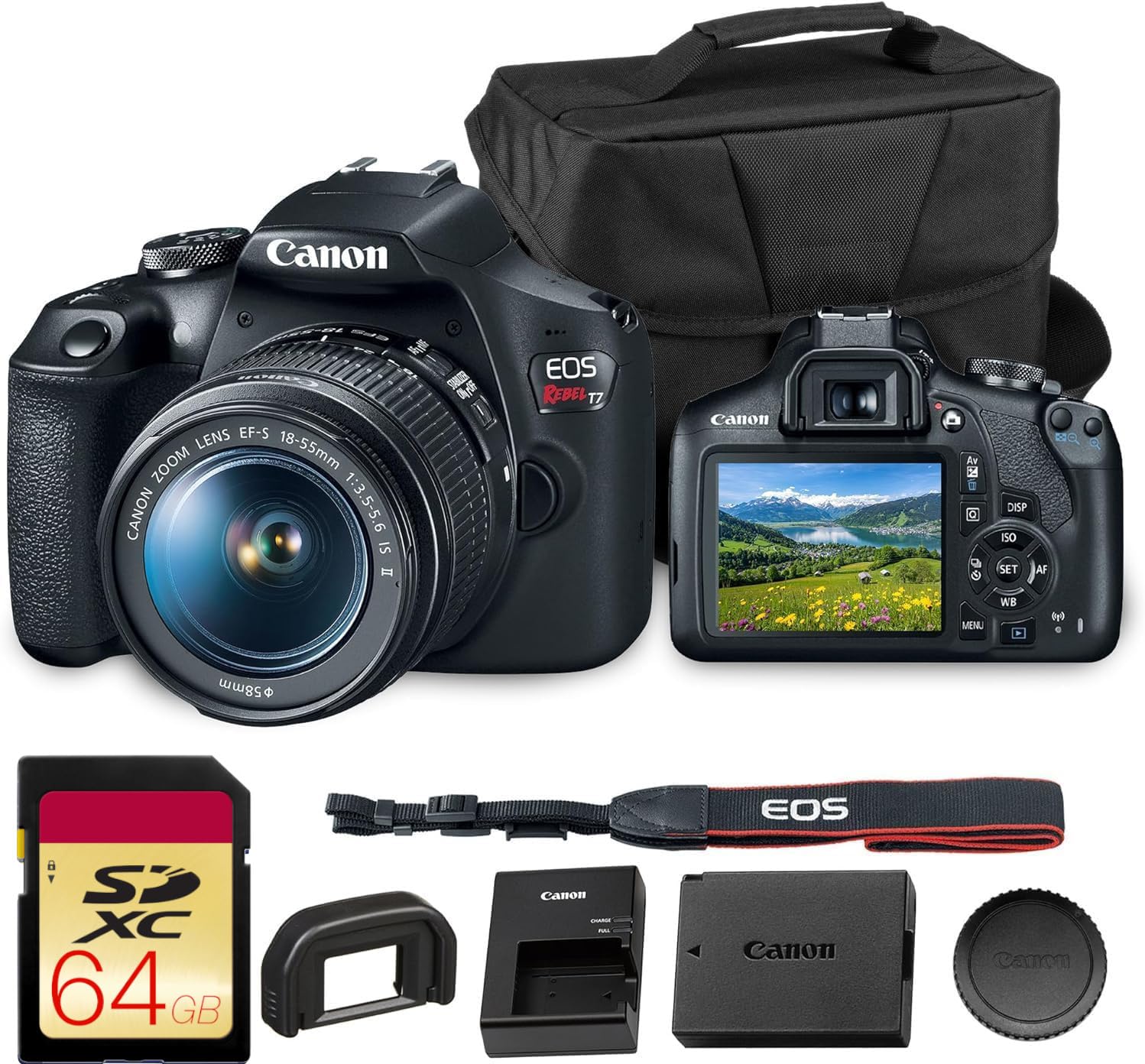
The Canon Rebel T7 is the quintessential beginner DSLR, offering a complete kit including the camera body, 18-55mm lens, shoulder bag, and 64GB memory card right out of the box. Its 24.1-megapixel APS-C sensor paired with the DIGIC 4+ processor produces vibrant, detailed images that are easy on the eyes with minimal noise up to ISO 3200.
The 9-point autofocus system is basic by modern standards, but it is reliable for general photography, landscapes, and portraits. Built-in Wi-Fi with NFC allows instant image transfer to a smartphone via the Canon Camera Connect app for sharing on social media. The direct button layout and on-screen menu are straightforward, making the learning curve gentle for absolute beginners.
The optical viewfinder provides a bright, lag-free view of the scene, and the 3-inch LCD is functional for review and composition. Battery life is excellent with the LP-E10 battery lasting through a full day of heavy shooting. The Rebel T7 gives you access to Canon’s vast EF and EF-S lens ecosystem, allowing upgrades as your skills develop. This is the ideal starter kit for someone who wants a dedicated camera without complication.
Why it’s great
- Complete kit with bag and memory card included
- Excellent battery life for all-day shooting
- Proven image quality with Canon color science
Good to know
- 9-point autofocus system is limited for tracking action
- DIGIC 4+ processor is older technology compared to newer models
7. Nikon Z50 II

The Nikon Z50 II is a refined mirrorless camera that brings many features from Nikon’s full-frame Z series down to a compact APS-C body. The 20.9-megapixel DX-format sensor is several times larger than a typical smartphone sensor, delivering lifelike colors and impressive detail from dawn to dusk. The camera is lightweight enough for a small bag but robust enough for serious photography.
A standout feature is the Picture Control button providing 31 built-in color presets that let you dial in a creative look before you shoot. The autofocus system uses the same EXPEED 7 processor as the Z9, enabling 231-point hybrid AF with subject detection for people, dogs, cats, birds, and vehicles. The 4K video at up to 60fps and Full HD slow motion at 120fps make it capable for video content as well.
The built-in flash is a welcome addition for fill-light in portraits. Wireless photo sharing via the SnapBridge app is quick, sending images to a phone in seconds. Battery life is moderate, and the single SD card slot limits redundancy. For photographers who want a modern, compact system with powerful processing and easy creative controls, the Z50 II is a compelling choice.
Why it’s great
- Z9-derived EXPEED 7 processor for fast, accurate autofocus
- 31 creative Picture Control presets for instant style
- Compact and lightweight design with built-in flash
Good to know
- Single SD card slot with no backup option
- Battery life is average and requires spare for all-day shoots
8. Nikon D3400

The Nikon D3400 remains a popular entry-level DSLR for good reason — it is a proven tool that delivers excellent image quality at a very accessible price point. The 24.2-megapixel DX-format sensor lacks an optical low-pass filter, resulting in sharper, more detailed images than many of its contemporaries. The EXPEED 4 processor ensures responsive operation and good battery efficiency.
The 11-point autofocus system is adequate for general use, and the camera’s Guide Mode walks new users through settings and techniques step by step. SnapBridge Bluetooth connectivity transfers smaller images to a smartphone for sharing. The kit lens, the AF-P DX NIKKOR 18-55mm VR, is a significant step up in optical quality from earlier Nikon kit lenses, with fast and quiet autofocus.
The D3400 provides an authentic DSLR experience with an optical viewfinder that offers zero lag and instant scene composition. As a renewed product, condition varies, and some users report issues with included accessories like batteries and chargers. For those committed to learning photography through an optical viewfinder and wanting a rock-solid budget platform, the D3400 is a time-tested choice.
Why it’s great
- No optical low-pass filter for exceptionally sharp image detail
- Quiet, fast AF-P kit lens included
- Guide Mode teaches photography basics intuitively
Good to know
- Renewed product with potential variations in included accessories
- Bluetooth transfers smaller images, not full-resolution JPEGs
9. Canon EOS 2000D / Rebel T7 Bundle

This bundle of the Canon EOS 2000D — essentially the Rebel T7 — is designed for the buyer who wants everything in one box. The 24.1-megapixel APS-C sensor and DIGIC 4+ processor produce the same reliable, vibrant images that have made the Rebel line a staple of beginner photography. The included accessories include a 32GB memory card, tripod, case, and wide-angle and telephoto lens attachments.
Wi-Fi with NFC connectivity enables wireless remote control and instant photo transfer to a smartphone via the Canon Camera Connect app. The 9-point autofocus system is basic but adequate for stationary subjects. The camera supports Canon’s extensive EF and EF-S lens system, allowing for future upgrades. The built-in flash provides fill-light capability in dim conditions.
The bundled accessories have limited quality — the case is small and flimsy, and the wide-angle and telephoto attachments are screw-on adapters that degrade image quality versus proper lenses. The camera body itself is a solid performer, but the bundle value is in the convenience of having everything at once rather than top-tier accessories. For a complete first kit without shopping for extras, this bundle works well.
Why it’s great
- All-inclusive bundle with tripod, case, and memory card
- Proven Canon image quality with 24.1MP sensor
- Wireless sharing and remote control via Wi-Fi and NFC
Good to know
- Included wide-angle and telephoto adapters degrade optical quality
- Bundled case is low quality and should be replaced
10. Canon EOS 4000D Bundle

The Canon EOS 4000D is the most affordable DSLR in Canon’s lineup, making it a true entry-level option for those who want to learn on a dedicated interchangeable-lens camera. Its 18-megapixel sensor is lower resolution than competitors, but it still offers a dramatic improvement over any smartphone. The sensor surface area is roughly 19 times larger than a typical phone, enabling superior low-light performance and depth of field.
The 19-point autofocus system is better on paper than the Rebel T7’s 9-point system, but it uses contrast detection rather than phase detection, making it slower in continuous tracking. The Pixi Advanced bundle includes the camera, 18-55mm lens, wide-angle and telephoto screw-on adapters, a tripod, a bag, a memory card reader, and lens cleaning cloth. This is a comprehensive kit for someone starting from absolute zero.
The 4000D lacks Wi-Fi and NFC, so transferring images requires a USB cable or a separate card reader. The LCD screen is the same 2.7-inch unit from a decade ago, with lower resolution and brightness than modern cameras. For a beginner who just wants to learn aperture, shutter speed, and ISO on the cheap, this bundle provides a functional starting point, but the limitations will become apparent quickly.
Why it’s great
- Most affordable entry point to Canon EF/EF-S lens system
- Comprehensive Pixi bundle with tripod and accessories
- Large APS-C sensor offers real image quality over phones
Good to know
- No Wi-Fi or NFC connectivity for wireless image transfer
- Low-resolution 18MP sensor and dated 2.7-inch LCD screen
11. Xtra Muse
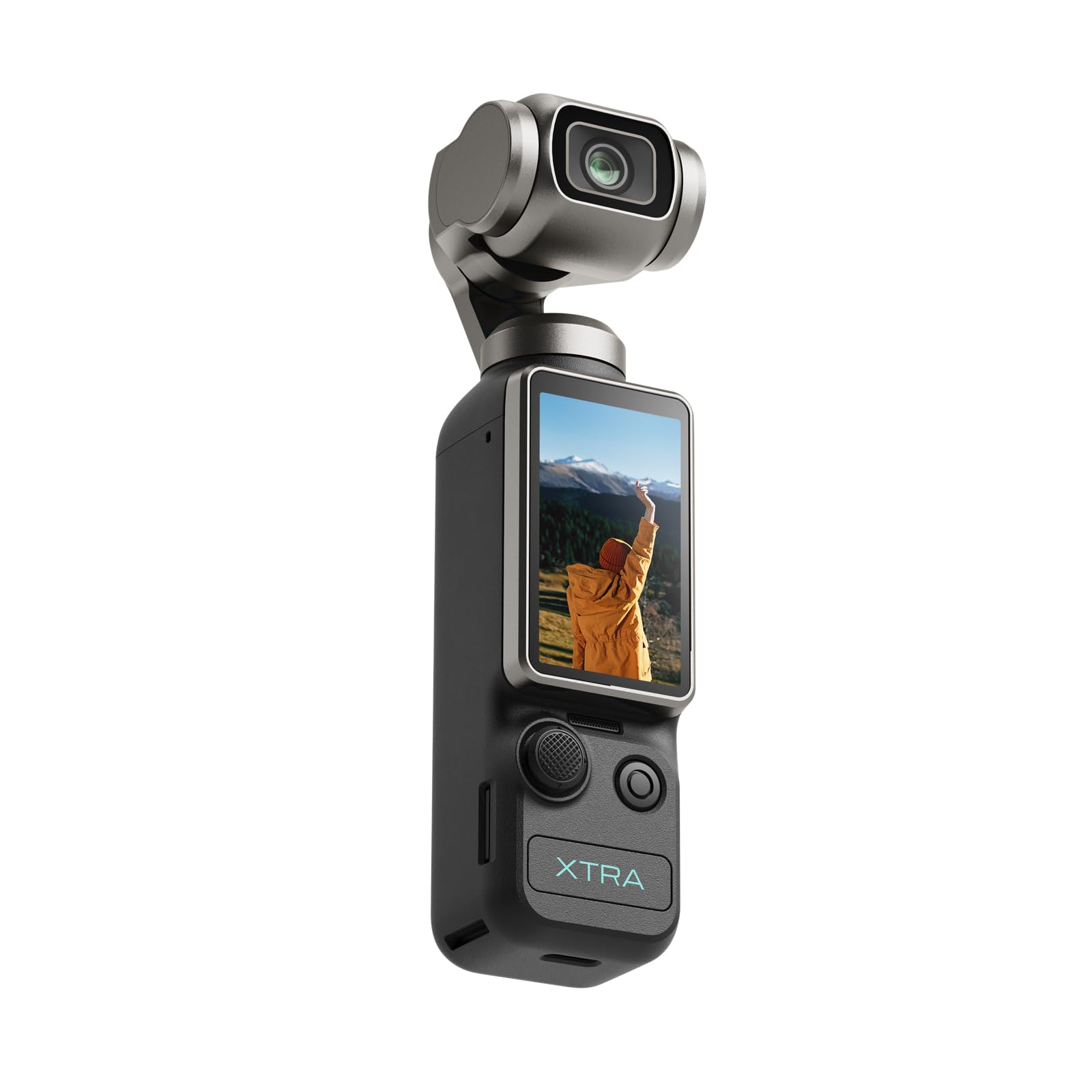
The Xtra Muse is a pocket-sized vlogging camera built around a 1-inch CMOS sensor — larger than a typical smartphone sensor but smaller than APS-C or Micro Four Thirds. Its defining feature is a built-in 3-axis gimbal stabilizer that delivers remarkably smooth footage without requiring an external gimbal. The camera records 4K video at 120fps, providing both high resolution and smooth slow-motion capabilities.
Master Follow mode uses face and object tracking to keep you centered in the frame, even when moving actively. The 2-inch touchscreen is responsive and flips for vlogging selfies. True 10-bit X-Log color grading allows for professional color correction in post-production, capturing up to one billion colors. The standard bundle includes a carrying bag, wrist strap, and a handle with a 1/4-inch thread for tripod mounting.
Battery life is approximately two and a half hours of recording, extendable with an external USB power bank. The Xtra Muse is best suited for content creators who prioritize video portability and stabilization over interchangeable lenses and raw photographic power. It serves as an excellent entry-level camera for vloggers and travelers who want a dedicated device that outperforms a phone for video capture.
Why it’s great
- Integrated 3-axis gimbal stabilizer removes need for external rig
- 4K video at 120fps enables smooth slow motion
- Pocket-sized design is ideal for travel and vlogging
Good to know
- 1-inch sensor cannot match APS-C or full-frame image quality
- Non-interchangeable lens limits creative flexibility
FAQ
Should I buy a DSLR or mirrorless camera as a budget beginner?
What autofocus point count do I actually need for portrait photography?
Does a higher megapixel sensor always mean better image quality?
How important is in-body image stabilization for a beginner photographer?
Can I use old lenses from my film camera on these budget mirrorless cameras?
Final Thoughts: The Verdict
For most users, the best budget camera for photography winner is the Canon EOS RP because it provides full-frame image quality and depth of field at an entry-level price point, with a modern RF lens system that will not be obsolete in five years. If you want the absolute best autofocus and subject tracking for action or wildlife, grab the Canon EOS R6 Mark II. And for a complete beginner seeking the simplest learning curve with everything included, nothing beats the Canon EOS Rebel T7 Kit.

Mo Maruf
I created WellFizz to bridge the gap between vague wellness advice and actionable solutions. My mission is simple: to decode the research and give you practical tools you can actually use.
Beyond the data, I am a passionate traveler. I believe that stepping away from the screen to explore new environments is essential for mental clarity and physical vitality.