Our readers keep the lights on and my smoothie glass nicely filled. As an Amazon Associate, I earn from qualifying purchases.
The heart of any off-grid or backup solar setup is the storage bank, and choosing the wrong chemistry or capacity means watching your investment fade with every overcast day. Lead-acid batteries die young, weigh a ton, and waste half their rated capacity, yet the shift to lithium iron phosphate (LiFePO₄) brings its own maze of specs, BMS ratings, and cell configurations that make comparing apples to oranges feel easy by comparison.
I’m Mohammad Maruf — the founder and writer behind WellFizz. I’ve spent years analyzing the technical specifications, cell chemistries, and real-world performance data of residential and portable solar storage systems to help buyers separate genuine value from marketing hype.
This guide cuts through the technical noise to deliver a clear, spec-driven comparison of the top contenders, helping you confidently identify the best battery for solar system that matches your voltage, capacity, and budget requirements.
How To Choose The Best Battery For Solar System
Selecting a solar battery is a multi-variable equation involving voltage architecture, usable capacity, BMS current limits, expandability, and temperature tolerance. Getting each variable right ensures your system runs efficiently for a decade or more.
Match Voltage to Your Inverter
Most solar inverters are designed for 12V, 24V, or 48V nominal battery banks. A 48V system halves the current compared to 12V for the same power draw, allowing thinner copper cables and higher total wattage. If you are building a home-scale system over 3kW, a 48V battery like the AOUSK rack-mount unit is the correct foundation.
BMS Continuous Discharge Rating
The built-in Battery Management System (BMS) dictates how many amps the battery can safely deliver continuously. For example, a 100Ah battery with a 100A BMS can supply roughly 1,280W at 12.8V—enough for a microwave but not a well pump. Oversizing the BMS or paralleling batteries raises the total discharge ceiling.
Usable Capacity vs. Rated Capacity
LiFePO₄ batteries deliver nearly 100% of their rated amp-hours, unlike lead-acid which limits usable capacity to 50% to avoid damage. A 100Ah LiFePO₄ battery gives you 1,280Wh of usable energy, while a 100Ah lead-acid gives only 600Wh. Always compare usable watt-hours, not raw amp-hours.
Low-Temperature Protection
Charging a LiFePO₄ battery below freezing (32°F / 0°C) causes irreversible damage. Premium batteries integrate a low-temperature cutoff circuit that stops charging below ~0°C and resumes once safe. If your battery lives in an unheated garage or RV, this feature is essential.
Quick Comparison
On smaller screens, swipe sideways to see the full table.
| Model | Category | Best For | Key Spec | Amazon |
|---|---|---|---|---|
| Redodo 12V 100Ah | Drop-in LiFePO₄ | RVs, trolling motors, small solar | 4000 cycles at 100% DOD | Amazon |
| LiTime 12V 100Ah Group 24 | Bluetooth LiFePO₄ | Van conversions, solar campers | 1280Wh energy, IP65 rated | Amazon |
| ECO-WORTHY 12V 280Ah | High-Capacity LiFePO₄ | Off-grid homes, large RVs | 3584Wh, metal case, 200A BMS | Amazon |
| AOUSK 48V 100Ah V2 | Rack-Mount 48V | Permanent home solar backup | 5120Wh, CAN/RS485 communication | Amazon |
| Anker SOLIX C2000 Gen 2 | Portable Power Station | Emergency backup, camping | 2048Wh, 58-min AC recharge | Amazon |
| VTOMAN FlashSpeed Pro 3600 | High-Output Station | Whole-room backup on wheels | 3096Wh, 3600W AC, wheels | Amazon |
| OSCAL PowerMax 6000 | Massive Home Station | Full-home backup, 240V needs | 10.8kWh, 6000W, 120/240V | Amazon |
| DUMFUME 12V 600Ah | Single-Cell Monster | Large 12V banks without paralleling | 7200Wh, 200A BMS | Amazon |
| SUMRY 3600W Inverter/Charger | All-in-One System | DIY solar builds with MPPT | 3600W inverter, 120A MPPT built-in | Amazon |
In‑Depth Reviews
1. Redodo 12V 100Ah LiFePO₄ Battery
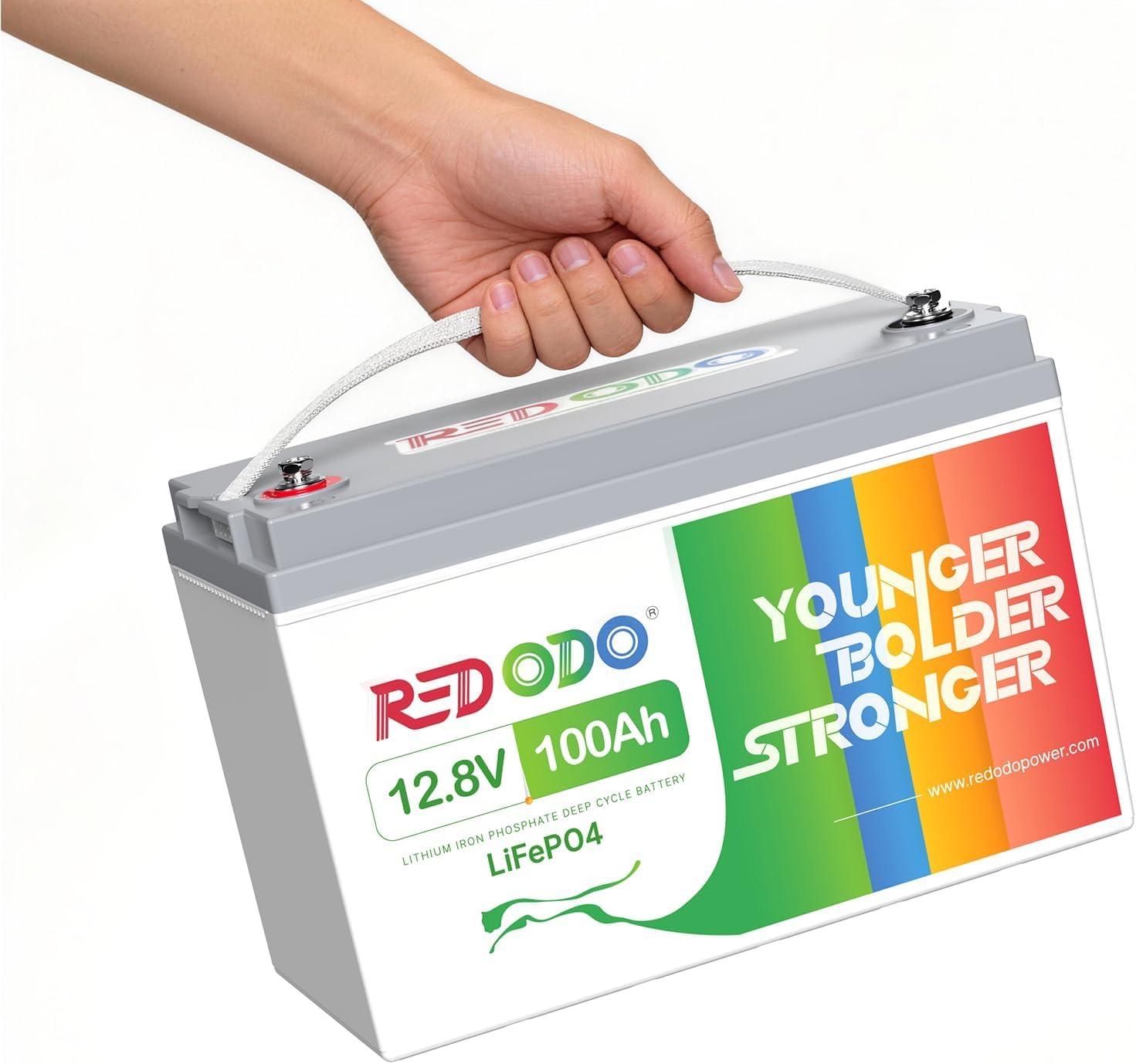
The Redodo 12V 100Ah is the gold standard for a drop-in solar battery replacement, weighing only 22 lbs compared to the 64 lbs of an equivalent lead-acid unit. Its automotive-grade LiFePO₄ cells deliver 4,000 cycles at 100% depth of discharge, meaning you can use the full 1,280Wh capacity every cycle without degradation acceleration. The built-in 100A BMS protects against overcharge, over-discharge, and short circuits while allowing series or parallel configurations up to 4S or 4P for 48V systems.
Customer reports confirm this battery solves the rapid failure of lead-acid in high-vibration environments like trolling motors and pool vacuums, with consistent voltage output that prevents slowdown. For solar home backup, RV camping, or marine use, the Redodo offers an unmatched blend of low weight, high cycle life, and straightforward setup—no Bluetooth app required, just clean terminal connections. Several users noted it came partially charged, so a top-off with a 14.6V LiFePO₄ charger is recommended before commissioning.
The only trade-off is the lack of a low-temperature cutoff circuit, so it should not be charged below freezing without external thermal management. For temperate-climate solar systems or heated enclosures, this limitation is irrelevant, and the price-to-performance ratio remains best-in-class.
Why it’s great
- 60% lighter than equivalent lead-acid, easy to install in Group 31 boxes
- Full 100Ah usable capacity with 4000-cycle lifespan at 100% DOD
- Supports 4S series or 4P parallel for voltage or capacity scaling
Good to know
- No integrated low-temperature charging cutoff
- No Bluetooth monitoring for state-of-charge tracking
2. LiTime 12V 100Ah Group 24 LiFePO₄ Battery
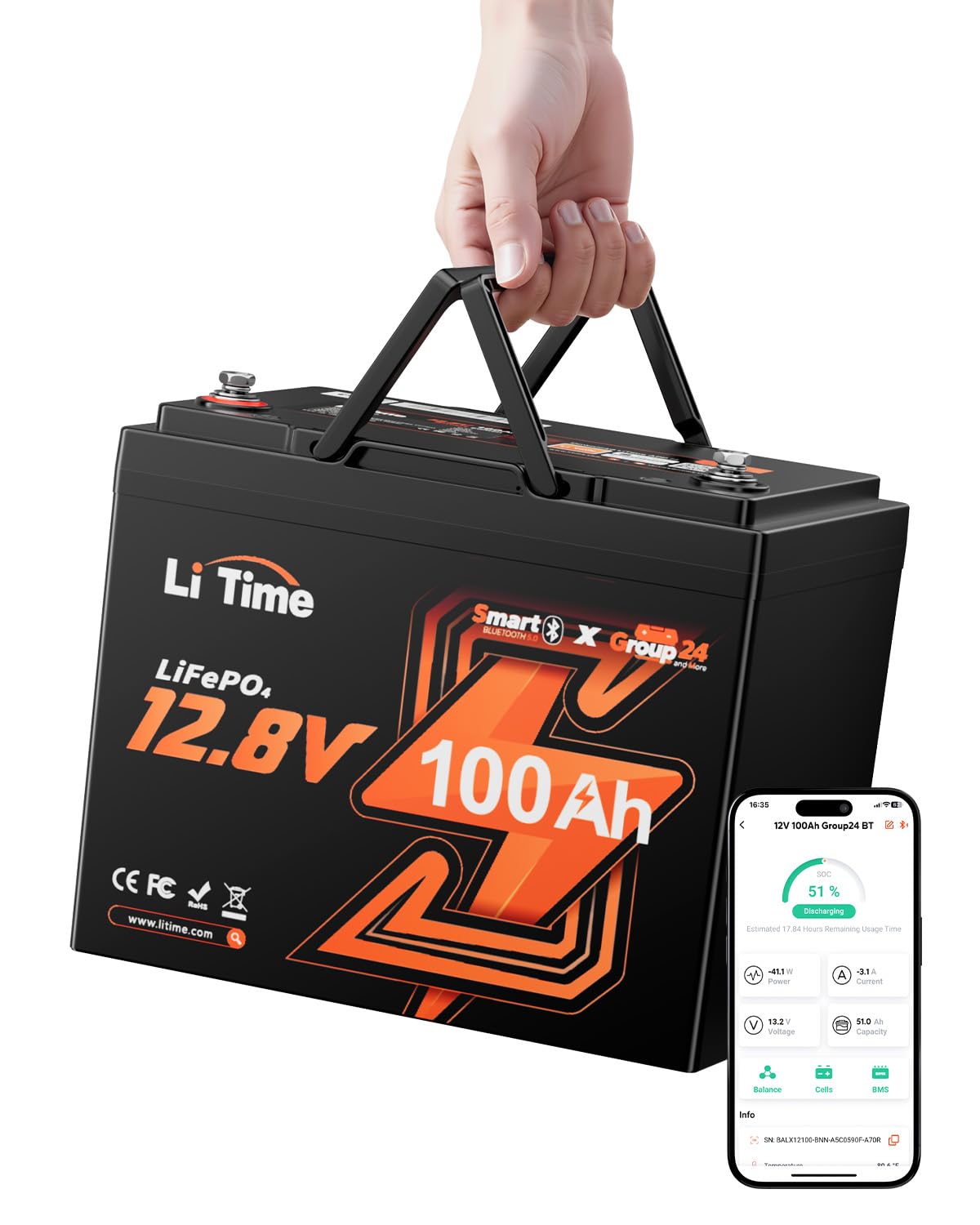
The LiTime Group 24 battery brings smart monitoring to the mid-range tier without sacrificing durability. Its Bluetooth 5.0 module pairs with the LiTime app for real-time state-of-charge (SOC) and voltage tracking, letting you catch a low battery before it shuts down your fridge or CPAP machine. At 21.9 lbs and fitting Group 24/27/31 boxes, this is the lightest 100Ah option we reviewed, with 1,280Wh of usable energy that doubles the functional capacity of a similarly sized lead-acid unit.
Safety is a strong point here: the self-developed BMS provides 20+ protections, including a low-temperature charging cutoff below 0°F and discharging cutoff below -4°F, making it suitable for unheated camper vans. The IP65 rating adds water resistance against splashes and dust ingress. Customer feedback from van-dwellers running 4-battery parallel setups since September 2024 confirms flawless operation through 50+ cycles, powering heaters, fridges, and TVs without voltage sag or balancing issues.
The LiTime also complies with UL 1973 standards and carries FCC/CE certifications, adding a layer of regulatory trust. For solar camper or van owners who want to monitor battery status from a phone without installing external shunts, this is a premium-feeling solution at a mid-range cost.
Why it’s great
- Smart Bluetooth monitoring via LiTime app for SOC and voltage
- Low-temperature charging and discharging protection for cold climates
- IP65 water resistance suitable for exposed RV compartments
Good to know
- Group 24 footprint may not fit all Group 31 battery boxes without an adapter
- Bluetooth range can be limited inside metal RV compartments
3. ECO-WORTHY 12V 280Ah LiFePO₄ Battery
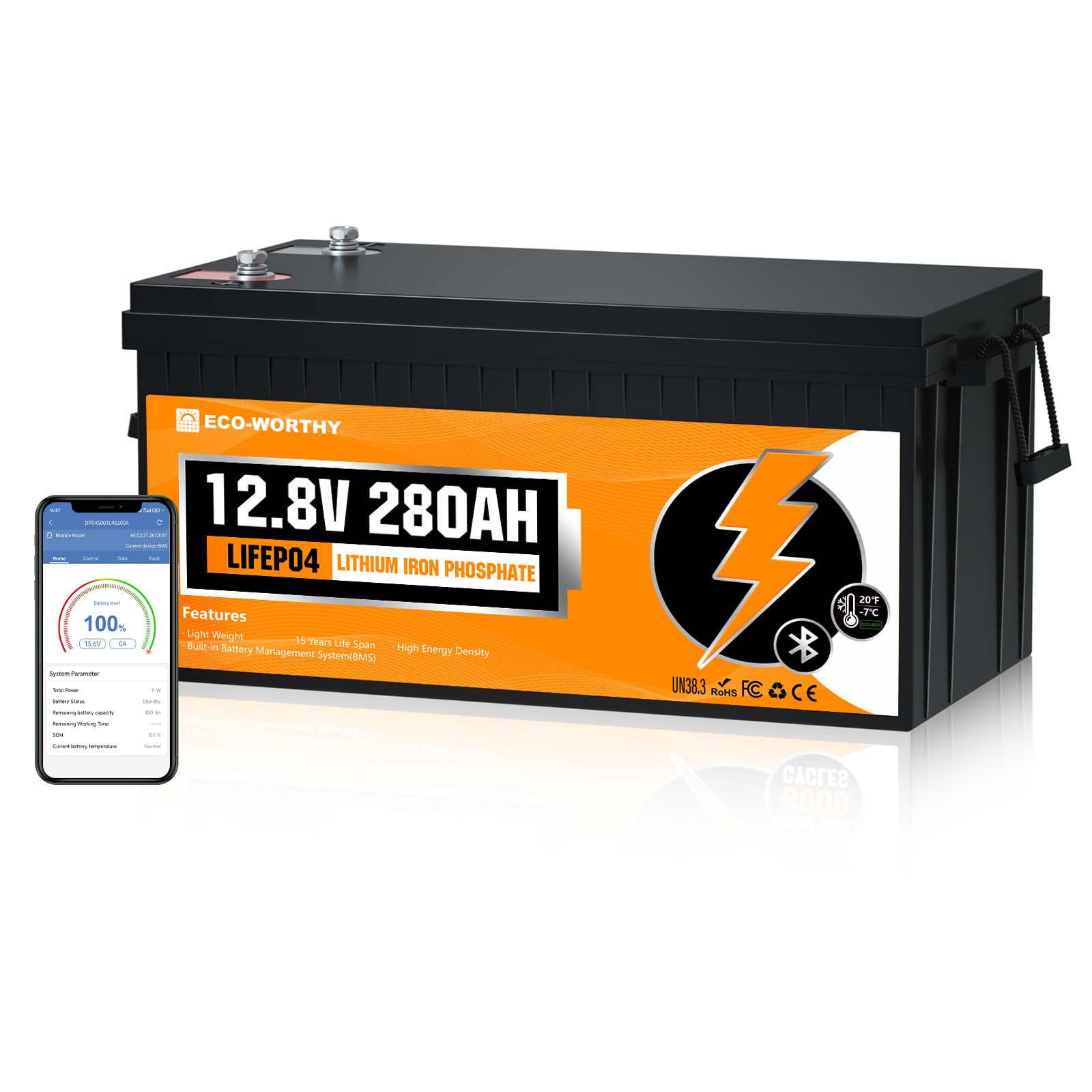
The ECO-WORTHY 280Ah delivers 3,584Wh of usable energy in a single 12V package—enough to run a mid-size refrigerator for over 24 hours without solar input. Its defining feature is the metal compression frame that prevents the prismatic cells from swelling during charge cycles, a common failure mode in budget LiFePO₄ packs. The 200A BMS handles up to 2,560W continuous load, sufficient for a microwave, induction cooktop, or 2,000W inverter.
Bluetooth monitoring via the ECO-WORTHY app provides real-time voltage, current, and capacity data. Low-temperature charging protection shuts down below 19.4°F and resumes at 32°F, protecting the cells from frost damage. The front-mounted terminals and integrated on/off switch simplify wiring and maintenance in tight RV compartments. Real-world user data shows the battery exceeding its rated capacity by several amp-hours, with the JBD 200A BMS compatible with the Overkill Solar app for deeper diagnostics.
The 61.7 lb weight matches a lead-acid battery of similar size, but the usable capacity is triple due to LiFePO₄ chemistry. It supports up to 4 units in parallel (1,120Ah at 12V) or 4 in series for a 48V 280Ah bank, making it a versatile building block for expanding solar storage.
Why it’s great
- Metal compression frame prevents cell swelling for long-term durability
- 280Ah capacity with 3584Wh usable energy—triple equivalent lead-acid
- Front terminals and on/off switch simplify installation and maintenance
Good to know
- Heavier than other 100Ah class batteries at 61.7 lbs
- Bluetooth range limited to 15 meters
4. AOUSK 48V 100Ah V2 LiFePO₄ Solar Battery
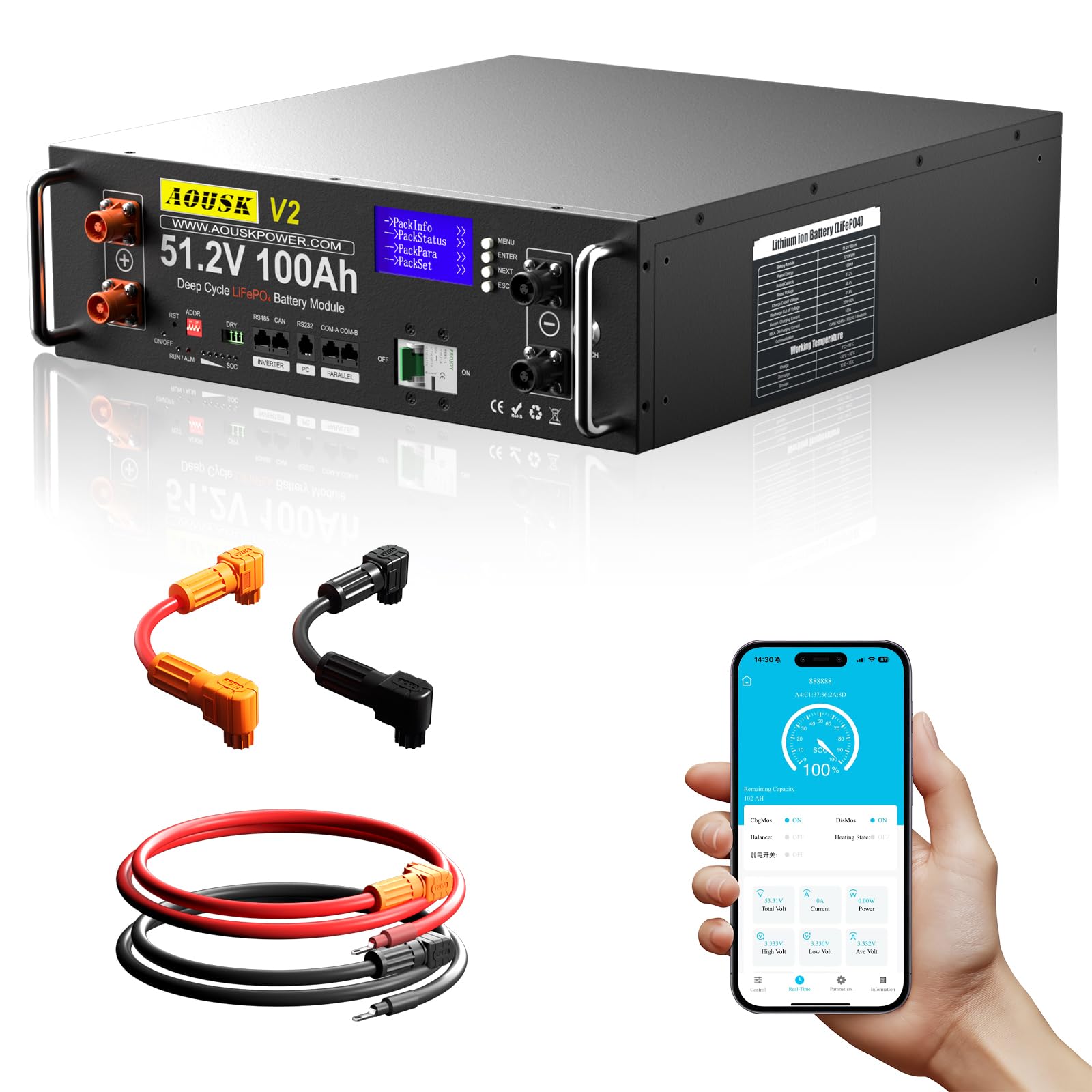
The AOUSK 48V 100Ah V2 is engineered for serious off-grid solar systems, replacing the complexity of wiring four 12V batteries in series with a single rack-mount unit. Using 16 automotive-grade A prismatic LiFePO₄ cells, it delivers 5.12kWh of usable energy with a nominal voltage of 51.2V—the standard for most hybrid inverters from brands like Growatt, MPP Solar, and Victron. The built-in 100A BMS supports CAN and RS485 communication protocols, enabling the inverter to read precise SOC data and adjust charge parameters automatically.
The 3U rack-mount design fits standard server cabinets, saving valuable floor space in equipment rooms. It supports up to 15 units in parallel for a massive 76.8kWh storage bank. The full-metal enclosure and integrated 125A air switch provide overcurrent protection at the system level. Customer reports from off-grid builds confirm clean cell balance across cycles, with voltage deltas staying within a 20mV range.
At 94.8 lbs it’s a two-person lift, but the ready-to-use accessory kit including parallel cables, communication cables, and grounding wires shortens installation time significantly. For a permanent home solar installation requiring 48V architecture, this is the best foundation.
Why it’s great
- Native 48V architecture eliminates series wiring complexity
- CAN/RS485 communication for seamless inverter integration
- Rack-mount 3U form factor saves space in equipment cabinets
Good to know
- Heavy at 94.8 lbs; requires two people for rack installation
- Higher initial investment than a 12V equivalent
5. Anker SOLIX C2000 Gen 2 Portable Power Station
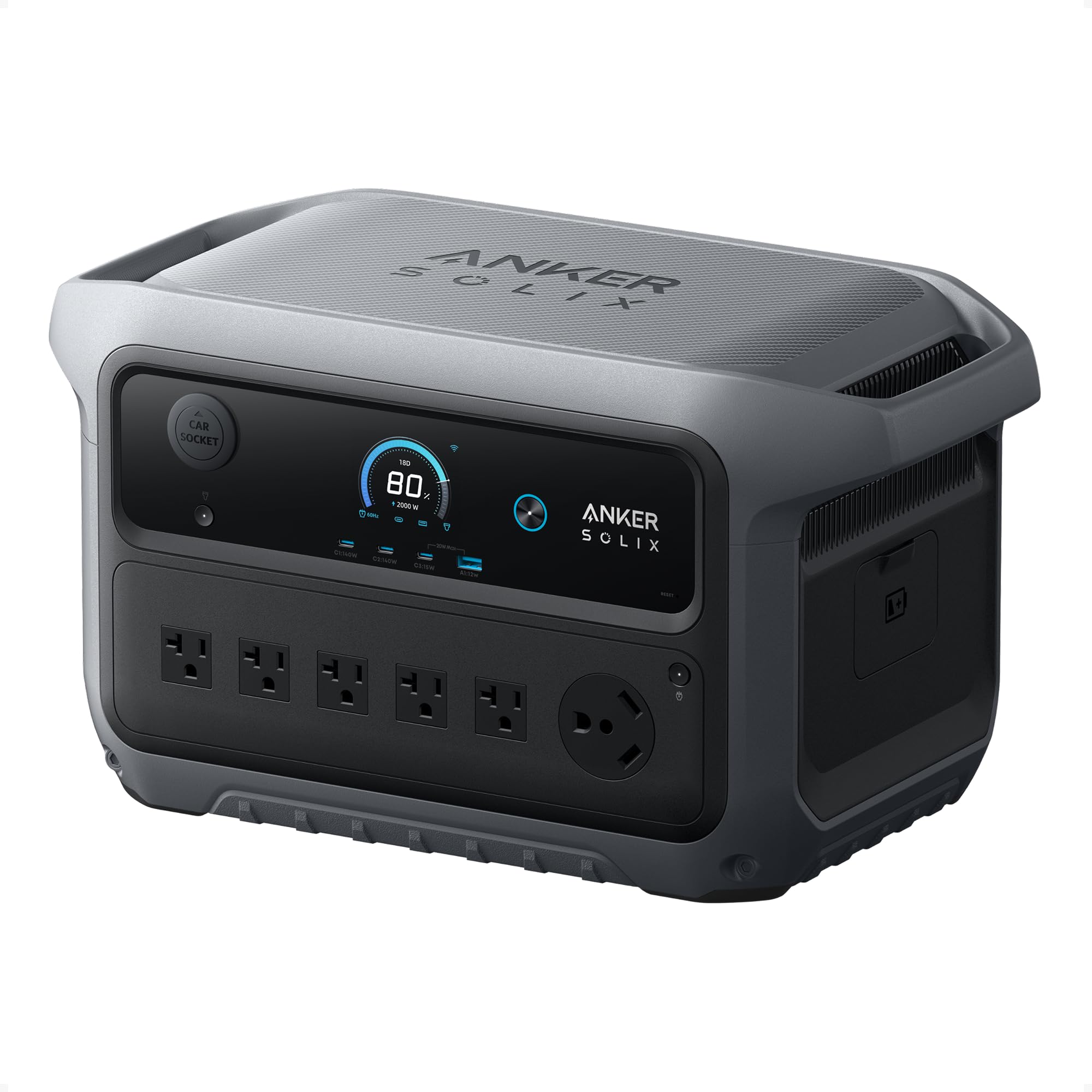
The Anker SOLIX C2000 Gen 2 redefines portable power station speed with AC and solar recharge completing in just 58 minutes—unheard of for a 2kWh-class unit. The 2,400W rated (4,000W peak) pure sine wave inverter can run a window AC unit or a full-size refrigerator, and the 9W standby draw means it won’t drain itself when idle. Its 2,048Wh LiFePO₄ battery pack supports expansion to 4kWh with an add-on battery, extending runtime for a dual-door fridge up to 64 hours.
At 41.7 lbs and 25% smaller than previous-generation units, it’s surprisingly portable for a 2kWh backup. USB-C PD100W output, multiple AC outlets, and an 800W alternator charging mode that tops up in 3 hours from a vehicle make it versatile for both home emergency and road trip use. Customer reviews consistently praise its build quality, with one user powering a 30qt car fridge for 5-7 days per charge over a 7-week cross-country trip.
The main limitation is non-expandable internal architecture—the expansion battery must be Anker’s proprietary unit, not generic LiFePO₄ modules. For a ready-to-go, low-maintenance emergency system that charges faster than any competitor, the SOLIX C2000 Gen 2 is the top pick.
Why it’s great
- Full recharge in 58 minutes—fastest in its capacity class
- Ultra-low 9W standby draw preserves stored energy
- Expandable to 4kWh for extended outage protection
Good to know
- Expansion battery uses proprietary connection, not generic modules
- 2400W continuous limit may not run large well pumps
6. VTOMAN FlashSpeed Pro 3600 Portable Power Station
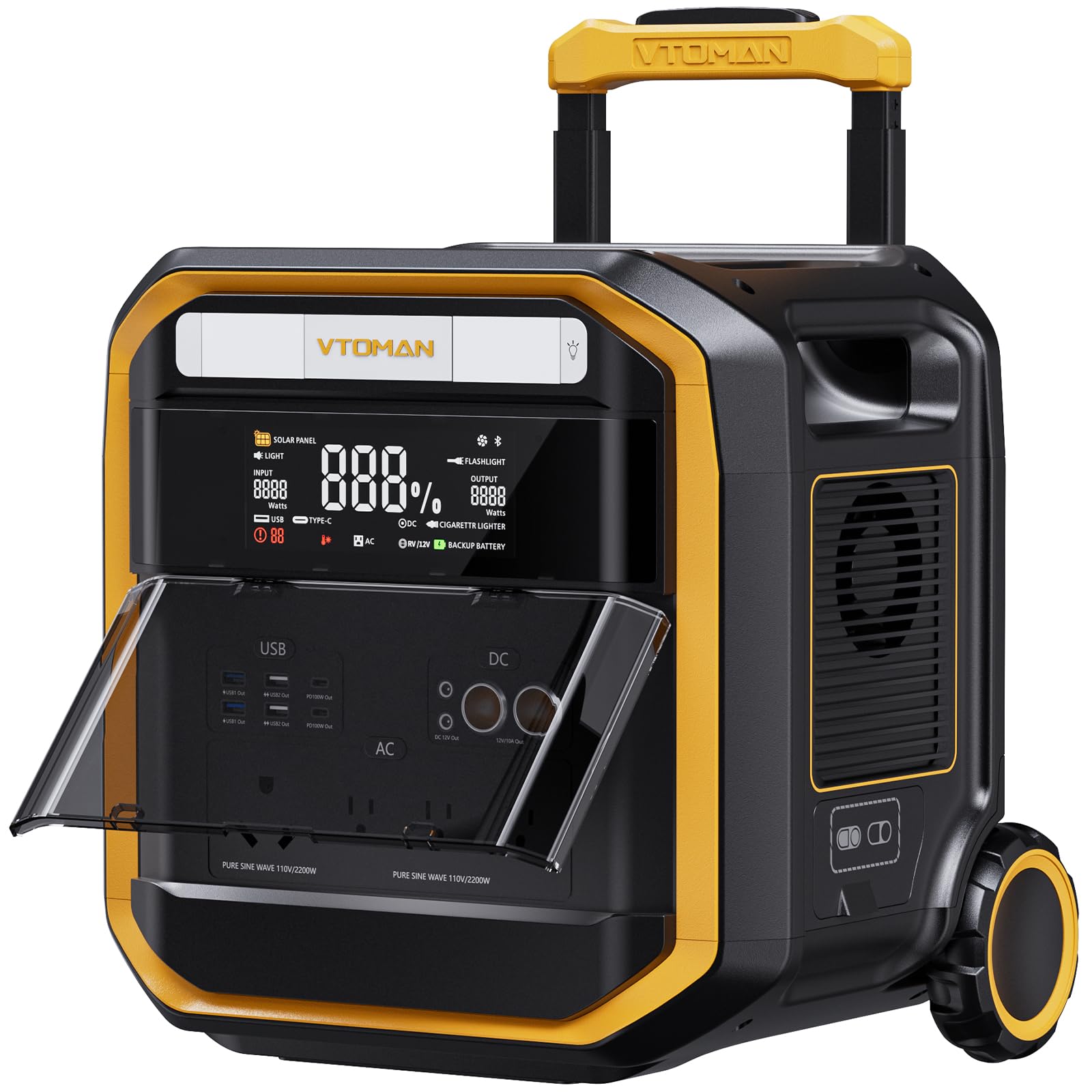
The VTOMAN FlashSpeed Pro 3600 brings wheeled portability to a 3,096Wh LiFePO₄ power station, making it feasible to move an 83.8 lb unit from garage to living room during a blackout. Its 3,600W rated (6,000W surge) pure sine wave inverter runs high-draw appliances like a microwave, air fryer, or power saw, and the integrated handle and large wheels eliminate the strain of carrying. The 2-hour AC recharge from 0–100% is competitive for this capacity class.
With 14 output ports including 4 AC outlets, 2 USB-C PD100W, and 2 car outlets, it can simultaneously power a refrigerator, laptops, and lighting. The <20ms UPS switchover ensures desktop electronics stay online during grid flickers. Customer feedback spanning three years of daily use reports flawless operation with high-watt devices like air fryers, though the AC inverter does draw some power when idle—a trait common to all pure sine wave inverters.
The included 400W solar panel with adjustable kickstands allows for field recharging at up to 800W solar input. For RV owners who need to move power between campsite and tow vehicle, or homeowners who want a robust wheeled backup for outages, the FlashSpeed Pro 3600 is a solid investment.
Why it’s great
- Wheeled design with pull handle for easy mobility of 83.8 lb unit
- 3600W continuous output runs high-draw appliances and tools
- 2-hour full recharge from AC; supports up to 800W solar input
Good to know
- Inverter idle draw drains battery when unit is on but unused
- Wheels suitable for smooth floors; rough terrain may require lifting
7. OSCAL PowerMax 6000 Solar Generator
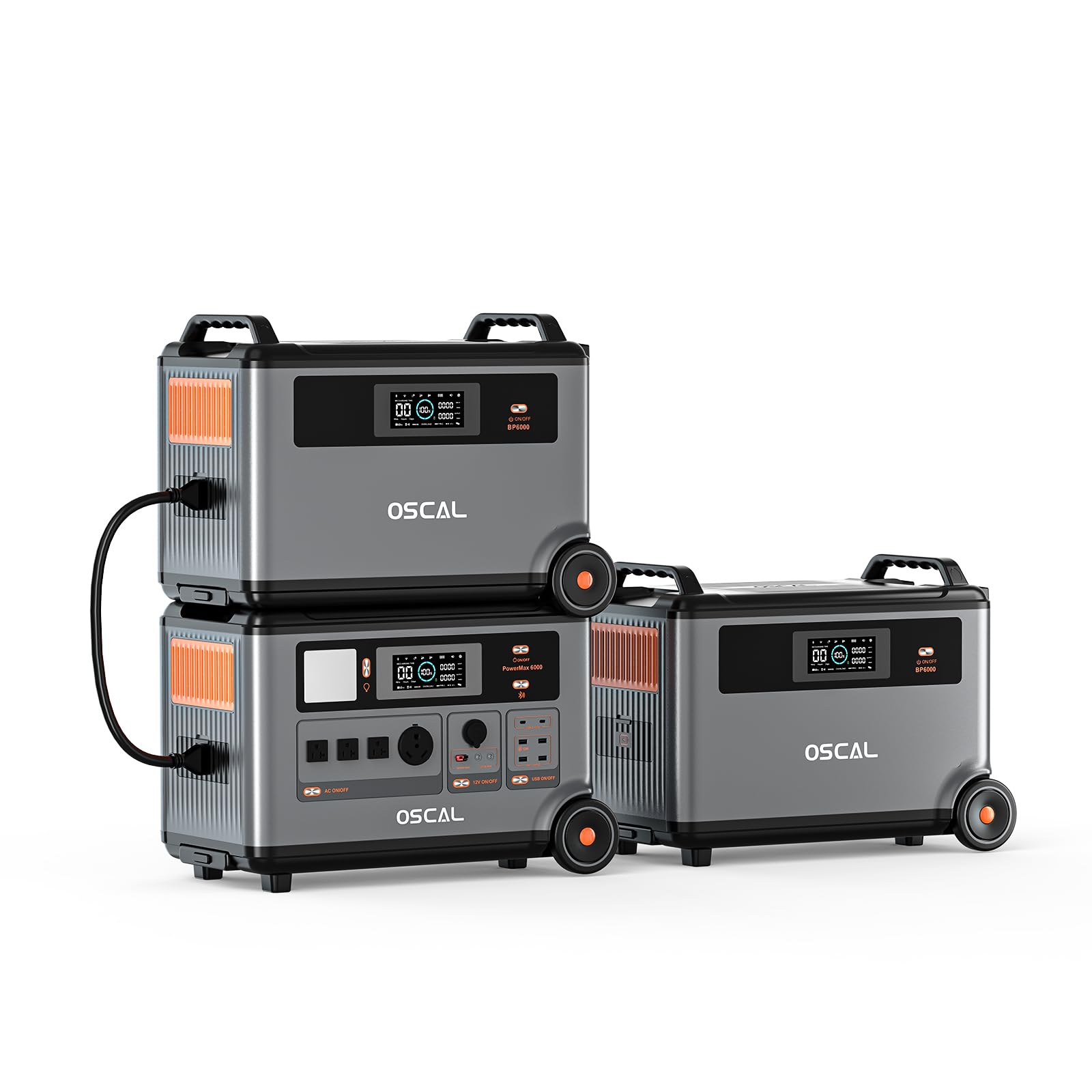
The OSCAL PowerMax 6000 is the highest-capacity unit in this guide, offering 10.8kWh of LiFePO₄ storage with a 6,000W continuous (9,000W peak) split-phase inverter capable of 120V or 240V output. This dual-voltage capability allows it to power 240V well pumps, central AC compressors, and EV chargers—loads that typical 120V-only stations cannot handle. The 2,200W bi-directional inverter recharges the pack from 0–100% in under two hours, and solar input up to 2,400W enables full recharge from panels in roughly 4.5 hours of strong sun.
The 5–8 ms EPS switchover ensures critical loads like network equipment and medical devices never experience a full power interruption. Smart App control via the ‘Smart Life’ platform allows remote monitoring of SOC, load, and charge parameters. The unit ships with the main station plus two extra battery modules, all housed in a single enclosure with wheels for transport.
Customer feedback is overwhelmingly positive, though one user noted the DC-to-AC conversion efficiency drops noticeably with very low-watt loads like a single LED bulb. For its intended use case—whole-home backup for outages—the PowerMax 6000 delivers the highest usable capacity and the only native 240V output in this comparison.
Why it’s great
- 10.8kWh capacity with 6000W split-phase (120V/240V) output
- 2400W solar input for off-grid recharging in ~4.5 hours
- Smart App control for remote system monitoring
Good to know
- Lower efficiency on very small loads like a single LED bulb
- Heavy and large; permanent placement recommended
8. DUMFUME 12V 600Ah LiFePO₄ Battery
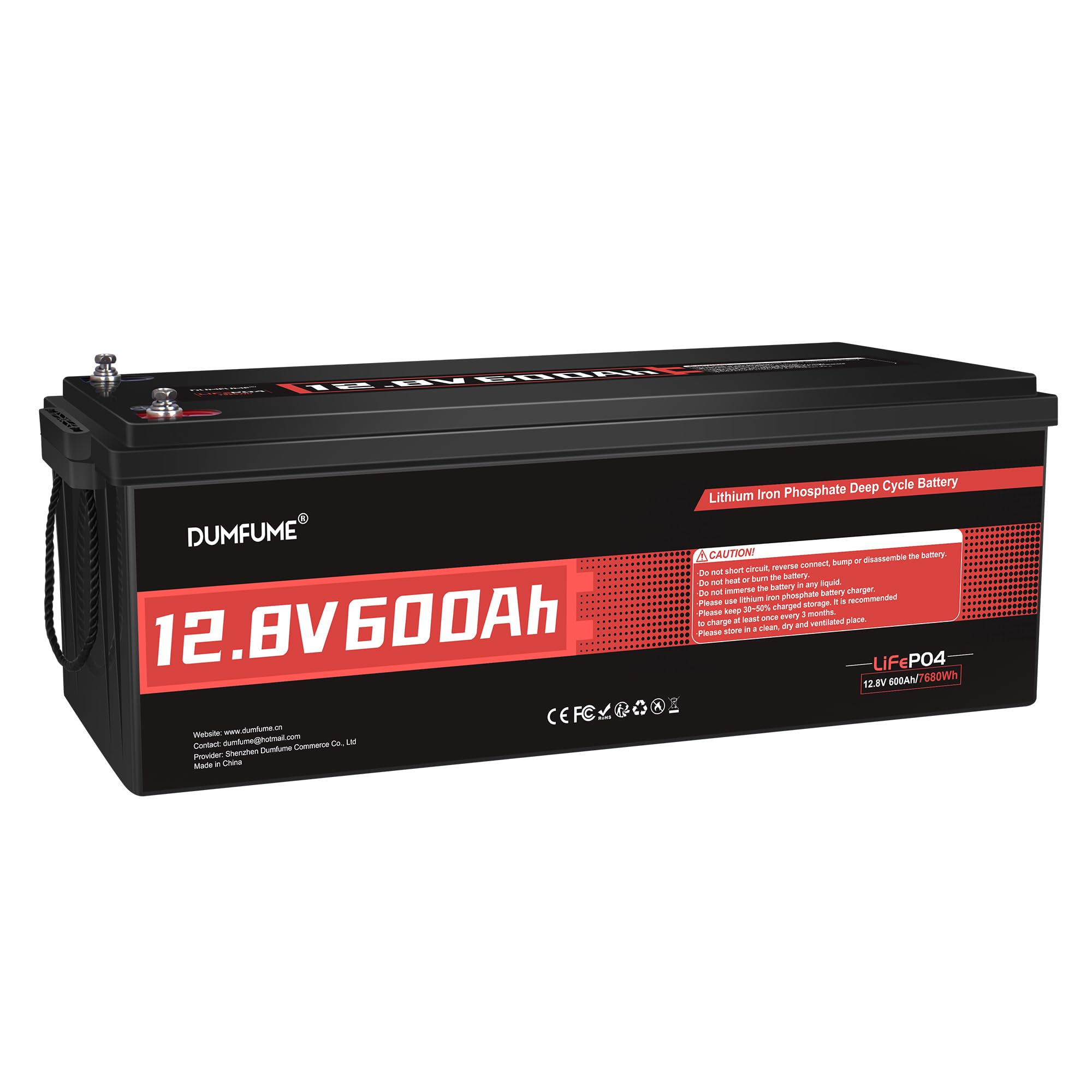
The DUMFUME 12V 600Ah packs 7.2kWh into a single 12V battery, eliminating the need to parallel multiple batteries for large 12V solar banks. The 200A BMS provides up to 2,560W continuous discharge, and the unit supports both series and parallel expansion (up to 4 units in series for 48V). The LiFePO₄ cells are rated for 4,000+ cycles at 100% DOD with a claimed 10-year lifespan.
User reports are mixed primarily due to quality control: in a batch of 4 batteries, two arrived with severely low voltage (12.2V and 12.4V) requiring a jump charge from a separate battery to wake the BMS, while the other two were fine. One unit failed due to a faulty low-temperature detection circuit that wouldn’t allow charging to resume after a freeze event. For customers who received properly functioning units, performance has been excellent—one owner with four 150Ah units reports all exceeding rated capacity by ~7Ah after one year.
This battery lacks Bluetooth monitoring, so you must rely on an external shunt or battery monitor for SOC data. For budget-focused buyers who are comfortable with a slightly higher failure rate and the need for a separate monitoring system, the DUMFUME offers the lowest cost per usable watt-hour in this guide.
Why it’s great
- 7200Wh in a single 12V unit—no paralleling needed for large banks
- Excellent cost-per-watt-hour for entry-level solar storage
- Supports series connection for 24V or 48V operation
Good to know
- Some units arrive with low voltage requiring a BMS jump charge
- No integrated Bluetooth or low-temperature charging cutoff
9. SUMRY 3600W Solar Inverter Charger
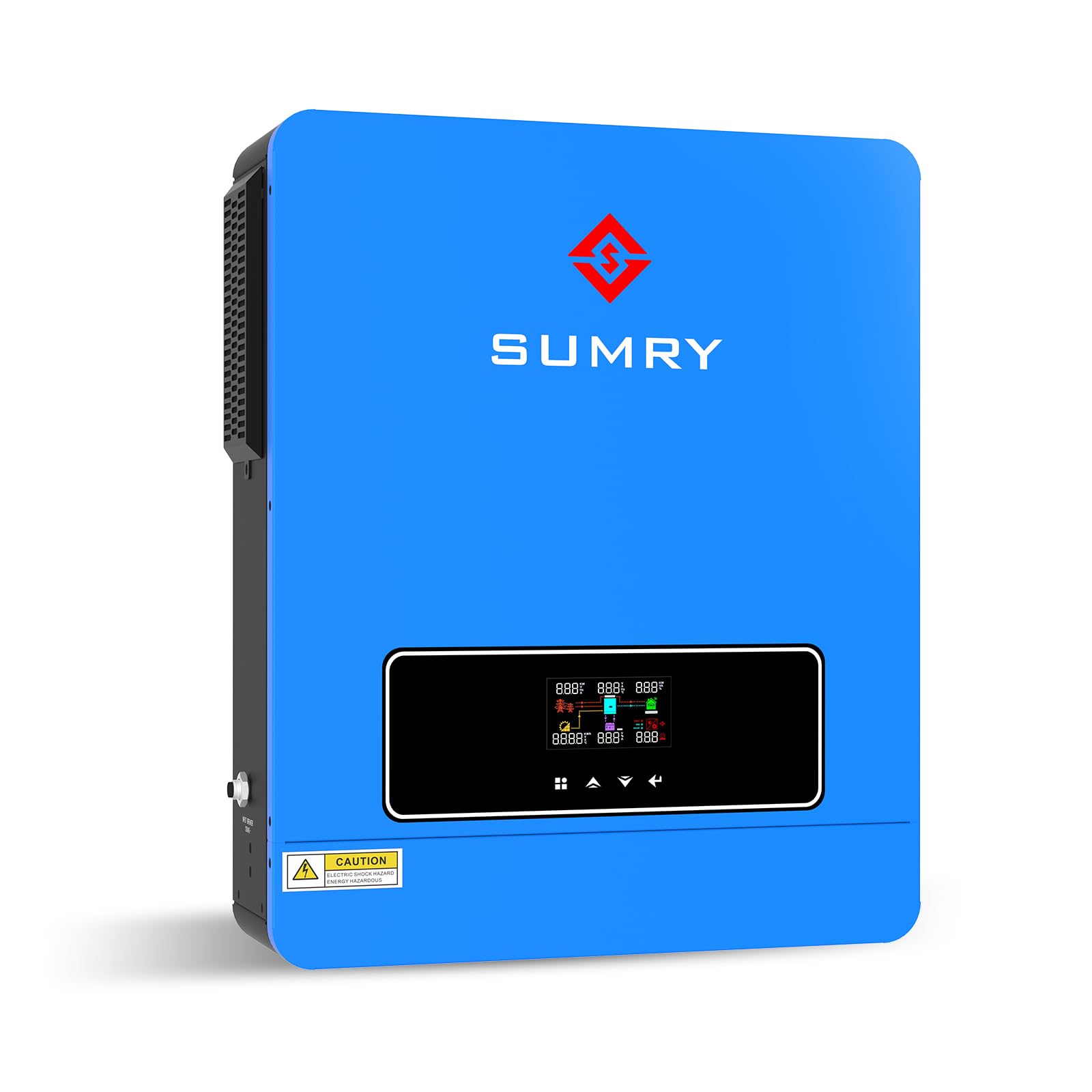
The SUMRY 3600W is not a battery but an all-in-one hybrid inverter/charger/MPPT controller, included here as the perfect companion for building a complete DIY solar system. It combines a 3,600W (7,200W peak) pure sine wave inverter, a 120A MPPT solar charge controller accepting 60–500VDC PV input, and a 100A AC battery charger in a single enclosure. The MPPT controller harvests up to 4,200W from solar panels, exceeding typical stand-alone charge controller capacity.
The inverter operates on 24VDC input and works without a battery in a direct solar-to-load mode—though the manual and user reports confirm it will draw grid power if PV is insufficient, making battery integration recommended for true off-grid use. Users report successful operation powering entire workshop loads including table saws (with 7,000W surge capacity), fridges, and coffee makers. Programming is handled via the LCD display, allowing configuration of battery type (LiFePO₄, AGM, etc.), charging priority, and output voltage.
The silent cooling fans and multiple protection features (overload, overheat, short circuit) ensure safe operation. The main downside is a relatively high idle power draw, so users should turn it off when not actively powering loads. For DIY builders starting from scratch, this unit replaces three separate components (inverter, charge controller, battery charger) at a significant cost saving.
Why it’s great
- All-in-one inverter/MPPT/charger simplifies DIY solar wiring
- 120A MPPT accepts high-voltage PV (60–500VDC) for efficient string configurations
- 7200W peak surge handles motor-starting loads like table saws
Good to know
- Requires 24V battery bank; not compatible with 12V or 48V
- Not battery-less unless PV voltage exceeds 120V and grid is disconnected
FAQ
Can I connect a LiFePO₄ battery directly to a lead-acid solar charge controller?
How many 12V 100Ah batteries do I need for a 5kWh off-grid system?
Does putting batteries in series double the BMS current limit?
Final Thoughts: The Verdict
For most users, the best battery for solar system winner is the Redodo 12V 100Ah because it nails the balance of cost, cycle life, and drop-in simplicity for the widest range of RVs, trolling motors, and small solar installations. If you want Bluetooth monitoring and low-temperature protection for a camper van that sees cold nights, grab the LiTime 12V 100Ah Group 24. And for a permanent whole-home 48V system that communicates directly with your inverter, nothing beats the AOUSK 48V 100Ah V2.

Mo Maruf
I created WellFizz to bridge the gap between vague wellness advice and actionable solutions. My mission is simple: to decode the research and give you practical tools you can actually use.
Beyond the data, I am a passionate traveler. I believe that stepping away from the screen to explore new environments is essential for mental clarity and physical vitality.