Our readers keep the lights on and my smoothie glass nicely filled. As an Amazon Associate, I earn from qualifying purchases.
That early-morning cooing might sound peaceful, but the reality of a bird infestation is anything but. From prized blueberry bushes stripped overnight to ledges and railings caked in corrosive droppings, unwanted birds cause real property damage and garden heartbreak. The solution is a targeted physical barrier, not a poison or a scarecrow, and the right choice depends entirely on the surface you’re protecting and the species you’re dealing with.
I’m Mohammad Maruf — the founder and writer behind WellFizz. I’ve spent years analyzing market trends and dissecting the raw specs on thousands of outdoor and garden products, laser-focusing on the material science that dictates whether a barrier actually holds up against persistent pests like pigeons, sparrows, and squirrels.
Whether you’re shielding a vegetable patch from flocks or keeping your balcony free of pigeon roosts, this guide to the best bird deterrent will break down the netting and spike options that deliver real, measurable results.
How To Choose The Best Bird Deterrent
Bird deterrents fall into two main camps: netting for broad areas like gardens and trees, and spikes for linear surfaces like ledges, gutters, and railings. Your specific problem—flock feeding versus singular roosting—dictates the hardware. A few non-negotiable specs separate an effective, long-lasting solution from a tangled, brittle waste of money.
Mesh Size and Material Density (Netting)
For netting, the mesh hole size is everything. A 0.5-inch (1/2”) mesh stops small sparrows and finches from squeezing through, while larger 0.8-inch mesh is fine for blocking pigeons and squirrels but lets smaller birds pass. Material density, measured in grams per square meter (gsm), determines tear strength. Budget nets run 6-9gsm and rip easily; mid-range and premium nets weigh 30gsm or higher, offering genuine multi-season durability. High-density polyethylene (HDPE) resists UV degradation and cold-weather brittleness far better than standard polypropylene (PP).
Material Grade and Spike Density (Spikes)
For spikes, material grade is the priority. 304 stainless steel is rust-proof and weatherproof for years on exposed roofs or railings. The spike density—how many rows and how close the pins are—determines whether a pigeon can find a flat spot to land. Pre-assembled bases save significant installation headache, and a matte black finish blends best with most home exteriors.
Quick Comparison
On smaller screens, swipe sideways to see the full table.
| Model | Category | Best For | Key Spec | Amazon |
|---|---|---|---|---|
| ORIVOGAS Netting (19.5×19.5 ft) | HDPE Netting | Chicken coops & garden beds | 45gsm density, 0.8″ mesh | Amazon |
| OFFO Black Bird Spikes (10.8 ft) | Steel Spikes | Ledges, railings, & roofs | 304 Stainless Steel | Amazon |
| POYEE Netting (20×20 ft) | HDPE Netting | Fruit trees & large gardens | 30gsm density, 0.5″ mesh | Amazon |
| RIFNY Netting (13×40 ft) | PP Netting | Grape vines & raised beds | 0.65oz/sq yd, 5/8″ mesh | Amazon |
| RIFNY Ultra-Fine Netting (2x 10×33 ft) | PE Mesh | Pest & mosquito barrier | 0.04″ ultra-fine mesh | Amazon |
In‑Depth Reviews
1. ORIVOGAS Heavy Duty Bird Netting (19.5 x 19.5 ft)
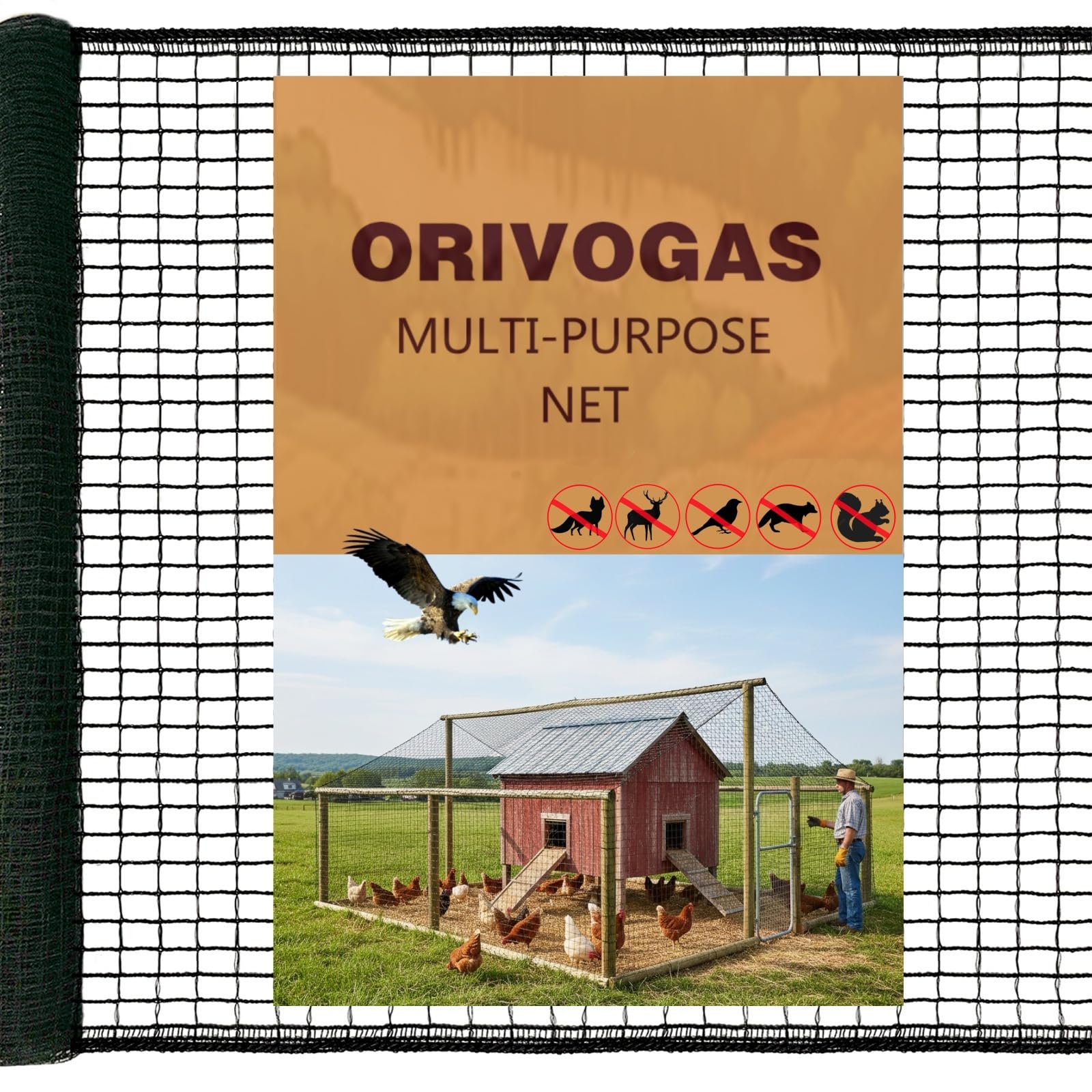
This netting from ORIVOGAS hits the sweet spot where material science meets practical usability. At 45gsm, the high-density polyethylene fabric is noticeably heavier and stiffer than standard netting, giving it a canvas-like feel that resists tearing even when stretched tight over a chicken run frame. The 0.8-inch mesh is large enough for good airflow and visibility but small enough to block hawks, crows, and squirrels from reaching your flock or tomatoes. The real standout feature is the reinforced edges with integrated ropes—this simple addition prevents the net from fraying at the corners and makes tensioning across a large span much simpler.
Installation is streamlined by the included 50 cable ties and 8 ground stakes, which save a separate trip to the hardware store. Users report that the netting unrolls with minimal tangling, a common frustration with lighter-weight nets. The slightly larger aperture is also a win for wildlife safety, as birds or small snakes are less likely to get tightly tangled compared to smaller mesh. The matte black color fades into the background, making it a solid choice if aesthetics matter for a suburban backyard.
The only trade-off is that the 0.8-inch mesh will not stop smaller finches or sparrows. If you specifically need to keep out tiny birds, you will need a finer mesh. However, for the core job of protecting a chicken coop from aerial predators and securing raised beds from medium-sized pests, this is the most balanced, durable, and easy-to-install netting in the lineup. The included hardware and the heavy-duty material justify the slightly higher investment for those who want a multi-year solution.
Why it’s great
- Industrial-grade 45gsm HDPE is 2-3x heavier than standard nets
- Reinforced edges with ropes prevent fraying and ease setup
- Comes complete with cable ties and ground stakes
Good to know
- 0.8″ mesh won’t block very small birds or insects
- Cut edges may unravel slightly without heat sealing
2. OFFO Black Pre-Assembled Bird Spikes (10.8 ft)

When you need to reclaim a balcony railing, window sill, or roof ridge from pigeons, netting is useless. This is where physical spikes excel, and OFFO’s offering is the most refined option here. The pre-assembled design is a genuine time saver—two adhesive strips or a few screws and the base is locked down, the stainless steel wires already fanned out. The 304 stainless steel construction is completely rust-proof, which is non-negotiable for an exterior product exposed to rain and humidity. Each 10.8-foot strip provides a dense field of flexible wires that make it physically impossible for a bird to land comfortably.
Users consistently note the matte black finish as a major plus, as it disappears against dark roofing or wrought iron railings rather than standing out as an obvious anti-bird device. The individual wires are soft enough to bend around corners or curved surfaces, allowing for continuous coverage on complex architecture. Customers have successfully used cable ties to attach the spikes to chain-link fences and privacy fence tops, broadening the application beyond just flat surfaces. The product holds up well against squirrels too, as noted by multiple verified purchasers.
The primary drawback is the higher cost relative to unpainted or unassembled spike strips, but the convenience of the pre-assembled base and the fade-resistant coating justify the premium for homeowners who want a clean, permanent solution. If you are dealing with a persistent pigeon roost on a ledge, this is the most effective and aesthetically acceptable fix. Just ensure your surface is clean and dry before applying the adhesive tape for a secure bond.
Why it’s great
- Ready to install right out of the box, no assembly needed
- 304 stainless steel wires are fully rust-proof and weather-resistant
- Matte black finish blends with most exterior surfaces
Good to know
- Premium price point reflects the pre-assembled convenience
- Adhesive tape may not hold on very rough or porous surfaces
3. POYEE 20x20ft Bird Netting
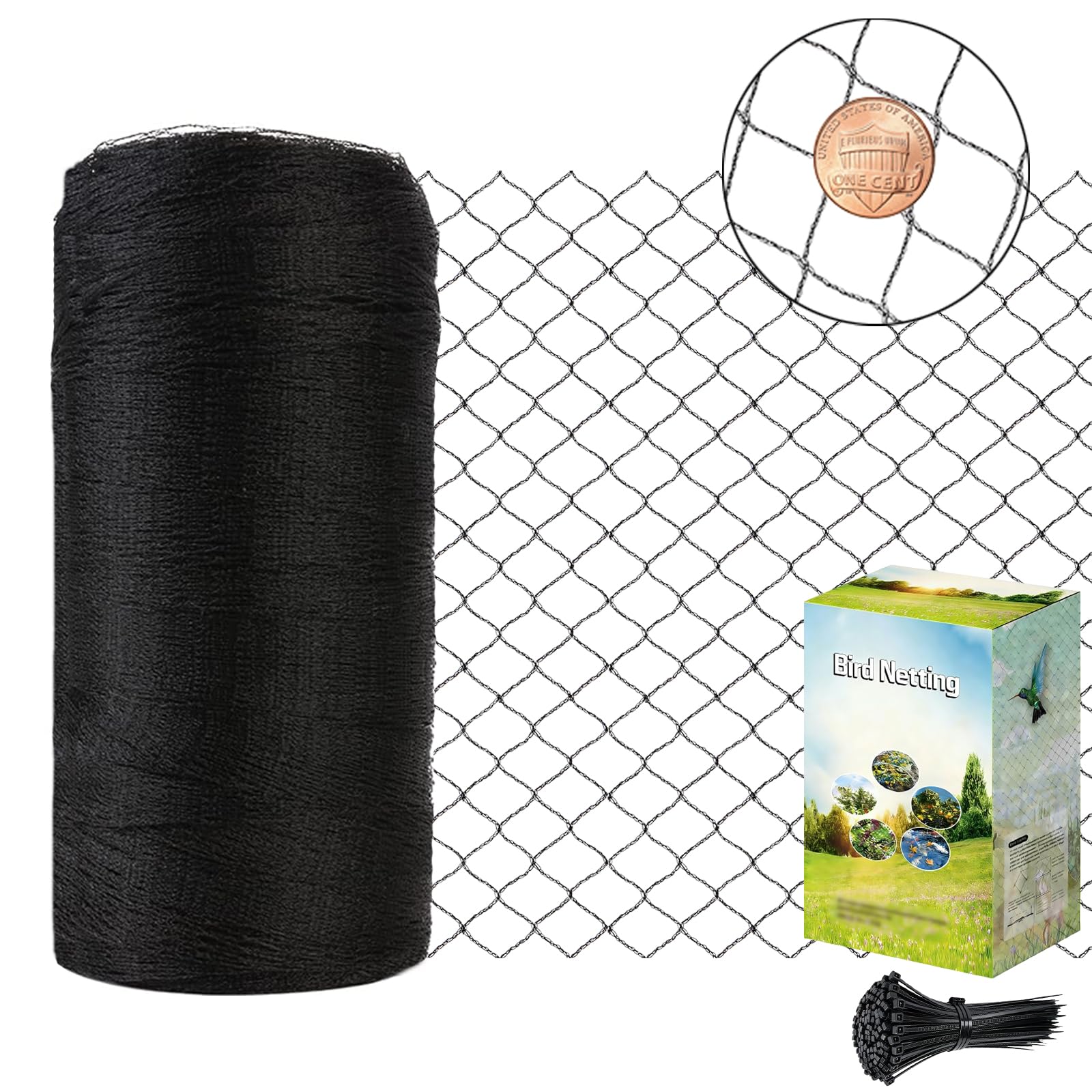
This POYEE netting is the workhorse for vegetable gardeners with large spaces to cover. The 20×20-foot dimension is generous enough to drape over a row of fruit trees or a substantial strawberry patch without needing to piece together multiple smaller nets. The 0.5-inch mesh is the tightest among the heavy netting options here, meaning it will exclude not only crows and jays but also smaller thrushes and sparrows that can strip a blueberry bush in a day. The use of 30gsm HDPE material gives it a clear structural advantage over the ultra-light 6-9gsm nets often sold at big-box stores.
Setup is straightforward—the net rolls out with minimal tangling and can be cut with scissors to fit odd-shaped beds. Users specifically praise its durability when stretched over chicken runs, noting it holds up against hawks during the day and raccoons at night. The UV-resistant formulation prevents the material from becoming brittle after a full season in the sun. It functions well as a ground-level deer fence too, though for deer you would want additional support stakes.
The main consideration is that the 0.5-inch mesh does block some pollinator access. If you are covering flowering crops like squash or melons, you will need to remove the netting during blooming periods or risk reduced fruit set. Also, while the 30gsm weight is solid, it is not as tear-resistant as the ORIVOGAS 45gsm netting, so take care when pulling it taut over sharp-angled objects. For the price, this is the best value for large-area garden coverage with fine enough mesh to stop most bird species.
Why it’s great
- 0.5″ mesh excludes small birds and squirrels effectively
- 30gsm HDPE is robust enough for multi-season reuse
- Large sheet size covers entire raised bed sections
Good to know
- Can block bees and beneficial insects from pollinating
- Not the most heavy-duty option in the lineup
4. RIFNY Bird Netting (13 x 40 FT)
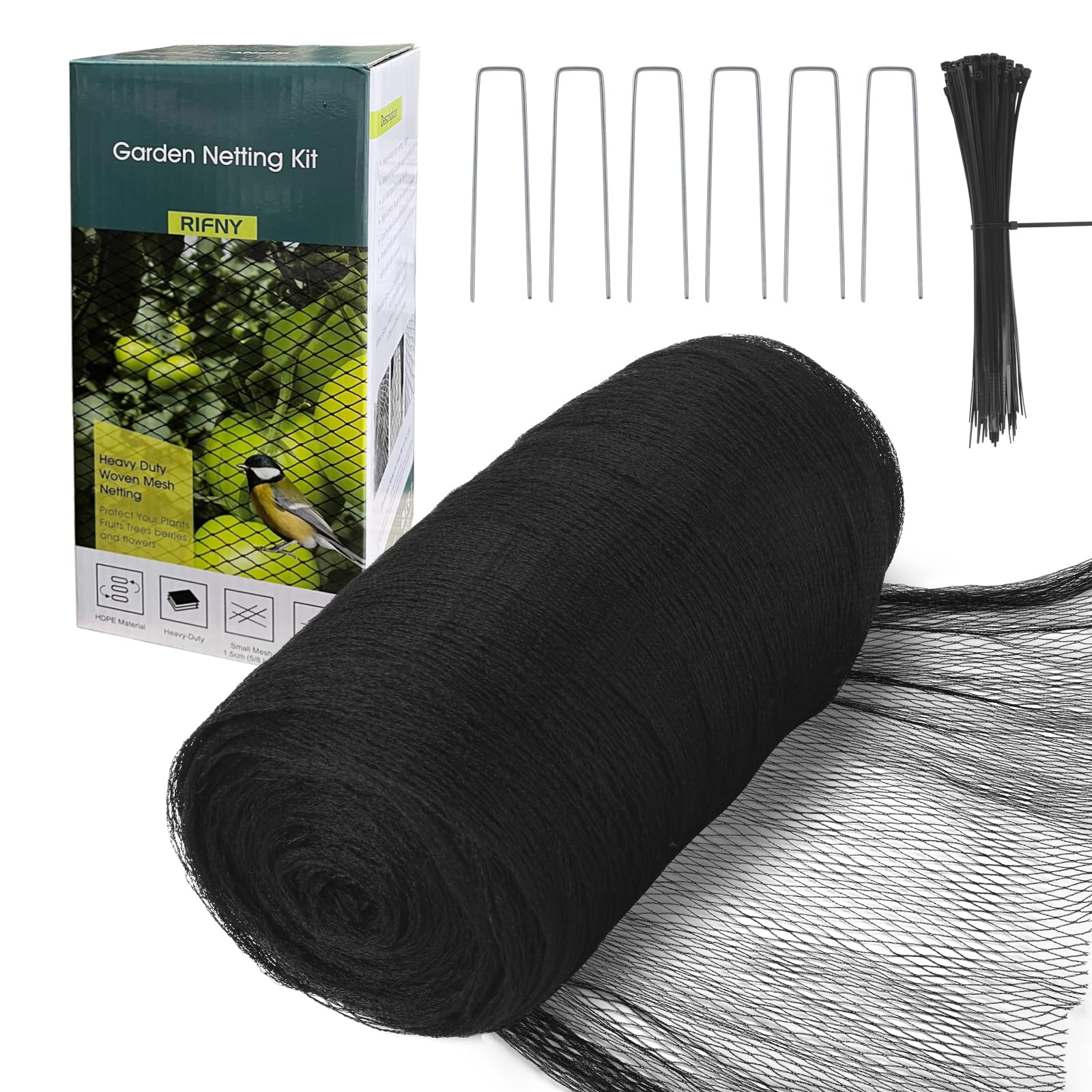
The RIFNY 13x40ft netting is the longest individual sheet in this roundup, making it a top choice for covering long rows of grapevines or multiple raised beds in a single pass. The 5/8-inch mesh size is a practical compromise—it stops crows, jays, and larger birds while remaining light enough that it does not weigh down delicate branches. The polypropylene material, rather than HDPE, makes this netting notably soft and pliable, which reduces the risk of scratching fruit or snapping stems when draped directly over bushes.
Installation is the real selling point for this model. The flexible nature of the PP material means it flops over plants without needing a rigid supporting structure, and it can be bundled and stored easily at the end of the season. The included 6 landscape staples and twist ties provide a basic anchoring kit, though you will likely need additional stakes for proper tensioning over a large area. Users consistently praise how it does not tangle during unrolling, a common pain point with netting of this length.
The trade-off is material durability. Polypropylene is more susceptible to UV degradation over time compared to HDPE, and the 0.65oz/sq yd weight is lighter than the premium HDPE nets. Users in very hot climates (above 100°F) may find the PP becomes stiff after a single season. It is also a less effective barrier against squirrels, which can push through the soft weave. Best deployed as a seasonal protective layer for berries and fruit trees rather than a permanent predator-proof fence.
Why it’s great
- Long 40-foot sheet great for row crops and grapevines
- Soft polypropylene won’t damage delicate fruit or branches
- Easy to roll out, cut, and store without tangling
Good to know
- Polypropylene is less UV-resistant than HDPE
- May need additional stakes for proper tensioning
5. RIFNY Ultra-Fine Mesh Netting (2-Pack, 10×33 ft)

If your definition of “pest” includes insects, not just birds, this RIFNY ultra-fine mesh is the specialist solution. The 0.04-inch mesh aperture is essentially a sieve—it blocks cabbage moths, aphids, flea beetles, and mosquitoes while still allowing air, rain, and diffused sunlight to reach the plants. It is sold as a two-pack, giving you two separate 10×33-foot sheets, which is incredibly versatile for covering multiple small garden beds or windows. The white polyethylene material is lightweight enough to drape directly over crops without heavy support.
The unique oblong hole design is a smart engineering detail: it allows the material to be permeable for rain and liquid fertilizer while remaining dense enough to stop even the smallest flying pests. Users in aquaponics setups specifically praise its ability to protect fish ponds from leaf litter and bird predation. The mesh is easy to cut and shape, and the fact that it lets you water right through the fabric without removing it is a major daily convenience. It also provides a light frost protection buffer.
The vulnerability of this netting is its lack of structural strength. Squirrels and larger birds can easily rip the ultra-fine polyethylene if they try to walk on top of it, so it needs to be supported and not left taut where animals can lean against it. It also blocks all insect pollinators, so it must be removed during the flowering stage of fruit and vegetable crops. This netting is not a general bird deterrent for large pests, but it is an unmatched barrier for insect control and small-bird exclusion on tender seedlings.
Why it’s great
- 0.04″ mesh blocks insects, small birds, and mosquitoes
- Oblong holes allow rain and liquid feed to pass through
- Two large sheets per pack offer excellent coverage value
Good to know
- Too fragile to resist squirrels or large birds trying to perch
- Blocks bees and beneficial insects—remove during flowering
FAQ
Will bird netting hurt or trap birds?
How do I install bird spikes on a brick or stucco surface?
Netting or spikes — which works better for pigeons on a balcony?
Final Thoughts: The Verdict
For most users, the best bird deterrent winner is the ORIVOGAS Heavy Duty Netting because its 45gsm HDPE construction and reinforced edges deliver unmatched durability for both garden and coop protection. If you need to stop pigeons from landing on a ledge or railing, grab the OFFO Pre-Assembled Bird Spikes for their rust-proof 304 steel and clean matte finish. And for budget-friendly, large-area garden coverage with a tight 0.5-inch mesh, the POYEE 20x20ft Netting offers the best coverage for the investment.

Mo Maruf
I created WellFizz to bridge the gap between vague wellness advice and actionable solutions. My mission is simple: to decode the research and give you practical tools you can actually use.
Beyond the data, I am a passionate traveler. I believe that stepping away from the screen to explore new environments is essential for mental clarity and physical vitality.