Our readers keep the lights on and my smoothie glass nicely filled. As an Amazon Associate, I earn from qualifying purchases.
Snoring isn’t just a social annoyance—it’s a mechanical airway problem that forces an estimated 90 million American adults into fragmented, oxygen-deprived sleep. The real challenge isn’t finding a device; it’s matching the right mechanism—positional, nasal, or oral—to your specific snoring source.
I’m Mohammad Maruf — the founder and writer behind WellFizz. I’ve spent years dissecting consumer health hardware, analyzing clinical protocols for airway management, and filtering out marketing noise to isolate the specs and mechanisms that genuinely reduce nocturnal airway resistance.
After evaluating dozens of models across mechanical categories, I’ve assembled the most practical and effective list of the best anti-snoring device options currently available for back-snorers, nose-breathers, and jaw-position seekers alike.
How To Choose The Best Anti-Snoring Device
Snoring has distinct mechanical origins, and the wrong device type is the number one cause of failed therapy. You must first diagnose whether your airway collapses when lying on your back (positional), when nasal passages narrow (nasal), or when the tongue and soft palate drop back (oral). Each cause demands a different mechanical solution.
Identify Your Snoring Type First
Positional snorers—those who only snore lying face-up—need a device that prevents supine sleep, not one that dilates nostrils or moves the jaw. Nasal dilators work best for congestion-driven or septum-deviation snoring. Jaw advancement mouthguards target tongue-base collapse and are the most effective for heavy, obstructive snoring but require proper boil-and-bite molding to avoid discomfort.
Material, Compliance & Adjustability
For intraoral devices, BPA-free medical-grade polymers are non-negotiable. Adjustability in millimeter increments (typically 1–10 mm of jaw forward positioning) allows you to find the minimum effective advancement, reducing jaw and tooth strain. For nasal devices, silicone offers superior comfort over hard plastic, especially for first-time users. Reusable nasal dilators must be cleaned daily to prevent bacterial buildup.
Quick Comparison
On smaller screens, swipe sideways to see the full table.
| Model | Category | Best For | Key Spec | Amazon |
|---|---|---|---|---|
| Intake Breathing Magnetic Strip | Magnetic Dilator | Strong lift, sports & sleep | 4 band sizes + 15 tabs | Amazon |
| SilentZPro 2.0 | Mandibular Device | FDA-cleared, adjustable jaw | 5 adjustment settings | Amazon |
| Somnos Mouthguard | Mandibular Device | 1-10mm jaw advancement | 2-piece adjustable | Amazon |
| Dentemp SleepTight 2pk | Mandibular Device | Dentist-designed, dual pack | FDA-cleared, dual-laminate | Amazon |
| SleepRight Breathe Aid | Nasal Dilator | Instant nasal congestion relief | 58% more airflow | Amazon |
| Nasilator 4-Pack | Nasal Dilator | Multiple size options | 4 sizes (S to XL) | Amazon |
| Calma Clip v2 | Positional Aid | Back-snorer retraining | 3x3x3 inch foam ball | Amazon |
In‑Depth Reviews
1. Intake Breathing Magnetic Nasal Strips Starter Kit
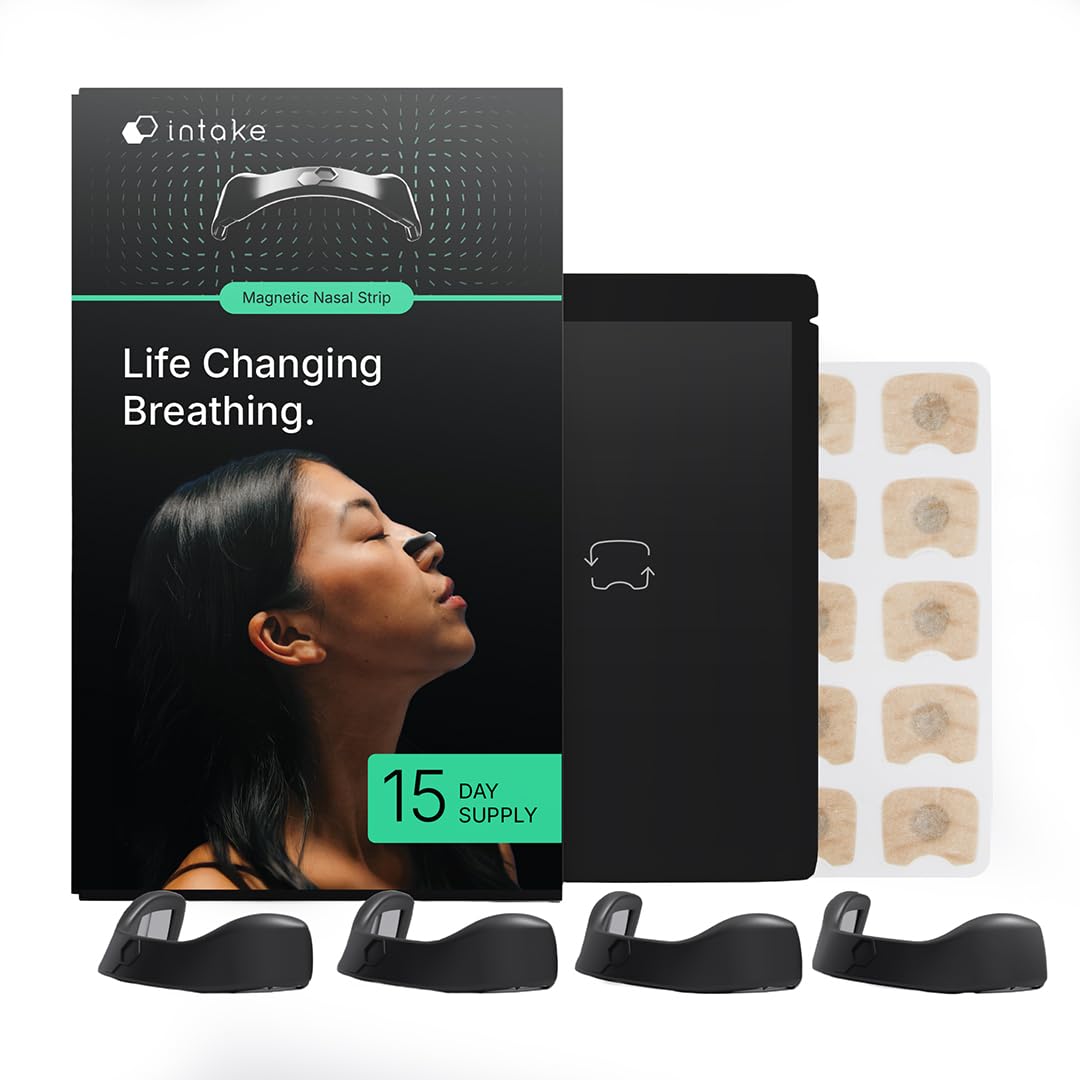
The Intake system represents a genuine mechanical upgrade over adhesive nasal strips. Instead of relying on sticky surface tension that breaks down with moisture or skincare products, the magnetic band anchors to disposable tabs to deliver consistent, structural expansion of the nasal valve—the narrowest point in your airway. Users report significantly reduced snoring and mouth breathing because the lift is stronger and lasts the entire sleep cycle.
Four band sizes (XS through L) allow a precise fit that traditional one-size strips cannot match. The starter kit includes 15 adhesive tabs and the reusable magnetic band. Athletes also use this for high-intensity training, where the magnetic hold resists sweat-induced failure. The per-night cost runs higher than disposable strips, but the mechanical advantage and overnight retention justify the premium for chronic snorers.
Customer feedback highlights its effectiveness over nightly skincare routines—the band stays put where BreatheRight strips would peel off. Some users note the adhesive backing can be fiddly to remove, and the refill subscription adds ongoing expense. But for pure lift force and adjustability, this is the most technically advanced nasal dilator on the market.
Why it’s great
- Magnetic system provides consistent, structural nasal expansion all night
- Four band sizes ensure precise fit for different nose shapes
- Stays secure over moisturizer, sweat, and movement
Good to know
- Adhesive tabs require careful handling and cleaning
- Refill subscription adds recurring cost
2. SilentZPro 2.0 Anti Snoring Mouthguard
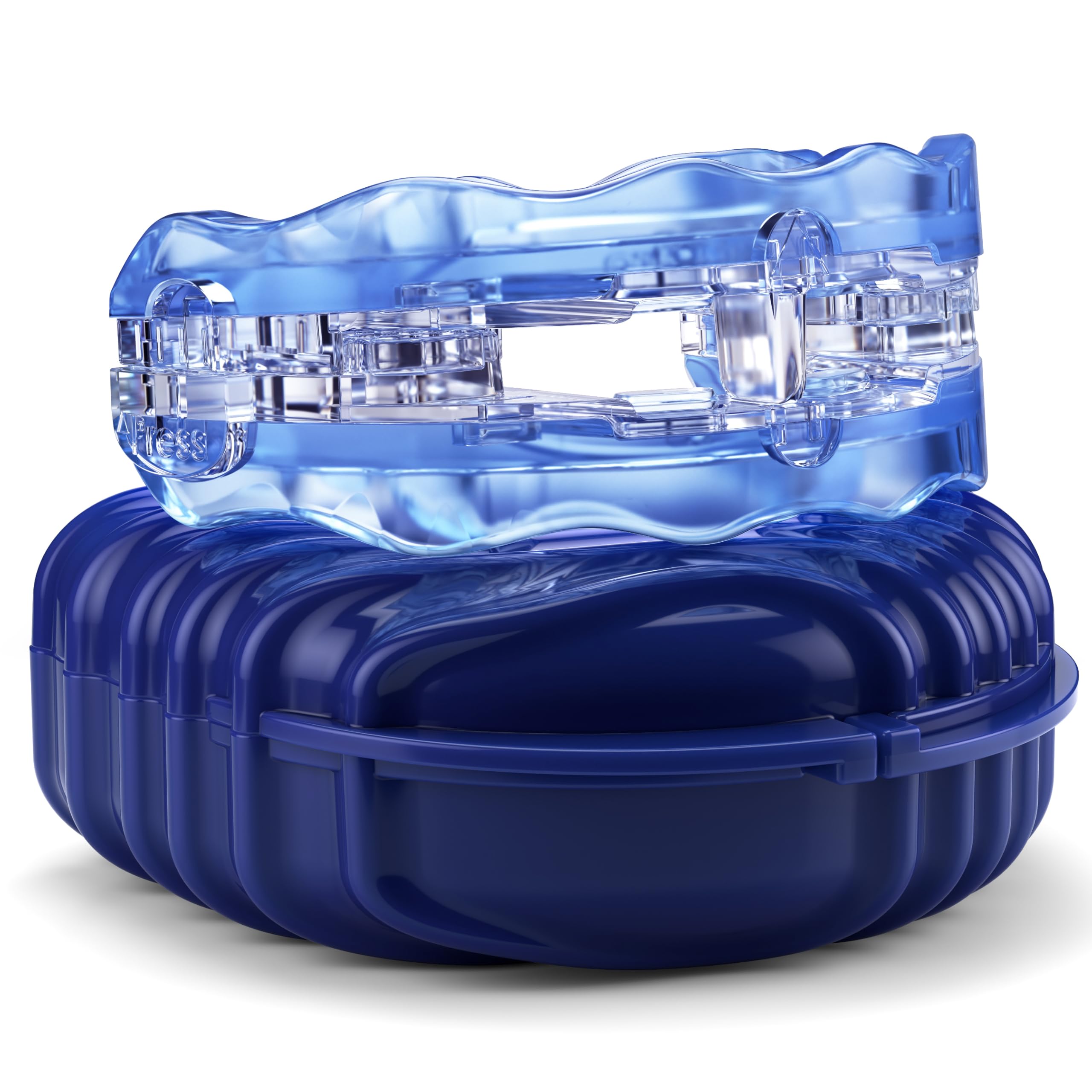
The SilentZPro 2.0 stands apart from generic boil-and-bite mouthguards due to its FDA clearance and patented five-setting adjustment system. This isn’t a one-position device—you can dial the mandibular advancement from minimal to maximum in five discrete steps, allowing you to find the least jaw protrusion that still eliminates airway collapse. The patented design permits both vertical and lateral jaw movement, reducing the locked-in feeling that causes many users to abandon mouthguards.
Made from BPA-free, medical-grade material, the device molds to your teeth after a hot-water bath. The medium size fits most adult mouths, and the manufacturer offers U.S.-based support. Users report a normal adjustment period of 3–4 weeks as the jaw and bite adapt. The trade-off is bulk: some users find the plastic edges sharp and the overall profile too thick for comfort, especially if the molding isn’t perfect on the first try.
For those who take the time to mold correctly and progress through the settings gradually, this mouthguard reliably reduces snoring enough to satisfy partners. It’s not the cheapest option, but the FDA clearance and adjustment range make it a clinically serious choice compared to unregulated competitors.
Why it’s great
- FDA-cleared with five precise jaw advancement settings
- Patented design allows natural lateral and vertical jaw movement
- BPA-free, easy-to-clean medical-grade materials
Good to know
- Bulky profile and sharp plastic edges cause initial discomfort for some
- Requires patience for proper boil-and-bite molding
3. Somnos Anti Snore Mouthguard
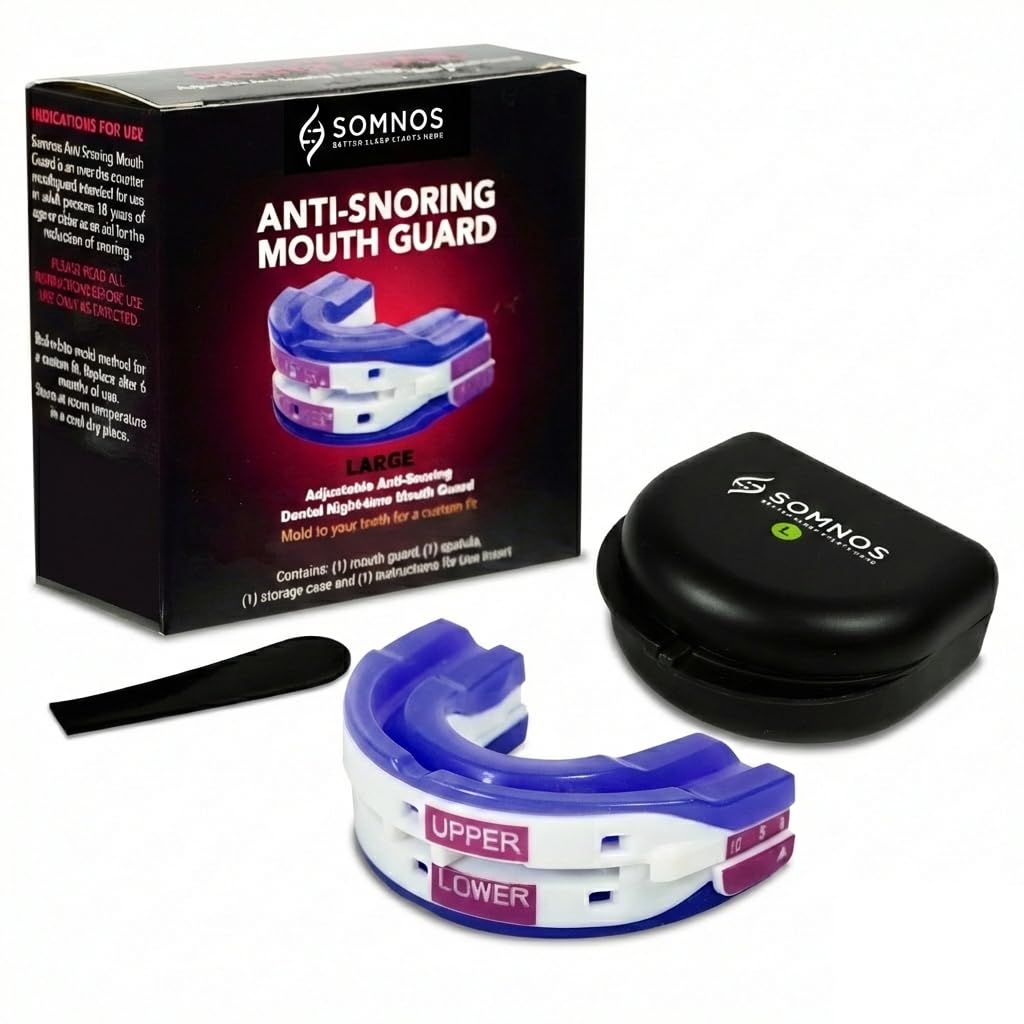
The Somnos mouthguard delivers a 1–10 millimeter adjustable jaw advancement range—matching devices that cost significantly more—in a two-piece boil-and-bite format. This allows you to fine-tune exactly how far forward your lower jaw sits, which directly determines airway patency. For moderate to heavy snorers, even 3–4 millimeters of advancement can be the difference between silence and vibration.
The two-piece design is a deliberate engineering choice: by molding the upper and lower trays separately and then connecting them at your preferred advancement, you avoid the sloppy fit of single-piece adjustable guards. Users who struggle with the instruction manual praise the device once they master the multi-step molding process—mold the top, mold the bottom, then mold them together with the jaw slightly forward.
Customer reviews highlight complete snoring cessation on the minimum effective setting, though some users report gum or cheek irritation if the plastic edges are not smoothed down after molding. The medium and large sizing options help accommodate different arch widths, but allergic reactions to the material have been reported. For the price, the adjustability-to-cost ratio is exceptional.
Why it’s great
- Full 1-10mm adjustment range for personalized jaw advancement
- Two-piece design allows independent top/bottom molding for better fit
- Affordable entry point for testing mandibular advancement therapy
Good to know
- Molding process is finicky and may require multiple reheats
- Some users experience gum swelling or material sensitivity
4. Dentemp SleepTight Mouthpiece 2-Pack
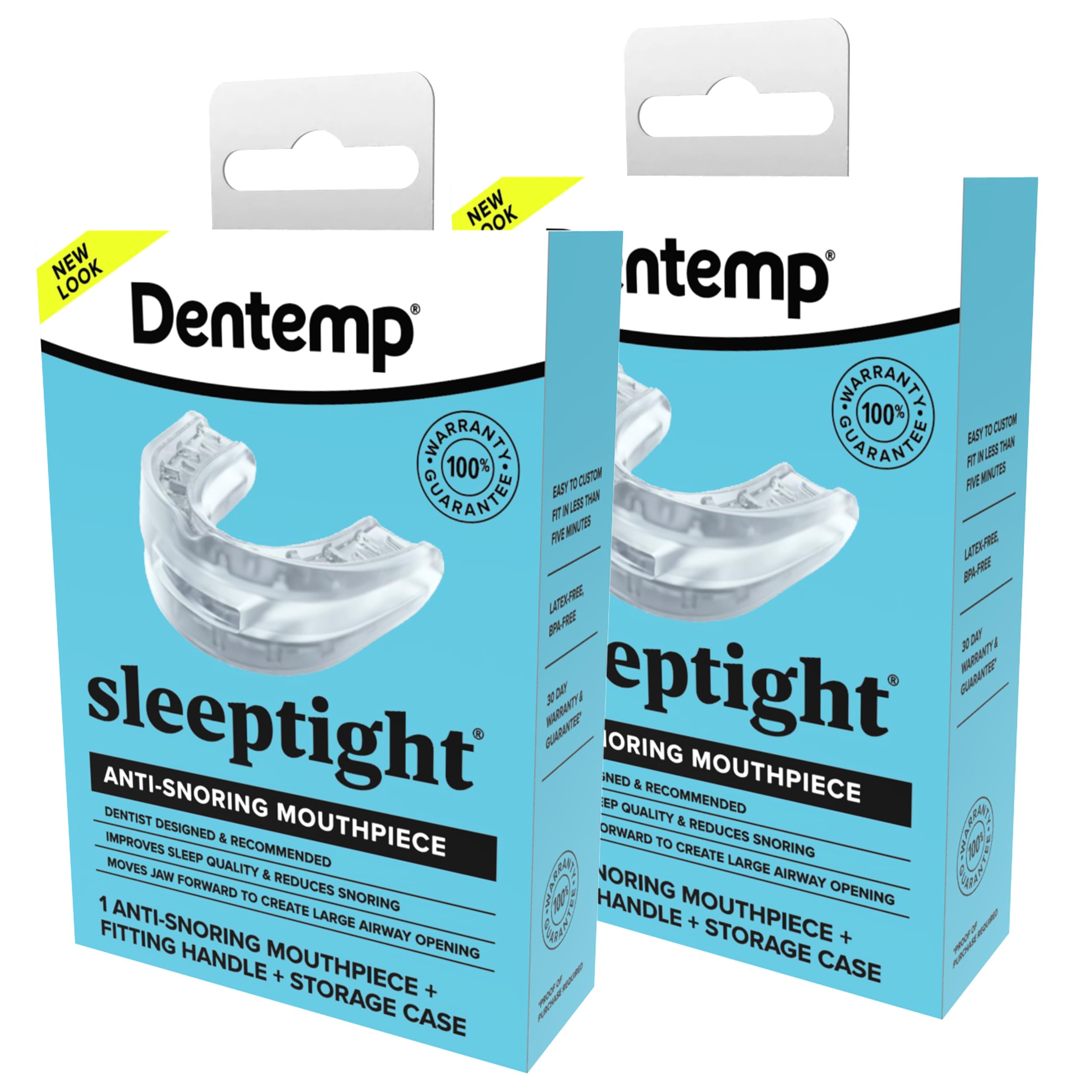
The Dentemp SleepTight was designed by a dentist and carries FDA clearance, with a dual-laminate construction that balances durability with a comfortable boil-and-bite fit. The large front opening is a deliberate feature—it allows natural airflow through the mouth even as the device holds the jaw forward, preventing the suffocating sensation some mouthguards cause. This makes it easier for mouth-breathers to transition to nasal breathing during sleep.
The two-pack format adds practical value: one unit serves as a primary and the other as a backup or travel spare. The boil-and-bite process is straightforward with clear instructions, though achieving a secure fit can take a couple of tries. The device is noted for its slim profile compared to bulkier competitors, which helps with retention during the night.
Customer feedback is mixed: successful users report 90–95% snoring reduction and relief from teeth grinding, while others find the device falls out after several hours or deforms during hot-water molding. Some users report temporary tooth shifting that resolves quickly after waking. For those who get the fit right, the SleepTight offers dentist-level design at a fraction of clinical cost.
Why it’s great
- Dentist-designed with FDA clearance and Sleep Foundation recommendation
- Large front opening allows natural airflow during sleep
- Two-pack provides a built-in backup option
Good to know
- Molding can produce misshapen results if not handled carefully
- Some users report the device falling out after 3-4 hours
5. SleepRight Intra-Nasal Breathe Aid 2-Pack

The SleepRight Breathe Aid is a spring-loaded nasal dilator that physically flares the nostrils from the inside, increasing airflow by up to 58% according to the manufacturer. Unlike adhesive strips that pull from the outside, these intra-nasal flares apply outward pressure from within the nasal vestibule, providing mechanical, non-adhesive dilation that cannot peel off during the night. The effect is immediate and noticeable from the first wear.
Each pair is reusable for roughly 15 days, and the set includes four pieces (two packs) plus a carrying case. The flares are made from flexible, hypoallergenic material that accommodates most nose sizes without adhesive irritation. Users coming from external strips appreciate the absence of red marks or skin blemishes on the nose bridge. The trade-off is a break-in period during which the inner nostrils may feel sore or develop minor scabbing—applying petroleum jelly for the first two weeks is a common mitigation strategy.
Long-term users report life-changing improvements in sleep quality and oxygen intake, with some extending sleep duration by over an hour. The device occasionally falls out during the night, especially for side sleepers, but generally stays in place better than tape or strips. If your snoring stems from nasal congestion or narrow nasal valves, this is a highly effective mechanical fix.
Why it’s great
- Mechanical dilation from inside provides instant, non-adhesive relief
- Up to 58% airflow increase advantages over external strips
- Reusable design with no skin irritation or adhesive residue
Good to know
- Initial break-in period can cause nostril soreness and scabbing
- May occasionally dislodge during the night, especially for side sleepers
6. Nasilator Anti-Snoring Nasal Dilators 4-Pack

The Nasilator provides a straightforward approach to nasal dilation: a small, reusable plastic clip that sits just inside the nostrils to expand the nasal passages. The key differentiator is the size range—four options from S to XL—which allows users to match the dilator to their actual nasal anatomy rather than forcing a one-size-fits-all device. This sizing precision is critical because an undersized dilator provides minimal lift, while an oversized one causes pain and rejection.
Made from hard plastic rather than silicone, the Nasilator has a polarizing feel. Some users appreciate the firm, reliable opening that does not compress during sleep, while others find the plastic stiff and uncomfortable, causing tickling sensations or sharp edges that lead to subconscious removal. For those who tolerate the material, the airway opening effect is real and immediate, with several reviews noting dramatically improved breathing without needing decongestants.
The four-pack format makes it affordable to try different sizes or to keep a set at home and one for travel. The device is reusable and requires minimal maintenance. The main caution is material stiffness: if you have sensitive nasal tissue, a silicone-based dilator like the SleepRight may be a gentler starting point.
Why it’s great
- Four precise sizes (S to XL) ensure anatomical fit
- Firm plastic construction holds airways open reliably
- Made in USA with reusable, hypoallergenic materials
Good to know
- Hard plastic can feel stiff and uncomfortable, causing tickling or sharpness
- Material sensitivity leads some users to subconsciously remove during sleep
7. Calma Clip v2 by Whole Nights
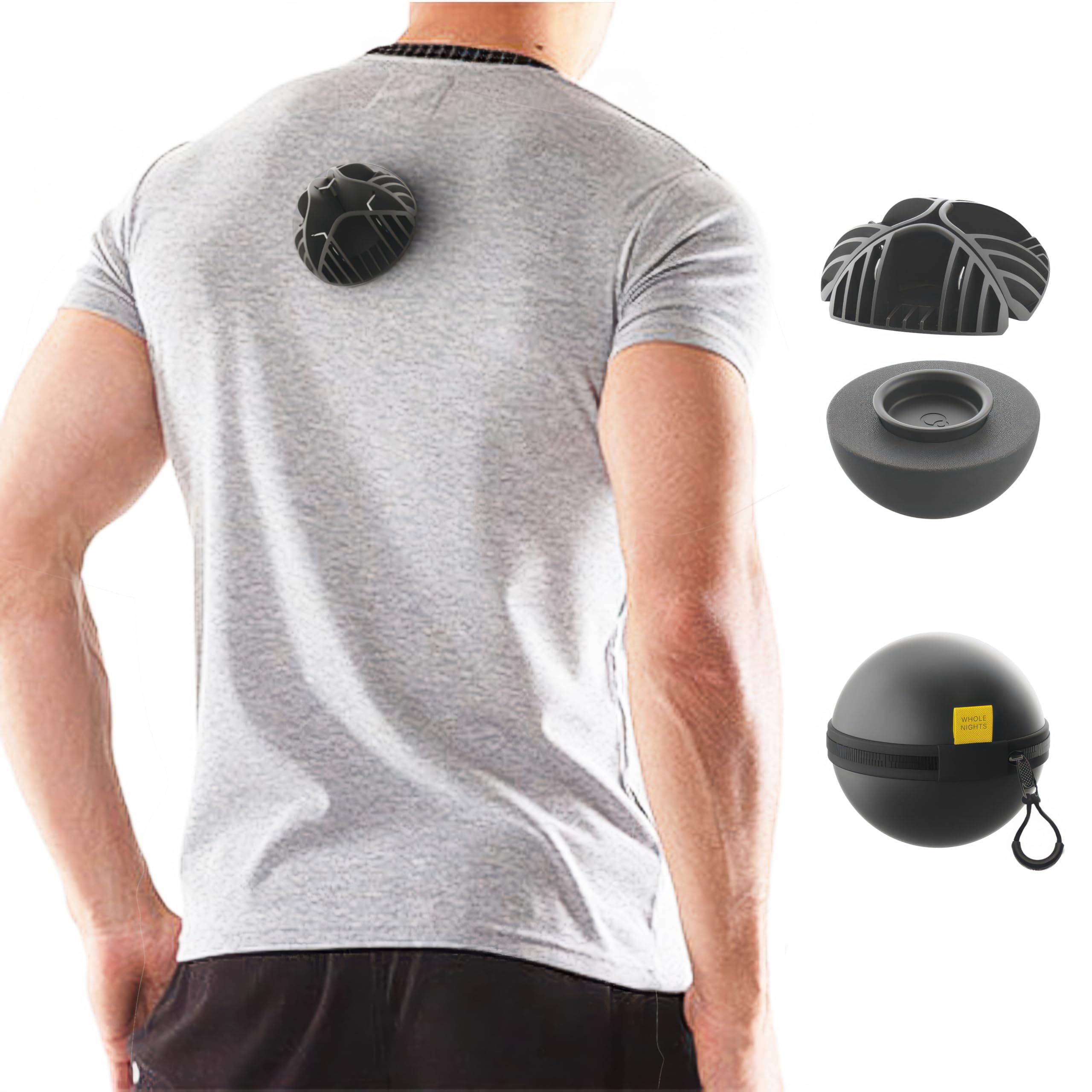
The Calma Clip v2 addresses a specific snoring subtype that no mouthguard or nasal dilator can fix: positional snoring caused by sleeping on the back. The device is a simple foam-filled ball attached to a clip that fastens to the upper back of your shirt. When you roll onto your back during sleep, the pressure of the ball against your spine creates a gentle but persistent discomfort that encourages you to shift back to your side without fully waking you.
This is behavioral retraining, not mechanical obstruction removal. Over the course of one to two weeks, most users develop a natural side-sleeping habit and no longer need the clip. The design is non-invasive, requires no mouth insertion or nasal contact, and has zero side effects. It weighs only 2.3 ounces and is small enough for travel. The manufacturer explicitly states it only works for back-snorers—if you already snore on your side or stomach, this device will not help.
Customer reviews are surprisingly enthusiastic, with users reporting complete snoring cessation after adaptation, and even sleep apnea patients noting improved oxygen saturation and reduced awakenings when they stay off their back. The main drawback is that the ball can fall off during the night in the early adaptation phase, but persistent nightly use solves this. For positional snorers, this is the most elegant and cost-effective solution available.
Why it’s great
- Non-invasive behavioral retraining for back-snorers
- Lightweight, travel-friendly design with no oral or nasal contact
- Effective for sleep apnea patients who worsen on their back
Good to know
- Only effective for back-snorers—not for side or stomach snorers
- Ball may dislodge during early adaptation period
FAQ
Will an anti-snoring device cure my sleep apnea?
How long does it take to get used to a mandibular advancement mouthguard?
Should I choose a nasal dilator or a mouthguard for snoring?
Final Thoughts: The Verdict
For most users, the best anti-snoring device winner is the Intake Breathing Magnetic Nasal Strips because it combines reusable mechanical engineering with reliable overnight retention and a strong, consistent nasal lift that outperforms disposable strips. If you need adjustable jaw advancement with clinical validation, grab the SilentZPro 2.0. And for pure positional back-snoring without any oral or nasal device, nothing beats the Calma Clip v2.

Mo Maruf
I created WellFizz to bridge the gap between vague wellness advice and actionable solutions. My mission is simple: to decode the research and give you practical tools you can actually use.
Beyond the data, I am a passionate traveler. I believe that stepping away from the screen to explore new environments is essential for mental clarity and physical vitality.