Our readers keep the lights on and my smoothie glass nicely filled. As an Amazon Associate, I earn from qualifying purchases.
That split-second shift in your step—the one that sends a sharp snap through your ankle—is the exact moment every athlete and active walker dreads. An ankle that rolls outward tears ligaments, sidelines training for weeks, and leaves the joint permanently weaker. The right support changes that outcome by mechanically blocking that dangerous inversion before it happens.
I’m Mohammad Maruf — the founder and writer behind WellFizz. My research focuses on the mechanical design of orthopedic supports, analyzing how stabilizer stiffness, strapping geometry, and material density translate into real-world stability for active adults.
After evaluating the construction details and user feedback on five leading options, I’ve built this guide to help you find the best ankle brace to prevent rolling for your specific activity and foot shape.
How To Choose The Best Ankle Brace To Prevent Rolling
Selecting a brace to stop ankle rolling isn’t about compression alone—it’s about mechanical resistance. You need structural components that physically block the talus bone from tilting past its safe range. Here are the three features that separate effective braces from simple sleeves.
Side Stabilizers: The Backbone of Rolling Prevention
Rigid or semi-rigid medial and lateral stays are the single most important feature for preventing inversion sprains. These molded plastic inserts, embedded in fabric pockets on both sides of the ankle, create a physical barrier that the foot cannot bend past. Look for braces with removable stays—this lets you wear the brace with full protection during high-risk activity and remove the stays for lighter daily wear or flexibility.
Strapping System: Figure-8 vs. Simple Wrap
A figure-8 strapping system wraps the strap under the heel and crosses over the top of the foot, then continues up around the ankle. This configuration pulls the calcaneus into a neutral position and locks the subtalar joint, directly counteracting the rolling motion. Simple single-wrap braces provide compression but little mechanical resistance against inversion. Lace-up designs add another layer of security by cinching the entire brace tightly around the midfoot and ankle.
Fit Profile and Shoe Compatibility
A brace that prevents rolling is useless if it won’t fit inside your sneakers or cleats. Low-profile designs using thinner neoprene and streamlined stabilizers slide into standard basketball shoes, hiking boots, and running trainers without requiring you to size up. Measure your foot circumference at the ankle and midfoot, then check the brace’s dimensions—bulky models with wide stabilizer pockets may only fit in roomier footwear or might require you to loosen your laces significantly.
Quick Comparison
On smaller screens, swipe sideways to see the full table.
| Model | Category | Best For | Key Spec | Amazon |
|---|---|---|---|---|
| Fitomo Ankle Brace | Premium | Triple-lock rolling prevention | Removable dual plastic stabilizers + figure-8 strap | Amazon |
| Shock Doctor Stabilizer | Premium | Low-profile lace-up stability | Speed-lace closure + flexible support stays | Amazon |
| ProCare Stabilized Brace | Mid-Range | High-durability basketball use | 800D ballistic nylon + articulated stays | Amazon |
| DRwelland Side Stabilizer Brace | Mid-Range | Comfortable all-day wear | Neoprene body + side stabilizers + adjustable arch strap | Amazon |
| ZOELION Compression Sleeve | Budget | Mild support with shoe compatibility | 3D knit graduated compression + removable X-strap | Amazon |
In‑Depth Reviews
1. Fitomo Ankle Brace
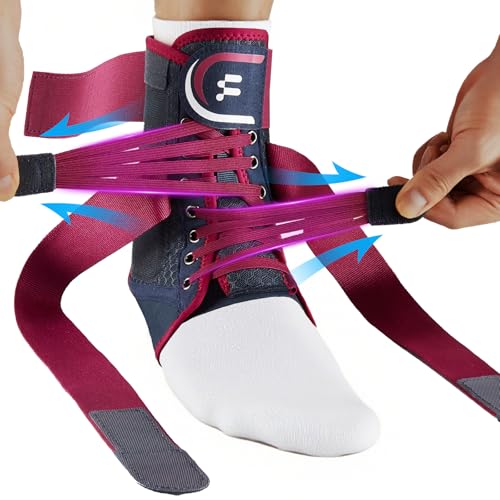
The Fitomo combines three mechanisms that directly fight ankle rolling: top strap compression locks the ankle mortise, dual removable side stabilizers create rigid barriers against inversion, and cross straps form a figure-8 configuration under the heel. This triple-lock system provides the most complete mechanical protection in this roundup, making it the top choice for anyone returning from a sprain or dealing with chronic instability.
The removable stabilizers are a smart design touch—you can wear the brace with full rigidity during basketball or hiking, then pull the stays out for lighter support during daily walking or recovery rest. Users report the brace stays put without slipping or shifting during intense movement, which is critical when you need the stabilizers to align perfectly with your malleoli. The figure-8 strap allows micro-adjustments so you can dial in exactly the right tension for different activities.
At a size medium, the brace fits comfortably inside sneakers without feeling bulky. The breathable polyester-nylon blend reduces sweat buildup during extended wear. One minor tradeoff is that the Velcro hook on the top strap can snag fabrics if you don’t stick it back on the brace’s loop patch during removal, but this is common with high-retention straps and doesn’t affect performance during wear.
Why it’s great
- Triple mechanical lock (straps + stabilizers + figure-8) most effectively prevents lateral rolling
- Removable side stays allow transition from full protection to flexible daily wear
- Low-profile design fits standard athletic shoes without sizing up
Good to know
- Hook-and-loop top strap can snag clothing if not secured to its patch during removal
- Single unit per pack—you need to buy two for bilateral support
2. Shock Doctor Ankle Stabilizer

The Shock Doctor stabilizer uses a speed-lace closure system that pulls the brace tightly around the ankle and midfoot in seconds, then locks down with a quick-release Velcro strap. This lacing mechanism distributes compression evenly across the dorsal foot, preventing pressure points while securing the flexible support stays against the malleoli. The lace-up design is particularly effective for preventing rolling because it cinches the entire foot into a stable unit before the external strap adds final tension.
Worn by professional and college athletes, this brace prioritizes a low profile that fits under cleats, basketball shoes, and turf trainers. The flexible support stays bend slightly with natural ankle movement but stiffen when the foot approaches a dangerous inversion angle. Users with chronic ankle weakness report it prevents the familiar “rolling feeling” during lateral cuts and jumps. The breathable SBR-nylon-polyester blend keeps the foot cooler than thicker neoprene options.
Sizing runs slightly small based on multiple user reports—measure your foot circumference carefully before ordering, and consider sizing up if you’re between sizes. The bottom Velcro on the stirrup strap can catch on socks over time, causing some fuzz. This brace provides excellent inversion resistance for its slim build, but for those needing maximum rigid stabilization, the Fitomo’s dual stays offer a higher level of mechanical blocking.
Why it’s great
- Speed-lace closure creates an even, secure fit around the ankle and midfoot
- Very low profile slides easily into most athletic shoes
- Flexible stays provide a good balance of mobility and roll prevention
Good to know
- Sizing runs small—measure carefully and consider a larger size
- Bottom stirrup Velcro can snag and wear socks over time
3. ProCare Stabilized Ankle Support Brace

The ProCare brace stands out for its build quality—800D ballistic nylon wraps the ankle in a fabric that resists tearing and abrasion far longer than standard neoprene or polyester. This material choice is critical for basketball players and trail runners who subject their braces to repeated friction inside shoes. The articulated medial and lateral stays are removable and shaped to contour around the ankle bones, providing targeted resistance against inversion without digging into the skin.
A full circumferential elastic strap wraps around the top of the brace to secure all the lacing and provide additional fibula compression. This creates a two-stage fit: first, you lace the brace snugly around the ankle and foot, then you apply the external strap for overall stability. Users report the brace stays comfortable for hours even during intense play, and it’s the same brand orthopedists give post-surgery, which speaks to its clinical-level reliability.
The main drawback is the learning curve—the long laces and three independent straps make donning the brace more complicated than pull-on sleeves or figure-8 wraps. Once on, however, the stability is excellent. The reinforced eyelet area prevents the laces from tearing through the nylon over months of use. This is the best option for heavy-use athletes who need a brace to survive an entire season without wearing out.
Why it’s great
- 800D ballistic nylon construction offers exceptional durability for frequent high-intensity use
- Articulated removable stays contour to the ankle for precise inversion resistance
- Full circumferential strap adds an extra layer of stability on top of the lacing system
Good to know
- Multiple straps and long laces make it more complicated to put on than simpler designs
- Bulky profile may not fit in all low-cut shoes comfortably
4. DRwelland Ankle Brace with Side Stabilizers
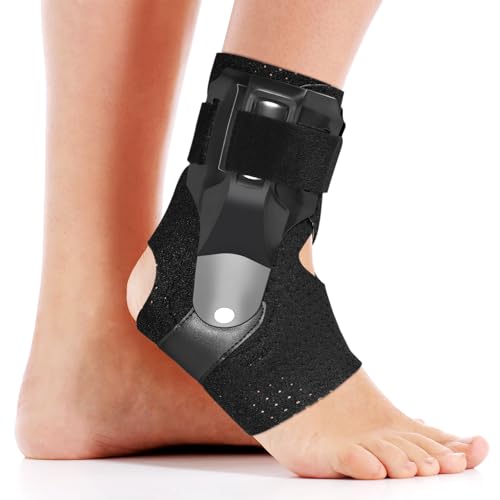
The DRwelland brace uses a neoprene body with integrated side stabilizers, blending comfortable compression with the lateral support needed to prevent rolling. Designed by orthopedic surgeons, the brace targets the subtalar joint with a strap that wraps under the arch and crosses over the top of the foot, mimicking a figure-8 configuration. The neoprene material wicks moisture and provides mild compression that helps reduce swelling while the stabilizers do the mechanical work.
User feedback consistently highlights the comfort factor—the soft fabric wraps around the heel without rough seams, making it comfortable enough to wear during sleep for overnight stabilization. Parents of children with special needs report their kids tolerate wearing this brace without complaints because the fit is gentle yet supportive. The adjustable arch strap allows you to customize the level of midfoot lift, which can help with concurrent plantar fasciitis pain.
The weak point is the plastic buckle on the main strap. Several users report the buckle cracking or breaking after a few months of regular use, requiring replacement. The brace still functions without the buckle—you can thread the strap through the slot—but the fastener design could be more robust. If you need a brace for occasional flare-ups rather than daily athletic training, the comfort-to-cost ratio is excellent. For daily competitive use, consider reinforcing the strap closure.
Why it’s great
- Soft neoprene body provides all-day comfort and moisture management
- Adjustable arch and ankle straps let you customize fit and compression
- Comfortable enough for overnight wear and sensitive skin
Good to know
- Plastic buckle on the main strap is prone to breaking with heavy use
- Neoprene can retain heat during intense activity in warm weather
5. ZOELION Ankle Brace Compression Support
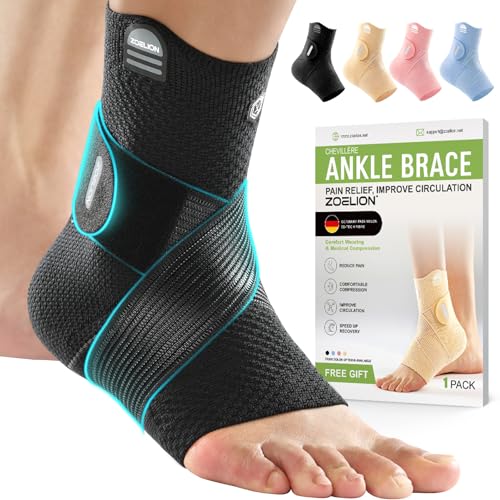
The ZOELION is a 3D knit compression sleeve with a removable fishnet X-strap, designed for mild to moderate support rather than rigid rolling prevention. The sleeve itself uses graduated compression with three distinct zones—a gentle comfort zone over the instep, a supportive pressure zone over the arch and heel, and flexible pressure-free edges to prevent digging. This makes it an excellent entry-level option for those with weak ankles who don’t yet require rigid lateral stays.
The X-strap wraps under the arch and crosses over the top of the foot, then cinches around the lower shin to provide additional Achilles and tendon support. While this strap helps stabilize the subtalar joint, it lacks the rigid plastic inserts found in the Fitomo or ProCare braces. For everyday walking, light jogging, or mild plantar fasciitis relief, the ZOELION’s breathable, moisture-wicking fabric keeps feet dry and comfortable for extended wear.
The main limitation is that this brace relies on compression and strap tension rather than mechanical blocking to prevent rolling. Users with chronic inversion sprains or significant ankle instability may find the support insufficient for cutting sports like basketball or volleyball. Sizing can be tricky—the sleeve runs large, and several users recommend ordering a size smaller than your measurement suggests. For mild support and maximum breathability inside standard shoes, this is a solid budget-friendly pick.
Why it’s great
- 3D knit graduated compression is breathable and comfortable for all-day wear
- Removable X-strap provides adjustable arch and Achilles support
- Very low profile fits easily inside any regular shoe
Good to know
- Sleeve-style compression without rigid stays offers limited roll prevention for unstable ankles
- Sizing runs large—measure carefully and consider ordering a smaller size
FAQ
Can an ankle brace fully prevent my ankle from rolling during sports?
Should I choose a lace-up brace or a slip-on sleeve to stop rolling?
How tight should I fasten the straps for maximum rolling prevention?
Final Thoughts: The Verdict
For most users, the ankle brace to prevent rolling winner is the Fitomo Ankle Brace because its triple-lock system—dual removable side stabilizers, figure-8 cross straps, and top strap compression—provides the most complete mechanical protection against inversion. If you want a low-profile lace-up with excellent mobility, grab the Shock Doctor Stabilizer. And for heavy-use athletes who need a brace to survive an entire season, nothing beats the ProCare Stabilized Brace.

Mo Maruf
I created WellFizz to bridge the gap between vague wellness advice and actionable solutions. My mission is simple: to decode the research and give you practical tools you can actually use.
Beyond the data, I am a passionate traveler. I believe that stepping away from the screen to explore new environments is essential for mental clarity and physical vitality.