Our readers keep the lights on and my smoothie glass nicely filled. As an Amazon Associate, I earn from qualifying purchases.
That first warm breeze in spring turns your nose into a faucet, your eyes into a waterfall, and your head into a foggy drone of congestion. You just need something that stops the reaction without turning you into a zombie. The right antihistamine is a precise tool — not a hammer — because the chemical difference between alert relief and a crash nap is measured in single milligrams of a specific molecule.
I’m Mohammad Maruf — the founder and writer behind WellFizz. I spend my days dissecting ingredient panels, cross-referencing clinical data on second-generation H1 antagonists, and stress-testing the real-world efficacy of OTC allergy protocols against manufacturer claims.
After filtering through the shelf noise of branded generics, dosing flexibility, and side-effect profiles, I’ve zeroed in on the five most reliable options. This is your definitive road map to the best antihistamine for seasonal allergies.
How To Choose The Best Antihistamine For Seasonal Allergies
The allergy aisle is a maze of boxes promising identical relief, but the active ingredient and its dosage form determine whether you get awake and focused or drowsy and dependent. Here is the filter that cuts through the noise.
First-Generation vs. Second-Generation Antihistamines
The single most important split is the generation of the active molecule. First-generation drugs like diphenhydramine (Benadryl) cross the blood-brain barrier aggressively, producing strong sedation. They are the right tool for an acute reaction or bedtime attack. Second-generation molecules like cetirizine (Zyrtec) and loratadine (Claritin) were engineered to stay in the peripheral tissues, giving you symptom control without the brain fog. If you need to function at work, drive, or operate anything requiring alertness, you want a second-gen option.
Dosing Flexibility and Severity Matching
Not every allergy day is the same. A 10 mg cetirizine tablet delivers consistent 24-hour coverage for most adults, but some newer products now offer 5 mg tablets that allow you to take one for mild symptom days and two for heavy pollen counts. This flexibility prevents over-medicating on light days and under-dosing when the season peaks. Pay attention to the count — 300 or 365 tablets stretch through the entire season without a refill run.
Onset Speed and Duration Profile
Cetirizine typically takes effect within one hour and holds for a full 24 hours. Loratadine is slower to kick in — often two to three hours — but is the least likely to cause drowsiness of the second-gen options. Diphenhydramine works in 15 to 30 minutes but lasts only four to six hours and carries a heavy sedation penalty. Match the onset speed to your need: fast rescue for sudden symptoms, slow and steady for daily prevention.
Quick Comparison
On smaller screens, swipe sideways to see the full table.
| Model | Category | Best For | Key Spec | Amazon |
|---|---|---|---|---|
| Zyrtec 24 Hour (35 ct) | Premium | Flexible daily dosing | 5 mg cetirizine (flexible 1–2 tablet) | Amazon |
| Amazon Basic Care All Day Allergy (300 ct) | Mid-Range | Best value for daily use | 10 mg cetirizine, 300 count | Amazon |
| GoodSense Loratadine (365 ct) | Mid-Range | Non-drowsy family supply | 10 mg loratadine, 365 count | Amazon |
| Benadryl Ultratabs (100 ct) | Mid-Range | Fast acute rescue | 25 mg diphenhydramine HCl | Amazon |
| RIGHT REMEDIES Diphenhydramine (1000 ct) | Budget | Bulk emergency supply | 25 mg diphenhydramine HCl, 1000 count | Amazon |
In‑Depth Reviews
1. Zyrtec 24 Hour Allergy Relief Tablets (35 ct)
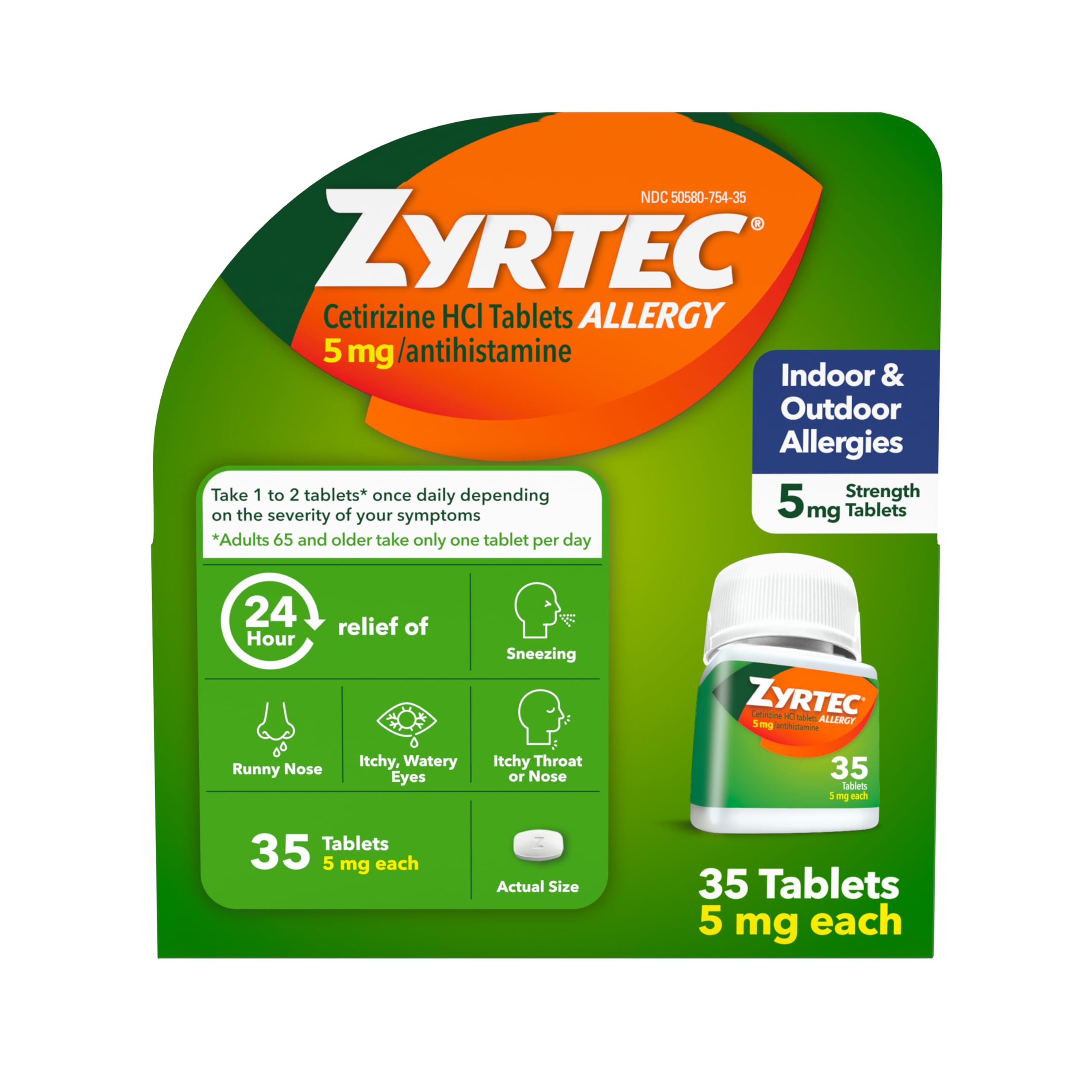
Zyrtec finally addressed the one-dose-fits-all problem by launching this 5 mg tablet format. On a low-pollen day you take one tablet; when the tree count spikes you double up to 10 mg. This titration ability means you are never stuck committing to the full 10 mg when your symptoms only call for half the molecule. The cetirizine hydrochloride is the same second-generation active that users trust for non-sedating 24-hour coverage, but the dosage form is the key differentiator here.
The 35-count bottle is intentionally compact — toss it in a backpack or glove compartment without the bulk of a 300-count jug. Real-world reports from the pollen-heavy New Jersey season confirm zero dry mouth and no drowsiness with consistent daily use. The onset is roughly one hour, and the full day coverage holds reliably even when you take the flexible 5 mg dose.
For the buyer who wants to match their medication to their actual symptom curve rather than hitting every day with a fixed hammer, this is the most surgical option on the list. The slightly higher cost per tablet is compensation for the precision and the brand’s clinical validation.
Why it’s great
- Flexible 5 mg base allows 5–10 mg daily titration based on symptom severity.
- Zero reported drowsiness or dry mouth in user logs across heavy pollen weeks.
Good to know
- Tablets have a bitter taste if you cannot swallow immediately.
- Only 35 doses per bottle — need refills for full season coverage.
2. Amazon Basic Care All Day Allergy (300 ct)

Amazon Basic Care delivers the exact same 10 mg cetirizine hydrochloride found in name-brand Zyrtec, and at a per-tablet cost that makes seasonal stocking a no-brainer. This is original prescription-strength dosing — the same molecule that was prescribed before it went OTC — packaged in a 300-count bottle that lasts the average adult nearly ten months with daily use. The active ingredient targets histamine at the H1 receptor site in peripheral tissues, providing 24-hour relief from sneezing, runny nose, and itchy watery eyes.
User reports from Florida’s relentless pollen season highlight that the relief holds into the next day when taken at night, and the non-drowsy profile holds true for the vast majority. Some experienced users note that half a tablet (5 mg) works for mild seasons, effectively doubling the supply. The tablets are gluten-free and sourced from either Indian or U.S. manufacturing facilities, depending on the production batch.
The only trade-off compared to Zyrtec-branded cetirizine is the lack of flexible dosing — each tablet is fixed at 10 mg. If you need the ability to dial up or down, the newer Zyrtec 5 mg format is the better fit. But for predictable, daily, full-strength coverage at a price that makes the 300-count bottle the obvious annual buy, this is the benchmark.
Why it’s great
- 300 tablets per bottle covers a full allergy season plus carry-over.
- Pharmaceutically equivalent to name-brand Zyrtec at a significantly lower cost.
Good to know
- Fixed 10 mg dose — no half-dose titration for mild symptom days.
- Some users with severe allergies report needing two tablets for 24-hour coverage.
3. GoodSense Allergy Relief Loratadine Tablets (365 ct)
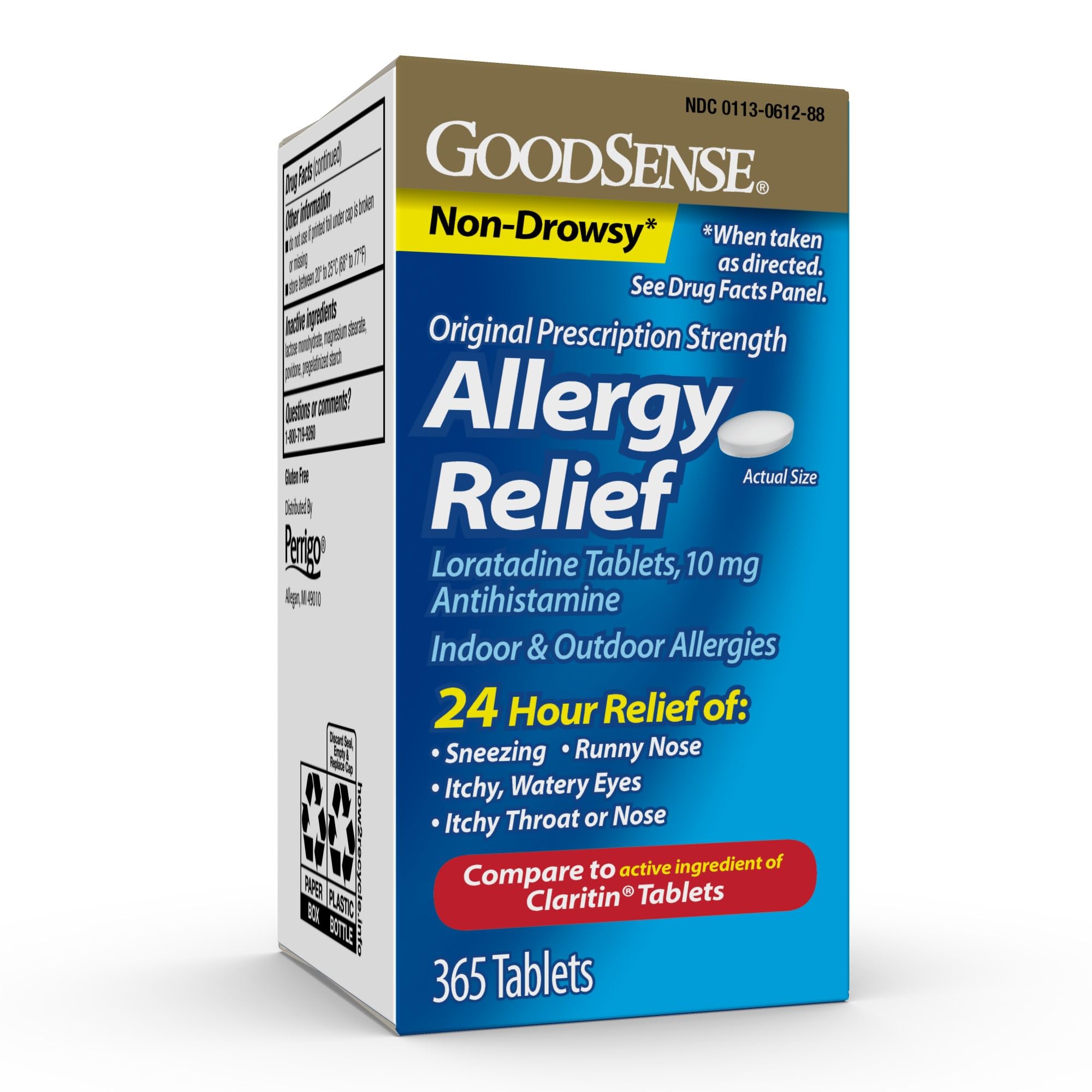
GoodSense Loratadine is the least sedating second-generation antihistamine available without a prescription. Loratadine has a lower penetration of the blood-brain barrier than cetirizine, making it the preferred choice for anyone who experiences even mild drowsiness from Zyrtec. The 10 mg tablet is chemically identical to Claritin, providing relief from sneezing, runny nose, and itchy throat for a full 24 hours with a single dose.
The 365-count bottle is a full year’s supply for one adult, and the per-tablet cost is the lowest on this list. Families report buying this as the household staple because it is safe for children six years and older and does not cause the afternoon crash that interferes with school or work. The trade-off is onset time — loratadine takes two to three hours to reach peak plasma levels, so it is not the choice for a sudden allergy attack. Users pair it with cetirizine for acute rescue while using loratadine for daily maintenance.
For the buyer whose primary concern is staying sharp and avoiding any sedation signal, this is the molecule of choice. The slow onset is manageable with consistent daily dosing — take it every morning and the steady-state concentration handles the pollen before you feel it.
Why it’s great
- Loratadine is the most non-drowsy second-gen antihistamine available OTC.
- 365 tablets in one bottle — no refills for the entire year.
Good to know
- Slow onset (2–3 hours) — not ideal for immediate symptom rescue.
- Less effective for severe congestion compared to cetirizine.
4. Benadryl Allergy Ultratables (100 ct)
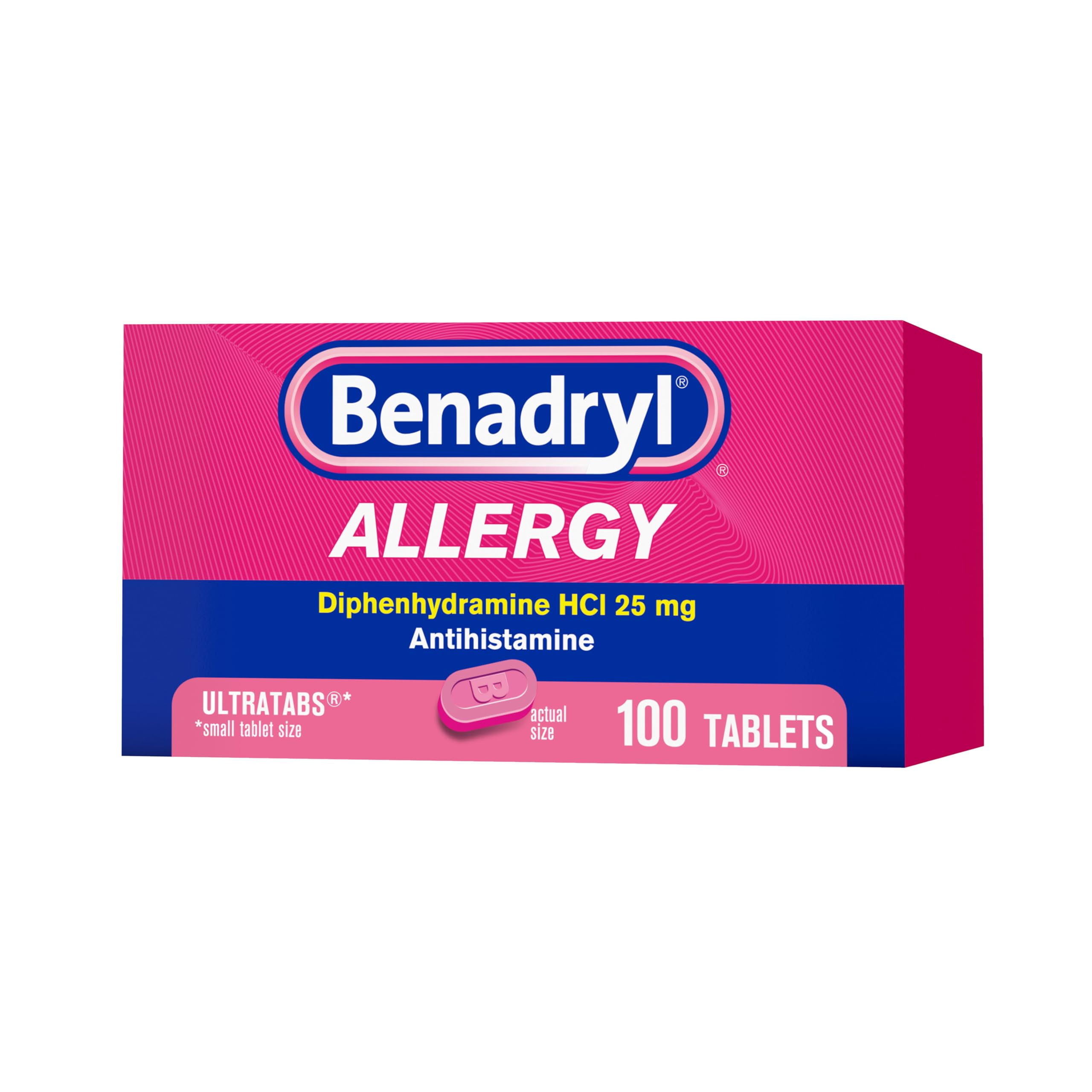
Benadryl remains the gold standard for acute allergic episodes because diphenhydramine HCl works within 15 to 30 minutes. When your eyes are swelling, your nose is running uncontrollably, or you had an unexpected encounter with a cat despite being allergic, this is the molecule that stops the histamine cascade fast. The 25 mg tablet is the standard adult dose, and the 100-count bottle gives you a full arsenal of rescue doses that stay fresh in a glove compartment or travel bag.
The drawback is non-negotiable: diphenhydramine is a first-generation antihistamine that crosses the blood-brain barrier, causing significant drowsiness in most adults. This is not a daily driver for the workday. Users describe it as reliable and trusty for symptom knockout, but the sedation limits its use to evenings, weekends, or situations where you can afford to nap. The small tablet size makes it easy to swallow even without water.
For the buyer who needs a heavy-hitting rescue tool rather than a daily maintenance med, Benadryl Ultratabs are the correct pick. Keep them in your arsenal for the days when second-gen options are not cutting it and you need the full force of a first-gen molecule.
Why it’s great
- Fastest onset of any OTC antihistamine — relief in under 30 minutes.
- Doctor-recommended brand with decades of real-world efficacy data.
Good to know
- Significant drowsiness — not suitable for daily daytime use.
- Short duration (4–6 hours) requires re-dosing every few hours.
5. RIGHT REMEDIES Allergy Relief Antihistamine (1000 ct)
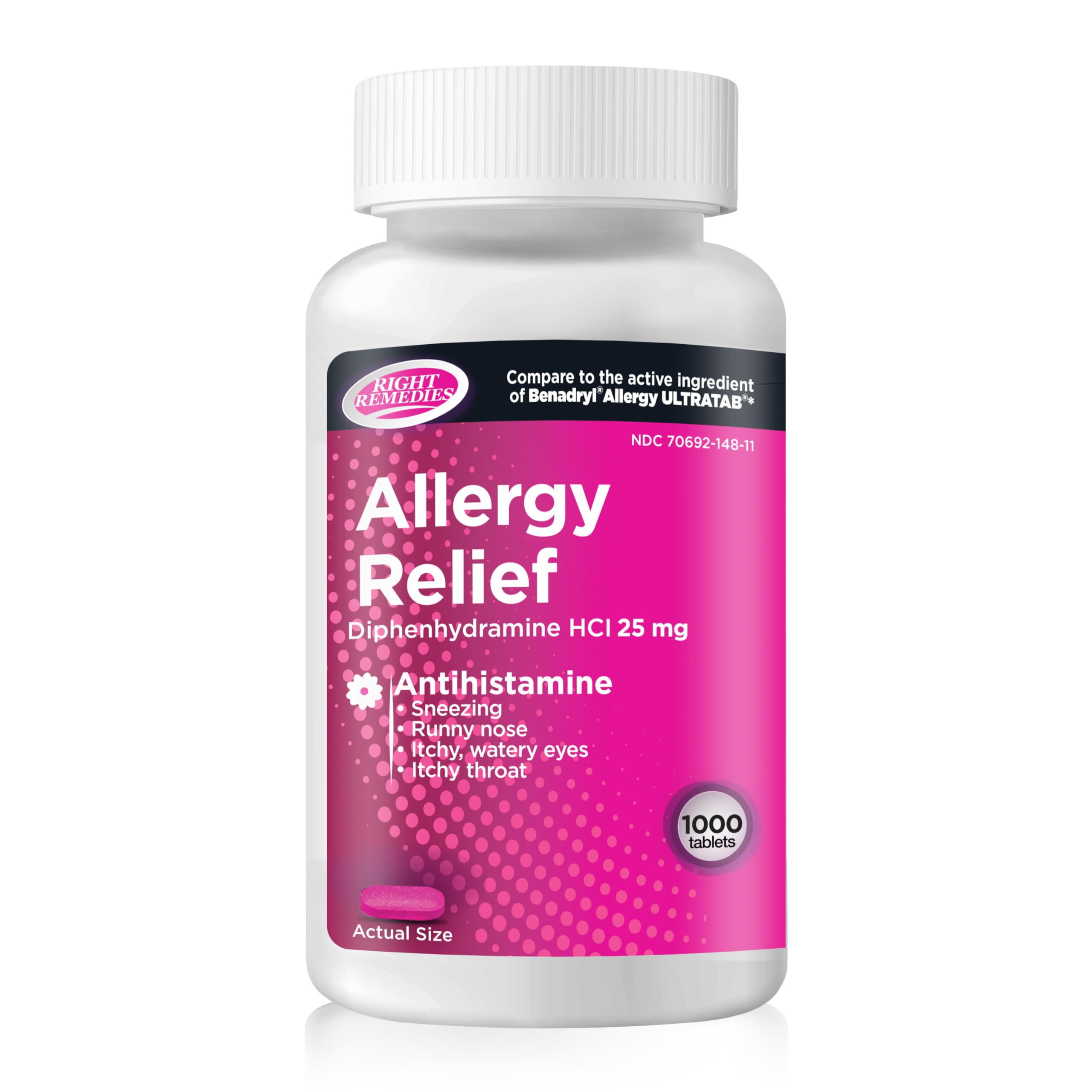
RIGHT REMEDIES offers the same 25 mg diphenhydramine HCl found in Benadryl at a per-tablet cost that makes the 1000-count bottle the most economical bulk buy on the market. The active ingredient is first-generation, so it carries the same sedative profile, but for the buyer who knows they will need a large volume of rescue doses across a long season or multiple family members, this bottle eliminates the hassle of reordering every few weeks.
User logs consistently report that these tablets work as well as or better than brand-name Benadryl for reducing pollen symptoms, with the same fast onset. Each dose lasts four to six hours, and the instructions allow up to two tablets every six hours for adults and children 12 years and older.
The catch, as with any first-gen antihistamine, is sedation. This is not a purchase for someone seeking a daily alert-state allergy solution. It is a smart reserve purchase — keep it in the medicine cabinet for breakthrough attacks, for travel where you might need to sleep through a reaction, or for households where multiple members need occasional fast rescue.
Why it’s great
- 1000 tablets per bottle — the highest count per dollar in this review.
- Active ingredient is identical to Benadryl at a fraction of the cost.
Good to know
- First-gen sedation is heavy — plan for sleep after each dose.
- Short duration requires re-dosing every 4–6 hours for continuous coverage.
FAQ
Can I take cetirizine and loratadine on the same day?
Why does diphenhydramine make me so drowsy while Zyrtec does not?
How long do I need to take an antihistamine before it builds up in my system?
Final Thoughts: The Verdict
For most users, the best antihistamine for seasonal allergies is the Amazon Basic Care All Day Allergy (300 ct) because it delivers the proven cetirizine molecule at the optimal 10 mg dose with the lowest per-tablet cost and a full season’s supply. If you want the flexibility to dial your dose between mild and severe days, grab the Zyrtec 24 Hour (35 ct). And for fast, acute rescue when second-gen options are not enough, nothing beats the Benadryl Ultratabs (100 ct).

Mo Maruf
I created WellFizz to bridge the gap between vague wellness advice and actionable solutions. My mission is simple: to decode the research and give you practical tools you can actually use.
Beyond the data, I am a passionate traveler. I believe that stepping away from the screen to explore new environments is essential for mental clarity and physical vitality.