Our readers keep the lights on and my smoothie glass nicely filled. As an Amazon Associate, I earn from qualifying purchases.
The biggest pain point for anyone switching to a plant-based protein is texture — specifically the gritty, chalky mouthfeel that turns a post-workout shake into a chore. For brown rice protein, that graininess is the direct result of particle size and processing method, two variables most shoppers never see on the label. A poorly milled rice protein separates in liquid, settles into a sludge at the bottom of your shaker, and leaves a dry aftertaste that makes daily use feel like punishment. The goal is to find a powder that dissolves fully and delivers clean, complete nutrition without a fight.
I’m Mohammad Maruf — the founder and writer behind WellFizz. I’ve spent hundreds of hours cross-referencing third-party lab reports, customer texture complaints, and ingredient decks to separate the truly smooth powders from the ones that rely on heavy flavor masking.
The only approach that consistently filters out low-grade powders is to compare protein concentration, additive load, and real-world solubility data side by side. That is exactly what this guide to the best brown rice protein powder delivers for the decisive shopper.
How To Choose The Best Brown Rice Protein Powder
Before ordering a tub, you need to know that not all brown rice protein powders are created equal. The spec that most directly impacts usability is the protein content percentage — a 70-percent concentrate will feel grainier and require more liquid than an 80-percent isolate. The second factor is the presence of digestive enzymes; rice protein is naturally harder to break down than pea, so added proteases make a noticeable difference in bloat and absorption speed.
Protein Concentration and Particle Size
Look for powders that list “brown rice protein isolate” rather than “concentrate.” Isolates undergo additional filtration to bump protein content above 80 percent, which also removes more of the fibrous hull that creates that sandy texture. A lower particle size — below 100 microns — translates directly to a smoother mouthfeel in cold water.
Amino Acid Completeness and Blends
Brown rice protein is naturally low in lysine, so a single-source rice powder will not be a complete protein by PDCAAS standards. The best options either blend with pea, chia, or pumpkin seed to fill that gap, or fortify with added lysine. If the label does not show an amino acid profile or a blend statement, the product is likely incomplete for muscle building.
Additive Profile and Sweetener Type
Stevia is the most common sweetener in this category, but cheap stevia extracts carry a bitter aftertaste that many users describe as “metallic.” Premium brands use organic stevia leaf or monk fruit to avoid that bitterness. Avoid products with “natural flavors” as the second ingredient — that is often a code for masking poor raw-material quality.
Quick Comparison
On smaller screens, swipe sideways to see the full table.
| Model | Category | Best For | Key Spec | Amazon |
|---|---|---|---|---|
| Sunwarrior Classic Plus | Blend (Pea+Brown Rice) | Daily smoothies & coffee addition | Sprouted & fermented for digestibility | Amazon |
| About Time Vegan Protein | Isolate Blend | Low-carb, clean-label shakes | Zero fat, cholesterol, or sugar | Amazon |
| MRM Veggie Elite | Pea+Rice+Enzymes | Post-workout recovery | 9.5g amino acids + digestive enzymes | Amazon |
| Forzagen Vegan Protein 360 | Triple-Source Blend | Budget-friendly chocolate shakes | 20g protein, 6g carbs per serving | Amazon |
| Sprout Living Epic Protein | 5-Source Unflavored | Ultra-clean, additive-free users | Third-party tested for heavy metals | Amazon |
| NutriBiotic Organic Rice Protein | Single-Source Isolate | Hypoallergenic, minimal ingredient | 80% protein content, no chemicals | Amazon |
| Orgain Organic Plant Protein | Triple-Source Blend | Meal replacement & baking | 21g protein, 0g sugar, 5g fiber | Amazon |
In‑Depth Reviews
5. Sunwarrior Classic Plus — Chocolate

Sunwarrior Classic Plus distinguishes itself in a crowded field by sprouting and fermenting the raw brown rice before milling — a step that breaks down phytic acid and increases bioavailable amino acids. Users consistently report that this powder dissolves more completely than mechanically milled competitors, even when stirred by hand into a cold beverage. The 15-gram protein serving is modest compared to blends that push 24 grams, but the amino acid profile is notably well-rounded for a plant powder, with good levels of methionine and cysteine that brown rice alone usually lacks.
The chocolate flavor is the strongest reason to buy this tub. Multiple verified buyers mention adding it to black coffee as a creamer replacement, which tells you the flavor does not clash with acidity or bitterness. The fine particle size leaves no floaties, and the absence of added sugars means the sweetness comes entirely from stevia leaf, which the community calls “natural tasting” rather than synthetic. The scoop fills to 15 grams, so the serving density is lower than typical 25-gram powders — you will get 30 uses from a 1.7-pound container.
Cost per gram of protein is slightly higher than mass-market blends, but the gentle digestion and clean ingredient deck justify the premium for anyone who has had bloating issues with other rice proteins. The bag-style packaging is less convenient than a jar, and the lack of a resealable zipper means you need a transfer container for long-term storage.
Why it’s great
- Sprouted and fermented for superior digestibility and nutrient absorption
- Chocolate flavor blends seamlessly into coffee and smoothies without added sugar
- Fine particle size minimizes grit and residue in cold water
Good to know
- Modest 15g protein per serving compared to 20-24g blends
- Bag packaging offers less convenience than a rigid jar with a scoop holder
7. About Time Vegan Protein Powder — Vanilla

About Time builds its ingredient philosophy around minimalism — the vanilla flavor contains five recognizable components: pea protein isolate, brown rice protein concentrate, organic stevia, natural vanilla flavor, and a trace of coconut milk powder for creaminess. There is no gum, no lecithin, no synthetic thickeners. The protein blend leans heavily on isolate for volume, which keeps the carbohydrate and fat content at zero grams per serving. For anyone on a keto or strict low-carb protocol, hitting 22 grams of protein with zero net carbs is a strong draw.
The trade-off for that clean profile is a slightly gritty texture that a few reviewers noted tickles the throat when mixed only with cold water. The recommended preparation is a shaker bottle with almond milk, which masks the particle feel. The vanilla flavor is not overpowering, and users who add instant coffee or unsweetened cocoa report that the powder integrates without clashing. A small percentage of drinkers notice a mild stevia aftertaste during the first few servings, but acclimation usually happens within a week.
The container holds 32 servings at 22 grams each, giving you a competitive per-serving cost for an isolate-heavy blend. The price point sits above the middle of the market, but the “no junk” formula and the inclusion of iron and calcium (from the natural ingredients) add nutritional value beyond just protein content.
Why it’s great
- Zero fat, zero sugar, zero cholesterol — ideal for ketogenic and low-carb diets
- Short, pronounceable ingredient list with no gums or artificial fillers
- Mixes instantly in a shaker with almond milk or juice
Good to know
- Grittiness is noticeable when mixed with plain cold water alone
- Stevia aftertaste may take a few days to get used to
4. MRM Veggie Elite Performance Protein — Vanilla Bean
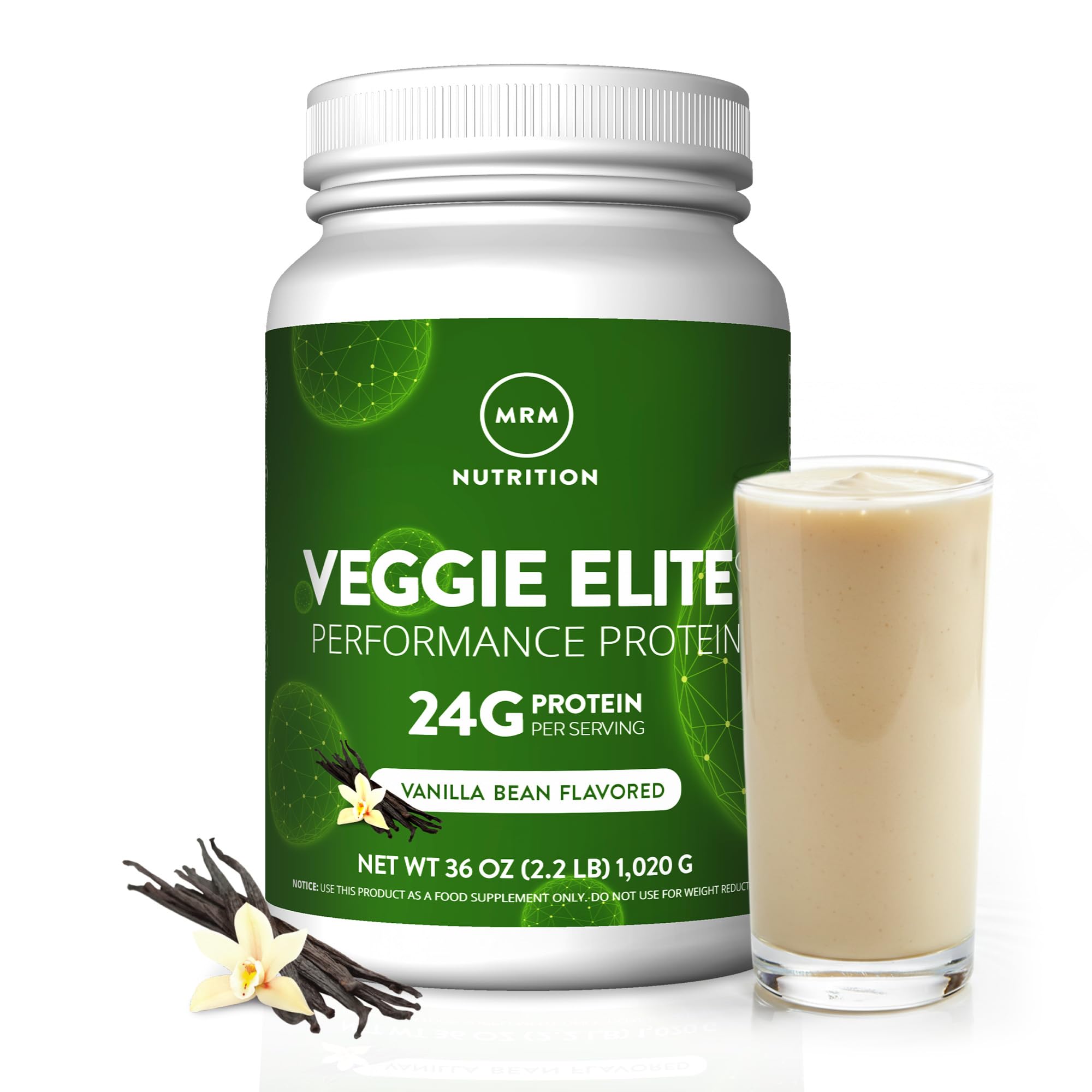
MRM Veggie Elite is one of the few brown-rice-based proteins that publishes its full amino acid breakdown on the label, showing 9.5 grams of total amino acids and 4.5 grams of branched-chain amino acids per 24-gram serving. The formula combines pea protein isolate with organic brown rice protein and sacha inchi, a seed that boosts omega-3 content and rounds out the lysine gap. The addition of a proprietary digestive enzyme blend (including bromelain and papain) is a concrete spec that directly addresses the digestion complaints common with straight rice powder.
The vanilla bean flavor is described by long-term users as “clean” and “mild” — it does not dominate a smoothie, which makes it versatile for baking and pancake recipes. However, a significant minority of recent purchasers report that a formula change increased the sweetness level, making it cloying in water. The scoop volume is also known to be inaccurate; users recommend weighing the powder to hit the 24-gram target rather than relying on the scoop alone. The texture sits in the middle of the category — not as smooth as the top premium picks, but noticeably finer than entry-level concentrates.
The company has been owned by a clinical dietitian and biochemist since 1996, so the formulation logic is grounded in sports nutrition rather than marketing. Veggie Elite is not the cheapest per gram, but the amino density per serving is among the highest in any rice-based blend.
Why it’s great
- Transparent amino acid profile with 9.5g total and 4.5g BCAAs per serving
- Digestive enzyme blend reduces bloating and improves protein absorption
- Versatile vanilla flavor works in baking as well as shakes
Good to know
- Recent formula change may have increased sweetness level
- Scoop volume is inconsistent — weighing the powder is recommended
3. Forzagen Vegan Protein 360 — Chocolate Milkshake
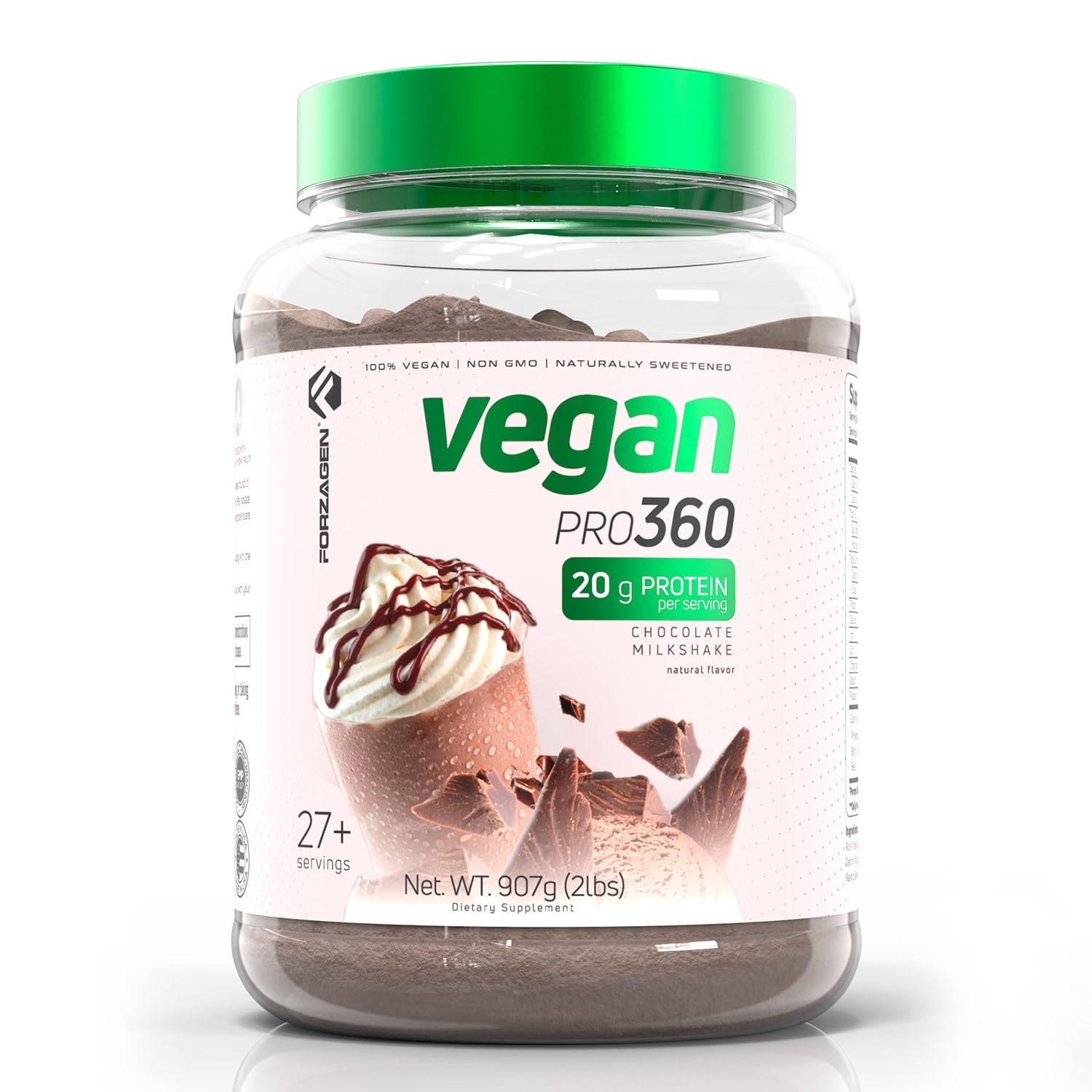
Forzagen stands out on the value front by delivering 20 grams of protein from a triple-source blend of quinoa, brown rice, and pea isolate with only 6 grams of carbs and 2 grams of sugar per serving. The chocolate “milkshake” flavor is a crowd-pleaser — reviewers consistently call it “one of the better tasting vegan proteins they’ve tried,” with minimal stevia bitterness. The protein concentration hits the sweet spot for a blend this affordable, avoiding the common trap of stretching the formula with cheap carbohydrate fillers.
The texture is thicker and creamier than straight rice isolates, thanks to the quinoa’s natural starch content. Users who prefer a thinner shake should double the liquid recommendation. A few packages have arrived with dents or tears in the outer seal, but the inner lid remained intact in all reported cases. The 2.2-pound tub provides 27 servings, making the cost per gram of protein among the lowest in this lineup while still maintaining a complete amino acid profile from three different plant sources.
Flavor fatigue is the main long-term concern — the chocolate is pleasant but singular, and there is no unflavored option for those who want to control their own sweetener. For a daily driver who prioritizes cost efficiency and taste over the absolute cleanest ingredient deck, this is a strong mid-range contender.
Why it’s great
- Excellent chocolate flavor with minimal stevia bitterness
- Triple-source protein (quinoa, rice, pea) for a complete amino profile
- Low carb (6g) and low sugar (2g) per serving at a competitive price point
Good to know
- Chocolate flavor only — no unflavored or vanilla options
- Mixes thick; requires more liquid than average for a thin shake
2. Sprout Living Epic Protein — Original Unflavored

Sprout Living Epic Protein uses five organic protein sources — yellow pea, pumpkin seed, sunflower seed, chia seed, and cranberry seed — to build a complete amino acid profile without relying on a single rice concentrate. The unflavored version contains zero additives, no gum, no natural flavors, and no sweeteners of any kind. This is a powder for the purist who wants total control over the flavor profile of their smoothie or oatmeal. The 26-gram serving is among the highest protein counts per scoop in the entire category.
The lack of sweeteners is a double-edged sword. Some users find the taste neutral and versatile, while others describe it as “chalkboard” or “earthy” when mixed with water alone. The texture is described as smooth and creamy relative to other unflavored powders, but the absence of lecithin or xanthan gum means that the powder settles after about five minutes if the drink is not consumed quickly. The company bottles the product in a glass-like jar with a metal lid, which preserves freshness but adds shipping weight.
Third-party testing for heavy metals and purity is a documented part of Sprout Living’s quality process — they post results for current batches on request. This is the pick for someone who values absolute ingredient transparency over flavor convenience and is willing to invest in a premium product for the cleanest possible profile.
Why it’s great
- 26g protein from 5 organic superfood seeds — complete amino profile without additives
- Third-party tested for purity, heavy metals, and contaminants
- Zero artificial or natural flavors — full control over your shake’s taste
Good to know
- Strong earthy flavor that some users find off-putting in water only
- Settles quickly if not consumed within a few minutes of mixing
6. NutriBiotic Organic Rice Protein — Plain

NutriBiotic’s organic rice protein is a single-ingredient product with 80 percent protein content by weight — meaning roughly 24 grams of protein per 30-gram scoop, the highest protein density in this guide. The powder comes from certified organic, whole-grain sprouted brown rice processed with water only, with no chemicals, solvents, or additives used at any stage. The plain (unflavored/un sweetened) version has been on the market for over 40 years, making it one of the longest-running rice protein formulations available.
The pure processing method has a direct impact on texture. The powder is described as “very grainy” and “gritty” by many reviewers, and it does not dissolve fully in cold water — blending for 2-3 minutes or using room-temperature liquid reduces the grit but does not eliminate it. The taste is distinctly like brown rice, which is neutral to some but off-putting to others as a drink. Most long-term users add cinnamon, cocoa, or fruit to mask the flavor profile. The inner seal is designed to stay inside the lid when opened, which is intentional to maintain freshness but catches first-time buyers off guard.
The 3-pound container provides significantly more servings than any other tub in this guide, making the per-serving cost the absolute lowest among premium-certified organic options. This is the best choice for someone who needs a high-protein, hypoallergenic bulk powder for baking or oatmeal and does not mind working around the texture limitations.
Why it’s great
- Single-ingredient organic brown rice protein with 80% protein content
- Processed without chemicals, pesticides, or added solvents
- Large 3-pound container offers excellent per-serving value
Good to know
- Very grainy texture that does not dissolve fully without extended blending
- Plain rice taste requires masking with cocoa, fruit, or cinnamon
1. Orgain Organic Plant Based Protein — Vanilla Bean
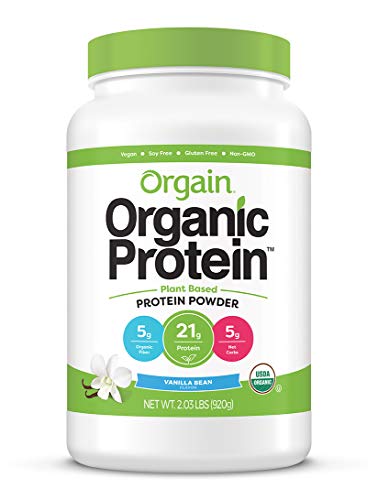
Orgain combines pea protein, brown rice protein, and chia seeds for a triple-source blend that delivers 21 grams of protein, 5 grams of fiber, and 0 grams of sugar per 150-calorie serving. The inclusion of chia adds a prebiotic fiber that sets it apart from standard rice-pea blends — the fiber not only aids digestion but also improves the shake’s satiety, making it functional as a meal replacement rather than just a post-workout supplement. The vanilla bean flavor is sweetened with organic stevia, and the sweetness level is polarizing: some drinkers call it “perfectly balanced,” while others find it cloyingly sweet, especially when mixed with milk or non-dairy alternatives.
The texture is smooth relative to other budget-to-midrange options, with no visible clumps after shaker mixing. The powder is USDA organic, vegan, kosher, and free of gluten, dairy, soy, and carrageenan — meeting most dietary restriction requirements in a single jar. Users have reported using it successfully in baked goods like muffins and pancakes, which speaks to the stability of the protein under heat. The 2.03-pound container yields about 20 servings at the 21-gram target.
Orgain is available at the widest retail footprint of any product in this guide, which makes it the most accessible option for replenishment. The flavor range, high fiber content, and consistent quality make it the best entry point for someone transitioning to a plant-based protein who wants a product that works across multiple use cases.
Why it’s great
- 21g protein plus 5g fiber from chia for improved satiety and digestion
- 0g sugar with a balanced vanilla bean flavor that blends well in recipes
- USDA organic, vegan, kosher, and free of the top 8 allergens
Good to know
- Sweetness level can be too strong for some palates with milk
- Only 20 servings per 2.03 lb jar — fewer servings than larger containers
FAQ
Is brown rice protein powder a complete protein?
Why does my brown rice protein powder taste gritty?
How much brown rice protein should I take per day?
Final Thoughts: The Verdict
For most users, the best brown rice protein powder winner is the Sunwarrior Classic Plus because it balances digestibility, flavor versatility, and a clean organic profile in a way that works for both morning coffee and post-workout recovery. If you want a ultra-clean, additive-free protein with third-party heavy metal testing, grab the Sprout Living Epic Protein. And for a budget-friendly chocolate shake with a complete amino profile and excellent taste, nothing beats the Forzagen Vegan Protein 360.

Mo Maruf
I created WellFizz to bridge the gap between vague wellness advice and actionable solutions. My mission is simple: to decode the research and give you practical tools you can actually use.
Beyond the data, I am a passionate traveler. I believe that stepping away from the screen to explore new environments is essential for mental clarity and physical vitality.