Our readers keep the lights on and my smoothie glass nicely filled. As an Amazon Associate, I earn from qualifying purchases.
Stepping up from a smartphone to a dedicated camera means confronting a wall of specs — sensor sizes, mount systems, autofocus points, and stabilization jargon. The budget tier of this market is crowded, and a wrong purchase can leave you with a body that limits your lens growth or a kit that can’t handle low light. The real challenge isn’t finding a cheap camera; it’s spending your money on the package that delivers tangible image quality and a clear upgrade path.
I’m Mohammad Maruf — the founder and writer behind WellFizz. I’ve spent years combing through technical specifications, market pricing trends, and real-user feedback to identify which mirrorless cameras deliver genuine performance gains without inflating the cost.
Whether you’re chasing fast autofocus for kids and pets, crisp 4K video for vlogging, or a compact travel companion with excellent lens options, finding the right tool is critical. This guide breaks down the best options to help you confidently choose a budget mirrorless camera that fits your needs and will grow with your skills.
How To Choose The Best Budget Mirrorless Camera
Navigating the budget mirrorless market requires focusing on a few critical components that directly impact your image quality and future flexibility. Sensor size, stabilization, autofocus capability, and the lens ecosystem are the pillars that define a camera’s true value.
Sensor Size: APS-C vs. Micro Four Thirds
The sensor is the heart of the camera. APS-C sensors (found in Canon EOS R100, Sony ZV-E10, Nikon Z 30) are physically larger, offering better low-light performance and more natural background blur (bokeh) at equivalent apertures. Micro Four Thirds sensors (used by Panasonic G85, G100, OM System E-M10 Mark IV) result in smaller, lighter bodies and lenses, with a deeper depth of field that can be beneficial for vlogging and macro work. For general photography where low-light is a priority, APS-C generally wins. For ultimate portability and a massive catalog of affordable glass, Micro Four Thirds is a compelling choice.
Stabilization: IBIS vs. Lens-Based
Image stabilization is crucial for sharp handheld shots in dim conditions and smooth video. In-Body Image Stabilization (IBIS) moves the sensor itself, meaning it works with any lens you mount, even old manual-focus primes. This is a premium feature on the Panasonic G85 and OM System E-M10 Mark IV. Many budget APS-C cameras (like the Sony ZV-E10 and Canon EOS R100) lack IBIS, relying only on lens-based optical stabilization (OIS) or electronic stabilization that can crop your video. If you plan to use a variety of lenses or shoot steady footage without a gimbal, prioritize IBIS.
Autofocus System
Phase-detection autofocus (PDAF) is the gold standard for speed and tracking, especially for moving subjects. Sony’s Real-Time Eye AF on the a6400 and ZV-E10 is exceptionally sticky. Canon’s Dual Pixel CMOS AF on the R100 and R10 is also very reliable. Contrast-detection systems, found on the Panasonic G100 and older models, are slower and can hunt in low light. The number of autofocus points is less important than the type: PDAF with subject tracking is the feature that will save you from missed shots.
Quick Comparison
On smaller screens, swipe sideways to see the full table.
| Model | Category | Best For | Key Spec | Amazon |
|---|---|---|---|---|
| Panasonic LUMIX G85 | Mid-Range | Hybrid Shooters | 16 MP + 5-Axis IBIS | Amazon |
| Sony Alpha a6400 | Premium | Fast Action Tracking | 425 Phase-Detect Points | Amazon |
| Canon EOS R10 | Premium | Beginners & Versatility | 651 Autofocus Points | Amazon |
| Nikon Z50 II (2-Lens Kit) | Premium | Travel & Value Kit | 20.9 MP + Dual Lenses | Amazon |
| Fujifilm X-S20 (Body) | Premium | Film Simulations & Video | 6.2K 10-bit Video | Amazon |
| OM System E-M10 Mark IV | Mid-Range | Compact Selfies & Style | 20 MP + 5-Axis IBIS | Amazon |
| Nikon Z 30 | Mid-Range | Vlogging & Streaming | 4K 30p & Flip-Out Screen | Amazon |
| Sony ZV-E10 | Mid-Range | Content Creators | 24.2 MP + 4K from 6K | Amazon |
| Panasonic LUMIX G100 | Mid-Range | Novelty & Audio Quality | 4K + Mic with Tracking | Amazon |
| Canon EOS R100 | Budget | Entry-Level Photography | 24.1 MP Dual Pixel AF | Amazon |
| Fujifilm X-Half | Budget | Novelty Film Fun | 18 MP + Instax Print | Amazon |
In‑Depth Reviews
1. Panasonic LUMIX G85 4K Digital Camera

The Panasonic G85 remains a benchmark for value in the mirrorless world because it packs in-body 5-axis stabilization into a weather-sealed magnesium alloy body—a rare combination at this tier. The 16-megapixel Micro Four Thirds sensor lacks a low-pass filter, boosting fine-detail resolving power by nearly 10 percent over older 16 MP sensors, and the kit lens (12-60mm f/3.5-5.6) is optically solid with effective OIS that works in tandem with the IBIS for incredibly steady handheld 4K video.
Autofocus is contrast-based with 49 points, which is reliable in good light but does hunt noticeably in dim conditions, especially when recording 4K. The electronic viewfinder offers a sharp 2360K-dot OLED experience, and the fully articulated touchscreen makes framing from any angle straightforward. Battery life is rated modestly, so picking up a spare is wise for a full day of shooting.
This camera is the complete package for someone who wants a rugged, stable platform for both photos and 4K video without paying for a full-frame body. The Micro Four Thirds mount opens the door to a massive library of affordable lenses from Panasonic, Olympus, and third parties, making it a true grow-with-you system.
Why it’s great
- Professional-grade 5-axis IBIS works with all lenses
- Weather-sealed magnesium alloy body for durability
- Excellent 4K video with 30 fps stills burst mode
Good to know
- 16 MP sensor resolution is lower than APS-C competitors
- Contrast-detect AF struggles in low light
- Below-average battery life; buy a spare
2. Sony Alpha a6400 Mirrorless Camera

The Sony a6400 is a speed demon, boasting 0.02-second autofocus acquisition with 425 phase-detection points covering nearly the entire frame. Real-Time Eye AF for humans, animals, and birds is incredibly tenacious, making it one of the best options for photographing active children, pets, or sports. The 24.2-megapixel APS-C Exmor sensor delivers excellent dynamic range and ISO performance up to 51,200, producing clean images that hold up well to cropping.
The camera captures 4K video with 2.4x oversampling and full pixel readout, resulting in sharp footage with no pixel binning artifacts. The 180-degree tiltable touchscreen is great for high-angle shooting but not a fully articulated flip-out, which is a limitation for selfie vlogging if you want an on-camera mic. The body is compact, and the E-mount ecosystem is the largest of any mirrorless system, with lenses from Sony, Sigma, Tamron, and more at every price point.
Where the a6400 loses ground is the lack of in-body stabilization—you must rely on stabilized lenses or an external gimbal for smooth handheld video. The menu system is dense and takes time to learn. For stills shooters who prioritize autofocus speed and have a budget for stabilized glass, this camera is a formidable tool.
Why it’s great
- Blazing-fast 425-point phase-detect autofocus with Real-Time Eye AF
- Excellent 4K oversampled video quality
- Massive Sony E-mount lens ecosystem
Good to know
- No in-body image stabilization (IBIS)
- Screen tilts but does not flip to the front for vlogging
- Complex menu system can be daunting for beginners
3. Canon EOS R10 Mirrorless Camera

The Canon EOS R10 brings the company’s powerful dual-pixel CMOS AF II system, with 651 autofocus points and subject detection for people, animals, and vehicles, to a compact and lightweight body. It uses a 24.2-megapixel APS-C sensor combined with the DIGIC X image processor, the same engine found in Canon’s high-end R3 and R5 models. This processing power enables mechanical shutter bursts up to 15 fps and 23 fps with the electronic shutter, while maintaining continuous autofocus tracking.
The kit lens, the RF-S 18-45mm f/4.5-6.3 IS STM, is compact and stabilized, making the whole setup incredibly portable. The anti-smudge coated LCD is bright and touch-responsive, and the deep grip offers excellent handling for a camera of this size. 4K video is oversampled from 6K, and the single UHS-II SD card slot is a welcome upgrade from slower slots on cheaper models.
Battery life is typical for a small mirrorless; the LP-E17 requires an external charger (included) and you will want a spare for heavy days. The RF-S lens selection is still growing, but the camera is fully compatible with all Canon RF lenses, including full-frame glass. For a beginner who wants modern autofocus performance and a clear path into the Canon ecosystem, the R10 is a smart investment.
Why it’s great
- Advanced dual-pixel AF II with 651 points and subject tracking
- Fast 15 fps mechanical / 23 fps electronic burst speeds
- Compact and lightweight with an excellent grip
Good to know
- Limited native RF-S lens options currently available
- No in-body image stabilization
- Battery life is average; a spare is recommended
4. Nikon Z50 II with Two Lenses

The Nikon Z50 II is purpose-built for the traveler who wants one kit to cover wide-angle landscapes and telephoto close-ups. It comes bundled with both the NIKKOR Z DX 16-50mm f/3.5-6.3 VR and the 50-250mm f/4.5-6.3 VR lenses, giving you a full-frame equivalent range of 24-375mm. The 20.9-megapixel APS-C sensor is larger than a smartphone’s and produces lifelike colors with good dynamic range from dawn to dusk.
A standout feature is the Picture Control button, offering 31 built-in presets that allow you to dial in a look—vivid, monochrome, or custom Cloud Picture Controls downloaded from Nikon Imaging Cloud—directly in the viewfinder. Autofocus is a hybrid system with 231 points that can detect and track nine subject types including birds and airplanes. 4K UHD video at 60p, in-camera 120p slow motion, and the built-in flash make it versatile for evening and indoor use.
The two-lens kit adds weight and bulk compared to a single compact zoom, and the SnapBridge app can be slow for large file transfers. The Z50 II lacks a headphone jack, which might bother dedicated videographers. For the photographer who values a wide zoom range out of the box and creative color presets, this kit is hard to beat.
Why it’s great
- Excellent two-lens kit covers 24-375mm equivalent range
- 31 built-in Picture Control presets for creative looks
- 9-subject autofocus detection including birds and vehicles
Good to know
- Two-lens kit is bulkier than a single zoom
- No headphone port for video monitoring
- SnapBridge app can be slow for transferring images
5. Fujifilm X-S20 Mirrorless Camera Body

The Fujifilm X-S20 is the premium entry in this guide, pairing the 26.1-megapixel X-Trans CMOS 4 sensor with the high-speed X-Processor 5 imaging engine—the same heart as the flagship X-H2S. This combination delivers blazing autofocus with subject detection, up to 20 fps burst shooting with the electronic shutter, and the ability to record 6.2K/30p video internally in 4:2:2 10-bit color. The acclaimed Fujifilm film simulations (like Classic Chrome, Acros, and Velvia) produce stunning JPEGs straight out of camera, reducing the need for post-processing.
The in-body image stabilization has been improved to offer up to seven stops of compensation, a full stop better than the previous X-S10 model, making handheld video and low-light stills remarkably steady. The deep handgrip provides a confident hold even with larger telephoto lenses. The NP-W235 battery delivers approximately 750 frames per charge, more than double the previous generation, which is a massive advantage for long shoots.
Some early units have reported overheating during extended 4K recording in hot ambient temperatures, and the camera lacks weather sealing, so caution is needed in rain or dust. The single SD card slot is another limitation for backup-hungry professionals. For the hybrid shooter who wants exceptional color science, top-tier video, and seven-stop IBIS, the X-S20 represents a high-value premium choice.
Why it’s great
- Outstanding 6.2K 10-bit internal video recording
- Seven-stop in-body image stabilization
- Best-in-class film simulations for straight-out-of-camera JPEGs
Good to know
- Can overheat in hot weather during extended video recording
- No weather sealing for rain or dust protection
- Only a single SD card slot
6. OM System Olympus E-M10 Mark IV

The OM System (formerly Olympus) E-M10 Mark IV is a compact, retro-styled camera with a 20-megapixel Micro Four Thirds sensor and an impressive 5-axis in-body stabilization rated at 4.5 shutter speed steps. This means you can handhold shots at surprisingly slow shutter speeds—down to a full second in some cases—without blur. The flip-down screen activates a dedicated selfie mode, automatically switching the camera into touch-to-shoot operation perfect for self-portraits and group shots.
The bundled M.Zuiko Digital ED 14-42mm F3.5-5.6 EZ pancake lens is extremely slender, allowing the camera to slide into a jacket pocket when paired with the body. The interface is beginner-friendly with scene modes and art filters, including a new Instant Film option for a nostalgic feel. Bluetooth connectivity provides always-on connection for quick image transfer to a smartphone via the OI Share app.
The Micro Four Thirds sensor has more noise at high ISOs compared to larger APS-C sensors, so low-light performance is not its strength. The camera charges via a micro-USB port (not USB-C) and does not include an external charger, though spare batteries are inexpensive. For the user who prizes portability and in-body stabilization above ultimate image quality, the E-M10 Mark IV is a joy to carry and use.
Why it’s great
- Impressive 4.5-stop 5-axis in-body stabilization
- Very compact and jacket-pocket portable with pancake lens
- Flip-down selfie screen with dedicated mode
Good to know
- Micro Four Thirds sensor has more high-ISO noise than APS-C
- Charges via micro-USB, not USB-C; no external charger included
- Smartphone app can be slow and unreliable
7. Nikon Z 30 with Wide-Angle Zoom Lens

The Nikon Z 30 is designed from the ground up for vloggers and content creators, featuring a fully articulated flip-out touchscreen that faces forward for self-recording, a built-in stereo microphone with adjustable sensitivity, and a red REC light that clearly shows when you’re rolling. The 16-50mm wide-angle zoom kit lens provides a generous field of view perfect for handheld vlogging, and the 20.9-megapixel APS-C sensor delivers crisp 4K resolution with outstanding low-light performance and beautifully blurred backgrounds.
Autofocus uses a hybrid phase-detection system with eye tracking for both people and pets, ensuring subjects stay sharp during movement. The camera can stream directly over USB-C at Full HD 60p or 4K 30p over HDMI without needing extra capture cards, and it can be powered continuously over USB-C for long streaming sessions. The body is Nikon’s most compact and lightweight mirrorless camera.
There is no electronic viewfinder, so framing relies entirely on the rear LCD, which can be difficult in bright sunlight. Some users report overheating after 45 minutes to two hours of continuous streaming. The Z 30 is a focused tool for the social media creator who values a flip-out screen, easy streaming, and great 4K quality over a viewfinder and traditional photography controls.
Why it’s great
- Fully articulated touchscreen ideal for self-recording and vlogging
- Built-in stereo mic with adjustable sensitivity and red REC light
- Plug-and-play USB-C streaming with continuous power
Good to know
- No electronic viewfinder for bright-light shooting
- Can overheat during extended streaming sessions
- Not ideal for traditional photography due to lack of viewfinder
8. Sony Alpha ZV-E10 Vlog Camera
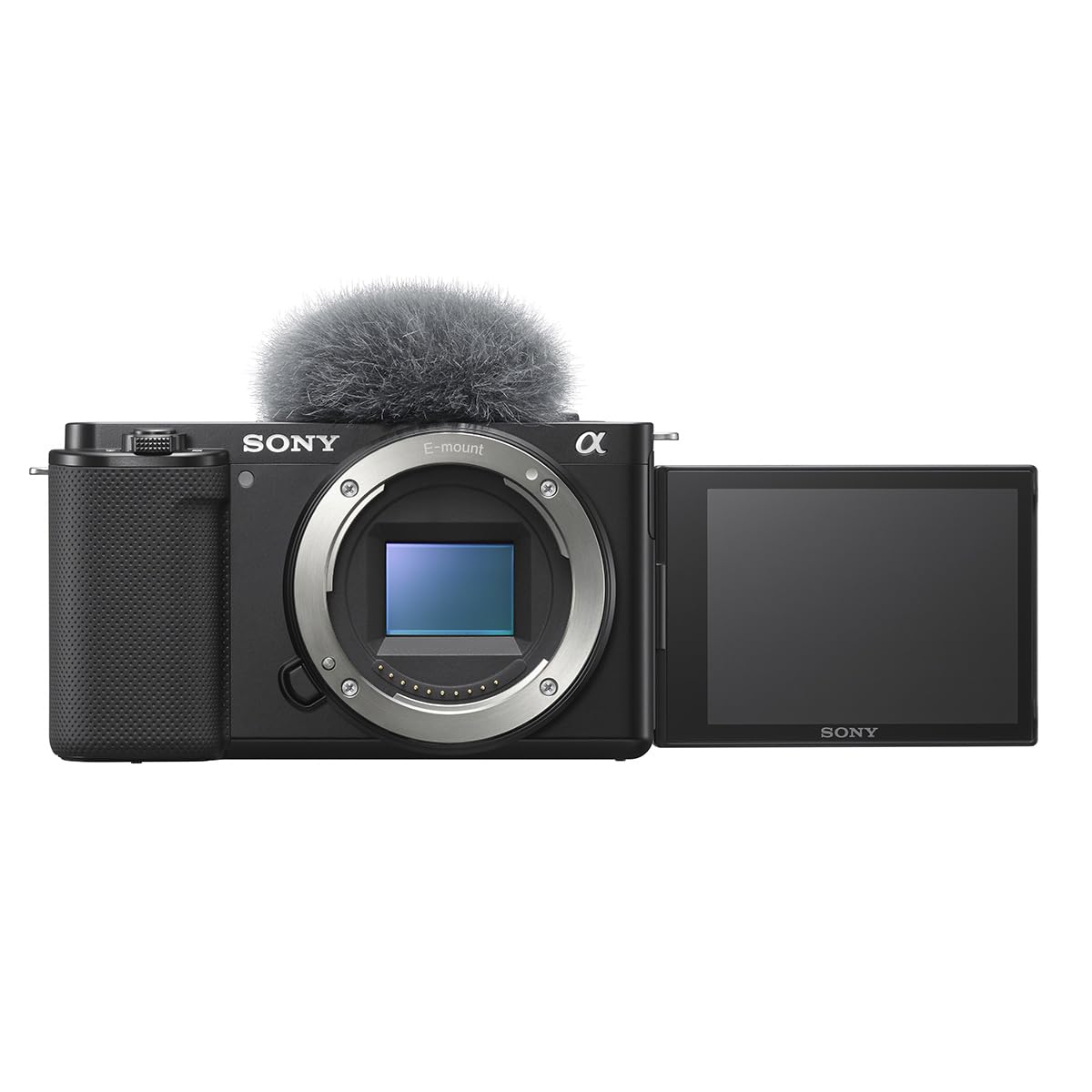
The Sony ZV-E10 is purpose-built for content creators, combining a 24.2-megapixel APS-C Exmor CMOS sensor with a BIONZ X processor that oversamples 4K video from a 6K readout—delivering exceptionally sharp footage with full pixel readout and no binning. The Product Showcase Setting instantly transitions focus from your face to an object in front of the lens, perfect for unboxing videos or review footage. The Background Defocus button toggles between blurred and sharp backgrounds with one press.
Real-Time Eye AF for humans and animals is fast and sticky, and the 425-point phase-detection array ensures accurate tracking across the frame. The camera streams live over a single USB cable without extra hardware, and the included windscreen on the top mic reduces audio harshness outdoors. The E-mount gives access to the largest APS-C lens ecosystem.
The camera lacks in-body image stabilization, so smooth handheld footage requires a gimbal or a lens with OIS. The rolling shutter is quite pronounced when panning quickly, and the small LCD and lack of a viewfinder can make critical focus checks difficult in bright light. 4K recording is also limited to 30p without zone autofocus. For the YouTuber or Twitch streamer who needs reliable autofocus and sharp 4K in a compact body, the ZV-E10 is a fantastic tool.
Why it’s great
- Sharp 4K oversampled from 6K with full pixel readout
- Product Showcase and Background Defocus buttons for efficient content creation
- Excellent Real-Time Eye AF for people and animals
Good to know
- No in-body image stabilization; requires gimbal for smooth handheld video
- Pronounced rolling shutter effect
- Small LCD and no viewfinder for critical focusing
9. Panasonic LUMIX G100 4K Mirrorless Camera

The Panasonic LUMIX G100 differentiates itself with an advanced 360-degree microphone system that can track audio to a subject, automatically adjusting its pickup pattern for clear sound in noisy environments. This is an unusual and valuable feature for solo videographers who don’t want to manage an external mic rig. It also includes V-Log L recording for professional color grading and frame markers for social media aspect ratios, suggesting Panasonic designed it with a multimedia creator in mind.
The 20-megapixel Micro Four Thirds sensor supports 4K video at 24p and 30p, and the 5-axis hybrid image stabilization helps reduce shake. The 12-32mm wide-angle kit lens is a compact pancake zoom, keeping the overall package very small. The camera can also function as a high-quality webcam via USB, making it suitable for both content creation and professional calls.
Autofocus is contrast-detection based, which is slower and less reliable than phase-detection systems, particularly in lower light. The major limitation is that 4K video recording cuts off after a few minutes due to heat or file size limits, which severely restricts its use for longer interviews or events. The G100 is a niche pick ideal for short clips, vlogs, and interviews where audio quality matters more than marathon recording.
Why it’s great
- Unique built-in microphone with automatic subject tracking for clear audio
- Compact and lightweight with pancake zoom lens
- Includes V-Log L for professional color grading
Good to know
- 4K video recording time is heavily restricted
- Contrast-detect autofocus is slow and hunts in low light
- Not suitable for long event or interview recording
10. Canon EOS R100 Mirrorless Camera Kit

The Canon EOS R100 is the smallest and most affordable body in the EOS R series, offering a 24.1-megapixel APS-C CMOS sensor paired with the DIGIC 8 processor. It provides Canon’s respected Dual Pixel CMOS AF, covering up to 143 zones with human face and eye detection, making autofocus reliable for portraiture and general shooting. The camera can shoot 4K video at 24 fps and Full HD at 60 fps, with slow-motion capture available in HD.
The RF-S 18-45mm F4.5-6.3 IS STM kit lens includes optical image stabilization at up to four stops, helping to reduce camera shake. The body is lightweight and compact, designed for excellent mobility. Built-in Wi-Fi and Bluetooth allow for easy image transfer to a smartphone for sharing on social media.
The lack of a fully articulated touchscreen is a significant compromise; the screen is a fixed unit, which limits creative and selfie shooting. The 4K video is capped at 24 fps and there is no in-body stabilization, so smooth video will require stable hands or a gimbal. The EOS R100 is a pure entry-level stills camera and a solid starting point for a beginner who wants access to the Canon RF lens system without spending much.
Why it’s great
- Very affordable entry point into the Canon RF mirrorless system
- Reliable Dual Pixel CMOS AF with face detection
- Compact and lightweight body for easy carry
Good to know
- Fixed LCD screen cannot tilt or rotate for selfies
- 4K video limited to 24 fps and no in-body stabilization
- DIGIC 8 processor is older than the DIGIC X found in newer models
11. Fujifilm X-Half Mirrorless Camera

The Fujifilm X-Half is a niche product that simulates the 35mm half-frame film camera experience in a modern digital body. It uses an 18-megapixel 1-inch sensor and outputs JPEG only—no RAW files—to replicate the character of film. The retro dial-based controls and a unique 2-in-1 mode that stitches stills and video together give it a creative edge for users seeking a distinct analog feel. Print-to-Instax functionality and app-based sharing are built in.
The camera is compact and pocketable, with 26 analog-inspired film and filter options to achieve specific looks without post-processing. The user reviews highlight the fun factor and the satisfying tactile nature of the dials, making it a conversation starter. It works best as a casual memory-capturing device suitable for scrapbooking and everyday snapshots.
It is not a serious photography tool and lacks the sensor size, autofocus speed, and lens compatibility of any other camera on this list. The software app connection has been described as roughly 80% reliable. For the price, you are paying for the aesthetic experience and the film simulation novelty, not for image quality or system expandability. The X-Half is best seen as a digital toy for enthusiasts who already own a proper system camera.
Why it’s great
- Unique half-frame film simulation experience in a digital body
- Extremely pocketable and lightweight
- Prints directly to Instax printers for instant physical photos
Good to know
- JPEG-only output; no RAW format for editing flexibility
- 17-18 MP 1-inch sensor is much smaller than APS-C or M43
- Not suitable for serious photography due to limited specs and lens incompatibility
FAQ
Is it better to buy a mirrorless camera body only or with a kit lens?
How many autofocus points do I actually need for casual photography?
What is the meaning of ‘crop factor’ and how does it affect my lens choices?
Can I use my old DSLR lenses on a new mirrorless camera?
Is 4K video at 24 fps enough for YouTube and social media?
Final Thoughts: The Verdict
For most users, the best budget mirrorless camera winner is the Panasonic LUMIX G85 because it offers the rare combination of professional-grade in-body stabilization, weather sealing, and 4K video at a price that undercuts its APS-C rivals. If you prioritize blazing-fast autofocus and a massive lens ecosystem for stills, grab the Sony Alpha a6400. And for creative shooters who want the best video specs, film simulations, and seven-stop IBIS, nothing beats the Fujifilm X-S20.

Mo Maruf
I created WellFizz to bridge the gap between vague wellness advice and actionable solutions. My mission is simple: to decode the research and give you practical tools you can actually use.
Beyond the data, I am a passionate traveler. I believe that stepping away from the screen to explore new environments is essential for mental clarity and physical vitality.