Our readers keep the lights on and my smoothie glass nicely filled. As an Amazon Associate, I earn from qualifying purchases.
IEMs for audiophiles are a different species from consumer earbuds. They are precision instruments designed to reveal the texture of a snare hit, the decay of a piano note, and the soundstage width of a live recording. The difference between a and a model isn’t just price—it’s the difference between hearing your music and dissecting it.
I’m Mohammad Maruf — the founder and writer behind WellFizz. My research focuses on driver configurations, passive crossover networks, and impedance matching to separate the truly transparent from the hyped.
After analyzing over a dozen hybrid and multi-driver models, these picks represent the clearest path to micro-detail and tonal accuracy if you are looking for the best audiophile iem under market constraints.
How To Choose The Best Audiophile IEM
Choosing an audiophile IEM requires shifting focus from brand names to the actual architecture of sound reproduction. Driver type, crossover design, and build ergonomics matter more than any marketing badge.
Driver Topology: Hybrid vs. Full BA vs. Single DD
Hybrid IEMs combine dynamic drivers for bass and balanced armatures for mids/treble. The advantage is textured low-end without sacrificing speed. Full-BA designs like the Westone Pro X50 deliver exceptional coherence but can lack sub-bass weight. Single dynamic driver models like the Sennheiser IE 200 are simpler but hit a ceiling in detail retrieval.
Impedance and Sensitivity
Low impedance (below 32Ω) and high sensitivity (above 108dB) mean an IEM is easy to drive from a phone or laptop. However, higher-end models often require a dedicated DAC/amp to unlock their soundstage. The Shure SE846 Gen 2, for example, benefits from a balanced amplifier to deliver its full dynamic range.
Crossover Network and Phase Coherence
A poorly implemented crossover causes frequency bleed—bass muddies the mids, or treble becomes harsh. Look for 3D-printed acoustic tube structures (as in the AFUL Performer 5+2) or independent sound paths (Tipsy M3) that keep drivers isolated. This ensures clean instrument separation.
Shell Comfort and Nozzle Depth
Audiophile IEMs are worn for hours. Shells made from hand-crafted resin or 3D-printed acrylic offer durability and a contoured fit. Nozzle angle matters—too shallow and the seal breaks; too deep and fatigue sets in. The Kiwi Ears Astral has a larger shell that may not fit small ear conchas, while the Sennheiser IE 200 is notably compact.
Quick Comparison
On smaller screens, swipe sideways to see the full table.
| Model | Category | Best For | Key Spec | Amazon |
|---|---|---|---|---|
| Tipsy M3 | Hybrid | Studio monitoring, competitive gaming | 2BA+1DD, Acoustic-Runway Tubes | Amazon |
| AFUL Performer 5+2 | Hybrid | Reference mixing, all-genre listening | 7-driver, 4-way electronic crossover | Amazon |
| Kiwi Ears Astral | Hybrid | Neutral-critical listening, professional engineers | 1DD+6BA, 10mm bioceramic driver | Amazon |
| Sennheiser IE 200 | Single DD | Entry-level hi-fi, portable neutral listening | 7mm TrueResponse transducer | Amazon |
| Kiwi Ears Quartet | Hybrid | Bass-forward fun listening, gaming | 2DD+2BA, Isobaric dual dynamic woofers | Amazon |
| Sennheiser HD 490 PRO | Open-Back Over-Ear | Mixing/mastering, competitive FPS gaming | Open-frame architecture, 5-36kHz response | Amazon |
| Moondrop Variations | Tribrid | EDM/electronic, critical detail retrieval | 1DD+2BA+2EST, <1% THD | Amazon |
| Westone Pro X50 | Full BA | Live stage monitoring, vocal clarity | 5 balanced-armature drivers | Amazon |
| Shure SE846 Gen 2 | Multi-Driver | Customizable tuning, premium detail | 4 drivers, 4 interchangeable sound filters | Amazon |
In‑Depth Reviews
1. Tipsy M3 Professional IEM
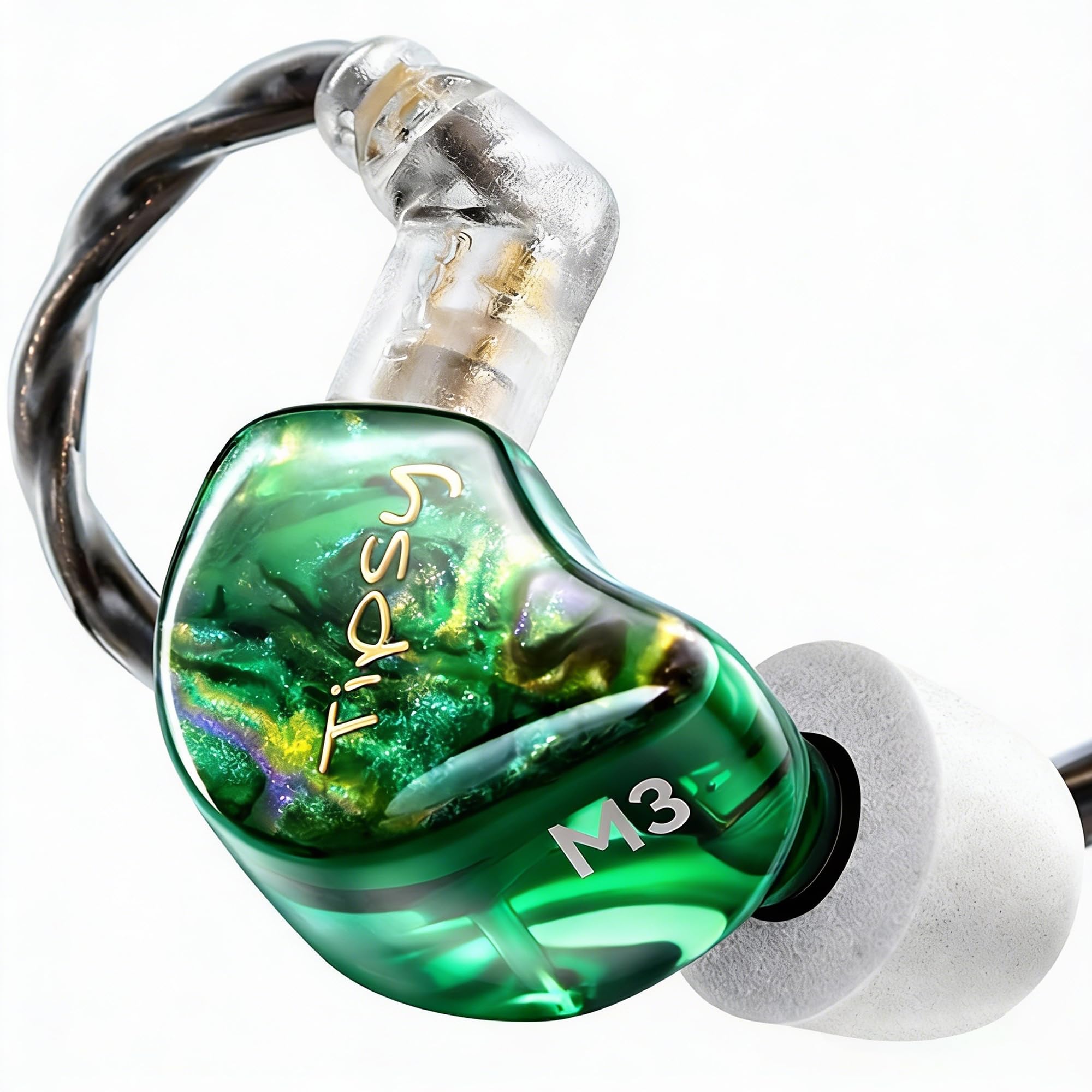
The Tipsy M3 sits at a unique intersection: it brings studio-grade transparency with its proprietary three-bore Acoustic-Runway Technology that physically separates bass, mid, and high frequencies into independent tubes. This eliminates crossover distortion entirely, making it one of the most phase-coherent hybrids at its level. The 9.2mm titanium-plated dynamic driver handles sub-bass with control, while the dual balanced armatures deliver a clean, analytical midrange that reveals flaws in a mix without harshness.
Comfort is a standout feature here. Tipsy analyzed over 20,000 ear scans to 3D-print the shell, resulting in a leak-free fit that offers 36dB of passive noise cancellation. The gem-grade resin is hand-polished and transparent, letting you see the internal acoustic tubes—a visual confirmation of the engineering. The included OFC silver-plated cable is excellent for the tier, offering low noise and flexible memory.
Gamers and musicians will appreciate the imaging precision. Footsteps in competitive shooters like Warzone are spatially distinct, and instrument separation in dense mixes avoids the congestion typical of simpler IEMs. The ear hooks, however, can feel stiff during prolonged sessions for some users. A memory foam tip swap usually resolves initial fit issues.
Why it’s great
- Physical tube isolation prevents frequency bleed
- Excellent passive noise isolation (36dB)
- Lightweight resin build with premium finish
Good to know
- Default ear hooks may irritate after 2+ hours
- Case feels budget relative to the IEM quality
2. HiFiGo AFUL Performer 5+2

The AFUL Performer 5+2 packs seven drivers—two dynamic, four balanced armature, and one micro planar—into a compact shell with zero frequency bleed. The trick is a 3D-printed acoustic tube structure combined with an enhanced four-way electronic crossover. Each driver operates in its own sealed chamber, so the micro planar handles the 10kHz–30kHz range entirely independently from the BA section. This results in an airy, electrostatic-like treble extension that remains smooth rather than splashy.
Instrument separation is the strongest attribute here. The RLC network eliminates resonant peaks, so cymbal crashes and string harmonics don’t smear into vocals. The bass has excellent texture—the dual dynamics deliver a layered low-end that can resolve the difference between a kick drum’s attack and its sustain. At 15Ω impedance and 109dB sensitivity, these are easy to drive from a basic dongle, but they scale noticeably with a cleaner DAC source, tightening the sub-bass and widening the stage.
Comfort is generally good, but some users report that the stock ear tips are too small for a secure seal. A quick swap to third-party foam tips resolves this and deepens the bass response. The included 8-strand silver-plated copper cable is premium-grade, though its thickness adds noticeable weight during casual walking.
Why it’s great
- Clean treble extension via dedicated micro planar driver
- Exceptional imaging with vertical depth
- Zero audible driver bleed across the spectrum
Good to know
- Stock silicone tips may not seal for smaller ears
- Cable is heavy and thick for portable use
3. Kiwi Ears Astral 1DD+6BA

The Kiwi Ears Astral is built around a 10mm bioceramic diaphragm dynamic driver that delivers a 9dB sub-bass shelf with a gentle 300Hz roll-off into the mids. This avoids the disjointed bass-to-mid transition that plagues many hybrids. The six balanced armatures are divided into dual midrange drivers and dual ultra-high tweeters, with a custom SWFK tweeter that extends smoothly to 15kHz without the sharp glare typical of extended treble.
The tuning is a refined U-shape—deep but controlled sub-bass, neutral midrange with accurate pinna compensation at 2.8kHz, and airy treble that never becomes shrill. This makes the Astral an excellent choice for critical listening of acoustic instruments and vocal recordings. The imaging is detailed enough to locate individual microphone placements in a live jazz set. The stock cable offers both 3.5mm and 4.4mm terminations, a thoughtful inclusion for balanced-amplifier users.
The shells are larger than most competitors, which may cause fit issues for smaller ears. Users with average-sized conchas should be fine, but those with smaller ears might need aftermarket tips or warmer ambient temperatures to soften the resin for a better seal. The included case is also undersized, often requiring a third-party replacement for safe storage.
Why it’s great
- Natural, non-fatiguing treble extension to 15kHz
- Excellent sub-bass texture without bleeding into mids
- Includes both 3.5mm and 4.4mm terminations
Good to know
- Large shells may not fit small ears comfortably
- Included case is too small to hold IEMs and cable
4. Sennheiser IE 200

The Sennheiser IE 200 is the entry-level hi-fi gateway. Its 7mm TrueResponse transducer—a single dynamic driver—delivers a neutral, uncolored sound that reveals details without exaggeration. The dual bass-tuning design lets you adjust the ear tip mounting position to choose between a tighter, controlled low-end or a warmer, fuller presentation. This feature is rare at this level and gives the listener flexibility without requiring EQ.
The fit is arguably the best in class. The compact, rounded shells sit flush in the ear and are comfortable for eight-hour listening sessions. The MMCX connectors allow cable swapping, though the proprietary connector length limits third-party compatibility. The included braided cable is decent but tangles easily and picks up microphonics when brushing against clothing—an upgrade to a braided aftermarket cable is a common recommendation.
Sound signature is flat out of the box, which makes it an excellent canvas for EQ customization. With a clean source like the AudioQuest Dragonfly, the IE 200 reveals impressive soundstage width for a single-driver IEM. However, some units have reported internal component failures after extended use, so consider it a beginner investment rather than a lifetime piece.
Why it’s great
- Exceptional comfort for all-day wear
- Dual bass-tuning positions without EQ
- Neutral signature ideal for EQ experimentation
Good to know
- Stock cable is microphonic and tangles easily
- Proprietary MMCX limits third-party cable choice
5. Kiwi Ears Quartet 2DD+2BA

The Kiwi Ears Quartet uses an isobaric dual dynamic subwoofer configuration—two 10mm titanium diaphragms each with independent magnetic circuits—aligned to be phase-synced with zero soundwave cancellation. This delivers sub-bass that is tight, fast, and deep, with a passive low-pass network at 350Hz that keeps the bass from bleeding into the lower mids. The result is a “fun” tuning that still maintains clarity in vocals and instrumental textures.
The switches on the cable let you toggle between bass and treble shelves. With both switches up, the Quartet has a warm, bass-rich signature that works well for EDM, hip-hop, and cinematic gaming. The dual balanced armatures handle the mids and highs with a crisp, clean tone that avoids the nasality common in cheap BA drivers. Imaging is decent, with good left-right separation but limited depth compared to more expensive hybrids.
The hand-crafted resin shells are beautifully finished and lightweight, though the housing protrudes slightly from the ear. Some users with a pronounced antitragus ridge report irritation after extended wear. The stock cable is entry-level but functional, with low noise and minimal tangling.
Why it’s great
- Deep, controlled sub-bass with zero bleed into mids
- On-board tuning switches for bass/treble customization
- Lightweight and visually striking resin shells
Good to know
- Protruding housing may cause ear fatigue
- Sound quality may degrade over extended daily use per some reports
6. Sennheiser HD 490 PRO

While not an IEM, the HD 490 PRO belongs in any audiophile discussion for its role as a stationary reference tool. It features an open-back design with Sennheiser’s Open-frame Architecture that reduces total harmonic distortion and delivers a wide, dimensional soundstage. The low-frequency cylinder system produces deep, accurate bass that is rare in open-back headphones under this tier.
The dual ear pad system (mixing and producing) changes the frequency response subtly. Mixing pads flatten the bass slightly for critical balance checks; producing pads add a touch of low-end warmth. The detachable cable with a 4-pin mini-XLR connector reduces handling noise effectively. With 120Ω impedance, it is easy to drive from most interfaces but benefits from a clean amplifier for maximum clarity.
This headphone is ideal for mixing engineers and competitive gamers who need pinpoint directional audio. The imaging precision reveals the position of footsteps in FPS games without artificial boosting. The fiberglass-reinforced polymer build is lightweight (under 300g) and the suspension headband ensures pressure-free wear for hours.
Why it’s great
- Open soundstage with precise localization
- Proprietary cable coil structure eliminates microphonics
- Two ear pad sets for mixing and producing
Good to know
- Proprietary pad attachment limits third-party options
- Not portable—needs a quiet environment
7. Moondrop Variations 1DD+2BA+2EST

The Moondrop Variations is a tribrid IEM that combines a 10mm LCP liquid crystal diaphragm dynamic driver, two custom balanced armatures for mids, and two electrostatic tweeters for ultra-high frequencies. The electrostatic tweeters extend treble beyond 40kHz with near-zero distortion, giving cymbals and hi-hats a shimmering airiness that BA tweeters cannot match. Total harmonic distortion across the full range is less than 1%, which is exceptional for a tribrid at this level.
The tuning is a mild V-shape that enhances sub-bass rumble and treble sparkle while keeping the midrange slightly recessed. This makes the Variations particularly engaging for EDM, electronic, and trance genres where bass impact and cymbal texture define the experience. Imaging is layered and three-dimensional—you can perceive the height and depth of a soundstage rather than just left-right positioning.
Build quality is the primary concern. The faceplate has been reported to detach after light use, and the 2-pin connectors can loosen after fewer than 50 insertions. The sound quality is class-leading under , but the durability issues mean this is better suited to a desk listener who handles the IEM carefully rather than a daily commuter.
Why it’s great
- Electrostatic tweeters deliver airy, extended treble
- Sub-bass rumble is deep and well-controlled
- Three-dimensional imaging with height perception
Good to know
- Reported faceplate adhesion problems
- 2-pin connectors may loosen over time
8. Westone Audio Pro X50

The Westone Pro X50 is a five-driver balanced-armature IEM designed for live stage monitoring. It features proprietary BA drivers with an extraordinarily tight ±2dB channel matching tolerance, ensuring that left and right responses are nearly identical. The sound signature is neutral and analytical, with a focus on vocal clarity and midrange definition. There is no sub-bass emphasis—this is a tool for hearing the mix, not for enjoying bass-heavy genres.
Isolation is a key strength. With foam tips, the Pro X50 provides immense passive noise attenuation, making it ideal for loud stage environments where you need to hear only the monitor mix. The compact, low-profile shell fits deep in the ear and stays secure during movement. The Linum Bax T2 cable is ultra-lightweight but fragile—a known weak point that tangles easily and lacks rigid ear hooks, causing it to fall out of the ear during active performances.
For home audiophiles, the Pro X50 offers a reference-level neutral signature that works well for critical listening of acoustic music, podcasts, and audiobooks. The absence of bass boost means it won’t satisfy those seeking a fun V-shape, but for vocal clarity and transient speed, it competes with custom monitors.
Why it’s great
- Neutral, analytical tuning ideal for live monitoring
- Extremely high noise isolation with foam tips
- Precise ±2dB channel matching
Good to know
- No sub-bass extension for bass-heavy genres
- Stock cable lacks ear guides and tangles easily
9. Shure SE846 PRO Gen 2

The Shure SE846 Gen 2 is the updated version of a legendary IEM. Its four high-definition drivers operate in a three-way system that dedicates a driver each to low, mid, and high frequencies, with a fourth for extended bass clarity. The headline feature is the interchangeable sound filters: balanced, warm, bright, and the new extended audio nozzle. This allows the listener to change the tonal balance without EQ, making the SE846 Gen 2 one of the most versatile IEMs for different genres and listening situations.
With the red extended filter, the sound signature becomes more open, with enhanced top-end sparkle and a more powerful, textured bass. The midrange retains the sweet, rich character that Shure is known for—acoustic guitars sound woody, and vocals have a natural presence without sibilance. The noise isolation is exceptional, thanks to the low-profile, over-ear design and multiple ear tip options. Triple-flange tips provide the deepest seal and the best bass response.
This IEM scales dramatically with better amplification. A balanced DAC/amp like the iFi hip-dac3 unlocks the full dynamic range, tightening the bass and expanding the soundstage. The build quality is durable, with reinforced MMCX connectors and a rugged carrying case. However, the price positions it as a serious investment, suitable for professionals and dedicated audiophiles who want a single do-everything IEM.
Why it’s great
- Four interchangeable filters for on-demand tonal tuning
- Rich, detailed midrange and powerful, controlled bass
- Exceptional build quality and noise isolation
Good to know
- Needs a balanced amplifier for full performance
- Premium price may exceed casual listener budget
FAQ
What is the difference between a hybrid and a full-BA IEM?
Can I use audiophile IEMs for competitive gaming?
Do I need a DAC/amp for high-impedance IEMs?
What does a 4-way electronic crossover do?
Final Thoughts: The Verdict
For most users, the best audiophile iem winner is the Tipsy M3 because it combines physical acoustic separation, professional-grade noise isolation, and a well-tuned hybrid driver array at a balanced price point. If you want a more scientific crossover design with cleaner treble extension, grab the HiFiGo AFUL Performer 5+2. And for the highest level of tuning versatility and build precision, nothing beats the Shure SE846 Gen 2.

Mo Maruf
I created WellFizz to bridge the gap between vague wellness advice and actionable solutions. My mission is simple: to decode the research and give you practical tools you can actually use.
Beyond the data, I am a passionate traveler. I believe that stepping away from the screen to explore new environments is essential for mental clarity and physical vitality.