Our readers keep the lights on and my smoothie glass nicely filled. As an Amazon Associate, I earn from qualifying purchases.
An aggregate concrete sealer is the invisible armor your driveway, patio, or walkway never knew it needed. The wrong choice leaves exposed pebbles pitted by freeze-thaw cycles or a surface that turns chalky within a single season, forcing a costly redo.
I’m Mohammad Maruf — the founder and writer behind WellFizz. For years I’ve analyzed and compared the chemical formulations, coverage rates, and real-world durability tests of hardscape sealers to separate marketing claims from actual performance.
This guide cuts through the noise to deliver actionable data on the top contenders for the best aggregate concrete sealer, helping you match the right chemistry to your specific surface without wasting a penny on the wrong gallon.
How To Choose The Best Aggregate Concrete Sealer
Selecting a sealer for exposed aggregate isn’t the same as sealing smooth broom-finished concrete. The uneven surface and exposed pebbles demand a formula that penetrates deeply without leaving a milky residue in low spots. Here are the three most critical factors.
Penetrating vs. Film-Forming Chemistry
Penetrating sealers (silane-siloxane) bond chemically inside the pores, letting the concrete breathe and preventing trapped moisture from causing delamination. Film-forming acrylics sit on the surface, delivering a wet-look gloss but requiring more maintenance and careful removal before reapplication. Aggregate surfaces benefit most from a penetrating base coat topped with an acrylic if a gloss finish is desired.
UV Stability and Finish Longevity
Clear acrylics can yellow or haze after one or two summers of direct sun. Look for UV-resistant acrylic formulations or pure silane-siloxane if you want the natural stone color to remain unchanged. Solvent-based acrylics generally hold color longer than water-based ones, but at the cost of higher VOC content and stronger fumes during application.
Coverage Rate and Application Method
Rough aggregate eats more product than smooth concrete. Check the manufacturer’s coverage range (typically 90–225 sq. ft. per gallon for penetrating products, 175–400 sq. ft. for acrylics) and factor in a second coat for new or heavily porous surfaces. Spray application with a pump-up garden sprayer is the most efficient method for textured aggregate, though a roller works for flatter sections.
Quick Comparison
On smaller screens, swipe sideways to see the full table.
| Model | Category | Best For | Key Spec | Amazon |
|---|---|---|---|---|
| Armor AR350 | Solvent Acrylic | Wet-look color enhancement | 175–225 sq. ft./gal | Amazon |
| DOMINATOR LG+ | Water Acrylic | Low-odor, fast-dry projects | 250–400 sq. ft./gal | Amazon |
| McKinnon Sealer | Water Acrylic | Semi-gloss on pavers | UV-resistant film | Amazon |
| MasonryDefender Siloxane | Penetrating | Invisible water repellency | 3-year verified durability | Amazon |
| MasonryDefender All Purpose | Penetrating | Multi-surface waterproofing | Works on limestone/granite | Amazon |
In‑Depth Reviews
1. Armor AR350 Low Gloss Wet Look Concrete Sealer

The Armor AR350 delivers the dramatic color enhancement that homeowners want when they see their aggregate go dark and rich after a rain shower. Its solvent-based acrylic formula penetrates the crevices between pebbles and dries to a low-gloss, non-yellowing finish that stands up to road salts, UV rays, and vehicle traffic for years. With a coverage rate of 175–225 sq. ft. per gallon, it balances durability with a workable application window.
Users consistently report that the low-gloss sheen transforms faded slate and stamped concrete without the heavy plastic look of high-gloss competitors. The product self-primes, meaning you don’t need a separate primer coat before applying to clean, unsealed aggregate. One gallon typically covers a single-car driveway with a single coat, though two coats are recommended for porous surfaces to even out the sheen.
The major trade-off is solvent fumes. The AR350 has strong VOC content and requires a proper respirator during application. Fumes dissipate within an hour, but the odor is noticeable for a full day in enclosed areas. For outdoor aggregate driveways and patios where ventilation is ample, this is the premium choice for a finish that lasts multiple seasons without hazing.
Why it’s great
- Dramatic wet-look enhancement without high-gloss plastic film
- Self-priming — no separate primer needed on clean concrete
- UV-resistant formulation resists yellowing for multiple years
Good to know
- Strong solvent odor requires respirator during application
- Coverage drops on extremely rough aggregate surfaces
- Not ideal for enclosed spaces until fumes fully cure
2. DOMINATOR LG+ Clear Acrylic Sealer
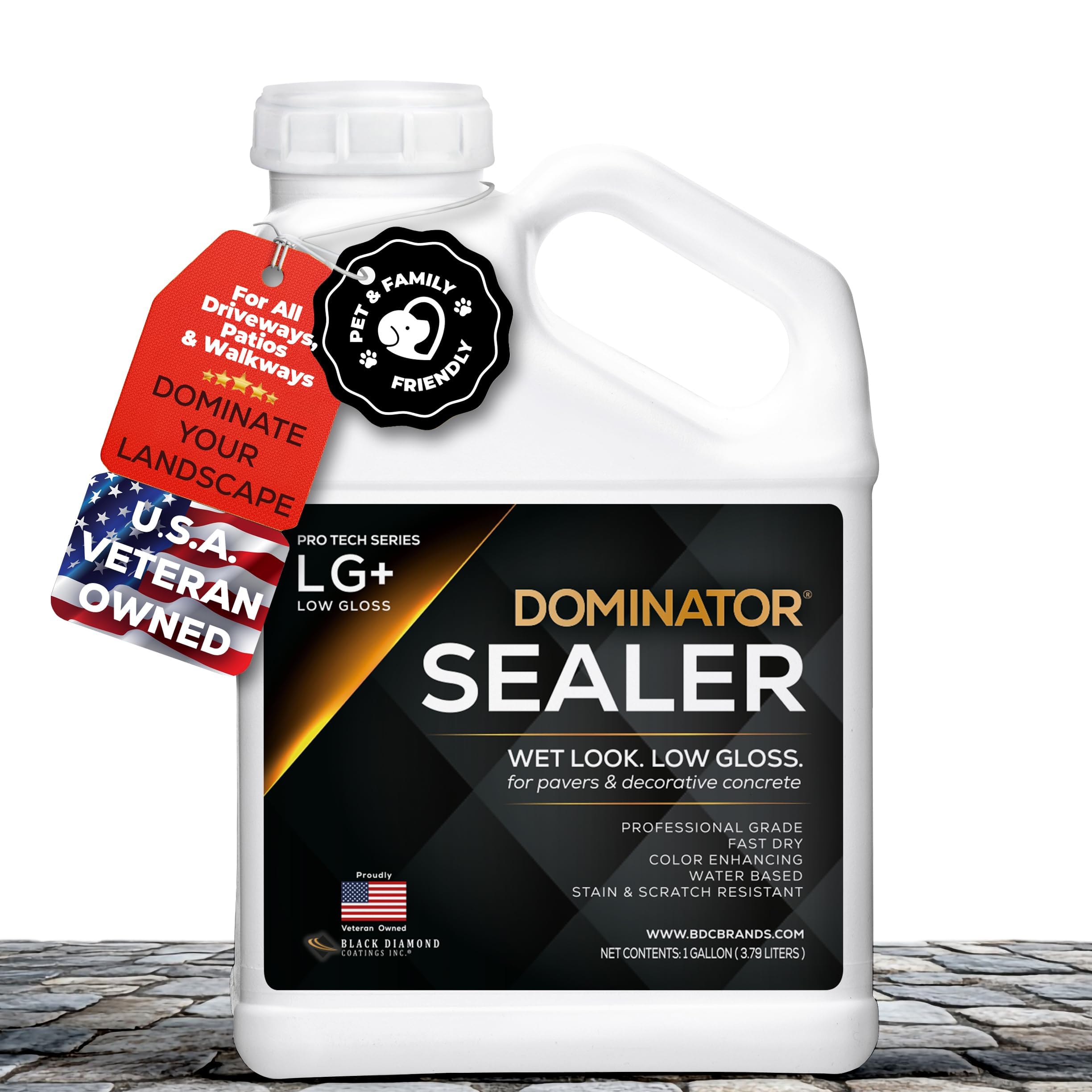
Its formula sprays on white but dries crystal clear, delivering a low-gloss wet look that enhances paver and decorative concrete colors without the heavy solvent fumes. Coverage is exceptional at 250–400 sq. ft. per gallon, making it the most economical choice for large driveways.
The fast-dry chemistry means you can apply two coats in a single afternoon, a significant advantage when the forecast is tight. Garden sprayer application works well, and cleanup requires only soap and water — no solvents needed. Users with twenty-year-old pavers report the LG+ restored a like-new appearance with two coats, while the water beading effect appears immediately after curing.
Be aware that the product remains slightly tacky in shaded areas for up to a week, and some users noted that ants and weeds can push through thin spots. The sealer also requires non-marking shoes during the first few days. Despite these quirks, the combination of low VOCs, fast dry time, and generous coverage makes it a top-tier mid-range option.
Why it’s great
- Low VOC and minimal odor — no respirator needed outdoors
- Covers 250–400 sq. ft. per gallon, reducing total project cost
- Fast-dry formula allows two coats in one day
Good to know
- Can remain sticky in shaded areas for up to a week
- White spray application requires careful monitoring to avoid missed spots
- Not recommended for natural stone or clay surfaces
3. McKinnon Concrete and Paver Sealer

The McKinnon Sealer sits in a sweet spot between the heavy-gloss of a pure acrylic and the invisible finish of a penetrating sealer. Its semi-gloss wet-look formula enriches aggregate color without the plastic shine that some homeowners find unnatural. Because it is water-based, cleanup is simple, and there are no noxious fumes — an important consideration for aggregate patios attached to living spaces.
Made in the USA by a family-owned industrial coatings supplier, this sealer is UV-resistant, meaning the color enhancement won’t fade into a hazy white after a season in the sun. Users applying it to exposed aggregate driveways report that it dries fast, spreads easily with a thick-nap roller, and leaves a dust-resistant surface that stays cleaner longer than untreated concrete. The 1-gallon container covers roughly 150–200 sq. ft. on rough aggregate.
The main limitation is that the semi-gloss sheen is slightly less dramatic than the full wet look achieved by solvent-based acrylics like the Armor AR350. For homeowners who want a noticeable color boost without the maintenance demands of a solvent sealer, McKinnon offers the best balance of ease and aesthetic improvement. The product is still relatively new to market, so long-term durability data beyond one season is limited.
Why it’s great
- No strong fumes — pleasant water-based application
- UV-resistant film prevents yellowing and hazing over time
- Semi-gloss finish enhances color without looking artificial
Good to know
- Semi-gloss sheen is less dramatic than full wet-look solvents
- Long-term durability data is limited due to recent release
- Requires full cure time before exposure to rain or traffic
4. MasonryDefender Concrete Sealer (Penetrating)

For homeowners who want zero change to the natural look of their aggregate while still blocking water damage, the MasonryDefender penetrating sealer is the clear winner. The silane-siloxane formula bonds deep within the concrete pores, creating a hydrophobic barrier that causes water to bead and roll off without forming any surface film. The concrete continues to breathe, preventing trapped moisture that can cause spalling in freeze-thaw climates.
Real-world user reports from the Pacific Northwest confirm that after three years, treated driveway squares still repel dirt and mold better than untreated areas. The formula is odorless, dries clear, and cleans up with water. Application is simple — just a low-pressure garden sprayer and ten minutes of work for a standard slab. One gallon covers 90–150 sq. ft., which is lower than film-forming sealers but expected for a deep-penetrating product.
The trade-off is obvious: you get zero color enhancement or gloss. If your aggregate is already in good shape and you simply want to prevent efflorescence, chloride ion damage, and ice melt deterioration, this is the most effective invisible armor available. It is not suitable for those seeking a wet-look finish.
Why it’s great
- Invisible protection — no change to aggregate appearance
- Breathable formula prevents moisture-trapping damage
- Proven 3-year durability in wet, high-rainfall climates
Good to know
- No color enhancement or gloss — purely functional
- Lower coverage rate (90–150 sq. ft./gal) than film-forming sealers
- Yearly reapplication recommended for optimal water repellency
5. MasonryDefender All Purpose Brick Stone & Concrete Sealer

If your project mixes aggregate concrete with brick, limestone, granite, or cultured sandstone, the MasonryDefender All Purpose formula offers the same silane-siloxane penetrating technology in a blend certified for a wider palette of surfaces. The waterproof barrier it creates is invisible and breathable, making it a strong choice for patios where concrete meets stone retaining walls or brick edging.
Users report successful results sealing brick porches and limestone steps, with water beading strongly after a two-coat application. The formula sprays on easily with a pump-up garden sprayer and dries quickly without altering the surface color or texture. One user specifically solved a water seepage issue under a stone porch post that had been leaking into their basement, demonstrating the product’s genuine waterproofing ability beyond simple surface repellency.
The caveat is that the all-purpose formulation is slightly more diluted to accommodate porous natural stone, so coverage and longevity may not match the dedicated MasonryDefender Concrete Sealer on pure aggregate. It is also a penetrating sealer with no gloss, so those wanting color enhancement should look to the acrylic options above. For mixed-material hardscapes, this is the most versatile barrier sealer available.
Why it’s great
- Works on concrete, brick, limestone, granite, and sandstone
- Invisible waterproofing — preserves natural surface appearance
- Effective on vertical surfaces and porous stone
Good to know
- Slightly lower longevity than dedicated concrete formula
- No gloss or color enhancement — purely functional barrier
- Requires thorough surface cleaning before application
FAQ
Should I use a penetrating or film-forming sealer on exposed aggregate?
How long does a concrete sealer last on an aggregate driveway?
Final Thoughts: The Verdict
For most users, the best aggregate concrete sealer winner is the Armor AR350 because it delivers dramatic color enhancement with a long-lasting, UV-resistant low-gloss finish that holds up to traffic and weather. If you want a zero-odor, fast-dry formula for large areas, grab the DOMINATOR LG+. And for invisible, breathable protection that preserves your aggregate’s original look, nothing beats the MasonryDefender Concrete Sealer.

Mo Maruf
I created WellFizz to bridge the gap between vague wellness advice and actionable solutions. My mission is simple: to decode the research and give you practical tools you can actually use.
Beyond the data, I am a passionate traveler. I believe that stepping away from the screen to explore new environments is essential for mental clarity and physical vitality.