Our readers keep the lights on and my smoothie glass nicely filled. As an Amazon Associate, I earn from qualifying purchases.
The challenge isn’t finding a compact camera; it’s finding one that doesn’t force you to choose between pocketability and actual image quality. Most so-called “small” cameras cut corners on sensor size, zoom range, or stabilization — leaving you with a device that barely outshines a smartphone. The right choice delivers a dedicated lens, a real sensor, and controls that let you capture a moment before it disappears.
I’m Mohammad Maruf — the founder and writer behind WellFizz. I’ve spent years analyzing camera specifications, comparing sensor performance, and mapping the real-world trade-offs between zoom reach, low-light capability, and physical size to help you find a genuinely portable camera that doesn’t compromise on image quality.
Whether you need a rugged companion for underwater adventures, a travel zoom that fits in a jacket pocket, or a street photography tool with a prime lens, the best small camera is the one that matches your specific shooting environment without demanding a dedicated camera bag.
How To Choose The Best Small Camera
Choosing a small camera means balancing three competing demands: portability, image quality, and versatility. The smallest bodies often use 1/2.3-inch sensors, which limit low-light performance and dynamic range. Larger 1-inch or APS-C sensors produce noticeably better images but increase the lens size. Your decision should start with the shooting scenario — travel, underwater, vlogging, street photography — and work backward to the sensor size and lens that fit that environment.
Sensor Size and Low-Light Performance
A 1-inch sensor (like the Sony RX100 series) offers roughly four times the surface area of a typical 1/2.3-inch sensor, translating directly into less noise and better color depth at higher ISOs. APS-C sensors, found in the Ricoh GR IIIx and Fujifilm X100VI, are larger still and deliver full-frame-approaching results in a body that fits in a coat pocket. If you shoot indoors, at twilight, or in shaded environments, prioritize a 1-inch or larger sensor over extreme zoom range.
Optical Zoom vs. Prime Lens
Optical zoom lenses (24-200mm, 24-720mm) provide flexibility for travel and wildlife but often have variable apertures that reduce light at the telephoto end. Fixed prime lenses (like the 23mm f/2 on the Fujifilm X100VI or the 40mm f/2.8 on the Ricoh GR IIIx) maintain a wide aperture consistently, offering superior low-light performance and sharper optics, but require you to zoom with your feet. If you frequently shoot at concerts, from a distance, or during travel where you can’t reposition, a zoom lens is non-negotiable.
Stabilization Type: Gimbal, OIS, or IBIS
Optical Image Stabilization (OIS) inside the lens compensates for hand shake at telephoto focal lengths. In-Body Image Stabilization (IBIS) shifts the sensor itself, stabilizing any lens attached. A 3-axis gimbal, like the one in the Xtra Muse, physically steadies the entire camera — ideal for walking video footage. For handheld video, a gimbal is best. For still photography in low light, IBIS gives you two to six stops of shutter speed advantage.
Quick Comparison
On smaller screens, swipe sideways to see the full table.
| Model | Category | Best For | Key Spec | Amazon |
|---|---|---|---|---|
| Fujifilm X100VI | Premium Fixed-Lens | Street & Everyday Carry | 40.2MP APS-C, 6-stop IBIS | Amazon |
| Sony RX100 VII | Premium Compact | Travel & Vlogging | 1-inch Stacked CMOS, 200mm Zoom | Amazon |
| Canon EOS RP Kit | Full-Frame Mirrorless | Entry-Level Full Frame | 26.2MP Full-Frame, 5-stop OIS | Amazon |
| Ricoh GR IIIx | APS-C Compact | Discreet Street Photography | 24.2MP APS-C, 40mm f/2.8 | Amazon |
| Panasonic LUMIX ZS99 | Travel Zoom | All-Day Travel & Concerts | 30x Leica Zoom, 720mm Reach | Amazon |
| Canon EOS R100 Kit | Entry Mirrorless | Beginners & Family Photos | 24.1MP APS-C, Dual Pixel AF | Amazon |
| OM System TG-7 | Rugged Compact | Underwater & Adventure | Waterproof 15m, 4x Macro | Amazon |
| Xtra Muse | Gimbal Vlogger | Shaky-Free Video | 1-inch CMOS, 3-Axis Gimbal | Amazon |
| Kodak PIXPRO AZ528 | Budget Superzoom | Wildlife & Sports | 16MP BSI CMOS, 52x Zoom | Amazon |
In‑Depth Reviews
1. Fujifilm X100VI

The Fujifilm X100VI is the definitive small camera for photographers who prioritize image character over zoom flexibility. Its 40.2-megapixel X-Trans CMOS 5 HR sensor delivers resolving power that rivals full-frame cameras, while the 5-axis in-body image stabilization provides up to six stops of shake correction — enough to shoot sharp handheld images at shutter speeds that would challenge most compact cameras. The built-in 4-stop neutral density filter lets you shoot wide open in bright conditions, maintaining a shallow depth of field for environmental portraits.
The fixed 23mm f/2 lens (35mm equivalent) is sharp across the frame even at its maximum aperture, and Fujifilm’s 20 Film Simulation modes — including the new REALA ACE — produce striking out-of-camera JPEGs that reduce time spent in post-production. The hybrid optical/electronic viewfinder is a rare luxury in this form factor, allowing you to compose without the battery drain of an always-on LCD. The intuitive dial-based exposure control encourages deliberate shooting habits.
Battery life is the primary compromise; expect roughly 350 shots per charge, which makes carrying at least one spare essential for a full day of shooting. The autofocus system, while much improved, still trails Sony’s real-time tracking in continuous mode, particularly in low-contrast scenes. The lack of weather sealing means you’ll want to be cautious in rain or dusty environments — adding a filter adapter and UV filter provides some protection.
Why it’s great
- Exceptional 40.2MP sensor with outstanding dynamic range
- 6-stop IBIS allows handheld low-light shooting
- Film simulations produce gorgeous JPEGs straight from the camera
- Compact enough for a coat pocket with the lens cap on
Good to know
- Battery life is limited; plan for multiple spares
- Fixed 23mm lens limits framing flexibility
- No weather sealing — use a filter adapter for protection
- Autofocus can hunt in low-contrast situations
2. Sony RX100 VII
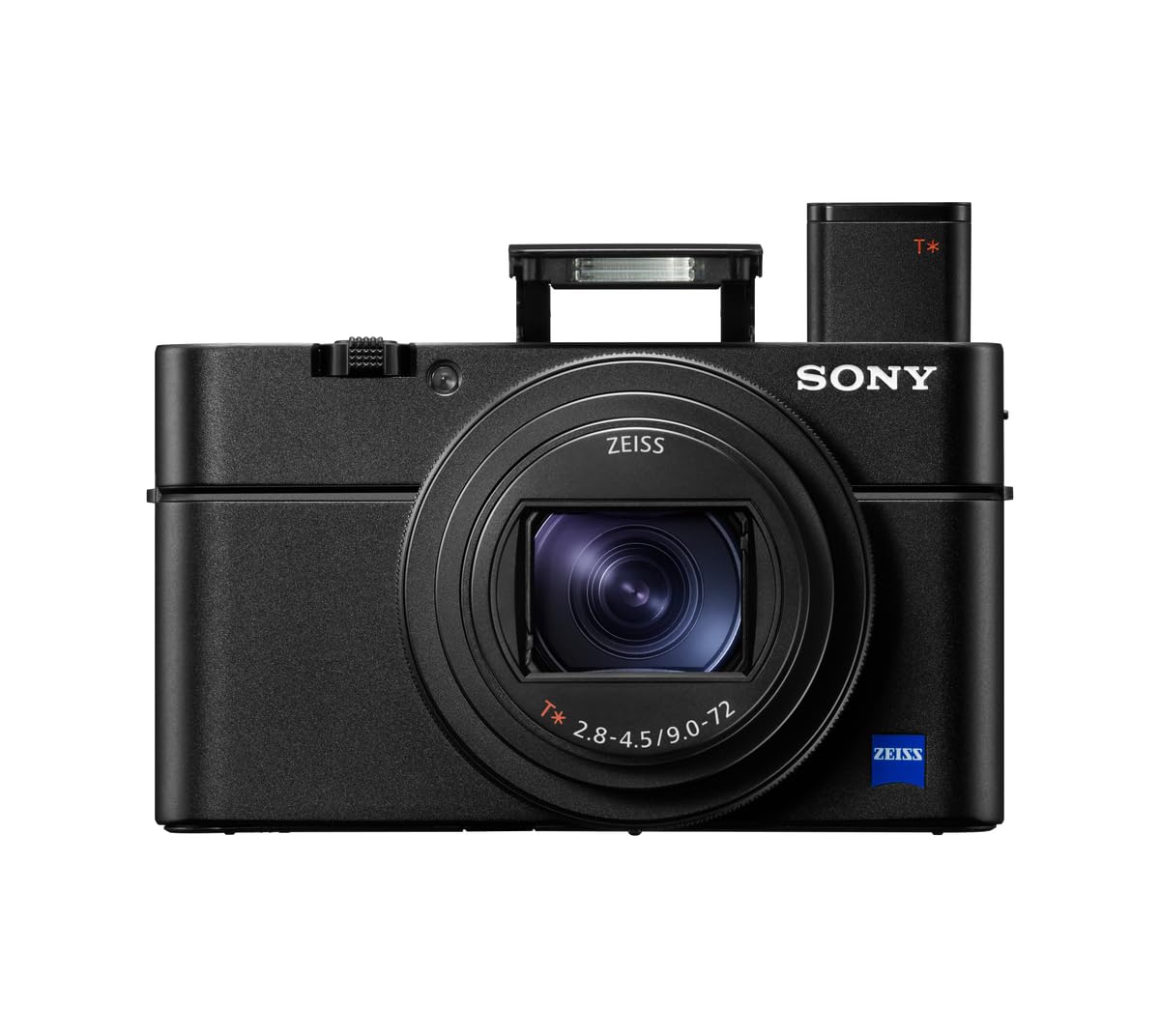
The Sony RX100 VII packs a 24-200mm f/2.8-4.5 Zeiss Vario-Sonnar T* zoom lens into a body that fits in any pocket, making it the most versatile travel companion on this list. The 1-inch stacked CMOS sensor achieves 0.02-second autofocus speeds with 357 phase-detection points, and the real-time Eye AF for humans and animals works reliably for stills and movies. The 20 fps blackout-free burst shooting with continuous AF/AE tracking captures fast-moving subjects — kids, pets, sports — with a high keeper rate.
Video shooters benefit from 4K recording with full pixel readout and no pixel binning, plus a built-in microphone jack that allows external audio without an adapter. The pop-up electronic viewfinder (EVF) provides a crisp 2.36-million-dot display for sunny-day composition, and the tiltable touchscreen enables waist-level or overhead shooting. Active Mode image stabilization smooths handheld walking footage noticeably, though a gimbal still produces superior results for professional work.
The menu system is characteristically Sony-dense — there’s a learning curve before you can navigate quickly. The body finish is slippery, making a grip accessory almost mandatory for confident one-handed use. Battery life hovers around 260 shots per charge, so a multi-pack is essential for day-long shoots. The zoom range, while impressive, shows softness at the 200mm end when wide open, requiring a stop down to f/5.6 for optimal sharpness.
Why it’s great
- 24-200mm optical zoom range is unmatched in this size
- Blazing fast 0.02-sec autofocus with reliable eye tracking
- Built-in EVF and microphone jack for video
- Stacked sensor enables 20 fps blackout-free burst
Good to know
- Menu system is complex for new users
- Slippery body; a grip add-on helps significantly
- Soft at 200mm f/4.5; best results stopped down
- Battery life is short — carry three spares for a full day
3. Canon EOS RP + RF24-105mm Kit

The Canon EOS RP offers the most affordable entry point into full-frame mirrorless photography while remaining genuinely compact. The 26.2-megapixel full-frame sensor produces images with shallow depth of field and low-light performance that APS-C cameras cannot match — usable images at ISO 6400 are routine. The Dual Pixel CMOS AF covers a wide portion of the frame with 4,779 selectable points and delivers smooth, confident autofocus in video mode.
The bundled RF 24-105mm f/4-7.1 IS STM lens provides a versatile everyday range with up to five stops of optical stabilization, making handheld shooting possible in dim light. The lens is compact for a full-frame zoom and focuses quietly for video use. The vari-angle touchscreen is excellent for vlogging and self-recording, and the electronic viewfinder is bright with good color accuracy. The menu system is Canon-friendly, remaining intuitive for new mirrorless users transitioning from DSLRs.
The kit lens restricts the f-stop range to f/4-7.1, limiting low-light performance at the telephoto end — a faster prime lens like the RF 50mm f/1.8 is a worthwhile addition for interior and evening shooting. The burst rate of 5 fps with continuous AF is slow for action or wildlife. Battery life at CIPA-rated 250 shots is below average, though USB-C charging enables power bank top-ups during the day.
Why it’s great
- Full-frame sensor delivers excellent dynamic range and bokeh
- Compact body and kit lens make it genuinely portable
- Intuitive Canon menu system for beginners
- Vari-angle touchscreen ideal for vlogging and selfies
Good to know
- Kit lens aperture reduces significantly at 105mm
- 5 fps burst is slow for sports or birds in flight
- Battery life is below 300 shots — carry spares or a power bank
- No in-body stabilization — relies entirely on lens OIS
4. Ricoh GR IIIx

The Ricoh GR IIIx is the ultimate discreet camera for street photography, sliding into a jeans pocket while delivering APS-C image quality that rivals much larger systems. Its 40mm equivalent f/2.8 lens (in full-frame terms) provides a natural perspective that matches human vision closely, making compositions feel intuitive without distortion. The 24.2-megapixel sensor lacks an optical low-pass filter, extracting maximum sharpness that reveals fine texture in architectural details and skin.
The snapshot focus system lets you pre-set a distance and shoot instantly without waiting for autofocus to lock — a decisive advantage for capturing fleeting street moments. The near-silent leaf shutter allows completely inconspicuous operation. In-body image stabilization with three-axis correction gives you roughly three stops of handheld advantage in dim conditions, which is sufficient for static subjects but not for moving ones. The touchscreen is responsive, and the physical controls have a tactile precision that rewards deliberate operation.
Battery life is the GR IIIx’s weakest point — expect around 200 shots per charge, making two or three spare batteries necessary for any day-long outing. Dust ingress is a known long-term concern; a filter adapter with a protective filter is a standard precaution. The camera does not have a built-in flash and offers only rudimentary video recording, so it is not suitable for hybrid shooters who need both high-quality video and stills from a single device.
Why it’s great
- APS-C sensor in a truly pocketable body
- 40mm f/2.8 lens is extremely sharp with natural perspective
- Snapshot focus system is perfect for fast street photography
- Near-silent leaf shutter for discreet shooting
Good to know
- Battery life is very short — carry at least two spares
- No weather sealing; dust ingress is a known issue
- No built-in flash and very basic video capabilities
- Fixed prime lens limits framing flexibility
5. Panasonic LUMIX ZS99

The Panasonic LUMIX ZS99 (known as the TZ99 outside North America) packs a 30x Leica DC Vario-Elmar optical zoom covering 24-720mm in a body that slides into a jacket pocket — making it the camera to grab for travel days when you need to photograph both a cathedral interior and a distant mountain peak without changing lenses. The 1,840k-dot tiltable touchscreen is bright enough for outdoor use, and the universal USB-C charging removes the need to carry a proprietary charger.
Image quality is competitive for the 1/2.3-inch sensor class, with good color science from the Leica lens that produces pleasing contrast and saturation out of camera. The 4K Photo mode captures 8-megapixel stills at 30 fps, letting you extract the perfect frame from a burst sequence — useful for bird feeding or children playing. Built-in Bluetooth v5.0 with a dedicated Send Image button makes transferring photos to your phone for sharing a quick, one-tap operation.
The variable aperture narrows to f/6.4 at the 720mm telephoto end, which means you need ample light or a tripod for sharp results at maximum zoom. There is no built-in flash, so indoor or evening shooting relies entirely on the available ISO range. The lens exhibits purple fringing in high-contrast edges, particularly at the wide-angle end, which requires software correction in post-processing. Autofocus speed is adequate for static subjects but struggles with fast-moving subjects at the telephoto end.
Why it’s great
- 30x Leica zoom covers 24-720mm in a pocketable body
- USB-C charging — no proprietary charger needed
- 4K Photo burst mode for extracting perfect frames
- Tiltable touchscreen for waist-level and overhead shots
Good to know
- Small 1/2.3-inch sensor limits low-light performance
- No built-in flash and f/6.4 at telephoto is slow
- Observable chromatic aberration at wide-angle extremes
- Autofocus hunts on fast-moving subjects at full zoom
6. Canon EOS R100 + RF-S18-45mm Kit

The Canon EOS R100 delivers the most accessible entry into interchangeable-lens mirrorless photography, combining a 24.1-megapixel APS-C sensor with Dual Pixel CMOS AF in the smallest body in the EOS R series. The guided user interface walks first-time camera buyers through manual mode settings without overwhelming them, while still offering full PASM control for when skills develop. The 18-45mm kit lens provides a comfortable 29-72mm equivalent range for everyday shooting.
The DIGIC 8 processor enables 4K video at 24 fps and Full HD at 60 fps, along with high-speed 120 fps HD recording for creative slow-motion clips. The Dual Pixel AF covers 143 zones with human face and eye detection, and animal and vehicle detection modes are available for wildlife and car photography. The 6.5 fps burst rate in One-Shot AF is adequate for family portraits and slow-moving subjects, though it drops in continuous AF mode.
The kit lens’s f/4.5-6.3 aperture range limits indoor performance without adding a faster prime lens — consider the RF 50mm f/1.8 as a natural next step. The camera lacks in-body stabilization, relying entirely on the lens’s optical IS for shake reduction. The 3-inch LCD has a fixed design with no touch input, which feels dated for a mirrorless camera released in 2023. The single-card SD slot and Micro USB port are budget compromises compared to the rest of the EOS R lineup.
Why it’s great
- Excellent entry-level price for a modern APS-C mirrorless
- Dual Pixel AF with face/eye/animal detection works well
- Compact and lightweight — easy to carry daily
- Guided menu system helps beginners learn photography
Good to know
- Kit lens is slow (f/4.5-6.3); upgrade for indoor use
- Fixed LCD without touch input limits flexibility
- No in-body stabilization — relies on lens IS only
- Micro USB port is outdated; USB-C would be preferable
7. OM System Olympus TG-7

The OM System Olympus TG-7 is the only camera on this list you can take snorkeling, hiking in a downpour, or drop off a table without worrying — its waterproof rating goes to 15 meters, it survives 2.1-meter drops, and it operates at temperatures down to -10°C. The variable macro system is exceptional: four dedicated macro modes include a microscope mode that focuses up to one centimeter from the lens, revealing detail invisible to the naked eye. The 12-megapixel back-illuminated CMOS sensor prioritizes pixel quality over quantity, producing clean images in good light.
The F2.0 maximum aperture on the 4x optical zoom lens lets in enough light for underwater use where ambient light scatters quickly, and the five underwater scene modes (including underwater microscope and underwater HDR) adjust white balance and exposure specifically for marine environments. The camera records 4K video at 30 fps and high-speed 120 fps HD for slow-motion replay. The field sensor system (GPS, manometer, compass, accelerometer) logs your exact location, depth, and orientation during outdoor activities.
The 12MP sensor is small by 2024 standards — images look good on a phone or tablet but show noise and limited dynamic range when cropped heavily or printed large. Low-light performance without the flash is poor compared to any 1-inch or APS-C camera. The menus, inherited from Olympus’s older camera systems, are cluttered with options that overlap confusingly. Battery life is adequate for a dive session but drains faster in cold conditions — carry a spare for all-day snow activities.
Why it’s great
- Waterproof to 15m without any housing
- Exceptional macro system with 1cm focusing distance
- Shockproof, crushproof, and freezeproof build
- Field sensor logs GPS, depth, and orientation data
Good to know
- 12MP sensor shows noise in low light and limits cropping
- Poor low-light performance without the built-in flash
- Menus are cluttered and less intuitive than rivals
- Image quality is a step behind 1-inch sensor compacts
8. Xtra Muse
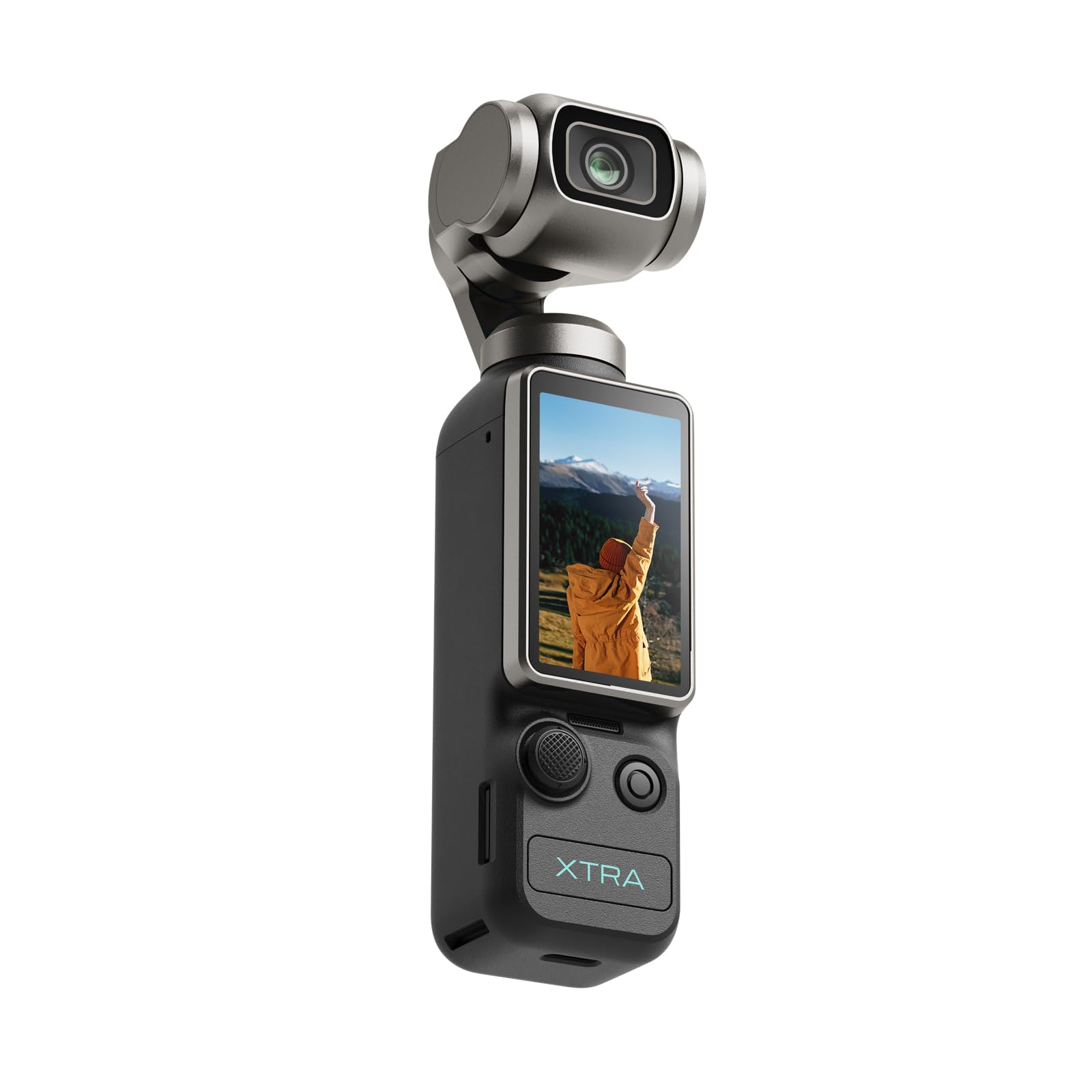
The Xtra Muse is a compact vlogging camera built around a 1-inch CMOS sensor and an integrated 3-axis gimbal stabilizer, producing smooth 4K footage at up to 120 fps without requiring an external gimbal. The physical stabilization eliminates the walking bounce and handshake that ruin handheld video, making it a strong alternative to the DJI Pocket 3 for creators on a tighter budget. The 10-bit X-Log color mode captures over one billion colors, providing significant grading flexibility for sunrises, sunsets, and high-contrast scenes.
The Master Follow tracking system keeps a moving subject centered in the frame while the camera is mounted on a tripod or held stationary — useful for solo vloggers who walk, dance, or demonstrate products without needing a second person to operate the camera. The 2-inch touchscreen supports quick switching between horizontal and vertical shooting orientations for TikTok and Instagram Reels. Fast autofocus with face and object tracking ensures focus stays locked during movement without hunting.
Battery life runs approximately two hours of continuous recording, which is standard for this form factor but requires planning for longer shoots — USB-C power bank operation extends runtime. The Xtra Muse is not waterproof, so use in rain or around water requires caution. The stabilization, while excellent for walking, is not as refined as DJI’s ActiveTrack 6.0 for fast sideways or backward movement. The micro SD card slot supports lower capacity cards than some rivals — using V30 or U3 cards is recommended for 4K/120fps recording.
Why it’s great
- Built-in 3-axis gimbal eliminates need for separate stabilizer
- 1-inch sensor records sharp 4K/120fps video
- 10-bit X-Log color profile gives broad grading latitude
- Face/object tracking keeps subjects in focus while moving
Good to know
- Battery lasts about 2 hours — best suited with a power bank
- Not weather-sealed or waterproof
- Stabilization smoothness trails higher-end gimbal cameras
- Micro SD slot benefits from V30/U3 rated cards for 4K/120fps
9. Kodak PIXPRO Astro Zoom AZ528
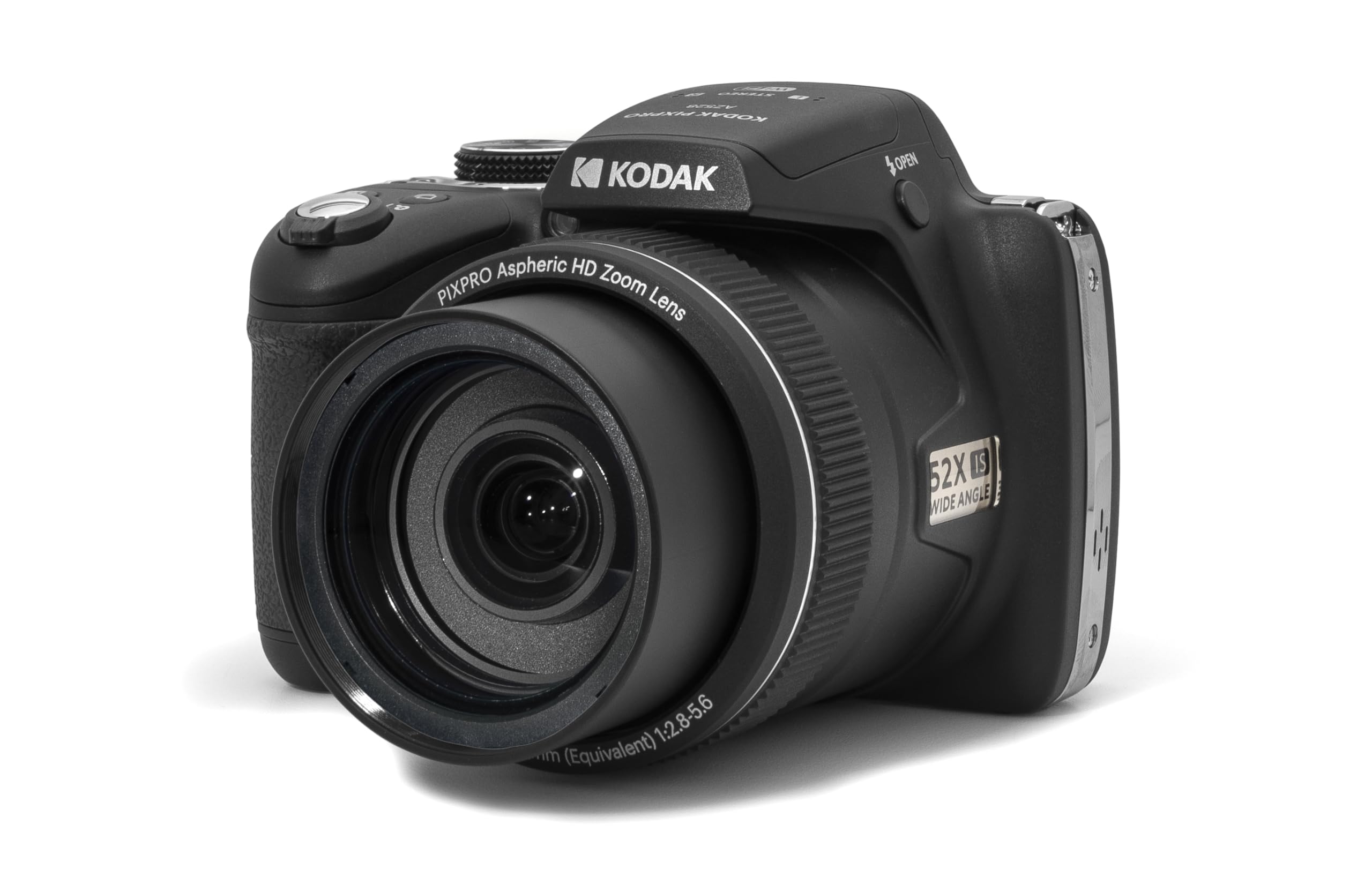
The Kodak PIXPRO AZ528 offers a staggering 52x optical zoom (24-1248mm equivalent) at the lowest entry price for a superzoom camera, putting distant wildlife, moon craters, and sports action within reach for photographers on a strict budget. The 16-megapixel BSI CMOS sensor provides decent detail at base ISO, and the optical image stabilization helps keep telephoto shots steady enough for social media sharing. The built-in Wi-Fi transfers images to your phone for quick posting without needing a card reader.
The 3-inch LCD screen is functional for composition and playback, and the burst mode at 6 fps captures sequences of bird takeoffs or pet movements with a reasonable keeper rate. The full 1080p HD video recording at 30 fps covers basic video needs like family events and travel clips. The camera runs on a rechargeable lithium-ion battery, and the memory card slot supports SD cards up to 512 GB — enough for thousands of images over a long day of shooting.
At maximum 52x zoom, image quality degrades noticeably — softness and chromatic aberration become apparent, and optical shake even at high shutter speeds often requires a tripod for critically sharp results. The contrast-detection autofocus is slow compared to phase-detect systems, causing missed shots with fast-moving subjects. The build quality uses lightweight plastics that scuff easily, and the battery life, while adequate, is shorter than some competitors at around 240 shots per charge.
Why it’s great
- 52x optical zoom reaches subjects no pocket camera can touch
- Very affordable entry price for superzoom capabilities
- Built-in Wi-Fi for quick phone transfer and remote control
- BSI CMOS sensor improves low-light performance over older CCD models
Good to know
- Image quality degrades significantly at full 52x zoom
- Contrast-detect autofocus is slow for moving subjects
- Lightweight plastic body scuffs easily with regular use
- Battery life is average — plan for spares on long shoots
FAQ
Why is a 1-inch sensor better than a 1/2.3-inch sensor in a small camera?
What does the “f” number mean in a compact camera lens?
How important is 4K video in a small camera for travel?
What does “BSI” mean in a CMOS sensor?
How do I know if a small camera can replace my smartphone?
Final Thoughts: The Verdict
For most users, the best small camera winner is the Sony RX100 VII because its 24-200mm zoom range combined with a 1-inch stacked sensor and real-time eye autofocus covers the widest range of everyday shooting scenarios without sacrificing pocketability. If you value image character and film-like JPEGs straight from the camera, grab the Fujifilm X100VI. And for underwater adventures or rugged outdoor use, nothing beats the OM System Olympus TG-7.

Mo Maruf
I created WellFizz to bridge the gap between vague wellness advice and actionable solutions. My mission is simple: to decode the research and give you practical tools you can actually use.
Beyond the data, I am a passionate traveler. I believe that stepping away from the screen to explore new environments is essential for mental clarity and physical vitality.