Our readers keep the lights on and my smoothie glass nicely filled. As an Amazon Associate, I earn from qualifying purchases.
The era of pulling out a phone to jot down a thought, record a meeting, or track your sleep is ending. A new class of wearable devices listens to your conversations, monitors your biometrics, and processes that data through AI engines — turning raw sound and sensor input into searchable transcripts, structured summaries, and personalized health insights without you lifting a finger.
I’m Mohammad Maruf — the founder and writer behind WellFizz. I’ve spent years analyzing the chipset architectures, sensor arrays, and AI model integrations that separate effective wearables from overpriced gadgets, focusing specifically on how these devices handle real-world noise, privacy, and battery life trade-offs.
This guide breaks down the top options across voice recorders, smart rings, AR glasses, and AI watches so you can find the right best ai wearables for how you actually work, rest, and move.
How To Choose The Best AI Wearables
AI wearables are not a single product category — they span voice recorders, smartwatches, rings, and AR glasses. Each type solves a different primary problem. Matching the device to your specific daily workflow is more important than comparing raw specs across categories.
Transcription Accuracy and Language Coverage
For voice-focused wearables, transcription accuracy is the single most important spec. Look for models that advertise 95% or higher accuracy and support for at least 100 languages if you work in multilingual environments. The AI model used for processing (GPT, Claude, custom models) determines summary quality — cheaper models often produce robotic or overly formal summaries that miss nuance.
On-Device vs Cloud Processing and Privacy
Devices that process audio locally keep your data on your device, which matters for compliance with HIPAA, GDPR, or corporate confidentiality rules. Cloud-dependent wearables offer more advanced AI features (mind maps, role-specific summaries) but route your conversations through external servers. Check for AES-256 encryption, SOC 2 certification, and whether transcripts are permanently deleted after processing.
Battery Life and Wearability Form Factor
A recorder that lasts 8 hours but requires daily charging may still work if you clip it to your collar. A ring with 7-day battery life disappears into your routine but offers no transcription. Consider how the device attaches or sits on your body — clip, necklace, wristband, finger, or glasses frame — and whether that form factor fits your actual day: meetings, workouts, travel, or bedside use.
Quick Comparison
On smaller screens, swipe sideways to see the full table.
| Model | Category | Best For | Key Spec | Amazon |
|---|---|---|---|---|
| Plaud NotePin S | AI Voice Recorder | Professionals needing summaries & mind maps | 64GB local storage / 20hr recording | Amazon |
| Meta Ray-Ban (Gen 2) | AI Glasses | Hands-free photo/video & AI assistant | 8hr battery / 12MP 3K video | Amazon |
| Oura Ring 4 | Smart Ring | 24/7 sleep & health tracking without screen | 8-day battery / 50+ health metrics | Amazon |
| Meta Oakley Vanguard | AI Glasses | Sports & outdoor hands-free capture | 8hr battery / Prizm 24K lenses | Amazon |
| XREAL One Pro | AR Glasses | Large spatial screen for gaming & media | 57° FOV / 171″ virtual display | Amazon |
| Samsung Galaxy Watch Ultra 2025 | AI Smartwatch | Fitness & LTE connectivity for athletes | 590mAh battery / Exynos W1000 3nm | Amazon |
| Samsung Galaxy Watch 7 40mm LTE | AI Smartwatch | AI wellness tips & sleep tracking | 30hr battery / BioActive Sensor | Amazon |
| soundcore Work by Anker | AI Voice Recorder | Budget-friendly meeting transcription | 8GB storage / 150+ language support | Amazon |
| Ray-Ban Meta (Gen 1) | AI Glasses | Fashion-forward hands-free photo capture | 4hr battery / 12MP camera | Amazon |
In‑Depth Reviews
1. Plaud NotePin S AI Voice Recorder

The Plaud NotePin S earns the top spot because it combines enterprise-grade privacy compliance — ISO 27001, HIPAA, SOC 2 — with the most advanced AI transcription pipeline available in a wearable. It feeds recordings through GPT-5.5, Claude Sonnet 4.6, and Gemini 3.1 Pro to generate structured insights, mind maps, and role-specific summaries from a single conversation. Weighing 0.61 oz with a 20-hour recording battery and 64GB of local storage, it handles full workdays and travel without recharging.
You can wear it as a necklace, wristband, clip, or pin using the four included accessories. A physical record button marks key moments in real time, and multimodal input lets you add typed notes or images alongside audio. The free Starter Plan gives 300 transcription minutes per month, which is enough for light meeting usage.
The main trade-off is that advanced features — speaker labeling, summary templates, mind maps — require a Pro subscription at /month billed annually. Some users report that the physical button layout can lead to accidental recordings, and there is no native integration with cloud storage services like Google Drive or Dropbox for automatic export.
Why it’s great
- Multi-model AI pipeline (GPT-5.5, Claude, Gemini) produces nuanced, structured summaries
- 20-hour continuous recording with 64GB local storage for offline use
- ISO 27001, HIPAA, SOC 2, and GDPR compliance for sensitive conversations
- Lightweight (0.61 oz) with four wearing options for any dress code
Good to know
- Speaker labeling and advanced templates require a paid Pro subscription
- No automatic export to cloud storage — must manually transfer each file
- Physical button placement can cause accidental recordings if bumped
2. Meta Ray-Ban (Gen 2) Skyler Smart AI Glasses
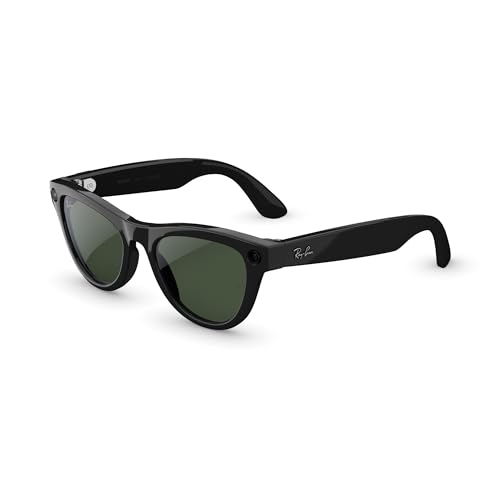
The Gen 2 Meta Ray-Ban doubles the battery life of its predecessor, now delivering up to 8 hours of moderate use and 48 hours of charging from the included case. The 12MP camera records 3K Ultra HD video, and the open-ear speakers provide clear audio without blocking ambient sound — a critical safety feature for walking or commuting. Meta AI can answer questions, provide live translation between 7 languages, and set reminders hands-free through voice commands.
The Skyler frame in Shiny Black with Transitions Graphite Green lenses looks indistinguishable from standard Ray-Ban sunglasses, so the tech is invisible to people around you. A front LED lights up when recording, maintaining transparency. Wind and street noise are suppressed by 90% during calls, and the audio quality is good enough for listening to music or podcasts discreetly.
Comfort is the main concern here. The glasses are heavier than standard Ray-Bans, and several users report they slide down the nose or feel tight after a few hours. Aftermarket ear hooks and nose cushions often solve this. The Meta app interface also takes some time to navigate for first-time users.
Why it’s great
- 8-hour battery life with 48-hour charging case — double the Gen 1 runtime
- 3K Ultra HD video and 12MP photos from an inconspicuous frame
- Live translation for 7 languages works without WiFi
- Open-ear audio keeps you aware of surroundings
Good to know
- Heavier than standard Ray-Bans and may slide down on smaller faces
- Touchpad on the arm is sensitive and prone to accidental taps
- Case design makes it slightly difficult to remove the glasses quickly
3. Oura Ring 4

The Oura Ring 4 is the most discreet health-focused wearable on this list. With no screen, no vibrations, and a titanium band that looks like a normal ring, it tracks over 50 biometric metrics including sleep stages, heart rate variability, body temperature, respiratory rate, and menstrual cycle predictions. Smart Sensing technology adjusts LED pathways to maintain accuracy across different finger positions and skin tones.
The battery lasts up to 8 days and fully charges in about 80 minutes, so you only think about power once a week. The companion app is well-designed, offering daily readiness scores, sleep debt analysis, and trend charts. The food photo logging feature is a nice touch for nutrition context. The ring is swim-proof and durable enough for daily wear through workouts and showers.
The catch is the subscription model. After the first free month, Oura Membership costs per month, which is required to access detailed insights and trend data. Some users have reported significant battery degradation after 10 months, dropping from 5 days to under 24 hours. Oura’s customer service has been criticized for slow responses and reliance on AI chat loops. Accurate sizing is also essential — the free sizing kit is a necessary first step.
Why it’s great
- 8-day battery life with 80-minute full recharge — minimal charging friction
- Tracks 50+ metrics including HRV, temperature, and respiratory rate
- No screen means no distractions and zero disruption during sleep
- Swim-proof and durable titanium construction for 24/7 wear
Good to know
- /month subscription required for detailed insights after the first month
- Battery degrades noticeably around the 10-month mark for some users
- Customer support is routed through an AI system with limited human escalation
4. Meta Oakley Vanguard Smart AI Glasses
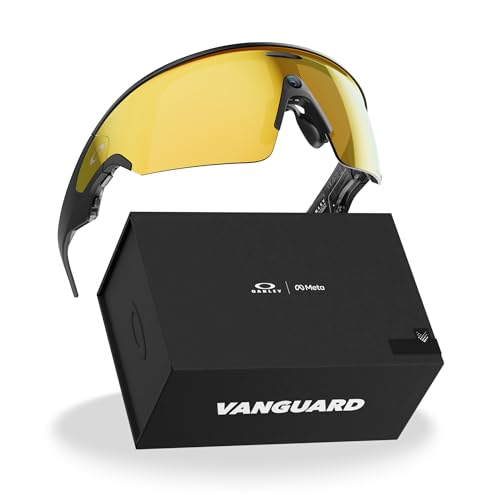
The Meta Oakley Vanguard translates the smart glasses concept into an athletic context. Built on the Oakley HSTN platform with Prizm 24K lenses, these glasses are designed for outdoor performance — capturing POV video during cycling, running, or paintball with a 12MP camera that shoots 3K Ultra HD. The open-ear audio keeps you aware of traffic and trail sounds while still delivering music and calls.
Battery life matches the Ray-Ban Gen 2 at 8 hours of typical use, and the charging case provides an additional 48 hours of on-the-go top-ups. Meta AI integration means you can ask for wind conditions, surf reports, or directions hands-free while keeping your eyes on the environment. The unit integrates with Garmin devices and Strava to overlay performance metrics onto captured video.
The full-frame resin construction is sturdier than the Ray-Ban half-frame but also heavier at 65.2 grams, which becomes noticeable after 2-3 hours of continuous wear. The fit is generous, and some users with smaller faces find the arms tight. Privacy-conscious users should note that the glasses are entirely dependent on the Meta ecosystem — there is no offline mode for local capture, and all data routes through Meta servers.
Why it’s great
- 8-hour battery with 48-hour charging case designed for extended outdoor use
- Prizm 24K lenses enhance contrast in outdoor conditions
- Strava and Garmin integration overlays performance data onto video
- Full-frame build is more durable for sports and active movement
Good to know
- Heavier than Ray-Ban Meta — 65.2 grams may cause pressure after hours of wear
- Fully dependent on Meta ecosystem with no local or offline capture mode
- Bluetooth call routing can conflict with car audio systems
5. XREAL One Pro AR Glasses

The XREAL One Pro is a different kind of AI wearable — it projects a 171-inch virtual screen using XREAL’s X-Prism optics and self-developed X1 spatial computing chip. The 57-degree field of view and 120Hz refresh rate on Sony Micro-OLED displays create a cinema-like experience for gaming, movies, and productivity use. Native 3DoF tracking with 3ms M2P latency keeps the screen stable during head movements, and pairing with the XREAL Eye accessory unlocks full 6DoF spatial anchoring.
The design includes two IPD size options (M and L) covering over 95% of users, three-stage adjustable arms, and three sizes of zero-pressure nose pads. Bose-engineered audio delivers quality sound without external headphones, and the 700-nit brightness stays visible even in direct sunlight with electrochromic dimming. It connects via USB-C to any device with DP output — iPhone 16/15, Android phones, Steam Deck, ROG Ally, MacBook, and Windows PCs.
The biggest downside is that this is still emerging technology. Some users report frequent disconnects on mobile devices, screen drifting during anchored mode, and polarization interference on certain Windows laptops. The lack of built-in volume and media controls on the glasses frame means you have to adjust through the connected device. Users who wear prescription glasses need to purchase separate prescription lens inserts.
Why it’s great
- 57° FOV creates a true 171-inch virtual screen for immersive media and gaming
- X1 chip delivers native 3DoF tracking with ultra-low 3ms latency
- 700-nit brightness remains clear in direct sunlight with electrochromic dimming
- Bose-tuned audio eliminates the need for separate headphones
Good to know
- No volume or media controls on the glasses — must adjust through the source device
- Prescription lens inserts are required for users who wear glasses
- Some users experience screen drifting and occasional connectivity drops
6. Samsung Galaxy Watch Ultra 2025
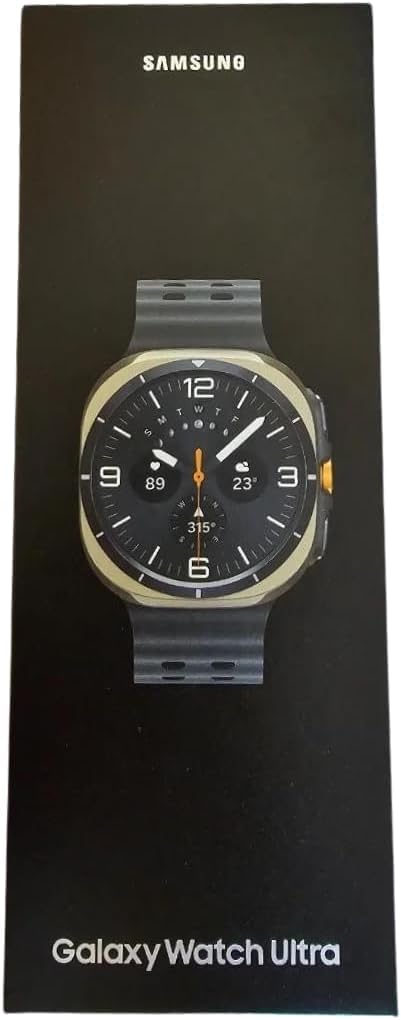
The Galaxy Watch Ultra 2025 is Samsung’s premium AI smartwatch focused on fitness and outdoor performance. The 1.5-inch Super AMOLED display at 480×480 resolution is bright and crisp even under direct sun. The 590mAh battery is the largest in this comparison, combined with the 3nm Exynos W1000 processor for smooth performance and AI-powered wellness tips, sleep optimization, and heart health monitoring. It carries MIL-STD 810H certification and is water-resistant to 100 meters with IP68 rating.
The 47mm titanium case with a tool-free band change system makes it suitable for workouts and daily wear alike. Galaxy AI provides personalized health suggestions, smart replies, and music control without pulling out your phone. The 64GB storage is generous for offline music and app storage. LTE connectivity with eSIM support means you can leave your phone behind on runs.
The critical caveat is that this is an international model — it does not support LTE on US carrier networks despite being advertised as unlocked. Buyers expecting US LTE functionality will be disappointed to find it only works as a Bluetooth tether to a phone. Many users note the battery life, while better than previous Galaxy Watch models, still falls short of the advertised estimates during heavy GPS use.
Why it’s great
- 590mAh battery and 3nm Exynos W1000 deliver strong performance and all-day endurance
- 1.5-inch Super AMOLED display is exceptionally bright and sharp outdoors
- MIL-STD 810H and 10ATM water resistance for extreme sports and diving
- 64GB storage allows offline music and app storage for phone-free workouts
Good to know
- International model — LTE does not work on US carrier networks
- Battery life falls short of estimates during continuous GPS tracking
- Android-only compatibility; no iPhone support
7. Samsung Galaxy Watch 7 40mm LTE (Renewed)

The Galaxy Watch 7 40mm LTE offers the core AI health features of Samsung’s wearable lineup — Energy Score, personalized wellness tips, sleep apnea detection, and dual-frequency GPS — at a lower entry point. The enhanced BioActive Sensor improves accuracy for heart rate, ECG, blood oxygen, and body composition tracking. The 3nm Exynos W1000 processor provides noticeably faster app navigation and smoother performance than previous generations.
This watch is ideal for users who want AI-driven sleep and activity insights without spending on the larger Ultra model. The 30-hour battery life covers a full day but requires daily charging. The green silicone band is comfortable for all-day wear, and the display responsiveness is excellent — the screen turns on instantly with a wrist flick. As a renewed unit, it offers significant savings over retail pricing while functioning like new.
The main concern is consistency — some renewed units have battery issues, with reports of overheating during setup or battery dropping rather than charging. The 40mm case is compact, which is great for smaller wrists but limits battery capacity compared to the larger 44mm or Ultra models. LTE setup requires a separate data plan, and the watch is Android-only.
Why it’s great
- Enhanced BioActive Sensor provides accurate heart rate, ECG, and body composition tracking
- 3nm Exynos W1000 processor delivers noticeably faster performance than Watch 4/5/6
- Sleep apnea detection and AI wellness insights in a compact 40mm form factor
- Renewed pricing offers significant savings with near-new performance
Good to know
- Some renewed units have experienced overheating or battery charging defects
- 30-hour battery requires daily charging — not suitable for multi-day trips
- Android-only compatibility; no LTE data plan included
8. soundcore Work by Anker AI Voice Recorder
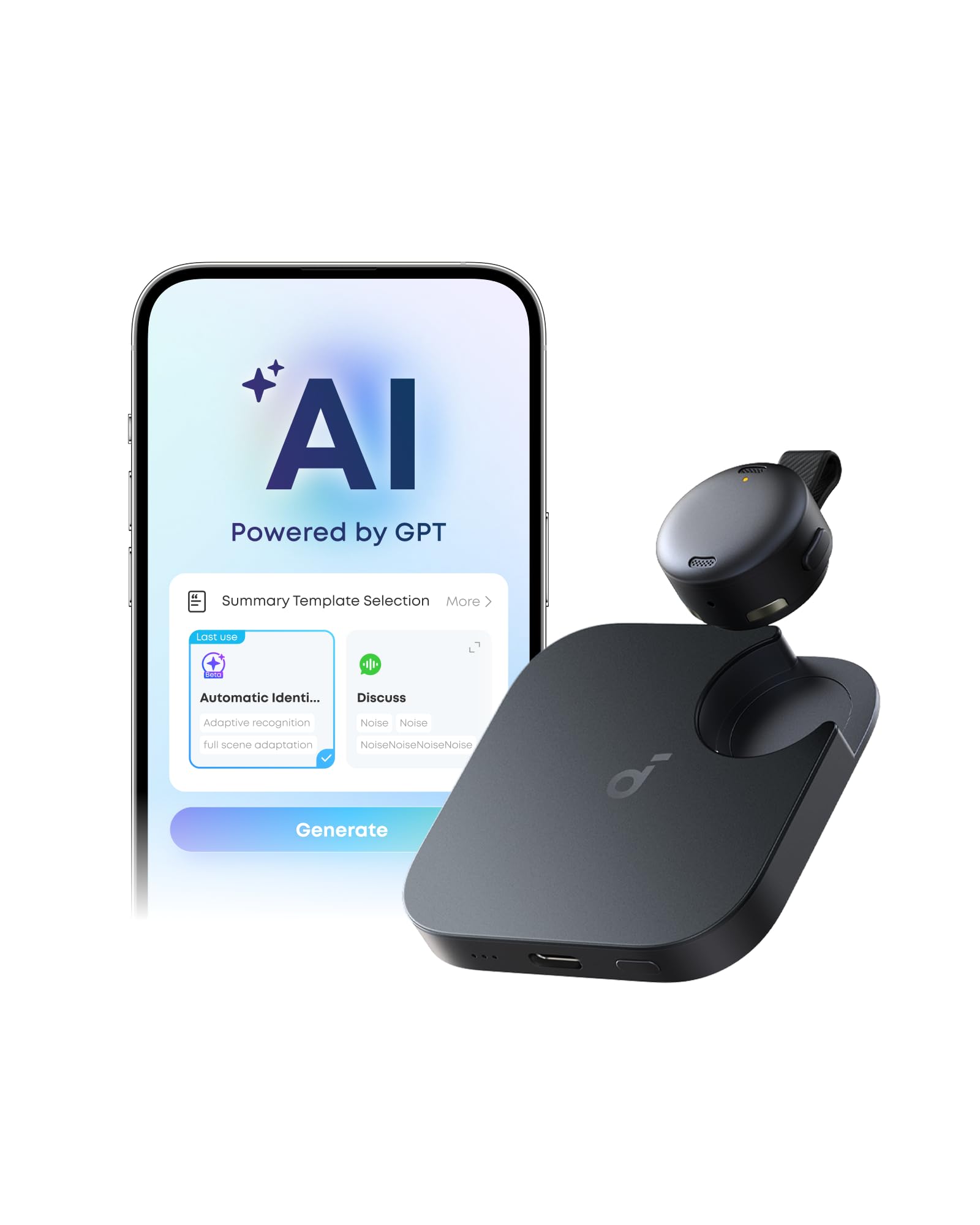
The soundcore Work is the smallest and lightest AI voice recorder in this lineup at just 0.35 oz — smaller than a coin. It clips to your collar, hangs as a necklace, or attaches to your phone via a magnetic ring. Despite its size, it claims up to 97% transcription accuracy across 150+ languages with AI voice enhancement and noise reduction. One press starts recording, and a double-tap marks key moments for later reference.
Anker backs this device with enterprise-grade privacy: AES-256 encryption, SOC 2 Type I certification, and alignment with NIST IR 8425 standards. Audio and transcriptions stay local on the 8GB storage by default, and cloud processing only happens during active transcription — data is permanently deleted immediately after delivery. The MFi certification ensures seamless compatibility with iPhones, though it also works with Android devices.
Practical complaints center on the software experience: summaries tend to be overly corporate and formal, there is no automatic export to cloud storage like Google Drive or Dropbox, and each file (recording, transcript, summary) must be exported manually and separately. A small but notable number of units arrived defective with Bluetooth connection failures or recording glitches. The 8-hour recording time is shorter than the Plaud NotePin S.
Why it’s great
- Ultra-compact 0.35 oz design — small enough to clip to a shirt collar discreetly
- AES-256 encryption with local storage and instant cloud processing deletion
- MFi certified for seamless iPhone integration with Apple’s chipset
- 8GB onboard storage and 8-hour recording time for full meeting days
Good to know
- AI summaries are overly formal and corporate — lack natural nuance
- No automatic cloud export; each file must be manually exported separately
- Some units arrived defective with Bluetooth pairing or recording failures
9. Ray-Ban Meta (Gen 1) Skyler

The Gen 1 Ray-Ban Meta in the Skyler frame is the entry point to smart glasses for users who prioritize fashion and build quality over battery life. The 12MP camera captures good photos and videos in well-lit conditions, and the open-ear speakers deliver clear audio for music and calls without blocking environmental sounds. The frame looks identical to standard Ray-Bans, making the technology invisible in social settings.
The battery lasts about 4 hours with mixed use, and the charging case provides roughly five full recharges, with glasses charging in about 30 minutes. The camera quality is excellent for its size, and the Meta app makes it easy to transfer media. Call quality is clear even outdoors, and the hands-free voice commands work reliably for quick captures.
The critical limitation is the 4-hour battery life — half what the Gen 2 offers — which makes it difficult to use through a full day. There is no zoom capability on the camera. Users who want all-day wear or live translation features will be better served by the Gen 2. Some units have experienced hardware reliability issues with the charging case over time.
Why it’s great
- Classic Ray-Ban styling makes the tech completely invisible in daily use
- Open-ear speakers provide clear audio while maintaining environmental awareness
- Charging case provides ~5 full recharges with fast 30-minute glasses charging
- 12MP camera produces excellent photos and videos for hands-free capture
Good to know
- 4-hour battery is half the Gen 2 — insufficient for full-day use
- No zoom capability on the camera
- Charging case has reported reliability issues over extended use
FAQ
Can AI wearables transcribe conversations in real time without an internet connection?
What privacy certifications should I look for in an AI wearable recorder?
How do AI smart rings differ from AI smartwatches for health tracking?
Do smart AI glasses work with prescription lenses?
Final Thoughts: The Verdict
For most users, the best ai wearables winner is the Plaud NotePin S because it combines the most advanced multi-model AI pipeline (GPT, Claude, Gemini) with enterprise-grade privacy certifications, 20-hour recording, and 64GB local storage — all in a 0.61 oz package that adapts to how you dress. If you want discreet health tracking without a screen, grab the Oura Ring 4 for its 8-day battery and 50+ biometric metrics in a titanium ring. And for hands-free content creation that looks like regular eyewear, nothing beats the Meta Ray-Ban Gen 2 with its 8-hour battery, 3K video, and live translation across 7 languages.

Mo Maruf
I created WellFizz to bridge the gap between vague wellness advice and actionable solutions. My mission is simple: to decode the research and give you practical tools you can actually use.
Beyond the data, I am a passionate traveler. I believe that stepping away from the screen to explore new environments is essential for mental clarity and physical vitality.