Our readers keep the lights on and my smoothie glass nicely filled. As an Amazon Associate, I earn from qualifying purchases.
Every ounce saved on a backpacking sleep system translates directly to more miles covered and a happier back at the end of the day. The real battle isn’t just between down and synthetic—it’s balancing a pad’s R-value against a bag’s loft, ensuring you stay warm without the burden of a car-camping behemoth in your pack.
I’m Mohammad Maruf — the founder and writer behind WellFizz. I’ve spent hundreds of hours cross-referencing fill powers, denier ratings, and pad thicknesses to find the gear combinations that actually deliver on their pack weight promises.
Toggling between a top-quilt ultralight and a high-R-value insulated pad is the fastest way to dial in a three-season setup, which is why I assembled this breakdown of the best backpacking sleep system for your next trail adventure.
How To Choose The Best Backpacking Sleep System
A sleep system is more than just a bag and a pad—it is a weight-to-warmth equation where every spec trades off against another. Before you click “buy,” you need to understand three foundational elements that separate a smart buy from a regretted one.
R-Value vs. Temperature Rating: The Insulation Truth
Sleeping bag temperature ratings are tested with a pad underneath, but the pad’s R-value determines how much ground cold actually reaches your back. A bag rated to 20°F will feel cold at 40°F if your pad’s R-value is below 3. For three-season backpacking, target a pad with an R-value of 4.0 or higher to avoid losing all your bag’s warmth through compression beneath your body.
Fill Power and Weight: The Loft Trade-Off
850-fill down compresses smaller and lofts more per gram than 550-fill down, but it costs more and loses insulating ability when wet. A top quilt with 850-fill may save you nearly a pound over a traditional mummy bag with 550-fill, making it the clear choice for thru-hikers who prioritize pack volume. For budget-conscious weekend trips, 650-fill down offers a solid middle ground without the premium price tag.
Pad Thickness and Shape: The Side Sleeper Equation
A 3.5-inch thick pad with raised outer chambers is non-negotiable if you sleep on your side. Standard 2-inch pads let your hip bottom out against the ground, causing cold spots and poor sleep. The difference between a 20-inch wide pad and a 25-inch wide pad can also be the difference between staying centered all night or waking up on the tent floor.
Quick Comparison
On smaller screens, swipe sideways to see the full table.
| Model | Category | Best For | Key Spec | Amazon |
|---|---|---|---|---|
| ATEPA Backpacking Sleep System | System Combo | All-in-one convenience | 6.6 R-Value, 4.33″ pad | Amazon |
| Big Agnes Rapide SL 25×78 | Insulated Pad | Wide side sleepers | R-Value 4.8, 25″ wide | Amazon |
| NEMO Tensor Trail Ultralight | Insulated Pad | Ultralight packers | 3.5″ thickness, 380g | Amazon |
| Exped Ultra 3R MW | Insulated Pad | Recycled-material fans | R-Value 3.2, 25.6″ wide | Amazon |
| Big Agnes Rapide SL 20×72 | Insulated Pad | Standard backpackers | R-Value 4.8, 3.5″ thick | Amazon |
| Sierra Designs Nitro Quilt 20 | Down Quilt | Ultralight quilt lovers | 800 Fill, 420g fill weight | Amazon |
| Kelty Supernova Down Bag | Down Mummy | Budget-conscious campers | 550 Fill, 2 lbs 1 oz | Amazon |
| Naturehike 650FP Down Bag | Down Mummy | Entry-level backpackers | 650 Fill, 885g weight | Amazon |
| SENSORY4U 850 Down Top Quilt | Down Quilt | Value ultralight quilts | 850 Fill, 1.9 lbs | Amazon |
In‑Depth Reviews
1. ATEPA Ultralight Backpacking Sleep System
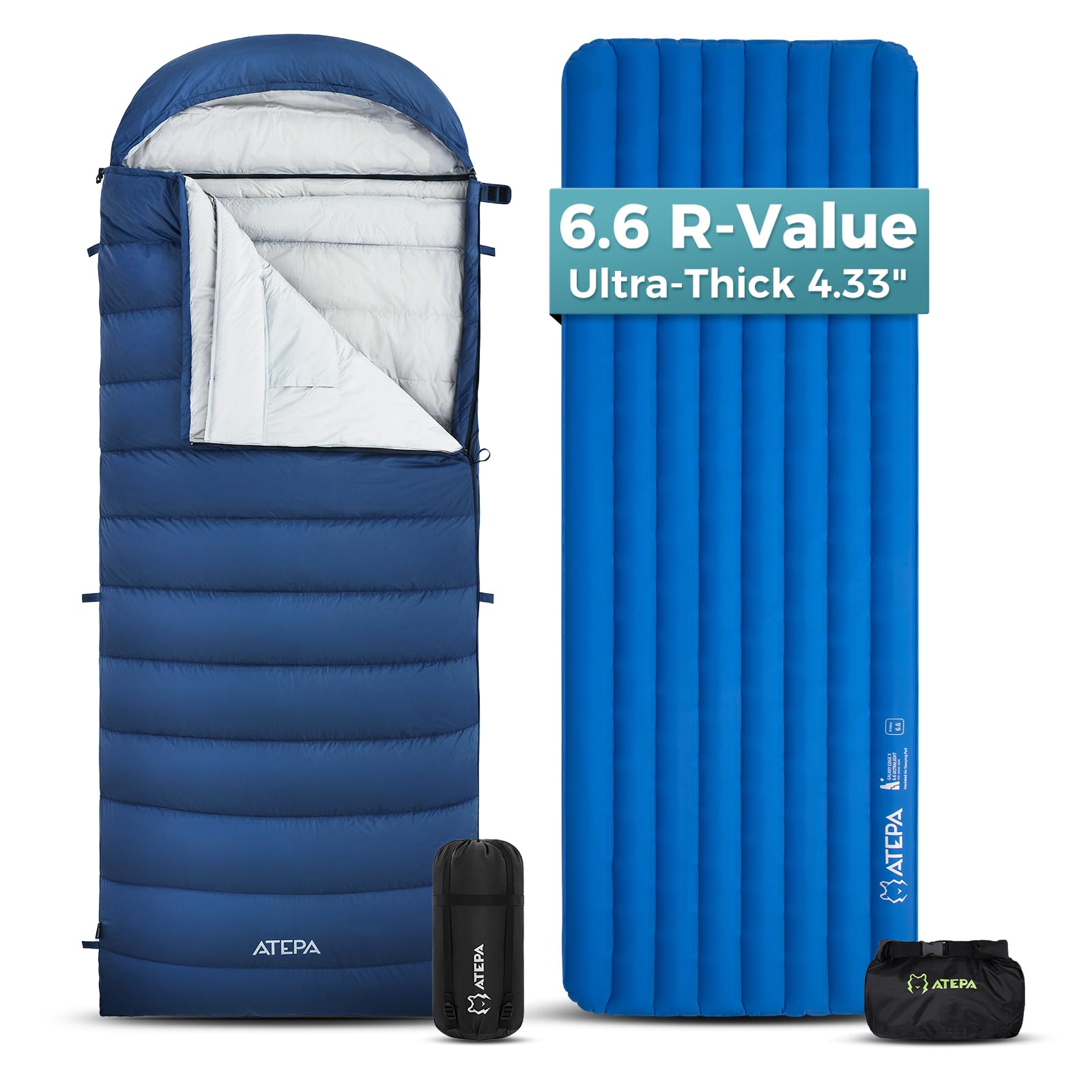
The ATEPA system pairs a 6.6 R-value insulated pad with a down sleeping bag that clips directly onto the pad, eliminating the frustrating middle-of-the-night sliding that saps warmth. The pad’s 4.33-inch thickness provides serious cushioning for side sleepers, while the bag’s 3D baffle construction prevents down from shifting into cold spots.
At 5.1 pounds total for the combined system, it is not the lightest option, but it delivers a cohesive sleep experience that is rare among incompletely matched gear. The 88.58-inch length accommodates taller frames without foot box compression, and the removable hood allows venting when temperatures rise above the bag’s 39°F comfort rating.
Users consistently report no bottoming out even on rocky ground, and the pad’s quiet material avoids the crinkly noise that plagues many budget insulated pads. The integrated side straps are a thoughtful inclusion that turns the whole set into a wearable sleeping bag around camp.
Why it’s great
- Integrated pad attachment stops sliding and eliminates drafts
- 6.6 R-value handles shoulder-season temperatures comfortably
- Wide XL cut supports side sleepers and active tossers
Good to know
- 5.1-lb total weight is heavier than a pad-plus-quilt combo
- Inflation valve may not fit some aftermarket pumps like Flextail Zero
2. Big Agnes Rapide SL – Wide Long 25×78

The Big Agnes Rapide SL in the 25×78 size solves the two biggest pad complaints for side sleepers: width and bounce. The 4.25-inch raised outer chambers create a cradle effect that keeps your hips and shoulders from rolling off, while the offset I-beam construction eliminates the trampoline feel of simpler air pads.
With an R-value of 4.8, this pad holds its own down to freezing temperatures without requiring a foam overlay. The included Pumphouse inflation sack fills the pad in under a minute using dry air, and the micro-adjustment valve lets you fine-tune firmness without frantically pressing the release button.
At about 14.5 ounces for the wide-long version, it weighs less than many regular-width pads with lower R-values. The superlight double ripstop nylon and aviation-grade TPU lamination have held up against sharp granite and desert scrub without developing slow leaks.
Why it’s great
- 4.25-inch outer chambers prevent side-sleeper bottoming out
- Pumphouse sack inflates quickly without moisture inside
- Ultralight 14.5 oz weight for a wide insulated pad
Good to know
- Packs slightly larger than some ultralight air pads
- Premium price bracket for a dedicated backpacking pad
3. NEMO Equipment Tensor Trail Ultralight Insulated Pad
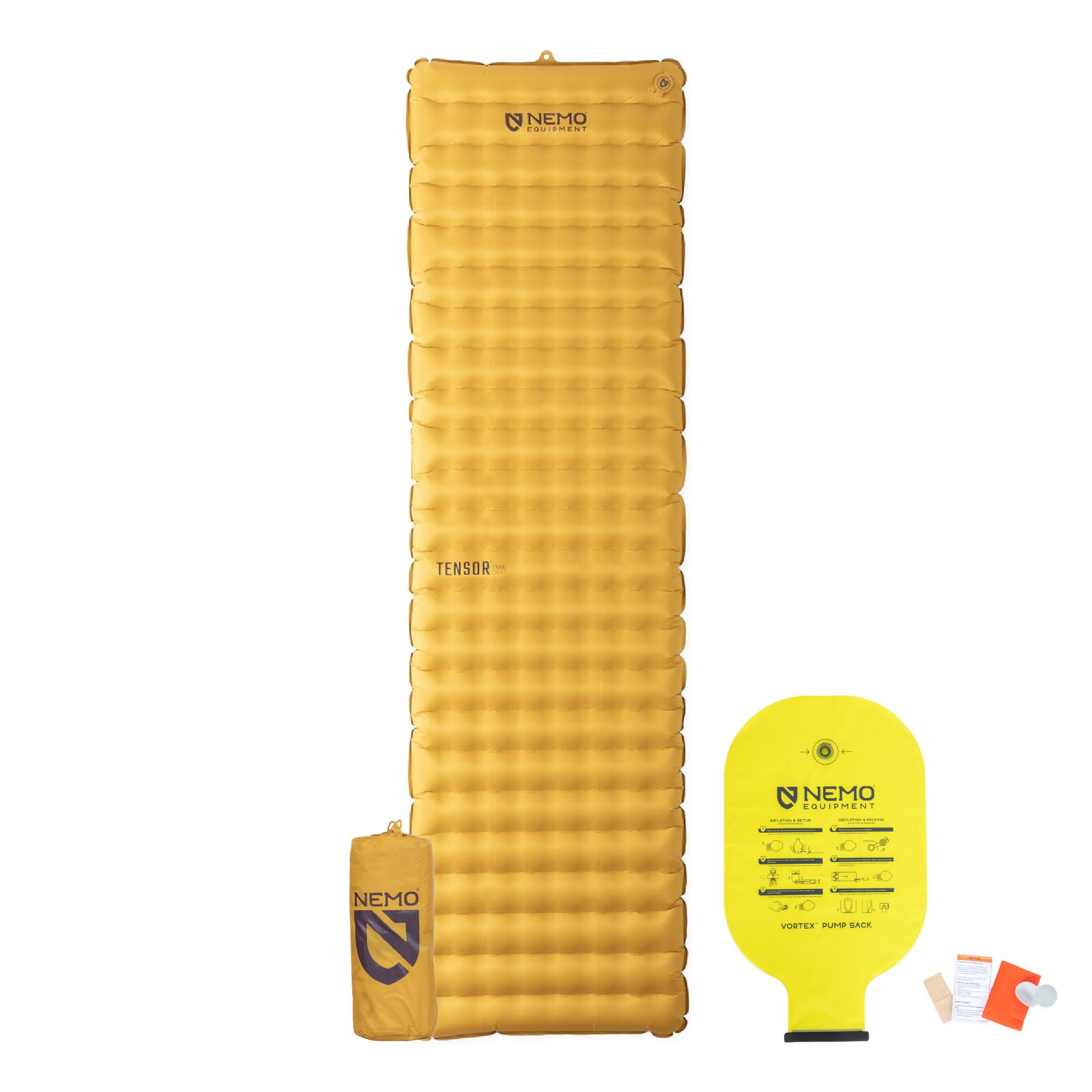
The NEMO Tensor Trail is the go-to pad for gram-counters who refuse to sacrifice sleep quality. Its Spaceframe baffle system uses low-stretch trusses that eliminate the springy feel common in lightweight pads, providing 3.5 inches of stable loft that feels more like a sleeping pad twice its weight.
The floating Thermal Mirror metallized film insulation adds warmth without the crinkle noise of older reflective layers, and the bluesign-approved premium nylon fabrics resist punctures better than most sub-400-gram pads. The Vortex Pump bag inflates the pad in roughly six to seven pumps—no moisture from your breath ever enters the chamber.
Weighing just 380 grams for the regular size, the Tensor Trail appeals to thru-hikers and bikepackers who measure gear volume in liters. Users report comfortable sleeps down to around 40°F, and the 25-inch width version provides ample room for side sleepers.
Why it’s great
- Sub-400g weight sets a new standard for insulated pads
- Quiet material avoids disruptive crinkle during the night
- Vortex pump bag provides fast, moisture-free inflation
Good to know
- Runs slightly narrow for restless sleepers in the 20-inch width
- Long-term durability of the thin fabric is unproven on sharp terrain
4. Exped Ultra 3R MW
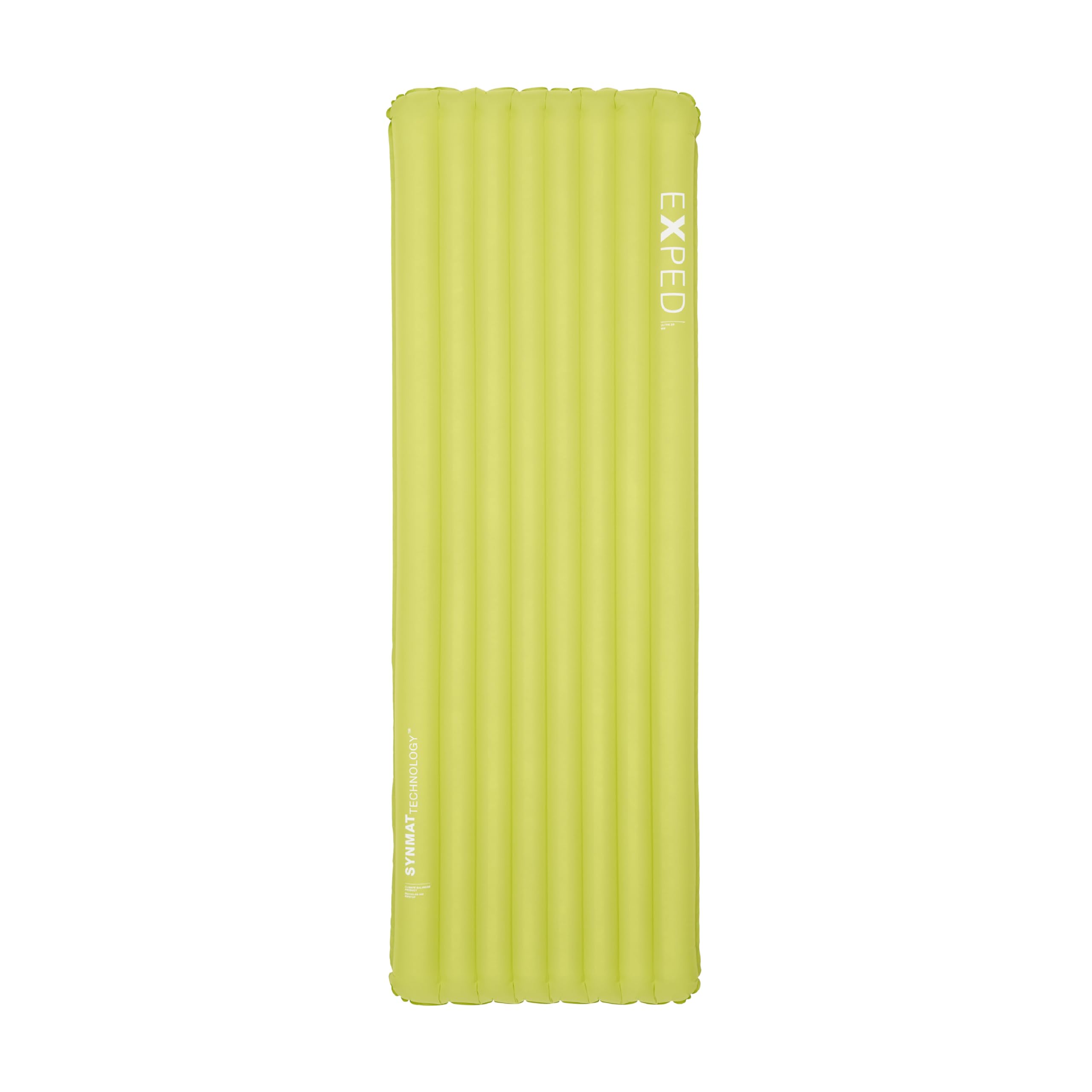
The Exped Ultra 3R uses SYNMAT recycled synthetic microfiber insulation welded directly to the top and bottom of the air chambers, eliminating cold spots and preventing insulation from shifting over time. This construction makes the pad quieter than film-based insulation pads and gives it a soft-touch surface that feels less plasticky against sleeping bags.
At 25.6 inches wide, the Ultra 3R offers generous real estate for side sleepers who shift positions through the night. The tapered Comfort Cradle outer rails keep you centered on the pad, while the 3.5-inch thickness provides enough loft to keep hips off the ground on uneven tent sites.
The Schnozzel pumpbag inflates the pad quickly, and the dual-valve system allows precise fine-tuning of firmness. Users consistently praise the warmth-to-weight ratio for late spring through early fall trips, noting that the 3.2 R-value is sufficient for most three-season conditions.
Why it’s great
- Synthetic microfiber insulation eliminates cold spots and crinkle noise
- Wide 25.6-inch design accommodates large sleepers
- Recycled face fabric reduces environmental impact
Good to know
- 3.2 R-value is best for warmer three-season use, not deep cold
- Packs slightly larger than minimalist ultralight air pads
5. Big Agnes Rapide SL – Regular 20×72
The regular-size Big Agnes Rapide SL packs the same insulation technology as its wider sibling into a lighter, more packable package. With an R-value of 4.8 and 3.5 inches of quilted top cushioning, it delivers impressive warmth for a pad that weighs under 16 ounces, making it a strong contender for backpackers who keep their pack weight around 12-15 pounds.
The offset I-beam construction provides consistent stability without the air mattress bounce that disturbs light sleepers. The padded outer chambers are slightly raised at 4.25 inches to keep you centered, and the high-volume valve with micro-adjustment allows on-the-fly firmness changes without deflating the entire pad.
Big Agnes individually inflation-tests every pad at the factory, and the lifetime manufacturing guarantee covers material defects. Users report the pad holds air for multiple nights without needing a top-off, and the Pumphouse sack makes setup effortless even in a cramped tent vestibule.
Why it’s great
- 4.8 R-value rivals winter pads at a three-season weight
- Quilted top creates a pillowy surface without excessive bulk
- Lifetime guarantee provides long-term confidence
Good to know
- 20-inch width may feel narrow for broad-shouldered side sleepers
- Wide version is significantly heavier for weight weenies
6. Sierra Designs Nitro Quilt 20

The Sierra Designs Nitro Quilt is the quilt that converts mummy-bag loyalists. Its 800-fill PFC-free DriDown provides exceptional loft at just 420 grams of fill weight, and the oversized design offers generous coverage without the restrictive confinement of a zipped bag. The hide-away hood deploys when temperatures drop below freezing, adding insulation around the head without adding a separate balaclava.
The full-length insulated hand/arm pockets are a clever touch that seals out drafts while keeping your arms inside the warm envelope. The 15-denier nylon ripstop shell and liner keep the packed weight low, and the EN comfort rating of 32°F is accurate for most sleepers wearing a light baselayer.
Users report the quilt functions well down to about 25°F with a puffer jacket and fleece, and it excels in the 35-75°F range where traditional bags force you to unzip and lose heat. The occasional feather loss is minor and typical for high-fill-power down products.
Why it’s great
- 800-fill DriDown provides serious loft with minimal pack volume
- Hide-away hood adds warmth for cold nights without bulk
- Insulated arm pockets seal drafts and keep arms warm
Good to know
- Oversized design may feel baggy for shorter sleepers under 5’6″
- Minor down leakage is expected with 15-denier fabrics
7. Kelty Supernova Down Sleeping Bag

The Kelty Supernova is a semi-rectangular down bag that prioritizes roominess over extreme weight savings, making it a smart choice for backpackers who feel claustrophobic in tight mummy cuts. The 550-fill down provides decent compressibility for the price, and the 40-degree rating works well for summer and warm three-season conditions.
The ability to zip two Supernova bags together into a two-person cocoon is a practical feature for couples who want to share warmth without doubling their pack volume. Kelty’s use of recycled materials in the shell and liner aligns with growing demand for sustainable gear.
At 2 pounds 1 ounce, it is not the lightest 40-degree bag on the market, but the roomy shape allows unrestricted movement for stomach sleepers and active tossers. Users report it keeps them warm into the low 30s when paired with an appropriate sleeping pad.
Why it’s great
- Spacious semi-rectangular cut works for all body types and sleep positions
- Two bags zip together for a two-person sleep system
- Recycled shell materials reduce environmental impact
Good to know
- Zipper requires careful alignment to avoid snagging the baffle
- 550-fill down packs larger than higher-fill-power alternatives
8. Naturehike 650FP Down Sleeping Bag

The Naturehike 650FP bag splits the difference between a mummy and a rectangular shape: the upper body hugs your torso to prevent heat loss, while the lower half offers enough room to move or stick your feet out for ventilation. At just 885 grams, it is genuinely ultralight for a 40°F down bag with an RDS-certified fill.
The 400T 20D ripstop nylon shell resists water and abrasion reasonably well for the weight class, and the YKK zipper is a reliable choice. The included compression sack squeezes the bag to a 13.8 x 7.1-inch package that fits easily into a 50-liter pack.
Users report the bag comfortable down to the low 40s Fahrenheit with just a baselayer, and it doubles well as a travel quilt in warmer conditions. The zipper can snag occasionally if rushed, and the draft tube around the face is minimal compared to premium bags.
Why it’s great
- Sub-900g weight at a budget-friendly price point
- RDS-certified down provides ethical sourcing confidence
- Hybrid cut works for stomach sleepers who dislike full mummy confinement
Good to know
- Zipper snagging is a recurring user complaint
- Thin 20D fabric requires careful ground sheet placement
9. SENSORY4U 850 Down Top Quilt

The SENSORY4U top quilt delivers 850-fill-power down at a fraction of the price of established quilt brands, making it one of the highest-value entries in the ultralight sleep system category. Weighing just 1.9 pounds, it undercuts many traditional sleeping bags while offering superior compressibility and freedom of movement.
The foot box provides dedicated space for your feet without constricting them, and the included pad straps prevent the quilt from sliding off during the night. The 30°F comfort rating is realistic with a proper baselayer, and the weather-resistant nylon shell handles condensation and light moisture well.
Users with over 40 nights of use report the quilt maintains its loft and warmth, though the thin stuff sack may develop holes over time. The drawstring closure at the neck is effective at sealing drafts, and the ability to vent by sticking a foot out is a significant advantage for hot sleepers.
Why it’s great
- 850-fill down at a price that undercuts premium quilt brands
- Pad straps prevent quilt displacement during active sleep
- Foot box design allows natural foot movement without drafts
Good to know
- Stuff sack durability is below average for long-term use
- Some users report minor down leakage through the shell
FAQ
Can I use a 30°F quilt instead of a 20°F sleeping bag to save weight?
Why does my 40°F bag feel cold at 45°F with a standard foam pad?
What does the “comfort” versus “limit” temperature rating mean for a backpacking sleep system?
Final Thoughts: The Verdict
For most users, the best backpacking sleep system winner is the ATEPA Ultralight Backpacking Sleep System because it eliminates the weakest link in most sleep setups—the bag sliding off the pad—while providing a 6.6 R-value that handles shoulder-season nights without extra gear. If you want maximum packability and a quilt-style freedom, grab the Sierra Designs Nitro Quilt 20. And for the best pad-only experience when paired with your existing bag, nothing beats the Big Agnes Rapide SL 25×78 for width and stability.

Mo Maruf
I created WellFizz to bridge the gap between vague wellness advice and actionable solutions. My mission is simple: to decode the research and give you practical tools you can actually use.
Beyond the data, I am a passionate traveler. I believe that stepping away from the screen to explore new environments is essential for mental clarity and physical vitality.