Our readers keep the lights on and my smoothie glass nicely filled. As an Amazon Associate, I earn from qualifying purchases.
A baby who knows the breast often rejects plastic imitators. The latch, the flow rate, the feel of the nipple — everything has to be nearly identical, or feeding time turns into a battle of wills. For parents navigating combination feeding, the wrong bottle can undo weeks of breastfeeding progress.
I’m Mohammad Maruf — the founder and writer behind WellFizz. I’ve spent years analyzing consumer feedback and technical specs in the infant feeding space, focusing specifically on how bottle design affects a breastfed baby’s latch and digestion.
After reviewing hundreds of real-parent experiences and examining the key design features — nipple shape, venting systems, and flow rates — I’ve curated the list of the absolute best baby bottles for breastfed babies that truly mimic the breast and minimize rejection.
How To Choose The Best Baby Bottles For Breastfed Babies
Selecting a bottle for a breastfed baby isn’t about finding the most popular brand — it’s about finding the one that matches your baby’s specific latch habits and your breastfeeding rhythm. The wrong choice can lead to nipple confusion, excessive gas, or outright bottle refusal.
Nipple Shape, Material, and Flow Rate
A breastfed baby uses a specific tongue and jaw motion to extract milk. Nipples that are too firm, too narrow, or too long can disrupt that motion, causing the baby to reject the bottle or develop a shallow latch. Look for wide, breast-shaped nipples made from ultra-soft silicone that mimics the skin-like texture of a real breast. Flow rate is equally critical — a slow or extra-slow flow nipple forces the baby to work for the milk, just like at the breast. A flow that’s too fast can cause choking, overfeeding, or a preference for the bottle over the breast.
Anti-Colic Venting Systems
Breastfed babies swallow less air than bottle-fed babies because the breast creates a natural seal. When switching to a bottle, an effective venting system becomes essential to prevent air from entering the baby’s stomach. Internal vent systems (like those with a straw or tube) are clinically proven to reduce colic and gas, but they add cleaning steps. External venting at the base of the nipple is easier to clean but may be less effective. The choice depends on how much cleaning time you’re willing to trade for gas reduction.
Material: Glass vs. Plastic vs. Silicone
Glass bottles are non-porous, easy to sterilize, and free from BPA and other chemicals, but they are heavier and can break. High-quality silicone bottles are lightweight, squeezable, and feel closer to skin, but may discolor over time. Plastic bottles are lightweight and shatterproof, but some parents worry about chemical leaching with repeated heating. For breastfed babies, glass or silicone are often preferred because they don’t retain odors and are easier to clean thoroughly.
Quick Comparison
On smaller screens, swipe sideways to see the full table.
| Model | Category | Best For | Key Spec | Amazon |
|---|---|---|---|---|
| Gulicola Natural Glass (4 Pack) | Premium Glass | Complete newborn solution | Borosilicate glass, 3 oz & 5 oz | Amazon |
| Philips Avent Natural (2 Pack) | Plastic Slow Flow | No-drip breast-to-bottle transition | Natural Response nipple, Flow 2 | Amazon |
| Gulicola Natural Glass (2 Pack) | Premium Glass | Durable glass with soft latch | 5 oz borosilicate glass | Amazon |
| Comotomo Baby Bottle (2 Pack) | Silicone Bottle | Teething babies who reject bottles | Food-grade silicone, 8 oz | Amazon |
| Dr. Brown’s Natural Flow Options+ | Anti-Colic Plastic | Reducing colic and gas | Internal vent system, Level 1 nipple | Amazon |
In‑Depth Reviews
1. Gulicola Natural Glass Baby Bottles Set, 4 Pack (3 oz + 5 oz)
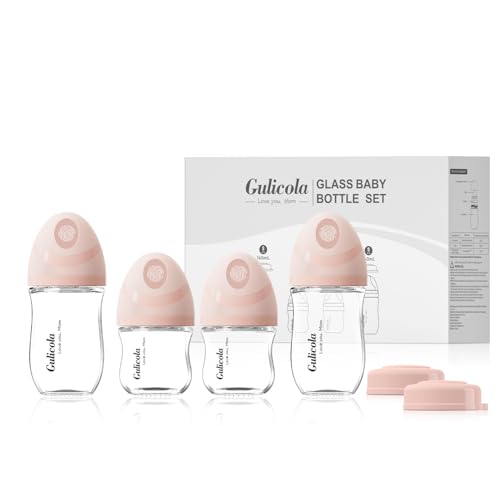
This 4-pack set from Gulicola includes two 3-ounce bottles with extra-slow flow nipples and two 5-ounce bottles with slow flow nipples — covering a newborn’s entire first six months. The ultra-soft silicone nipple features latch-guide dots that train the baby’s mouth to form the correct suction pattern, mirroring breastfeeding mechanics. Parents consistently report zero nipple confusion, even for babies who nurse at night and bottle-feed during the day.
The borosilicate glass construction is noticeably thicker than standard glass, surviving drops onto hardwood and tile floors without chipping. The wide-neck design uses only four pieces, making it easier to clean than multi-part vent systems. Reviewers highlight that the nipple’s jelly-like texture is the closest they’ve found to the real breast, and the anti-colic vents sit at the base of the nipple, keeping air out of the milk.
This set also comes with storage caps, making it a complete newborn feeding kit. The glass doesn’t absorb odors or stains from breast milk, and the bottles are dishwasher and sterilizer-safe. For parents who want a single investment that grows with their baby and eliminates the guesswork of switching bottle sizes, this 4-pack delivers exceptional value without compromising on material quality.
Why it’s great
- Complete starter set with both 3 oz and 5 oz sizes
- Ultra-soft nipple with latch-guide dots prevents confusion
- Borosilicate glass survives multiple drops without breaking
- Only 4 pieces to clean, far simpler than vent-tube designs
Good to know
- Smaller brand means replacement nipples and rings are harder to find locally
- Glass is heavier than plastic or silicone, which some babies may notice
2. Philips Avent Natural Baby Bottles with Natural Response Nipples (4 oz, 2-Pack)

Philips Avent’s Natural Response nipple is engineered around a simple principle: milk only flows when the baby actively drinks. The unique opening at the tip releases milk during suction and stops flowing when the baby pauses to swallow or breathe — replicating the intermittent flow pattern of breastfeeding. This design dramatically reduces the risk of choking and overfeeding, which is why the 4-ounce version won the Best of The Bump Award for newborns.
The wide, breast-shaped nipple is made from soft silicone and the bottle body is clear plastic with a wide neck that simplifies pouring breast milk and scrubbing. Parents who have tried Dr. Brown’s and Tommee Tippee consistently report that these are the only bottles that absolutely do not leak, even when shaken or stored sideways. The anti-colic valve sits inside the nipple ring, keeping air away from the baby’s tummy without adding extra parts to clean.
The slow flow (Flow 2) nipple is ideal for newborns and younger breastfed babies. Some parents note that the flow is genuinely slow — almost too slow for older babies — which is actually a benefit for maintaining breastfeeding pacing. The set includes two 4-ounce bottles, making it a perfect starter pack for parents testing combination feeding without committing to a full set.
Why it’s great
- Natural Response nipple only releases milk during active drinking
- Zero leakage — widely considered the most leak-proof option tested
- Easy to clean with no internal vent tubes or straws
- Awarded Best Bottle for Newborns by The Bump
Good to know
- Plastic body may show wear and cloudiness after repeated sterilization
- Flow 2 is slow; some older babies may need Flow 3 nipple upgrade
3. Gulicola Natural Glass Baby Bottle, 5 oz, 2 Pack
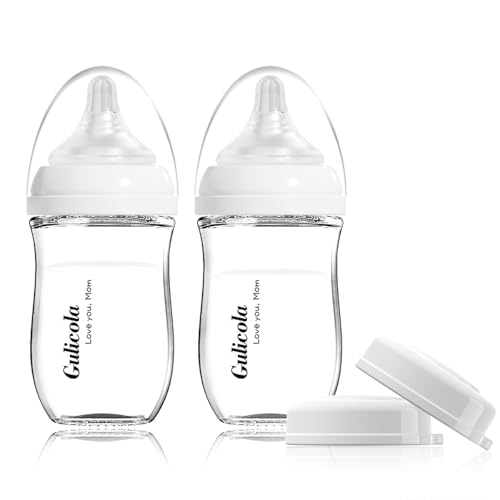
For parents who want the durability of glass in a compact 2-pack, the Gulicola 5-ounce bottles deliver a premium build without the bulk of a full set. The borosilicate glass is heat-resistant and survives drops that would shatter standard soda-lime glass. Parents who have tested these bottles confirm they’ve been dropped on tile and hardwood floors multiple times without a single chip or crack — a rare claim in the glass bottle category.
The nipple is ultra-soft and mimics the natural flex and movement of breastfeeding, helping a breastfed baby maintain a proper latch. The anti-colic vents at the nipple base allow the baby to drink continuously without gasping for air, reducing the air bubbles that cause spit-up and discomfort. The wide neck makes filling and cleaning simple, and all four pieces can be sterilized in a bottle warmer, microwave, or boiling water.
Some parents note that because Gulicola is a smaller brand, finding replacement attachments like the nipple ring locally is more difficult — ordering backups online is recommended. However, the quality of the glass and the softness of the nipple have earned it high marks from lactation consultants on social media. For parents committed to glass and looking for a premium mid-size option, this 2-pack is a strong contender.
Why it’s great
- High-quality borosilicate glass is extremely drop-resistant
- Ultra-soft nipple helps breastfed babies latch naturally
- Anti-colic vents reduce air intake without complex tubes
- Easy to clean with only 4 pieces and wide neck design
Good to know
- Replacement parts are harder to source than major brands
- 5 oz size may be outgrown quickly by heavy feeders
4. Comotomo Baby Bottle Double Pack, 8 oz, Green

Comotomo’s uniquely squeezable silicone body sets it apart from every other bottle on this list. The soft, skin-like texture feels more natural to a baby than hard plastic or rigid glass, which is why this bottle is often the only one a teething baby will accept. The truly wide mouth mimics the shape of the breast, and the dual anti-colic vents at the base of the nipple provide consistent milk flow without leaking.
The silicone is BPA, PVC, and phthalate-free, and the wide neck makes it arguably the easiest bottle to clean by hand — your entire hand can fit inside the bottle. The 8-ounce capacity works well for older babies, though some parents note that the last bit of milk pools at the top and requires tilting the bottle upright to drain. The medium flow nipple works for most babies starting around 3.5 months, but the slow flow option is recommended for newborns and younger breastfed infants.
Reviewers consistently praise the non-slip silicone grip, which makes it easier for babies to hold the bottle independently as they grow. The main downside is the round shape: the bottle can roll off tables or countertops easily. Despite this quirk, Comotomo remains a top choice for babies going through bottle refusal during teething, and its three-piece design (nipple, ring, bottle) is the simplest of any option here.
Why it’s great
- Soft, squeezable silicone feels skin-like and is accepted by teething babies
- Wide neck makes cleaning exceptionally easy
- Dual anti-colic vents prevent gas without complex assembly
- Non-slip silicone grip helps baby self-feed
Good to know
- Round shape causes the bottle to roll on flat surfaces
- Last bit of milk pools at the top; requires tilting to finish
5. Dr. Brown’s Natural Flow Anti-Colic Options+ Narrow Baby Bottle, 4 oz, 4 Pack
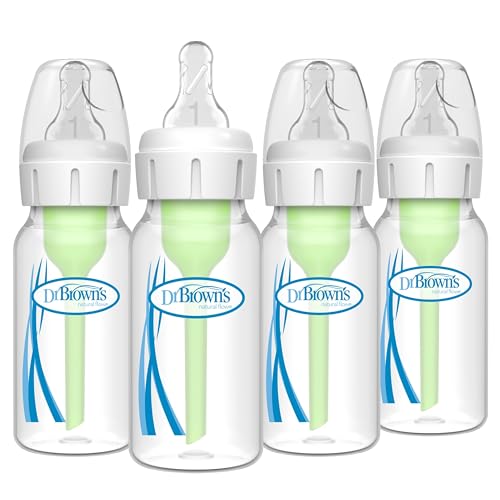
Dr. Brown’s internal vent system is clinically proven to reduce colic by creating a vacuum-free feeding environment that eliminates air bubbles from the milk. This system is particularly beneficial for breastfed babies who are used to the airtight seal of the breast — it prevents the gas, spit-up, and burping that often occur when switching to a traditional bottle. The breast-like nipple shape encourages a proper latch, easing the transition back and forth.
The 4-ounce bottles come with Level 1 slow flow nipples, which provide a consistent flow that allows the baby to feed at their own pace without gulping. The vent system also helps preserve the nutrients in breast milk by reducing oxidation during feeding. The Options+ design allows the internal vent to be removed once the baby’s feeding develops, meaning the same bottle can transition from a high-venting newborn phase to a simpler toddler bottle without buying a new set.
However, the vent system includes multiple parts — the bottle, nipple, collar, vent tube, and vent insert — which require more cleaning time than simpler designs. Some parents report that the vent tube can bend after repeated sterilization, and leakage can occur if the bottle is overfilled or the straw is submerged. Despite this, the anti-colic effectiveness is unmatched, and parents of gassy babies often call this bottle a lifesaver.
Why it’s great
- Clinically proven internal vent system significantly reduces colic and gas
- Vacuum-free feeding preserves breast milk nutrients
- Options+ design allows vent removal as baby grows
- Consistent slow flow mirrors breastfeeding pace
Good to know
- Multiple parts require more cleaning and reassembly time
- Vent tube can bend after sterilization, and overfilling may cause leaks
FAQ
How do I prevent nipple confusion when switching between breast and bottle?
Why does my breastfed baby choke on bottle milk?
How often should I replace the bottle nipples for a breastfed baby?
Are glass baby bottles safe for breastfed newborns?
Final Thoughts: The Verdict
For most parents, the best baby bottles for breastfed babies winner is the Philips Avent Natural (2-Pack) because it combines a leak-proof design with the Natural Response nipple that mimics the breast’s intermittent flow, making combination feeding seamless without nipple confusion. If you want a complete starter set with glass durability and latch-guide technology, grab the Gulicola Natural Glass 4-Pack. And for a baby going through teething who refuses every other bottle, nothing beats the Comotomo Silicone Bottle for its skin-like feel and simple, squeezable design.

Mo Maruf
I created WellFizz to bridge the gap between vague wellness advice and actionable solutions. My mission is simple: to decode the research and give you practical tools you can actually use.
Beyond the data, I am a passionate traveler. I believe that stepping away from the screen to explore new environments is essential for mental clarity and physical vitality.