Our readers keep the lights on and my smoothie glass nicely filled. As an Amazon Associate, I earn from qualifying purchases.
A cable stripping tool that nicks or slices through internal conductors turns a five-minute termination into a frustrating re-do. Whether you are pulling Cat6A through a drop ceiling or terminating 12 AWG solid in a panel, the difference between a clean strip and a damaged wire comes down to blade geometry, adjustment range, and handle leverage. The wrong tool wastes material, dulls quickly, and leaves you chasing intermittent faults.
I’m Mohammad Maruf — the founder and writer behind WellFizz. My research focuses on how blade hardness, jaw alignment, and ergonomic indexing across different wire gauges determine whether a tool becomes a daily driver or a drawer filler.
After analyzing five models spanning self-adjusting automatics, precision radial strippers, and compound-lever pliers, the best cable stripping tool for most electricians and network installers is the Klein Tools K11095 because its individually machined stripping holes and alloy-steel blades deliver consistent depth control across solid and stranded wire without nicking a single strand.
How To Choose The Best Cable Stripping Tool
Choosing the right cable stripping tool comes down to the specific cables you handle most often — network, electrical, or coaxial — and how many terminations you do in a typical session. A tool that works flawlessly on Cat6A can damage stranded fixture wire, and a heavy-duty plier-style stripper may be overkill for low-voltage data work. Focus on three factors: blade adjustability, mechanical leverage, and grip comfort during repetitive use.
Blade Adjustability and Cutting Mechanism
Fixed-gauge hole strippers, like those on the Klein K11095, offer the most predictable depth control because each hole is machined to a specific wire diameter. Self-adjusting tools use a spring-loaded blade that automatically conforms to the cable jacket, which speeds up repetitive stripping but can over-cut on very soft or thin insulation. Radial strippers rotate around the cable and are ideal for data cables where you must avoid nicking the inner twisted pairs.
Ergonomics and Handle Design
When you are stripping 50+ cables in a single run, handle material and grip contour determine whether your hand cramps by the 30th pull. Thermoplastic elastomer (TPE) overmolds absorb vibration better than bare steel or hard plastic. Glow-in-the-dark handles, like those on the Rack-A-Tiers Croc’s Sr., save minutes in dark crawlspaces, but the locking mechanism quality matters more — a loose clasp that pops open in your pouch defeats the purpose of portability.
Wire Range and Versatility
A broad stripping range — 8 to 20 AWG for solid and stranded — lets you move from a heavy feeder to a control wire without switching tools. Multi-function tools that add crimping, bolt shearing, and wire looping increase convenience but often compromise stripping precision. If your primary use is terminating Cat6A or coax, a dedicated adjustable-depth radial stripper like the trueCABLE delivers cleaner results than a jack-of-all-trades design.
Quick Comparison
On smaller screens, swipe sideways to see the full table.
| Model | Category | Best For | Key Spec | Amazon |
|---|---|---|---|---|
| Klein K11095 | Manual Plier | Electrical solid & stranded wire | 8-18 AWG solid, 10-20 AWG stranded | Amazon |
| Klein VDV110-261 | Radial | Twisted pair (Cat3 – Cat6A) | High-carbon steel auto blade | Amazon |
| trueCABLE MULTISTRIP | Adjustable Depth | Ethernet & coax cable prep | Infinitely adjustable blade depth | Amazon |
| Rack-A-Tiers Croc’s | Needle Nose | General electrical & tight spaces | 10.5-inch compact needle nose | Amazon |
| WORKPRO Self-Adjusting | Self-Adjusting | DIY & quick multi-wire stripping | 3-in-1: strip, cut, crimp | Amazon |
In‑Depth Reviews
1. Klein Tools K11095 Klein-Kurve Wire Stripper and Cutter
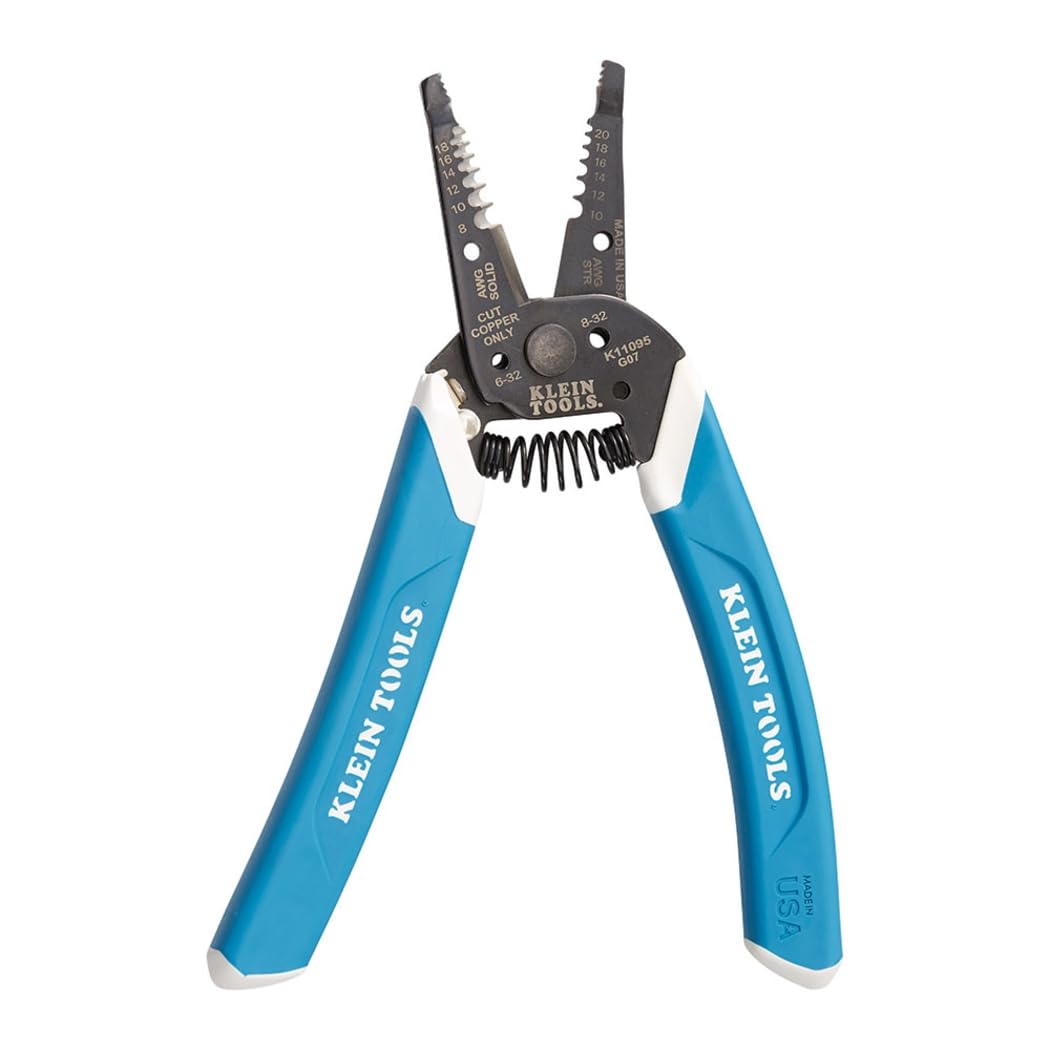
The Klein K11095 is the benchmark for precision manual stripping. Its six precision-ground stripping holes are machined for 8-18 AWG solid and 10-20 AWG stranded wire — each hole cuts a consistent depth without crushing the remaining insulation. The alloy steel blades stay sharp through hundreds of terminations, and the narrower head geometry lets you reach into tight breaker panels and crowded junction boxes where bulkier pliers can’t fit.
Beyond stripping, the K11095 includes screw shearing holes for 6-32 and 8-32 bolts, dual wire looping holes, and shear-like cutter blades that leave a clean, burr-free end. The spring-loaded TPE handles reduce hand fatigue during repeated cycles, and the etched markings on the tool body remain legible even after months of oil and grime exposure.
The only trade-off is its specialization — this is not a self-adjusting tool, so you must select the correct hole for each wire gauge. But for professionals who value absolute control over depth, that manual step ensures no nicked conductors and no wasted wire.
Why it’s great
- Precision-ground holes deliver consistent strip depth on solid and stranded wire
- Heat-treated alloy steel blades resist dulling over long-term daily use
- Narrow head design fits into confined electrical panels and boxes
Good to know
- Not self-adjusting — requires selecting the correct hole for each gauge
- Mid-range price point reflects premium USA manufacturing
2. Klein Tools VDV110-261 Twisted Pair Radial Stripper
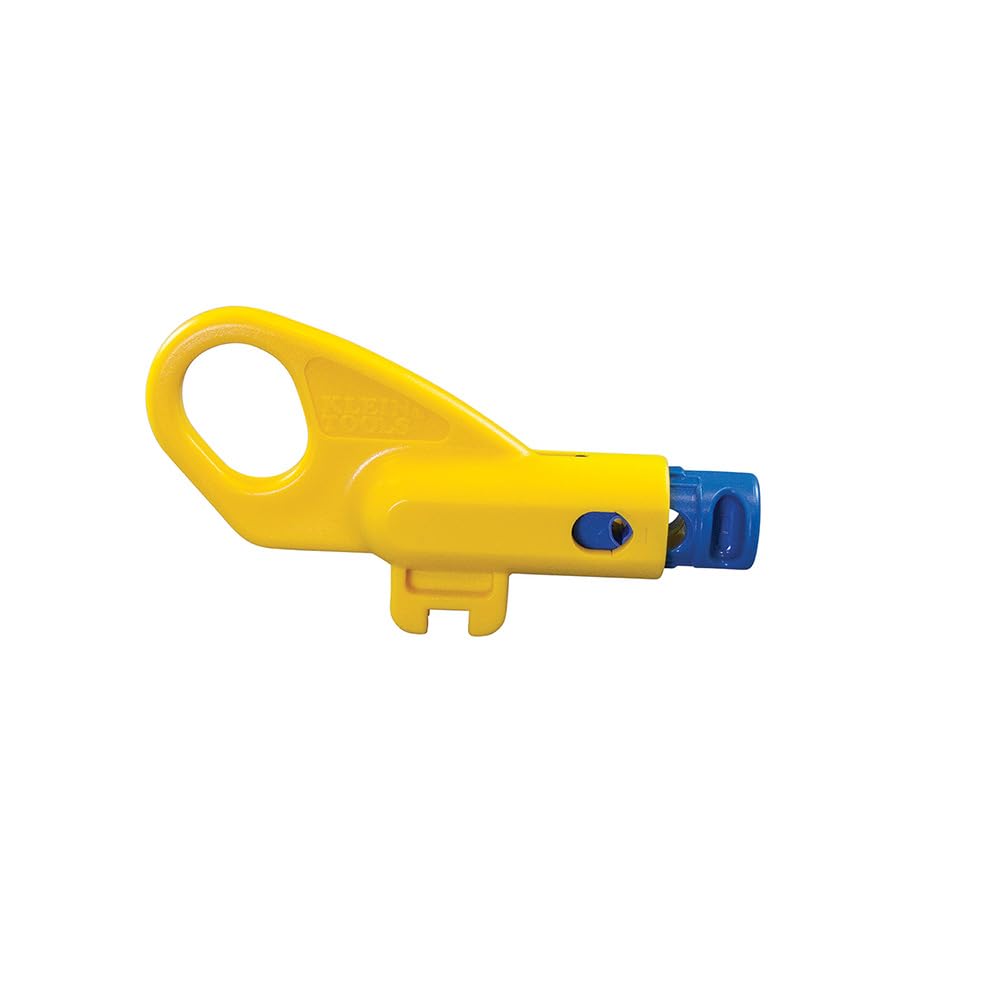
If your daily work revolves around twisted pair cabling — Cat5e, Cat6, or Cat6A — the VDV110-261 is the most reliable radial stripper in its class. The high-carbon steel cutting blades automatically adjust to the cable diameter as you rotate the tool, scoring the jacket at a consistent depth that cleanly separates without contacting the internal conductors. Users consistently report hundreds to thousands of terminations before the blade requires replacement.
Weighing just 1.28 ounces, this tool disappears into a pocket or tool pouch. The finger loop design lets you spin the stripper around the cable with minimal wrist movement, which matters when you are terminating 48-port patch panels. An additional external blade allows mid-span jacket slitting for service loops or direct burial repairs.
The trade-off is that this tool is purpose-built for twisted pair and may not replace your general electrical strippers. There is no manual gauge selection — the auto-blade mechanism works best when the cable is round and consistent. For network installers, however, that singular focus is precisely what makes it indispensable.
Why it’s great
- Auto-adjusting blade rotates around the cable, eliminating nicked pairs
- Ultra-light and compact for convenient pouch carry during long jobs
- External blade enables mid-span jacket slitting without extra tools
Good to know
- Limited to twisted pair and similar round data cables only
- Lacks instructions for first-time users; requires trial to feel the proper rotation
3. trueCABLE Wire Stripping and Cutting Tool

The trueCABLE MULTISTRIP bridges the gap between cheap plastic strippers and expensive multi-tools by offering infinitely adjustable blade depth in a lightweight ABS body. You dial in the exact score for Cat5e through Cat6A Ethernet jackets and for RG59 through RG11 coax — a single tool that covers the two most common low-voltage cable families on any structured cabling job.
Build quality stands out at this price tier: the blade cassettes are replaceable, the ergonomic grip reduces fatigue during repetitive pulls, and the velcro cable comb makes braided shield management faster and safer than using your fingers. A molded-in wire straightener removes kinks from Ethernet conductors before termination. The Forever Warranty from trueCABLE also adds peace of mind for professional installers.
The main limitation is the plastic construction — it feels less robust than an all-metal tool, and it does not serve as a general-purpose electrical stripper for solid or stranded building wire. For dedicated data and coax prep, however, the adjustable depth control and replaceable blades make this a smarter buy than single-purpose coax strippers that cost the same.
Why it’s great
- Infinitely adjustable blade depth accommodates multiple Ethernet and coax sizes
- Replaceable blade cassettes extend the tool’s usable life significantly
- Velcro comb and wire straightener speed up shield preparation and conductor straightening
Good to know
- ABS plastic body may feel less durable than all-metal alternatives
- Not designed for stripping solid or stranded electrical building wire
4. Rack-A-Tiers Croc’s Sr. Needle Nose Wire Strippers
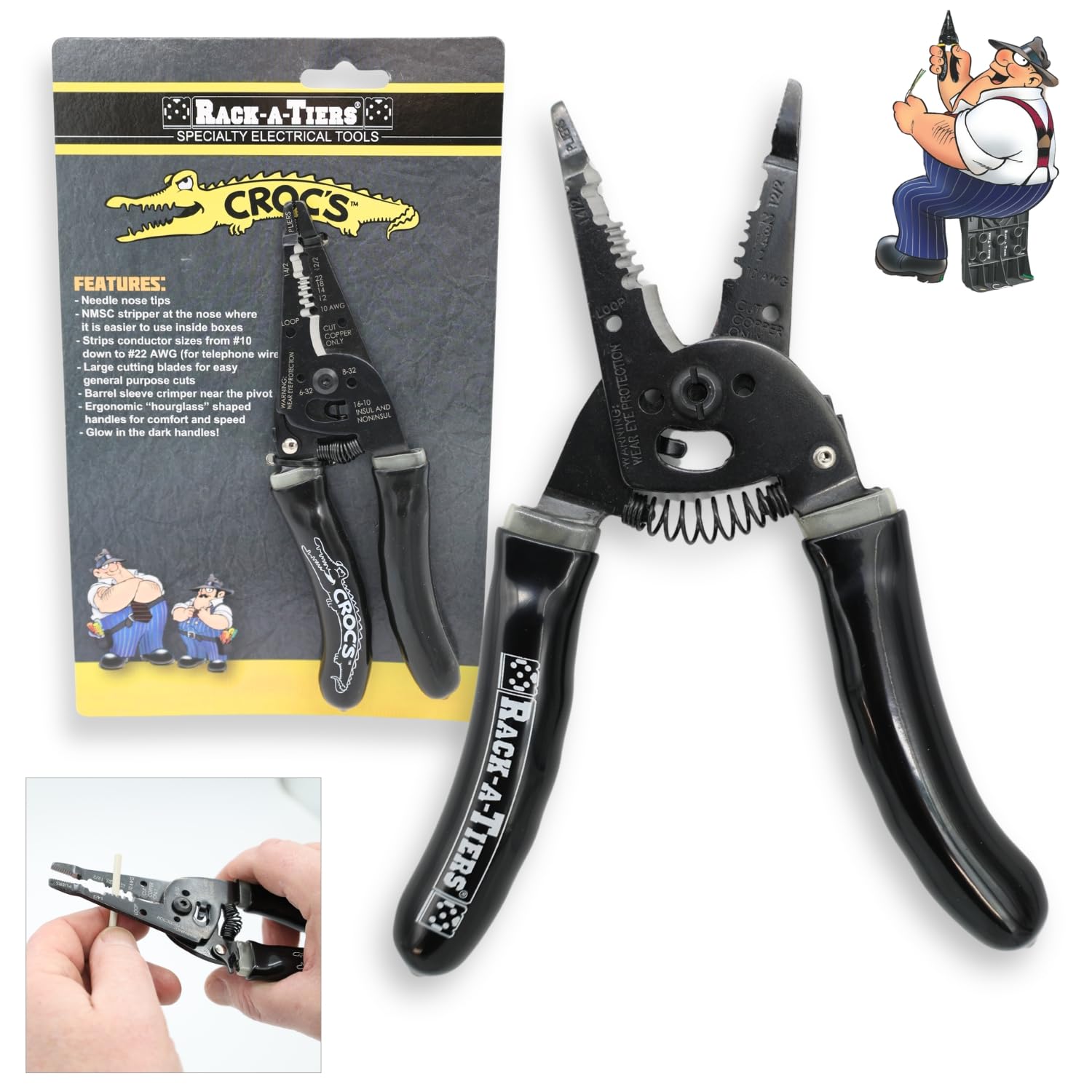
The Rack-A-Tiers Croc’s Sr. is a four-in-one tool — wire stripper, cutter, bolt chopper, and needle nose pliers — packed into a compact 10.5-inch frame. The ergonomic glow-in-the-dark handles are genuinely useful when you drop your tool in a dark attic or crawlspace; the photoluminescent material stays visible for hours after a brief light exposure. Users with larger hands find the grip contour comfortable for extended use, and the spring-loaded mechanism reduces hand fatigue during repetitive cycles.
The needle nose profile reaches into tight spaces where standard plier-style strippers cannot fit, and the integrated cutting blades handle general-purpose cuts on Romex and THHN wire. The bolt chopper adds utility for cutting 6-32 and 8-32 screws, reducing the number of tools on your belt.
The biggest drawback is the locking mechanism — several users report the clasp is loose and pops open inside a tool pouch, causing the tool to snag or fall out. The lack of separate stripping holes for solid versus stranded wire also reduces precision compared to dedicated manual strippers. For electricians who work in confined spaces and want a multi-tool, the Croc’s Sr. offers convenience, but precision strippers from Klein and Knipex outperform it on clean strip quality.
Why it’s great
- Four tools in one: stripper, cutter, bolt chopper, and needle nose pliers
- Glow-in-the-dark handles prevent losing the tool in dark work areas
- Compact needle nose design accesses tight junction boxes and panels
Good to know
- Locking mechanism is prone to popping open unexpectedly in a pouch
- No separate gauge holes for solid vs. stranded wire reduces strip precision
5. WORKPRO Self Adjusting Wire Stripper

The WORKPRO Self Adjusting Wire Stripper is the entry-level champion for DIYers and occasional home use. Its self-adjusting mechanism accepts 10-24 AWG copper and aluminum cables without needing to dial in a specific hole — just clamp and pull. The 3-in-1 design adds wire cutting and insulated terminal crimping, making it a viable single-tool solution for basic electrical repairs, lamp rewiring, and small appliance work.
The A3 and SK5 steel construction feels solid in hand at 12.3 ounces, and the TPE anti-slip handles provide decent grip leverage. Several users report the tool strips individual and multiple wires consistently, with the automatic gauge adjustment saving time when switching between different wire sizes on the same project.
The downsides become apparent under heavier use. The crimper struggles with smaller connectors and can puncture insulation if not aligned perfectly. Re-stripping the same wire piece often fails because the blade scores the jacket at a slightly different depth on the second pass.
Why it’s great
- Self-adjusting mechanism speeds up stripping across multiple wire gauges
- Includes cutting and crimping functions in a single tool
- Solid steel build with comfortable TPE grip handles
Good to know
- Crimping performance is inconsistent, especially on small connectors
- Re-stripping the same wire often fails due to inconsistent blade depth
FAQ
Can I use a self-adjusting wire stripper on Cat6A Ethernet cable?
How do I prevent nicking the internal conductors when stripping solid wire?
Final Thoughts: The Verdict
For most users, the best cable stripping tool winner is the Klein Tools K11095 because its precision-ground stripping holes and alloy steel blades deliver consistent, nick-free results on solid and stranded wire across a wide AWG range. If you primarily terminate Ethernet and coax cables, grab the trueCABLE MULTISTRIP for its infinitely adjustable blade depth and replaceable cassettes. And for a budget-friendly all-in-one that handles light DIY jobs without breaking the bank, nothing beats the WORKPRO Self Adjusting Wire Stripper.

Mo Maruf
I created WellFizz to bridge the gap between vague wellness advice and actionable solutions. My mission is simple: to decode the research and give you practical tools you can actually use.
Beyond the data, I am a passionate traveler. I believe that stepping away from the screen to explore new environments is essential for mental clarity and physical vitality.