Our readers keep the lights on and my smoothie glass nicely filled. As an Amazon Associate, I earn from qualifying purchases.
Stepping into the OLED gaming monitor market for the first time feels like standing at the edge of a visual revolution. The infinite contrast, the per-pixel lighting, and the near-instantaneous response times redefine what you expect from a screen. But the premium price tags attached to most OLED panels create a real dilemma for gamers who want that transformative image quality without breaking the bank.
I’m Mohammad Maruf — the founder and writer behind WellFizz. I’ve spent countless hours analyzing panel technologies, refresh rate curves, and HDR certifications to separate genuine value from marketing hype in the competitive display market.
Your goal is to pinpoint the best budget oled gaming monitor that delivers true black levels and blistering speed without sacrificing the features that actually matter for your setup.
How To Choose The Best Budget OLED Gaming Monitor
OLED gaming monitors have dropped in price significantly, but the jump from budget IPS to entry-level OLED still requires careful spec matching. Three core factors determine whether a monitor serves your needs or wastes potential.
Refresh Rate and Response Time Balance
OLED panels all deliver sub-0.1ms response times, so the real differentiator is the refresh rate ceiling. A 240Hz panel pairs perfectly with a mid-range GPU running QHD resolution, while 360Hz and above demand a top-tier card that can push that many frames. Budget OLEDs typically sit at 240Hz, which offers a tangible upgrade over standard 144Hz IPS panels without requiring a thousand-dollar graphics card upgrade.
Panel Type: QD-OLED vs WOLED
Quantum Dot OLED panels (QD-OLED) produce wider color volume and higher peak brightness, especially in HDR scenes. WOLED panels (White OLED) often include an anti-glare coating and can show slightly better text clarity. Budget-focused buyers should prioritize QD-OLED for superior vibrancy unless they game in very bright rooms where WOLED’s matte finish reduces reflections more effectively.
Burn-in Prevention and Warranty Coverage
All modern OLED gaming monitors include pixel cleaning cycles, screen savers, and logo detection features. What separates a smart budget buy from a regretful one is the warranty. Three-year burn-in coverage is the gold standard, and several brands now include it without requiring extra registration. Avoid any OLED monitor that lacks explicit burn-in warranty terms in the package documentation.
Quick Comparison
On smaller screens, swipe sideways to see the full table.
| Model | Category | Best For | Key Spec | Amazon |
|---|---|---|---|---|
| Alienware AW2725DF | Premium | Esports & competitive FPS | 360Hz / QD-OLED / 0.03ms | Amazon |
| ASUS ROG Swift PG27AQWP-W | Premium | Future-proof dual mode | 540Hz QHD / Tandem OLED | Amazon |
| MSI MPG 321URX | Premium | 4K single-player & work | 4K UHD / 240Hz / QD-OLED | Amazon |
| LG 39GX90SA-W | Premium | Immersive ultrawide gaming | 3440×1440 / 240Hz / 800R | Amazon |
| ASUS ROG Strix XG27ACDNG | Premium | High-refresh QD-OLED | 360Hz / QD-OLED / DCI-P3 99% | Amazon |
| KOORUI S3241XO | Mid-Range | 4K OLED on a budget | 32″ 4K / 240Hz / HDR400 | Amazon |
| ASUS ROG Strix XG27AQDMG | Mid-Range | Glossy WOLED with heatsink | 240Hz / Glossy WOLED / 0.03ms | Amazon |
| LG 27GX700A-B | Mid-Range | Brightest OLED gaming | 280Hz / 4th Gen OLED / 1500 nits | Amazon |
| Samsung Odyssey OLED G6 | Mid-Range | Samsung ecosystem & build | 240Hz / QD-OLED / Glare Free | Amazon |
| INNOCN 2780s | Budget | Entry-level QD-OLED | 280Hz / QD-OLED / Pivot stand | Amazon |
| AOC Q27G4ZD | Budget | Lowest price OLED entry | 240Hz / QD-OLED / 0.03ms | Amazon |
In‑Depth Reviews
1. Alienware AW2725DF

The Alienware AW2725DF delivers a 360Hz refresh rate on a QD-OLED panel at a price point that undercuts many lower-spec competitors. Its 0.03ms response time eliminates motion blur completely, and the VESA DisplayHDR True Black 400 certification ensures deep, layered shadows in dark game scenes. The 99.3% DCI-P3 coverage provides color vibrancy that makes both competitive titles and cinematic single-player games pop.
Build quality stands out with a fully adjustable stand that offers height, tilt, swivel, and pivot adjustments. The I/O cover keeps the desk clean, and the included microfiber cloth acknowledges the delicate nature of QD-OLED screens. The three-year burn-in warranty provides peace of mind that many budget-tier OLED monitors lack entirely.
The only compromises are moderate text fringing due to the non-standard pixel layout and a slight purple tint on the anti-glare coating when viewed from extreme angles. Pair it with a high-end GPU that can consistently push past 240fps to fully justify the 360Hz capability.
Why it’s great
- Industry-leading 360Hz refresh rate with 0.03ms response
- Three-year burn-in warranty included out of box
- Fully adjustable ergonomic stand with cable management
Good to know
- QD-OLED text fringing is visible on small fonts
- Anti-glare coating shows slight purple tint from side angles
2. ASUS ROG Swift PG27AQWP-W
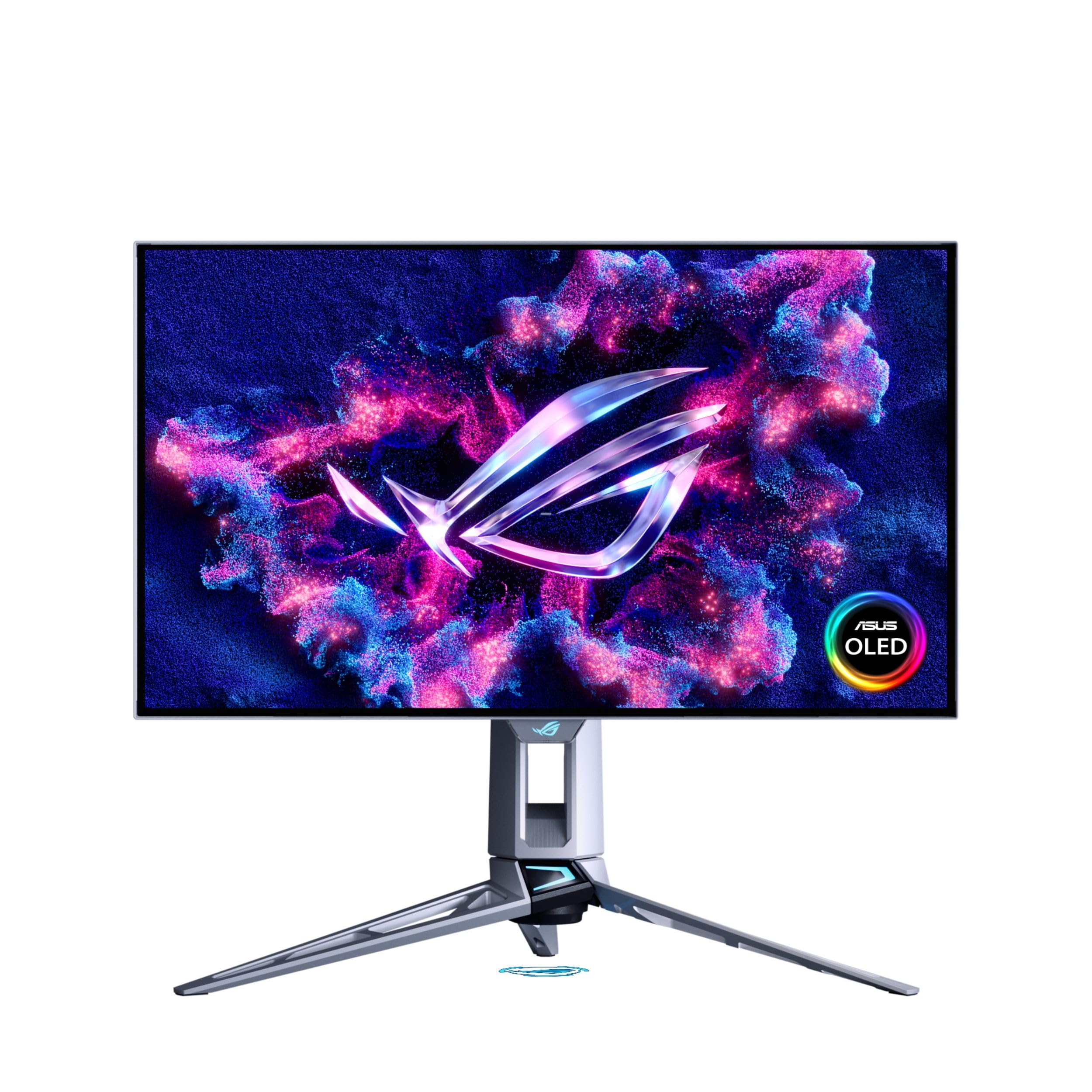
The ASUS ROG Swift PG27AQWP-W uses a new Tandem OLED panel that combines two OLED layers for 15% higher peak brightness and 60% longer panel lifespan compared to standard WOLED panels. Its dual-mode feature lets you switch between QHD at 540Hz and HD at 720Hz, a capability designed for esports professionals who prioritize frame rate over resolution in tournament play.
The TrueBlack Glossy surface delivers exceptional sharpness with zero haze, making text and fine details appear crisper than any matte-coated OLED. The Neo Proximity Sensor automatically darkens the display when you step away, reducing burn-in risk without manual intervention. DisplayPort 2.1 UHBR20 bandwidth supports full 80Gbps throughput, future-proofing the monitor for next-generation GPUs.
Despite the advanced panel technology, the color volume falls slightly behind the best QD-OLED competitors, and a few users report graininess appearing in certain gray gradients. The 27-inch QHD resolution means pixel density is good but not retina-sharp for productivity tasks.
Why it’s great
- Dual-mode supports up to 720Hz HD for extreme esports
- Neo Proximity Sensor automates burn-in prevention
- TrueBlack Glossy panel eliminates grain and haze
Good to know
- Colors less vibrant than premium QD-OLED alternatives
- Occasional graininess reported on gray gradients
3. MSI MPG 321URX

For gamers who want 4K resolution without leaving the OLED ecosystem, the MSI MPG 321URX delivers a 31.5-inch UHD QD-OLED panel with a 240Hz refresh rate and 0.03ms response. The 10-bit panel covers 99% DCI-P3 with Delta E under 2, making it viable for both gaming and color-critical creative work. VESA DisplayHDR True Black 400 certification ensures HDR content displays with proper luminance mapping.
The built-in KVM switch and Picture-in-Picture modes let you control two devices from one keyboard and monitor setup, a feature that dual-PC streamers and productivity users will find valuable. The OLED Care 2.0 suite includes pixel shift, taskbar detection, and a screen saver that activates after ten minutes of inactivity. The 90W USB-C port charges a laptop while passing through display signals.
Peak brightness in HDR mode measures lower than premium competitors, and the 32-inch diagonal at 4K requires a deeper desk for comfortable viewing. The burn-in warranty is not explicitly stated in the package, so verify before purchase.
Why it’s great
- 4K resolution at 240Hz with 0.03ms response
- KVM switch and 90W USB-C for dual-device workflows
- QD-OLED color volume with 10-bit gradation
Good to know
- HDR peak brightness trails higher-tier options
- Burn-in warranty not clearly documented in box
4. LG 39GX90SA-W
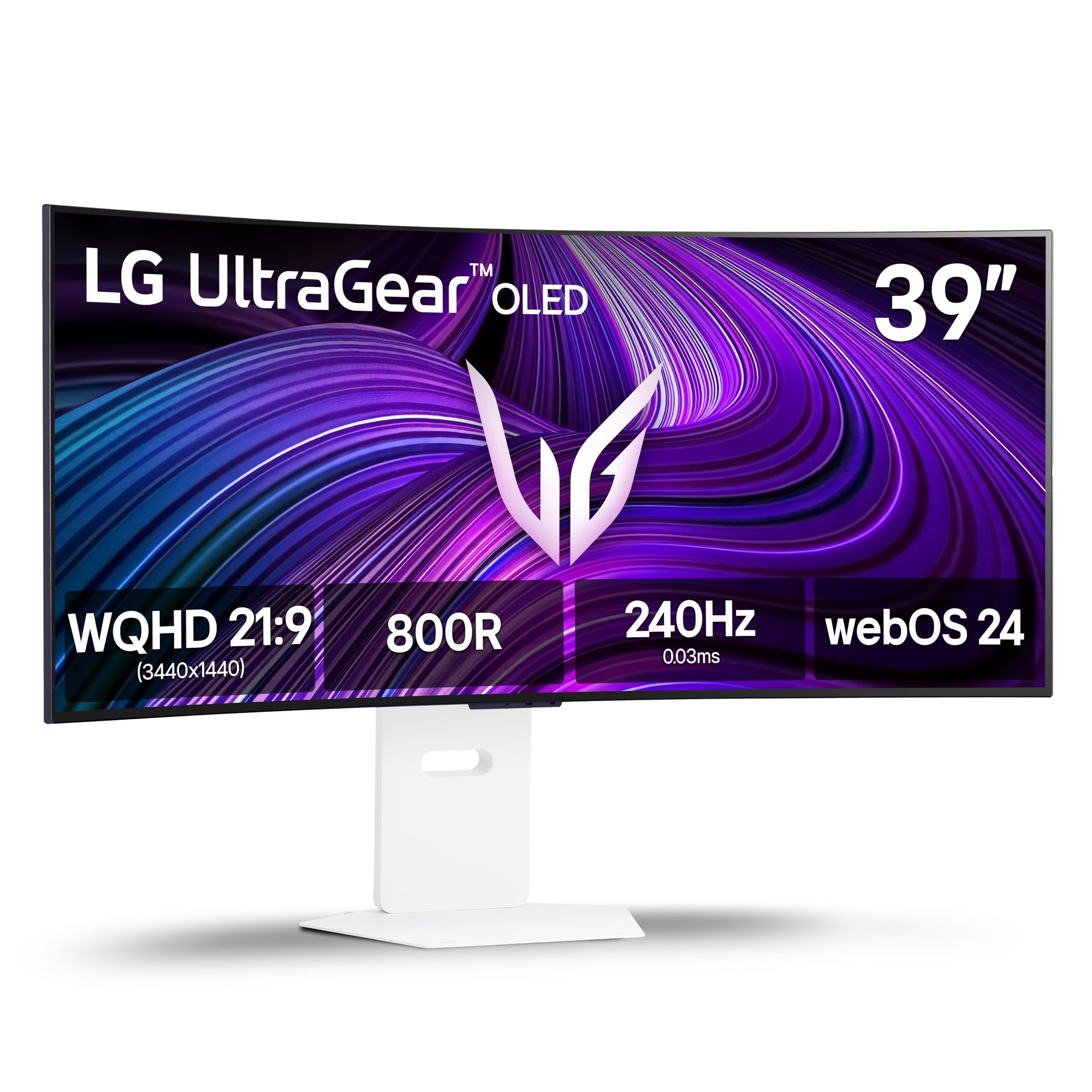
The 39-inch LG 39GX90SA-W wraps your peripheral vision with an aggressive 800R curve at 3440×1440 WQHD resolution. The 240Hz refresh rate and 0.03ms response time match the best flat OLED panels, while the built-in webOS platform lets you access Netflix, Prime Video, and cloud gaming services without connecting a PC. The 1300-nit peak brightness in HDR provides excellent highlight detail in games and movies.
Color coverage hits 98.5% DCI-P3 with a 1.5M:1 contrast ratio that makes SDR content look punchy and well-saturated. Dynamic Action Sync reduces input lag further, and the Black Stabilizer helps spot enemies hiding in dark corners of shooter games. The anti-glare surface handles ambient light better than most glossy OLED competitors.
Pixel density is lower than 27-inch QHD or 32-inch 4K monitors, so text and UI elements appear larger. The 21:9 aspect ratio leaves black bars on many console games and videos, and the two-year warranty does not explicitly cover burn-in.
Why it’s great
- 800R curve provides deep immersion for racing and flight sims
- Built-in webOS streams content without a PC
- 240Hz OLED with 0.03ms and 1300-nit peak HDR
Good to know
- Lower pixel density than 27″ QHD alternatives
- Console games show black bars on 21:9 panel
5. ASUS ROG Strix XG27ACDNG

The ASUS ROG Strix XG27ACDNG pairs a 360Hz refresh rate with a QD-OLED panel at a mid-premium price that undercuts similar offerings from Alienware and Samsung. The custom heatsink and advanced airflow design actively manage thermal load to reduce burn-in risk over extended gaming sessions. ROG-exclusive OLED Anti-flicker technology smooths out flicker that often appears during refresh rate fluctuations in variable frame rate scenarios.
Color performance is exceptional with 99% DCI-P3 coverage and Delta E under 2 out of the box. The DisplayWidget Center software lets you tweak OLED Care, adjust settings, and switch profiles using a mouse rather than fumbling with OSD buttons. The three-year burn-in warranty provides the same peace of mind as the Alienware competitor.
The height adjustment range is limited compared to other monitors in this bracket, and the pixel cleaning pop-up interrupts gameplay without a clear skip option. Some older games with locked refresh rates may not display properly due to the panel’s high-frequency native timing.
Why it’s great
- 360Hz QD-OLED with custom heatsink for burn-in protection
- Three-year burn-in warranty included
- DisplayWidget Center for mouse-controlled settings
Good to know
- Limited height adjustment range for taller desks
- Pixel cleaning pop-up can interrupt gameplay flow
6. KOORUI S3241XO
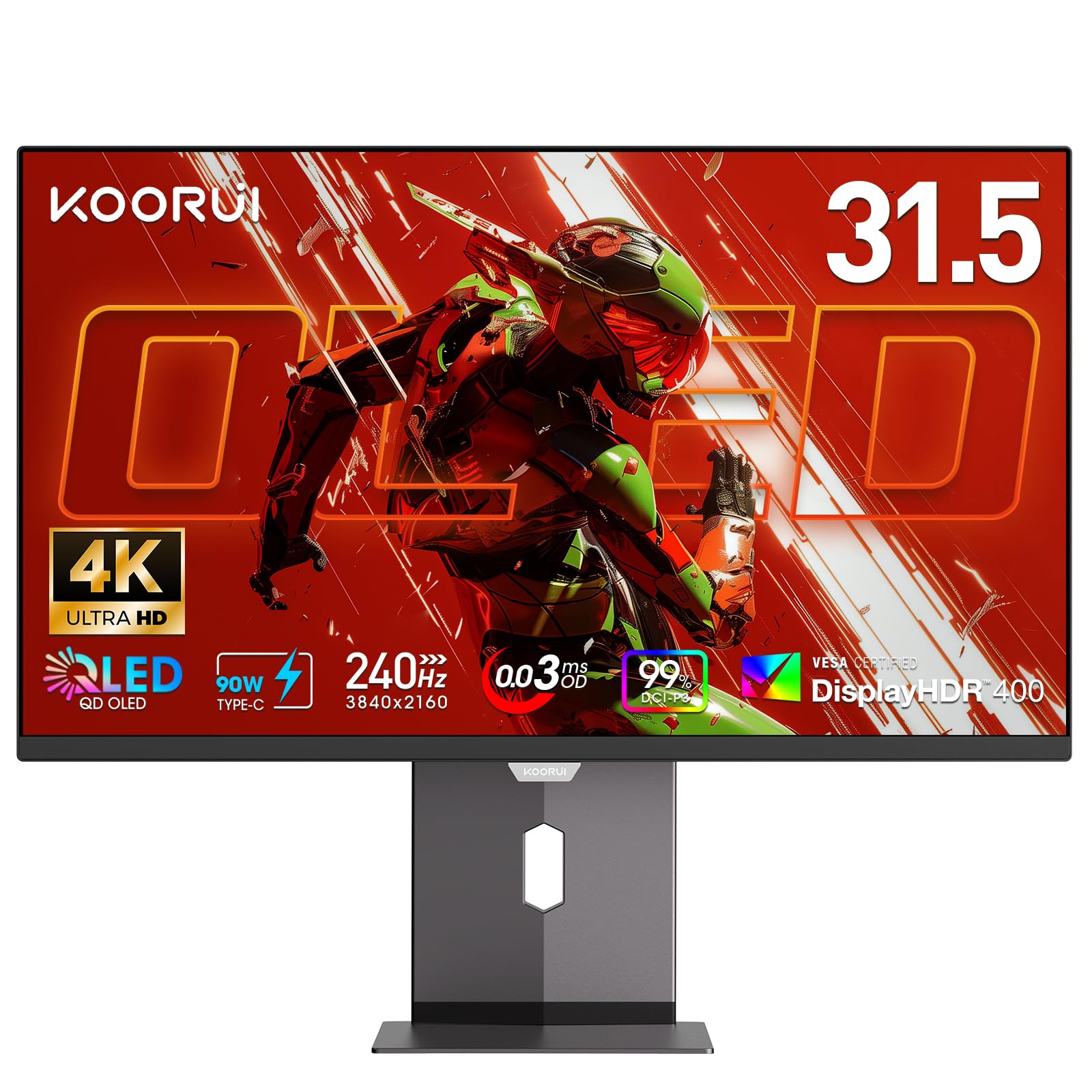
KOORUI entered the OLED market aggressively with the S3241XO, offering a 32-inch 4K panel at a price that undercuts most mid-range 1440p OLED monitors. The 240Hz refresh rate and 0.03ms response time match the specifications of much more expensive competitors. HDR True Black 400 certification and a 1.5M:1 contrast ratio deliver the deep blacks and bright highlights that define the OLED experience.
Connectivity includes dual HDMI 2.1 ports, DisplayPort 1.4, USB-C, and USB-A/B ports, covering modern consoles and PCs equally. The ergonomic stand provides full height, pivot, swivel, and tilt adjustments, matching the adjustability of premium monitors. The 99% DCI-P3 color gamut ensures vibrant color reproduction across games and media.
Build quality feels slightly less premium than established brands, and the on-screen display menu takes time to learn. The warranty covers the panel for one year and accessories for three years, which is shorter than the burn-in coverage offered by ASUS and Dell.
Why it’s great
- 32-inch 4K OLED at a price competitive with 1440p options
- Full ergonomic stand with height, pivot, and swivel
- Dual HDMI 2.1 and USB-C connectivity
Good to know
- Panel warranty only one year, shorter than competitors
- OSD interface is less intuitive than major brands
7. ASUS ROG Strix XG27AQDMG

The ASUS ROG Strix XG27AQDMG stands out with a glossy WOLED panel that delivers punchier saturation and sharper text than matte-coated OLED alternatives. The third-generation panel avoids the purple tint that plagued earlier glossy OLEDs when viewed in bright rooms. The custom heatsink design and advanced airflow keep thermals in check during long sessions.
Uniform Brightness mode locks luminance across the entire screen, preventing the automatic brightness limiting that many OLEDs apply to white-heavy scenes. The 240Hz refresh rate and 0.03ms response time handle competitive gaming effortlessly, and the ROG-exclusive Anti-flicker technology reduces eye strain during variable refresh rate fluctuations.
The stand feels sturdy but offers less height range than the Alienware or LG options. The auto-dimming features require manual disabling if you prefer consistent brightness, and the lack of built-in speakers means you need external audio.
Why it’s great
- Glossy WOLED panel with superior text clarity and saturation
- Uniform Brightness mode prevents ABL in static scenes
- Third-generation panel avoids purple tint issues
Good to know
- Auto-dimming features need manual disabling
- No integrated speakers; external audio required
8. LG 27GX700A-B
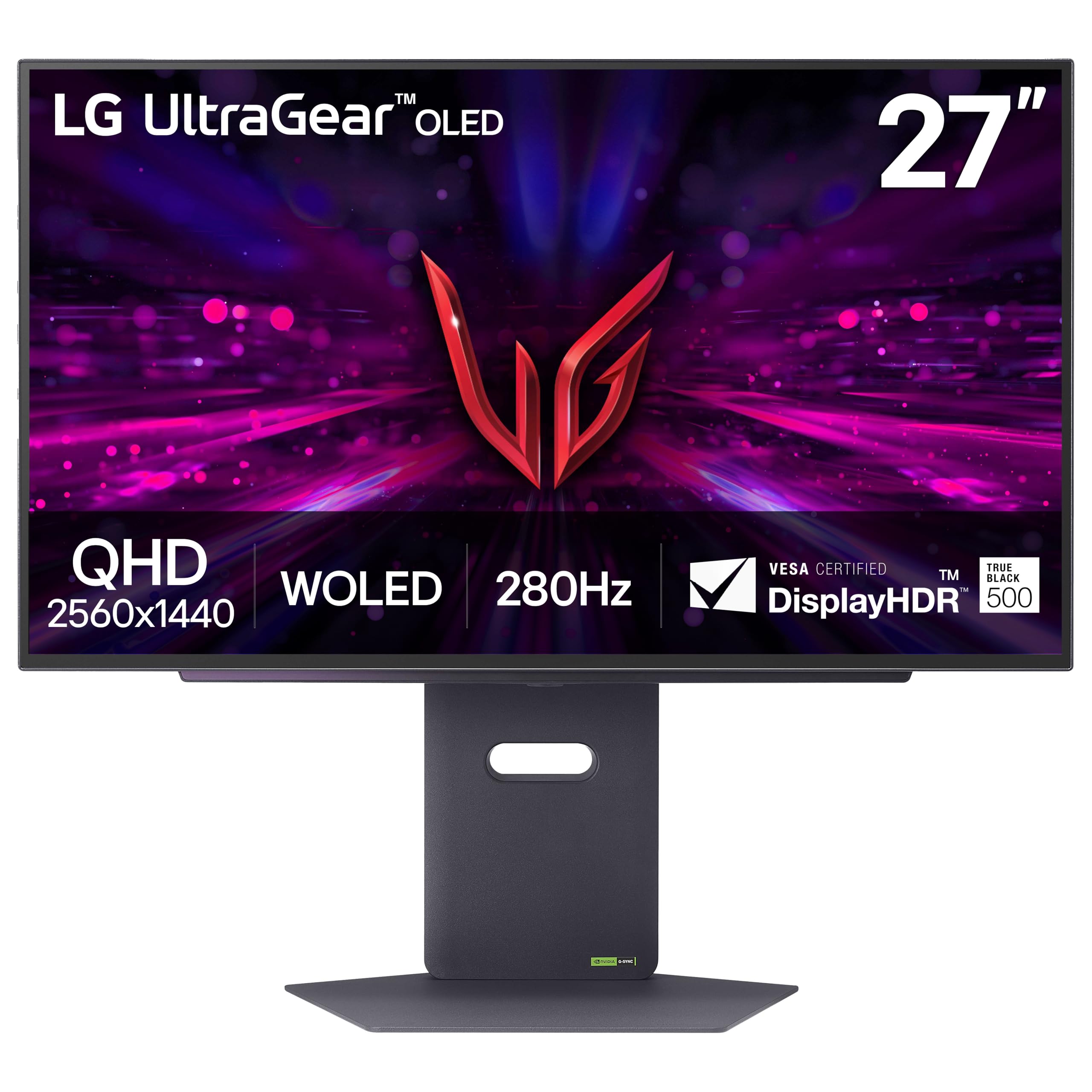
LG’s 27GX700A-B uses fourth-generation OLED with Primary RGB Tandem technology to reach up to 1500 nits peak brightness, making it the brightest OLED gaming monitor in this lineup. Enhanced APL and reduced ABL algorithms keep critical battlefield details visible even in bright scenes. The 280Hz refresh rate and 0.03ms response time provide smooth motion with virtually no ghosting.
Certifications stack up with VESA DisplayHDR True Black 500, UL-verified Perfect Black and Perfect Color, and five UL certifications for anti-glare and low blue light. The matte coating manages reflections well while maintaining good contrast. The virtually borderless design and RGB backlighting create a clean gaming aesthetic.
Some units show horizontal banding on static gray screens, and the LG Switch app can feel intrusive with its notifications. VRR flicker is present in certain frame rate ranges, though disabling it and locking to 280Hz resolves the issue.
Why it’s great
- 1500-nit peak brightness with Primary RGB Tandem OLED
- VESA DisplayHDR True Black 500 certification
- Multiple UL certifications for eye comfort
Good to know
- Horizontal banding reported on static gray screens
- VRR flicker noticeable in certain frame rate ranges
9. Samsung Odyssey OLED G6 G61SD

The Samsung Odyssey OLED G6 G61SD brings a 27-inch QD-OLED panel with 240Hz refresh rate and 0.03ms response time wrapped in a slim metal chassis. The Glare Free technology reduces reflections by 54% compared to conventional anti-reflection coatings, making it viable for brightly lit rooms. The Dynamic Cooling System uses a pulsating heat pipe to keep the panel temperature lower than graphite-based solutions, which directly reduces burn-in risk over the display’s lifetime.
Thermal Modulation predicts surface temperature and adjusts brightness automatically, while Logo and Taskbar Detection dims static elements to prevent image retention. G-Sync compatibility syncs GPU and panel refresh rates to eliminate tearing in the 48-240Hz range. The silver metal finish and slim profile look cleaner than most plastic gaming monitors.
Pixel Shift cannot be disabled, which leaves noticeable gaps around the screen edges that some users find distracting. The automatic brightness limiter makes the screen dimmer in white-heavy scenes and brighter in dark scenes, causing jarring transitions in mixed-content use.
Why it’s great
- Glare Free coating handles bright rooms better than competitors
- Pulsating heat pipe cooling system reduces burn-in risk
- Premium metal design with slim profile
Good to know
- Pixel Shift cannot be disabled, leaving edge gaps
- ABL causes jarring brightness shifts in mixed content
10. INNOCN 2780s
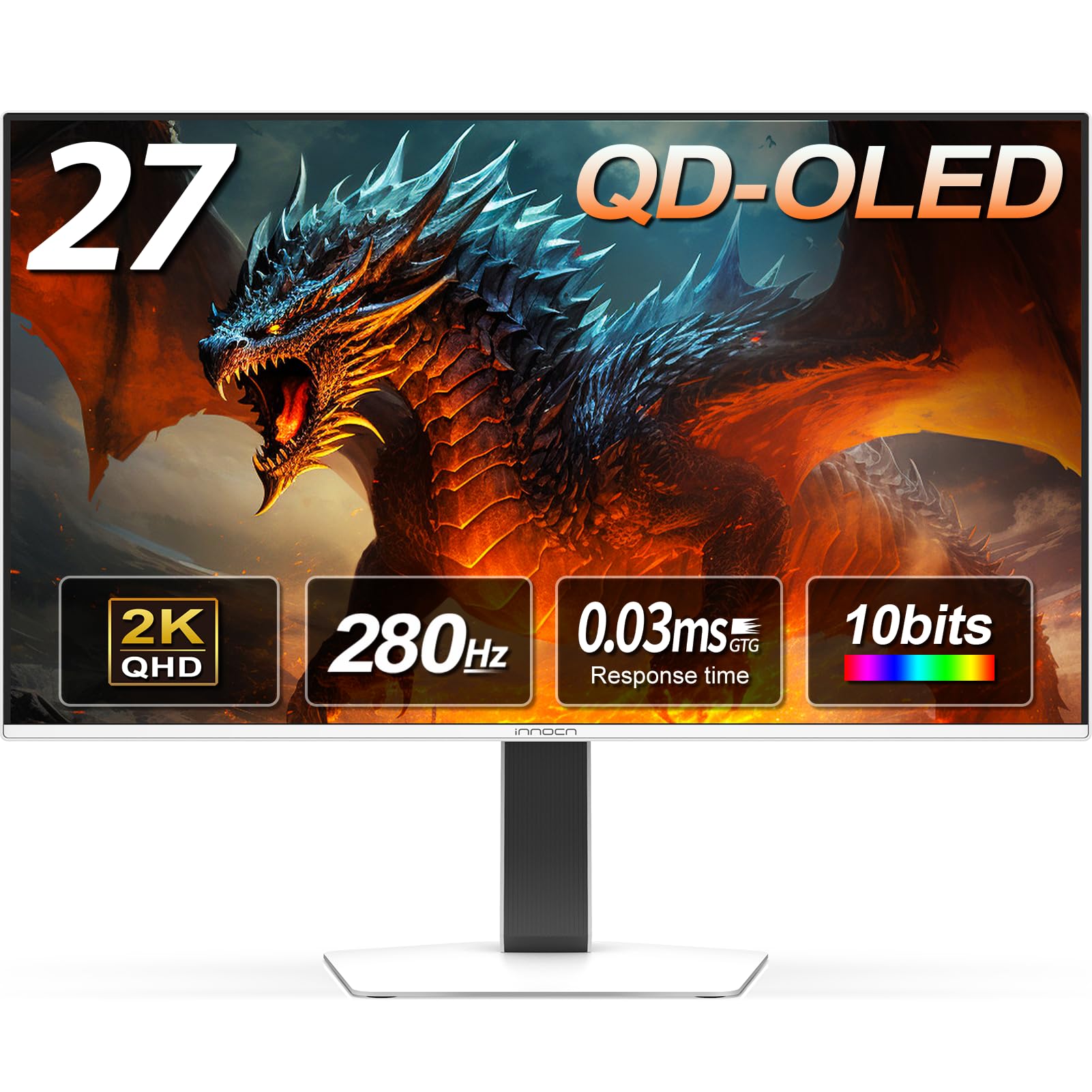
The INNOCN 2780s offers a 27-inch QD-OLED panel with a 280Hz refresh rate that actually exceeds most 240Hz competitors at a lower price point. The 0.03ms response time delivers the instant pixel transitions expected from OLED technology. HDMI 2.1 connectivity supports full bandwidth for high-refresh-rate gaming on next-generation consoles and PCs alike.
The fully adjustable stand with height, tilt, and pivot provides ergonomic flexibility that many budget monitors omit. The white color scheme sets it apart visually from the sea of black gaming monitors, and the built-in speakers, while not high-fidelity, provide functional audio for desktop use without requiring external speakers.
The peak brightness in HDR mode is lower than premium QD-OLED options, and the picture adjustments for dark and light scenes are more limited than the competition. The brand does not have the same customer service infrastructure as ASUS or Dell, so warranty support may be slower.
Why it’s great
- 280Hz refresh rate exceeds most budget OLED competitors
- Full ergonomic stand with height, tilt, and pivot
- HDMI 2.1 for full console gaming bandwidth
Good to know
- HDR peak brightness trails premium QD-OLED panels
- Limited picture adjustment for dark and light scenes
11. AOC Q27G4ZD

The AOC Q27G4ZD delivers a 27-inch QD-OLED panel with 240Hz refresh rate and 0.03ms response time at the lowest price point in the entire OLED gaming monitor market. The 147.6% sRGB and 110.2% DCI-P3 color coverage produce vivid, saturated imagery that rivals monitors costing twice as much. The 1.5M:1 contrast ratio delivers the infinite black levels that define the OLED experience.
G-Sync compatibility ensures tear-free gameplay with compatible GPUs, and the 120Hz console support via HDMI makes it a viable option for PS5 and Xbox Series X gamers on a budget. The three-year Zero-Bright-Dot warranty covers the panel against failed pixels, which adds confidence for long-term ownership. The color accuracy out of the box is good enough for most gamers to skip calibration.
The stand lacks height adjustment and feels basic compared to the competition. The panel is susceptible to scratching during cleaning, and the text readability from the QD-OLED subpixel layout is average at best. Some units have arrived with cosmetic damage due to minimal packaging protection.
Why it’s great
- Lowest entry price for a 27-inch QD-OLED gaming monitor
- Three-year Zero-Bright-Dot warranty for panel defects
- Wide color gamut with 147.6% sRGB coverage
Good to know
- Basic stand lacks height adjustment
- Panel scratches easily; requires careful handling
FAQ
Is a 240Hz OLED worth upgrading from a 144Hz IPS monitor?
Does the Samsung Odyssey G6 support full HDMI 2.1 bandwidth for consoles?
How does the Alienware AW2725DF compare to the ASUS XG27ACDNG for competitive gaming?
Can the AOC Q27G4ZD be wall-mounted with a VESA adapter?
Final Thoughts: The Verdict
For most users, the best budget oled gaming monitor winner is the Alienware AW2725DF because it combines a 360Hz QD-OLED panel with a fully adjustable stand and a three-year burn-in warranty at a price that rivals lower-spec options. If you want a glossy WOLED with better text clarity and an effective heatsink, grab the ASUS ROG Strix XG27AQDMG. And for the absolute lowest entry price into QD-OLED gaming, nothing beats the AOC Q27G4ZD.

Mo Maruf
I created WellFizz to bridge the gap between vague wellness advice and actionable solutions. My mission is simple: to decode the research and give you practical tools you can actually use.
Beyond the data, I am a passionate traveler. I believe that stepping away from the screen to explore new environments is essential for mental clarity and physical vitality.