Our readers keep the lights on and my smoothie glass nicely filled. As an Amazon Associate, I earn from qualifying purchases.
Every shift matters when the goal is to prevent a red spot from turning into a stage two ulcer. Bed sore pads sit between fragile skin and relentless pressure, doing the work that repositioning alone cannot. These aren’t just bandages — they are engineered barriers that manage moisture, cushion bony prominences, and survive constant contact without causing new damage.
I’m Mohammad Maruf — the founder and writer behind WellFizz. I study the material science of wound care accessories, comparing foam density, absorbency ratios, and adhesive profiles to separate genuine clinical tools from soft marketing claims.
This guide is built around real specs and verified user reports, cutting through the noise to help you select the right setup for your specific care scenario, whether you are managing a sacral wound or padding a hospital mattress. These are the decisions that define the best bed sore pads on the market today.
How To Choose The Best Bed Sore Pads
Bed sore pads come in different forms — adhesive foam dressings for existing wounds and mattress overlays or pads for pressure redistribution. Your choice depends on whether you are treating an open sore or preventing one from forming. Understanding the layers, adhesive types, and material makeup will steer you to the right product.
Foam Layering and Absorbency
For wound care dressings, a four-layer construction with a silicone contact layer, absorbent foam core, fluid-lock layer, and waterproof outer film delivers the best balance. Look for an absorbency rating — products that claim to hold 15 times their weight in exudate are handling high-output wounds effectively. Thicker foam cores provide more cushioning, reducing the pressure on the wound bed itself.
Adhesive Type: Silicone vs. Acrylic
Medical-grade silicone adhesives are the standard for fragile or elderly skin. They stick securely to dry skin but will not adhere to the moist wound surface, meaning dressing changes do not rip away healing tissue. Acrylic adhesives can be more aggressive and are better suited to areas that see a lot of movement, but they are less forgiving on thin, papery skin.
Mattress Overlays vs. Dressings
A foam dressing treats a specific wound site. A mattress overlay or pad redistributes pressure across a larger area, preventing sores from forming on the sacrum, hips, and heels. Alternating pressure overlays use individual air cells that inflate and deflate in cycles — these are the most active prevention tools available, but they require a pump and periodic replacement of the pad itself.
Quick Comparison
On smaller screens, swipe sideways to see the full table.
| Model | Category | Best For | Key Spec | Amazon |
|---|---|---|---|---|
| Sacral Foam Dressing (ZMZPA) | Foam Dressing | Sacral wounds & prevention | 15x fluid absorbency, 7×7 inch | Amazon |
| Dimora Ag Silver Foam Dressing | Silver-Infused Dressing | Infection-prone wounds | 0.25-0.35mg/cm2 silver ions | Amazon |
| Vive Alternating Pressure Pad Replacement | Alternating Pressure Overlay | Full-body pressure prevention | 130 individual air cells | Amazon |
| Foam Global Egg Crate Topper | Mattress Overlay | General pressure relief | 2 inch convoluted foam | Amazon |
| Natural Sheepskin Seat Pad | Natural Fiber Pad | Comfort & moisture wicking | 1 inch pile height, 17×17 inch | Amazon |
In‑Depth Reviews
1. Sacral Foam Dressing (ZMZPA)
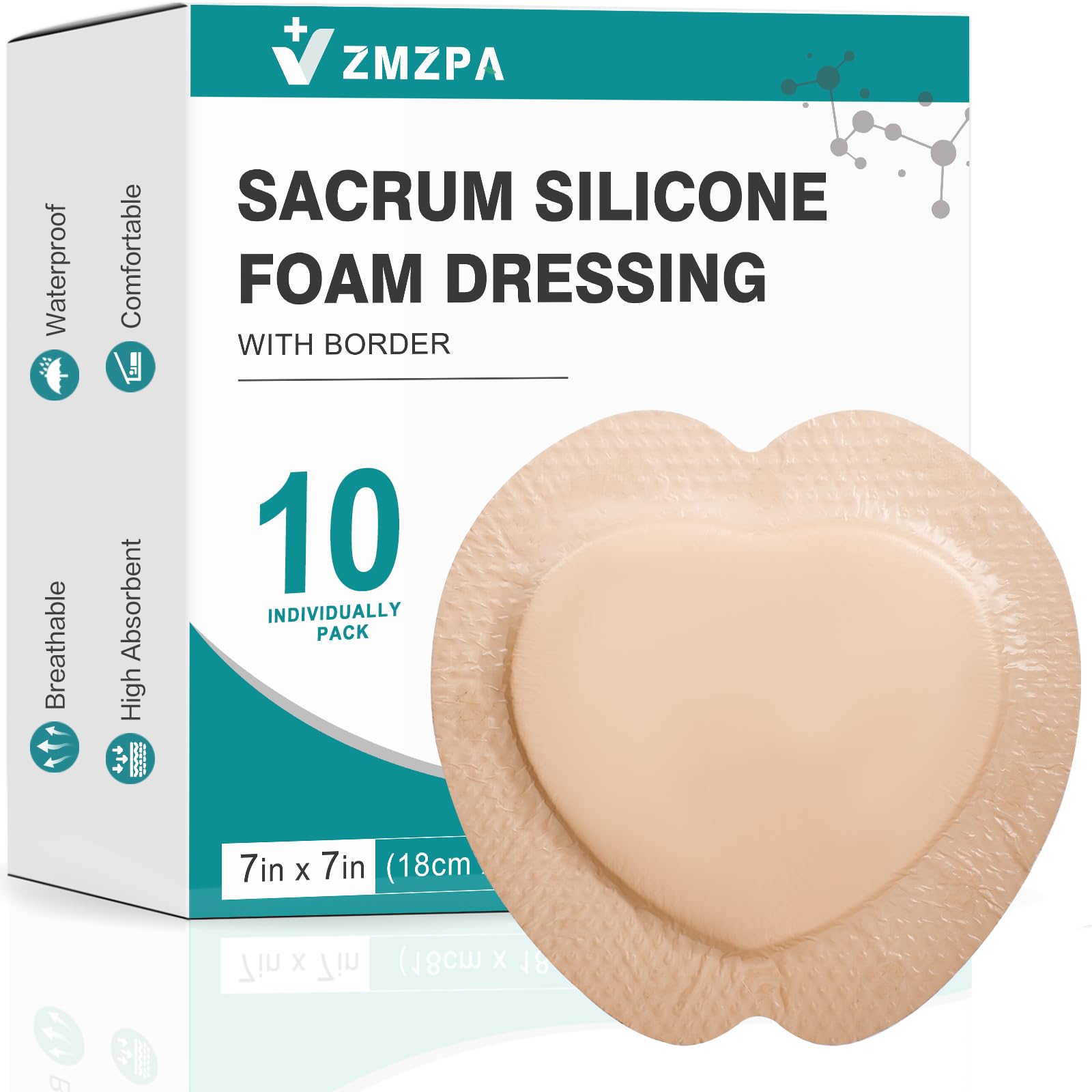
This 7×7 inch sacral dressing uses a four-layer foam design that includes a silicone contact layer, a thick foam core, a SAF fluid-lock layer, and a waterproof PU film. The absorbent pad measures 5.3×4.3 inches — large enough to cover stage one through four sacral ulcers while the border provides a secure seal around the wound. Users report that the cushioning effect helps prevent existing red spots from escalating, and the adhesive holds through nights of repositioning without curling at the edges.
The medical-grade silicone adhesion is the standout feature here. It grips dry skin firmly but releases cleanly from the wound bed, which is critical for patients who require daily dressing changes. The 15x absorbency claim lines up with real-world reports of extended wear time — reviewers mention leaving the dressing in place for multiple days without leakage or maceration. The waterproof outer layer also allows patients to shower without removing the pad.
Multiple users with tailbone pain from weight loss or prolonged bed rest report significant relief. The only recurring challenge is self-application — the sacrum area is hard to reach alone, so a caregiver is almost always needed for proper placement. Once applied, the dressing stays put and performs reliably through the recommended wear period.
Why it’s great
- Four-layer design manages high exudate levels
- Painless silicone release protects healing tissue
- Waterproof barrier allows bathing without removal
Good to know
- Difficult to apply without assistance
- May feel bulky under tight clothing
2. Dimora Ag Silver Sacrum Foam Dressing

Dimora takes the standard foam dressing formula and adds a silver ion layer — between 0.25 and 0.35 mg per square centimeter — that activates in the presence of wound fluid. This makes it a strong choice for wounds where bacterial colonization is a concern, such as stage three ulcers or surgical incisions that are slow to close. The foam core absorbs up to 15 times its weight while the silver works to reduce the bioburden inside the dressing itself.
The A+ hypoallergenic silicone contact layer prevents the dressing from sticking to the wound, which users with tummy tuck incisions and sacral ulcers confirm — removal is painless and does not disturb newly formed tissue. The PU film backing provides a waterproof seal, and the 7×7 inch size accommodates wounds up to 5.5×4.9 inches. Several long-term users specifically recommend this for tailbone pain related to cancer recovery or prolonged sitting.
The delivery timeline has been inconsistent, with some orders arriving late or being rescheduled. A few users also note that the price is higher than standard foam dressings — the silver infusion adds cost. For wounds that are not at risk of infection, a standard foam pad may be a more efficient choice. But for high-risk wounds or compromised immune systems, the antimicrobial protection justifies the premium.
Why it’s great
- Silver ions reduce bacterial colonization inside the dressing
- Painless release from wound bed
- Thick foam cushions sacrum during repositioning
Good to know
- Higher cost per dressing than standard foam
- Occasional delivery delays reported
3. Vive Alternating Air Pressure Mattress Pad Replacement
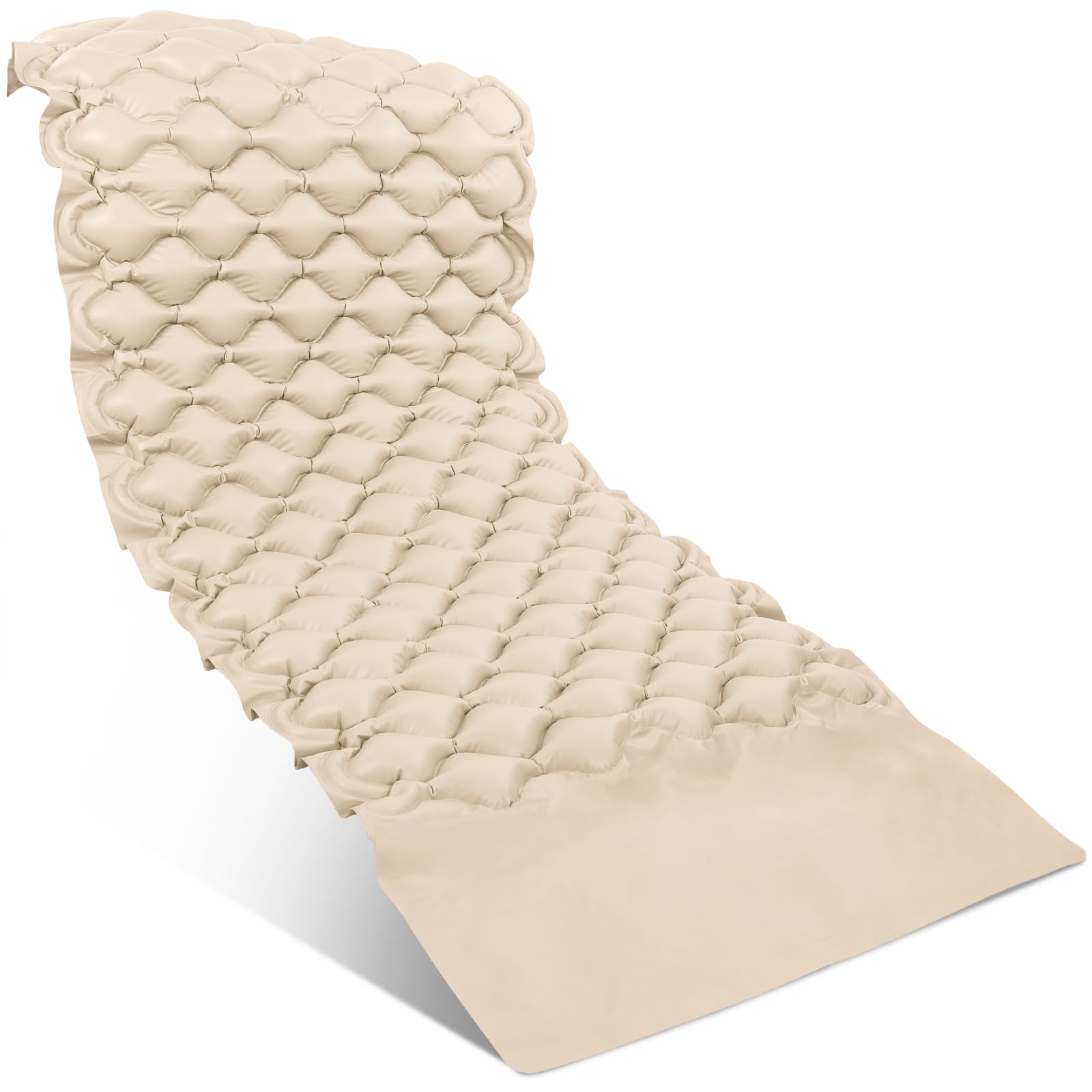
This is not a dressing — it is a replacement pad for an alternating pressure pump system. The pad contains 130 individually heat-sealed air cells that inflate and deflate in cycles to redistribute pressure across the entire body. For bedridden patients, this is one of the most effective active prevention tools available. The dual inflation tubes connect to most pumps with standard 5mm connectors, and the twin-sized overlay fits over hospital mattresses or standard beds.
A second user reported holes appearing along seam lines after two months, which suggests some variance in manufacturing consistency. The included patch kit repairs small punctures, but multiple failures in a short span are a dealbreaker for a pressure prevention device.
This replacement pad does not include the pump — you must purchase that separately or already own one from the Vive system. The vinyl material is heat-resistant and easy to wipe clean, but it is less breathable than foam or sheepskin. For full-body pressure prevention in a hospital or home care setting, the Vive pad delivers excellent value, but only if you already have a compatible pump and are willing to inspect it regularly for leaks.
Why it’s great
- 130 air cells cycle pressure across the whole body
- Compatible with standard 5mm pump connectors
- Easy to clean vinyl surface
Good to know
- Pump sold separately — not a complete system
- Some units develop pinhole leaks within months
4. Foam Global Egg Crate Mattress Topper

This hospital-size mattress topper measures 2 inches thick, 33 inches wide, and 72 inches long — designed specifically for standard hospital bed frames. The convoluted egg crate shape improves air circulation and distributes weight more evenly than a flat foam surface. The polyurethane foam is CertiPUR-US certified, meaning it is free from heavy metals, formaldehyde, and ozone depleters. The open-cell structure also makes it hypoallergenic and latex-free.
Users with bedridden family members report that the topper transforms a hard hospital mattress into a comfortable sleeping surface. One reviewer noted that their mother-in-law refused to stay in the hospital bed until this topper was added — then she stayed put. Another user appreciated the quick expansion after unrolling and the rapid dissipation of the initial plastic smell. A few customers noted missing foam bumps in spots, which is a quality control issue that does not seem to affect overall pressure relief.
This topper is not a replacement for a wound dressing. It does not manage exudate or protect a specific wound site. Its role is general pressure redistribution across the back and hips, making it suitable for preventative care in patients who are not yet showing signs of skin breakdown. For the price, it is a solid entry-level pressure relief solution that works well when paired with targeted dressings on existing sores.
Why it’s great
- CertiPUR-US certified foam — no harsh chemicals
- Convoluted shape improves airflow and weight distribution
- Quick expansion out of packaging
Good to know
- No cover included — requires separate sheet
- Missing foam bumps reported on some units
5. Natural Sheepskin Seat Pad
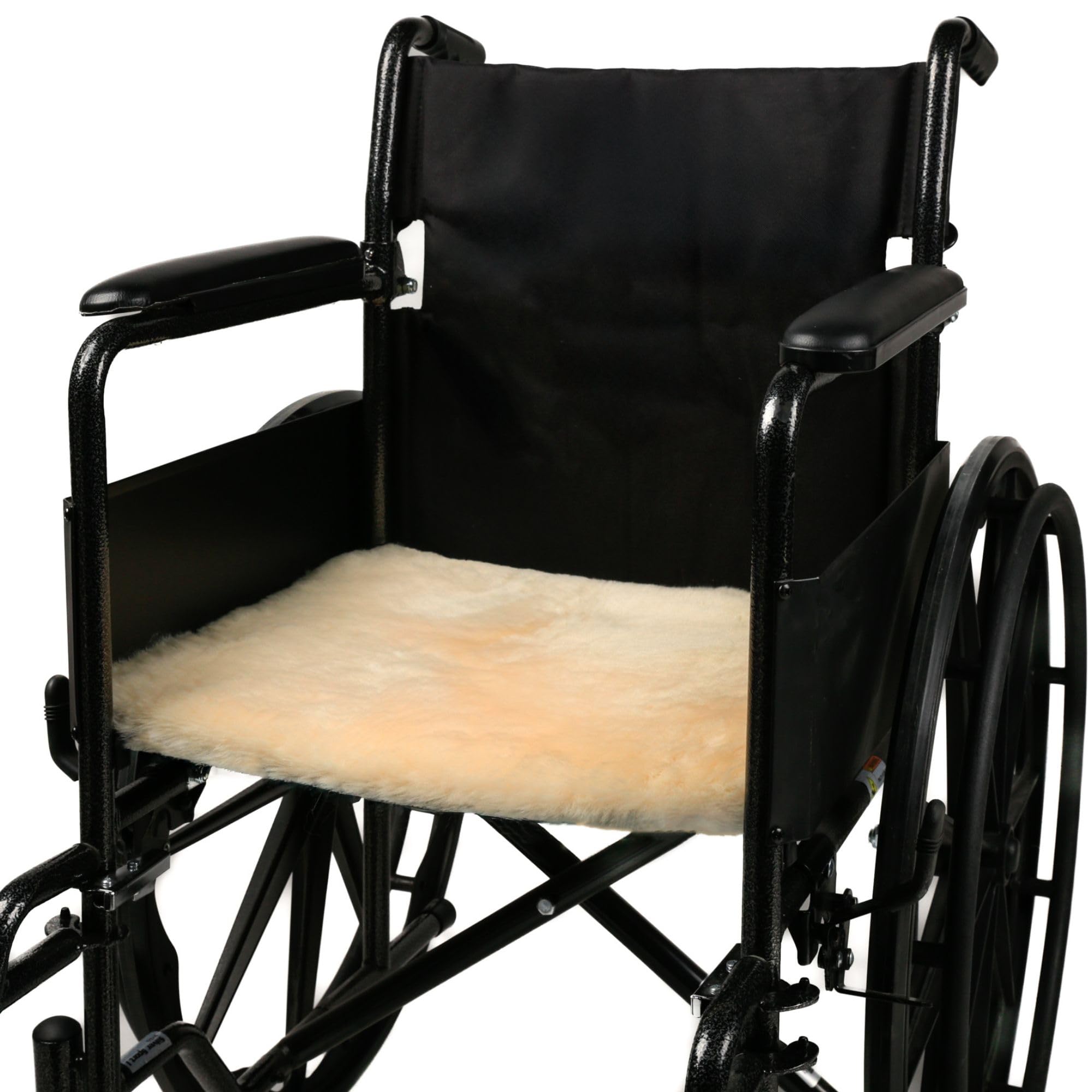
This 17×17 inch pad uses 100 percent New Zealand sheepskin with a uniform 1-inch pile height. The natural wool fibers wick moisture away from the skin, regulate temperature, and provide a soft cushion that reduces shear and friction. The non-slip backing helps the pad stay in place on wheelchairs, office chairs, or bed mattresses. It is a non-woven alternative to foam and air systems — no pumps, no adhesives, no chemicals.
Reviewers caring for bedridden or quadriplegic patients report that the sheepskin effectively prevents heel and sacral sores when used consistently. One user noted that a loved one gave a sigh of relief as soon as the pad was placed under them. Another mentioned that it stayed in place and did not bunch up, which is a common problem with loose fabric pads. The wool is naturally hypoallergenic and breathable, making it suitable for sensitive or allergic skin.
The pad requires dry cleaning — machine washing causes odor and degrades the wool. The 17×17 inch size works well as a seat cushion but is too small for full mattress coverage; larger sizes are available at a higher price point. Some users found that the pad shifted easily on smooth surfaces despite the non-slip backing. For targeted pressure relief on a single contact point, this sheepskin pad is a premium natural solution that prioritizes comfort and breathability over absorbency or active pressure cycling.
Why it’s great
- Natural wool fibers wick moisture and regulate temperature
- Non-slip backing reduces shifting on chairs and beds
- Hypoallergenic and safe for sensitive skin
Good to know
- Dry cleaning required — machine washing causes odor
- Small size limits use to seat cushions unless buying larger format
FAQ
How often should a foam bed sore dressing be changed?
Can you use a mattress overlay and a foam dressing at the same time?
What does silver in a foam dressing actually do for bed sores?
Final Thoughts: The Verdict
For most users, the best bed sore pads winner is the Sacral Foam Dressing from ZMZPA because the four-layer construction, 15x absorbency, and gentle silicone adhesion deliver hospital-grade wound care without the premium price tag. If you need antimicrobial protection for an infection-prone wound, grab the Dimora Ag Silver Foam Dressing. And for full-body pressure prevention in a bedridden patient, nothing beats the Vive Alternating Pressure Pad Replacement when paired with a compatible pump.

Mo Maruf
I created WellFizz to bridge the gap between vague wellness advice and actionable solutions. My mission is simple: to decode the research and give you practical tools you can actually use.
Beyond the data, I am a passionate traveler. I believe that stepping away from the screen to explore new environments is essential for mental clarity and physical vitality.