Our readers keep the lights on and my smoothie glass nicely filled. As an Amazon Associate, I earn from qualifying purchases.
You know the feeling—thumbing through a digital storefront, the next “cinematic experience” already mapped out in a quest log, the solo grind a familiar hum. But the true magic of gaming isn’t the graphics card; it’s the human league, the table talk, the tactile click of a wooden token. For the video gamer, the board game is not a step backward; it’s a translation of the mechanics you love—deck-building, resource management, cooperative problem-solving—into a shared, physical space where the lag is zero and the tension is palpable.
I’m Mohammad Maruf — the founder and writer behind WellFizz. For the last eight years, I’ve been dissecting cardboard boxes and rulebooks, mapping the gap between digital and analog mechanics to find the games that respect a video gamer’s instincts while delivering something you can’t get from a screen.
This guide distills that research into the definitive lineup of the best board games for video gamers, whether you crave the quiet strategy of a solo puzzle or the chaotic bluffing of a four-player race.
How To Choose The Best Board Games For Video Gamers
A video gamer walks into a game store with a specific muscle memory—they know what they like: resource management from a city-builder, the tension of a battle royale, or the quiet optimization of a puzzle game. The right board game doesn’t abandon that; it translates it. Here are the three filters that matter most when bridging the gap between digital and analog.
Player Count and “The Solo Queue”
If you spent your teens in a multiplayer lobby, you might instinctively look for 4- or 5-player games. But the solo mode is the great equalizer. A game like *Stardew Valley: The Board Game* or *Harmonies* is designed to be played alone when the group can’t assemble. Check the box for “1-4 Players”—a game that functions perfectly at every player count is worth its weight in cardboard.
Weight vs. Depth: Avoiding Rules Bloat
Many video game adaptations fail because they try to cram every mechanic into a box. The winning strategy is “light rules, deep strategy.” Look for games where the core loop is simple (place a tile, roll a dice, play a card) but the tactical decisions are layered. A 30-minute game with smart decisions beats a 90-minute slog through a confusing rulebook every time.
The Tactile Trade-Off
The biggest advantage of tabletop over screen is physical presence. Wooden tokens, thick card stock, a 3D landscape you can touch—these aren’t just “nice to have.” For a video gamer, the sensory feedback of a heavy component is the selling point. A game with 120 wooden animal cubes or magnetic dice has an “unboxing moment” that digital DLC can never match.
Quick Comparison
On smaller screens, swipe sideways to see the full table.
| Model | Category | Best For | Key Spec | Amazon |
|---|---|---|---|---|
| Heat: Pedal to the Metal | Racing/Hand Management | High-speed tactical racing | 60 min, 1-6 players, 6 tracks | Amazon |
| Gwent (Official) | Deck-Building/Bluffing | Witcher 3 fans & competitive dueling | 430+ cards, 5 factions | Amazon |
| Stardew Valley: The Board Game | Cooperative/Farming | Solo or small-group resource management | 45 min/player, 1-4 players | Amazon |
| The Night Cage | Cooperative/Horror | Atmospheric, tense group puzzle | 40 min, 1-5 players, tile-laying | Amazon |
| Sky Team | 2-Player Co-op/Dice | Couples or best-friend strategic silence | 20 min, 2 players, 20 scenarios | Amazon |
| Harmonies | Tile-Laying/Puzzle | Relaxing solo or family strategy | 30 min, 1-4 players, 120 wooden tokens | Amazon |
| Bedlam in Neverwinter | Escape Room/RPG | D&D groups wanting one-time puzzle adventure | 90 min/act, 2-6 players, d20/d6 | Amazon |
In‑Depth Reviews
1. Heat: Pedal to the Metal

If video game racing titles build tension through gear shifts and engine temperature, *Heat* translates that exact mechanic into a card-driven hand-management system. You have Speed cards, Heat cards that clog your deck, and Stress cards with unpredictable values—the board game equivalent of a redlining engine. The core loop is immediately familiar to anyone who has played a racing game: push too hard and you overheat, forcing you to discard or take on more Stress. The slipstreaming rule, where you draft behind the car ahead, adds positional depth without extra complexity.
What sets *Heat* apart as the overall pick for video gamers is its modular championship system. You can run a single race or a full season across six double-sided tracks, upgrading your car between rounds with Garage cards. The Legend module provides a brilliant solo AI that simulates opponents with simple behavior rules, meaning no player is left behind. The production quality is top-tier—thick card stock, a dual-layer player dashboard that holds everything in place, and a 1960s Grand Prix art style that feels like a collector’s edition.
The only real friction is the box size—it’s large—and the lack of a collision mechanic, which some reviewers house-ruled. But for pure, repeatable, high-speed tactical play that scales from solo to six players, this is the board game that respects the racing gamer’s instincts. The 60-minute runtime is perfectly calibrated for a weeknight session that feels like a full race.
Why it’s great
- Brilliant hand-management mechanic mimics real racing heat.
- Modular championship system for deep replayability.
- Legends solo AI is genuinely competitive.
Good to know
- Large box may not fit standard game shelves.
- No official collision rules (easy to house-rule).
2. Gwent (Official Licensed Version)
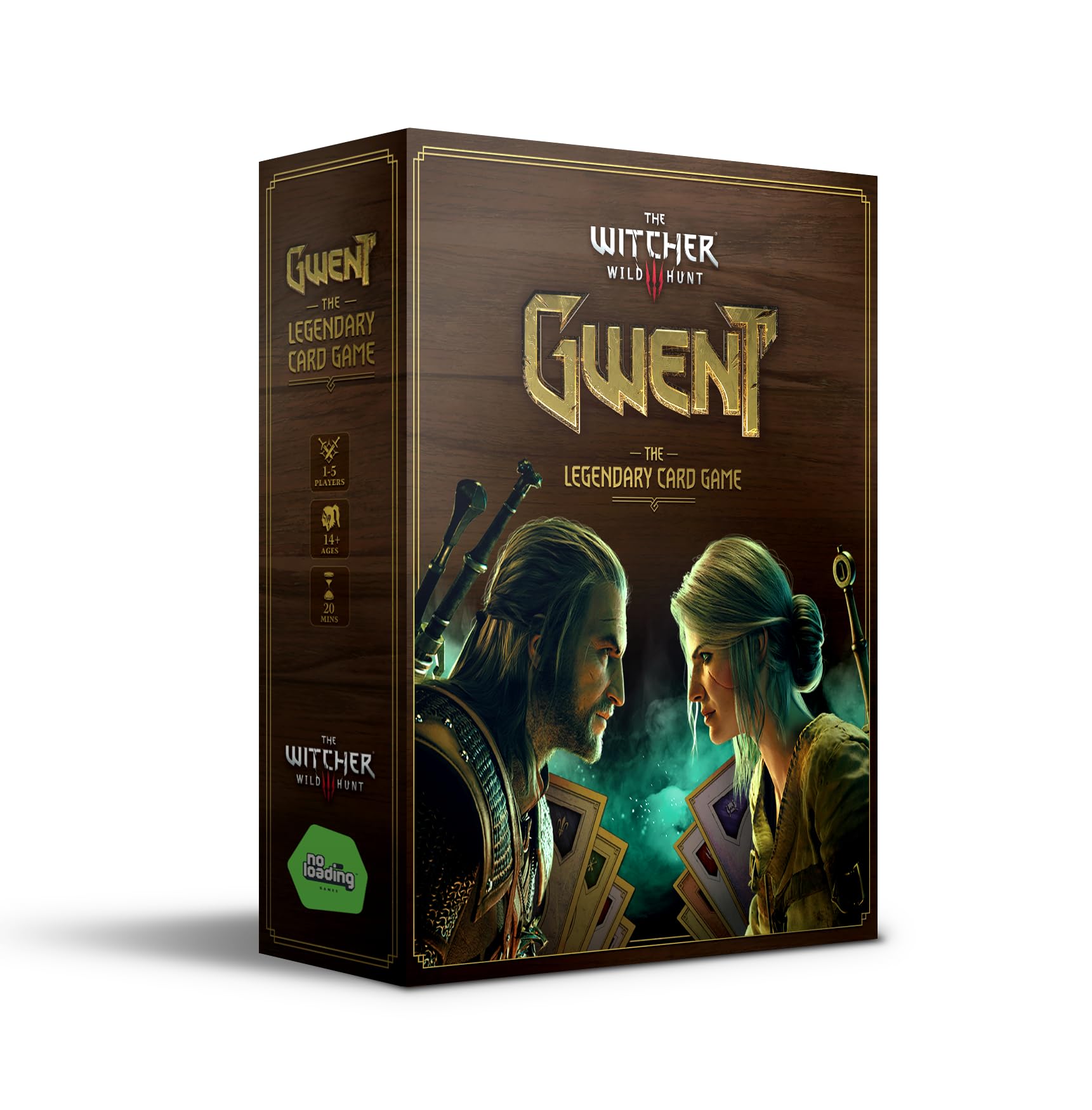
For the thousands of players who spent hours in Novigrad just playing the mini-game, the official *Gwent* tabletop adaptation is exactly what you hoped for: a faithful, physical reproduction of the card-based wits from *The Witcher 3*. The deck is massive—over 430 cards across all five factions (Northern Realms, Scoia’tael, Skellige, Monsters, Nilfgaard)—each with the original artwork. The rules are identical to the video game version: win two out of three rounds using limited cards per hand, bluffing your opponent into overcommitting.
Where this set excels is in the tabletop feel. The card stock is thick and durable, with a linen finish that shuffles well. The included paper playmat is functional but not premium—many reviewers note it creases easily, so a dedicated neoprene mat is a worthy investment. The box includes everything needed for two to five players, with multiple alternative game modes that add variety beyond the standard duel. It’s also surprisingly portable; the box is compact enough to take to a game night or a café.
The only downside is that the playmat is glossy paper rather than a rigid board, and some cards may feel slightly slippery fresh out of the box. But for any fan of the digital mini-game, this is the definitive physical version. The bluffing and resource-timing mechanics translate perfectly to the table, making it a must-add for any video-gamer’s shelf who values tactical decision-making over luck.
Why it’s great
- Exact replica of Witcher 3’s Gwent rules and art.
- 430+ cards with high-quality, durable cardstock.
- Multiple game modes and five complete factions.
Good to know
- Paper playmat is not durable; invest in a neoprene mat.
- Cards can be slippery for the first few plays.
3. Stardew Valley: The Board Game

When you think about the video game *Stardew Valley*, you think about the quiet rhythm of planting, foraging, and befriending neighbors. The board game captures that exact cooperative vibrancy—you are not competing against other players; you are racing against the clock to restore the Community Center before Grandpa’s evaluation. The mechanics are a cooperative resource management puzzle: players take turns rolling dice to gather resources, complete bundles, and manage their limited energy pool. The passing of the seasons creates a natural timer that pushes the pace.
The real win here is the solo mode. The game is fully playable solo with a single character, and the rules are streamlined enough that you can teach it to anyone in under five minutes. The components are high-quality—thick cardboard tokens, colorful player boards, and a large central board that tracks progress. The downside is that the rulebook can be vague on edge cases; watching a quick YouTube tutorial is almost essential for the first playthrough. The playtime is also significant—about 45 minutes per player—so a full four-player session runs around three hours.
Where this game truly shines for video gamers is in its faithful translation of the “just one more turn” loop. You’ll constantly find yourself saying “let me just finish this one bundle” before realizing the game is over. It’s a gentle, cooperative experience that rewards planning and prioritization, much like the digital original, but with the added warmth of shared table presence.
Why it’s great
- Excellent cooperative translation of the video game loop.
- Strong solo mode with meaningful decisions.
- High-quality, colorful components and art.
Good to know
- Rulebook is sometimes vague; YouTube tutorials recommended.
- Game length is long for larger groups.
4. The Night Cage

Imagine a horror game where you can only see what your own candle reveals—that is the core mechanic of *The Night Cage*. You and your team are trapped in a shifting labyrinth of absolute darkness, and the only way to reveal the path is to place tiles that show what is in front of you. The catch? If you move away from a tile, it is discarded back into the darkness, forcing you to rely on memory and teamwork. The “Wax Eaters” are roaming monsters that, when they land on your tile, force you to discard cards or lose your candle.
For video gamers who love the tension of survival horror titles like *Amnesia* or *Outlast*, this game delivers that exact heart-racing atmosphere. The recommended play environment is a dimly lit room with thematic music, which transforms a 40-minute round into an immersive story. The tile-laying mechanic is simple to learn—you place tiles to create the path as you go—but the strategic depth comes from managing your candle’s “heat” (represented by cards) and communicating with your team without overwhelming each other. The advanced mode adds new monsters that escalate the difficulty.
The only common criticism is that the rulebook could be clearer, and the game can feel repetitive after several plays if you don’t use the advanced settings. But for a theme-first experience that genuinely captures the feeling of helpless exploration, *The Night Cage* is unmatched. It’s a short, intense session that respects your time while delivering a memorable tabletop moment—perfect for a Halloween game night or a rainy evening with friends.
Why it’s great
- Unique candlelight mechanic creates genuine tension.
- Excellent thematic atmosphere with minimal rules overhead.
- Advanced mode adds replayability.
Good to know
- Rulebook could be clearer for new players.
- Best experienced in a dark room for full immersion.
5. Sky Team

*Sky Team* won the prestigious Spiel des Jahres (Game of the Year) in 2024, and for good reason—it solves the “alpha player” problem that plagues cooperative games by making communication the core mechanic. You and a partner are pilot and co-pilot of a commercial airplane, and during each round you must silently place your dice on the cockpit’s control panel. You can discuss strategy before the dice are rolled, but once they hit the table, no talking is allowed. This forced trust creates a tension that is both hilarious and deeply satisfying when you pull off a perfect landing.
The game comes with 20 different airport scenarios, each with unique rules—fog, ice on the runway, or a leaky engine that changes how you deploy your dice. The components are beautifully compact: a small box, eight custom dice, a control panel with slots, and player aid screens that hide your dice from your partner. The estimated 20-minute playtime is accurate, making it an ideal “filler” game for a couple or two friends who want a quick, thinky challenge after dinner. There’s a progression system where you unlock new modules, but the core loop remains fresh across many plays.
The only real limitation is that it’s strictly two-player. There’s no solo mode, and it’s not expandable to larger groups. But for that specific use case—a pair of gamers who want a cooperative challenge that demands real communication—it’s one of the best games ever designed. The difficulty curve is steep but fair, and the joy of a perfect landing after several failed attempts is genuinely cathartic.
Why it’s great
- Brilliant silent-dice mechanic eliminates alpha-player dominance.
- 20 scenarios provide excellent variety and replayability.
- Fast setup and playtime ideal for weeknights.
Good to know
- Strictly two-player only.
- Can be frustrating if partners have very different skill levels.
6. Harmonies

For video gamers who find solace in city-builders or puzzle games like *Tetris Effect*, *Harmonies* is the board game equivalent of a meditative zen session. The concept is simple: draft tokens and cards to create a 3D landscape of forests, mountains, and rivers on your personal board, and then place animal cubes onto matching habitats to earn victory points. The tactile joy of stacking wooden tokens into a physical landscape cannot be overstated—it’s feedback no screen can replicate. The 120 wooden tokens are hefty and satisfying to click together, and the illustrated cards are beautiful.
Where *Harmonies* really works for video gamers is in its “thinky” relaxation. There is minimal player interaction—each player works on their own board—so it’s essentially a multiplayer solitaire puzzle. The strategic depth comes from pattern development and tile placement optimization: you must plan ahead to create contiguous habitats that attract high-scoring animals. The solo mode is excellent, and the rules are so clean that you can teach the game in under two minutes. The 30-minute playtime is perfect for a quick midweek break.
The only knock against it is that the low player interaction might feel too solitary for gamers who want banter and negotiation. But if you love the trance-like state of a good puzzle game, this is the perfect analog counterpart. It’s also one of the most photogenic games on the table—the final result looks like a tiny diorama. A wonderful gateway for non-gamers who enjoy a quiet, beautiful challenge.
Why it’s great
- Incredibly satisfying tactile feel with 120 wooden tokens.
- Very easy to learn with deep strategic optimization.
- Excellent solo mode and beautiful visual presentation.
Good to know
- Low player interaction (multiplayer solitaire).
- Game can end abruptly when tile draws run out.
7. Bedlam in Neverwinter

Not every video gamer wants a long-term campaign—sometimes you want a contained, story-driven experience you can finish in one or two sessions. *Bedlam in Neverwinter* is exactly that: a 3-act escape-room puzzle game set in the D&D universe, where you create a character by choosing race, class, and starting weapon (represented by cards), and then work together to solve a mystery involving a dangerous cult. The game uses a d20 and a d6 for skill checks, keeping the D&D flavor without requiring a dungeon master.
The board itself is dynamic—it builds and changes as you solve puzzles, revealing new locations and clues. The puzzles range from wordplay to multi-card visual riddles, and the difficulty is calibrated to be challenging but not frustrating for groups with mixed experience. The combat is streamlined but thematic: players roll dice to defeat monsters, but the real focus is on the puzzle-solving and cooperative investigation. The included components are excellent for the price point—six plastic figures, multiple game boards, four secret envelopes, and nearly 300 cards.
The trade-off is that this is essentially a one-time play experience. Once you’ve solved the puzzles, the replay value is limited because you know the solutions. That said, the production value and the satisfaction of completing a 3-act story make it a great choice for a dedicated game night with friends who won’t mind playing through it once. It’s also a perfect gateway for RPG-curious video gamers who want to taste the D&D world without committing to a long campaign.
Why it’s great
- Immersive D&D setting with easy-to-learn mechanics.
- Dynamic board that reveals new locations as you play.
- Great for a single-session or two-session campaign.
Good to know
- One-time play; very low replay value.
- All character miniatures are female (minor complaint from some).
FAQ
Will a board game adaptation of my favorite video game feel authentic or watered down?
What is the best board game for a solo video gamer who usually plays single-player RPGs?
How do I prevent quarterbacking when playing cooperative board games with my gaming group?
Final Thoughts: The Verdict
For most video gamers looking for the single best board game to anchor their collection, the board games for video gamers winner is the Heat: Pedal to the Metal because it translates the digital racing loop into a tactile, scalable hand-management system that works solo, in pairs, or with a full group. If you want a quiet solo puzzle you can pull out after a long day, grab the Stardew Valley: The Board Game. And for couples or duos who crave a cooperative challenge that demands real trust and communication, nothing beats the silent drama of Sky Team.

Mo Maruf
I created WellFizz to bridge the gap between vague wellness advice and actionable solutions. My mission is simple: to decode the research and give you practical tools you can actually use.
Beyond the data, I am a passionate traveler. I believe that stepping away from the screen to explore new environments is essential for mental clarity and physical vitality.