Our readers keep the lights on and my smoothie glass nicely filled. As an Amazon Associate, I earn from qualifying purchases.
Waking up shouldn’t feel like a battle, yet for heavy sleepers, shift workers, and anyone sharing a bed, the wrong alarm clock turns every morning into a frustrating gamble. A dim display, a weak buzzer, or a single alarm setting for two different schedules can derail your entire day before it starts.
I’m Mohammad Maruf — the founder and writer behind WellFizz. I’ve analyzed hundreds of alarm clock specifications, comparing decibel ratings, display contrast ratios, dimmer granularity, vibration motor force, and backup battery circuitry to separate the real wake-up solutions from the generic shelf clutter.
After sifting through the specs and real-world feedback, I’ve zeroed in on the models that actually deliver. This guide covers the best alarm clocks for bedroom use that combine reliable wake-up power with a sleep-friendly feature set.
How To Choose The Best Alarm Clocks For Bedroom
Selecting the right alarm clock for your bedroom goes beyond picking the loudest buzzer. The blend of wake-up mechanism, display characteristics, and alarm flexibility determines whether your clock is an ally or an annoyance.
Wake-Up Mechanism: Sound, Vibration, or Gradual Tones
Not everyone wakes the same way. Heavy sleepers and those with hearing loss benefit from a bed shaker with multiple vibration levels or an alarm that exceeds 110 decibels. For light sleepers or those who want a gentle transition from sleep, a clock with gradual nature sounds or birdsong is a better fit. Some models combine both approaches — a loud tone paired with a vibrating puck placed under the pillow.
Display Brightness and Dimmer Control
A bedroom clock’s display can become a source of sleep disruption if it’s too bright. Look for models that offer at least three brightness levels or a dedicated low-dimmer mode. The best units let you adjust the main display and any projection light independently, so you can read the time at a glance without flooding the room with light.
Dual Alarms and Scheduling Flexibility
If you share a bedroom, a single alarm setting creates friction. A clock with dual alarms lets each partner set their own wake-up time. More advanced models offer weekday/weekend scheduling or separate modes for Monday–Friday, Saturday–Sunday, or every day of the week, which eliminates the need to remember to turn the alarm off on days off.
Quick Comparison
On smaller screens, swipe sideways to see the full table.
| Model | Category | Best For | Key Spec | Amazon |
|---|---|---|---|---|
| Roxicosly Projection Alarm Clock | Projection | Heavy sleepers who want time on the ceiling | 118 dB max volume, 7.9-inch display | Amazon |
| Acedeck Super Loud Alarm Clock | Loud Alarm | Deep sleepers and shift workers | 115 dB, 6 alarm sounds, 4.2-inch display | Amazon |
| Roxicosly Vibrating Alarm Clock | Shaker | Deaf users and vibration-reliant sleepers | 3-level vibration shaker, 7.5-inch display | Amazon |
| Sharp SPC736ABAMZ | Basic Digital | Anyone wanting a simple, readable display | 1.8-inch white LED display, 3-step dimmer | Amazon |
| Housbay Wooden Sound Machine Clock | Sound Machine | Light sleepers wanting gentle wake-up sounds | 30 sleep sounds, gradual volume alarm | Amazon |
In‑Depth Reviews
1. Roxicosly Projection Alarm Clock

The Roxicosly Projection Alarm Clock earns the top spot because it solves two problems with one device: waking heavy sleepers and keeping the time visible without turning your head. At 118 decibels, the alarm is loud enough to rouse anyone in the room, and the 7.9-inch display makes the time legible from across the bedroom. The 180-degree adjustable projector beams the time onto the ceiling or wall, so you can check it without rolling over and disturbing your partner.
This clock goes beyond volume. The 5-level dimmer for the main display and a separate 5-level dimmer for the projection let you fine-tune the light output at night. It also tracks indoor temperature and humidity, a useful bonus for monitoring your sleep environment. Dual alarms with weekday/weekend scheduling mean couples or shift workers can each run their own schedule from one device.
The USB and Type-C charging ports are a practical bedside addition, and the 4.9-foot power cord offers flexible placement. While the projection image can appear slightly soft at maximum distance and the manual focus ring requires a careful adjustment, these are minor trade-offs for a clock that delivers on every wake-up promise.
Why it’s great
- 118 dB max volume paired with a projection that displays time on ceiling
- Five brightness levels for display and projection can be set independently
- Dual alarms with flexible weekday/weekend scheduling
Good to know
- Projection sharpness requires manual focus adjustment
- Batteries not included for backup memory
2. Acedeck Super Loud Alarm Clock
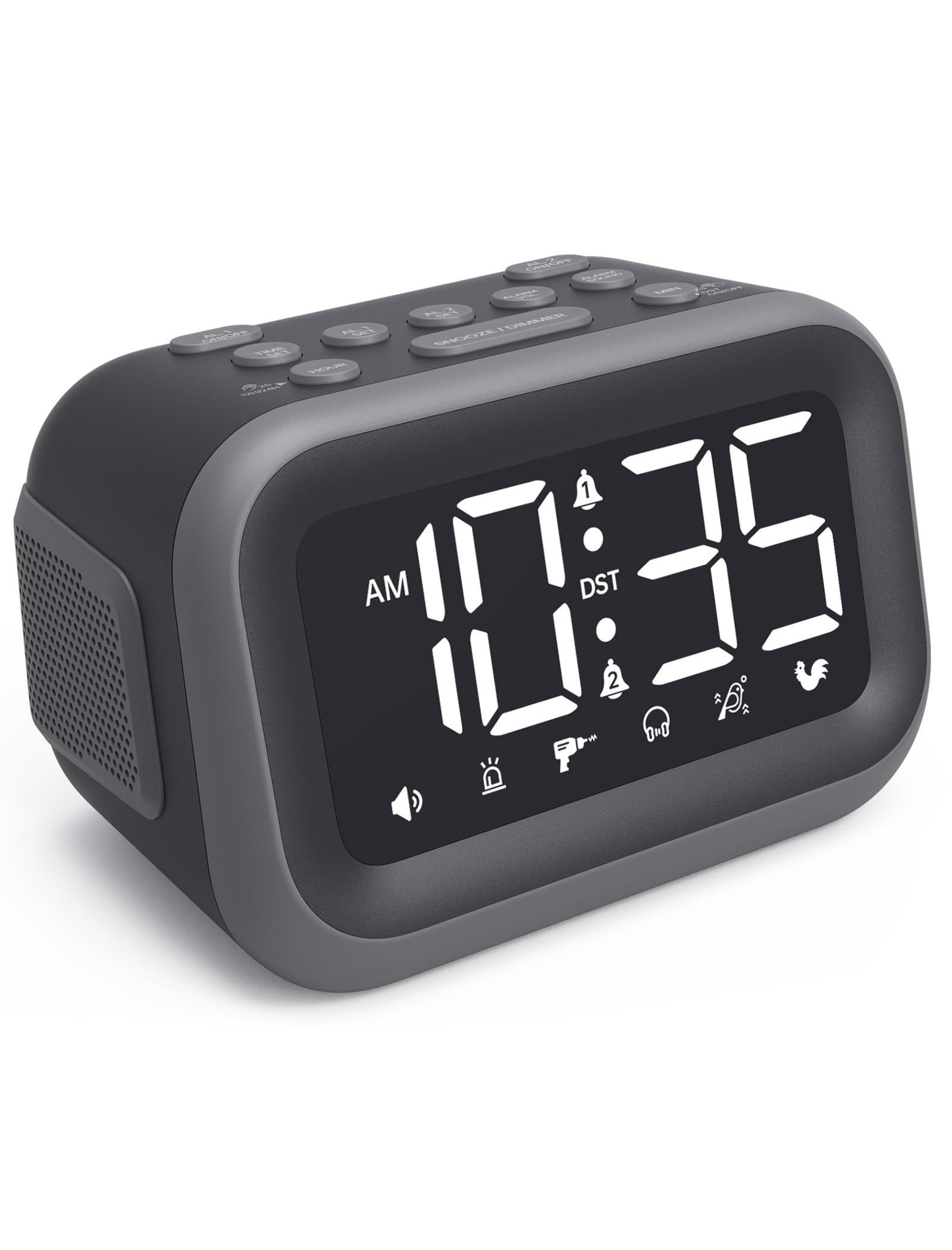
The Acedeck Super Loud Alarm Clock is engineered for one purpose: making sure you don’t oversleep. At 115 decibels, it can be heard from three rooms away according to real-world users, and the six alarm sounds — including an obnoxious rooster — ensure that even the deepest sleepers jolt awake. A 4.2-inch LED display offers adjustable brightness, so it won’t wash out a dark bedroom at night.
Dual alarms with a snooze function suit couples or rotating shift schedules. The clock also features alarm memory via AAA battery backup, meaning your settings survive a power outage. When the power returns, the display lights back up and your alarms are still active — a critical feature for anyone who relies on a strict wake-up schedule.
The built-in USB port lets you charge a phone overnight, and the button-based controls are refreshingly intuitive — no confusing sequences to memorize. The primary feedback is that the alarm is genuinely loud enough to wake a partner in the same room, so it may not be the best choice for light sleepers sharing a bed. The plastic housing feels functional rather than premium, but for raw wake-up authority, this clock delivers.
Why it’s great
- 115 dB alarm with six distinct sounds including a rooster
- Alarm memory retains settings during power outages via battery backup
- Intuitive button controls with no complex setup sequences
Good to know
- Extreme volume may disturb a partner in the same room
- Plastic housing doesn’t feel as substantial as the sound suggests
3. Roxicosly Vibrating Alarm Clock with Bed Shaker

For heavy sleepers who have learned to ignore beeping sounds, the Roxicosly Vibrating Alarm Clock offers a completely different wake-up pathway: physical vibration. The bed shaker features three adjustable strength levels and can be used alone, with the buzzer, or both combined. This makes it particularly effective for deaf and hard-of-hearing users who rely on tactile alerts rather than audio cues.
The 7.5-inch digital display uses a bold, clear font that is readable from across the room, and five brightness levels plus a low-dimmer mode let you dial back the light at night. Dual alarms with weekday and weekend scheduling accommodate couples with different routines, and the large snooze button on top delivers a 9-minute grace period with one easy press.
You also get a built-in USB port for charging hearing aids or a phone overnight. The clock runs on AC power with AAA battery backup that preserves time and alarm settings during outages, though the shaker itself requires AC to operate. A few users note that the build quality leans toward the plastic side, and the initial alarm shutdown procedure may require a quick read of the manual, but the vibration performance has proven reliable for users who previously slept through traditional alarms.
Why it’s great
- Three-level adjustable bed shaker wakes through vibration, not sound
- Five display brightness levels with a low-dimmer mode for dark bedrooms
- Dual alarms with separate weekday and weekend scheduling
Good to know
- Vibration function requires AC power; battery backup only preserves time settings
- Build quality feels slightly plasticky to some users
4. Sharp SPC736ABAMZ Alarm Clock

The Sharp SPC736ABAMZ strips away complexity and focuses on what matters most for a bedside clock: readability. The 1.8-inch white LED display is enormous for its class, making the time visible from any angle in the room. The black finish contrasts sharply with the white digits, and the three-step dimmer control lets you reduce the brightness to a level that won’t disturb light sleepers.
Dual alarms allow each partner to set their own wake-up time, and the alarm indicator on the display confirms when an alarm is active. The clock uses a standard power cord with AAA battery backup that preserves time and alarm settings during a power outage — though the display goes dark until AC power is restored. This is a straightforward, reliable design that has proven so popular that one reviewer has purchased four units over the years for different rooms.
The primary ergonomic complaint is that the alarm on/off buttons are flush with the top surface, making them difficult to locate by touch when half-asleep. A raised or side-mounted button design would be a welcome improvement. But for anyone who wants a jumbo, easy-to-read display without gimmicks, this is the most dependable basic model available.
Why it’s great
- Jumbo 1.8-inch white LED digits are readable from across the room
- Three brightness levels accommodate both night and day visibility
- Dual alarms serve two sleep schedules from one device
Good to know
- Alarm on/off buttons are flush with the top and hard to press while drowsy
- Battery backup does not power the display, only preserves settings
5. Housbay Wooden Sound Machine Alarm Clock
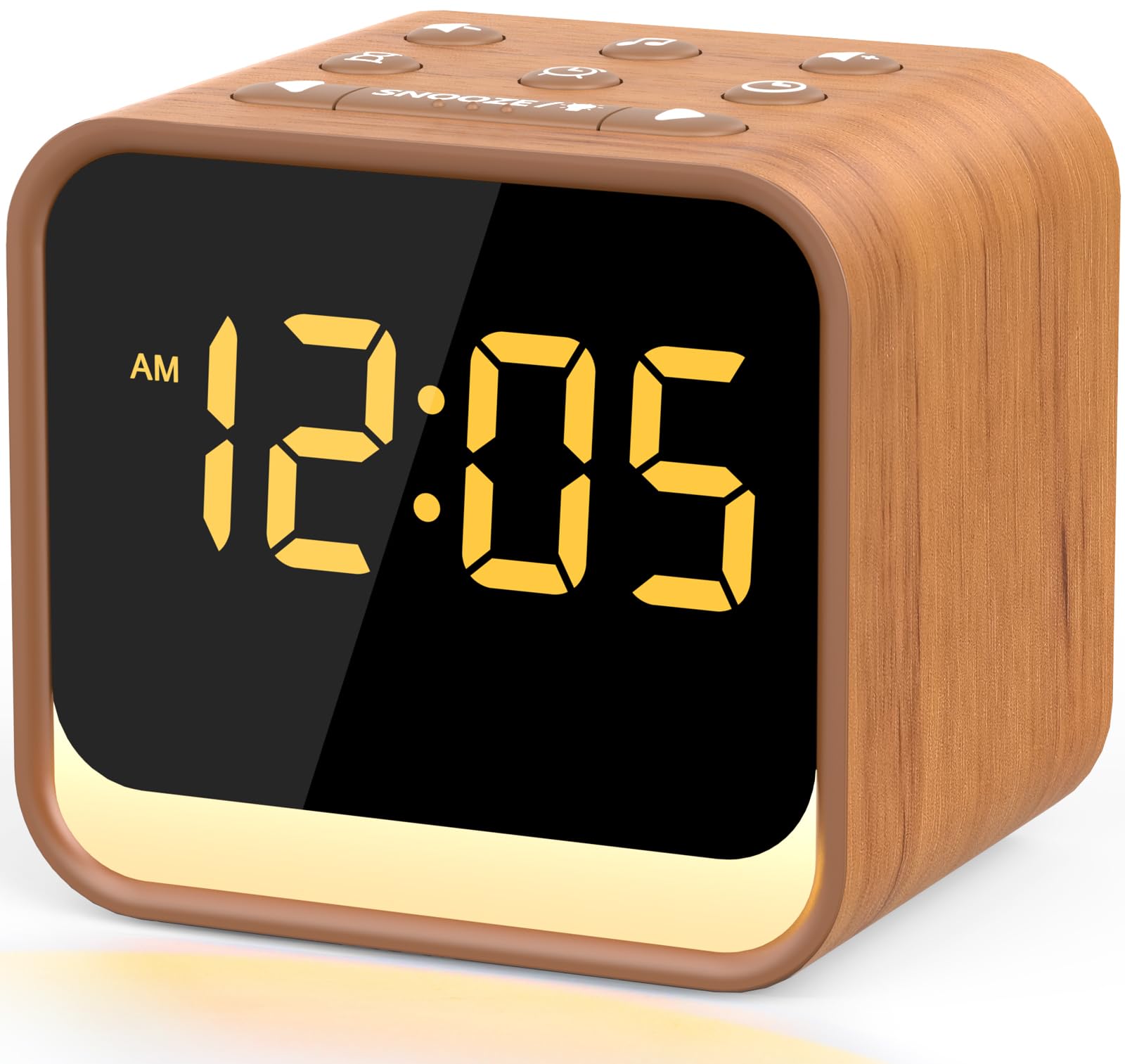
The Housbay Wooden Sound Machine Alarm Clock takes a completely different approach to morning wake-ups. Instead of a jarring buzzer or a vibrating puck, it uses gradual nature sounds — birdsong, ocean waves, or piano melodies — that increase in volume softly over two minutes. This makes it an excellent choice for light sleepers or anyone who wants to start the day without an adrenaline spike.
As a sleep aid, the clock features 30 built-in sounds including white noise, rainfall, and thunder, all designed to mask external noises like neighbors or traffic. A timer allows you to set the sound to play for 30 to 180 minutes before automatically turning off. The compact wood-grain design fits any nightstand aesthetic, and the display can be dimmed or turned off entirely to keep the bedroom pitch-black.
A built-in nightlight with a soft colored glow adds a subtle navigational aid for late-night trips to the bathroom. The primary limitation is that setting the alarm produces a brief preview of the wake-up sound, which can disturb a partner if one is already asleep. Also, the alarm requires a minimum three-minute offset from the current time to function correctly — a quirk that takes a moment to learn. But for those prioritizing a serene, screen-free bedroom routine, this clock delivers that environment beautifully.
Why it’s great
- Gradual nature sounds wake you gently over two minutes instead of jarring you
- 30 sleep sounds with a programmable timer help mask disruptive noise
- Compact wood-grain design and dimmable display promote a calm bedroom
Good to know
- Alarm preview plays a snippet of the sound when setting it, potentially disturbing a partner
- Alarm must be set at least three minutes after the current time to function
FAQ
What decibel level is needed for a heavy sleeper to wake up?
How does a bed shaker work and who needs one?
Final Thoughts: The Verdict
For most users, the best alarm clocks for bedroom winner is the Roxicosly Projection Alarm Clock because it pairs a floor-shaking 118 dB alarm with a practical ceiling projection and independent dimmer controls for display and projection. If you want a vibration-based wake-up that doesn’t rely on sound, grab the Roxicosly Vibrating Alarm Clock with Bed Shaker. And for a serene, phone-free morning routine with gradual nature sounds, nothing beats the Housbay Wooden Sound Machine Alarm Clock.

Mo Maruf
I created WellFizz to bridge the gap between vague wellness advice and actionable solutions. My mission is simple: to decode the research and give you practical tools you can actually use.
Beyond the data, I am a passionate traveler. I believe that stepping away from the screen to explore new environments is essential for mental clarity and physical vitality.