Our readers keep the lights on and my smoothie glass nicely filled. As an Amazon Associate, I earn from qualifying purchases.
A proper cavatelli maker doesn’t just cut dough — it forms those distinctive ridges that grip sauce and create the chewy, tender bite that makes handmade pasta worth the effort. The gadget itself must survive years of cranking through stiff semolina dough without warping, seizing, or letting the rollers drift out of alignment. That mechanical precision separates a tool that produces dozens of uniform shells per minute from one that mashes your dough into a sticky, shapeless mess.
I’m Mohammad Maruf — the founder and writer behind WellFizz.
Whether you are chasing that Sunday-sauce nostalgia or just want a weeknight shortcut to fresh pasta, finding the right best cavatelli maker comes down to understanding roller materials, dough clearance, and the learning curve baked into every model on this list.
How To Choose The Best Cavatelli Maker
Buying a cavatelli maker means choosing between three fundamentally different mechanical approaches: a dedicated roller-and-cutter machine, a KitchenAid pasta-extruder attachment that can also make cavatelli-shaped tubes, or a multi-format Italian machine that switches between cavatelli, orecchiette, and gnocchi. Each has a distinct learning curve and a different long-term failure point.
Roller Material and Surface Grip
The roller surface is everything. Wood rollers — like those on old Italian heirlooms — provide micro-texture that grabs semolina dough and curls it into the signature shell. Metal rollers with a non-stick coating are easier to clean but can let wetter dough slide without forming proper ridges. Surface porosity, not just smoothness, determines whether your first batch comes out as cavatelli or as sad, flat dough scraps.
Clamp vs. Suction Cup Stability
A cavatelli maker that walks across the counter under pressure is useless. Heavy-duty C-clamps grip countertops up to roughly 1.3 inches thick and provide rock-solid stability for cranking. Suction-cup bases, common on Italian-made machines, work only on perfectly smooth, non-porous surfaces and can lose grip as the machine vibrates. If your countertop is textured tile or butcher block, a clamp is the safer bet.
Dough Clearance and Strip Width Tolerance
The most common failure reported by users across every price tier is dough that jams because the strip fed into the rollers is too thick or too wide. Good machines accept a dough rope roughly 3/8-inch in diameter and maintain consistent roller clearance that doesn’t squeeze the dough flat. Models with adjustable rollers or a wider hopper entrance tolerate imperfect hand-rolling, which matters for beginners.
Quick Comparison
On smaller screens, swipe sideways to see the full table.
| Model | Category | Best For | Key Spec | Amazon |
|---|---|---|---|---|
| Tagliapasta Demetra-Divina | Premium Italian | Heirloom quality, multi-shape | 4 pasta shapes, aluminum body | Amazon |
| Atbod Metal KitchenAid Press | Premium Attach | All-metal KitchenAid durability | Alloy metal body, 5 discs | Amazon |
| Fantes Cavatelli Maker | Classic Manual | Authentic ridged shells | Non-stick cast aluminum | Amazon |
| O’Creme Wooden Roller | Wood Roller | Traditional grip, ease of use | Natural wood rollers | Amazon |
| Cofun KitchenAid Press | Value Attach | 7-shape versatility, low cost | Plastic body, 7 plates | Amazon |
| Dpofirs Stainless Steel Press | Budget Press | Stainless build, portable | All stainless steel body | Amazon |
| InnoMoon KitchenAid Press | Budget Extruder | Entry-level extruded shapes | Plastic body, 7 discs | Amazon |
In‑Depth Reviews
1. Tagliapasta Demetra-Divina

This Italian-made machine flips between cavatelli, orecchiette, gnocchi, and Sardinian gnocchetti by swapping the front forming plate, which makes it effectively four tools in one compact footprint. The aluminum body is coated in food-grade enamel, and the suction-cup base, when locked onto a smooth counter, holds firm through the entire cranking cycle. The forming rollers are food-grade plastic, but after years of weekly use reported by European reviewers, they show no significant wear — a testament to the material selection.
The dough recipe matters more here than with any other machine on this list. A 2:1 semolina-to-water ratio, kneaded for a full 8-10 minutes and rested for 30 minutes, produces the firm, non-sticky dough this machine requires. Roll the dough into 1-centimeter cylinders, dust generously with semolina, and the shells drop cleanly into a bowl positioned below the chute. The orecchiette setting takes more practice to get the classic ear shape right, but the cavatelli and gnocchi produce consistent ridged results on the first attempt.
The one limitation is that the machine does not disassemble for deep cleaning — you wipe the rollers and body with a damp cloth, which is standard for dedicated cavatelli machines but means you must avoid letting dough dry inside the crevices. Owners who have had this unit for three-plus years confirm the mechanism remains smooth and the suction cup retains its seal. For someone who wants a single heirloom piece that makes multiple pasta shapes from the same firm dough, this is the definitive choice.
Why it’s great
- Switches between four pasta shapes without additional attachments
- Aluminum enameled body feels dense and resistant to corrosion
- Proven multi-year durability in weekly-use households
Good to know
- Suction cup requires a perfectly smooth, non-porous counter
- Cannot be disassembled; requires immediate wipe-down after use
2. Atbod Metal Gourmet Pasta Press

This KitchenAid attachment is built from high-grade alloy metal rather than the plastic used by most extruder competitors, which removes the single biggest failure point: cracking under dough pressure. The body mates securely to all standard KitchenAid models, and the included five discs cover spaghetti, bucatini, fusilli, and large and small macaroni. While none of the discs produce a true ridged cavatelli shell, the macaroni discs create a hollow tube that mimics the shape and chew of cavatelli when cut to the right length.
The built-in wire cutter lets you dial in pasta length without grabbing kitchen shears, and the metal auger pushes semolina dough at a consistent rate without the surging that plastic augers cause as they warm up. Dough preparation is identical to any extruder method — form walnut-sized balls, feed one at a time, and let the auger do the work. The included storage case keeps the discs organized, which matters when you are switching shapes mid-session for a pasta flight dinner.
The cleaning protocol is the same as any non-dishwasher extruder: wipe the main body with a damp cloth immediately after use, and use the included cleaning tool to push residue out of the die openings. Owners note that the spaghetti and angel-hair settings tend to produce thicker, clumpier strands that require a drier dough than the macaroni discs, so start with the tube shapes if you are new to extrusion. For anyone who already owns a KitchenAid and wants a metal-body attachment that will outlast plastic alternatives, this is the upgrade.
Why it’s great
- Alloy metal body resists cracking that plagues plastic press attachments
- Built-in wire cutter for custom pasta length
- Compact storage case keeps discs organized
Good to know
- No dedicated cavatelli disc; tube shapes approximate the form
- Main body cannot be submerged; manual wipe-down only
3. Fantes Cavatelli Maker Machine

Fantes has been the go-to name for home cavatelli makers since 1906, and this cast-aluminum model with non-stick coating is the reason. The clamp fits countertops up to 1.37 inches thick and locks down with enough stability to crank through stiff dough without the machine shifting. The non-stick surface on the forming rollers is the defining feature here — wetter dough that would gum up a wood-roller machine slides through without sticking, which dramatically reduces the learning curve for beginners.
The technique that experienced users converge on: roll your dough into a 3/8-inch rope instead of the recommended 1/2-inch. That narrower strip prevents the dough from overfilling the roller channel and gumming up the cutter. Coat the dough rope in semolina before feeding it in, and the cavatelli separate cleanly with deep ridges that actually hold sauce. Users making ricotta-enriched doughs report that resting the dough overnight after mixing yields the firmest, most cooperative texture for this machine.
The non-stick coating does require hand-washing in warm soapy water — no dishwasher and no abrasive pads. A small number of units have shipped with the crank installed backwards, which is easily corrected by unscrewing the handle and flipping it, but the inconsistency is worth noting. For the cook who wants a dedicated cavatelli machine that produces authentic ridged shells right out of the box without fighting dough stickiness, this is the proven workhorse.
Why it’s great
- Non-stick cast aluminum rollers rarely jam with properly floured dough
- Deep ridges create excellent sauce-gripping texture
- Sturdy clamp fits most standard countertop thicknesses
Good to know
- Hand-wash only; non-stick coating scratches easily
- Rare quality-control issues with crank assembly direction
4. O’Creme Wooden Roller Cavatelli Maker

This is the only wood-roller cavatelli maker in this price bracket that delivers the traditional micro-grip surface Italian nonnas rely on. The natural wood rollers grab semolina dough and curl it into a clean shell without needing a non-stick coating, and the food-grade metal frame provides enough weight to keep the machine planted during cranking. The unit measures 23.5 inches tall with the handle, so it requires a bit of vertical clearance on your counter, but the reach is comfortable once you find the right stool height.
The learning curve is real and documented extensively in user reports. Feed dough strips that are too thick or too wide, and the rollers will squeeze them flat instead of forming cavatelli. Pass dough that is too soft, and it will stick to the wooden rollers rather than releasing. The fix is a 30- to 45-minute dough rest after kneading, followed by generous dusting with semolina before each pass. Once the technique clicks, this machine produces shells faster than any hand-rolling method and with more consistent ridge depth than some metal-roller competitors.
Cleaning is surprisingly forgiving for a wood-roller machine — the entire unit is dishwasher safe, which is nearly unheard of in this category. That alone saves significant post-pasta-night effort. The wood rollers may develop a patina over time as they absorb oils from the dough, which is normal and does not affect performance. If you want the authentic feel of wood-on-dough texture without paying Italian-import prices, this is the sweet spot.
Why it’s great
- Natural wood rollers provide superior dough grip and shell formation
- Entire unit is dishwasher safe for easy cleanup
- Sturdy metal frame with comfortable crank handle
Good to know
- Requires precise dough-strip thickness to avoid jamming
- Tall vertical profile needs ample counter clearance
5. Cofun Gourmet Pasta Press Attachment
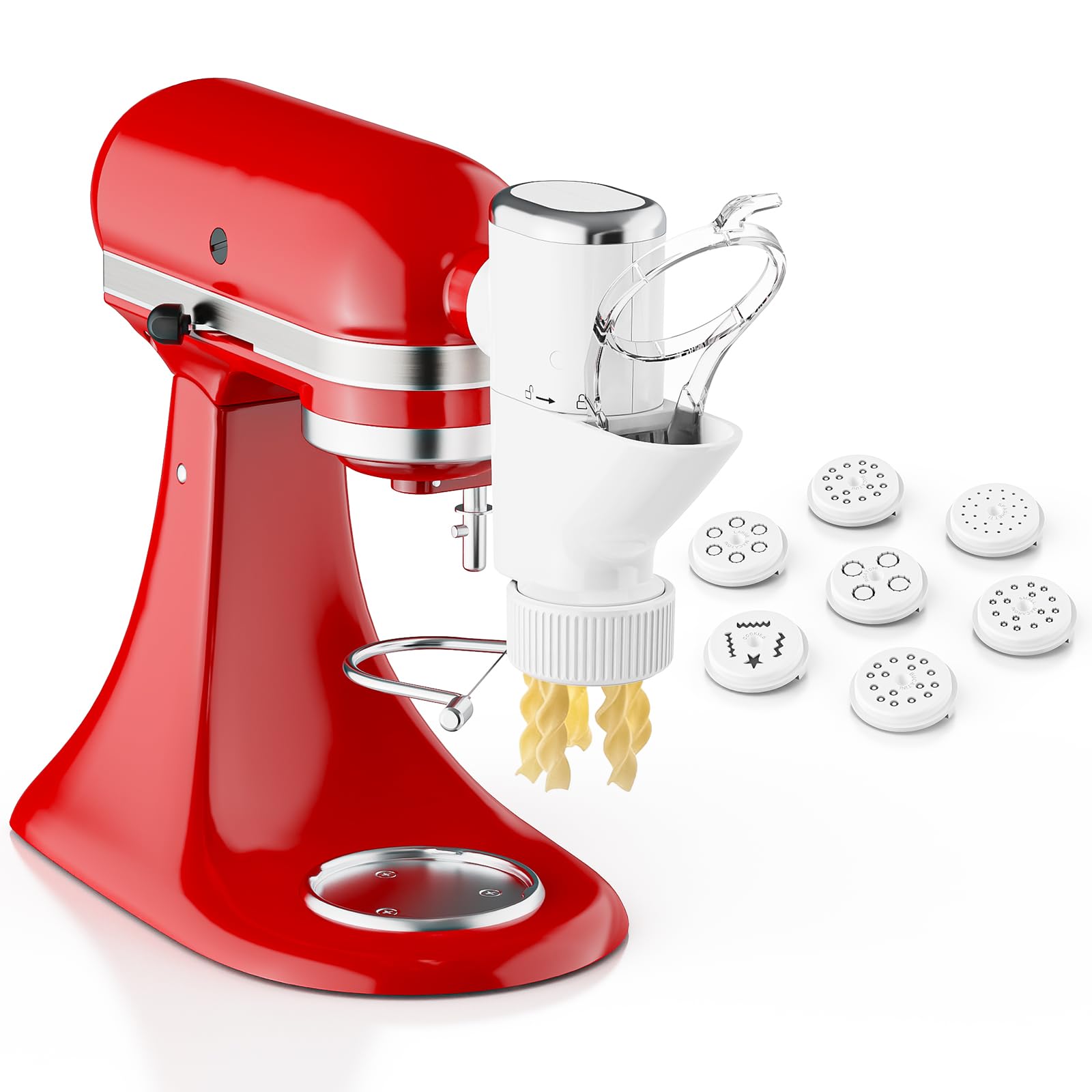
The Cofun attachment matches the form factor of the KitchenAid OEM pasta press at a significantly lower entry point, and it includes seven shaping plates — spaghetti, fusilli, and multiple macaroni sizes — plus a dedicated storage case that keeps everything organized. The plastic body is lighter than the Atbod metal unit, but early users report that the dough auger and gears mesh smoothly without the grinding that cheaper plastic extruders develop. The built-in cutter and pusher bar let you control pasta length without reaching for separate tools.
Dough consistency is the single determining factor for success with this attachment. The dough must form crumbles that hold a firm ball when squeezed — if it leaves residue on your fingers, it is too wet. Form the dough into walnut-sized balls, spray a light coating of olive oil on the rotator and mold surface, and feed each ball only when the previous one is nearly out of sight in the auger chamber. Users who follow this method report excellent results on the first attempt, while those who use wet dough or overfill the hopper get extruded mush.
Two durability caveats: several users reported the auger fusing to the main housing after roughly six uses, and the company’s customer-support response has been inconsistent. The included storage case is a genuine plus for keeping plates scratch-free, but the plastic construction means this is a value-oriented tool rather than a lifetime investment. For the cook who wants to experiment with multiple extruded shapes without spending KitchenAid OEM money, this covers the bases.
Why it’s great
- Seven shape plates offer wide variety for pasta experimentation
- Included storage case prevents disc loss and damage
- Lightweight and easy to attach and detach from mixer
Good to know
- Plastic body may fuse after repeated use; durability is limited
- Dough must be nearly bone-dry for consistent extrusion
6. Dpofirs Stainless Steel Cavatelli Press
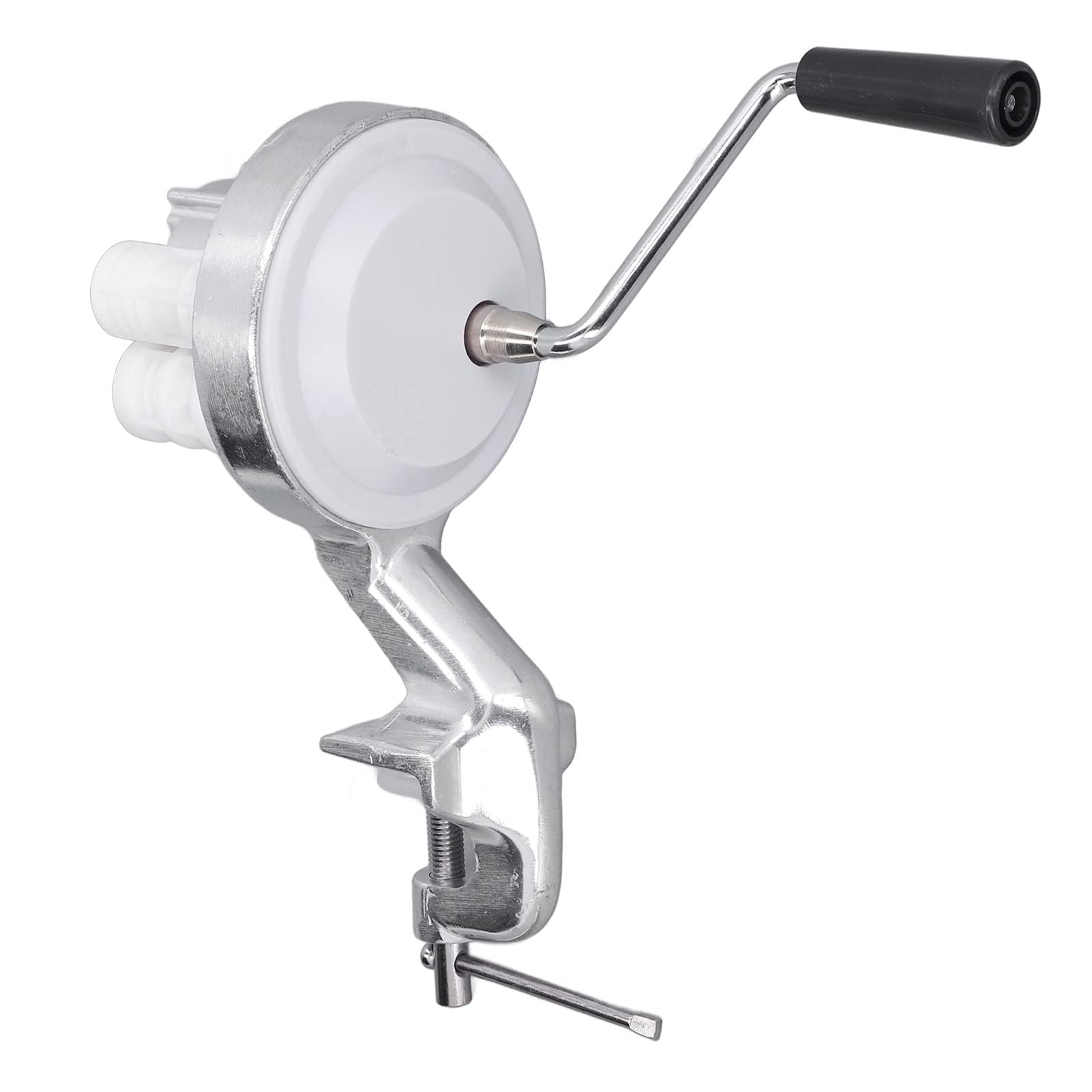
This all-stainless-steel crank press is the most affordable dedicated cavatelli-style machine on the list, and the metal construction gives it a weight and solidity that plastic-bodied competitors lack. The hand-crank mechanism requires no electricity, which makes it genuinely portable for outdoor cooking setups or small kitchens without counter space for a dedicated machine. The stainless body resists rust and food staining and wipes clean with a damp cloth.
The critical flaw that multiple buyers reported immediately is that the rollers sit too far apart to cut and shape the dough properly. The cut lines on the roller surface do not align cleanly, which means the dough gets squeezed into a thick, flat strip rather than being cut into individual shells with a curled ridge. Even with a perfectly firm dough and the correct strip width, the machine produces misshapen pasta that does not hold sauce. Several users returned the unit after a single attempt.
A minority of buyers report satisfactory results after significant trial and error, suggesting that unit-to-unit quality control varies widely. The seller has issued full refunds to some dissatisfied customers without requiring the item to be returned, which indicates an awareness of the inconsistency. If you are willing to gamble on assembly tolerances and have the patience to troubleshoot, the stainless build is appealing — but for reliable cavatelli production, the failure rate is too high to recommend confidently over the Fantes or O’Creme alternatives.
Why it’s great
- All-stainless-steel construction resists rust and staining
- Small footprint and no power cord for true portability
Good to know
- Roller alignment issues prevent proper shell formation for many units
- Inconsistent quality control; high rate of returns
7. InnoMoon Gourmet Pasta Press Attachment
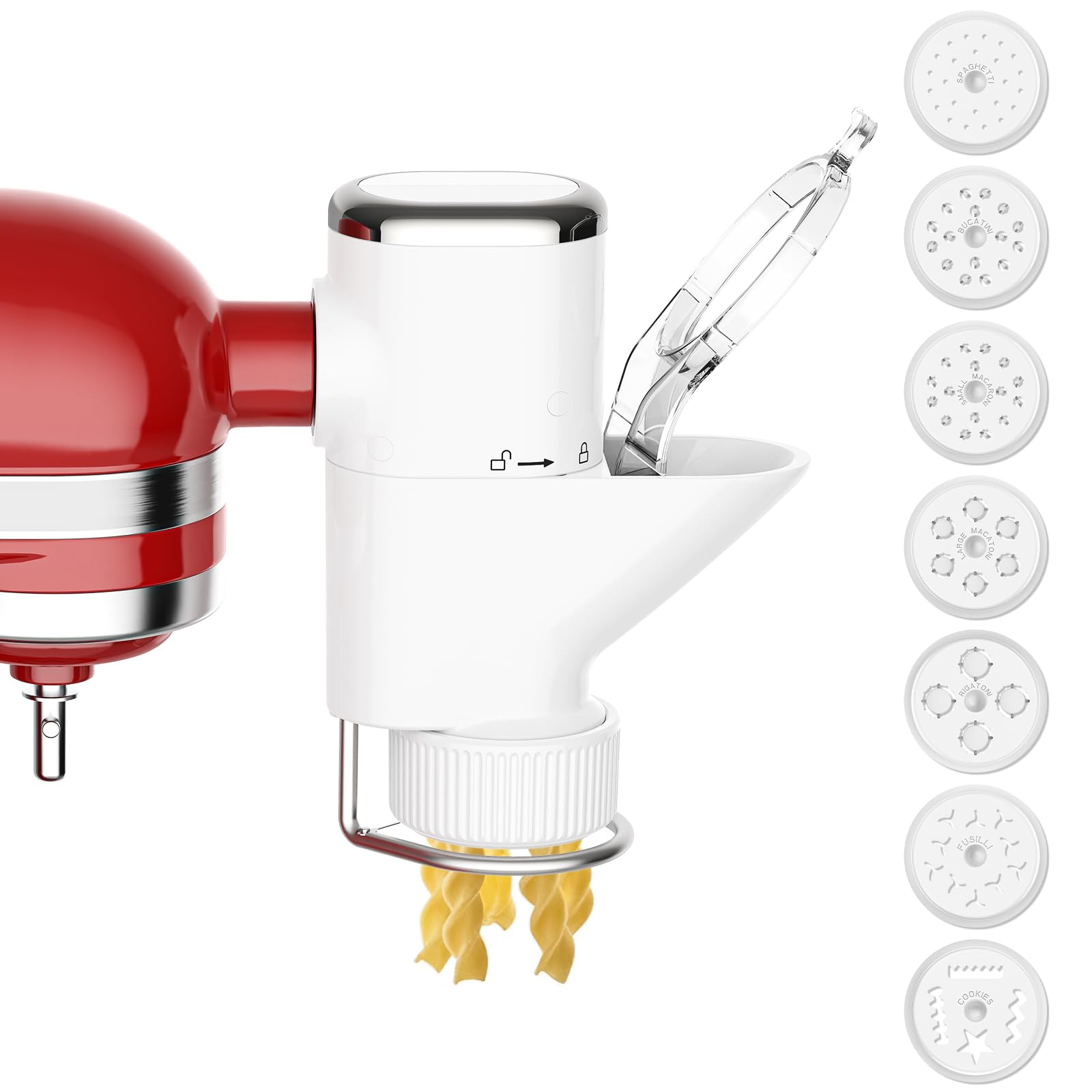
The InnoMoon press offers the widest shape variety of any attachment on this list — seven discs including spaghetti, bucatini, rigatoni, fusilli, large and small macaroni, and fettuccine — for the same entry-level cost as the Cofun unit. The plastic body keeps the weight down to under three pounds, and the included blade storage box and cleaning brush make post-use organization straightforward. The auger mechanism feeds dough consistently when the dough is properly prepared.
The failure pattern here mirrors the Cofun but with a tighter timeline. Multiple users report that the auger or internal gearing began cracking and shedding plastic parts after approximately ten uses. One reviewer noted that the company responded to a product failure by issuing a full refund, which suggests the brand is responsive to defects even if the engineering is not yet mature. The dough recipe included with the unit produces dough that is too wet for extrusion, which exacerbates the jamming and adds to the frustration.
Cleaning is straightforward — wipe the main body with a damp cloth and use the brush on the discs — but the instruction manual explicitly warns against submerging the main unit. The compact storage box is a genuine organizational win, especially in small kitchens. For someone who needs to make seven shapes of pasta on a tight budget and is comfortable with a shorter expected lifespan, this covers the bases. For anyone who wants cavatelli specifically, the dedicated roller machines above will produce better results with less hassle.
Why it’s great
- Seven discs provide the widest shape variety at this price point
- Includes cleaning brush and blade storage box for organization
- Lightweight and easy to handle during use
Good to know
- Plastic components may crack or fuse after roughly ten uses
- Included dough recipe produces dough too wet for extrusion
FAQ
What dough recipe works best for a manual cavatelli maker?
Can you get the same cavatelli shape from a KitchenAid extruder attachment?
Why does my cavatelli maker keep jamming on the first batch?
Final Thoughts: The Verdict
For most users, the best cavatelli maker winner is the Tagliapasta Demetra-Divina because it combines heirloom-quality aluminum construction with the ability to switch between four pasta shapes from the same firm dough, making it a single-purchase solution for a lifetime of pasta-making. If you want a dedicated roller machine that produces authentic ridged shells with minimal sticking, grab the Fantes Cavatelli Maker. And for the traditionalist who values the natural grip of wood rollers and dishwasher-safe cleanup over Italian provenance, nothing beats the O’Creme Wooden Roller Cavatelli Maker.

Mo Maruf
I created WellFizz to bridge the gap between vague wellness advice and actionable solutions. My mission is simple: to decode the research and give you practical tools you can actually use.
Beyond the data, I am a passionate traveler. I believe that stepping away from the screen to explore new environments is essential for mental clarity and physical vitality.