Our readers keep the lights on and my smoothie glass nicely filled. As an Amazon Associate, I earn from qualifying purchases.
A backpacking tent needs to balance weight, packed size, and weather resistance without crossing the psychological barrier of a budget-friendly price. Too often, lightweight materials mean flimsy poles or a rainfly that wets out after one storm. Finding a shelter that lets you push miles and stay dry requires sifting through nylon weights, hydrostatic head ratings, and pole architecture — details most casual shoppers overlook until they are shivering at 3 AM.
I’m Mohammad Maruf — the founder and writer behind WellFizz. I spend weeks analyzing tensile strength, seam-tape applications, and real-world condensation reports to separate the few genuine performers from the disposable shelter-shaped objects.
After stress-testing dozens of configurations against temperature drops and sustained downpours, the right backpacking tent under 200 delivers reliable protection without demanding ultralight budgets.
How To Choose The Best Backpacking Tent Under 200
Within this budget, you are balancing weight against durability and floor space. A tent that saves four ounces but tears on the first granite site is a poor trade. Start by identifying your non-negotiables: minimum waterproof rating, pole type, and whether you need room for gear inside or can stash it in a vestibule.
Weight vs. Packed Size
A sub-4-pound trail weight lets you cover ground without feeling the shelter in your pack. But weight is useless if the packed cylinder is too long for a 40-liter pack. Look for a packed length under 20 inches and a diameter under 7 inches — tents in this price range often achieve this with 7001-series aluminum poles or trekking-pole-only designs.
Weather Resistance
Hydrostatic head ratings of 1500 mm or higher on both the rainfly and floor are the baseline for a tent that handles real storms. Seam-taped construction is non-negotiable; factory-sealed seams prevent water from wicking through stitch holes. A full-coverage rainfly that reaches near the ground stops splash-up and keeps the inner mesh dry in sideways rain.
Livability and Layout
A center height of at least 40 inches allows a sitting adult to change layers without brushing the ceiling. Internal storage pockets and a gear loft keep small items organized. For two-person tents, dual doors and vestibules eliminate the middle-of-the-night crawl-over and provide separate storage for packs and boots.
Quick Comparison
On smaller screens, swipe sideways to see the full table.
| Model | Category | Best For | Key Spec | Amazon |
|---|---|---|---|---|
| Naturehike Mongar Upgraded 3P | Premium | Maximum livable space for two | 43.8 sq. ft floor area | Amazon |
| Featherstone Backbone 1P | Trekking Pole | Ultralight solo thru-hikes | 2 lbs 6 oz trail weight | Amazon |
| OneTigris COSMITTO 2P | Mid-Range | Feature-packed 2P with dual doors | 1500 mm fly coating | Amazon |
| Kelty Late Start 2P | Premium | Fast setup for car-to-trail head trips | 3-minute pole assembly | Amazon |
| Kelty Grand Mesa 2P | Mid-Range | Reliable 3-season trips | 4 lbs 1 oz packed weight | Amazon |
| Naturehike Mongar 2P | Mid-Range | Spacious 2P with gear storage | 7001 aluminum alloy poles | Amazon |
| ALPS Mountaineering Lynx 1 | Mid-Range | Durable solo shelter | 75D 185T floor fabric | Amazon |
| Hyke & Byke Zion 1P | Budget | Value-driven duo with free foot print | PU5000 poly ripstop fly | Amazon |
| KAZOO 1P Ultralight | Budget | Entry-level solo backpacking | 3.3 lbs total weight | Amazon |
In‑Depth Reviews
1. Naturehike Mongar Upgraded 3 Person Backpacking Tent
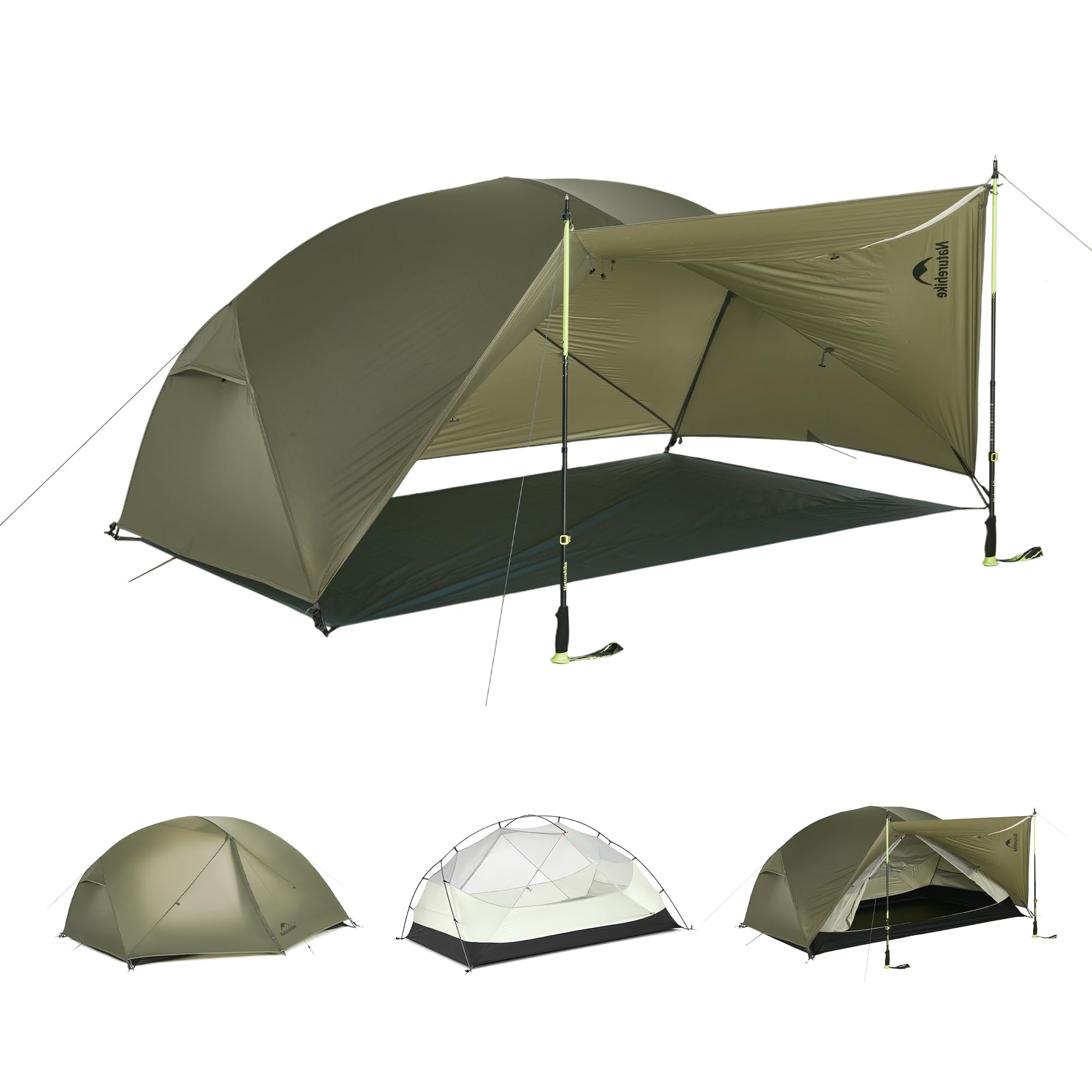
The Naturehike Mongar Upgraded pushes the boundary of what a budget-friendly shelter can offer. With a floor area of 43.8 square feet and a peak height of 43.3 inches, this tent gives two sleepers genuine elbow room plus space for dog and gear. The 20D nylon ripstop fabric carries a 3000 mm PU coating on both the outer fly and floor, a rating that comfortably sheds heavy Pacific Northwest-style rain. The expandable awning, supported by trekking poles, provides a covered cooking or lounging area that few competitors in this price range attempt.
Setup is a two-minute affair thanks to 9.5 mm aluminum alloy poles and a straightforward dome geometry. The dual doors and dual vestibules mean no late-night crawling over a partner. Mesh panels on the inner tent and adjustable vestibule height create airflow that fights condensation effectively in humid conditions. At 6 lbs total weight, this is not an ultralight shelter for fast-and-light missions, but it carries well enough for weekend trips where comfort matters more than ounces.
The included footprint adds floor protection without an extra purchase, and the sewn-in instructions inside the stuff sack simplify first-time pitching. Some users note that the thinner 20D nylon requires care on rocky ground, but the bathtub floor design with reinforced corners shrugs off normal wear. Smooth zippers and multiple interior pockets round out a package that feels far more expensive than its sticker suggests.
Why it’s great
- Expandable awning adds versatile covered living space
- High 3000 mm waterproof rating on fly and floor
- Spacious enough for two plus gear without feeling cramped
- Quick 2-minute dome setup with quality aluminum poles
Good to know
- Trail weight near 6 lbs is too heavy for ultralight purists
- Thin 20D floor fabric requires a footprint on abrasive sites
2. Featherstone Backbone 1 Person Ultralight Tent

At a minimum trail weight of 2 lbs 6 oz, the Featherstone Backbone redefines what a budget-friendly shelter can carry. This single-wall, trekking-pole-supported design eliminates pole weight entirely, using your existing hiking poles as the primary structure. The 40/60 pole placement creates a tapered floor that fits a full-size sleeping pad and provides surprising headroom for a shelter this light. Sil-Nylon fabric with factory seam-taped construction delivers reliable waterproofing without the bulk of a separate rainfly.
The Backbone features two doors and two vestibules, a rare configuration in solo ultralight tents. You can stash a 30-50 liter pack in one vestibule while keeping boots in the other. Wide mesh panels on the side walls and a large rear vent improve airflow, though some users report condensation buildup in sustained cold rain — a common trade-off with single-wall shelters. Setting up takes under three minutes: stake the four corners, insert trekking poles to your preferred height, and tension the guy lines.
Reinforced pole pockets at the peak handle repeated pitching without tearing, and the included Y-stakes and J-stakes are comparable to MSR groundhog minis in holding power. At 85 inches of floor length, a 6’4″ sleeper can stretch out comfortably. The lack of a groundsheet is a minor omission, but the dual vestibules and roomy floor layout make this an outstanding choice for solo thru-hikers who count grams.
Why it’s great
- Exceptionally low trail weight for the price point
- Dual vestibules provide real gear storage in a solo tent
- Spacious floor fits tall sleepers and wide pads
- Fast, intuitive stake-and-pole setup
Good to know
- Single-wall design can develop condensation in wet, cold conditions
- Requires trekking poles (not included) for setup
3. OneTigris COSMITTO 2 Person Backpacking Tent

The OneTigris COSMITTO packs an impressive feature set into a compact package. The 20D plaid ripstop polyester rainfly carries a 1500 mm waterproof coating — enough for moderate storms when seam-sealed — and the 75D nylon bathtub floor adds abrasion resistance at the wear points. A full-mesh inner tent provides 360-degree views and bug protection while a hexagon-shaped outer shell improves wind stability in exposed campsites. Setup is under five minutes with three aluminum alloy poles and color-coded clip attachments.
At 30.96 square feet of interior space, two adults can sleep side-by-side without feeling crowded, and the dual zippered doors eliminate the middle-of-the-night crawl. Each vestibule stores a pack and boots, keeping the sleeping area free of clutter. Internal gear pockets and a loop for hanging a lantern keep essentials accessible. The Line Loc 3 tensioners and reflective guy lines allow precise adjustment even in low light.
The included stakes are noticeably stronger than the aluminum pins that come with most budget tents, surviving hammer blows on hard-packed soil. Some users report that the zippers snag on the rainfly near the corners — a minor annoyance that can be mitigated by careful tensioning. Dual side vents with rain-blocking flaps maintain airflow without letting water in. For backpackers who want a freestanding two-person shelter with real weather protection and organized storage, this tent delivers value that punches above its weight class.
Why it’s great
- Full-mesh inner offers great ventilation and star views
- Dual doors and vestibules improve livability for two people
- Included stakes are durable enough for hard ground
- Wind-resistant hexagon geometry stays stable in gusts
Good to know
- Zippers can snag on rainfly fabric near the corners
- Bottom layer is 75D but not armored for extreme rocky sites
4. Kelty Late Start 2 Person Backpacking Tent

Kelty’s Late Start lives up to its name with a setup process that takes under three minutes. The Quickcorner pole sleeves and color-coded buckle attachments mean you can pitch this tent without fumbling in the dark. The 68D polyester rainfly carries a 1200 mm C0 PFC-free coating — adequate for most three-season conditions — and the full-coverage design extends low enough to prevent splash-up. A single large door and single vestibule keep the design simplified, reducing weight and complexity.
The interior measures 89 inches long and 54 inches wide with a peak height of 43 inches, providing enough space for two adults on standard sleeping pads. Mesh storage pockets on the walls and a small gear loft keep phones, headlamps, and maps organized. The bathtub floor uses the same 68D polyester as the fly, with fully taped seams at every stitch line. Ventilation is handled by a single adjustable vent on the rainfly that can be propped open even in light drizzle.
At just over 4 lbs packed weight, the Late Start is light enough for weekend backpacking trips yet robust enough for repeated car-camp use. The poles are identical, so you can grab either one during setup — a small detail that speeds up the process. Some users note the tent runs warm in hot weather because the mesh-to-fabric ratio favors privacy over max airflow. For campers who value speed and simplicity over ultralight specs, this Kelty is a strong contender.
Why it’s great
- Fastest setup in this roundup with Quickcorner system
- PFC-free coatings reduce environmental impact
- Spacious length accommodates tall sleepers
- Full-coverage rainfly provides solid storm protection
Good to know
- Single door limits side-by-side entry
- Rainfly vent is small and provides limited airflow in heat
5. Kelty Grand Mesa 2 Person Backpacking Tent

The Grand Mesa is Kelty’s no-nonsense three-season shelter that trades frills for fundamental reliability. The 68D polyester rainfly and floor are fully seam-taped, and the 1200 mm coating handles sustained rain without wetting through. Two aluminum pressfit poles with Kelty’s Quick Corners keep the corners locked during setup — no struggling with a loose pole in the wind. At 4 lbs 7 oz packed weight, it splits the difference between lightweight and bombproof.
The interior delivers 30 square feet of floor space with an 85 x 57-inch footprint and a 44-inch peak height. This is enough room for two standard sleeping pads with a slim gap between them. The single door and single vestibule are positioned for easy access, and the EZ-Zip system reduces snagging on the zipper track. A small smoke stack flap at the top of the rainfly lets you vent cooking smells or warm air without fully unzipping.
After a dozen nights on the trail, the Grand Mesa shows minimal wear. The stakes are solid metal with good holding power in loam and gravel. Some users find the vestibule a bit tight for two large packs, but the gear loft adds overhead storage for lighter items. For backpackers who want a familiar, predictable shelter from a brand with a decades-long reputation, the Grand Mesa is a safe buy that will last multiple seasons.
Why it’s great
- Proven Kelty build quality with fully taped seams
- Quick Corners simplify pole alignment during setup
- Durable 68D fabrics resist abrasion better than thinner materials
- Smoke stack flap adds useful ventilation flexibility
Good to know
- Packed size is bulkier than ultralight alternatives
- Single vestibule is tight for two overnight packs
6. Naturehike Mongar 2 Person Backpacking Tent

The Naturehike Mongar 2P is a widely copied design for good reason. It uses a Y-frame pole structure with 7001 aluminum alloy, creating a freestanding dome that sets up in under five minutes. The 210T polyester rainfly carries a 3000 mm waterproof coating, and the bathtub floor matches that rating — one of the highest hydrostatic head values in this roundup. Two doors and two vestibules allow each sleeper independent access and separate gear storage, a luxury at this price point.
Interior dimensions of 82.7 x 53.2 inches with a 41.3-inch peak height give two adults comfortable space without feeling like sardines. The included footprint adds floor protection and can be used alone as a sun shelter. High-density B3 mesh on the inner tent blocks even the smallest insects while massive mesh panels improve airflow. The dual top vents on the rainfly allow hot air to escape, reducing condensation buildup on humid nights.
Some users note that the factory stakes are adequate for soft ground but bend on hard-packed campsites — upgrading to heavier stakes is a cheap fix. The stuff sack is compact enough at 19.7 x 5.9 inches to fit vertically in a backpack. For a two-person tent that balances weight, weather resistance, and livability, the Mongar 2P is a benchmark that other budget tents often fail to match.
Why it’s great
- 3000 mm waterproof rating on both fly and floor
- Dual doors and vestibules for independent access
- Quick Y-frame setup with strong aluminum poles
- Excellent ventilation with dual top vents and mesh panels
Good to know
- Included stakes are light-duty and bend on hard ground
- Not the lightest 2P option at over 5 lbs packed
7. ALPS Mountaineering Lynx 1 Person Backpacking Tent

ALPS Mountaineering built the Lynx 1 for backpackers who prioritize durability over grams. The floor uses 75D 185T poly taffeta with a 2000 mm coating, and the rainfly is 75D 185T polyester with a 1500 mm coating — fabrics that shrug off brush and rock contact that would shred thinner 20D nylon. Two aluminum poles with a freestanding dome design make setup idiot-proof, and the factory-sealed seams mean you can pitch in the rain without adding seam sealer. Total weight is 4 lbs 1 oz.
The interior is snug but functional with a 90-inch length, 32-inch width, and 36-inch peak height. The single vestibule provides enough space for a pack and boots, and the mesh storage pockets and gear loft keep smaller items off the floor. Half-mesh walls improve airflow and reduce condensation compared to tents with more solid fabric. The 20-square-foot floor is tight for larger sleepers but works well for weekend trips where every cubic inch of pack space matters.
The factory stakes are weak and likely the first upgrade you will make — swapping to MSR Mini Groundhogs solves that. Some users note that the vestibule could be larger for storing gear alongside the sleeping area. For entry-level backpackers who want a tent that will survive clumsy campsite selection and frequent setups, the Lynx 1 offers a reassuring build quality that feels more expensive than it is.
Why it’s great
- Heavy-duty 75D fabrics handle rugged campsites without tears
- Freestanding dome is trivial to pitch solo
- Factory-sealed seams require no aftermarket waterproofing
- Gear loft and mesh pockets improve interior organization
Good to know
- Included stakes are flimsy and should be replaced
- Vestibule size is modest for large overnight packs
8. Hyke & Byke Zion 1 Person Backpacking Tent

Hyke & Byke’s Zion 1P stands out by including a footprint, gear loft, and aluminum stakes — accessories that budget brands typically sell separately. The rainfly is made from PU5000-rated poly ripstop, one of the highest waterproof ratings in this roundup, and the bathtub floor is similarly robust. At 37 x 88 x 42 inches with a 44-inch peak height, this tent is marketed as a 1-person but realistically fits one adult with gear or two small sleepers for an occasional night.
Setup follows a standard two-pole dome format with clip attachments and color-coded fly points. The included footprint clips onto the pole ends, keeping it in place during pitching. Internal storage includes four mesh pockets and the gear loft, providing plenty of places to stow small items. The vestibule is modest but sufficient for a single pack, and the reflective guy lines make nighttime adjustments safer. At a minimum trail weight of 3 lbs 1.4 oz, it is genuinely backpackable.
Some users report that the fly vent stays are too flimsy to hold the vent open in breezy conditions. The V-shaped aluminum stakes bend in hard soil, though the included stake press helps drive them straight. For backpackers who want a complete shelter kit without nickel-and-diming for accessories, the Zion delivers a ready-to-go package with weatherproofing that exceeds most tents in its price tier.
Why it’s great
- Includes footprint, gear loft, and aluminum stakes in the box
- PU5000 rainfly offers outstanding waterproof protection
- Low trail weight makes it viable for multi-day carries
- Reflective guy lines improve nighttime visibility
Good to know
- Fly vent stays are too flimsy to hold position reliably
- Stakes bend in hard-packed or rocky soil
9. KAZOO Waterproof Backpacking Tent 1 Person

KAZOO’s 1-person tent earns points for sustainability. The 210T ripstop polyester rainfly and B3 mesh inner are made from 100% recycled fabrics certified under the Global Recycled Standard, and each tent comes with a certificate of authenticity. At 3.3 lbs total weight with an 83 x 36 x 40-inch interior, it is a legitimate lightweight option for solo backpackers who want to minimize their environmental footprint. The 3000 mm waterproof rating on the fly and full-coverage rainfly keep the interior dry in sustained downpours.
Setup is simplified by a single integrated aluminum pole that clips onto the tent body — no fumbling with separate pole sections. The D-shaped door provides easy entry, and the bright yellow color improves visibility in dense forests or low-light conditions. Reflective guy lines and 14 stakes provide a stable footprint even in windy conditions. The double-wall design separates the mesh inner from the rainfly, reducing condensation compared to single-wall tents.
The 20.75-square-foot floor is tight for taller sleepers — a 5’8″ user reported toes touching the mesh. Some users also note that the outer shell is not attached to the inner mesh, requiring separate staking for fly tension. For eco-conscious solo hikers who prioritize recycled materials and solid weather protection over palatial space, this KAZOO offers a rare combination of low weight and environmental accountability.
Why it’s great
- GRS-certified recycled fabrics reduce environmental impact
- Double-wall design helps manage condensation
- 3000 mm waterproof fly handles heavy rain
- Single integrated pole makes setup quick and intuitive
Good to know
- Floor is short for sleepers over 5’8″
- Vestibule provides minimal gear storage
FAQ
Can I use a backpacking tent under 200 dollars for winter conditions?
What is the most important spec for preventing leaks in a budget tent?
Should I buy a tent with aluminum or fiberglass poles at this price?
Final Thoughts: The Verdict
For most users, the backpacking tent under 200 winner is the Naturehike Mongar Upgraded 3P because it delivers the most livable space, highest waterproof ratings, and innovative awning design in this price tier. If you want ultralight performance for solo thru-hikes, grab the Featherstone Backbone 1P. And for a durable, user-friendly two-person shelter that sets up in minutes, nothing beats the Kelty Grand Mesa 2P.

Mo Maruf
I created WellFizz to bridge the gap between vague wellness advice and actionable solutions. My mission is simple: to decode the research and give you practical tools you can actually use.
Beyond the data, I am a passionate traveler. I believe that stepping away from the screen to explore new environments is essential for mental clarity and physical vitality.