Our readers keep the lights on and my smoothie glass nicely filled. As an Amazon Associate, I earn from qualifying purchases.
Wrist-based calorie burn estimates are notoriously generous, often inflating numbers by 20-40% during steady-state cardio and even more during strength training. This isn’t a minor quibble—it’s the difference between a caloric deficit that drives fat loss and a phantom deficit that stalls progress for weeks. A calorie burn tracker that relies on photoplethysmography (PPG) alone cannot measure the mechanical work of your muscles or the oxygen cost of recovery, which is why serious athletes and body composition optimizers demand more rigorous hardware.
I’m Mohammad Maruf — the founder and writer behind WellFizz. My research process for this category examines sensor architecture, algorithm transparency, and real-world validation data across optical, chest-strap, and multi-sensor platforms to separate marketing claims from metabolic reality.
After analyzing five distinctly different approaches to energy expenditure measurement, the best best calorie burn tracker must deliver heart rate accuracy within ±1% of an ECG reference standard and provide running dynamics that reveal form inefficiencies directly affecting energy cost per mile.
How To Choose The Best Calorie Burn Tracker
The core of any calorie burn tracker is its heart rate sensor—optical wrist-based monitors rely on LED light absorption to estimate pulse, while chest straps measure the heart’s electrical activity directly via electrodes. Electrical cardiac monitoring is inherently more precise for the rate-of-change data that calorie algorithms feed on. If you train in heart rate zones for fat oxidation or lactate threshold, an ECG-grade chest strap is non-negotiable. Wrist-based optical sensors remain convenient for daily step counting and casual workouts, but their accuracy degrades with motion artifacts during intervals, weightlifting, and non-steady-state activities.
Sensor Type: Optical vs. Electrical
Optical sensors (PPG) use green and red LEDs to detect blood volume changes. They work well at rest and during steady-state runs under consistent cadence. Electrical sensors (ECG) capture the heart’s R-R intervals with millisecond precision, enabling HRV analysis and real-time calorie burn calculations that track metabolic drift across a workout. For fat loss targets where a 50-calorie error per session compounds into a half-pound per month, the chest strap’s accuracy justifies its premium cost.
Running Dynamics and Form Metrics
Calorie burn is not just a function of heart rate—it is heavily influenced by running economy. Advanced trackers measure ground contact time, vertical oscillation, stride length, and step speed loss. If your vertical oscillation is excessive, you are wasting energy bouncing instead of moving forward, and your calorie burn will be higher for the same pace. A tracker with running dynamics reports reveals the mechanical inefficiencies you can correct to lower the energy cost of your runs, making each mile metabolically cheaper.
GPS Accuracy and Distance Measurement
Calorie algorithms are fundamentally distance-dependent at a given body weight. Dual-frequency GPS (L1+L5 bands) reduces satellite signal multipath errors in urban canyons and tree cover by 30-50% compared to single-band receivers. If your outdoor routes include dense tree cover, tall buildings, or narrow trails, dual-frequency GPS ensures the distance fed into the calorie equation is accurate, which directly impacts the final burn estimate.
Quick Comparison
On smaller screens, swipe sideways to see the full table.
| Model | Category | Best For | Key Spec | Amazon |
|---|---|---|---|---|
| Garmin HRM 600 | Chest Strap | ECG-Accurate Training | ±1% Heart Rate Accuracy | Amazon |
| Samsung Galaxy Watch Ultra | Premium Smartwatch | All-Day + GPS Tracking | 590 mAh / Dual-Freq GPS | Amazon |
| Tensky AMOLED Smart Watch | Mid-Range Smartwatch | Calls + 120 Sport Modes | 1.85″ AMOLED / 60Hz | Amazon |
| Fitpolo Smart Watch | Budget Smartwatch | Daily Step/Cal Tracking | 350 mAh / 7-Day Battery | Amazon |
| MorePro Health Fitness Tracker | Budget Smartwatch | Sleep + BP Monitoring | IP68 / 2 Bands Included | Amazon |
In‑Depth Reviews
1. Garmin HRM 600

The Garmin HRM 600 is the gold standard for anyone who treats calorie tracking as a metabolic science rather than a casual estimate. Its chest-strap ECG sensor communicates with compatible Garmin watches and cycling computers via Bluetooth and ANT+, delivering heart rate data with clinical accuracy—no optical sensor matches its precision during HIIT intervals or heavy strength sets where motion artifacts corrupt wrist readings. The strap is machine-washable and available in two sizes (XS–S and M–XL), ensuring the electrodes maintain consistent skin contact through sweat and sudden movement.
Beyond pure heart rate, the HRM 600 captures seven running dynamics metrics including stride length, vertical oscillation, ground contact time balance, and the proprietary step speed loss metric that quantifies how much you decelerate at each foot strike. This is transformative for calorie burn analysis: if your ground contact time is asymmetric or your vertical oscillation exceeds 8 cm, you are burning more calories per mile than an efficient runner at the same pace. The trackers syncs this data to Garmin Connect where you can see exactly where your energy is wasted mechanically, not just cardiorespiratory.
The rechargeable battery lasts up to two months under typical training loads, and the module detaches from the strap for charging—no disposable coin cells. For team sports or pool sessions where wearing a watch is impractical, the HRM 600 records the workout internally and syncs heart rate, calorie burn, speed, and distance to the Garmin Connect app after you finish. It also transmits pace and distance during indoor treadmill runs, closing the gap between lab-grade metabolic cart data and real-world training.
Why it’s great
- ECG heart rate accuracy eliminates optical sensor drift during intervals
- Running dynamics reveal mechanical inefficiencies driving extra calorie burn
- Internal memory records workouts without a watch present
- Two-month battery life from a rechargeable cell
Good to know
- Chest strap requires proper sizing and moisture for optimal electrode contact
- Does not display calories on its own—requires a compatible Garmin watch or phone app
- Premium-tier investment compared to wrist-based alternatives
2. Samsung Galaxy Watch Ultra (2025) 47mm LTE
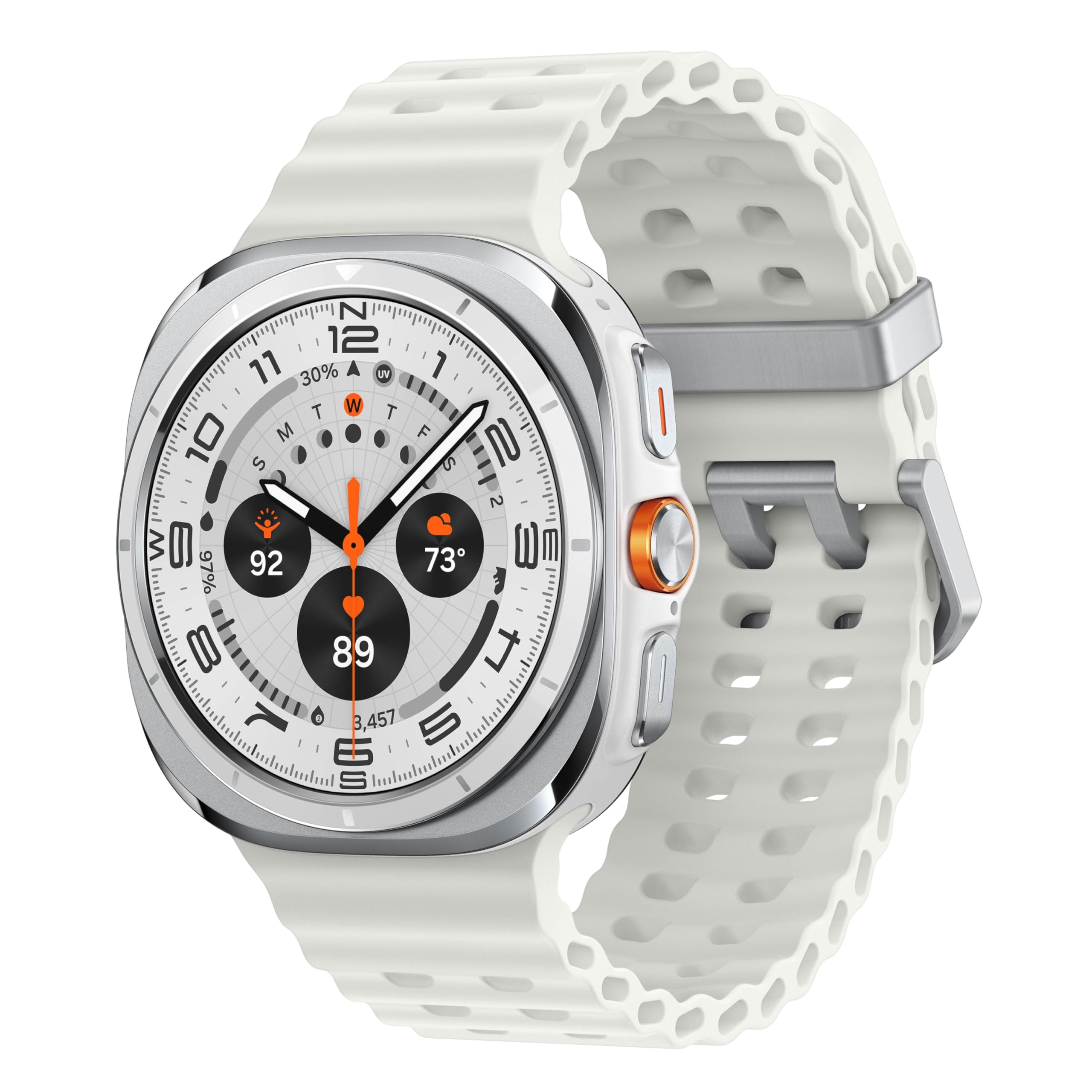
The Galaxy Watch Ultra represents the peak of wrist-based wearable capability for calorie burn estimation, powered by its dual-frequency GPS (L1+L5) and a 590 mAh battery that delivers days of continuous tracking. The dual-frequency GPS is critical for outdoor calorie accuracy—it locks onto satellite signals in urban environments where single-band receivers drift, ensuring the distance input to the calorie algorithm is reliable. The watch uses Samsung’s BioActive sensor array combining optical heart rate, bioelectrical impedance, and temperature sensing to estimate total daily energy expenditure with greater context than standalone step counters.
Its Energy Score feature, running on Galaxy AI, analyzes the previous day’s sleep quality, activity load, and heart rate variability to produce a single morning score that indicates whether your body is prepared for high-intensity training or needs recovery. This is directly relevant to calorie tracking because operating in a fatigued state increases the energy cost of submaximal work. The Running Coach mode factors in your age, weight, oxygen levels, and heart rate to prescribe pace zones that optimize fat oxidation versus carbohydrate utilization—a practical application of metabolic data that most trackers ignore.
The titanium casing and 10ATM water resistance make it suitable for open-water swimming and ocean training where saltwater corrosion concerns are eliminated. LTE connectivity allows you to leave your phone at home and still stream music, receive calls, and upload activity data in real-time. The 1.5-inch sapphire crystal display is readable in direct sunlight, and the rotating bezel provides tactile control during sweaty workouts. It is a full-featured smartwatch first, but its metabolic tracking infrastructure is the most sophisticated available in a wrist form factor.
Why it’s great
- Dual-frequency GPS delivers distance accuracy essential for calorie math
- Energy Score uses sleep + HRV to signal readiness and metabolic recovery
- LTE standalone capability for phone-free workout uploads
- Titanium build and 10ATM water resistance for extreme environments
Good to know
- Optical HR sensor cannot match chest-strap accuracy during HIIT intervals
- Full-featured battery drains within 22 hours with all health monitoring active
- 3rd-party screen protector recommended for scratch-prone sapphire surface
3. Tensky AMOLED Smart Watch
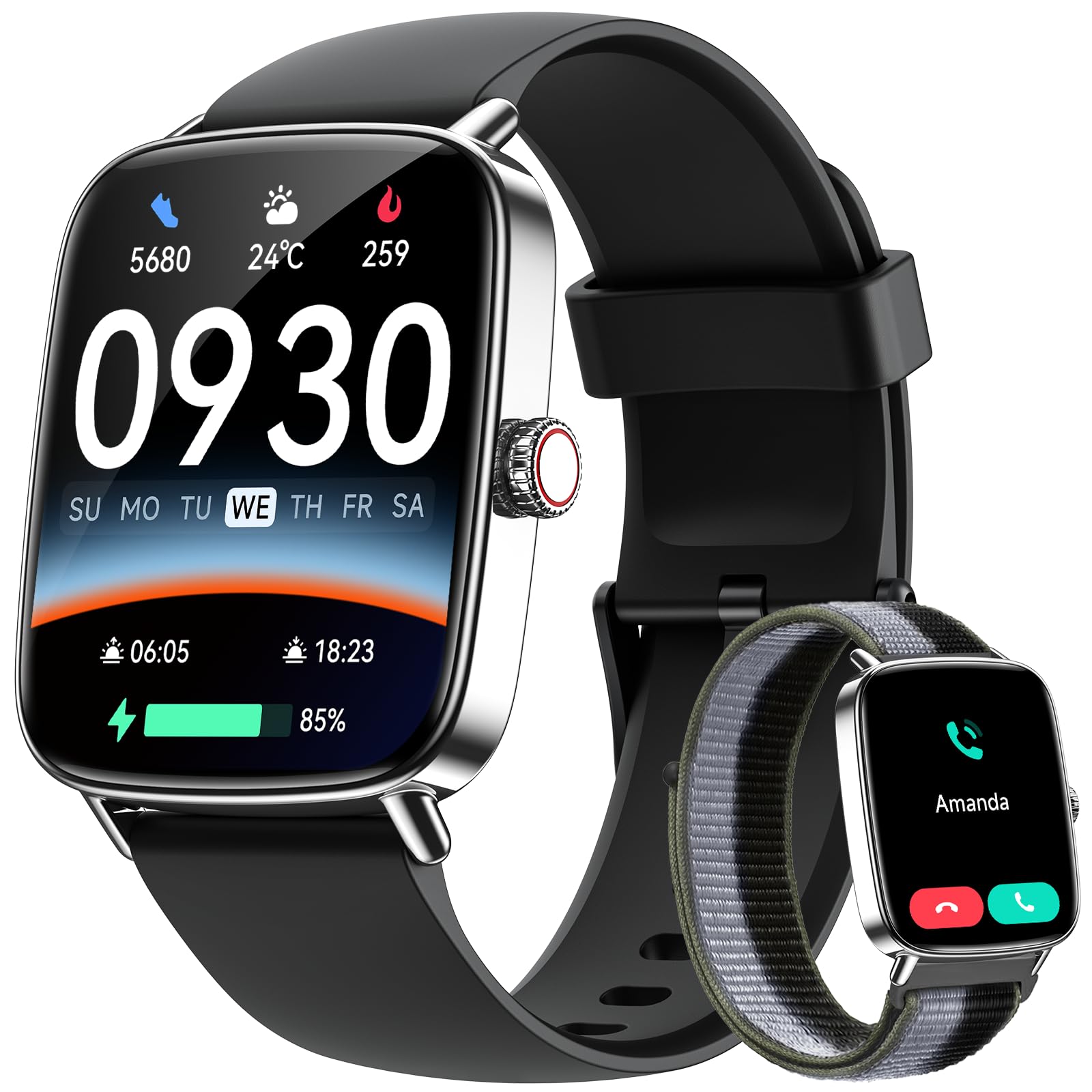
The Tensky AMOLED Smart Watch brings a 1.85-inch HD AMOLED display with a 60Hz refresh rate to the sub-premium tier, offering vibrant color rendering and outdoor readability that LCD-based budget trackers cannot match. Its optical heart rate sensor and SpO2 monitor feed into the Veryfit app, which provides sleep stage analysis (REM, light, deep) and stress monitoring, though calorie burn estimation follows the typical wrist-based regression model that works reliably for steady-state walking and jogging. For those whose primary goal is daily step count and general calorie awareness, this level of accuracy is sufficient.
Bluetooth 5.3 with a dedicated DSP chip allows call answering and rejection directly from the wrist—a convenience that competitive trackers at this price point omit. The IP68 waterproof rating means you can take it into the pool or wear it in heavy rain without worry, and the 120-plus sport modes cover everything from yoga to hiking, ensuring each activity type maps to an appropriate metabolic equivalent (MET) value. The watch ships with both a silicone band and a woven strap, accommodating different wrist sizes and style preferences out of the box.
The 350 mAh battery delivers approximately seven days of mixed use, with a standby time of 30 days on a single 2.5-hour charge. Tensky backs the unit with a 10-year warranty and lifetime tech support, which is unusual for this price tier. The main trade-off is that the step and calorie data can occasionally register minor hand-movement artifacts as steps (a common limitation of budget optical accelerometers), but overall accuracy is competitive with other entry-level to mid-range smartwatches. It is the best option for someone who wants AMOLED aesthetics, call functionality, and broad activity tracking without moving into premium pricing.
Why it’s great
- Bright 1.85″ AMOLED display with 60Hz navigation for outdoor clarity
- Bluetooth calling via wrist eliminates phone retrieval during workouts
- 120+ sport modes with MET-appropriate algorithms per activity
- 10-year warranty and two included band types
Good to know
- Optical HR sensor accuracy drops during high-intensity intervals
- Step counting may overreport due to hand-motion sensitivity
- Veryfit app interface is functional but not as polished as Garmin Connect
4. Fitpolo Smart Watch
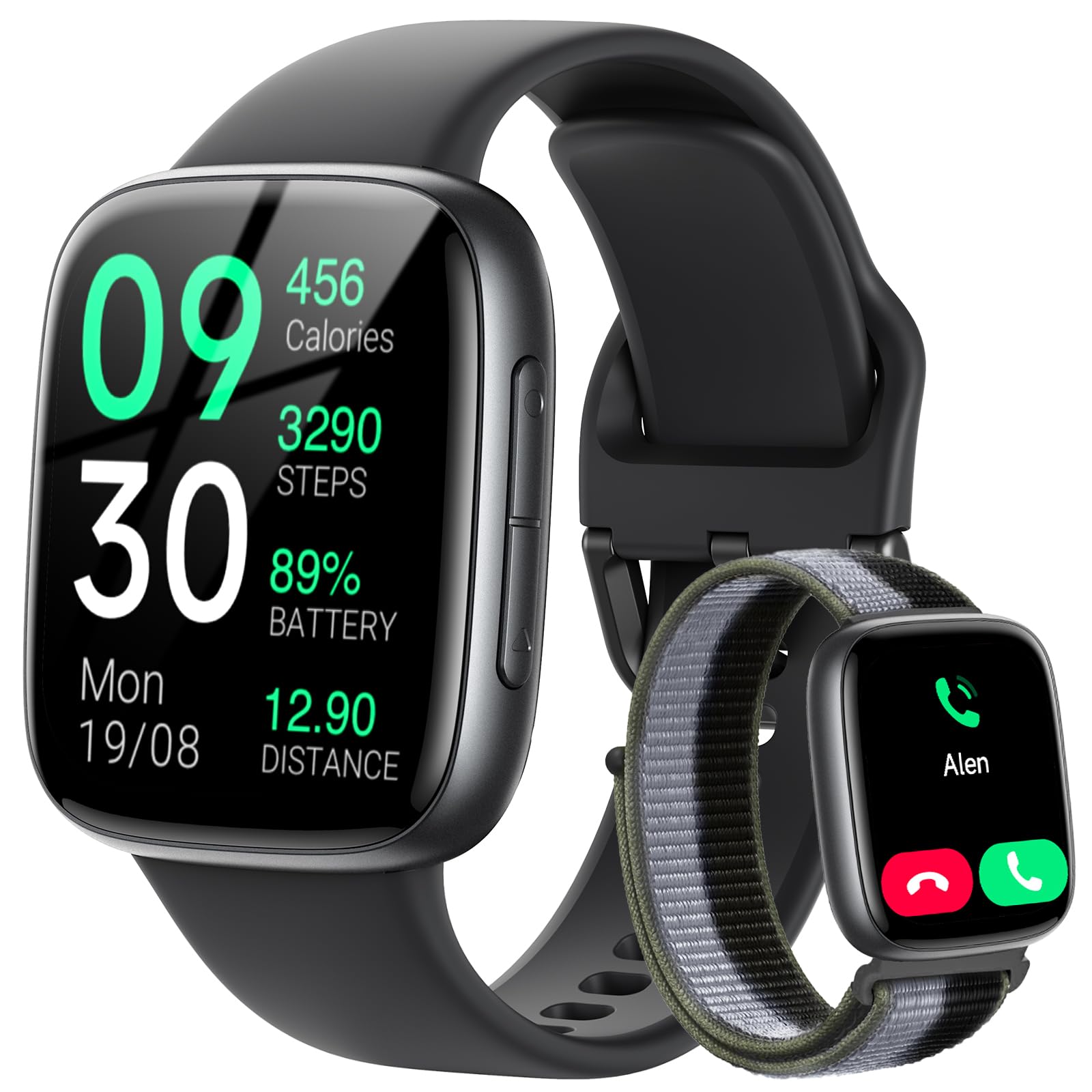
Fitpolo’s offering brings AMOLED display technology to an entry-level price point, with a 1.85-inch screen that delivers richer colors and improved power efficiency over the LCD panels common at this tier. The optical sensor suite tracks heart rate, blood oxygen saturation, sleep quality, and stress levels, providing a baseline health dashboard that syncs to your phone via a dedicated app. The calorie burn engine uses step count and heart rate data from the 100-plus sport modes, which is appropriate for casual fitness maintenance but should not be relied upon for precision deficit management.
The 350 mAh battery consistently delivers seven to ten days of runtime between charges, and the 3ATM water resistance handles rain, sweat, and handwashing without issue. Notably, users report the step tracking and BPM monitoring as accurate for daily use, and the watch pairs quickly with both Android and iPhone devices. The device includes two bands (a silicone strap and a woven/velcro option), and customer feedback highlights the free cloud-based watch face selection as a differentiator in this segment.
The primary limitation for serious calorie trackers is the optical sensor’s performance during non-steady-state exercise—it will underestimate the burn of HIIT, circuit training, and heavy weightlifting compared to a chest strap. However, for the price point, the Fitpolo offers an AMOLED experience, SpO2 monitoring, and reliable step tracking that outperforms many similarly priced LCD-based competitors. It is a solid entry-level starting point for someone transitioning from phone-based step counting to a dedicated wearable.
Why it’s great
- AMOLED display at an LCD-budget price point with Always-On option
- Seven to ten-day battery life with standard daily use
- Two included bands offer immediate fit customization
- Free cloud-based watch face designs for personalization
Good to know
- Optical HR sensitivity to motion reduces interval calorie accuracy
- Large case size may feel loose on smaller wrists
- No comprehensive user manual in the box for advanced settings
5. MorePro Health Fitness Tracker
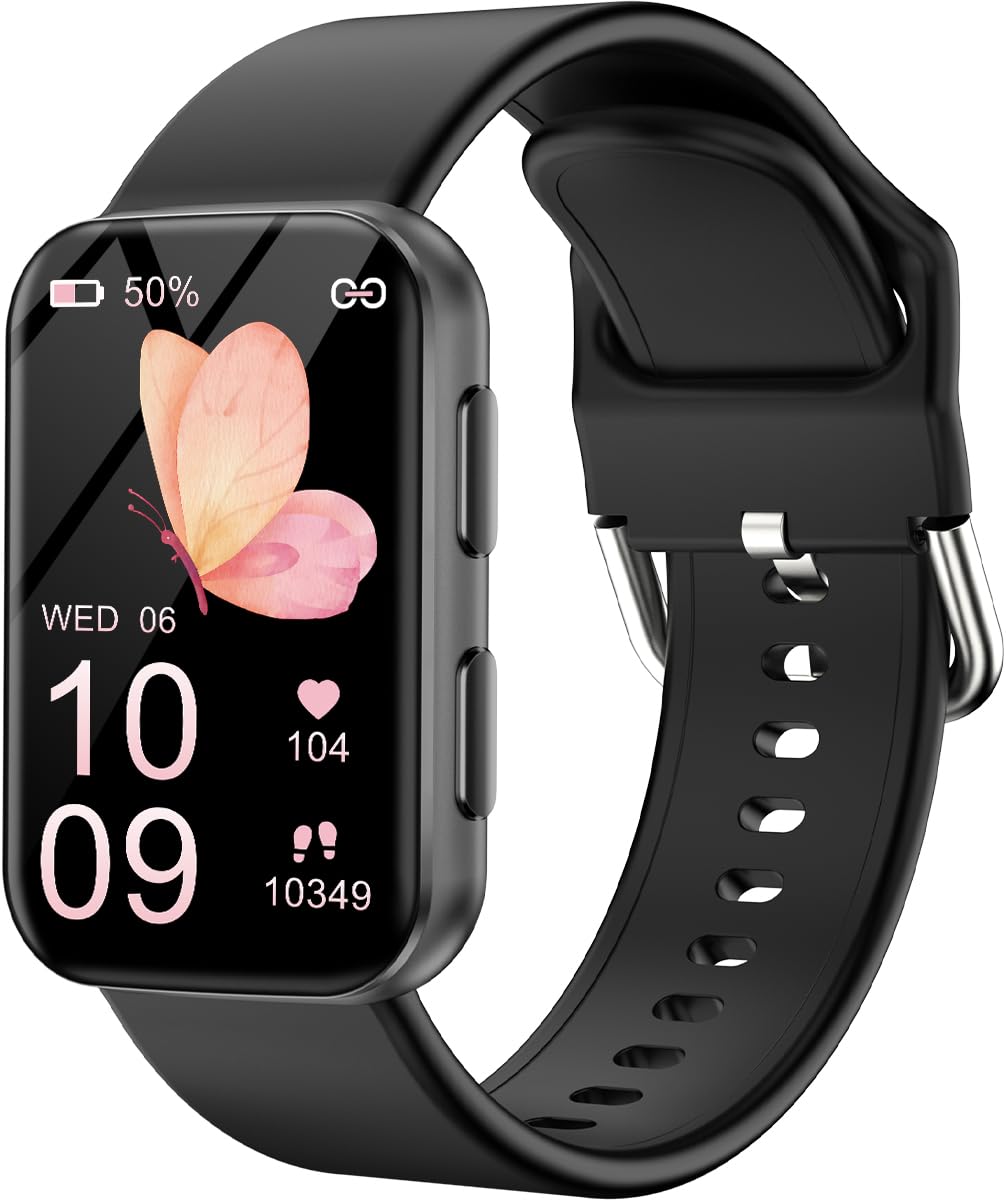
The MorePro tracker differentiates itself in the budget segment by including 24/7 blood pressure monitoring alongside the standard heart rate and SpO2 tracking array. For users who want to keep an eye on cardiovascular metrics beyond pure calorie burn, the continuous BP logging provides additional context for how your workouts affect your vascular system. The 1.57-inch HD touchscreen is LCD rather than AMOLED, which keeps the cost down and battery life high, and the Bluetooth LE 5.2 connection ensures reliable data syncing with the companion app.
The IP68 waterproof rating is a meaningful upgrade over the 3ATM or IP67 classifications found on many comparable trackers—it can handle submersion beyond one meter and is suitable for swimming laps in a pool. The watch ships with both a silicone band and a nylon band, giving you a ventilated option for sweaty workouts and a more comfortable band for sleep tracking. Sleep stage analysis records awake, light, and deep sleep durations, and the app allows long-term trend review to see how nightly recovery correlates with daily calorie burn.
Some users note that the step counter resets approximately 100 steps during the midnight transition, and sleep tracking does not initiate until midnight, which affects early-bed sleep segmentation. These are minor firmware quirks that do not undermine the overall value proposition. For anyone on a tight budget who wants health monitoring breadth—including blood pressure—alongside basic calorie and step tracking, the MorePro delivers a broader sensor suite than most alternatives at this price tier.
Why it’s great
- Blood pressure monitoring adds vascular context to calorie expenditure data
- IP68 waterproof rating allows pool swimming and submersion
- Two included bands for workout and daily wear versatility
- Up to seven days of battery life with health monitoring active
Good to know
- Step count may lose approximately 100 steps during daily reset
- Sleep tracking segmentation does not start before midnight
- LCD display lacks the outdoor brightness of AMOLED alternatives
FAQ
Why does my wrist-based tracker show fewer calories burned during HIIT than a chest strap?
How does running form affect my calorie burn per mile?
Can I use any heart rate monitor for calorie tracking without a smartwatch?
Does dual-frequency GPS matter for calorie accuracy on trails?
Final Thoughts: The Verdict
For most users, the best calorie burn tracker winner is the Garmin HRM 600 because its ECG heart rate accuracy eliminates the uncertainty that plagues wrist-based optical sensors, and its running dynamics provide actionable data to lower the energy cost of your runs. If you want an all-day wearable with dual-frequency GPS and Energy Score that doubles as a full smartwatch, grab the Samsung Galaxy Watch Ultra. And for entry-level users seeking AMOLED aesthetics and reliable step tracking without premium spending, the Tensky AMOLED Smart Watch offers the best feature-to-price ratio in the mid-range segment.

Mo Maruf
I created WellFizz to bridge the gap between vague wellness advice and actionable solutions. My mission is simple: to decode the research and give you practical tools you can actually use.
Beyond the data, I am a passionate traveler. I believe that stepping away from the screen to explore new environments is essential for mental clarity and physical vitality.