Our readers keep the lights on and my smoothie glass nicely filled. As an Amazon Associate, I earn from qualifying purchases.
A hiking backpack that shifts weight from your shoulders to your hips can mean the difference between a 12-mile summit push and a miserable afternoon turnaround. The internal frame, the torso adjustment range, and the ventilation of the back panel are not marketing bullet points — they are the mechanical specs that determine whether your spine survives the descent.
I’m Mohammad Maruf — the founder and writer behind WellFizz. I constantly analyze load-transfer geometry, fabric denier ratings, and suspension adjustability across dozens of hiking packs to separate the legit mountain-ready gear from the weekend-fashion impostors.
Whether you are dialing in a thru-hike kit or upgrading from a basic daypack, this guide drills into the five specs that define a true trail performer. Read on to find the best backpacks for hiking that deliver real load stability without roasting your back.
How To Choose The Best Backpacks For Hiking
A hiking backpack is a load-management system, not a glorified duffel. The wrong choice delivers pressure points, poor ventilation, and hip-belt slippage that can ruin a multi-day outing. Below are the three pillars that separate efficient trail packs from overpriced bins with straps.
Internal Frame & Torso Adjustment
The internal frame (usually an aluminum stay or a molded HDPE sheet) transfers the pack’s weight from your shoulders down to your hip belt. Without a frame, every pound sits on your trapezius muscles — unsustainable past a few miles. Look for a pack with at least a four-inch torso adjustment range. A fixed-length frame fits one body type only, so adjustable suspension allows you to dial the hip belt onto your iliac crest, not your lower ribs.
Ventilated Back Panel & Hip Belt
Sweat accumulation under the pack accelerates dehydration and chafing. Mesh trampoline panels (like Osprey’s AirSpeed or Deuter’s Aircomfort) create a 1- to 2-inch gap between your back and the load, reducing contact surface area. For the hip belt, dual-density foam with an ergonomic contour prevents the belt from rolling over your hips when loaded. A belt without rigid structure will migrate upward after the first hundred yards of a climb.
Volume, Access & Weather Protection
For a day hike, 20L–35L suffices. For a multi-day trip with food, shelter, and a sleep system, 40L–70L is the standard range. Top-loading packs (with a drawcord closure) are lighter and more waterproof but require you to unpack to reach mid-pack gear. Panel-loading packs zip open like a suitcase for easier organization but add a few ounces. An integrated or included rain cover is mandatory for alpine environments where a sudden shower can soak a non-water-resistant pack in minutes.
Quick Comparison
On smaller screens, swipe sideways to see the full table.
| Model | Category | Best For | Key Spec | Amazon |
|---|---|---|---|---|
| Osprey Stratos 44L | Premium | Multi-day technical hikes | 44L / AirSpeed ventilated suspension / 3.64 lb | Amazon |
| Deuter Futura 32 | Premium | Advanced day hikes & summer overnights | 32L / Aircomfort Sensic mesh back / 2.5 lb | Amazon |
| MOUNTAINTOP 70L | Mid-Range | Extended backcountry trips | 70L / Aluminum alloy frame / 4.4 lb | Amazon |
| High Sierra Pathway 30L | Mid-Range | Day hikes with gear organization | 30L / Internal frame / 2.2 lb | Amazon |
| Mardingtop 60L | Mid-Range | Camping & moderate-load hiking | 60L / MOLLE webbing / expandable to 75L | Amazon |
| Osprey Daylite Expandable 26+6 | Mid-Range | Minimalist travel & light day hiking | 26L+6 expandable / AirScape backpanel / 1.85 lb | Amazon |
| Tolaccea Travel 40-50L | Entry-Level | Hybrid travel-light day hiking | 40-50L expandable / wet-dry compartment / 3.6 lb | Amazon |
In‑Depth Reviews
1. Osprey Stratos 44L Men’s Hiking Backpack
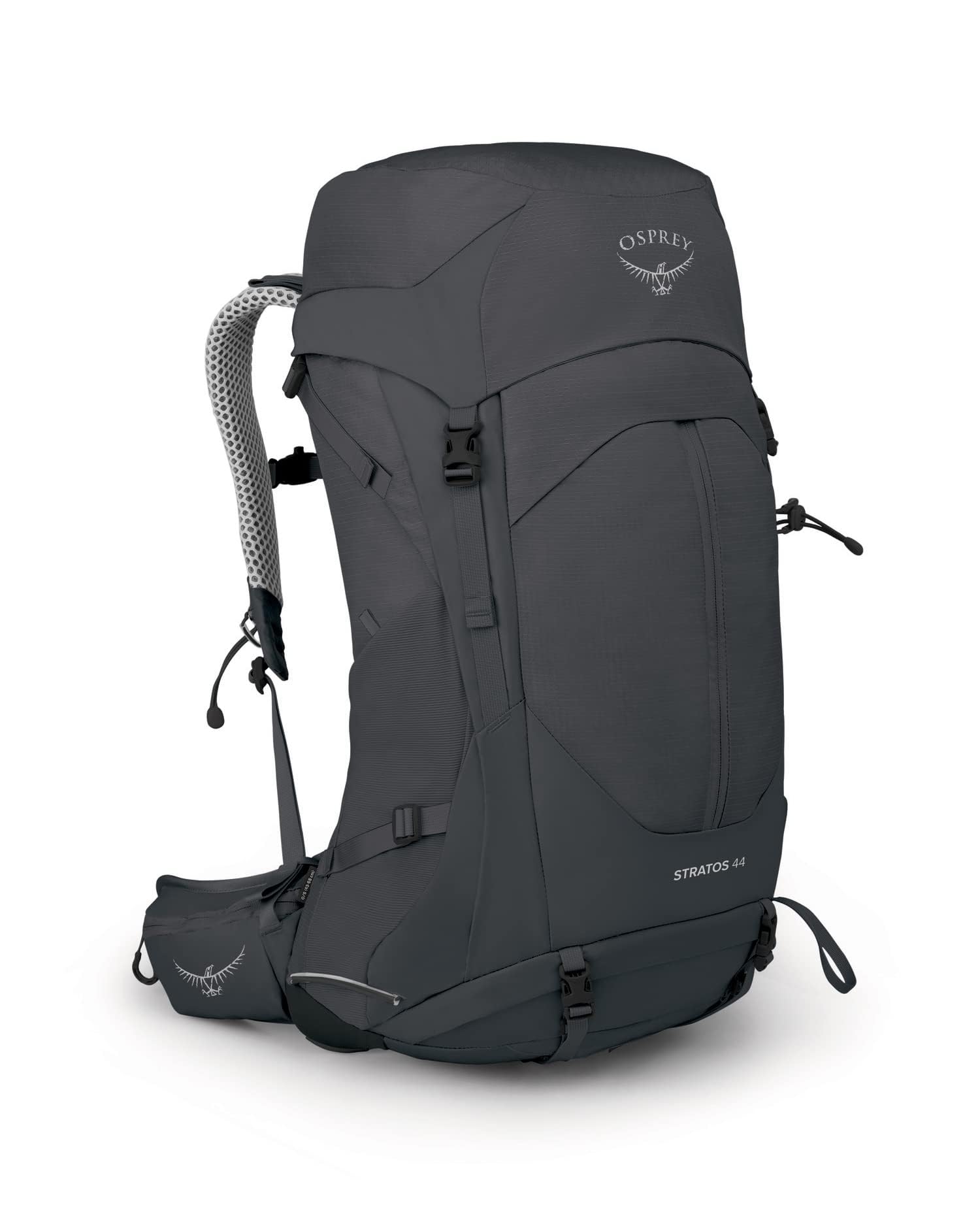
The Stratos 44L is the gold standard for the hiker who wants technical multi-day capability without moving into expedition-size bulk. Its AirSpeed suspension uses an injection-molded frame with 3D-tensioned mesh that pulls the load away from your back by about 2 inches — measurable ventilation that reduces sweat pooling even during steady 10-mile carries. The molded ladder torso adjustment extends the fit range significantly, so a 6-foot-2 hiker and a 5-foot-6 hiker can both dial the hip belt onto their natural shelf.
Top-loading with a secure drawcord closure keeps weight low, and the included rain cover means you do not have to buy a separate accessory for alpine trips. The hip-belt pockets are actually large enough for a phone and a bar of chocolate, which sounds trivial until you are scrambling and do not want to unpack. Internal hydration sleeve routes the hose through the backpanel where it stays out of the way.
At 3.64 pounds, it is not ultralight — but the frame stiffness and padding make that weight feel invisible when the pack is loaded to 30 pounds. Users consistently report that the straps are the most comfortable they have tried, and the build quality justifies the premium positioning for anyone logging real trail miles every season.
Why it’s great
- AirSpeed mesh backpanel provides measurable ventilation gap.
- Adjustable torso fits a wide range of heights precisely.
- Included rain cover and dual hip-belt pockets add genuine utility.
Good to know
- Hard internal frame requires overhead bin space on planes.
- Not designed for sub-20-pound ultralight kits.
2. Deuter Futura 32 Hiking Backpack

The Futura 32 is the pack for hikers who prioritize back airflow above all else. Deuter’s Aircomfort Sensic system tensions a breathable mesh over a flexible spring steel frame, creating a permanent gap that has been shown in lab testing to reduce perspiration by up to 25%. That statistic matters when you are hiking the Grand Canyon in June or pushing up a long ridgeline in humid weather. The dual-density foam lumbar pads are molded to follow the natural curve of the hips, preventing the belt from slipping or digging.
The ActiveFit S-shaped shoulder harness pivots with your shoulder movement instead of fighting it — a detail that becomes obvious on the second mile of a steep climb. The integrated detachable rain cover lives in a dedicated pocket, so it is always available. Exterior pockets hold water bottles without requiring you to remove the pack, and compression straps let you cinch down the volume when you are carrying less.
Several users note that the pack feels flimsy on first touch but proves sturdy under load. The 32-liter size sits perfectly between a day pack and a lightweight overnight bag: big enough for a 3-season loadout with a lightweight sleeping bag and shelter, compact enough to remain stable during off-trail movement. The lack of bottom compression straps is the only functional gap for hikers who want to lash a foam pad externally.
Why it’s great
- Aircomfort mesh reduces back sweat by a measurable margin.
- Pivoting S-shaped shoulder harness moves naturally with the body.
- Integrated rain cover and hydration-ready sleeve.
Good to know
- No bottom straps for attaching a tent or sleeping pad externally.
- Initial tactile feel feels light but holds up well under pressure.
3. MOUNTAINTOP 70L Internal Frame Backpack

The MOUNTAINTOP 70L is the classic big-volume workhorse for hikers who need capacity for a full week of self-supported travel without paying for a boutique brand name. The internal aluminum alloy frame plate provides genuine load-bearing stiffness — it transfers weight to the hip belt in a way that soft-frame packs cannot match. Multi-position torso adjustment lets both men and women dial the fit, and the side zippered access means you can grab a rain jacket from the middle of the main compartment without unpacking the entire bag.
The hip belt and shoulder straps use breathable mesh padding that is comfortable for sustained carries up to about 30 pounds. The bottom sleeping bag compartment with a removable divider keeps your sleep system separate from your food and cook gear, which helps with organization on long trips. YKK zippers, integrated rain cover, and daisy chain lashing points round out a feature set that rivals packs costing twice as much.
This is not the lightest 70-liter pack, and the ventilation is not as advanced as trampoline-back systems from Deuter or Osprey. For the hiker who needs maximum cubic inches for the dollar — and who does not mind a few extra ounces in exchange for aluminum-frame stability — the MOUNTAINTOP delivers impressive backcountry substance. The hydration port opening is smaller than ideal, so threading a wide-mouth bladder hose may take a few extra seconds.
Why it’s great
- Aluminum alloy frame provides true load transfer to the hip belt.
- Side zipper access saves time during mid-day gear retrieval.
- Bottom compartment with divider organizes sleep gear separately.
Good to know
- Heavier than premium 70L packs from specialist brands.
- Hydration hose port is small for wide-bottle connectors.
4. High Sierra Pathway Internal Frame Hiking Backpack, 30L

The High Sierra Pathway 30L is a daypack that brings internal frame structure into a compact silhouette, making it a smart choice for hikers who want load-bearing support on 5- to 8-mile treks without the bulk of a multi-day pack. The U-shaped zippered opening reveals a wide main compartment that makes packing far easier than narrow top-loading daypacks — you can see everything at once, which matters when you are trying to fit a 2-liter hydration bladder plus a puffy layer and snacks.
The internal frame is lightweight yet stiff enough to transfer a 15- to 20-pound load to the padded hip belt. Side compression straps keep the load snug against your back for stability during side-hill traverses. A dedicated hydration sleeve works with standard 2-liter bladders, and the front pocket provides quick access to maps or a phone. The bottom daisy chain can lash a lightweight sleeping pad or a wet shell.
Testers report that the pack carries well for hikers around 5-foot-3 and holds up under repeated use. The fabric is durable polyester with a medium-weight feel that resists abrasion from trailside brush. Missing a front external pocket for stashing a rain jacket without opening the main compartment, which is the only real organizational shortfall. For day hikes where you want frame support without paying for a premium badge, this is a solid mid-range performer.
Why it’s great
- U-shaped opening makes packing and access simple.
- Internal frame provides real load support for day hikes.
- Hydration sleeve fits standard 2-liter bladders.
Good to know
- No front external quick-access pocket.
- Best suited for smaller loads under 20 pounds.
5. Mardingtop 60L Military Internal Frame Backpack
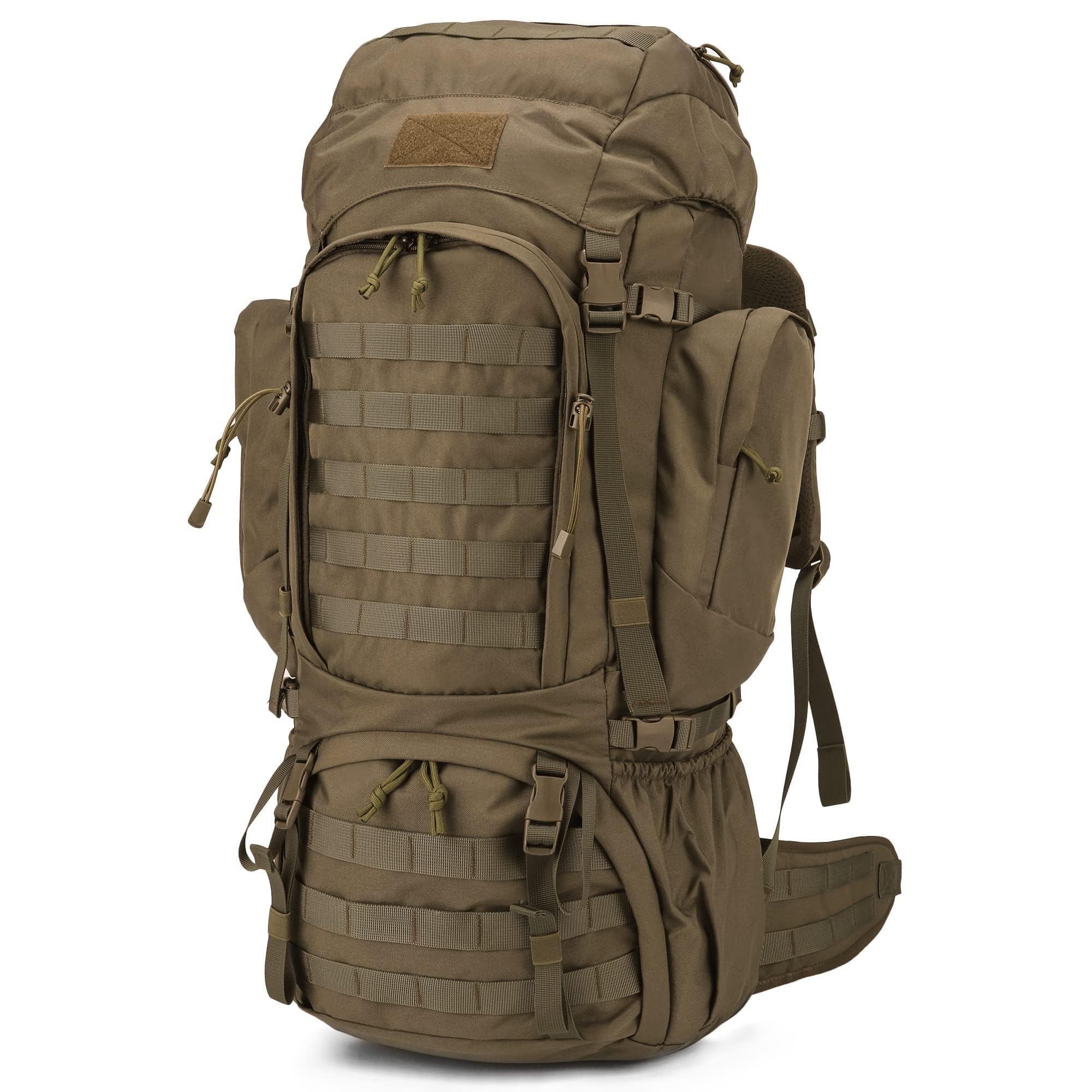
The Mardingtop 60L punches above its weight class with genuine YKK zippers, modular MOLLE webbing, and an expandable design that pushes from 60 to 75 liters. For the budget-conscious hiker who needs a pack that can handle three-day trips with sleeping bag, tent, and cook kit, this is one of the most capable options in the value tier. The internal frame provides enough structure to keep a 40-pound load stable, though the hip belt padding is thinner than premium rivals.
Users consistently highlight the material balance and stitching quality — the pack survives ruck-style abuse that would tear cheaper canvas. The separate bottom compartment with a horizontal zipper gives quick access to a sleeping bag or bulky gear without opening the main body. MOLLE loops on the front allow attachment of pouches for water bottles, tools, or a small first aid kit, adding a level of customization rare at this price point.
The hip belt lacks the dense foam needed for heavy loads beyond 50 pounds over long distances; cinch straps also tend to loosen under repeated high-weight pressure. Shoulder straps are on the narrower side, which can create pressure points for larger hikers on full-day carries. For moderate loads under 40 pounds on 10- to 15-mile trips, the Mardingtop delivers durability and capacity that compete with packs costing significantly more.
Why it’s great
- YKK zippers and reinforced stitching for tough durability.
- Expandable from 60L to 75L for extra gear capacity.
- MOLLE webbing allows modular pouch attachment.
Good to know
- Hip belt padding is thin for loads over 50 pounds.
- Shoulder straps are narrow for larger torso frames.
6. Osprey Daylite Expandable 26+6 Travel Pack

The Osprey Daylite Expandable 26+6 is a hybrid travel-and-hike pack built for hikers who also fly. At just 1.85 pounds with an AirScape backpanel, it is light enough for a steep summit push yet expands 2 inches to add 6 liters when you need extra capacity for a day on the trail. The pack is sized to fit under most airline seats as a personal item, which makes it a favorite for hikers who want one bag for both the airport and a 5-mile loop through a national park.
The front zip pocket provides organized access to a phone, passport, and snacks without opening the main compartment. Two stretch water bottle pockets are positioned so you can reach them without removing the pack. A dedicated tech sleeve fits a 15-inch laptop, and the luggage pass-through secures the pack to a rolling suitcase handle for travel days. The main compartment opens like a suitcase for easy packing — a practical advantage over top-loading bags when you need to dig for a jacket mid-hike.
The strap system is balanced and comfortable even at full expansion, a testament to Osprey’s suspension design. Users praise the build quality and the secure, lockable zippers. This is not a load hauler for 30-pound overnight kits — the internal frame is minimal, so heavy loads beyond 12 pounds will feel shoulder-heavy. For the day hiker who values versatility and airline compliance, this is a smart, lightweight tool.
Why it’s great
- Expands 6 liters for extra gear without changing footprint.
- Fits as a personal item under most airline seats.
- AirScape backpanel provides good ventilation for a travel pack.
Good to know
- Not designed for loads over 12 to 15 pounds.
- Minimal internal frame limits load transfer to hips.
7. Tolaccea Travel Backpack, 40L-50L
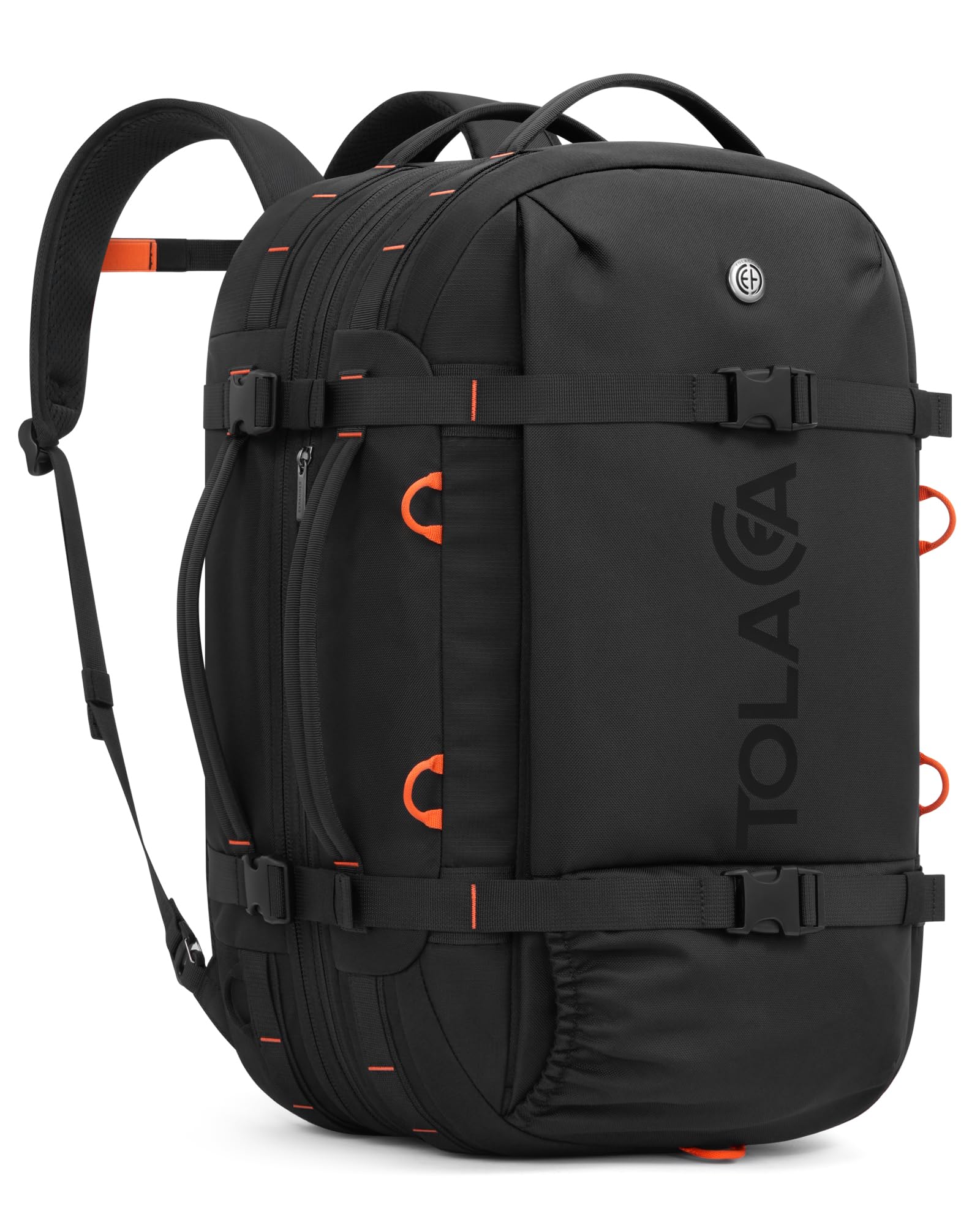
The Tolaccea Travel Backpack is built for the hiker-traveler who needs one bag for short trails, gym sessions, and airport hops. The expandable design moves from 40 to 50 liters via a center zip, giving you flexibility for a 2-day hike or a week-long trip. The standout feature is the separate wet-dry compartment — a sealed pocket that isolates damp clothes, toiletries, or a sweaty base layer from the rest of your gear, which is rare at this price tier.
The 180-degree opening design makes packing and unpacking fast, and the suspended laptop sleeve (fits up to 15.6 inches) provides shock protection that matters when you set the pack down hard on a trailside rock. The back panel is padded with breathable mesh, and the chest strap helps stabilize the load for moderate day-hike use. Side-access to the laptop compartment means you can grab your device through a dedicated zipper without opening the main body.
The Tolaccea lacks an internal frame — it is essentially a large soft-pack with compression straps, so it is not ideal for heavy multi-day loads that require hip-belt load transfer. The crossbody storage strap is tucked inside the water bottle pocket, which requires a moment of setup. For entry-level hikers whose trail use is moderate and who prioritize versatility for travel over pure mountain performance, this is a functional, well-organized option.
Why it’s great
- Wet-dry compartment separates damp items from dry gear.
- 180-degree opening simplifies packing and unpacking.
- Suspended laptop sleeve adds shock protection.
Good to know
- No internal frame — not suitable for heavy multi-day loads.
- Crossbody strap requires manual setup from water bottle pocket.
FAQ
How do I measure my torso length for a hiking backpack?
Should I choose a top-loading or a panel-loading hiking backpack?
How much weight should a hiking backpack carry comfortably?
Final Thoughts: The Verdict
For most hikers, the best backpacks for hiking winner is the Osprey Stratos 44L because it combines the most effective ventilated suspension in the category, precise torso adjustability, and a 44-liter capacity that handles everything from long day hikes to lightweight multi-day setups. If you want superior back airflow for humid conditions, grab the Deuter Futura 32. And for maximum cubic-inch capacity on a tight budget, nothing beats the MOUNTAINTOP 70L.

Mo Maruf
I created WellFizz to bridge the gap between vague wellness advice and actionable solutions. My mission is simple: to decode the research and give you practical tools you can actually use.
Beyond the data, I am a passionate traveler. I believe that stepping away from the screen to explore new environments is essential for mental clarity and physical vitality.