Our readers keep the lights on and my smoothie glass nicely filled. As an Amazon Associate, I earn from qualifying purchases.
Your gear budget is tight, but a leaky, sagging rainfly on a damp night is a quick way to ruin a weekend outdoors. The difference between a miserable trip and a memorable one often comes down to a few critical seams and pole clips, not the brand name on the bag. Finding a tent that keeps you dry without breaking your budget requires knowing exactly where to compromise and where to hold the line.
I’m Mohammad Maruf — the founder and writer behind WellFizz. I’ve spent hundreds of hours analyzing tent specs, customer field-reports, and long-term durability data to separate the true budget gems from the disposable shelters that fail after one season.
This guide breaks down the best options for a budget camping tent, focusing on weatherproofing, real-world space, and set-up speed so you can buy with confidence the first time.
How To Choose The Best Budget Camping Tent
When you are shopping on a tighter budget, the temptation is to grab the cheapest option with the highest listed capacity. But a “6-person” tent that weighs as much as a small car and leaks in the first drizzle is no bargain. Prioritize construction over capacity, and focus on the elements that directly affect dryness, ease of assembly, and usable square footage.
Weather Resistance: The Rainfly is Your Roof
A tent’s waterproofing comes almost entirely from the rainfly and the floor material. Look for a rainfly that extends well down the sides — not just a tiny “dinner plate” that sits on top of the mesh. Floor denier matters: 75D to 150D polyester or poly taffeta indicates better puncture resistance than thinner 20D fabrics. Factory-sealed or taped seams are non-negotiable if you want to stay dry without a second seam-sealing project.
Headroom and Floor Space: The “Person” Inflation Problem
Manufacturer capacity claims are notoriously generous. A “4-person” tent rarely fits four adult sleeping pads without gear overflow. The true test is floor width and peak height. A 6-foot center height allows an average adult to sit up and change clothes comfortably, while a 50-inch width gives two sleepers room to avoid elbow wars. Ignore the person count and measure the floor dimensions in inches.
Setup Speed and Pole Construction
Budget tents typically use either continuous pole sleeves (fast, pre-bent poles that snap together) or a separate pole-and-clip system (lighter, but slightly fussier). Steel poles are heavier and more prone to rust, but they cost less and are harder to snap than some aluminum alloys. If you plan to camp in wind, a freestanding dome or cabin frame — one that stands without guy-lines — allows you to pitch the tent on a pad or inside a shelter without staking first.
Quick Comparison
On smaller screens, swipe sideways to see the full table.
| Model | Category | Best For | Key Spec | Amazon |
|---|---|---|---|---|
| Coleman Sundome | Dome | Family car camping value | WeatherTec system, welded floors | Amazon |
| UNP Cabin Tent | Cabin | Stand-up headroom stability | 72″ center height, 4 steel poles | Amazon |
| Teton Sports Vista | Pop-up Dome | Ultra-fast instant setup | ~1 min setup, full mesh top | Amazon |
| OneTigris Backwoods Bungalow | Baker Shelter | Lightweight bushcraft/backpack | 3.2 lbs, 75D ripstop nylon | Amazon |
| ALPS Mountaineering Lynx 1 | Backpacking Dome | Solo durability and weather sealing | 4 lbs 1 oz, 2-pole aluminum frame | Amazon |
| Naturehike Mongar 2 | Backpacking Dome | Weight-conscious dupe of premium brands | 5.3 lbs, 3,000mm fly waterproofing | Amazon |
| Kelty Grand Mesa 2P | Backpacking Dome | Balanced weight, space, and ease | 4 lbs 7 oz, Quick Corners setup | Amazon |
In‑Depth Reviews
1. Coleman Sundome Camping Tent

The Coleman Sundome is the benchmark for entry-level car camping. Its WeatherTec system — welded corners on the floor and inverted seams on the fly — delivers reliable water protection at a price that leaves room in the budget for a quality sleeping pad. The continuous pole sleeves and two-pole dome design let a single person go from bag to pitched in about ten minutes without looking at instructions.
The polyguard floor offers solid puncture resistance for standard campground soil and grass, though it is thin enough that placing a footprint under the tent extends its life measurably. The large mesh ceiling panels provide excellent airflow during warm nights, and the included rainfly sheds moderate rain, but you will want to stake the fly taut to prevent pooling on the ends.
Real-world reports from dozens of trips confirm the Sundome handles 40-50°F nights comfortably and survives light to moderate storms without leaking, provided the fly is fully deployed. The main sacrifices are pack weight (over 10 pounds in larger sizes) and the lack of a full-coverage rainfly that extends to the ground. If you are driving to the campsite, these are non-issues; if you are backpacking, this is the wrong tent.
Why it’s great
- Proven WeatherTec seam and floor construction resists leaks
- Quick, intuitive assembly with color-coded pole sleeves
- Generous headroom for a dome design at its price point
Good to know
- Heavy for its size — not suitable for backpacking
- Rainfly coverage is adequate but could extend further down the sides
- Stock stakes are functional but lightweight; consider upgrading for windy sites
2. UNP Cabin Tent 4-Person

The UNP Cabin Tent is a rare find in the budget category: a cabin-style shelter with near-vertical walls and a 72-inch center height that actually lets a 5’8″ adult stand up fully. The rectangular base — 8 feet by 7 feet — creates a true 56-square-foot floor area that is far more livable than a comparably priced dome of the same labeled capacity.
Setup is notably fast, with reviewers reporting under ten minutes on the first attempt. The four steel leg poles give the structure a stable stance in wind, and the top rainfly covers the mesh roof to provide a dry overhead seal. The mesh door and two large mesh windows, combined with the mesh ceiling, produce excellent cross-ventilation when the fly is pitched high on the corners.
The biggest trade-off is that the cabin shape is heavier and bulkier than a dome — at 13 pounds it is purely for car camping. The 4-person rating is tight for four adults; it fits two cots with a center aisle much more comfortably. Testers noted that the included stakes are acceptable for fair weather but that the tent survived a severe thunderstorm with hail and 50+ mph winds without leaking, a strong testament to its polyester build quality.
Why it’s great
- Full stand-up headroom rare at this price point
- Straight walls maximize usable floor space for cots and gear
- Withstood severe storms in verified field tests
Good to know
- Heavy (13 lbs) — car camping only
- Side-sleeping bag layout is awkward; best paired with cots
- Lacks interior storage pockets and ceiling hooks
3. Teton Sports Vista Quick Tent
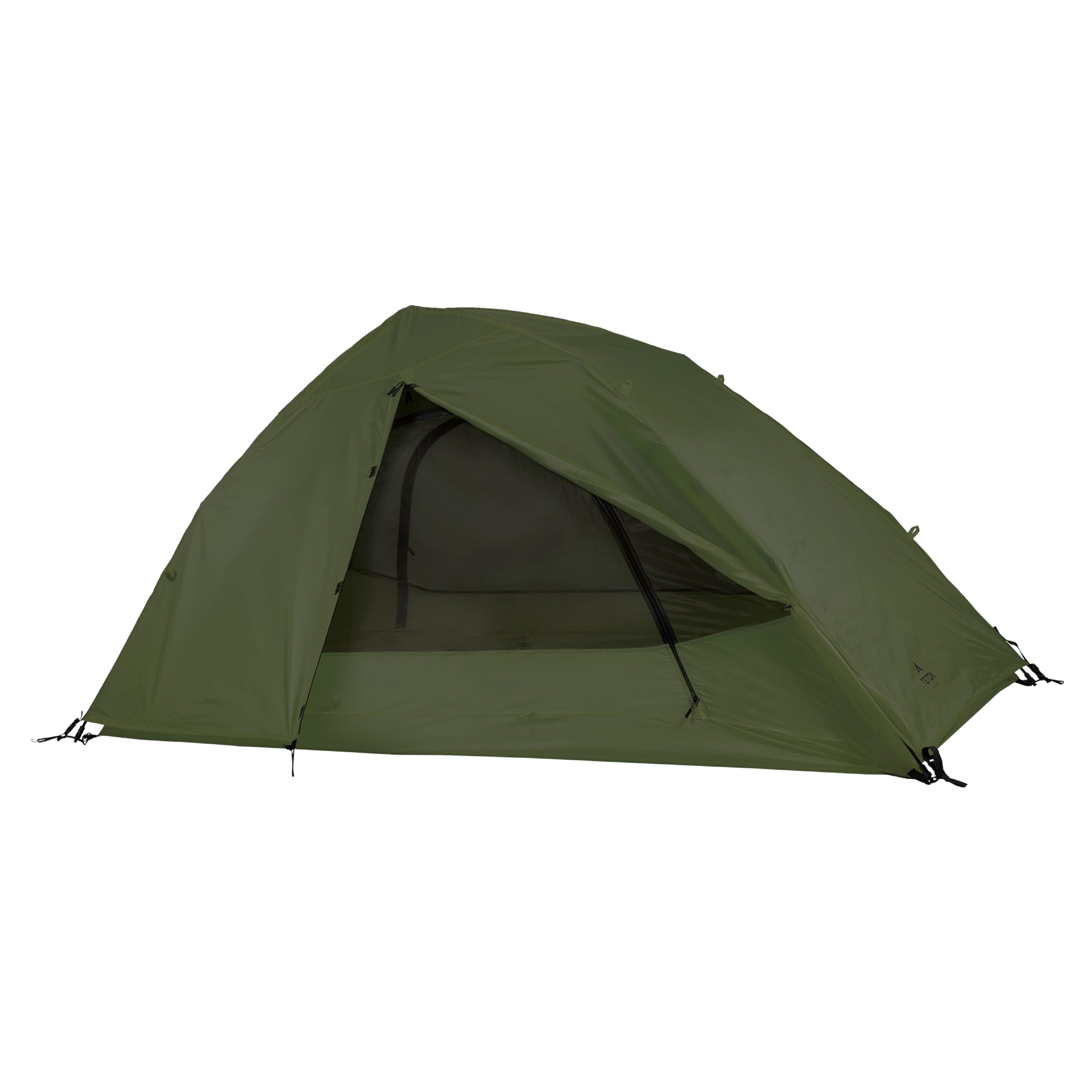
The Teton Sports Vista is the fastest-pitching tent in this lineup — unroll it, lock two poles, pull a single drawstring, and you are done in roughly 60 seconds. The full mesh top and two large doors provide exceptional ventilation and a 180-degree view of the night sky. The packed size (27 x 7 x 7 inches) is compact enough to throw in the back of a car without sacrificing trunk space for other gear.
The 75D 190T taffeta floor is not the burliest material in this guide, and several owners recommend laying a 6×8 tarp underneath to prevent punctures on rocky ground. The rainfly is effective for waterproofing but its orientation can be slightly fiddly to clip on correctly the first time — once you learn the color-coding logic, it goes on fast. The 2-person model is genuinely cozy for one plus gear; two average adults will be sleeping very close.
For a camper who values speed above all else — especially families with young children who need the shelter up before dark — the Vista is a fantastic entry-level option. The main durability limitation is the tarp-like floor, so keep it on soft grass or use a groundsheet, and this tent will give you many weekend trips for the money.
Why it’s great
- Genuinely sets up in under 2 minutes
- Full mesh ceiling offers superb stargazing and airflow
- Compact packed size for easy car storage
Good to know
- Floor material is thin; a footprint is strongly advised
- 2-person model is really a spacious solo shelter
- Rainfly clips lack color-coding, slowing attachment initially
4. OneTigris Backwoods Bungalow 2.0

The OneTigris Backwoods Bungalow is not a traditional freestanding dome — it is a Baker-style shelter that requires two trees or trekking poles to pitch, and it uses the included stakes plus a ridgeline to create its iconic covered-porch front. At 3.2 pounds, it is the lightest option in this guide, making it a legitimate candidate for backpackers, kayak campers, and motorcycle tourers who want a dry shelter without a heavy pack weight.
The 75D ripstop nylon fabric carries a 1500mm waterproof rating on the fly, and the double-layered entrance combines a mesh inner door with a solid zip-down flap that converts the porch into a sealed vestibule for stove use or heavy weather protection. The rear mesh vent with a solid flap gives excellent airflow control, essential for managing condensation when the fly is fully sealed in cold, damp conditions.
Real-world users consistently praise the build quality of the YKK zippers and the sturdy nylon grommets, though a small number report needing to touch up the elastic center hook with seam sealer to stop a minor drip. The shelter fits a 6-foot sleeper diagonally but will be tight for anyone taller. The porch area adds roughly 10.5 square feet of dry gear storage, a feature that feels luxurious compared to typical budget dome vestibules.
Why it’s great
- Sub-3.5 lb weight suits real backpacking and bikepacking
- Versatile porch/vestibule configuration for gear or stove use
- High-quality YKK zippers and ripstop nylon construction
Good to know
- Requires two trees or trekking poles — not freestanding
- Limited floor space for two; best as a 1-person plus dog shelter
- Some units need minor seam sealing at the center ridge hook
5. ALPS Mountaineering Lynx 1

The ALPS Mountaineering Lynx 1 is the most rugged solo shelter in this lineup, built around a 2-pole aluminum frame that is freestanding and genuinely easy to pitch alone. The 75D 185T polyester fly carries a factory-sealed 1500mm coating, and the floor is a burly 75D 185T poly taffeta rated at 2000mm — a combination that keeps moisture out even when the tent is pitched on damp ground or light snow.
The interior is snug at 20 square feet with a 36-inch peak height, but the half-mesh wall design pulls in solid ventilation and keeps condensation manageable during cold nights. The single vestibule is big enough for a backpack and boots, and the additional mesh storage pockets and gear loft inside give the solo user a tidy place for glasses, a headlamp, and a phone. The packed weight of 4 pounds 1 ounce is not ultralight — the Lynx is built for durability over gram-counting.
Reviewers consistently credit the Lynx for surviving rough weather that would stress thinner shelters, and the stake-out points are well reinforced. The limitation is living space: a 6-foot user will have little extra room for changing gear or sitting up comfortably for long periods. This is a no-nonsense shelter for the solo hiker who prioritizes reliability and long-term durability over carrying the lightest possible pack.
Why it’s great
- Heavy-duty 75D floor and fly with factory-sealed seams
- Freestanding aluminum frame for quick, idiot-proof setup
- Gear loft and multiple interior pockets for organization
Good to know
- Tight interior for one — no room for gear inside the sleeping area
- Weight (4+ lbs) is high for serious ultralight backpackers
- Factory stakes are serviceable but not confidence-inspiring in high winds
6. Naturehike Mongar 2 Person Tent

The Naturehike Mongar 2 is the closest thing on this list to a premium-brand backpacking tent at a fraction of the retail cost. The double-layer Y-frame dome design uses a 210T polyester fly with a 3000mm waterproof rating and a 210T polyester floor with the same rating — both significantly higher waterproof figures than most budget competitors offer. The free included groundsheet adds to the value proposition, protecting the floor right out of the box.
The interior dimensions of 82.7 by 53.2 inches with a 41.3-inch peak height provide enough floor space for two 25-inch sleeping pads, making this a true two-person backpacking shelter. The dual doors and dual vestibules give each occupant independent entry and dedicated gear storage outside the sleeping area, a feature normally reserved for tents costing much more. The high-density B3 mesh walls offer good bug protection without choking airflow, and the top vent system, when opened, dramatically reduces condensation.
Field reports from multiple seasons confirm the Mongar stays dry in sustained rain and holds up well in wind when properly staked. The included stakes are the first point of failure — several users snapped them in hard soil. The overall packed weight of 5.3 pounds is competitive for the price bracket, though a dedicated lightweight backpacker might consider swapping the poles for carbon fiber to shave ounces over time. For weekend to week-long trips where weight matters but your wallet is breathing down your neck, the Mongar is a standout.
Why it’s great
- Real 2-person space with dual doors and two vestibules
- 3000mm waterproof rating on both fly and floor
- Includes a footprint groundsheet at no extra cost
Good to know
- Stock stakes are weak and prone to breaking in hard ground
- 5.3 lbs is solid for the class but not ultralight territory
- Some units show minor loose threads — quality control is good but not flawless
7. Kelty Grand Mesa 2P Backpacking Tent

The Kelty Grand Mesa 2P is a thoughtful, no-surprises freestanding tent that balances weight, size, and weather protection better than almost any other option in its price neighborhood. The two aluminum press-fit poles use Kelty’s Quick Corner system to lock the frame in place instantly, and the color-coded clip-and-fly attachments make the entire setup a repeatable 3-to-5-minute process even in failing light.
The 68D polyester floor and fly are both fully seam-taped out of the box, which removes any guesswork about needing aftermarket sealant. The interior floor measures 85 by 57 inches (30 square feet) with a 44-inch peak height — roomier than the ALPS Lynx 1 but still best classified as a generous 1-person or cozy 2-person for average-sized adults. The single door and single vestibule side are slightly less convenient than the dual-access Naturehike, but the vestibule is well-shaped for a pack and boots.
Long-term owners report the Grand Mesa survives years of car camping and occasional backpacking trips without seam failures or zipper issues. The packed size of 16 x 7 x 7 inches is manageable, and the 4-pound-7-ounce weight is not a burden for a 3-season tent you drive to the trailhead. The stock stakes are solid metal, a welcome upgrade over the flimsy wires that come with many budget tents. For the buyer who wants one tent that does everything from campground duty to short backcountry treks, the Grand Mesa is the most versatile pick.
Why it’s great
- Fully seam-taped construction for instant waterproofing
- Fast, intuitive setup with color-coded clips and Quick Corner anchors
- Solid metal stakes included — no need to upgrade immediately
Good to know
- Single door and vestibule may feel restrictive for two people
- Pack size is slightly bulky for minimalist backpacking
- Ground cover sold separately
FAQ
Should I factory seal or seam-seal a budget tent myself?
How much does floor denier actually matter for a car-camping tent?
Is a 4-person tent ever big enough for four adults?
Final Thoughts: The Verdict
For most users, the budget camping tent winner is the Coleman Sundome because it delivers the most consistent weather protection, setup ease, and proven durability at a rate that leaves budget for other gear. If you want true stand-up headroom for family car camping, grab the UNP Cabin Tent. And for a lightweight backpacking shelter that punches above its price class, nothing beats the Naturehike Mongar 2 for value and space efficiency.

Mo Maruf
I created WellFizz to bridge the gap between vague wellness advice and actionable solutions. My mission is simple: to decode the research and give you practical tools you can actually use.
Beyond the data, I am a passionate traveler. I believe that stepping away from the screen to explore new environments is essential for mental clarity and physical vitality.