Our readers keep the lights on and my smoothie glass nicely filled. As an Amazon Associate, I earn from qualifying purchases.
Watching a loved one develop a pressure ulcer is heartbreaking — especially when you learn that many bed sores are entirely preventable with the right support surface. The difference between a worsening wound and steady healing often comes down to one decision: the mattress underneath them.
I’m Mohammad Maruf — the founder and writer behind WellFizz. I’ve spent hundreds of hours analyzing clinical studies, customer experiences, and technical specifications across dozens of pressure relief mattresses to separate marketing claims from real performance data.
After sifting through thousands of verified reviews and consulting published wound care guidelines, I narrowed the field down to the eleven models that truly deliver. This guide covers everything you need to confidently choose the best air mattress for bed sores for your specific care situation.
How To Choose The Best Air Mattress For Bed Sores
Not all pressure relief mattresses work the same way. Choosing the wrong type can delay healing, create new pressure points, or fail entirely. Here are the key factors to evaluate before buying.
Alternating Pressure vs. Static Overlay
Alternating pressure mattresses use a pump to cycle inflation and deflation across different air cells, constantly shifting the support points under the body. This dynamic movement restores blood flow to compressed tissues and is the gold standard for both prevention and treatment of existing bed sores. Static overlays — including foam, gel, and non-powered air systems — distribute weight evenly but never change position. They work well for prevention in low-risk patients, but for Stage I ulcers or higher, alternating pressure is strongly recommended by wound care clinicians.
Low Air Loss and Moisture Management
Skin that stays damp breaks down faster. Low air loss technology uses tiny laser-drilled holes in the air cells to gently circulate air across the patient’s back and sacrum, wicking away sweat and moisture. This microclimate control reduces the risk of maceration — softened, weakened skin that leads to faster ulcer formation. If the patient is incontinent or tends to sweat heavily, a mattress with active low air loss is not optional; it’s essential.
Cell Depth and the Bottoming Out Problem
When a patient sinks through the air cells and contacts the hard surface underneath, that’s bottoming out — and it renders the mattress useless. Deeper cells (8 to 10 inches) provide a larger cushion of air and keep bony prominences like the sacrum and heels suspended. Cell-on-cell designs, where a lower layer remains inflated during power loss, add a critical safety margin. Always match the patient’s weight to the mattress’s stated capacity, and choose deeper cells for heavier individuals.
Pump Noise, Alarms, and Ease of Use
A loud pump disrupts sleep for both the patient and the caregiver. Look for pumps rated below 20 dB or explicitly described as whisper-quiet. Digital pumps with weight-based pressure adjustment and low-pressure alarms provide an extra layer of safety, especially when the patient cannot call for help. CPR quick-release valves are a must-have for emergency deflation, and replaceable air filters extend the pump’s lifespan significantly.
Quick Comparison
On smaller screens, swipe sideways to see the full table.
| Model | Type | Best For | Key Feature | Amazon |
|---|---|---|---|---|
| MedVance Medical | Digital Pump | Stage I–III ulcers | Cell-on-cell, 450 lb capacity, remote control | Amazon |
| Medacure Oasis | Alternating | Hospital bed replacement | Quilted nylon cover, 8 pressure levels, CPR tag | Amazon |
| Drive Medical Med Aire Plus | Bariatric Low Air Loss | Bariatric patients up to 600 lb | 10″ deep cells, 24-hour power outage protection | Amazon |
| ProHeal Premium | Alternating + Low Air Loss | Heavy patients up to 1000 lb | 20 cell-on-cell bladders, analog controls, CPR valve | Amazon |
| ProHeal Low Air Loss | Alternating + Low Air Loss | Stage I–III with moisture concerns | 18 laser holes for ventilation, whisper-quiet pump | Amazon |
| Vive 8″ Alternating | Alternating Pressure | Full mattress replacement | 16 air chambers, ultra-quiet pump, 350 lb capacity | Amazon |
| Roho Prodigy | Non-Powered Overlay | No electricity, quiet operation | 3-zone Dry Flotation, 3.5″ immersion depth | Amazon |
| Vive Alternating | Alternating Pressure | Budget-friendly pressure relief | Adjustable dial, foam frame for stability, quiet pump | Amazon |
| Repose Overlay | Static Air Overlay | Portable prevention and travel | NHS-developed, manual pump, lightweight, 2-year warranty | Amazon |
| PRS Medical PURAP | Fluid Flotation Pad | Advanced stage sores, shear prevention | 3D Fluid Flotation, tested at Stanford, 3″ thick | Amazon |
| Proactive Protekt Aire 2000 | Alternating + Low Air Loss | Entry-level dual therapy | 18 laser holes, kink-resistant tubing, 350 lb capacity | Amazon |
In‑Depth Reviews
1. MedVance Medical Low Air Loss Mattress Replacement System

The MedVance Medical system combines cell-on-cell construction with a fully digital pump that adjusts pressure based on the patient’s weight. The dual pump cores operate below 20 dB, which means you can sleep in the same room without disruption — a rare claim among pressure relief mattresses at this level. The intuitive LED screen displays weight and pressure readings, taking the guesswork out of setup.
What sets this model apart is the 24-hour power outage protection built into the lower 4-inch base layer. If the electricity goes out, the patient remains supported on a stable air surface instead of sinking onto a hard frame. The CPR red tag deflates the mattress in under a second, and the removable quilted nylon cover is both water resistant and easy to machine wash. Users consistently report visible improvement in skin breakdown within days of switching to this system.
The remote control is the one area where the design shows its age — it requires direct line of sight to the pump and the buttons feel a bit plasticky. But given the clinical performance and the quietest pump in this class, that minor inconvenience is easy to overlook. For anyone managing Stage I through Stage III pressure ulcers at home, this is the most complete package available.
Why it’s great
- Ultra-quiet dual pump cores rated under 20 dB
- Cell-on-cell design prevents bottoming out during power loss
- Digital display with weight-based pressure adjustment
- Removable, water-resistant quilted cover is easy to clean
Good to know
- Remote control requires direct line of sight to the pump
- Higher upfront investment than basic alternating pads
2. Medacure Oasis Alternating Pressure Air Mattress

The Medacure Oasis is a hospital-grade replacement mattress that prioritizes simplicity without sacrificing clinical effectiveness. The pump features a single easy-to-turn knob with eight pressure levels, making it accessible for caregivers who may not be comfortable with digital interfaces. The 17 replaceable air cells snap in individually, so a single leak doesn’t mean replacing the entire mattress — a practical cost-saving feature for long-term use.
The low air loss system uses eight ventilated cells to keep the skin cool and dry, which is critical for patients who are incontinent or prone to sweating. The removable quilted nylon cover has an anti-slip coating and attaches to the bed frame with adjustable straps, preventing the mattress from shifting during position changes. Users report that the pump is whisper quiet and that existing pressure sores begin to improve within days of use.
One potential drawback is that some customers have reported cell leaks after several months, though the company has been responsive in sending replacement cells free of charge. The 350-pound weight capacity is adequate for most patients, but heavier individuals may need a bariatric model. Overall, the Oasis offers a strong balance of performance and user-friendly design for home care settings.
Why it’s great
- Simple analog control with eight pressure levels
- Replaceable air cells reduce long-term costs
- Low air loss system keeps skin dry
- Whisper-quiet pump operation
Good to know
- Some users reported cell leaks after months
- Weight capacity limited to 350 pounds
3. Drive Medical Med Aire Plus Bariatric Low Air Loss Mattress

The Drive Medical Med Aire Plus is purpose-built for bariatric patients who need robust pressure redistribution. With 10-inch deep air cells and a cell-on-cell design, it virtually eliminates bottoming out even for individuals weighing up to 600 pounds. The digital pump offers four cycle time options — 10, 15, 20, or 25 minutes — allowing caregivers to customize the alternating frequency based on the patient’s tolerance and wound status.
One of the standout features is the auto-return to alternating pressure mode if the system is left in static mode for more than two hours. This safety net ensures that the patient never stays on a static surface too long, which is especially valuable for overnight care when supervision may be lighter. The 24-hour power outage protection means the lower 4-inch layer stays inflated, providing a critical safety margin during emergencies. Users with bariatric family members report that skin redness and discomfort improve noticeably within weeks of switching to this mattress.
The main concern reported by a small number of customers involves pump reliability — a few units arrived with non-functional pumps, and the company’s customer service response was slow in those cases. Additionally, the cover can slide when the patient sits upright, though slightly deflating the mattress or using a non-slip sheet can mitigate this. For caregivers managing a heavier patient with advanced pressure ulcers, this mattress provides the depth and durability that lighter models cannot match.
Why it’s great
- 10-inch deep cells prevent bottoming out for bariatric patients
- Four adjustable cycle times for customized therapy
- Auto-return to alternating mode after static use
- 24-hour power outage protection with cell-on-cell design
Good to know
- Occasional pump defects reported
- Cover may slide when patient sits upright
4. ProHeal Premium Low Air Loss Alternating Pressure Mattress (1000 lb)
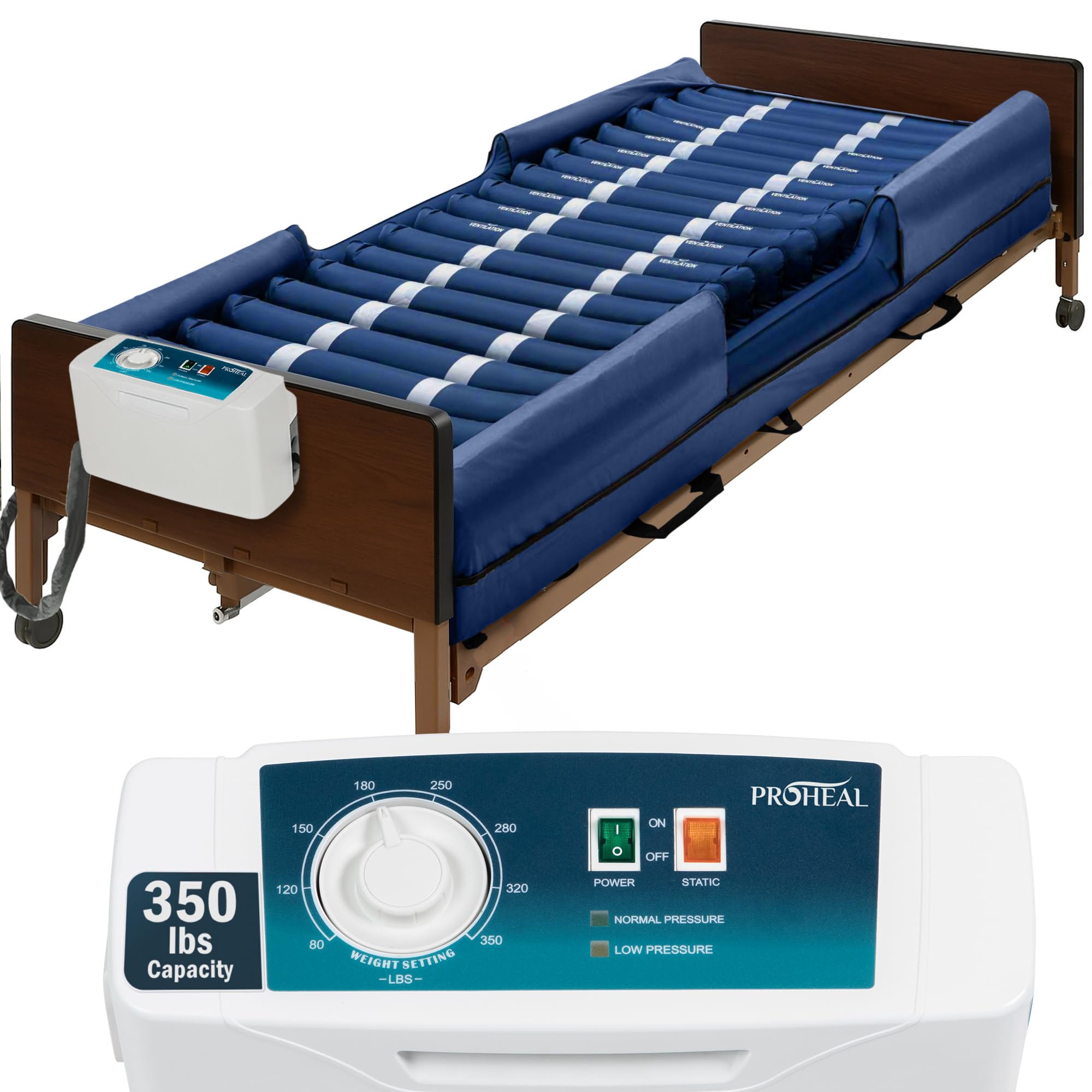
The ProHeal Premium model is essentially the same high-quality alternating pressure system as the standard ProHeal but with an extended weight capacity of 1,000 pounds and a 3-inch air perimeter for added stability. It features 20 individual cell-on-cell bladders that cycle every 10 minutes, providing consistent pressure redistribution. The analog dial controls are straightforward — no complex menus or remote to lose — making it ideal for caregivers who want reliability over flashy features.
The low air loss system incorporates 18 laser-drilled holes that actively ventilate the skin, reducing moisture buildup that can accelerate skin breakdown. The whisper-quiet pump is designed to be unobtrusive, and the visual low-pressure alarm alerts caregivers if the mattress loses significant air. The CPR valve allows rapid deflation in emergencies, and the removable fluid-resistant nylon cover is easy to clean. Customers consistently praise the comfort and noise level, with many noting that existing pressure sores stopped worsening or began healing after use.
Some users have experienced issues with the pump failing to maintain full inflation, displaying a low-pressure error despite no visible leaks. This seems to be an occasional defect rather than a widespread problem, but it’s worth noting. Additionally, the mattress is quite heavy at nearly 26 pounds, making repositioning a two-person job. For extremely heavy patients or those requiring a robust, no-frills alternating pressure system, this is a top-tier option.
Why it’s great
- 1000-pound weight capacity accommodates bariatric patients
- Cell-on-cell design with 20 bladders for even pressure distribution
- 18 laser holes for active moisture wicking
- Whisper-quiet pump with low-pressure alarm
Good to know
- Occasional pump inflation issues reported
- Heavy and difficult to reposition alone
5. ProHeal Low Air Loss Alternating Pressure Mattress (Standard)
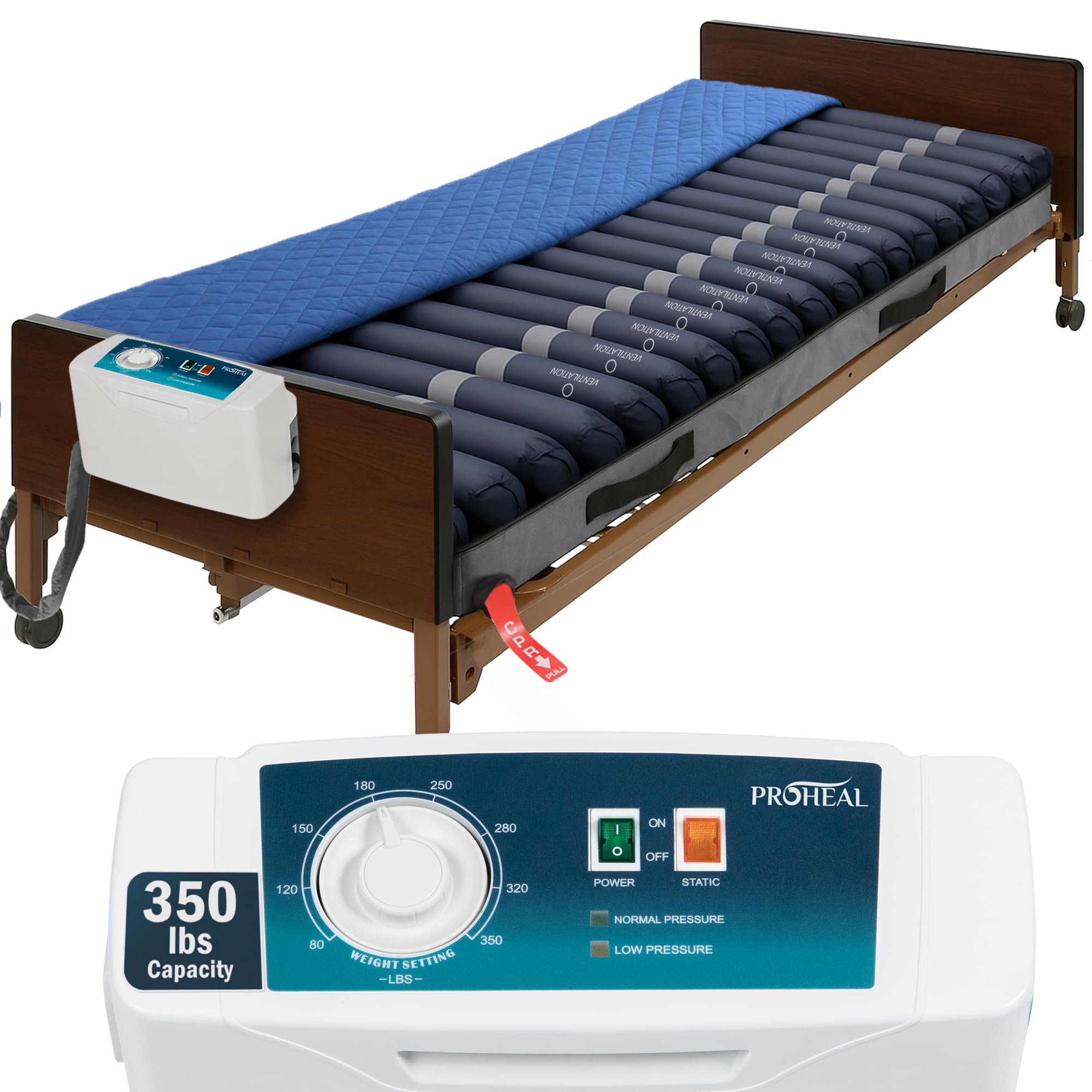
The standard ProHeal alternating pressure mattress delivers many of the same features as the premium model but at a more accessible price point. It uses 20 cell-on-cell bladders with a 10-minute cycle time and includes low air loss technology with 18 laser-drilled holes to keep the skin dry. The whisper-quiet pump is rated as very unobtrusive by users, and the visual low-pressure alarm provides peace of mind.
Setup is straightforward: place the mattress on the existing bed frame, attach the pump, and adjust the airflow dial to the desired comfort level. The CPR valve and adjustable hanging brackets are included. Users report that the mattress is comfortable and effectively prevents new sores from forming, with many noting that existing Stage I and II ulcers show improvement within a week. The fluid-resistant cover is easy to wipe down, and the non-skid bottom prevents shifting.
Like the premium version, a few customers have reported that the pump fails to reach full inflation, triggering the low-pressure alarm even when no leaks are found. This appears to be an occasional manufacturing defect. The mattress is also on the firmer side, which some users find less comfortable for sleeping but necessary for pressure relief. For those who need a reliable alternating pressure system for Stage I-III ulcers without the extra weight capacity, this is a well-rounded choice.
Why it’s great
- 20 cell-on-cell bladders for effective alternating therapy
- Low air loss with 18 laser holes reduces moisture
- Whisper-quiet pump with low-pressure alarm
- Easy setup with analog airflow dial
Good to know
- Some pumps may have inflation issues
- Firm feel may not suit all sleep preferences
6. Vive 8″ Alternating Pressure Mattress Replacement

The Vive 8-inch alternating pressure mattress serves as a full replacement for standard hospital beds, offering 16 air chambers that cycle to alleviate pressure points. The variable pressure pump allows you to adjust both the frequency of alternation and the overall firmness, with three static cells at the head acting as a pillow. The ultra-quiet pump is designed to be nearly silent, and the waterproof vinyl cover is breathable and supports up to 350 pounds.
Users have found this mattress highly effective for preventing new pressure sores and helping existing ones heal. One reviewer noted that their wife, a paraplegic with a Stage 4 ulcer and wound vac, saw significant improvement within a week. The pump is described as very quiet, comparable to a fan, and the adjustable settings allow for personalized comfort. The mattress also includes a static setting for general use when alternating pressure is not needed.
However, there are reports of the mattress deflating overnight after a few months of use, possibly due to pump wear or small leaks. Some users have experienced issues with the pump not maintaining pressure, and customer service responses have been mixed. Additionally, the mattress can squeak during inflation as the cells rub against each other, which may be annoying in a quiet room. Despite these concerns, the majority of reviews are positive, making this a solid mid-range option for pressure relief.
Why it’s great
- 16 air chambers with variable pressure and frequency settings
- Ultra-quiet pump for undisturbed sleep
- Waterproof vinyl cover is easy to clean
- Static mode available for general use
Good to know
- Some units experience deflation after months
- Cells may squeak during inflation
7. Roho Prodigy Premium Mattress Overlay

The Roho Prodigy is a non-powered overlay that uses exclusive Dry Flotation technology to achieve a depth of immersion of 3.5 inches, far exceeding typical alternating pressure pads. This depth prevents bottoming out, which is the most critical factor in pressure sore prevention. With three independently adjustable zones — head/upper body, hips/coccyx, and legs/feet — you can customize pressure relief exactly where it’s needed most. There are no moving parts, no noise, no heat generation, and no electricity consumption.
This overlay is recommended by more healthcare professionals than any other pressure relief surface, and it’s made in the USA. Users report that it provides excellent pressure relief, allowing them to sleep through the night without waking from discomfort. One reviewer noted that it greatly eased pressure points and bought a second unit for travel. The three-section design snaps together easily, and the included pump allows manual inflation adjustment. For those who want to avoid the noise and maintenance of electric pumps, this is a top contender.
On the downside, the large air cells can cause the patient’s heels and elbows to sink to the base if not adjusted properly, making care tasks like turning more difficult. The initial setup and inflation instructions can be confusing, and the overlay may not be ideal for very thin or low-body-weight individuals who might not fill the cells adequately. Additionally, the price is higher than many basic overlays, but the durability and clinical performance justify the investment for many families.
Why it’s great
- 3.5-inch immersion depth prevents bottoming out
- Three independently adjustable zones for customized relief
- No noise, no heat, no electricity required
- Made in the USA with strong clinical reputation
Good to know
- Large cells may cause heel/elbow sinking in some users
- Setup instructions can be confusing
8. Vive Alternating Air Pressure Mattress for Hospital & Home Beds

The Vive alternating pressure mattress overlay is designed for both hospital and home beds, featuring an ultra-quiet pump that users consistently describe as barely noticeable. The adjustable pressure dial allows you to fine-tune the firmness, and the sturdy foam frame encases the bubble mattress to prevent shifting during use. This overlay is a good option for those who want alternating pressure therapy without replacing their existing mattress.
Users have found it effective for preventing bed sores and relieving back pain, with one reviewer noting that it helped with muscle pull recovery and improved sleep quality. The pump is quiet enough to use in a shared room, and the setup is quick. The waterproof vinyl cover protects the mattress from accidents, and the 1-year guarantee on the pump provides some peace of mind. For the price, this overlay offers solid alternating pressure therapy with minimal noise.
However, there are reports of the pump failing after a few months, causing the mattress to deflate overnight. Some users have found that the highest pressure setting is still insufficient for heavier individuals, and the 30-day guarantee on the pad may not be enough for long-term use. Additionally, a few customers have noted that the motor is slightly louder than some competing models. For those on a budget who need basic alternating pressure, this is a reasonable choice, but durability concerns should be weighed.
Why it’s great
- Ultra-quiet pump for restful sleep
- Adjustable pressure dial for personalized comfort
- Foam frame prevents shifting during use
- Waterproof cover protects against accidents
Good to know
- Some pumps fail within months
- Highest setting may be insufficient for heavier patients
9. Repose Premium Pressure Relieving Mattress Overlay with Pump

The Repose overlay was developed in collaboration with the UK’s National Health Service (NHS) and has been used by over 3 million patients. It uses specially selected materials and a unique design to distribute weight evenly without losing shape, providing optimal comfort. The manual pump is fully portable, and the overlay deflates down to a compact size for travel. It comes with a 2-year warranty and a 60-day money-back guarantee.
Users praise its effectiveness for preventing and treating pressure ulcers, with one reviewer noting that it helped heal ulcers with proper care. The overlay is soft, durable, and easy to clean, with no seams that could cause friction. The manual pump is simple to use and inflates quickly. For those who need a lightweight, portable solution for travel or temporary use, the Repose is an excellent choice. It’s also suitable for those who want to avoid the noise and electricity of powered pumps.
However, the overlay is only 3 inches thick, which may not provide enough depth for heavier individuals or those with advanced ulcers. Some users have found that it doesn’t offer the same level of pressure redistribution as thicker alternating pressure pads. Additionally, the manual pump requires effort to inflate, and the overlay may need periodic topping up. For light-duty prevention and travel, it’s hard to beat, but for active wound treatment, a thicker powered system may be necessary.
Why it’s great
- NHS-developed design with proven track record
- Portable and lightweight for travel
- 2-year warranty and 60-day money-back guarantee
- No electricity needed, silent operation
Good to know
- Only 3 inches thick, may not suit heavier users
- Manual inflation requires effort
10. PRS Medical PURAP Bedsore Mattress Pad

The PURAP pad uses Fluid 3D Flotation technology, clinically tested at Stanford University Hospital, to dissipate pressure and prevent skin shear. Unlike alternating air or gel systems, the fluid-like material conforms to the body at all angles, eliminating high-pressure hotspots. This pad is designed to be placed on top of an existing mattress and is effective for both prevention and treatment of advanced stage sores.
Users have reported dramatic improvements, with one caregiver noting that their father’s sacral ulcers went from five wounds to two in just five days, with three completely healed. The pad is durable and easy to clean, and it stays in place well. For patients with existing Stage III or IV ulcers who haven’t responded to other overlays, the PURAP offers a unique approach that outperforms many traditional options. The 3-inch thickness provides substantial pressure relief without the need for electricity.
However, the pad is expensive and may not be covered by insurance. Some users have found that the velcro tabs can rip out after a few months, rendering the pad unusable. Additionally, the underside is not washable, which can be problematic for incontinent patients. The pad also requires careful positioning to avoid creating new pressure points on the back or shoulders. For those who need a non-powered solution for advanced wound care, it’s a powerful tool, but durability and cost are considerations.
Why it’s great
- Fluid 3D Flotation technology tested at Stanford
- Effective for advanced stage pressure ulcers
- No electricity or moving parts
- Easy to clean top surface
Good to know
- Velcro tabs may fail after months
- Underside is not washable
- Requires careful positioning to avoid new pressure points
11. Proactive Medical Protekt Aire 2000

The Proactive Medical Protekt Aire 2000 combines low air loss and alternating pressure therapies in one affordable system. It features kink-resistant tubing and 18 laser holes to keep the patient cool and dry. The 5-inch thick nylon mattress overlay supports up to 350 pounds and is designed to fit standard hospital and home beds. It’s a budget-friendly entry point for those who need dual therapy without a high investment.
Users have found it effective for providing relief, with one reviewer noting that it delivered the best sleep in three months while waiting for a hospital-grade replacement. Setup is straightforward, and the pump operates reasonably quietly. For those who need a temporary solution or are on a tight budget, the Protekt Aire offers basic alternating pressure and low air loss functionality.
However, there are notable drawbacks. Several users reported that the mattress developed leaks after 9-12 months, and some found it thinner than medical supplier versions. The lack of fasteners to secure the cover to the bed can cause shifting. Additionally, the effectiveness of the pressure change is questionable for some users. For long-term care or advanced ulcers, this may not provide sufficient depth or durability. It’s best suited for short-term use or low-risk prevention.
Why it’s great
- Combines low air loss and alternating pressure
- 18 laser holes for moisture management
- Easy to set up and operate
- Budget-friendly entry-level option
Good to know
- May develop leaks within a year
- Thinner than medical-grade alternatives
- No bed fasteners for the cover
Understanding the Specs
Alternating Pressure Cycle
The cycle time — usually 10 to 25 minutes — determines how often the air cells inflate and deflate. Shorter cycles provide more frequent pressure shifts, which can be beneficial for patients with advanced ulcers, while longer cycles may be more comfortable for lighter care. Most pumps allow you to adjust this setting, but some models have fixed cycles.
Low Air Loss vs. Non-Powered
Low air loss systems use tiny holes in the air cells to actively circulate air, keeping the skin dry and reducing maceration risk. Non-powered overlays like foam or static air rely on passive support and may trap heat and moisture. For incontinent patients or those in humid environments, low air loss is strongly recommended.
Weight Capacity and Cell Depth
Weight capacity isn’t just about the patient’s weight — it’s about maintaining adequate inflation. A 350-pound capacity mattress with 5-inch cells may bottom out under a 300-pound patient, while a 600-pound capacity mattress with 10-inch cells will provide a safety margin. Always choose a mattress with a capacity well above the patient’s weight.
Pump Features: Alarms and CPR Valve
A low-pressure alarm alerts caregivers if the mattress loses significant air, which can happen due to leaks or pump failure. A CPR quick-release valve allows the mattress to deflate instantly in an emergency, which is critical for safe resuscitation. These features are standard on hospital-grade models but may be absent on basic overlays.
FAQ
How often should I turn a patient on an alternating pressure mattress?
Can I use an alternating pressure mattress on a regular bed frame?
What’s the difference between a mattress overlay and a replacement mattress?
How long do alternating pressure mattresses typically last?
Can a low air loss mattress help with incontinence?
Final Thoughts: The Verdict
For most people, the air mattress for bed sores winner is the MedVance Medical Low Air Loss Mattress because it combines an ultra-quiet digital pump, cell-on-cell construction for power outage protection, and a weight capacity that covers the majority of patients. If you need a non-powered solution for quiet operation and don’t want to deal with electricity, grab the Roho Prodigy. And for bariatric patients requiring deep cells and high capacity, nothing beats the Drive Medical Med Aire Plus.

Mo Maruf
I created WellFizz to bridge the gap between vague wellness advice and actionable solutions. My mission is simple: to decode the research and give you practical tools you can actually use.
Beyond the data, I am a passionate traveler. I believe that stepping away from the screen to explore new environments is essential for mental clarity and physical vitality.