Our readers keep the lights on and my smoothie glass nicely filled. As an Amazon Associate, I earn from qualifying purchases.
Walking into a toy aisle overflowing with boxes promising “educational fun” can leave any parent feeling overwhelmed. The truth is, most preschool games either bore kids in five minutes or frustrate them with rules that are way too complex. I’ve spent weeks digging through specs, reading hundreds of parent reviews, and comparing every detail to find the games that actually deliver on their promises.
I’m Mohammad Maruf — the founder and writer behind WellFizz. I specialize in analyzing market data, studying consumer feedback patterns, and identifying the product features that truly matter for early childhood development.
Finding the perfect board games for preschoolers can be tricky. I’ve analyzed 11 top options to help you choose games that build skills and spark joy. Here are the best board games for preschoolers.
How To Choose The Best Board Games For Preschoolers
Preschool board games are more than just entertainment — they’re tools for building cognitive skills, social awareness, and fine motor control. But not every game labeled “ages 3+” is created equal. Here are the factors that separate the winners from the shelf-sitters.
Age Appropriateness & Skill Level
Always check the manufacturer’s age recommendation, but also look at the specific skills required. Games that rely purely on luck (like color-matching dice rolls) work well for younger preschoolers, while those requiring memory or simple strategy suit kids closer to 5 or 6. The best games meet kids where they are, not where marketers think they should be.
Play Time & Attention Span
A 15-minute game is the sweet spot for most preschoolers. Anything longer and you’ll lose their focus — or worse, they’ll lose interest before the game even ends. Look for games with fast rounds and quick setup so you can play multiple times without frustration.
Educational Value vs. Pure Fun
The most effective preschool games weave learning into the gameplay naturally. Color recognition, counting, letter awareness, and turn-taking are all valuable, but if a game feels like homework, kids will reject it. The best options disguise skill-building as play, so children ask to play again and again.
Quick Comparison
On smaller screens, swipe sideways to see the full table.
| Model | Type | Best For | Key Feature | Amazon |
|---|---|---|---|---|
| ThinkFun Zingo Bingo | Bingo/Matching | Early readers & pre-readers | Zinger device with 2 levels of play | Amazon |
| Candy Land | Classic Racing | First-time gamers | No reading required, color-coded path | Amazon |
| Yeti in My Spaghetti | Dexterity | Fine motor skill development | Silly suspense with noodle removal | Amazon |
| Chuckle & Roar Family Bingo | Educational Bingo | Multi-skill learning | 4-in-1: animals, alphabet, sight words, numbers | Amazon |
| TOP BRIGHT Magnetic Maze | Magnetic Puzzle | Solo play & travel | Recycling-themed magnetic bead maze | Amazon |
| Ravensburger Snail’s Pace Race | Non-Competitive Racing | Cooperative play | Everyone wins, wooden snails | Amazon |
| BLF FUN B.Duck Games | Active Bouncing | High-energy play | Rotating board with bouncing egg toys | Amazon |
| Tongues Out! | Memory/Color Matching | Sensory & tactile learning | Squishy pug dogs with colored tongues | Amazon |
| Hungry Hungry Hippos: TMNT | Active Launching | Licensed character fans | TMNT-themed marble chomping action | Amazon |
| Educational Insights Sneaky Snacky Squirrel | Fine Motor/Color Matching | Special edition collectors | Fuzzy squirrel squeezer & golden acorns | Amazon |
| Wonder Forge Bluey Matching Game | Memory/Matching | Bluey fans | 72 picture tiles with favorite characters | Amazon |
In-Depth Reviews
1. ThinkFun Zingo Bingo

Zingo Bingo has earned its reputation as one of the most beloved preschool games for good reason. The ingenious Zinger device dispenses tiles with a satisfying slide, keeping little hands engaged and eager for the next reveal. With two difficulty levels — picture-only matching on one side and words on the other — this game grows alongside your child from age 4 well into elementary school.
Parents consistently praise the durability of the thick cardboard boards and plastic components, noting that even after hundreds of plays, the tiles and Zinger hold up beautifully. The fast-paced rounds mean you can fit multiple games into a short play session, which is exactly what preschoolers need to stay interested. Teachers love it for classroom use, and families appreciate that up to 7 players can join with the extra card included.
The educational value here is substantial without feeling heavy-handed. Kids build vocabulary, practice matching, and develop hand-eye coordination every time they slap down a tile. It’s the rare game that entertains a wide age range — siblings at different skill levels can play together without frustration, making it a staple for family game night.
Why it’s great
- Two skill levels extend the game’s lifespan for years
- Sturdy construction handles enthusiastic preschool play
- Up to 7 players makes it perfect for larger families
Good to know
- Storage tray can be tricky to open after each round
- Some families want even more tile variety
2. Hasbro Gaming Candy Land

Candy Land is the benchmark that all other preschool games are measured against, and this Amazon Exclusive edition delivers everything that made the original a classic. The colorful board, sweet-themed destinations, and simple color-card mechanic mean kids as young as 3 can play without any reading skills. The gingerbread man pawns are sturdy and easy for small hands to grip.
What makes Candy Land so effective for preschoolers is its pure reliance on luck — there’s no right or wrong move, so every child has an equal chance to win. This eliminates the frustration that can come with more complex games and keeps the focus on turn-taking, patience, and the joy of racing toward the castle. Parents report that siblings of different ages play together harmoniously because the game is so accessible.
The Amazon Exclusive version features higher-quality components than some retail editions, with thicker cards and a more durable board. It’s the perfect introduction to board game etiquette — waiting your turn, moving your piece, and celebrating someone else’s win. For a child’s very first board game, Candy Land remains the gold standard.
Why it’s great
- Zero reading required makes it accessible for all preschoolers
- Pure luck format means no skill gap between players
- Classic design that parents remember fondly from their own childhood
Good to know
- Some kids outgrow it quickly once they want more strategy
- Board can be prone to wear with heavy use
3. Yeti in My Spaghetti Board Game

Yeti in My Spaghetti brings pure, laugh-out-loud fun to game night with a brilliantly simple premise: remove plastic noodles from a bowl without letting the Yeti fall through. The tension builds with every pull as the Yeti wobbles and tilts, and when he finally drops, the reaction is always delighted chaos. It’s the kind of game that has everyone — from toddlers to grandparents — leaning in and holding their breath.
The developmental benefits are real even though the game feels like pure silliness. Kids practice fine motor control as they carefully extract noodles, develop patience as they wait for their turn, and learn to handle the suspense of not knowing when the Yeti will fall. Parents report that even 2-year-olds can participate with a little help, and the game accommodates a wide range of abilities naturally.
Setup is instantaneous — just place the Yeti on the bowl, slide noodles through the slots, and you’re ready. The pieces are large enough that there’s no choking hazard concern, and the whole thing packs back into the box easily (though the noodles can be a bit finicky to store). For families who want a game that prioritizes shared laughter over quiet concentration, this is an outstanding choice.
Why it’s great
- Instant setup with no complex rules to learn
- Builds fine motor skills through playful challenge
- Appeals to a massive age range from toddlers to adults
Good to know
- Box durability is not the best for long-term storage
- Noodles can be tedious to pack back into the box
4. Chuckle & Roar Family Bingo
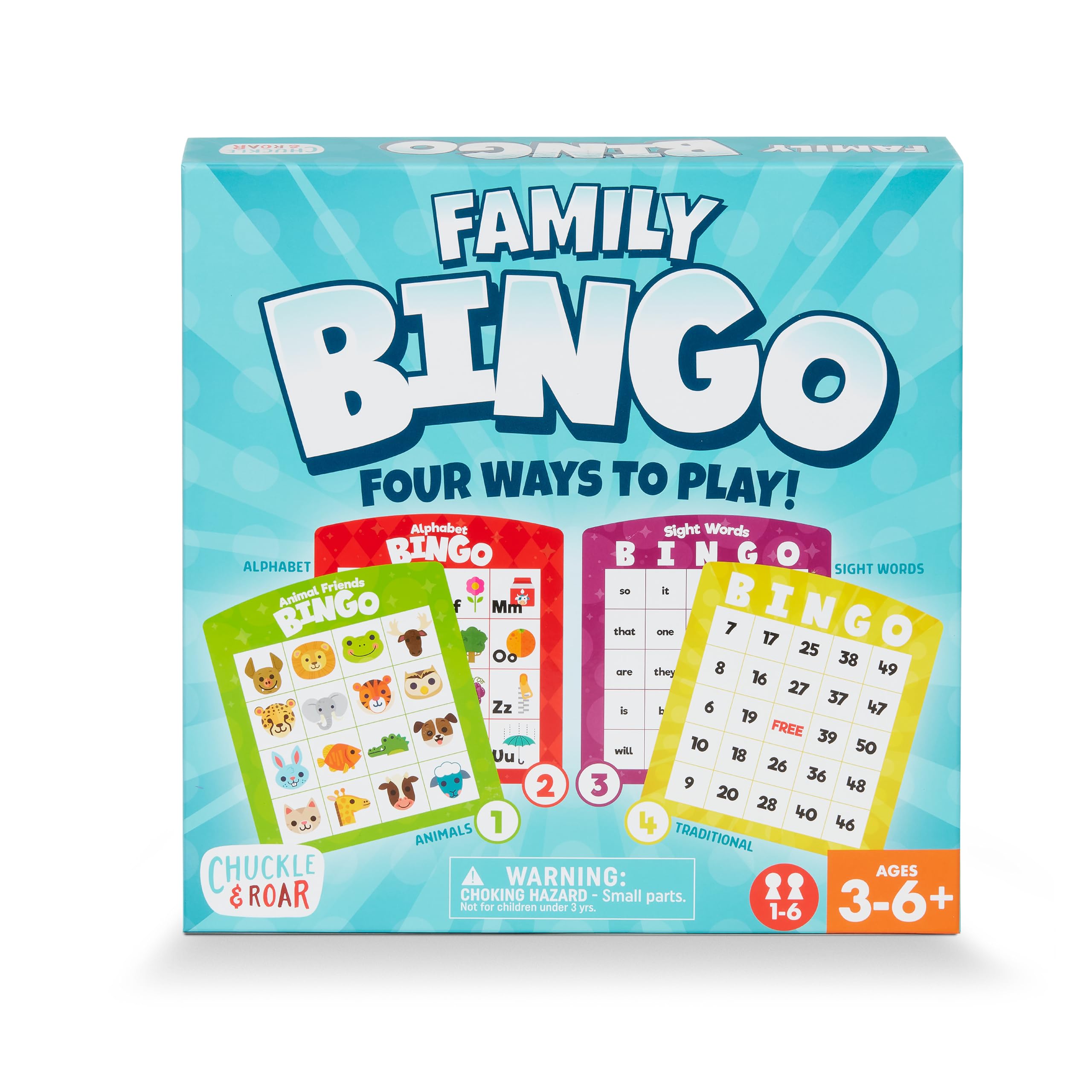
Chuckle & Roar Family Bingo takes the classic bingo format and expands it into four distinct learning modes: Animal Bingo, Alphabet Bingo, Sight Word Bingo, and Number Bingo. Each mode comes in its own color-coded storage bag, making it easy to switch between games or focus on a specific skill. The Animal Bingo mode requires no reading at all, making it perfect for the youngest players.
Parents rave about how this game holds the attention of multiple children at different developmental stages. A 3-year-old can play Animal Bingo by matching pictures, while a 6-year-old works on sight words using the same card format. The included bingo chips are sturdy, and the cards are thick enough to survive repeated use. The variety means this single purchase covers years of learning and play.
The design is thoughtful — uppercase and lowercase letters are both featured, sight words are pulled from common early reading lists, and the number cards provide a solid foundation for counting practice. For families who want maximum educational return from a single game purchase, this 4-in-1 set delivers exceptional value without sacrificing the fun factor that keeps kids coming back.
Why it’s great
- Four distinct games in one box cover multiple skills
- Color-coded storage bags keep everything organized
- No reading required for the Animal Bingo mode
Good to know
- Bingo format may not appeal to kids who prefer active games
- Some families wish for even more card variety per mode
5. TOP BRIGHT Wooden Magnetic Maze Board

The TOP BRIGHT Magnetic Maze Board takes a completely different approach to preschool gaming by offering a solo, quiet activity that builds fine motor skills and cognitive awareness. The recycling-themed board challenges kids to use a magnetic wand to guide colored beads into the correct bins, teaching environmental responsibility alongside color matching and hand-eye coordination. The sealed design means no loose pieces to lose.
This is the ideal travel companion — compact, self-contained, and engaging enough to keep a 3-year-old occupied during car rides or restaurant waits. The attached magnetic wand stores neatly, and the smooth wooden construction feels premium in hand. Parents note that children return to this activity again and again, finding new satisfaction as their precision improves over time.
The educational depth is impressive for such a simple concept. Kids must identify which color bead matches which bin, plan their path through the maze, and execute careful wand movements without bumping other beads out of place. It’s Montessori-adjacent in its approach, encouraging focused independent play while developing the pencil grip and control that will later support writing skills.
Why it’s great
- Self-contained design with no loose pieces to lose
- Builds fine motor control and pencil grip readiness
- Perfect for travel and quiet independent play
Good to know
- Single-player only, not ideal for family game night
- Some children may need initial guidance to understand the maze
6. Ravensburger Snail’s Pace Race

Ravensburger’s Snail’s Pace Race is a masterclass in non-competitive game design for young children. The concept is beautifully simple: six wooden snails race across the board, and players roll dice to move them forward. But here’s the twist — every snail is cheered on, and the game celebrates when they all cross the finish line. There are no winners or losers, just the collective joy of seeing the snails complete their journey.
The production quality is outstanding, as expected from Ravensburger. The wooden snails are chunky, tactile, and beautifully painted — each with a distinct color that helps children practice color recognition. The two dice (one with colors, one with symbols) add a layer of variety that keeps the game fresh across many plays. The board is sturdy and the artwork is charming without being overwhelming.
This game is particularly valuable for preschoolers who struggle with losing or need extra support learning turn-taking. Without the pressure of competition, kids can focus on the process — rolling the dice, matching colors, and moving the snails forward. Teachers use it in preschool classrooms to build patience and cooperation, and parents appreciate that it teaches empathy for slower-paced players. It’s a gentle, affirming experience that builds positive associations with game play.
Why it’s great
- Non-competitive format eliminates frustration and tears
- Beautiful wooden components that feel premium and last
- Teaches color recognition, counting, and turn-taking naturally
Good to know
- Some children may outgrow the simplicity fairly quickly
- Can be harder to find in stock at times
7. BLF FUN B.Duck Games
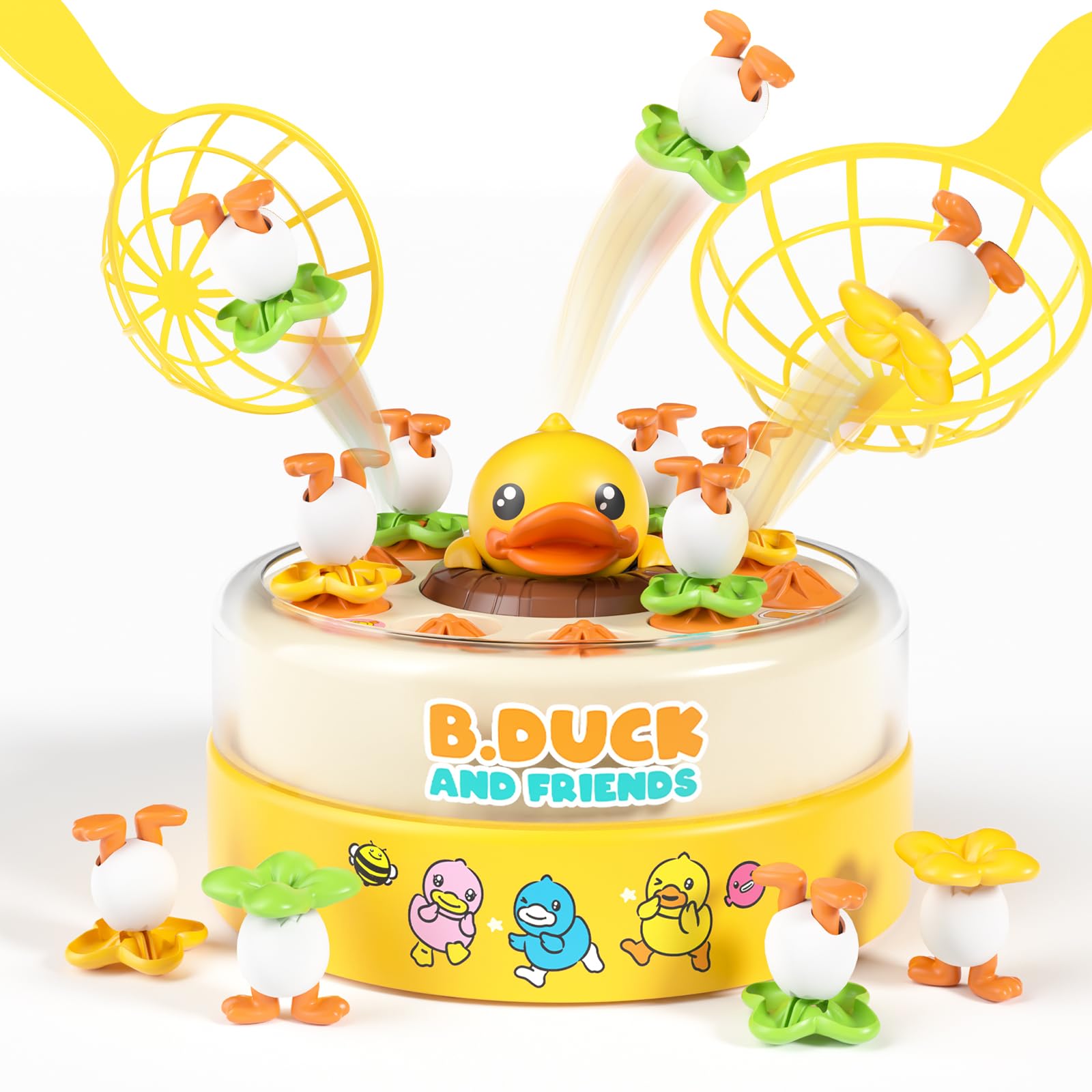
The B.Duck Games board brings an energetic, active twist to preschool gaming that gets kids moving and laughing. The rotating game board launches egg toys into the air while cheerful music plays, and players use nets to catch as many eggs as possible. It’s part arcade game, part preschool toy, and entirely engaging for high-energy children who struggle to sit still for traditional board games.
Parents report that this game is a hit across a remarkably wide age range — from toddlers just learning to track moving objects to teenagers who enjoy the competitive challenge. The B.Duck theme is adorable and the bright colors naturally draw children in. Setup requires three AA batteries, but once running, the game delivers minutes of active, screen-free entertainment that builds reaction time and hand-eye coordination.
The components feel well-made, with smooth edges and a sturdy rotating mechanism. The included sticker sheet lets kids personalize their game board, adding a creative element to the experience. For playdates or siblings close in age, this game shines because it keeps both players actively engaged simultaneously — no waiting around for turns. It’s a fantastic option for families who want a more physical, high-energy addition to their game collection.
Why it’s great
- Active play format keeps high-energy kids engaged
- Music and bouncing eggs create exciting sensory experience
- Two-player simultaneous play means no waiting
Good to know
- Requires AA batteries not included in the box
- Eggs can be challenging for younger children to catch
8. Tongues Out!
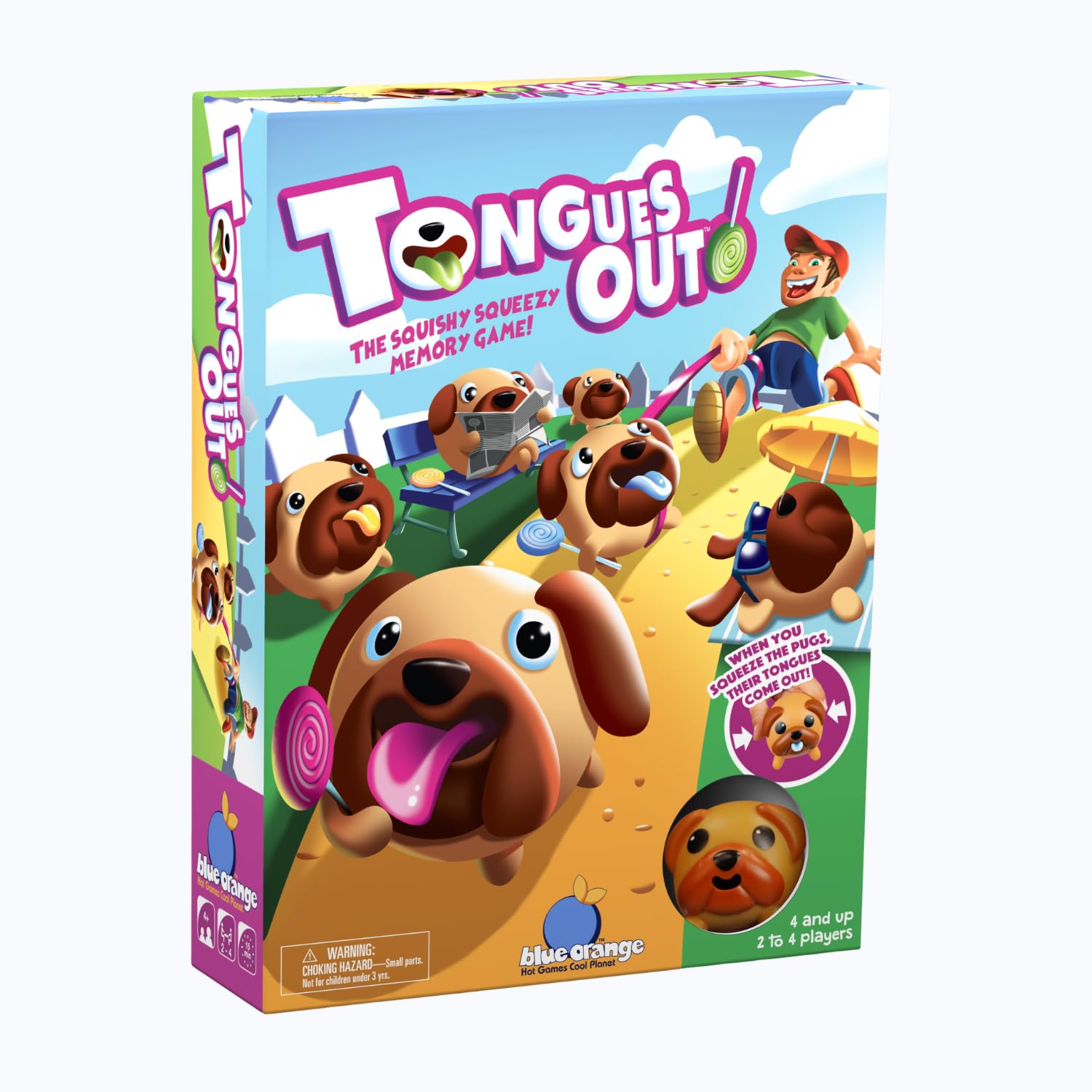
Tongues Out! takes the classic memory game format and injects it with irresistible tactile appeal. The star of the show is the set of 12 squishy pug dogs, each with a colored tongue that pops out when you squeeze them. Players roll two colored dice and then squeeze the pugs to find a matching tongue — the first to collect six pugs on their dog park board wins. The sensory feedback of the popping pugs is genuinely delightful.
This game excels at building multiple skills simultaneously. Kids practice color recognition through the dice and tongues, develop memory as they recall which pugs they’ve already checked, and strengthen fine motor control through the squeezing action. The social skills of turn-taking and good sportsmanship are naturally woven into the gameplay. Parents note that even young toddlers who can’t fully follow the rules enjoy simply squeezing the pugs.
The component quality is solid, with thick cardboard dog park boards and durable plastic pugs that withstand enthusiastic squeezing. The game plays quickly — most rounds finish in under 15 minutes — and the instructions are clear enough that kids can learn to set up and play independently. For families looking for a game that combines sensory play with genuine skill development, Tongues Out! is a creative and engaging choice.
Why it’s great
- S
- Squishy pugs may be too simple for older preschoolers
- Small pieces could be a choking hazard for very young children
9. Hungry Hungry Hippos: Teenage Mutant Ninja Turtles Edition

This TMNT edition of Hungry Hungry Hippos replaces the classic hippos with Leonardo, Michelangelo, Donatello, and Raphael, bringing a fresh, nostalgic twist to a beloved game. The premise remains the same — launch marbles and chomp as many as possible — but now kids are racing to collect pepperoni marbles and a special pineapple marble worth double. The TMNT theme adds excitement for fans of the franchise.
The game is designed for ages 4 and up, and parents report that it holds up well with repeated play. The marble storage is built into the center, preventing the runaway marble chaos of the original. Setup is quick, and the game plays in about 10 minutes, making it ideal for short attention spans. The themed stickers allow kids to decorate the base, adding a creative element.
This version improves on the original with better storage and more durable components. The Turtles are recognizable and the action is fast-paced. It’s a great choice for families who already love Hungry Hungry Hippos or who have a TMNT fan. The game teaches hand-eye coordination and competitive spirit in a fun, active way.
Why it’s great
- TMNT theme adds excitement for fans
- Improved storage prevents lost marbles
- Fast-paced rounds keep kids engaged
Good to know
- May be too chaotic for very young children
- Requires adult supervision for marble safety
10. Educational Insights Sneaky, Snacky Squirrel Game! Special Edition
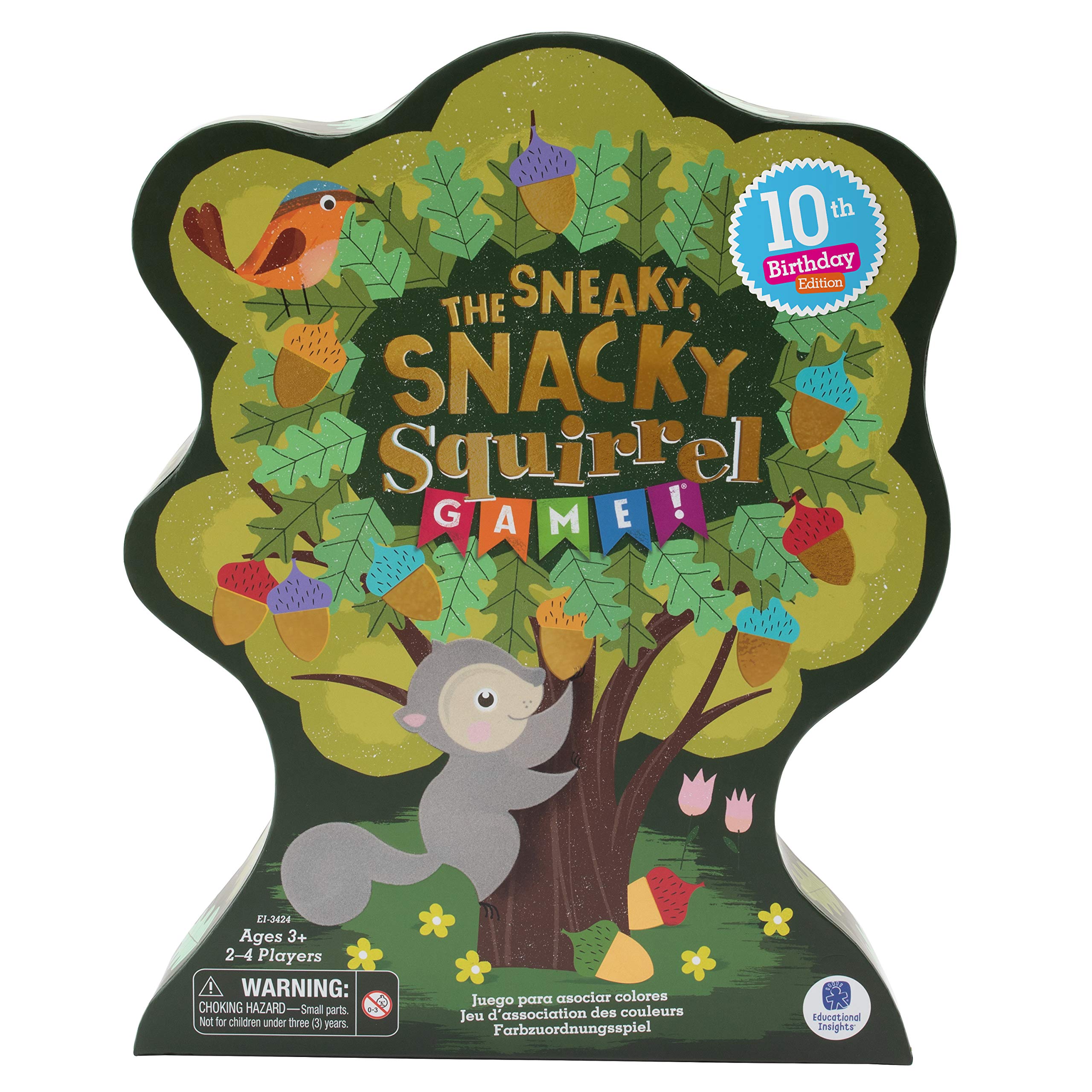
The Sneaky, Snacky Squirrel Game has sold over two million copies, and this 10th Birthday Special Edition adds a fuzzy Squirrel Squeezer and golden acorns to the original beloved formula. Players spin the spinner, then use the squirrel squeezer to pick up matching acorns and place them in their log. The first to collect five acorns wins. It’s a simple, engaging game that teaches color matching, fine motor skills, and turn-taking.
The special edition components are high-quality: the fuzzy squirrel is soft and fun to squeeze, and the golden acorns add a touch of excitement. The game board is sturdy and the packaging doubles as storage. Parents love that no reading is required, making it accessible for children as young as 3. The game plays in about 15 minutes, perfect for short attention spans.
This game is particularly effective for building hand strength and coordination. The squirrel squeezer requires a precise grip, which helps develop the fine motor control needed for writing. The game also teaches sportsmanship, as players may have to give back acorns or lose a turn. It’s a well-rounded educational game that feels like pure fun.
Why it’s great
- Fuzzy squirrel squeezer is irresistible to kids
- Teaches fine motor skills and color matching
- No reading required, perfect for preschoolers
Good to know
- Small acorns can be a choking hazard for babies
- Replacement acorns are hard to find
11. Wonder Forge Bluey Matching Game
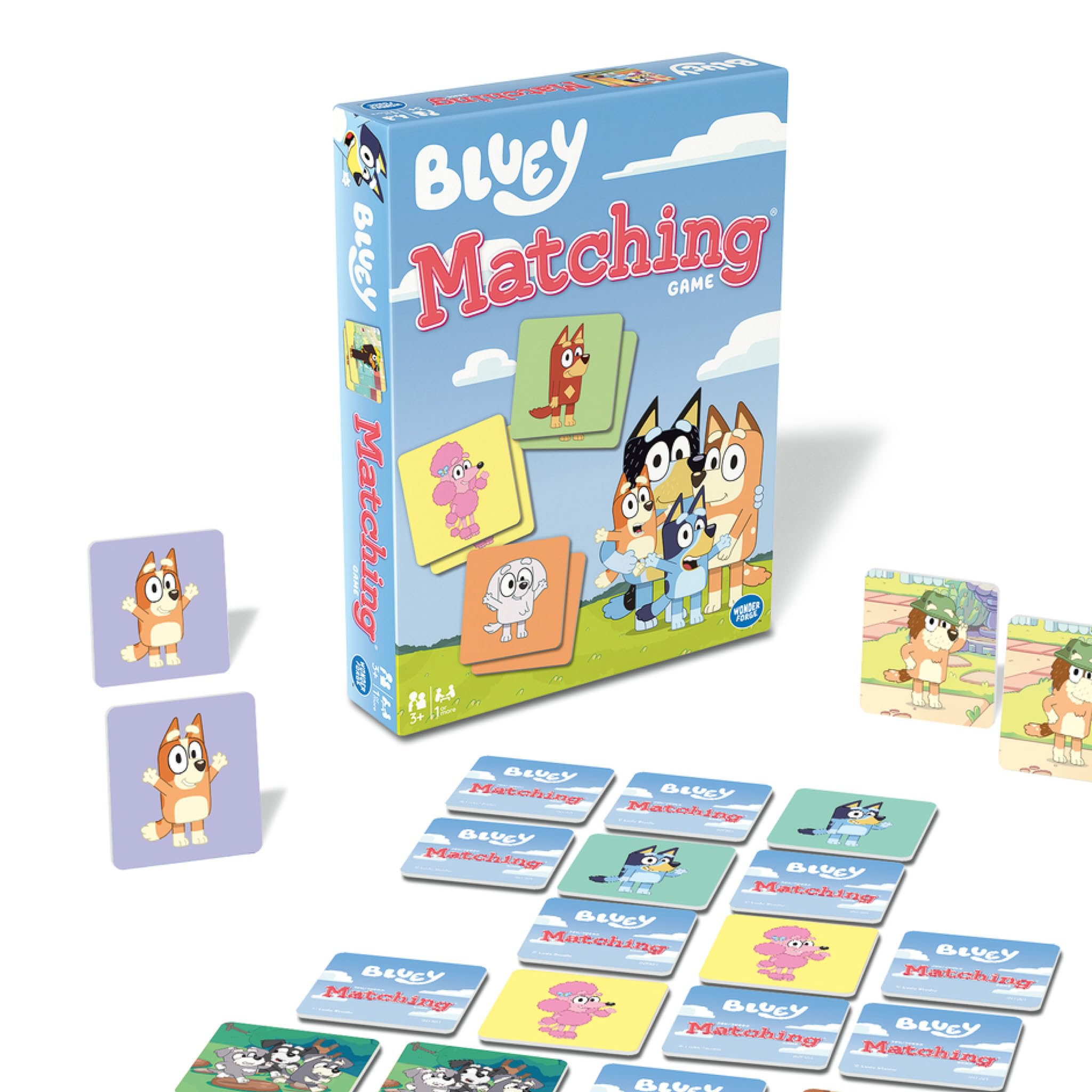
The Wonder Forge Bluey Matching Game is a must-have for any Bluey fan. It includes 72 picture tiles featuring Bluey, Bingo, Bandit, and Chilli, plus other characters from the show. The game is simple: flip two tiles to find a match. It’s a classic memory game with a beloved theme that keeps kids engaged. The tiles are sturdy and the artwork is bright and faithful to the show.
Parents report that this game is a hit with children ages 3 and up. The familiar characters motivate kids to play repeatedly, and the memory challenge helps develop cognitive skills like pattern recognition and concentration. The game plays in about 15 minutes, and instructions are simple enough for kids to learn quickly. It’s also great for solo play or family game night.
This game is an excellent gift for Bluey fans. It supports Montessori-inspired play and encourages screen-free fun. The tiles are large and easy for small hands to handle. While it’s a straightforward matching game, the theme gives it staying power that generic memory games lack. It’s a fantastic entry-level board game for preschoolers.
Why it’s great
- Beloved Bluey characters keep kids engaged
- 72 tiles provide variety and replay value
- Simple memory game builds cognitive skills
Good to know
- May be too simple for older preschoolers
- Tiles can be lost if not stored carefully
Understanding the Specs
Age Range
Manufacturer age recommendations (e.g., 3+, 4+) are guidelines, but consider your child’s individual development. Games that require no reading are ideal for younger preschoolers, while those with simple memory or matching elements suit older ones. Always check for small parts that could pose choking hazards.
Play Time
Most preschool games aim for 10-15 minutes. This is the sweet spot for attention spans. Games that play faster can be repeated, while longer games may cause frustration. Look for “quick play” or “15-minute” designations to ensure the game fits your child’s window of focus.
Number of Players
Consider how many children will typically play. Many games accommodate 2-4 players, but some like Zingo support up to 7. Solo play options like the magnetic maze are great for independent play. For family game night, choose games that include enough pieces for everyone.
Skill Development
Preschool games can target different skills: fine motor (squeezing, picking up pieces), cognitive (memory, matching, color recognition), social (turn-taking, cooperation), and language (sight words, vocabulary). Choose games that align with your child’s current developmental needs and interests.
FAQ
What is the best board game for a 3-year-old?
How do I choose a board game for a preschooler?
Are board games educational for preschoolers?
Final Thoughts: The Verdict
For most people, the board games for preschoolers winner is the ThinkFun Zingo Bingo because it balances educational value, replayability, and fun for a wide age range. If you want a classic, no-reading-required experience, grab the Candy Land. And for active, silly fun that gets the whole family laughing, nothing beats the Yeti in My Spaghetti.

Mo Maruf
I created WellFizz to bridge the gap between vague wellness advice and actionable solutions. My mission is simple: to decode the research and give you practical tools you can actually use.
Beyond the data, I am a passionate traveler. I believe that stepping away from the screen to explore new environments is essential for mental clarity and physical vitality.