Our readers keep the lights on and my smoothie glass nicely filled. As an Amazon Associate, I earn from qualifying purchases.
A flimsy bug catcher that breaks on the first catch or lets your prized specimen escape is more than a disappointment—it’s a lost opportunity to spark a lifelong love of nature. After analyzing hundreds of customer reviews and technical specs across eleven different models, I’ve found that the difference between a toy that collects dust and a tool that fuels curiosity comes down to build quality, thoughtful design, and real educational value.
I’m Mohammad Maruf — the founder and writer behind WellFizz. My deep market research and data analysis reveal which bug catchers genuinely deliver on their promises and which ones are likely to frustrate both kids and parents.
Whether you’re shopping for a toddler’s first exploration kit or a more serious set for an older child, this research-backed guide will help you find the absolute best bug catcher for your family’s needs.
How To Choose The Best Bug Catcher
Not all bug catchers are created equal. Some are designed for quick capture and release, while others double as temporary habitats for extended observation. Understanding the key differences will save you money and ensure your young explorer stays engaged.
Magnification Quality
A built-in magnifier that is clear, distortion-free, and large enough for a child to see through easily is essential. Models with dual magnifiers or adjustable lenses offer more versatility for examining tiny legs, wings, and antennae. Avoid cheap plastic lenses that blur or scratch quickly.
Ventilation and Habitat Design
Bugs need air to survive. Look for mesh lids, ventilation holes, or breathable panels. A removable base that can hold a bit of soil or water keeps specimens comfortable for longer observation periods. Secure latches are a must to prevent escapes.
Safety and Age Appropriateness
For younger children (ages 3–5), choose sets with smooth edges, no small parts, and easy-to-operate clasps. Older kids can handle more complex tools like tweezers, scissor-style catchers, and extendable nets. Always check the manufacturer’s age recommendation.
Kit Completeness vs. Simplicity
Full exploration kits with nets, tweezers, magnifying glasses, and carrying bags offer more play value but can be overwhelming for a beginner. A simple, well-made jar with a magnifying lid might be all a preschooler needs. Consider your child’s attention span and interest level.
Quick Comparison
On smaller screens, swipe sideways to see the full table.
| Model | Type | Best For | Key Feature | Amazon |
|---|---|---|---|---|
| Critter Keeper with Handle | Habitat Jar | Temporary housing during tank cleaning | Breathable mesh lid with transparent sub-lid | Amazon |
| Hape Explorers Bug Jar | Study Jar | Young children learning observation | Magnifying lid with grid measuring base | Amazon |
| LEUOA Bug Catcher | Scoop Trap | One-handed capture and viewing | 6X dual magnifying lenses and thumb-slide operation | Amazon |
| Skylety 2-Piece Bug Jars | Observation Jar | Pest control identification and sharing | Double magnifying glasses (3X and 6X) | Amazon |
| YOPINSAND Exploration Kit | Full Kit | Two kids exploring together | 10 pieces including 2 cages, nets, tweezers, whistles | Amazon |
| Bbiamsleep 20-Piece Kit | Full Kit | Budget-friendly comprehensive set | Includes 24 plastic bugs plus real tools | Amazon |
| Montessori Mama Kit | Premium Kit | Eco-conscious families with young kids | Adjustable carry strap and telescoping net | Amazon |
| Biubee 2-Set Catcher | Full Kit (2 Sets) | Siblings or playdates | Two complete sets with scissor-style capsule clip | Amazon |
| National Geographic Bug Catcher Kit | Premium Habitat | Serious young entomologists | 360° view habitat with dual magnifying viewers | Amazon |
| TOY Life Bug Catcher Kit | Full Kit | All-in-one adventure set | 12 pieces with binoculars and carry bag | Amazon |
| Nature Bound 20-Piece Set | Deluxe Kit | Classroom and group projects | Includes activity booklet, test tubes, and petri dish | Amazon |
In‑Depth Reviews
1. Critter Keeper with Handle

The Critter Keeper from OTSUMAMI TOKYO is a deceptively simple plastic habitat that punches well above its budget-friendly price point. Made in Japan by Nakaya Chemical Industry, it features a highly transparent polystyrene body that offers crystal-clear viewing from all angles. The breathable mesh lid includes a transparent sub-lid, allowing you to observe your critters from above without opening the container.
Reviewers consistently praise its sturdy build and secure snap-locks, with many using it as a temporary home for frogs during tank cleaning or as a travel container for beetles and small lizards. The compact dimensions (7 x 4.65 x 4.65 inches) make it easy to store, though a few users noted it’s smaller than expected—always check the measurements if you plan to house larger specimens.
While this is not a full exploration kit, it excels as a reliable, durable observation chamber that works for both wet and dry environments. The built-in handle adds portability, making it a solid choice for quick bug-catching sessions in the backyard.
Why it’s great
- Exceptional clarity and build quality from Japan
- Mesh lid with transparent sub-lid for top-down viewing
- Versatile for wet or dry habitats
Good to know
- Smaller than it appears in photos
- No included tools for catching bugs
2. Hape Explorers Bug Jar
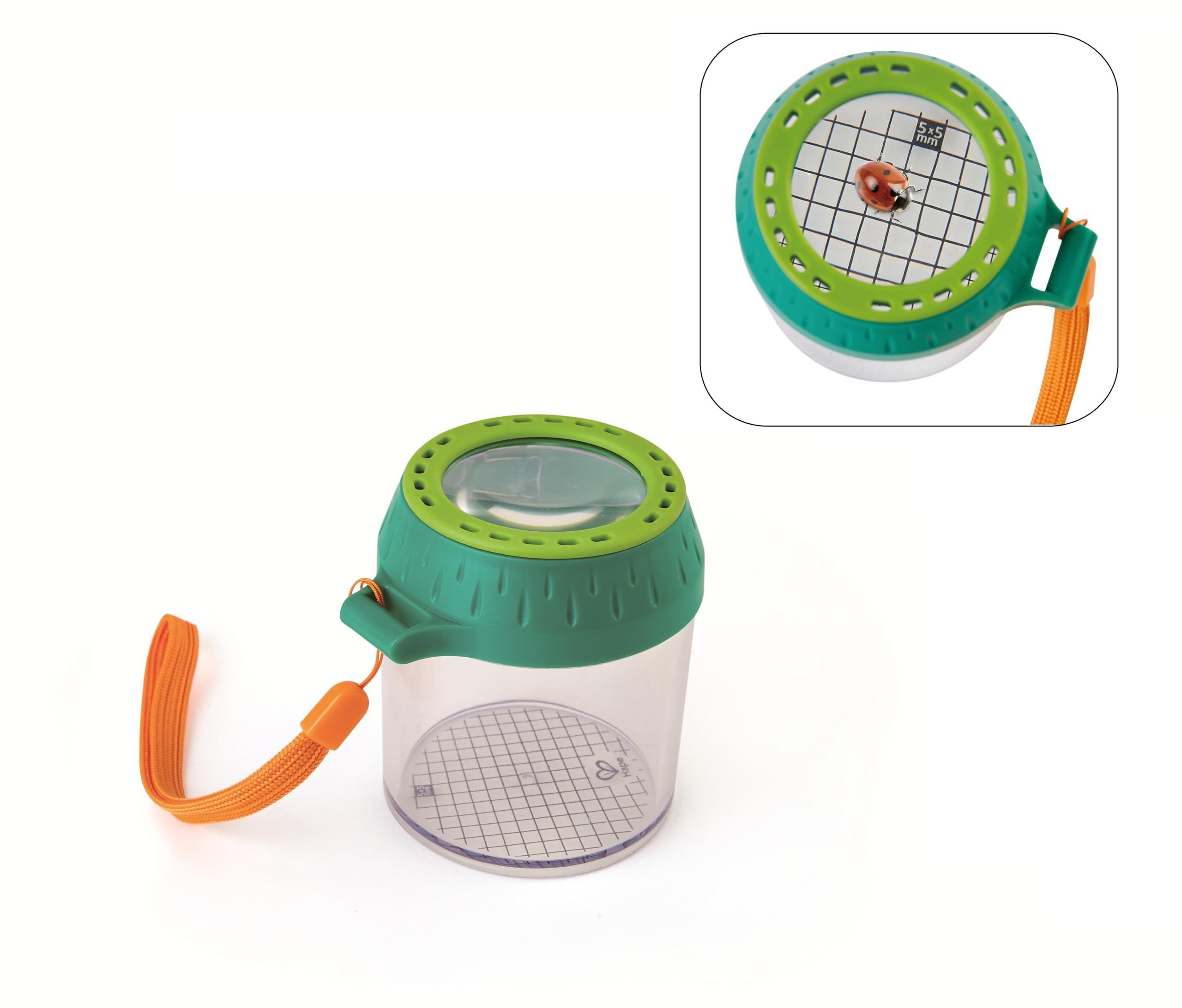
Hape’s Explorers Bug Jar is designed with the youngest naturalists in mind. The lid features a built-in magnifying glass, and the base includes a grid for measuring specimens—perfect for teaching early scientific observation skills. Made from sustainable biomass plastic, this jar reflects Hape’s commitment to eco-friendly materials.
Parents love that the jar locks securely, preventing escapes from even the most determined yellow jacket. The hand strap makes it easy for small hands to carry, and the ventilation holes keep bugs alive during short observation periods. However, some reviewers noted that the lid can be difficult for a 3-year-old to open independently, and tiny bugs may crawl out through the ventilation holes if not sealed properly.
This jar is best used as a capture-and-release tool for supervised exploration. It’s not intended as a long-term habitat, but it’s an excellent introduction to nature for preschoolers.
Why it’s great
- Eco-friendly biomass plastic construction
- Secure locking lid prevents escapes
- Built-in magnifier and measuring grid
Good to know
- Lid can be hard for very young children to open
- Ventilation holes may allow tiny insects to escape
3. LEUOA Bug Catcher (Pink)
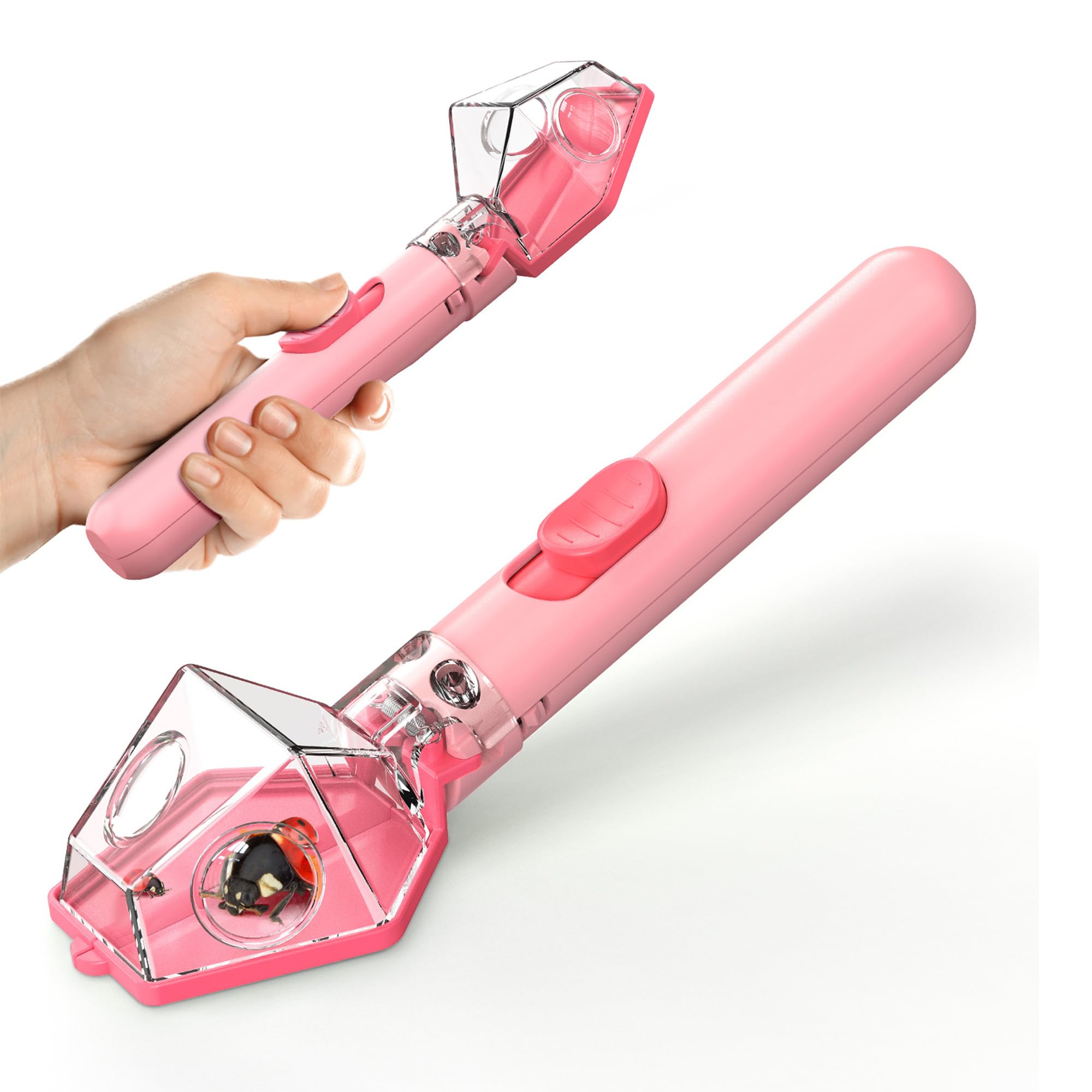
The LEUOA Bug Catcher takes a different approach with its futuristic scissor-like trap design. A thumb-slide button allows one-handed operation, making it easy for kids to scoop up insects without direct contact. Two ultra-clear 6X magnifiers on the side let children inspect legs, wings, and antennae up close.
Reviewers aged 4–12 enjoyed using it for catching butterflies, ladybugs, and spiders. The clear acrylic body is lightweight and durable, and the secure locking flaps prevent escapes. Some users noted that dirt can accumulate in the top groove, occasionally preventing the trap from closing fully, and the magnifier requires careful positioning to get a clear view.
This tool is ideal for older kids who want a more active bug-catching experience. It’s less suitable for very young children who might struggle with the precise alignment needed for the magnifier.
Why it’s great
- One-handed operation for easy capture
- Dual 6X magnifiers for detailed observation
- Lightweight and portable
Good to know
- Magnifier can be tricky to align
- Dirt in the groove may prevent full closure
4. Skylety 2-Piece Bug Jars (Pink)
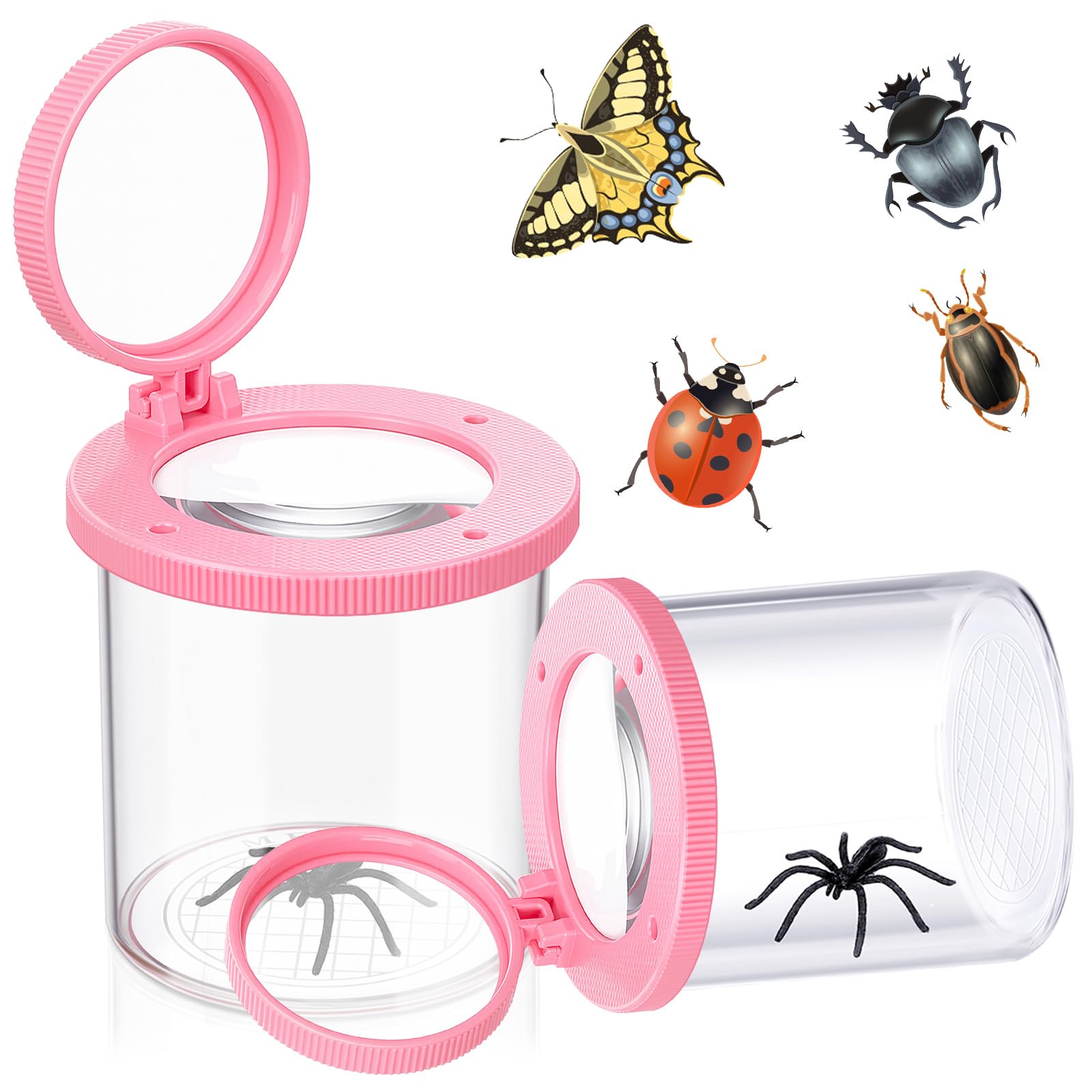
Skylety’s two-pack of pink bug jars offers an affordable way to equip multiple kids or have a spare on hand. Each jar features a dual magnifier: a 3X glass in the lid and a 6X glass lower down, allowing for different levels of magnification. Three small ventilation holes keep insects alive during observation.
Pest control professionals have even praised these jars for collecting specimens to show clients—proof of their practical utility beyond children’s play. Parents report that the jars survive rough handling by 7- and 8-year-olds, and the snap-on lid stays secure. The compact size (about 2.76 x 3.15 inches) fits easily into a jacket pocket.
While the dual magnifiers are a nice touch, some users found the lower lens less useful because the bug has to be positioned perfectly. Still, for the price, this set is a reliable entry-level option for backyard exploration.
Why it’s great
- Two jars for sharing or backup
- Dual magnification levels
- Sturdy build that lasts through rough play
Good to know
- Lower magnifier requires precise positioning
- Small size limits larger insects
5. YOPINSAND Bug Catcher Kit (10 Pieces)

The YOPINSAND exploration kit is designed for two children to use simultaneously, with duplicate tools including bug cages, butterfly nets, tweezers, magnifying glasses, and whistles. This makes it ideal for siblings or playdates, reducing arguments over who gets which tool.
Kids love the bright, playful design, and parents appreciate that the set encourages outdoor activity and cooperation. The cages are lightweight and easy to carry, though they are more toy-like than professional-grade. A few reviewers mentioned the nets could be sturdier, but for casual backyard use, they get the job done.
This kit is best for ages 3–12 and serves as a great introduction to group nature exploration. The whistles add an element of adventure, though they can get noisy indoors.
Why it’s great
- Two of everything for shared play
- Encourages outdoor cooperation and exploration
- Lightweight and portable
Good to know
- Nets are on the flimsy side
- Whistles may be annoying for parents
6. Bbiamsleep 20-Piece Bug Catcher Kit
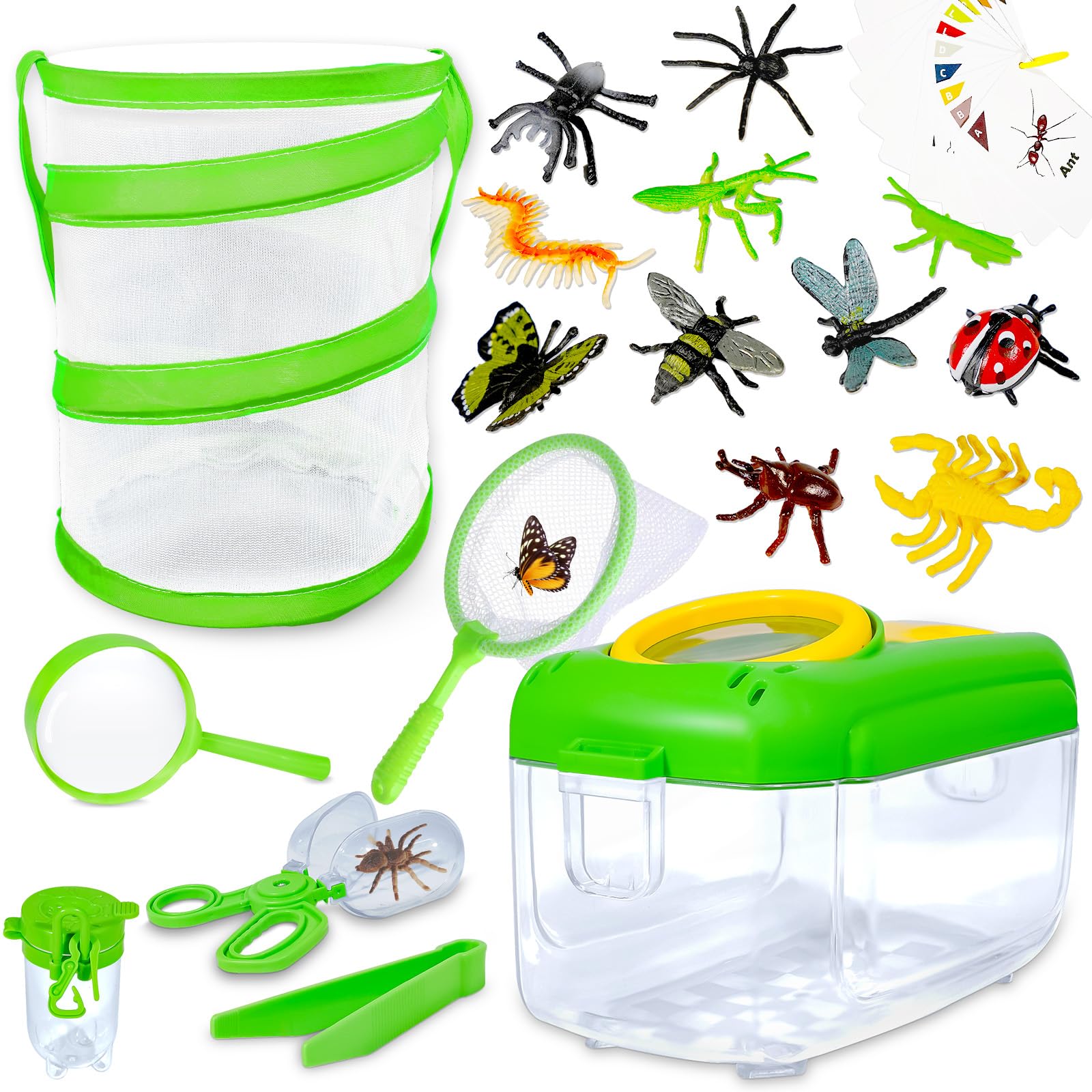
Bbiamsleep’s 20-piece kit offers a staggering number of components for a budget-friendly price. In addition to the standard bug viewer, magnifying glass, butterfly net, tweezers, and insect clip, it includes 24 plastic bugs for indoor play. This makes it a versatile set that works both as a real exploration tool and as a pretend-play accessory.
Children as young as 4 have spent hours catching real grasshoppers and then switching to the plastic bugs for imaginative play. The quality of the plastic is decent, though some tools feel a bit lightweight. The kit also includes a carrying case, making it easy to take on trips.
Because the set targets a wide age range (3+ years and up, but some components are better suited for older kids), supervision is recommended for younger children. The plastic bugs are a fun bonus but may not interest serious young entomologists.
Why it’s great
- Huge variety of tools and plastic bugs
- Great value for the number of pieces
- Includes carrying case for portability
Good to know
- Some tools feel less durable
- Plastic bugs may distract from real exploration
7. Montessori Mama Bug Catching Kit

Montessori Mama’s kit is thoughtfully designed with eco-friendly packaging and child-safe materials. The bug house features an adjustable carry strap, making it easy for little ones to wear while they hunt. The telescoping net extends to catch bugs from a distance, a feature that sets this kit apart from many competitors.
Parents of 3- and 4-year-olds praise the set for getting kids excited about outdoor exploration. The scissor-style capsule clip and tweezers allow safe capture without touching bugs. However, some reviewers reported durability issues—the lid snapped off one unit before it was even unwrapped, and the plastic feels less robust than some premium kits.
This kit is best for supervised use with younger children who need a lightweight, portable set. The Montessori name implies educational value, but the build quality may not justify the premium positioning for rough-and-tumble play.
Why it’s great
- Adjustable carry strap for hands-free exploring
- Extendable net for catching from a distance
- Eco-friendly packaging
Good to know
- Some reports of breakage on first use
- Not as durable as premium alternatives
8. Biubee 2-Set Bug Catcher Kit

Biubee’s offering is a two-set kit that includes everything two children need to explore together: insect boxes with adjustable straps, scissor-style capsule clips, tweezers, and butterfly nets. The circular magnifying glass in each box lid provides a clear view of captured insects, and multiple ventilation holes ensure the bugs stay healthy during observation.
With a strong Best Sellers Rank of #7 in Nature Exploration Toys and a 4.6-star average from over 500 ratings, this kit is clearly popular with families. The sturdy plastic construction withstands the enthusiasm of 3–8 year olds, and the adjustable strap (up to 31.5 inches) fits a range of body sizes.
The only downside is that the capsule clip can be a bit tricky for very small hands to operate independently. Otherwise, this is a well-designed, complete set that encourages shared outdoor adventures.
Why it’s great
- Two complete sets for siblings or friends
- Sturdy plastic with good ventilation
- Adjustable straps for comfortable carrying
Good to know
- Capsule clip may be hard for young kids
- Not intended for long-term housing
9. National Geographic Bug Catcher Kit

The National Geographic Bug Catcher Kit from Blue Marble is the gold standard for young entomologists. The habitat offers a 360° view with a removable base that can hold soil or water to keep bugs comfortable. Two built-in magnifying viewers—a larger stationary one and a smaller movable telescope—let kids examine specimens from multiple angles.
Parents consistently praise the kit’s durability and educational value. The scissor-style catcher, net, and tweezers are all well-made, and the tight lid with ample air holes prevents escapes while keeping bugs healthy. The removable base is a standout feature, making cleaning easy and allowing kids to create a mini habitat with leaves and twigs.
The only minor complaint is that the habitat is a bit short for larger insects like caterpillars, but for spiders, ladybugs, and ants, it’s perfect. This kit is an award-winning choice that truly fosters scientific curiosity.
Why it’s great
- 360° view with removable base for habitat creation
- Dual magnifying viewers for detailed observation
- Durable construction and tight security
Good to know
- Small for larger insects like caterpillars
- Premium price may not suit all budgets
10. TOY Life Bug Catcher Kit
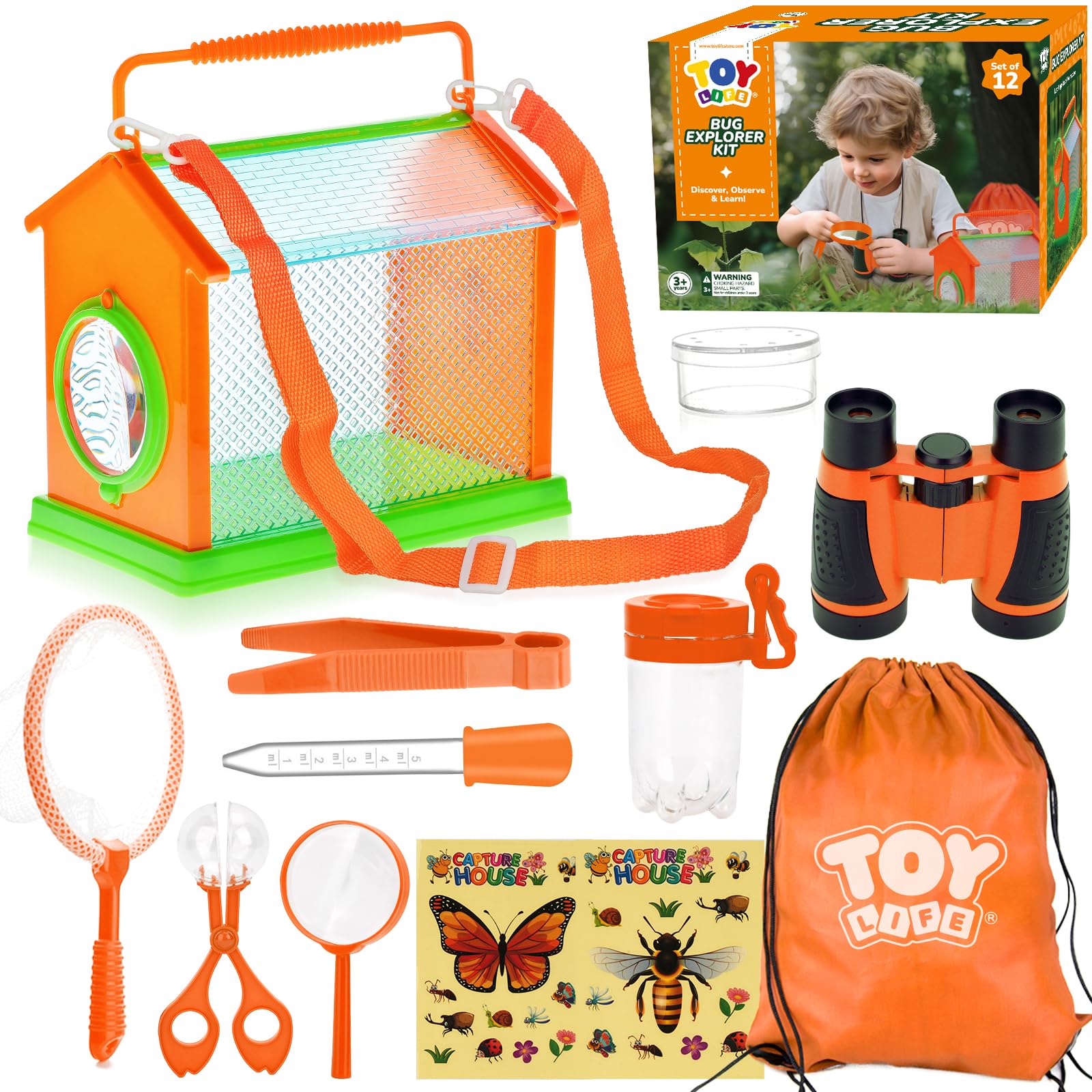
TOY Life’s 12-piece bug catcher kit is designed to be a complete adventure set. It includes a bug catcher, bug house, butterfly net, bug cage, tweezers, binoculars, magnifying glass, observation jar, bug collection box, dropper, bug toys stickers, and a carry bag. The binoculars and telescope are real working tools that add a ranger-like element to exploration.
Kids aged 4–8 love the variety, and parents appreciate that everything fits into the included carry bag for easy transport. The set encourages outdoor play and STEM learning, with enough tools for two children to share. The quality is solid for the price, though the plastic components are not as robust as the National Geographic kit.
Some reviewers noted that the bug house is a bit small for larger finds, but for casual backyard exploration, this kit offers tremendous play value. It’s an excellent gift for birthdays or holidays.
Why it’s great
- Comprehensive set with binoculars and telescope
- Portable carry bag for easy transport
- Encourages imaginative outdoor play
Good to know
- Bug house is small for larger insects
- Some tools feel less premium
11. Nature Bound Bug Catcher Kit (20 Pieces)
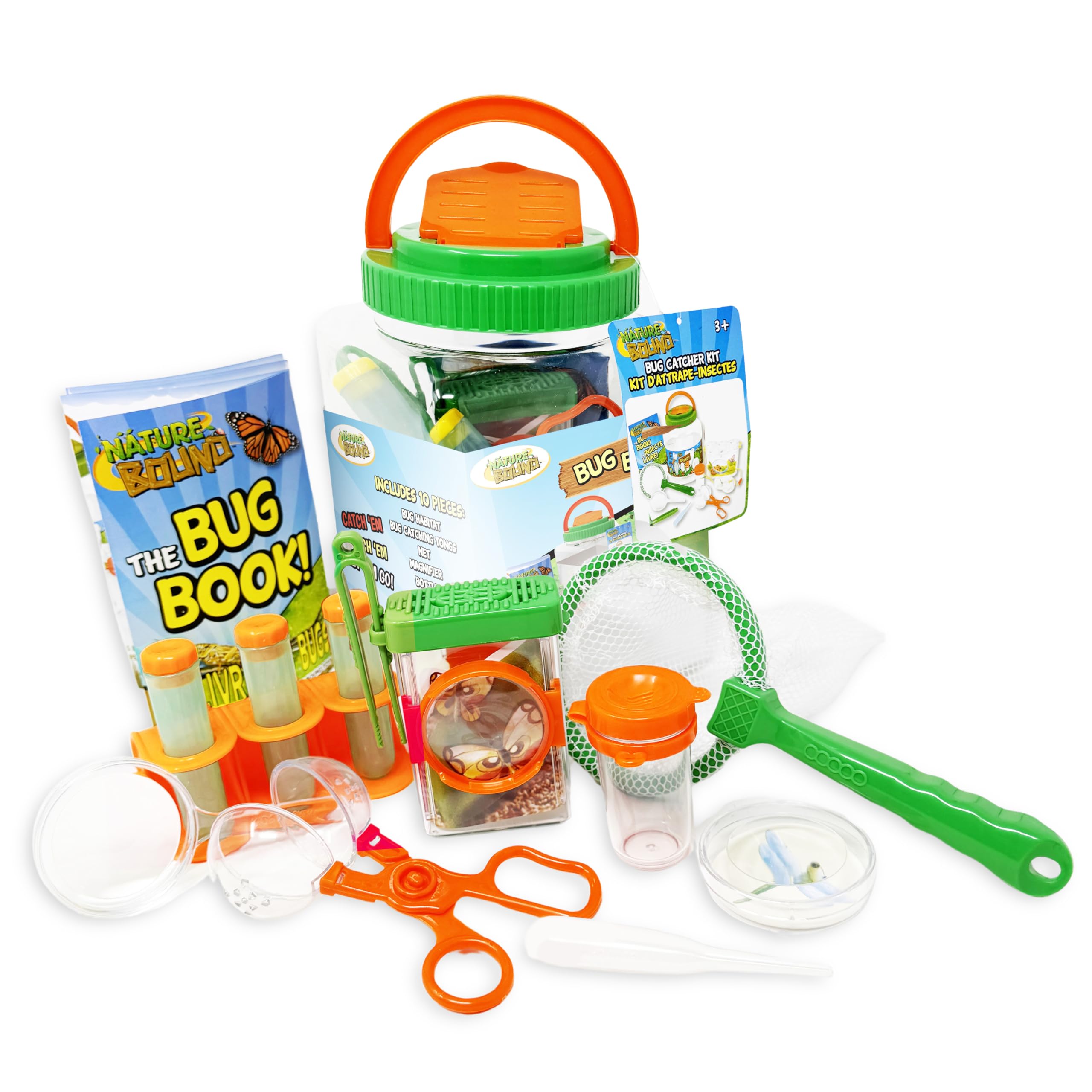
Nature Bound’s 20-piece set is the most comprehensive kit in this guide, designed for serious young scientists and classroom use. It includes a reusable bucket with a ventilated lid, petri dish, magnifier, bug jar, net, tweezers, bug tongs, pipette, three test tubes with stands, and an activity booklet that guides children through scientific exploration.
Parents and teachers appreciate the educational focus—the activity booklet provides structured experiments and observation prompts. The bucket doubles as a collection container and a habitat, with a sliding magnifier for easy viewing. Test tubes and petri dish allow for sorting and examining small specimens.
Some users found the test tube stands and pipette unclear in purpose, and the net is not the sturdiest. But for group projects, summer camps, or a child who is deeply interested in entomology, this kit offers incredible value and versatility.
Why it’s great
- Comprehensive 20 pieces with activity booklet
- Includes test tubes and petri dish for lab-style play
- Great for classrooms and group projects
Good to know
- Some components have unclear use
- Net could be sturdier
Understanding the Specs
Magnification Quality
A good magnifier should have at least 3X to 6X power and be made of clear, scratch-resistant plastic or glass. Dual magnifiers or adjustable lenses offer more flexibility for examining tiny details. Avoid lenses that distort the image around the edges.
Ventilation and Habitat Design
Look for mesh lids, multiple air holes, or breathable panels that allow airflow while preventing escapes. A removable base that can hold soil or water keeps specimens comfortable during longer observation. Secure latches are essential for peace of mind.
FAQ
What is the best bug catcher for a toddler?
How do I keep bugs alive in a bug catcher?
Can I use a bug catcher for insects I want to keep as pets?
Final Thoughts: The Verdict
For most families, the best bug catcher overall is the National Geographic Bug Catcher Kit because it combines exceptional build quality, dual magnifying viewers, and a removable base that turns the habitat into a mini ecosystem. If you want a budget-friendly twin pack for siblings, grab the Skylety 2-Piece Bug Jars. And for classroom projects or a deeply curious young scientist, nothing beats the comprehensive Nature Bound 20-Piece Set.

Mo Maruf
I created WellFizz to bridge the gap between vague wellness advice and actionable solutions. My mission is simple: to decode the research and give you practical tools you can actually use.
Beyond the data, I am a passionate traveler. I believe that stepping away from the screen to explore new environments is essential for mental clarity and physical vitality.