Our readers keep the lights on and my smoothie glass nicely filled. As an Amazon Associate, I earn from qualifying purchases.
Every glass of tap water carries a story — and sometimes it includes chlorine, lead, PFAS, or microplastics you never agreed to drink. With hundreds of filtration options flooding the market, finding a system that actually removes contaminants without breaking your budget or your cabinet space can feel like a full-time research project.
I’m Mohammad Maruf — the founder and writer behind WellFizz. I spend my days analyzing water quality reports, dissecting manufacturer spec sheets, and cross-referencing thousands of real-world user experiences to separate marketing hype from genuine performance.
After weeks of comparing flow rates, filtration stages, certification claims, and long-term maintenance costs across the leading models, this guide cuts through the noise to help you confidently choose the best at home water filter system for your family’s health, budget, and specific kitchen needs.
How To Choose The Best At Home Water Filter System
Not all water filters are created equal. Some strip everything including healthy minerals, while others leave behind the very contaminants you wanted removed. Understanding a few key specifications will help you match the right technology to your tap water profile and household habits.
Filtration Stages and Contaminant Removal
A standard reverse osmosis system uses a sediment pre-filter, carbon block, and RO membrane to catch particles, chlorine, and dissolved solids. Higher-stage systems add extra carbon passes or alkaline remineralization stages that restore calcium and magnesium. If your water contains specific concerns like PFAS, lead, or nitrates, look for systems with independent lab testing against those contaminants rather than generic claims.
Flow Rate and Tankless vs. Tank Design
Flow rate is measured in gallons per day — 400 GPD fills an 8-ounce cup in roughly 11 seconds, while 800 GPD cuts that to about 5 seconds. Tankless systems save under-sink space and deliver fresh water on demand, but they require a nearby electrical outlet and can be slightly louder due to the built-in pump. Traditional tank systems store purified water in a pressurized reservoir, which means no electricity needed but a larger footprint and potential for stagnant water if not used regularly.
Pure-to-Drain Ratio and Water Efficiency
Older RO systems wasted up to 4 gallons of water for every 1 gallon of purified water. Modern systems achieve ratios of 2:1, 3:1, or even 5:1, meaning less water goes down the drain. A higher ratio saves money over time and reduces environmental impact, though it may slightly shorten filter lifespan in areas with very hard water.
Certifications and Filter Replacement Costs
NSF/ANSI certifications provide independent verification of a system’s claims — NSF 58 covers RO performance, NSF 53 addresses contaminant reduction, and NSF 372 confirms lead-free materials. Before committing, check the price and availability of replacement filters, because the long-term cost of ownership often exceeds the initial purchase price by a significant margin.
Quick Comparison
On smaller screens, swipe sideways to see the full table.
| Model | Type | Best For | Key Feature | Amazon |
|---|---|---|---|---|
| Waterdrop G2P600 | Under Sink / Tankless | Reliable 7-stage filtration with easy maintenance | NSF/ANSI 372 certified; 2:1 drain ratio; 600 GPD flow | Amazon |
| SimPure T1-400ALK | Under Sink / Tankless | Alkaline remineralization with UV sterilization | SGS certified to NSF/ANSI 58; pH+ remineralization; 400 GPD | Amazon |
| Home Master TMAFC | Under Sink / Tank | Patented 2-pass remineralization and high flow | 4.5-second fill rate; modular tool-free design; NSF certified | Amazon |
| Frizzlife PD800-TAM4 | Under Sink / Tankless | Premium 9-stage alkaline RO with smart display | 800 GPD; real-time TDS and filter life monitoring; 2:1 drain | Amazon |
| DESENRUIS 800 GPD | Under Sink / Tankless | Dual RO membrane for extended filter life | 0-stagnant water technology; smart LED faucet; 3:1 drain ratio | Amazon |
| SimPure T2-600T | Under Sink / Tankless | Near-zero TDS with built-in pressure tank | 8-stage filtration; UV power; 2:1 pure-to-drain; 600 GPD | Amazon |
| APEC ROES-PH75 | Under Sink / Tank | WQA certified alkaline system with extra pre-filters | 6-stage filtration; 75 GPD; manual operation (no electricity); pH+ | Amazon |
| Brio SIMPL | Under Sink / Tankless | Compact 4-stage design with leak-resistant waterway | 600 GPD; front-access filter replacement; NSF 372 certified | Amazon |
| Philips AUT9340 | Under Sink / Tankless | Aquaporin biomimetic membrane technology | 2.3:1 drain ratio; 400 GPD; NSF/ANSI 372; SGS tested | Amazon |
| Aigerri Countertop RO | Countertop / No Plumbing | Portable no-install solution for renters and RVs | 5:1 pure-to-drain ratio; 5L reservoir; UV sterilization | Amazon |
| Ecoviva 600GPD | Under Sink / Tankless | Budget-friendly entry into tankless RO | 2.5:1 drain ratio; twist-and-pull filter change; LED panel | Amazon |
In‑Depth Reviews
1. Waterdrop G2P600 Reverse Osmosis System
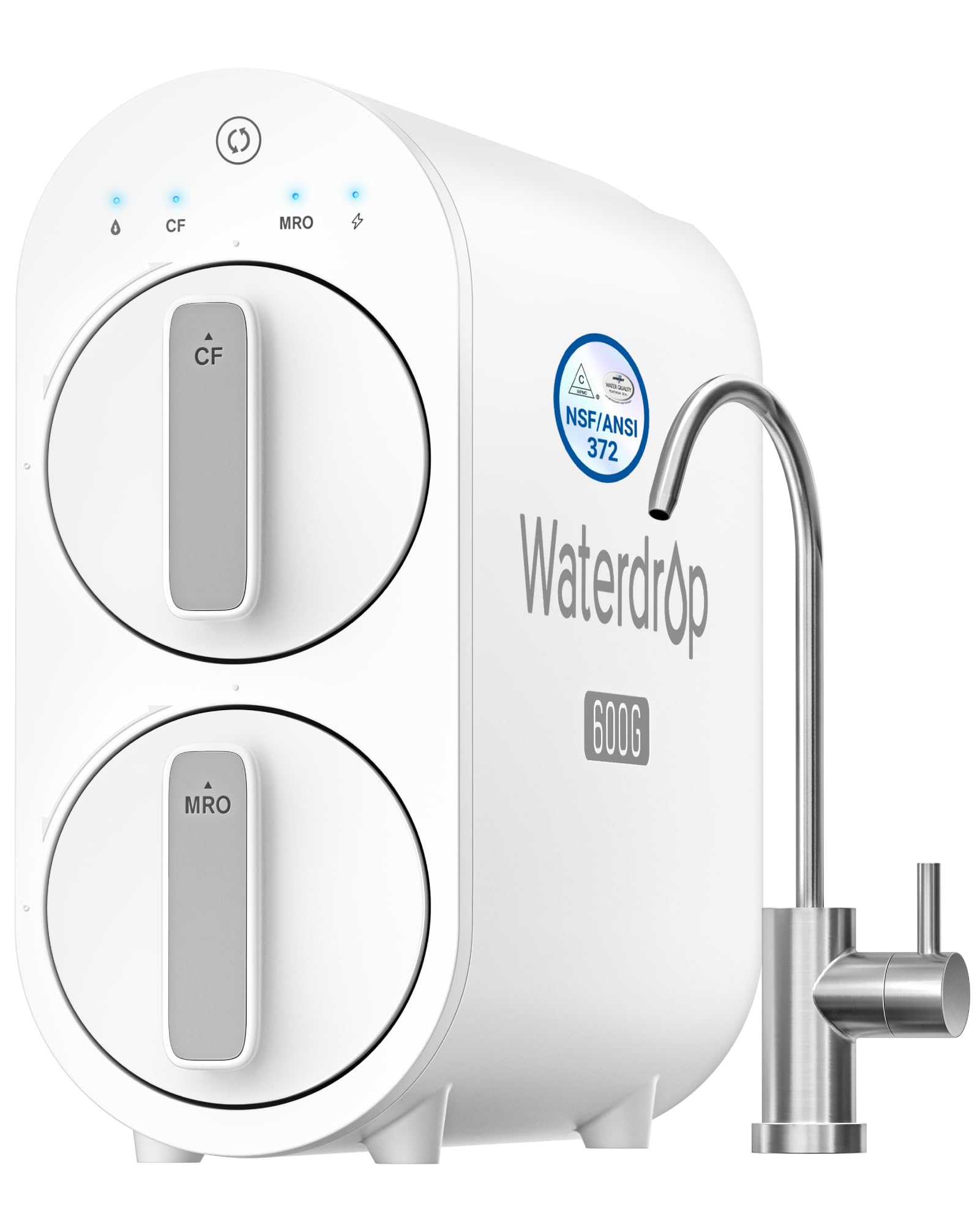
The Waterdrop G2P600 strikes an exceptional balance between performance, ease of maintenance, and long-term value. Its 7-stage filtration system tackles the full spectrum of common tap water issues — chlorine, lead, fluoride, heavy metals, and sediment — while the 600 GPD tankless design delivers a steady stream of purified water without consuming valuable under-sink real estate. Owners consistently report TDS readings dropping from 200–300 ppm down to single digits, which is precisely the kind of measurable result that matters.
Installation takes roughly 30 minutes for a moderately handy person, and the twist-and-pull filter cartridges make annual replacements a three-second job without tools or service calls. The 2:1 pure-to-drain ratio is competitive with modern standards, and users who have logged two years of continuous operation report zero leaks and consistent water quality throughout that period. The built-in filter life indicators take the guesswork out of maintenance scheduling.
One practical note for anyone connecting this to a refrigerator ice maker: the faucet’s pause during dispensing can create pressure fluctuations that trigger noise in some fridge lines. A small inline accumulator tank resolves this cleanly. The system requires an electrical outlet under the sink, so factor that into your installation planning. Overall, the G2P600 delivers premium-level results at a price that makes it accessible for most households.
Why it’s great
- Consistent TDS reduction to single digits verified by users over years of use
- Tool-free filter swaps take seconds with clear life indicators
- Compact tankless footprint leaves ample under-sink storage
- Strong 2:1 water efficiency reduces waste compared to older RO systems
Good to know
- Requires an electrical outlet under the sink for the booster pump
- Fridge ice maker connection may need a small accumulator tank
- Replacement filter part numbers can be confusing to locate
2. SimPure T1-400ALK Alkaline UV Reverse Osmosis System

The SimPure T1-400ALK is one of the few systems in its price range that combines reverse osmosis with genuine alkaline remineralization and UV sterilization in a single tankless unit. The alkaline filter adds back calcium, magnesium, and potassium after the RO stage, raising the pH and giving the water a noticeably smoother mouthfeel compared to standard RO output that can taste flat. SGS testing against NSF/ANSI 58 standards confirms removal of over 99.99% of 1,000-plus contaminants including PFAS, lead, arsenic, and fluoride.
The built-in booster pump ensures steady water pressure even in homes with lower incoming pressure, and the 400 GPD flow rate fills a glass in roughly 10 seconds — adequate for most families, though not the fastest on this list. Users report installation taking about an hour, and the quick-change twist filters simplify ongoing maintenance. The UV light operates automatically based on water flow, adding an extra layer of microbial protection without any user intervention.
A few owners note that the pump produces a mild hum during operation, and the UV effectiveness is difficult to verify without testing equipment. The TDS after filtration will not reach zero because the alkaline stage adds minerals back — this is by design, but worth understanding if you prefer mineral-free water. SimPure has been serving the US market since 2006, and their customer support team based in Seattle provides reliable backup if questions arise during installation or maintenance.
Why it’s great
- Alkaline remineralization restores calcium, magnesium, and potassium for better taste
- UV sterilization adds microbial protection beyond standard RO
- SGS certified against NSF/ANSI 58 with proven contaminant reduction
- Tankless design with built-in pump for consistent pressure
Good to know
- Pump is audible during operation — not silent but manageable
- UV filter is small and its long-term effectiveness is hard to verify at home
- TDS will not read zero due to added alkaline minerals
3. Home Master TMAFC Artesian Full Contact Reverse Osmosis System

The Home Master TMAFC stands apart from the tankless crowd with its traditional pressurized tank design — but don’t let the familiar form factor fool you. This system features a patented 2-pass remineralization process that passes water through a bed of calcium and magnesium minerals twice, mimicking the mineral profile of natural spring water. The result is water with body and a subtle sweetness that even dedicated bottled water drinkers notice. The 8.5-inch catalytic carbon contact per pass provides exceptional chlorine and VOC reduction.
Where this system truly shines is flow rate. The larger fittings and tubing deliver a 4.5-second fill for an 8-ounce glass, outpacing most tankless units that cost twice as much. The modular design means annual filter changes require no tools and no wrestling with the unit — each stage clicks out and clicks in. Users consistently highlight the outstanding customer service, with replacement parts shipped same-day when minor issues like a shut-off valve leak occur.
The trade-off is cabinet space. The purification cluster and separate 11-inch diameter storage tank require a more generous under-sink footprint than a single tankless module. The system operates entirely on water pressure with no electrical connection needed, which simplifies installation and eliminates any hum or vibration. Made in the USA by an NSF-listed company, the TMAFC carries a 5-year limited parts warranty and has a loyal following among families who prioritize taste above all else.
Why it’s great
- Exceptional 4.5-second fill rate outperforms most tankless systems
- Patented 2-pass remineralization delivers noticeably better taste
- No electrical outlet needed — runs on standard water pressure
- Modular tool-free filter changes simplify long-term maintenance
Good to know
- Separate storage tank requires significant under-sink space
- Faucet material quality has drawn mixed feedback from some owners
- Initial setup may need adapter fittings for non-standard plumbing
4. Frizzlife PD800-TAM4 800GPD Reverse Osmosis System

The Frizzlife PD800-TAM4 is the most feature-dense system in this roundup, packing 9 stages of filtration including a dedicated alkaline remineralization stage that raises pH above 7.5 and restores essential minerals. The real-time TDS display on the smart panel gives you continuous visibility into water quality, and the color-coded filter life indicators take all the guesswork out of maintenance schedules. With 800 GPD capacity, this system fills a cup in about 5 seconds — easily the fastest flow among the premium tier options here.
Installation is DIY-friendly thanks to the integrated design that minimizes connection points and the risk of leaks. The tankless module saves roughly 70% of under-sink space compared to traditional tank systems. Users report TDS reductions from 330 ppm city water down to 6 ppm, with the alkaline stage bumping it back up to around 28 ppm with a pH of 8.7 — a balanced profile that tastes clean but not flat. The brushed nickel faucet feels substantial, and the overall build quality reflects the higher price point.
The main consideration is the initial purge required after installation or after extended idle periods — the first half-liter or so may have elevated TDS and pH until the system stabilizes. The pump is slightly louder than some competitors, and customer support is email-only with no phone option. Replacement filters are proprietary and cost more than generic alternatives, so factor that into your long-term budget. For families who want the fastest flow, most filtration stages, and real-time monitoring in a single package, this is a compelling premium choice.
Why it’s great
- Fastest flow rate at 800 GPD — fills a cup in 5 seconds
- Real-time TDS display and filter life monitoring for total visibility
- 9-stage filtration including alkaline remineralization for balanced pH
- Compact tankless footprint with integrated leak-resistant design
Good to know
- Initial purge needed after installation or idle periods
- Pump is audible — not silent during operation
- Replacement filters are proprietary and cost more over time
5. DESENRUIS 800 GPD Dual RO Water Filter System
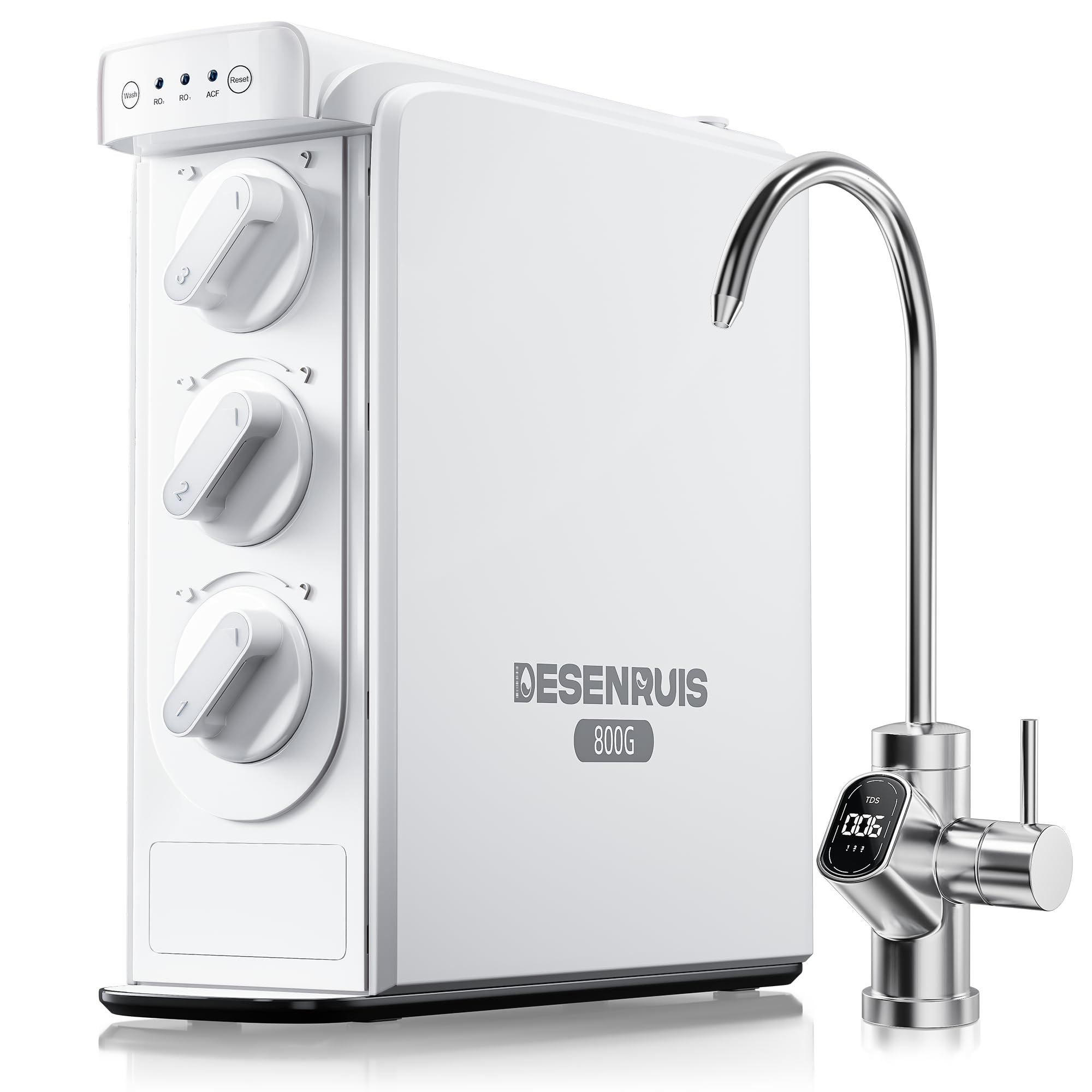
The DESENRUIS 800 GPD system brings dual RO membrane technology to a mid-range price point, using two membranes in series to extend filter life while maintaining a 3:1 pure-to-drain ratio. SGS third-party testing confirms 99.9999% removal of impurities including PFAS, fluoride, lead, chromium, and nitrates. The 0.55 GPM flow rate fills an 8-ounce cup in about 5 seconds, making it one of the faster options available without jumping to the premium tier.
The smart LED faucet provides real-time TDS monitoring and filter life indicators that turn red when replacement is due. The 0-stagnant water technology ensures that even after days of non-use, the first glass is fresh rather than concentrated with sitting water. Installation is straightforward with color-coded tubing and clear instructions, though users with PVC pipes may need an additional 3/8-inch push connector. The tankless design saves significant under-sink space while eliminating the risk of secondary contamination from a storage tank.
Some users note that the included 1/2-inch valve may not match all existing plumbing setups, requiring a trip to the hardware store for adapters. The system is quiet during operation, and the twist-and-pull filter replacement takes about 3 seconds without tools. For households looking for high flow, dual membrane longevity, and water-saving efficiency at a reasonable entry point, the DESENRUIS delivers impressive specifications that outperform its price class.
Why it’s great
- Dual RO membranes extend filter life and improve efficiency
- 3:1 pure-to-drain ratio reduces water waste significantly
- 0-stagnant water technology keeps first glass fresh after idle periods
- Smart faucet with TDS display provides real-time quality feedback
Good to know
- May need additional adapter fittings for non-standard plumbing
- Included valve size (1/2-inch) may not match all sink setups
- Dual membrane replacement costs slightly more than single-membrane systems
6. SimPure T2-600T Reverse Osmosis Water Filter System
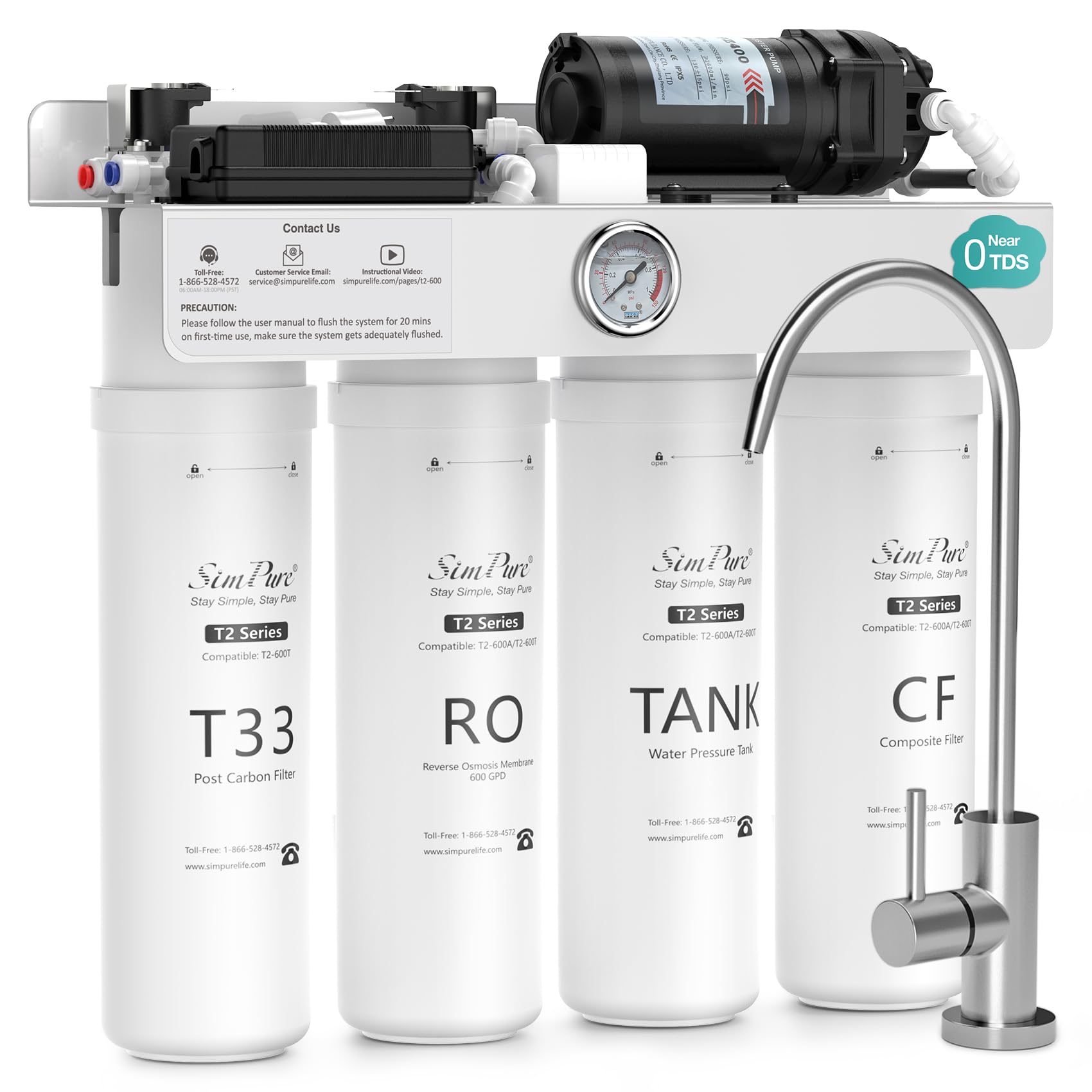
The SimPure T2-600T solves a common complaint about tankless RO systems: inconsistent pressure when connecting to a refrigerator ice maker. Its built-in mini pressure tank maintains stable flow at 0.42 GPM without needing a bulky external tank, and the 600 GPD capacity delivers near-zero TDS water — users report tap water at 172 ppm dropping to 1 ppm after filtration. The 8-stage system includes UV sterilization for microbial protection and achieves a 2:1 pure-to-drain ratio.
Installation is simplified by the all-in-one design that combines the tank and filtration unit into a single chassis, saving under-sink space compared to traditional tank systems. The tool-free twist filter replacements take seconds, and the SGS certification against NSF/ANSI 58 standards provides independent verification of contaminant removal. Users upgrading from the SimPure T1-400 model report that the T2-600T is twice as fast and significantly quieter than its predecessor.
The primary trade-off is that the built-in tank, while compact, still occupies more space than a truly tankless module. The system requires an electrical outlet for the booster pump, and the glass and plastic construction feels less premium than all-metal competitors. For households that want the pressure stability of a tank system without the footprint of a separate reservoir, the T2-600T offers a clever middle ground that delivers exceptional water purity.
Why it’s great
- Built-in pressure tank provides stable flow for fridge ice makers
- Near-zero TDS output — users report 1 ppm after filtration
- UV sterilization adds microbial protection beyond standard RO
- Compact all-in-one design saves space compared to separate tank systems
Good to know
- Built-in tank still takes more space than fully tankless designs
- Requires electrical outlet under the sink
- Glass and plastic construction may feel less durable than metal options
7. APEC Water Systems ROES-PH75 Essence Series Alkaline Mineral pH+
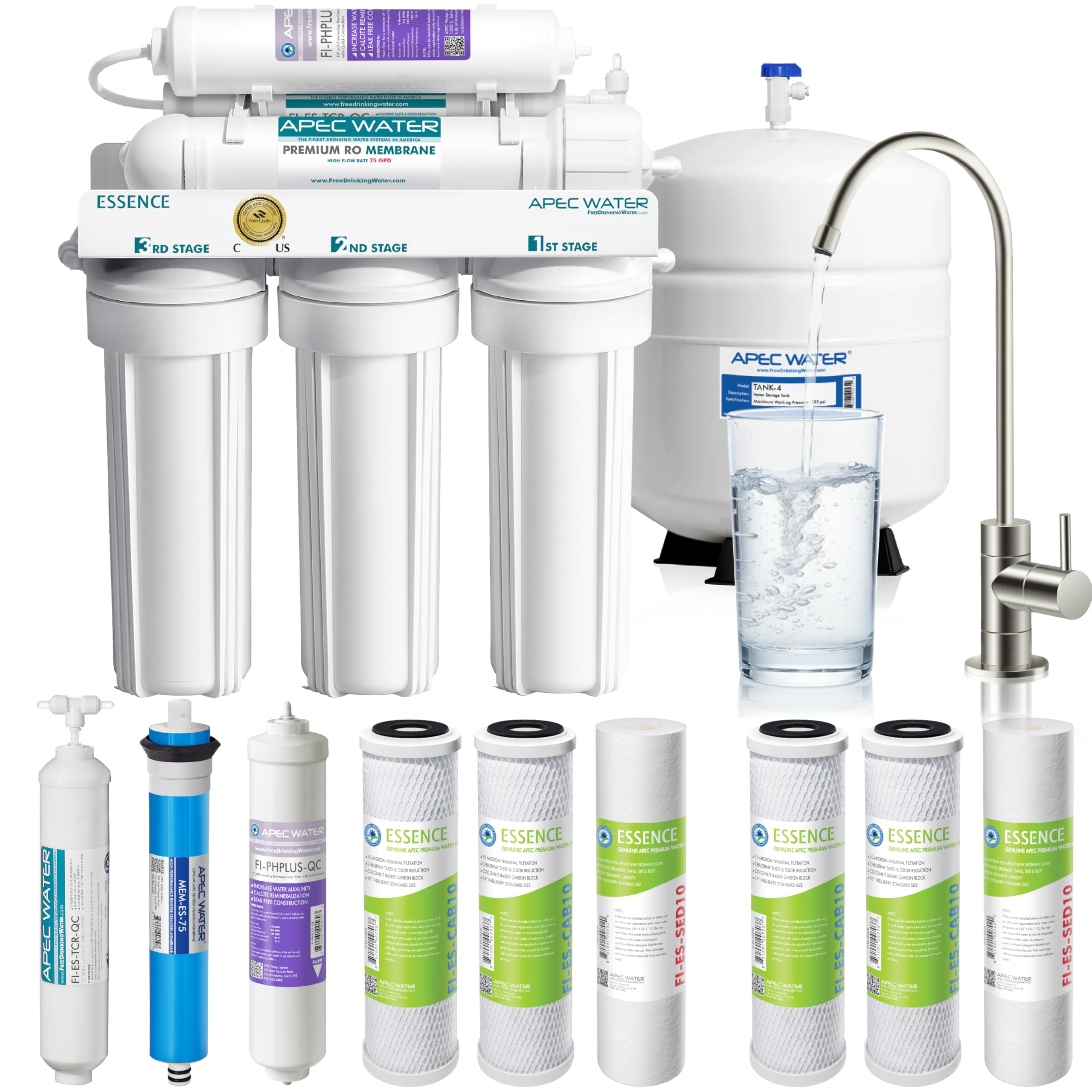
The APEC ROES-PH75 is the gold standard for traditional under-sink RO systems with a proven track record spanning nearly a decade. This WQA Gold Seal certified system uses standard 10-inch x 2.5-inch filters that are widely available and more affordable than proprietary cartridges, making it one of the most cost-effective systems to maintain over time. The 6-stage filtration includes an alkaline remineralization stage that adds calcium minerals for improved pH and taste, and the value bundle includes an extra set of pre-filters (stages 1-3) that typically need replacement every six months.
The 75 GPD capacity is modest by modern standards, but the pressurized storage tank means you have purified water available on demand without waiting for the system to produce it. The manual operation requires no electrical connection, which simplifies installation and eliminates any pump noise. Users report dramatic improvements in water quality, with lead levels dropping from 3.3 mcg/dL to below detectable limits in older homes. The system also prevents scale buildup in coffee makers, tea kettles, and espresso machines.
The trade-off is the slower production rate — if you deplete the tank, it takes time to refill. The separate storage tank also requires more cabinet space than tankless alternatives. Some users note that the quick-connect fittings can have minor leaks initially that seal after a short period. For households that value proven reliability, easy availability of replacement filters, and the simplicity of no-electricity operation, the APEC ROES-PH75 remains a top contender after years of market leadership.
Why it’s great
- Uses standard 10-inch filters that are widely available and affordable
- WQA Gold Seal certified with proven contaminant reduction
- No electrical outlet needed — runs on water pressure alone
- Includes extra set of pre-filters for reduced long-term cost
Good to know
- 75 GPD production rate is slow compared to modern tankless systems
- Separate storage tank requires significant under-sink space
- Quick-connect fittings may need slight adjustment to prevent initial drips
8. Brio SIMPL Reverse Osmosis Tankless Water Filter System

The Brio SIMPL lives up to its name with a straightforward 4-stage RO design that prioritizes ease of use and a minimal footprint. The integrated waterway system reduces connection points for leak resistance, and the front-access filter replacement requires only a quarter-turn to remove and a quarter-turn to install — no tools, no contortion. The brushed nickel faucet included in the package looks more premium than many systems in this class, and the 600 GPD flow rate provides a steady 1.5 liters per minute.
Installation is simplified by color-coded tubing and all necessary hardware, though the system does require a working under-sink electrical outlet and a drilled drain line connection. Users upgrading from older 5-stage RO systems consistently note the noticeably better flow rate and the clean, neutral taste of the water. The PAC composite filter captures dirt, rust, chlorine, and VOCs, while the RO membrane at 0.0001 microns tackles heavy metals and nitrates. The system conforms to NSF 372 for lead-free materials, providing additional peace of mind.
The compact dimensions — 14 inches long by 5.2 inches wide — make it one of the most space-efficient units in this roundup. Replacement filters are specific to Brio and must be ordered by part number, which adds a small friction to maintenance. The system does not include a TDS meter or filter life display, so you’ll need to track replacement schedules manually. For households that want a simple, no-nonsense tankless RO with a small footprint and reliable performance, the Brio SIMPL delivers exactly what it promises.
Why it’s great
- Compact dimensions save under-sink space while maintaining 600 GPD flow
- Front-access filter replacement takes seconds with no tools needed
- Integrated waterway system reduces potential leak points
- Stylish brushed nickel faucet included at no extra cost
Good to know
- Requires electrical outlet and drilled drain line for installation
- No TDS display or filter life indicators — manual tracking needed
- Replacement filters are proprietary and must be ordered by part number
9. Philips AUT9340 Reverse Osmosis System
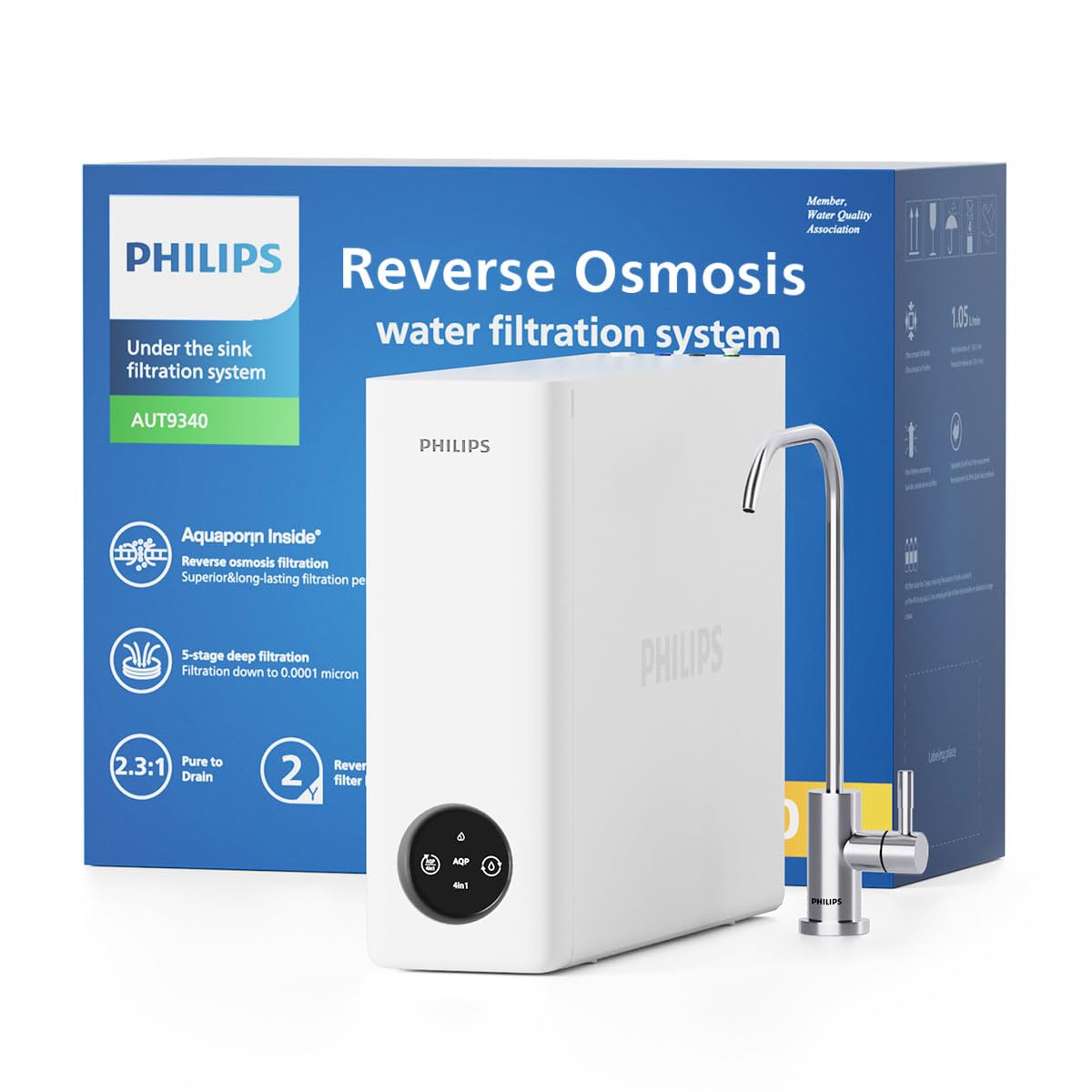
The Philips AUT9340 brings biomimetic filtration to the home market with its exclusive Aquaporin Inside technology, inspired by the natural water channels found in cell membranes. Developed in collaboration with NASA and ESA, this membrane achieves highly selective filtration that allows water molecules through while blocking contaminants. The 5-stage system with a 400 GPD capacity delivers a 2.3:1 pure-to-drain ratio, and the auto-cycle flushing prevents standing water from accumulating in the system.
Installation flexibility is a standout feature — the compact unit supports both vertical and horizontal mounting, making it adaptable to tight or oddly shaped cabinets. The front-loading, twist-out filter cartridges make replacements tool-free, and the 4-in-1 filter lasts approximately 12 months while the RO membrane extends to 24 months. Users consistently praise the quiet operation and the crisp taste of the water, noting that the flow rate is solid for drinking and cooking needs.
The system lacks a real-time TDS meter, which is a notable omission at this price point. Some users found installation documentation vague on certain options, and the drain line connection may require additional adapters if you have a garbage disposal. The 400 GPD capacity is sufficient for most households but falls behind the 600-800 GPD competitors in this price range. For those who value proven engineering from a global health technology brand and the unique Aquaporin membrane technology, the Philips AUT9340 represents a thoughtful alternative to conventional RO designs.
Why it’s great
- Aquaporin biomimetic membrane technology tested with NASA and ESA
- Flexible mounting options — vertical or horizontal installation
- Quiet operation with auto-cycle flushing for fresh water
- 4-in-1 filter lasts 12 months, RO membrane lasts 24 months
Good to know
- No built-in TDS display for real-time water quality monitoring
- Installation instructions could be more detailed for various setups
- 400 GPD flow rate is slower than comparably priced competitors
10. Aigerri UV Reverse Osmosis Water Filter Countertop System
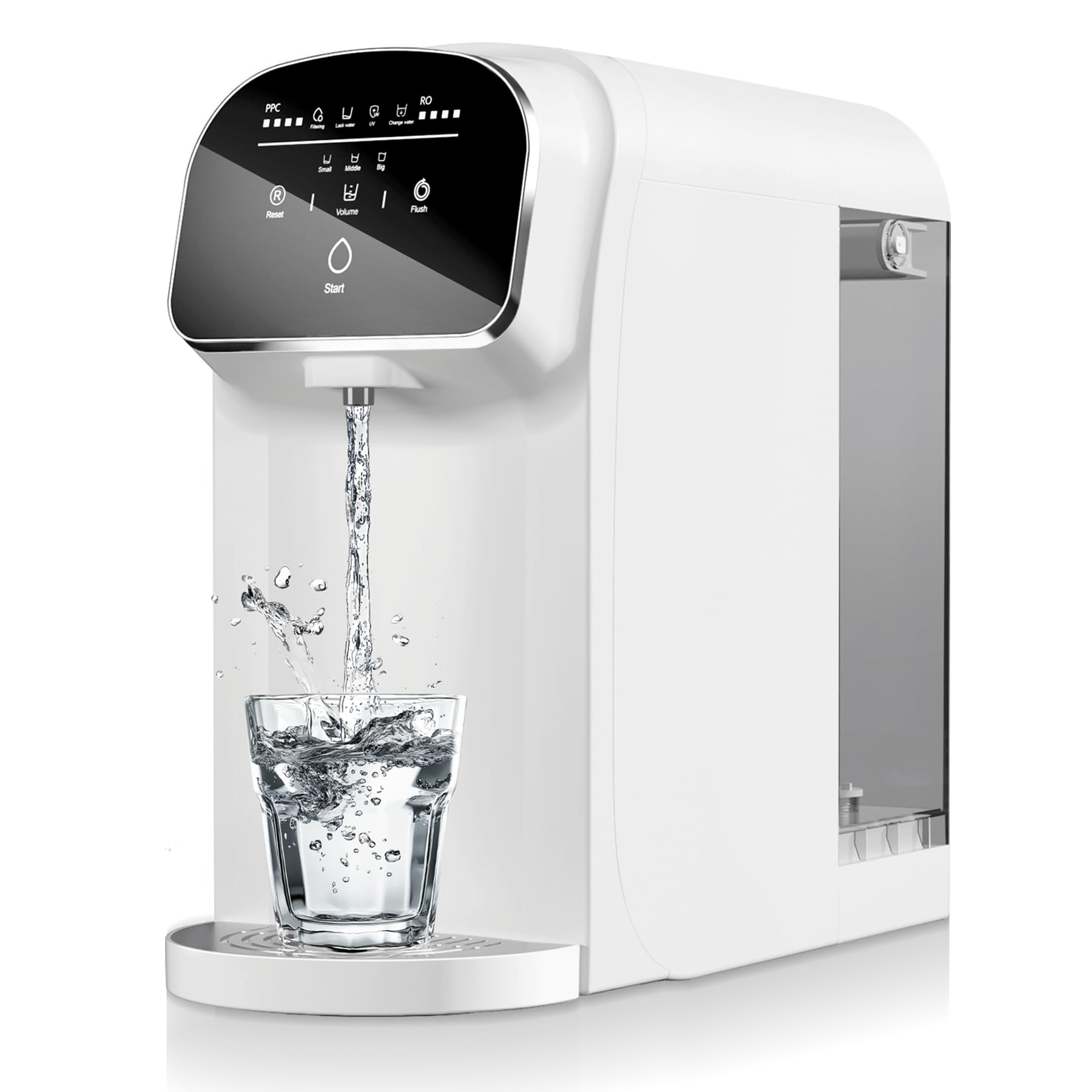
The Aigerri countertop RO system is the ideal solution for renters, RV owners, or anyone who wants purified water without drilling holes or modifying plumbing. Simply fill the 5-liter raw water reservoir, plug the unit into a standard outlet, and within minutes you have RO-purified water with UV sterilization. The 5:1 pure-to-drain ratio is the best in this roundup, producing 5 cups of clean water for every 1 cup of wastewater — a remarkable efficiency that saves both water and money over time.
The compact design measures just 16.1 inches tall when closed, and the responsive touchscreen control panel makes operation intuitive. Users report incoming TDS of 150 ppm dropping to 4 ppm after filtration, with the water tasting clean with no odor or aftertaste. The system comes with two replacement filter cartridges included, delivering up to 529 gallons of purified water — equivalent to roughly 6,000 single-use plastic bottles. The 5-liter reservoir fills about four standard Stanley cups, which is adequate for daily drinking and cooking for a small household.
The manual lacks some detail compared to competing countertop units, and the flow rate is slower than plumbed under-sink systems since the unit relies on a pump rather than line pressure. The RO and PPC filters may need replacement more frequently in areas with harder water. For households that prioritize flexibility and zero-installation convenience, the Aigerri delivers professional-grade RO filtration in a portable package that can move with you from apartment to RV to home.
Why it’s great
- No plumbing required — perfect for renters, RVs, and offices
- Industry-leading 5:1 pure-to-drain ratio minimizes water waste
- UV sterilization adds microbial protection beyond standard RO
- Comes with two replacement filters for extended value
Good to know
- Slower flow rate compared to plumbed under-sink systems
- Manual lacks detailed setup information
- Filter lifespan may be shorter in areas with hard water
11. Ecoviva 600GPD Reverse Osmosis System
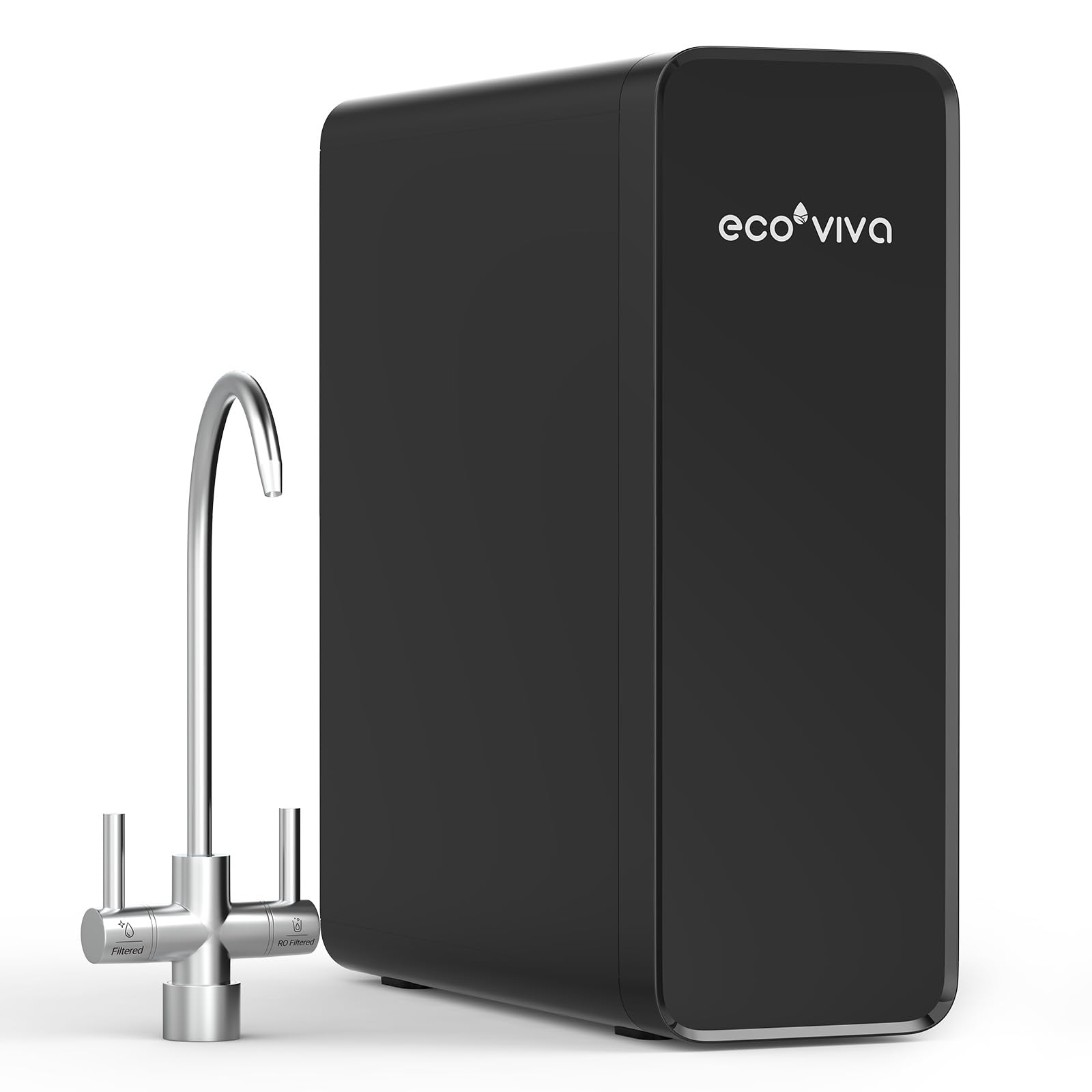
The Ecoviva 600GPD system offers the most affordable entry point into tankless RO filtration without sacrificing core performance. The NSF/ANSI 372, 42, and 58 certified membrane filters 97.25% of total dissolved solids, reducing heavy metals, chlorine, and other common contaminants. The 2.5:1 pure-to-drain ratio means only 1 cup of wastewater for every 2.5 cups of purified water — a 720% improvement over traditional 1:4 systems that saves significant water over time.
The twist-and-pull filter mechanism makes replacements effortless, and the LED panel with filter life indicators takes the guesswork out of maintenance schedules. Users report installation as straightforward with labeled parts and a clear manual, though connecting to a refrigerator ice maker requires an external RO accumulator tank that is not included. The compact footprint leaves plenty of under-sink storage even after installation, and the system operates quietly during normal use.
The faucet included is taller than some competing models, which may be an aesthetic consideration for certain kitchen layouts. The system requires a 110-120V electrical outlet, and the online installation guide is a helpful resource for first-time installers. Some users noted an occasional 30-minute flush alarm that resets automatically. For budget-conscious households that want the benefits of tankless RO without the premium price tag, the Ecoviva delivers reliable performance at the lowest entry cost in this roundup.
Why it’s great
- Lowest price entry point for a tankless RO system with solid certifications
- 2.5:1 pure-to-drain ratio saves significant water compared to older systems
- Compact footprint leaves ample under-sink storage space
- Filter life indicators on LED panel simplify maintenance scheduling
Good to know
- Refrigerator ice maker connection requires an external accumulator tank (not included)
- Faucet is taller than some competing models
- Occasional flush alarm may require reset after extended use
Understanding the Specs
GPD — Gallons Per Day
This measures the maximum amount of purified water the system can produce in a 24-hour period under ideal conditions. A 400 GPD system fills an 8-ounce cup in roughly 11 seconds, while 800 GPD cuts that to about 5 seconds. Higher GPD ratings mean faster flow but often require larger membranes and more powerful pumps. For most households, 400-600 GPD is sufficient for drinking, cooking, and filling pots. If you frequently fill large containers or have a large family, 800 GPD provides a noticeable improvement in convenience.
Pure-to-Drain Ratio
Traditional RO systems wasted 3-4 gallons of water for every gallon of purified water, sending the rest down the drain as concentrate. Modern systems achieve ratios of 2:1, 3:1, or even 5:1, meaning less wastewater and lower water bills. A 2:1 ratio produces 2 cups of clean water for every 1 cup of wastewater, while a 5:1 ratio produces 5 cups for every 1 cup wasted. Higher ratios are more eco-friendly but may slightly reduce membrane lifespan in areas with very hard water. The ratio can also fluctuate based on incoming water temperature and pressure.
Filtration Stages
The number of stages indicates how many different filter media the water passes through before reaching your glass. A basic 4-stage system typically includes sediment, carbon block, RO membrane, and post-carbon. Higher stage counts add extra carbon passes, alkaline remineralization cartridges, or UV sterilization modules. More stages do not automatically mean better water — the quality of each filter medium matters more than the count. However, additional stages for remineralization or UV can provide tangible benefits in taste and microbial safety.
TDS — Total Dissolved Solids
TDS measures the concentration of dissolved minerals and salts in water, measured in parts per million. Tap water typically ranges from 100-500 ppm depending on your location. Reverse osmosis systems reduce TDS by 90-99%, with most modern systems bringing levels below 20 ppm or even near zero. Some users prefer very low TDS for its neutral taste, while others prefer a moderate TDS with added minerals for improved mouthfeel. Systems with alkaline remineralization stages will intentionally increase TDS slightly after the RO membrane to restore beneficial minerals.
FAQ
Do I need an electrical outlet for an RO system?
How often do I need to replace the filters?
Will an RO system remove fluoride and PFAS?
Can I install an under-sink RO system myself?
What is the difference between alkaline and standard RO water?
Final Thoughts: The Verdict
For most people, the best at home water filter system winner is the Waterdrop G2P600 because it combines proven 7-stage filtration, a fast 600 GPD tankless design, and easy tool-free maintenance at a price that represents genuine value for the long term. If you want alkaline remineralization and UV protection in a single package, grab the SimPure T1-400ALK. And for a no-installation portable solution that works anywhere, nothing beats the Aigerri Countertop RO.

Mo Maruf
I created WellFizz to bridge the gap between vague wellness advice and actionable solutions. My mission is simple: to decode the research and give you practical tools you can actually use.
Beyond the data, I am a passionate traveler. I believe that stepping away from the screen to explore new environments is essential for mental clarity and physical vitality.