Our readers keep the lights on and my smoothie glass nicely filled. As an Amazon Associate, I earn from qualifying purchases.
Your butcher block takes daily abuse from knives, moisture, and bacteria. A quality sealant is the difference between a lifetime of beauty and early cracking or warping. The right formula locks in moisture resistance while keeping your food prep surfaces safe.
I’m Mohammad Maruf — the founder and writer behind WellFizz. I’ve spent years analyzing wood care formulations, dissecting ingredient lists, and comparing real-world performance data to separate marketing hype from effective protection.
After analyzing dozens of formulas, I’ve identified the top contenders for the best butcher block sealant that protect and beautify wood surfaces without leaving harmful residues.
How To Choose The Best Butcher Block Sealant
Choosing the right sealant comes down to three things: your wood type, how often you use the board, and whether you prefer a matte or glossy finish. Some products penetrate deep (oils), while others sit on the surface (waxes). A combo offers the best of both worlds.
Oil vs. Wax vs. Combo
Pure mineral oils are cheap and easy to apply but evaporate quickly and require frequent reapplication. Waxes (beeswax, carnauba) create a waterproof barrier but can feel greasy if overapplied. Combination products—like a gel or butter—give you deep conditioning plus a protective topcoat. For most households, a combo is the smartest choice.
Food Safety First
Always look for “food‑grade” or “USP” on the label. Avoid anything with petroleum distillates, synthetic fragrances, or drying oils like linseed that can turn rancid. Coconut‑derived and beeswax blends are naturally antimicrobial and won’t go bad.
Application & Longevity
Pastes and waxes take a bit more elbow grease but last longer. Liquids are faster but require more frequent coats. If you use your butcher block daily, expect to reapply every 2–4 weeks. For light use, a good wax can hold up for months.
Quick Comparison
On smaller screens, swipe sideways to see the full table.
| Model | Type | Best For | Key Feature | Amazon |
|---|---|---|---|---|
| Rowdy Rooster Cutting Board Gel | Gel (Oil + Wax) | Daily use, glossy finish | Combines oil & wax in one step | Amazon |
| Z’s Wood Nectar | Paste Wax | Unscented, sensitive users | 9 oz value size, odorless | Amazon |
| Caron & Doucet Conditioning Wax | Plant‑Based Wax | Eco‑conscious, bamboo | 100% plant‑based, no mineral oil | Amazon |
| Daddy Van’s Beeswax Countertop Care | Beeswax Paste | Countertops & soapstone | USDA Biobased, non‑toxic | Amazon |
| Howard Products Butcher Block Oil 3‑Pack | Mineral Oil | High‑volume, professional use | Value 3‑pack, won’t go rancid | Amazon |
| Walrus Oil Cutting Board Oil | Mineral Oil | Woodworkers, deep conditioning | Trusted by professionals | Amazon |
| Verdana Cutting Board Oil | Coconut‑Derived Oil | Petroleum‑free alternative | Organic coconut oil, non‑GMO | Amazon |
| Unpretentious Butcher Block Oil | Mineral Oil | Budget, large surfaces | 16 oz bottle, odorless | Amazon |
| Lancaster Wood Wax | Beeswax Paste | Wooden utensils, small boards | Pennsylvania beeswax, handmade | Amazon |
| Macy’s Place Wood Butter | Wax Cream | Easy application, animal rescue | Supports animal rescue | Amazon |
| Wendler Woodworking Natural Wood Wax | Beeswax Paste | Entry‑level, eco‑friendly | Plastic‑free tin, USA sourced | Amazon |
In‑Depth Reviews
1. Rowdy Rooster Cutting Board Gel
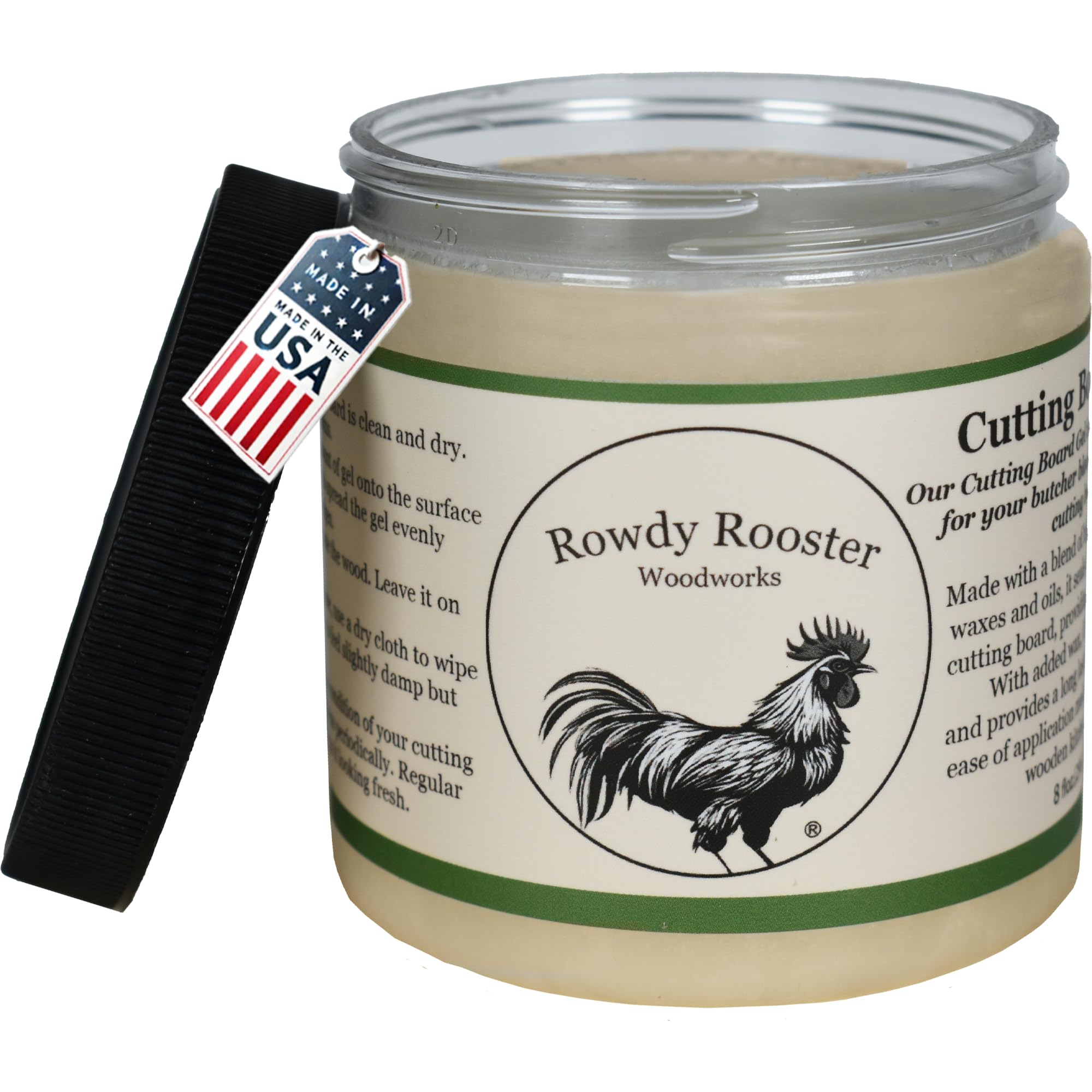
The Rowdy Rooster gel combines mineral oil and beeswax into one easy‑to‑apply formula that penetrates deeply while leaving a protective surface layer. Users report it soaks in quickly without stickiness, and the pleasant citrus scent is a bonus.
It works exceptionally well on teak and walnut, bringing out rich color and grain. The gel format means no messy drips—just apply with a cloth, let it absorb, and buff. Many reviewers note that a single application lasts several weeks even with daily use.
One small downside: the container is on the smaller side, so you may need two tins for large countertops. But for most cutting boards, this is the most balanced option you’ll find.
Why it’s great
- Easy, mess‑free gel application
- Provides deep conditioning and a protective seal
- Pleasant citrus scent, not overpowering
- Works on teak, walnut, bamboo, and maple
Good to know
- Small tin may not be enough for large countertops
- Citrus scent may not be for everyone
2. Z’s Wood Nectar

Z’s Wood Nectar is a paste wax made with food‑grade mineral oil and natural ingredients. It’s completely unscented, making it ideal for those sensitive to fragrances. Users love how it revives old wood and even works on non‑wood surfaces like plastic trim.
The 9‑ounce tin is generous—enough for multiple boards, utensils, and even furniture. Application is straightforward: rub on, let sit, buff off. The finish is a low‑sheen luster that doesn’t look greasy.
Some customers mention it takes a bit more effort to buff compared to liquid oils, but the longevity makes up for it. A great choice for woodworkers who want a reliable, odor‑free finish.
Why it’s great
- Large 9 oz tin offers great value
- Unscented and hypoallergenic
- Versatile—works on wood, plastic, even metal
- Food‑safe and non‑toxic
Good to know
- Paste requires more buffing than liquids
- Not ideal if you prefer a citrus or herbal scent
3. Caron & Doucet Conditioning Wax

Caron & Doucet stands out because it’s 100% plant‑based and vegan—no mineral oil at all. The base is fractionated coconut oil (which won’t go rancid) fortified with rice bran wax for a strong waterproof barrier. It also contains essential oils that naturally eliminate odors without transferring to food.
Users report that a single tin lasts for years with regular use on cutting boards, knife blocks, and bamboo utensils. The wax softens quickly with body heat and applies smoothly. It darkens wood slightly and brings out the grain beautifully.
On the downside, the scent (light essential oils) may not appeal to everyone, and the jar is small. But for those avoiding petroleum products, this is a stellar performer.
Why it’s great
- 100% plant‑based, vegan, no mineral oil
- Does not go rancid over time
- Creates a strong waterproof seal
- Eliminates odors naturally
Good to know
- Essential oil scent may be noticeable
- Small jar size
4. Daddy Van’s Beeswax Countertop Care

Daddy Van’s is specifically formulated for countertops—soapstone, slate, concrete, and butcher block. It’s a beeswax and carnauba wax blend that’s USDA Certified 100% Biobased and cruelty‑free. Users praise it for being less greasy than mineral oil while providing a silky, matte finish.
Application is simple: rub a small amount onto a clean surface and buff. It works wonders on water marks and restores old wood to a rich, even tone. Many reviewers mention it lasts longer than liquid oils and doesn’t leave a slippery residue.
The tin is 6 oz, which covers a decent area. It’s odorless and chemical‑free, making it safe around kids and pets. The only minor complaint is that it may need reapplication after heavy cleaning.
Why it’s great
- Designed for countertops, not just boards
- USDA Biobased and cruelty‑free
- Non‑greasy matte finish
- Odorless and non‑toxic
Good to know
- May require reapplication after damp wiping
- Not as deeply penetrating as oil
5. Howard Products Butcher Block Oil 3‑Pack
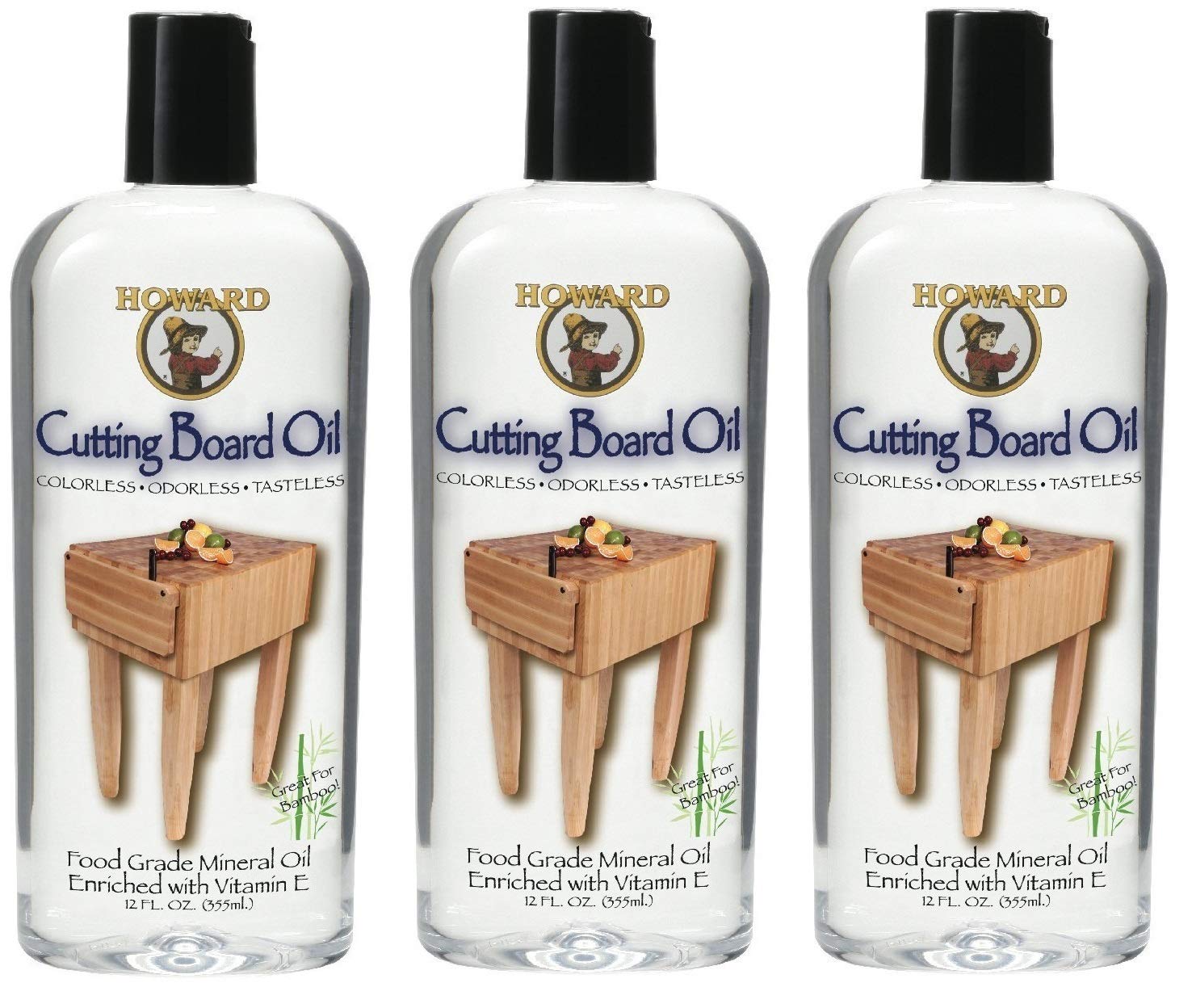
Howard’s is a classic mineral oil that has been a staple among woodworkers for years. This 3‑pack gives you three 12‑ounce bottles, offering the best per‑ounce value among premium oils. It’s enriched with Vitamin E to help preserve the wood and won’t go rancid.
Users love that a little goes a long way—one bottle can condition several boards, bowls, and utensils. It absorbs quickly and leaves a natural matte finish. Many professional wood turners and kitchen builders rely on Howard’s for their projects.
The main drawback is that it’s a pure oil, so it doesn’t leave a wax barrier. You’ll need to reapply more often than with a combo product. But for high‑volume conditioning, this pack is unbeatable.
Why it’s great
- Excellent value with three bottles
- Food‑safe and enriched with Vitamin E
- Won’t go rancid
- Trusted by professionals
Good to know
- Pure oil requires frequent reapplication
- No wax barrier against moisture
6. Walrus Oil Cutting Board Oil
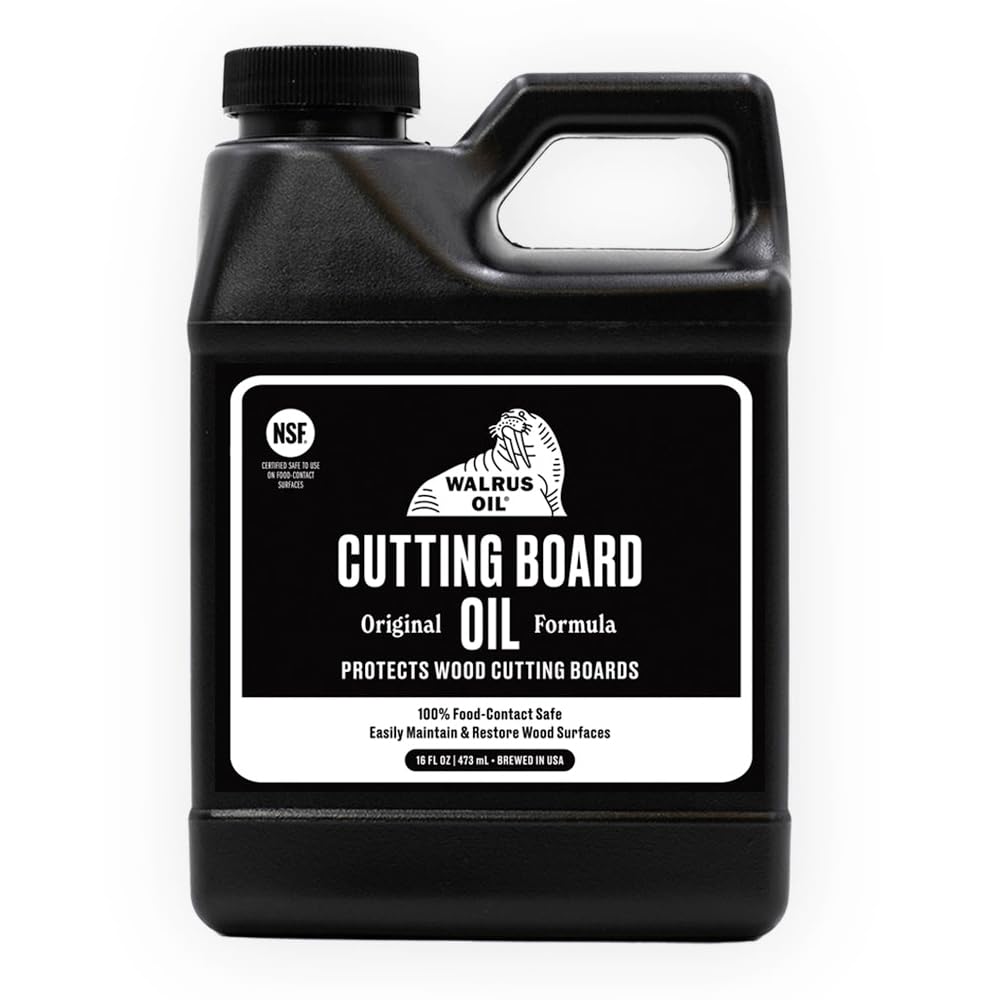
Walrus Oil is a trusted name among woodworkers, and this 16‑ounce jug of cutting board oil delivers exactly what professionals expect: pure, food‑safe mineral oil that penetrates deeply and evenly. It’s FDA‑compliant and made in the USA.
Users report that it brings out the natural beauty of walnut, maple, and cherry without any stickiness or odor. The generous size makes it ideal for frequent use on multiple boards or large countertops. It also works well as a base coat before applying a wax finish.
On the downside, it’s a simple oil—no added wax or scent. You’ll need to apply it more often if you want a waterproof seal. But for pure conditioning, this is top‑tier.
Why it’s great
- Large 16 oz bottle for heavy use
- Professional‑grade, trusted by woodworkers
- Odorless and food‑safe
- Enhances wood grain beautifully
Good to know
- Pure oil, no wax barrier
- Requires more frequent reapplication
7. Verdana Cutting Board Oil
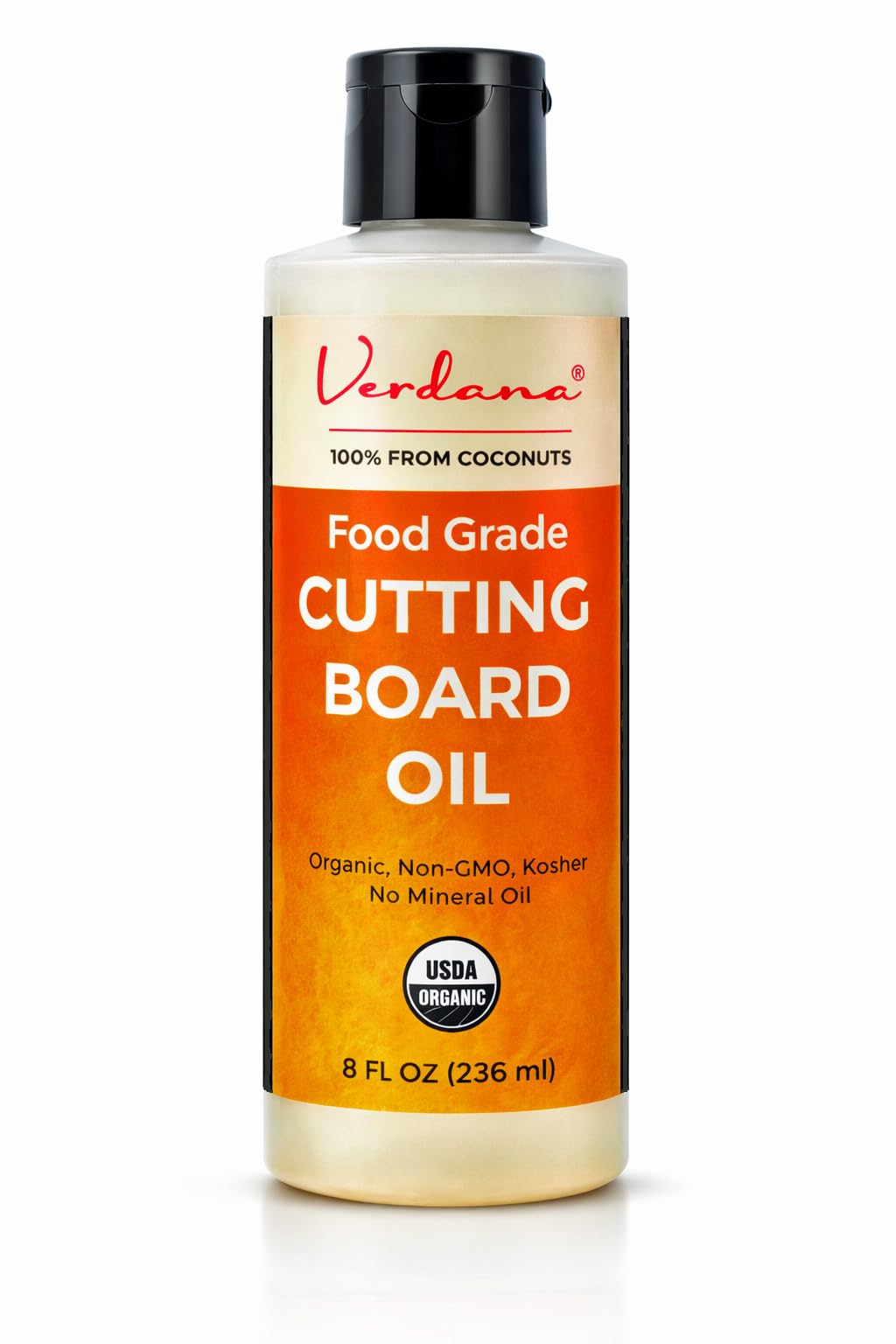
Verdana offers a unique alternative to mineral oil: 100% organic fractionated coconut oil. It’s Kosher, Non‑GMO, and bottled in the USA. This oil is completely odorless and tasteless, making it perfect for those who want a petroleum‑free option.
Users appreciate that it absorbs quickly without leaving a greasy film. It’s especially effective on bamboo and hardwood cutting boards. The 8‑ounce bottle is compact but plenty for regular maintenance. Many reviewers note that it revives dry wood without any chemical smell.
One consideration: fractionated coconut oil may not create as durable a waterproof barrier as mineral oil or wax. You’ll want to apply it more often if your board sees heavy moisture. But for a natural, non‑toxic choice, this is excellent.
Why it’s great
- Organic coconut oil, no
- Odorless, tasteless, and food safe
- Absorbs quickly without greasy residue
- Kosher and non-GMO certified
Good to know
- May not be as waterproof as mineral oil
- Requires more frequent reapplication
8. Unpretentious Butcher Block Oil
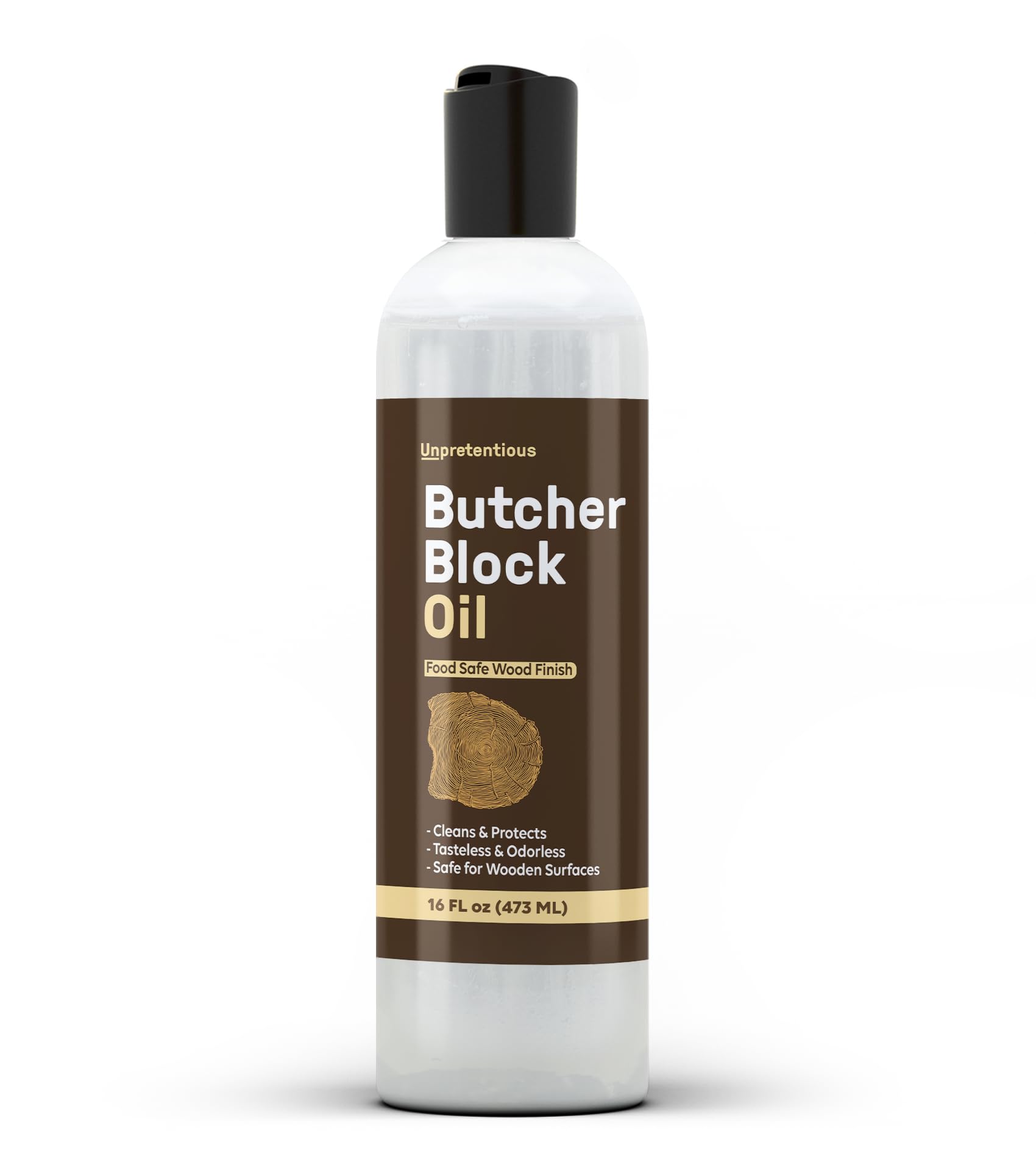
Unpretentious lives up to its name—it’s a straightforward, no-frills mineral oil that does exactly what you need. The 16-ounce bottle gives you plenty of product for large butcher block islands or multiple boards. It’s colorless, tasteless, and odorless, so it won’t alter your food.
Users report that it soaks in well and revives dry wood effectively. It’s particularly popular among custom cutting board makers who use it as their go-to finishing oil. The large bottle means you won’t run out mid-project.
The only downside is the cap design—some users received bottles with cracked caps that leaked during shipping. Also, as a pure oil, you’ll need to reapply regularly. But for the price per ounce, this is a solid entry-level option.
Why it’s great
- Excellent value for a large 16 oz bottle
- Odorless, tasteless, and food safe
- Penetrates deeply into dry wood
Good to know
- Cap may leak during shipping
- No wax barrier, requires frequent application
9. Lancaster Wood Wax

Lancaster’s wood wax is a small-batch, handcrafted product made with locally sourced Pennsylvania beeswax and food-grade mineral oil. It comes in a 2-ounce tin but punches above its weight in performance. Users love the soft paste consistency and the natural honey-like scent.
It’s ideal for wooden spoons, spatulas, and small cutting boards. Many reviewers note that one tin can last over a year with occasional use. The wax penetrates well and leaves a beautiful low-sheen finish that resists water and stains.
The main trade-off is the small size—you’ll need multiple tins for a large countertop. Also, the beeswax scent, while pleasant, may be noticeable if you’re sensitive. But for handcrafted quality, this is a gem.
Why it’s great
- Handcrafted with Pennsylvania beeswax
- Pleasant natural scent
- Long-lasting protection
Good to know
- Small 2 oz tin
- Beeswax scent may be noticeable
10. Macy’s Place Wood Butter

Macy’s Place Wood Butter combines food-grade mineral oil and organic beeswax into a creamy, easy-to-apply formula. It’s made in the USA by a small home business, and a portion of proceeds supports animal rescue. The 4-ounce tin is a good size for standard cutting boards.
Users report that it revives dry wood quickly and restores luster with minimal effort. It also works well on wooden utensils, knife blocks, and even as a hand moisturizer (food-grade ingredients). Many appreciate the feel-good aspect of supporting animal rescue.
Some users wish the tin were larger, as frequent users may run out quickly. Also, the cream consistency means it may not penetrate as deeply as a straight oil. But for ease of use and a feel-good purchase, this is a strong contender.
Why it’s great
- Easy to apply cream formula
- Supports animal rescue
- Safe for wooden utensils and boards
Good to know
- 4 oz tin may be small for heavy use
- Cream may not penetrate as deeply as oil
11. Wendler Woodworking Natural Wood Wax

Wendler Woodworking’s natural wood wax is a simple, honest product made with only two ingredients: food-grade beeswax and mineral oil. It’s handcrafted in Colorado and packaged in a reusable/recyclable tin with zero plastic. The 2-ounce size is perfect for first-time users or small projects.
Users report that it brings out the natural color and grain of wood, and it’s effective at hiding scratches on cutting boards. The application is straightforward—rub on, let penetrate, buff off. Many appreciate the eco-friendly packaging and the Wendler Family Guarantee.
The small size is the main limitation. You’ll need to buy multiple tins for larger surfaces. Also, the wax may need reapplication after a week of heavy use. But for a budget-friendly introduction to wood care, it’s a great starting point.
Why it’s great
- Eco-friendly, plastic-free packaging
- Simple two-ingredient formula
- Handcrafted in the USA
Good to know
- Small 2 oz tin
- May need frequent reapplication
Understanding the Specs
Oil vs. Wax vs. Combo
Oils (mineral, coconut) penetrate deep into wood fibers, hydrating and preventing cracks. Waxes (beeswax, carnauba) sit on the surface, creating a water-resistant barrier. Combination products offer the best of both worlds: deep conditioning plus a protective topcoat. For most users, a combo is the most efficient choice.
Food-Grade Certification
Look for “USP” or “food-grade” on the label. This ensures the product is safe for surfaces that contact food. Avoid anything with petroleum distillates or synthetic additives. Natural ingredients like beeswax, coconut oil, and mineral oil are the safest bets.
Rancidity
Some natural oils (like linseed or walnut oil) can go rancid over time, creating unpleasant smells. Fractionated coconut oil and mineral oil do not. Beeswax and carnauba wax are also stable. Always check that the product won’t turn rancid, especially if you don’t use your board daily.
Application Method
Liquids are easiest—just pour and wipe. Pastes require more effort but last longer. Gels offer a middle ground. Consider your comfort level and how often you’re willing to maintain the board. A paste wax every few months is less work than oiling weekly.
FAQ
How often should I apply butcher block sealant?
Can I use olive oil or vegetable oil on my butcher block?
Do I need to sand my board before applying sealant?
What’s the difference between mineral oil and beeswax?
Final Thoughts: The Verdict
For most people, the best butcher block sealant winner is the Rowdy Rooster Cutting Board Gel because it combines the deep conditioning of oil with the protective barrier of wax in one easy gel format. If you want an unscented, high-value option, grab the Z’s Wood Nectar. And for eco-conscious users who avoid petroleum, nothing beats the Caron & Doucet Conditioning Wax.

Mo Maruf
I created WellFizz to bridge the gap between vague wellness advice and actionable solutions. My mission is simple: to decode the research and give you practical tools you can actually use.
Beyond the data, I am a passionate traveler. I believe that stepping away from the screen to explore new environments is essential for mental clarity and physical vitality.