Our readers keep the lights on and my smoothie glass nicely filled. As an Amazon Associate, I earn from qualifying purchases.
Cooling a large space isn’t the same as cooling a standard bedroom — the square footage, ceiling height, insulation, and heat load all demand a system engineered for sustained output. Pick the wrong unit and you end up with short cycling, uneven temperatures, or an electricity bill that stings every month.
I’m Mohammad Maruf — the founder and writer behind WellFizz. I analyze specifications, efficiency ratings, and real-world performance data to separate marketing claims from genuine cooling capability.
After combing through dozens of models and thousands of verified customer experiences, the best ac for big room choices come down to BTU accuracy, inverter technology, and installation integrity.
How To Choose The Best Ac For Big Room
Selecting an air conditioner for a large space requires more than just looking at the price tag. You need to consider BTU output, efficiency ratings, refrigerant type, and whether a single unit or multi-zone system better fits your layout.
BTU Capacity: Match Output to Square Footage
For rooms over 800 square feet, you typically need at least 18,000 BTUs. Spaces around 1,200 to 1,500 square feet often require 24,000 BTUs or more. Undersizing leads to constant running and high bills; oversizing causes short cycling and poor humidity control. Always account for ceiling height, window area, and sun exposure when calculating your needs.
SEER2 & Inverter Technology: The Efficiency Trio
SEER2 measures seasonal energy efficiency under real-world conditions. Ratings of 18 SEER2 or higher indicate strong performance. Inverter compressors vary their speed instead of cycling on and off, which maintains steady temperatures and cuts electricity use by up to 30 percent compared to traditional units.
Single-Zone vs Multi-Zone Systems
A single-zone mini split works well for one open-concept great room or a large master suite. Multi-zone systems let you cool two or three separate areas from one outdoor condenser, giving each room its own thermostat. This flexibility is ideal for finished basements, split-level layouts, or home additions.
Quick Comparison
On smaller screens, swipe sideways to see the full table.
| Model | Type | Best For | Key Feature | Amazon |
|---|---|---|---|---|
| Cooper & Hunter 24K BTU | Single-Zone | Large open-concept rooms | 18 SEER2 with smart kit | Amazon |
| Daikin 18K BTU Entra | Single-Zone | Premium efficiency & air quality | Titanium apatite filter & ECO+ | Amazon |
| Senville AURA 18K BTU | Single-Zone | Smart home integration | 21.5 SEER2, Alexa enabled | Amazon |
| MRCOOL 24K BTU Easy Pro | Single-Zone | DIY-friendly installation | Pre-charged lines for self-install | Amazon |
| Cooper & Hunter 18K Dual 2-Zone | Multi-Zone | Two separate rooms | 22.5 SEER2, 25ft linesets | Amazon |
| ROVSUN 2 Zone 20K BTU | Multi-Zone | Dual-room value | 23 SEER2, individual room control | Amazon |
| Albott 3 Zone 27K BTU | Multi-Zone | Three-room coverage | 22 SEER2, WiFi app control | Amazon |
| Senville 18K Dual Zone | Multi-Zone | Whole-house comfort | 22.5 SEER2, 10-year warranty | Amazon |
| MRCOOL 36K BTU DIY Star 4 | Single-Zone | Extra-large spaces up to 1,500 sq ft | DIY install, low ambient cooling | Amazon |
| DELLA Umbra 18K BTU | Single-Zone | Budget-friendly smart split | Alexa/WiFi, 19 SEER2 | Amazon |
| DELLA Econo 23K BTU | Single-Zone | Large rooms on a budget | Cools 1,500 sq ft, 17 SEER2 | Amazon |
In-Depth Reviews
1. Cooper & Hunter 24,000 BTU Mini Split

The Cooper & Hunter MIA Series delivers 24,000 BTUs of cooling and heating power, making it a strong match for rooms up to 1,500 square feet. Its 18 SEER2 inverter compressor ramps up and down smoothly, which keeps temperatures consistent and reduces energy waste compared to non-inverter models.
Owners frequently praise how quietly this unit runs — indoor noise levels sit around 35 decibels, barely louder than a whisper. The included smart kit allows app control from your phone, and the 16-foot installation kit covers most standard setups. Multiple reviews note that after switching from central HVAC, monthly electric bills dropped noticeably.
A handful of users mention that professional installation is non-negotiable and that finding a technician comfortable with mini splits can take a few calls. One reviewer also flagged drainage concerns in humid climates, though the self-clean function helps mitigate that. Overall, this unit offers an excellent balance of capacity, efficiency, and build quality for large-room cooling.
Why it’s great
- Quiet operation at 35 dB
- Smart kit included for remote control
- Strong 18 SEER2 efficiency rating
Good to know
- Professional installation required
- Some users report drainage issues in high humidity
2. Daikin 18,000 BTU Entra R32 Series

Daikin is a heavyweight in the HVAC industry, and the Entra R32 series shows why. This 18,000 BTU system uses R-32 refrigerant, which has a lower global warming potential than older refrigerants, and achieves an 18 SEER2 rating with a titanium apatite photocatalytic filter that captures allergens and odors.
The unit covers up to 1,000 square feet and includes features like ECO+ mode, Powerful Operation for rapid cooling, and a self-diagnostic digital display that simplifies troubleshooting. Owners in hot climates like Las Vegas and Texas report that it keeps sun-drenched rooms comfortable without strain. The included 15-foot Maxwell installation kit and wall bracket add convenience for professional installers.
One significant concern: a small number of buyers experienced component failures within the first few months, and replacement parts reportedly took weeks to arrive. While the majority of feedback is positive, the reliability questions make it a slightly riskier bet than some competitors. If you value air purification and brand pedigree, this is still a compelling option.
Why it’s great
- Titanium apatite filter for cleaner air
- R-32 refrigerant with lower environmental impact
- ECO+ and Powerful Operation modes
Good to know
- Some reliability concerns reported
- Parts replacement can be slow
3. Senville AURA 18,000 BTU Mini Split

The Senville AURA series combines high efficiency with strong smart-home integration. At 21.5 SEER2, this 18,000 BTU unit is one of the more energy-efficient options in its class, and it works with Alexa for voice control and app-based scheduling. The DC inverter technology helps it maintain precise temperatures while keeping power draw low.
Users consistently highlight the quiet indoor unit — noise levels hover around 27 decibels, which is library-quiet. The system handles extreme temperatures well, with heating capability down to -22°F, making it suitable for four-season use in colder climates. Several DIY-minded buyers successfully installed it themselves, though the manual could be more detailed.
One recurring note: the 16-foot line set may be short for some installations, and you will need a vacuum pump and gauges if you go the DIY route. The warranty requires professional installation for full coverage, so weigh that carefully. For a mid-range price point, the AURA delivers impressive performance and energy savings.
Why it’s great
- Exceptional 21.5 SEER2 efficiency
- Very quiet at 27 dB
- Alexa and app control included
Good to know
- DIY install requires vacuum pump and gauges
- 16ft line set may be too short for some layouts
4. MRCOOL 24,000 BTU Easy Pro Series
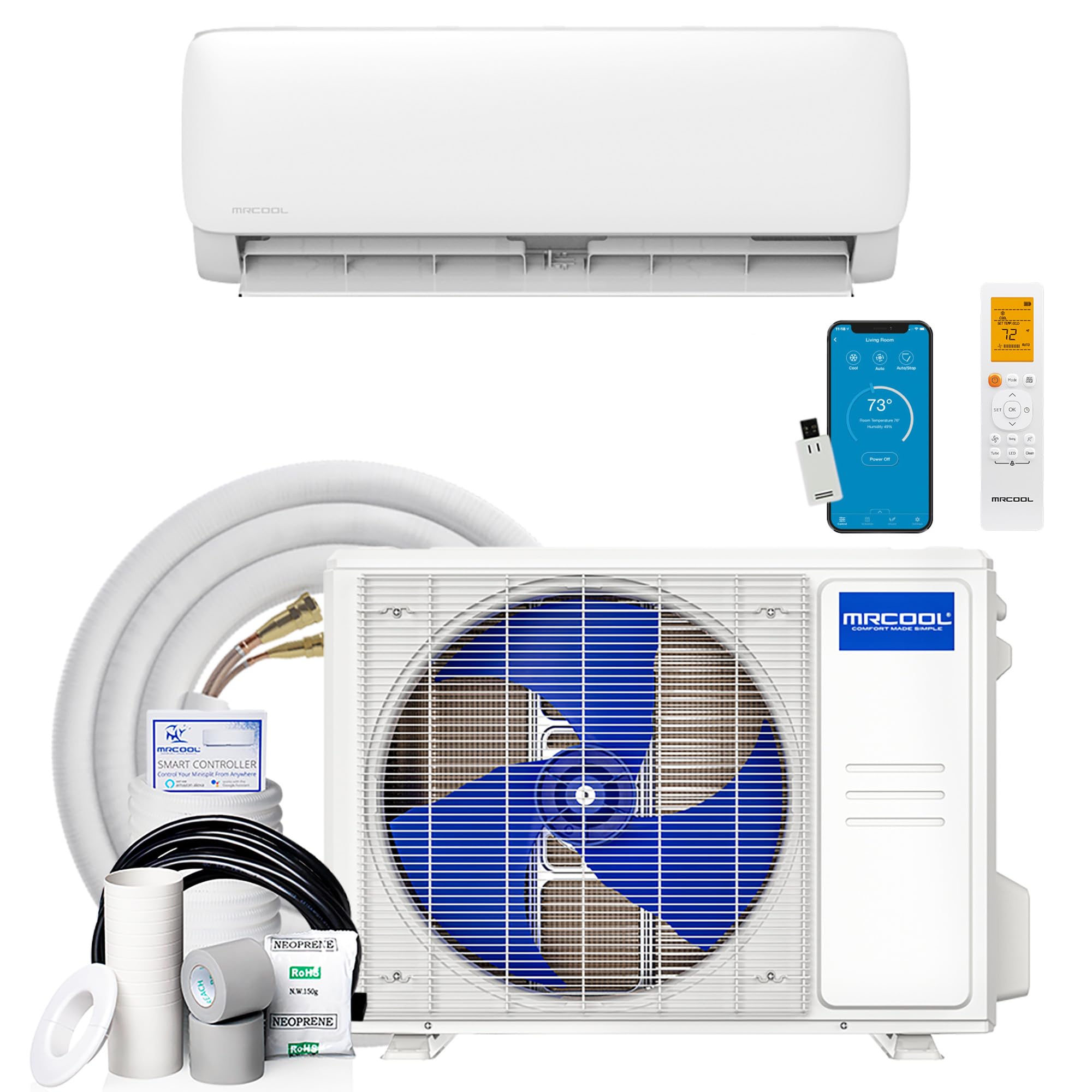
MRCOOL has built a reputation for making mini splits that homeowners can install themselves, and the Easy Pro Series continues that trend. This 24,000 BTU unit covers up to 1,050 square feet and uses pre-charged quick-connect line sets that eliminate the need for specialized HVAC tools or vacuum pumps.
The system provides both heating and cooling with a DC inverter compressor, and owners report that installation takes roughly four to six hours for someone with basic electrical knowledge. The unit operates quietly, and multiple buyers mention that it costs significantly less than equivalent units from big-box retailers. It also features a low ambient cooling mode down to 5°F.
Some feedback points to packaging issues — a few units arrived with cosmetic damage from shipping. Additionally, a minority of long-term users experienced compressor or reversing valve failures after a year or two. The warranty process can be slow, so factor that into your decision. For DIY enthusiasts who want to avoid expensive install labor, this is a solid contender.
Why it’s great
- DIY-friendly with pre-charged lines
- Cools up to 1,050 sq ft efficiently
- Low ambient cooling down to 5°F
Good to know
- Some units arrive with shipping damage
- Long-term reliability concerns reported
5. Cooper & Hunter 18,000 BTU Dual 2-Zone

This dual-zone system from Cooper & Hunter pairs a single outdoor condenser with two 9,000 BTU wall-mounted air handlers, giving you independent temperature control in two separate rooms. The 22.5 SEER2 rating makes it one of the most efficient multi-zone options available, and each zone comes with a 25-foot line set for flexible placement.
Buyers appreciate the whisper-quiet operation — indoor units measure as low as 23.5 decibels — and the smart port adapters let you control each zone individually through the C&H Remote app. Several owners successfully self-installed with basic HVAC knowledge, though finding a professional willing to install customer-supplied equipment can be a hurdle in some areas.
One reviewer noted that the system struggled to maintain heat when outdoor temperatures dropped below 40°F, requiring expensive service calls. Another pointed out that the included instructions are sparse, so you will need to supplement with online resources. For cooling two rooms from one outdoor unit, this delivers excellent efficiency and quiet comfort.
Why it’s great
- 22.5 SEER2 dual-zone efficiency
- Very quiet at 23.5 dB
- 25ft linesets for flexible placement
Good to know
- Heating performance drops below 40°F
- Instructions are minimal
6. ROVSUN 2 Zone 20,000 BTU Mini Split
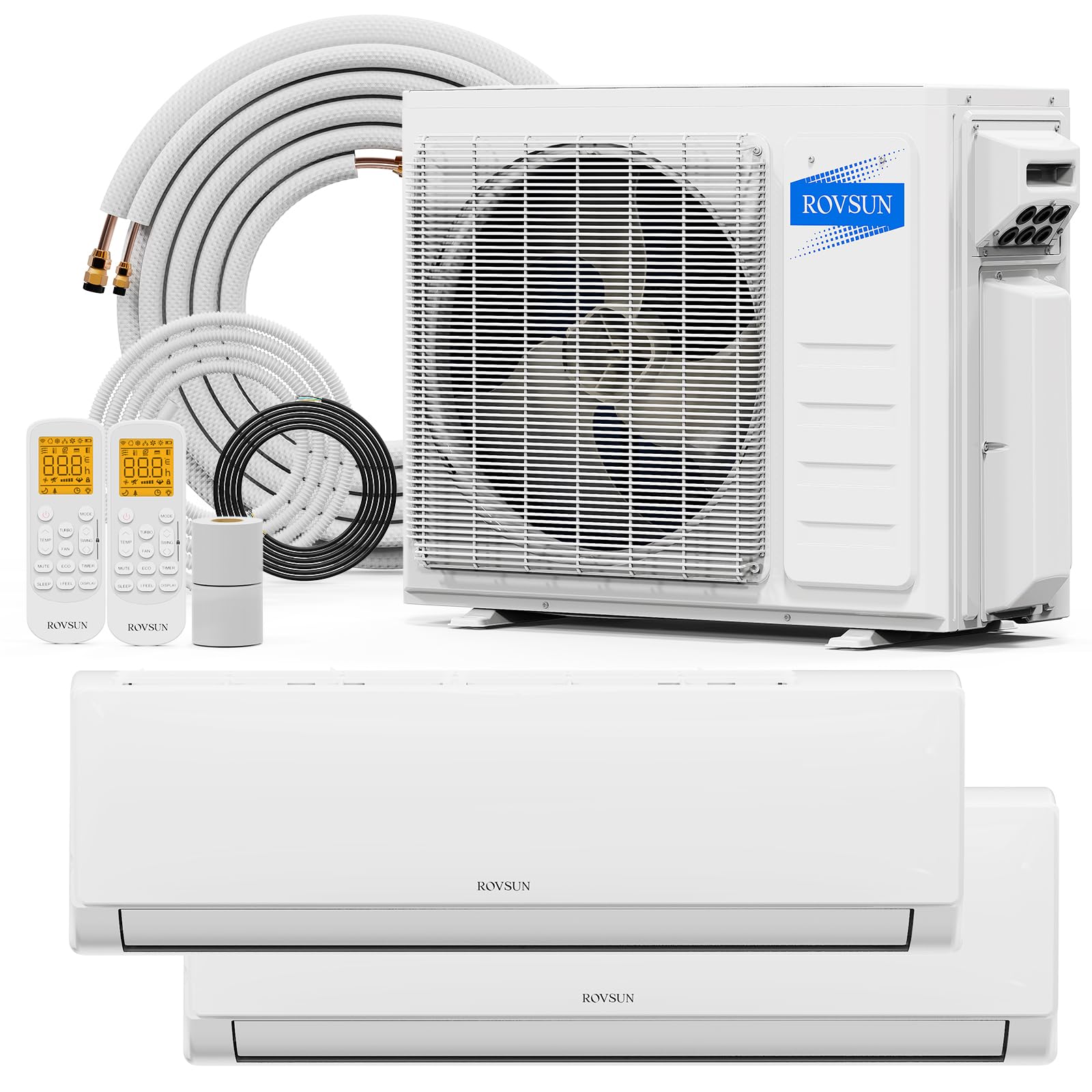
The ROVSUN dual-zone system delivers 20,000 total BTUs (12K + 12K) across two indoor units, each with its own remote and temperature settings. The standout feature here is the 23 SEER2 rating, which is among the highest in this roundup and translates to meaningful long-term energy savings.
Users report that the system cools efficiently even in hot, humid climates like Louisiana, and the ultra-quiet operation (28–45 dB) makes it suitable for bedrooms and living areas. The iFEEL mode shifts temperature sensing to the remote control, so the unit responds to conditions where you actually sit. Installation is straightforward for a professional, and the 25-foot pre-charged line sets offer plenty of reach.
A few customers experienced issues with the control board or compressor, and seller support was inconsistent in resolving those problems. One reviewer noted that finding an HVAC company familiar with the R-32 refrigerant took extra effort. For the price, the efficiency and dual-zone flexibility are hard to beat, but vet your installer carefully.
Why it’s great
- Excellent 23 SEER2 efficiency
- Two zones with independent control
- iFEEL mode for personalized comfort
Good to know
- Some control board reliability issues
- R-32 refrigerant may limit installer options
7. Albott 3 Zone 27,000 BTU Mini Split
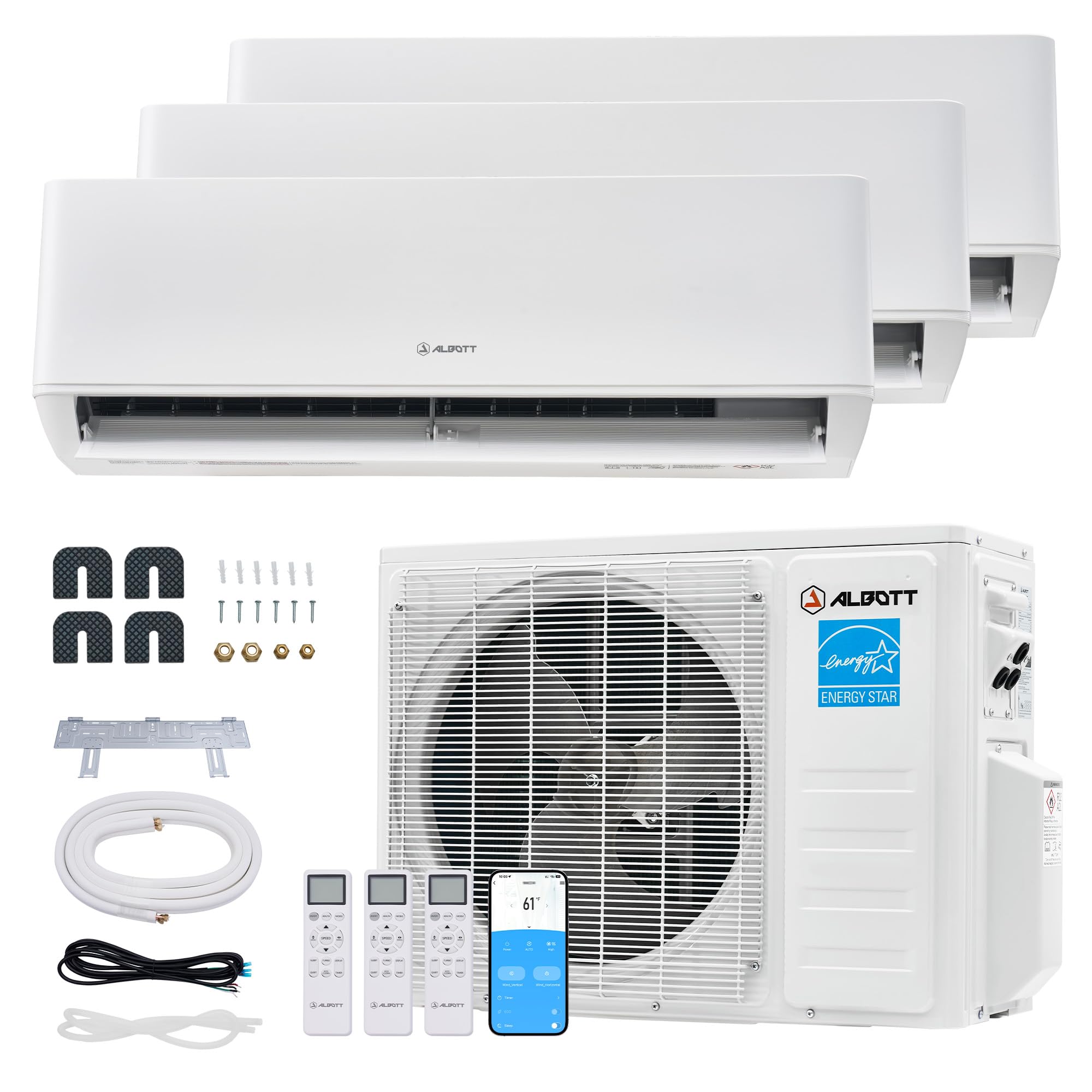
The Albott three-zone system provides 9,000 BTUs to each of three indoor units, covering up to 1,200 square feet total. Each zone operates independently, so you can cool only the rooms you are using. The 22 SEER2 rating and Energy Star certification ensure that running all three zones does not punish your utility bill.
Built-in WiFi allows app control from anywhere, and the automatic defrost function keeps the outdoor coil clear in cold weather. Owners report that the system is quiet enough for bedrooms and that installation, while requiring a professional, is straightforward. The sleep mode and auto-clean features add convenience for daily use.
Some buyers noted that the included documentation could be clearer, and a few experienced minor communication issues between the indoor units and the outdoor condenser. Customer service responsiveness received mixed reviews. For a three-zone setup at this price point, the Albott offers solid value if you have a reliable installer.
Why it’s great
- Three independent zones for flexible cooling
- 22 SEER2 with Energy Star certification
- Auto defrost and sleep mode
Good to know
- Documentation could be better
- Customer service responsiveness varies
8. Senville 18,000 BTU Dual Zone Mini Split

Senville’s dual-zone system delivers 18,000 total BTUs across two indoor air handlers, each controllable independently. The 22.5 SEER2 rating and Alexa compatibility make it a strong choice for tech-savvy homeowners who want energy efficiency and voice control. The 10-year compressor warranty and 5-year parts warranty add peace of mind.
Users consistently report that this unit is exceptionally quiet — one reviewer said you cannot tell it is running. Several owners saved thousands compared to central HVAC quotes, and the self-install route is feasible for those with electrical and HVAC experience. The 16-foot line sets work well for most single-story layouts, though second-floor installations may need longer lines.
One common issue: the condensation drain lines are not included, so you will need to purchase those separately. A few buyers also noted that wall-mounting the outdoor unit can cause vibration noise if not properly isolated. For a premium dual-zone system with strong warranty support, the Senville is a reliable choice.
Why it’s great
- 22.5 SEER2 with Alexa integration
- Very quiet operation
- 10-year compressor warranty
Good to know
- Condensation lines not included
- Outdoor unit can vibrate if not isolated
9. MRCOOL 36,000 BTU DIY Star 4

For the largest spaces — up to 1,500 square feet — the MRCOOL DIY Star 4 brings 36,000 BTUs of cooling and heating power. The fourth-generation DIY system uses pre-charged quick-connect line sets that allow homeowners to install without specialized tools. A low refrigerant alarm and filter cleaning alerts help prevent costly repairs and maintain air quality.
The unit features low ambient cooling down to 5°F, making it viable for server rooms or spaces that generate heat year-round. Owners in hot climates like Arizona praise its ability to keep large garages and workshops comfortable even when outdoor temps exceed 105°F. The auto-restart feature ensures settings are preserved after a power outage.
Some buyers report that the instructions are vague and that packaging could be improved to prevent shipping damage. A few long-term users experienced reliability issues, though the DIY convenience and raw cooling capacity are undeniable. If you need to cool a very large room and want to avoid professional install fees, this is a top candidate.
Why it’s great
- Massive 36,000 BTU capacity
- DIY installation with quick-connect lines
- Low ambient cooling down to 5°F
Good to know
- Instructions are vague
- Some long-term reliability concerns
10. DELLA Umbra 18,000 BTU Mini Split

The DELLA Umbra Series offers an entry-level price point without skimping on smart features. This 18,000 BTU unit covers up to 1,000 square feet and includes Alexa and WiFi control, 4D air flow with adjustable louvers, and an I Feel mode that reads temperature from the remote. The 19 SEER2 rating is competitive for the price range.
Buyers who installed the unit themselves appreciated the included 13-foot line set and installation kit, and several noted that tech support was responsive when they had app setup questions. The unit operates at 47 decibels — slightly louder than premium models but still reasonable. Heating performance holds up well even in freezing winter conditions.
One significant red flag: a handful of customers reported that the unit stopped cooling properly in extreme heat, triggering an error code. Manufacturer support was unresponsive in those cases. The temperature calibration can also be off by several degrees. For budget-conscious buyers willing to accept some quirks, this offers solid value.
Why it’s great
- Affordable entry point with smart features
- 19 SEER2 efficiency
- I Feel mode for targeted comfort
Good to know
- Some units fail in extreme heat
- Temperature calibration can be inaccurate
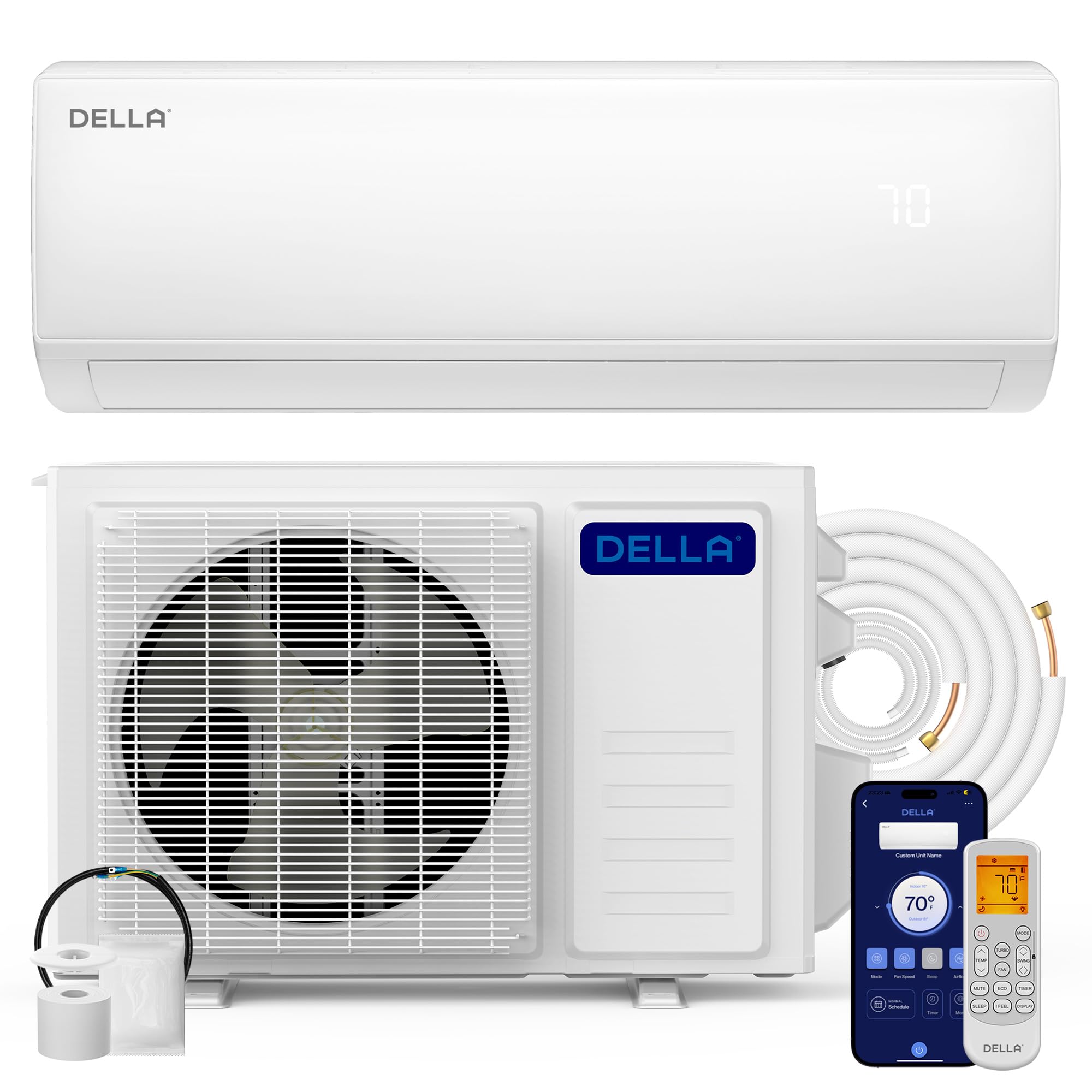
The DELLA Econo Series delivers 23,000 BTUs of cooling power, covering up to 1,500 square feet at a budget-friendly price. While the 17 SEER2 rating is lower than some competitors, the DC inverter technology still provides up to 30% energy savings compared to traditional units. The system includes Alexa and WiFi control, 4D air flow, and I Feel mode for temperature sensing at the remote.
Owners highlight the quiet operation — indoor noise levels sit around 41 decibels — and the turbo mode that rapidly cools a hot room. The 16.4-foot installation kit is generous, and several DIY-minded buyers successfully installed it with careful planning. Heating performance remains effective down to 5°F, making it a year-round solution for moderate climates.
Some users report that the temperature readings on the remote can be inconsistent, requiring manual adjustments of a few degrees. A small number of units arrived with cosmetic blemishes from shipping. For the price, this is a capable large-room cooler, but the lower SEER2 means it will cost more to run over time than higher-efficiency options.
Why it’s great
- High BTU output for large spaces
- Quiet operation at 41 dB
- Smart features including Alexa
Good to know
- 17 SEER2 is lower efficiency
- Temperature readings can be off
Understanding the Specs
BTU Capacity
British Thermal Units measure cooling output. For a big room (800–1,500 sq ft), you typically need 18,000–36,000 BTUs. Undersized units run constantly without reaching set temperature; oversized units short-cycle and fail to dehumidify properly. Calculate based on square footage, ceiling height, insulation, and sun exposure.
SEER2 & Inverter Technology
SEER2 is the modern efficiency standard for mini splits. Ratings of 18 or higher indicate strong performance. Inverter compressors adjust speed continuously rather than cycling on/off, which maintains steady temperatures and reduces energy consumption by up to 30% compared to fixed-speed units. Look for DC inverter systems for best results.
Refrigerant Type
R-32 is becoming the industry standard due to its lower global warming potential and higher efficiency compared to R-410A. Some older systems still use R-410A, which is being phased out. R-454B is another low-GWP alternative. Check local availability of refrigerant for future service needs.
Noise Levels
Indoor noise is measured in decibels (dB). Units below 30 dB are whisper-quiet; 30–40 dB is typical for most mini splits; above 45 dB may be noticeable in bedrooms. Outdoor condenser noise also matters for neighbors — look for units under 55 dB. Quieter operation often correlates with better build quality.
FAQ
Can I install a mini split myself?
How many BTUs do I need for a 1,000 sq ft room?
What’s the difference between single-zone and multi-zone mini splits?
Are mini splits more efficient than central air conditioners?
How long do mini split AC units last?
Final Thoughts: The Verdict
For most people, the best ac for big room winner is the Cooper & Hunter 24,000 BTU Mini Split because it combines ample capacity, quiet operation, and excellent efficiency at a mid-range price point. If you want premium air purification and brand pedigree, grab the Daikin 18,000 BTU Entra. And for a truly DIY-friendly option that covers the largest spaces, nothing beats the MRCOOL 36,000 BTU DIY Star 4.

Mo Maruf
I created WellFizz to bridge the gap between vague wellness advice and actionable solutions. My mission is simple: to decode the research and give you practical tools you can actually use.
Beyond the data, I am a passionate traveler. I believe that stepping away from the screen to explore new environments is essential for mental clarity and physical vitality.