Our readers keep the lights on and my smoothie glass nicely filled. As an Amazon Associate, I earn from qualifying purchases.
Finding a board game that truly sings with just two players is a unique challenge. Many games add a two-player mode as an afterthought, leading to clunky, unbalanced, or lonely experiences. The best ones are engineered from the ground up for that specific tension, creating a perfect dance of strategy, interaction, and shared focus.
I’m Mohammad Maruf — the founder and writer behind WellFizz. My background in deep market research involves analyzing thousands of gameplay specifications, player reviews, and design mechanics to identify which games create that perfect, frictionless head-to-head experience everyone is searching for.
This guide filters through the noise, presenting a curated selection that genuinely excels at two players. We’ll examine everything from quick tactical puzzles to deep strategic epics to find your next perfect match. best board games for 2 players are defined by intentional design, not just a rulebook footnote.
How To Choose The Best Board Games For 2 Players
Selecting the right two-player game is about more than just player count. It’s about finding a system that creates a compelling, self-contained world for exactly two minds to engage with. Consider these factors as your personal shopping criteria.
Mechanics and Interaction
At the heart of every great two-player game is a clever mechanical hook that forces interaction. Look for systems built on direct conflict, shared resources, or silent cooperation. Games with “worker placement” or “card drafting” mechanics, when designed for two, often involve tight competition for limited actions or resources. Abstract games focus purely on spatial reasoning and outmaneuvering your opponent. Cooperative games, a fantastic category for pairs, require silent teamwork and shared problem-solving without one player dominating the decisions.
Complexity and Time Commitment
Be honest about the mental energy and time you want to invest. Games are categorized by weight: light, medium, and heavy. Light games have simple rules and play in under 30 minutes, perfect for a quick, fun duel. Medium-weight games offer more strategic depth and typically run 30-60 minutes, providing a satisfying session. Heavy games are complex epics with longer playtimes, best for dedicated strategy enthusiasts. Matching the weight to your mood is key to long-term enjoyment.
Theme and Replayability
The theme is the story the game tells—be it historical intrigue, fantasy battles, or cute cats on a bed. A strong theme can make learning rules easier and gameplay more immersive. More importantly, consider replayability. Does the game have a variable setup, multiple paths to victory, or expansion content? Games with high replayability will feel new for dozens of sessions, offering tremendous long-term value from a single purchase.
Quick Comparison
On smaller screens, swipe sideways to see the full table.
| Model | Type | Best For | Key Feature | Amazon |
|---|---|---|---|---|
| Splendor Duel | Strategy | Strategic gem collecting | Exclusive 2-player design, new win conditions | Amazon |
| 7 Wonders Duel | Civilization | Fast-paced civilization building | Three unique victory paths, pyramid card draft | Amazon |
| Sky Team | Cooperative | Tense, silent teamwork | Dice placement co-op, no quarterbacking | Amazon |
| Mandala | Abstract | Tactical card play | Beautiful cloth board, deep bluffing | Amazon |
| Watergate | Historical | Head-to-head thematic struggle | Tug-of-war mechanics, educational theme | Amazon |
| Targi | Worker Placement | Intermediate strategy | Unique intersection mechanic, minimal luck | Amazon |
| BOOP. | Abstract | Quick, cute tactical plays | Adorable “boop” push mechanic, family-friendly | Amazon |
| Lord of the Rings: Duel | Thematic Strategy | Fans of Middle-earth & 7 Wonders | Asymmetric sides, area control twist | Amazon |
| Yinsh | Abstract Strategy | Pure, classic abstract play | Easy to learn, incredibly deep, rings & markers | Amazon |
| Electronic Battleship Reloaded | Deduction | Nostalgic, immersive family play | Lights, sounds, and voice commands | Amazon |
| Guess Who? NFL Edition | Deduction | Young fans & quick plays | NFL-themed, portable, easy to learn | Amazon |
In‑Depth Reviews
1. Splendor Duel
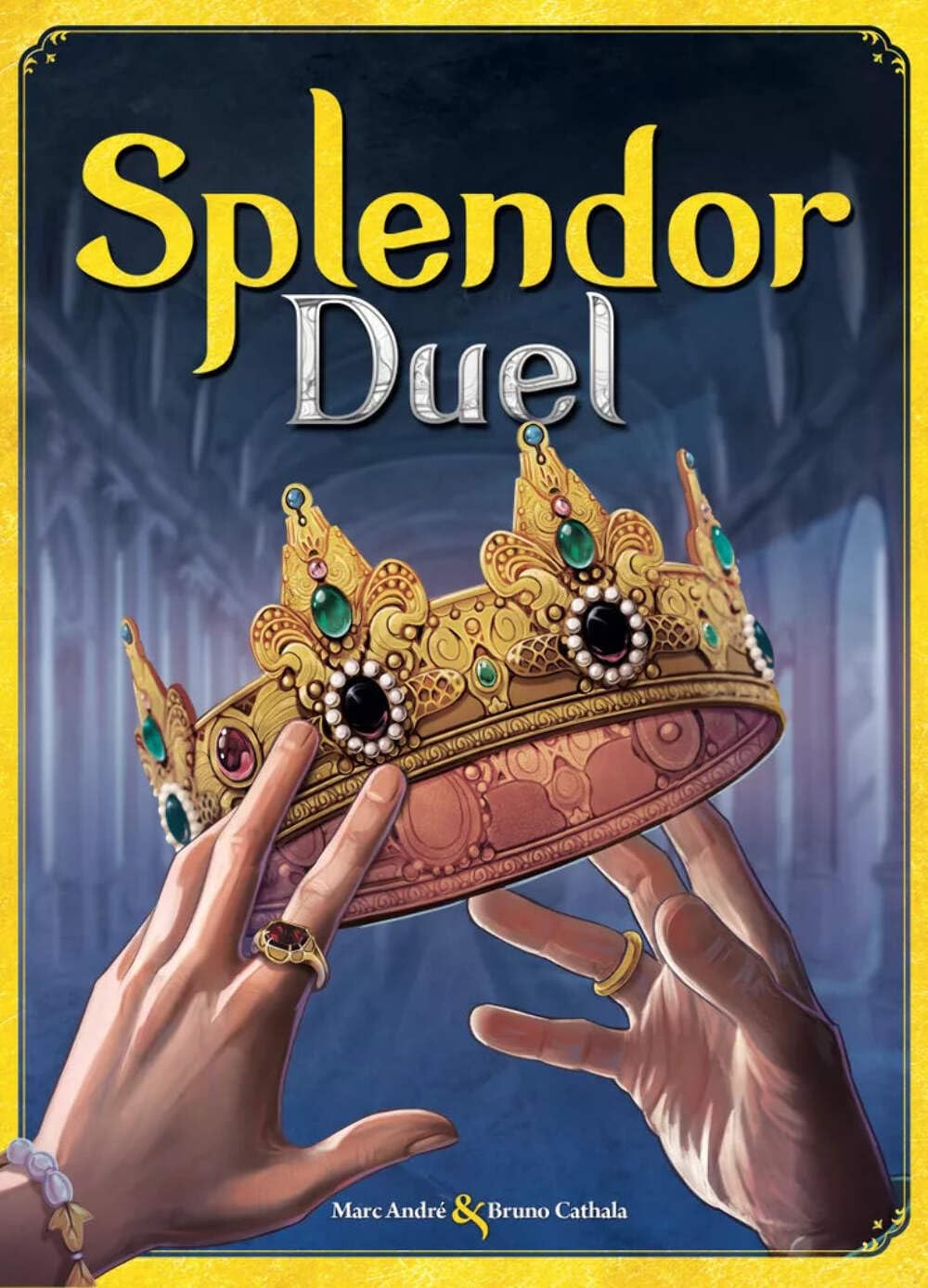
Splendor Duel isn’t just a scaled-down version of the popular original; it’s a masterfully reimagined game built exclusively for two. It takes the satisfying core loop of collecting gem tokens to purchase development cards and elevates it with new strategic layers, including a shared drafting board, special power abilities, and multiple victory conditions. The head-to-head competition is immediate and intense, as every gem you take is one your opponent cannot.
The components are a standout feature, with thick, vibrant cards and hefty, satisfying tokens that enhance the tactile pleasure of play. The new “pearl” resource and royal privileges add meaningful variables that force you to adapt your strategy each game. While it retains the easy-to-teach elegance of its predecessor, the decision space is significantly deeper, creating a more dynamic and interactive duel.
This game hits a remarkable sweet spot. It’s accessible enough for a casual game night yet possesses enough strategic depth to engage seasoned gamers for countless replays. The compact box and 30-minute playtime make it an ideal choice for regular play, offering a complete and deeply satisfying strategic experience in a concise package.
Why it’s great
- Perfectly tuned for two-player tension and interaction.
- Beautiful, high-quality components that feel premium.
- Quick to learn but offers substantial strategic depth and replayability.
Good to know
- The tighter economy can feel more cutthroat than the original Splendor.
- Pure abstract strategy; the “gem merchant” theme is lightly applied.
2. 7 Wonders Duel

7 Wonders Duel is a benchmark in the two-player strategy genre, condensing the epic feel of building a civilization into a brisk, 30-minute contest. It uses a brilliant “pyramid” card-drafting system where cards are laid out in overlapping rows. You and your opponent take turns picking cards, which simultaneously reveals new options and can block your rival’s future plans. This creates a palpable tension from the very first move.
The game offers three distinct paths to victory: military dominance, scientific supremacy, or pure point-based glory. This multi-faceted approach means you must constantly adapt, pivoting between pursuing your own engine and thwarting your opponent’s progress. The military conflict track is a particular highlight, creating a direct, escalating threat that hangs over every decision.
Its elegance lies in how much strategic depth is packed into a simple ruleset and short playtime. Every choice carries weight, and games are often decided by a single, clever move. The high replayability comes from the variable setup of Wonder cards and the ever-changing landscape of the card pyramid, ensuring no two games ever play out the same way.
Why it’s great
- Ingenious card-drafting mechanic that creates constant player interaction.
- Three different victory conditions keep games dynamic and unpredictable.
- Fast-paced, deeply strategic, and endlessly replayable.
Good to know
- Can occasionally produce a “runaway leader” if one player secures a powerful combo early.
- The card symbols, while clear, have a slight learning curve for first-time players.
3. Sky Team

Sky Team is a masterpiece of cooperative design, distilling the tension of landing a commercial airliner into a 20-minute, dice-placement puzzle for two. One player acts as the pilot, the other as the co-pilot, each with their own private control panel and specific responsibilities like managing speed, brakes, and wing flaps. The genius lies in the rule that you cannot verbally coordinate your dice placements each round—you must read the board state and trust your partner.
This “silent teamwork” mechanic brilliantly eliminates “quarterbacking,” where one player dictates all the moves. Instead, it creates genuine, pulse-raising cooperation where success feels like a shared triumph. The game includes a campaign of escalating scenarios with new modules and challenges (like ice on the runway or a leak), providing massive replayability and a satisfying sense of progression.
The production is immersive and charming, with a compact “cockpit” board and thematic touches like a coffee token that lets you re-roll dice. It’s easy to learn but consistently challenging, making it perfect for couples or friends who enjoy solving a tense puzzle together. The feeling of a perfectly synchronized landing is uniquely rewarding.
Why it’s great
- Eliminates quarterbacking through its brilliant silent communication rule.
- Extremely tense, immersive, and rewarding cooperative experience.
- Short playtime with enormous replay value via a built-in scenario campaign.
Good to know
- Relies heavily on dice rolls, though mitigation tools are built in.
- The pressure of silent play can be stressful for some; it’s a feature, not a bug.
4. Mandala

Mandala is a visually stunning and deceptively deep two-player card game. Play revolves around two central “mandalas” on a beautiful fabric playmat. You play colored cards to build these shared patterns, but your true goal is to claim the cards in the center “mountain” when a mandala is completed. The key strategic twist is that the order in which you collect colors determines their endgame point value.
This creates a fascinating long-term strategy layered on top of short-term tactical plays. Early in the game, you might fight over a common color to drive up its point value for yourself later, or you might sabotage a color your opponent is hoarding. The game is a constant balance of building your own scoring engine while disrupting your opponent’s plans, all with perfect information and no luck beyond the card draw.
It plays quickly (about 20-30 minutes) and is easy to teach, but the strategic depth is immense. The high-quality cloth board and colorful cards make it a pleasure to handle. It’s a thinky, sometimes ruthless abstract duel that feels almost like a martial art of card play, where every move sets up future possibilities.
Why it’s great
- Unique and deeply strategic scoring system that rewards foresight.
- Stunning components, especially the fabric playing mat.
- Fast-paced with zero luck, offering pure tactical and strategic gameplay.
Good to know
- Square cards can be a bit awkward to shuffle traditionally.
- Can feel quite “mean” as players actively deny each other key colors.
5. Watergate
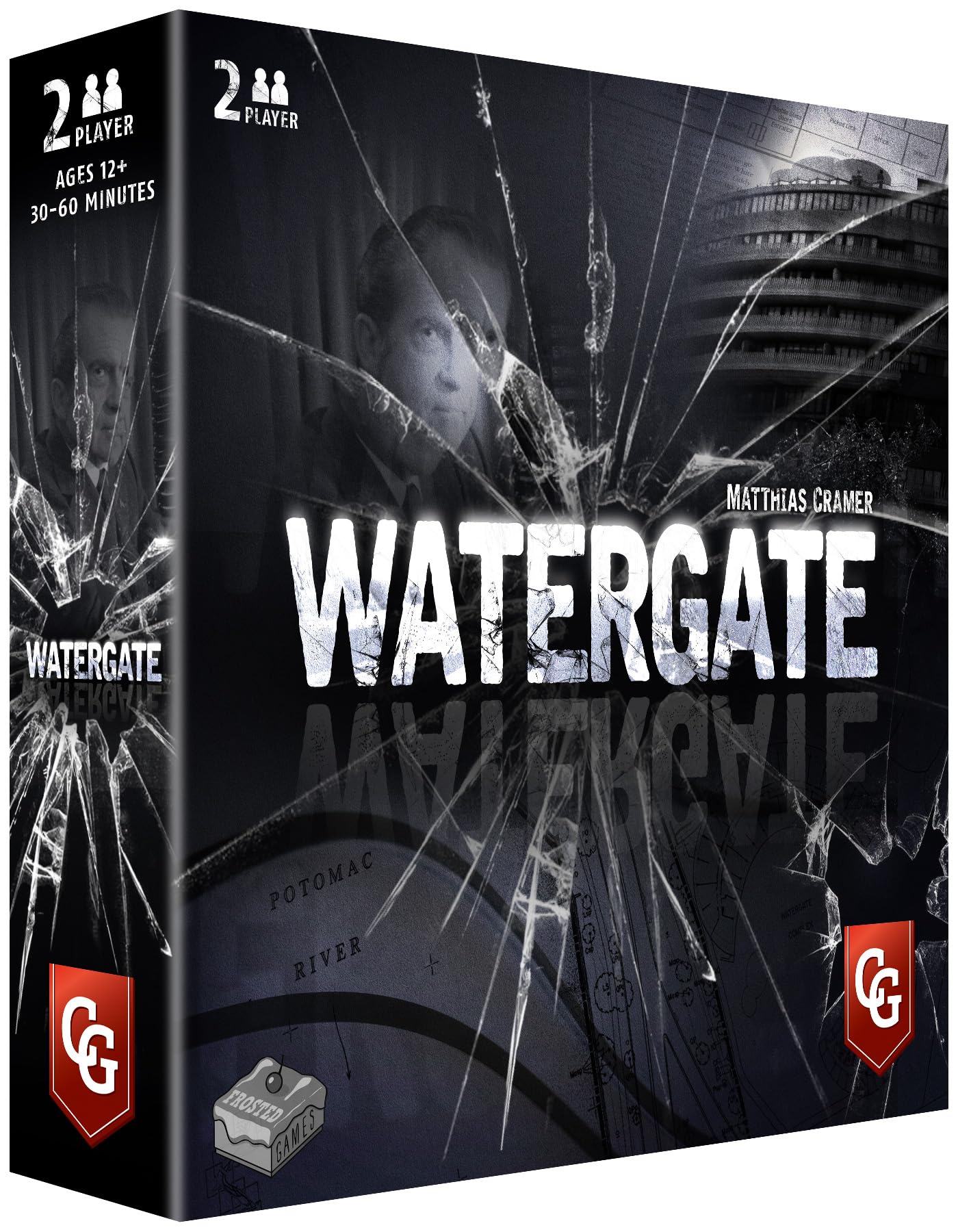
Watergate is a tight, tense two-player game that brilliantly encapsulates its historical theme. One player takes the role of the Investigative Journalist, trying to connect two pieces of evidence to the President. The other plays the Nixon Administration, aiming to obscure the truth and maintain momentum. This asymmetric setup creates a compelling cat-and-mouse dynamic where both sides have distinct but balanced tools and goals.
The game is driven by a clever card-playing mechanism. Each card can be used for its event (which often helps your opponent) or for its initiative value to place tokens on the board. This creates constant, agonizing decisions. Do you play a powerful event that helps you now but gives your opponent resources, or do you use it for its basic value to further your own board position? The tug-of-war on the momentum track adds to the constant pressure.
It plays in under an hour and is surprisingly easy to learn, yet every move feels critically important. The historical context adds a layer of intrigue, and the game does an excellent job of making you feel the weight of the scandal. It’s a fantastic middle-weight strategy game that delivers deep engagement without a lengthy time commitment.
Why it’s great
- Excellent asymmetric design that feels balanced and thematic.
- Creates incredibly tense, decision-heavy gameplay from start to finish.
- Easy to learn and plays in a satisfying, concise timeframe.
Good to know
- The card quality could be better for long-term durability.
- The theme, while well-integrated, might not appeal to everyone.
6. Targi

Targi is a celebrated gem in the world of dedicated two-player strategy games. It uses a clever worker-placement mechanism on a grid formed by border cards. You place your three workers on the edges, but the real action happens at the *intersections* those placements create. This dual-layer planning—thinking about the direct action and the intersecting bonus—is where the game’s genius lies.
The game involves collecting resources like dates, salt, and pepper to purchase tribe cards that provide victory points and special powers. There is almost no luck involved after setup; victory is determined purely by planning, tactical blocking, and long-term strategy. The fixed border and shifting center cards create a puzzle that changes every game, offering high replayability within a very compact box.
It’s a step up in complexity from lighter games, making it perfect for players ready for a more substantive, intermediate-level challenge. The gameplay is deeply interactive, as you constantly vie for control of key intersections and resources. While the component quality is functional rather than premium, the exceptional game design more than compensates, offering a rich and satisfying strategic duel.
Why it’s great
- Brilliant and unique intersection-based worker placement mechanic.
- Almost entirely skill-based with very little random chance.
- Offers deep strategic depth in a small box with reasonable playtime.
Good to know
- The iconography and rules have a bit of a learning curve for newcomers.
- Component quality (tokens, cards) is reported to be just average.
7. BOOP.

BOOP. is a delightful tactical game that combines an utterly charming theme with surprisingly thinky gameplay. Players take turns placing adorable wooden kitten pieces onto a quilted board that looks like a bed. The twist is the “boop” mechanic: if you place a kitten orthogonally next to another, you “boop” it one space away. If that pushes it into another piece, it creates a chain reaction.
The goal is to line up three of your kittens in a row to upgrade them into cats, and then line up three cats to win. This simple premise leads to wonderfully unpredictable and strategic board states. A single placement can completely scramble the layout, opening new opportunities for you or ruining your opponent’s careful plans. It’s easy to learn in minutes, making it perfect for families, but the spatial reasoning and forward planning provide real depth.
The components are a huge part of the appeal. The soft-fabric board and cute, well-crafted wooden cats and kittens make the game irresistible. It plays in about 20 minutes, offering a perfect dose of light, interactive fun that appeals to both children and adults who appreciate a clever abstract puzzle.
Why it’s great
- Adorable, high-quality components that everyone loves.
- Simple rules that hide a layer of satisfying tactical depth.
- The “boop” chain-reaction mechanic creates fun, unpredictable moments.
Good to know
- The randomizing effect of boops can sometimes feel chaotic rather than strategic.
- Primarily a light game; those seeking heavy strategy should look elsewhere.
8. The Lord of the Rings: Duel for Middle-Earth

This game takes the superb foundation of 7 Wonders Duel and layers on a rich Lord of the Rings theme and new mechanical twists. One player leads the Fellowship, seeking to destroy the One Ring, while the other commands Sauron’s forces to conquer Middle-earth. The core card-drafting pyramid returns, but it’s now used to recruit characters, deploy armies to regions on a map, and construct strongholds.
The addition of an area control map creates a more tactical spatial element, and the asymmetric goals and powers are deeply thematic. The Fellowship wins by advancing the Ring tracker, Sauron by moving his conquest marker. It adds a third “Peoples” victory condition, where allying with six different factions grants an instant win. This creates a dynamic, multi-front struggle where you must balance immediate threats against long-term objectives.
For fans of the IP, the integration is fantastic, with beautiful art and characters that feel true to the source material. For strategy gamers, it’s a clever evolution of a proven system, offering a slightly different but equally engaging puzzle. It maintains the snappy 30-minute playtime while feeling distinctly different from its predecessor.
Why it’s great
- Excellent thematic integration with the LOTR universe.
- Adds engaging area control to the proven 7 Wonders Duel formula.
- Highly asymmetric, offering very different experiences for each side.
Good to know
- If you already own and love 7 Wonders Duel, this may feel similar in core mechanics.
- The iconography, while clear, is dense and requires a learning game.
9. Yinsh

Yinsh is a member of the acclaimed GIPF project of abstract strategy games, and it stands as one of the finest pure two-player abstracts ever designed. The rules are astonishingly simple: on your turn, place one of your rings on the board and move it in a straight line, flipping any markers it jumps over. If you create a row of five consecutive markers of your color, you remove that row and one of your rings. The first player to remove three rings wins.
This elegant ruleset gives birth to breathtaking strategic depth. Every move has multiple consequences: you’re simultaneously trying to build your own lines, disrupt your opponent’s, and manage the position of your limited rings. The game evolves beautifully, starting with open placement and gradually becoming a complex web of potential lines and traps. There is zero luck—victory is entirely a product of superior foresight and tactics.
The components are clean and functional—a sturdy board, plastic rings, and cardboard markers—focusing attention purely on the game state. It’s a timeless game that feels like a close cousin to Go or Chess, but with its own unique and brilliant identity. It’s a must-have for lovers of deep, contemplative, head-to-head strategy.
Why it’s great
- Elegant rules that lead to profound, limitless strategic depth.
- Perfect information, zero luck—a pure test of skill.
- Timeless design that will never feel outdated.
Good to know
- The stark abstract theme and minimal components won’t appeal to those seeking theme or flash.
- Can be quite brain-burning and is best suited for players who enjoy heavy think-fests.
10. Electronic Battleship Reloaded

This modern take on the classic Battleship formula injects new life with electronic sound effects, voice commands, and special attack modes. The core deduction gameplay remains—calling out coordinates to find and sink your opponent’s hidden fleet—but the presentation elevates the tension. Explosion sounds, alert lights, and digital voice feedback make each hit or miss feel more dramatic and immersive.
The game includes both classic and advanced modes, the latter adding special weapon pegs like sonar and salvos that change tactical considerations. It also offers a well-implemented solo mode against a computer opponent, which is a great feature for practice. The setup is notably easier than older physical versions, with a folding unit that stores everything neatly.
While the electronic elements add fun, they also mean setup and input take a bit longer than the purely analog version. It’s a fantastic choice for families or anyone with nostalgia for the original who wants a more sensory-rich experience. It successfully bridges generations, offering simple, familiar gameplay with a contemporary, engaging presentation.
Why it’s great
- Lights, sounds, and voice commands create a highly immersive and exciting experience.
- Includes advanced game modes and a solid solo play option.
- Easier setup and storage than many previous Battleship editions.
Good to know
- The electronic setup and input can slow the pace compared to the purely classic game.
- Requires batteries, and the electronic nature means more potential points of failure over time.
11. Guess Who? NFL Edition
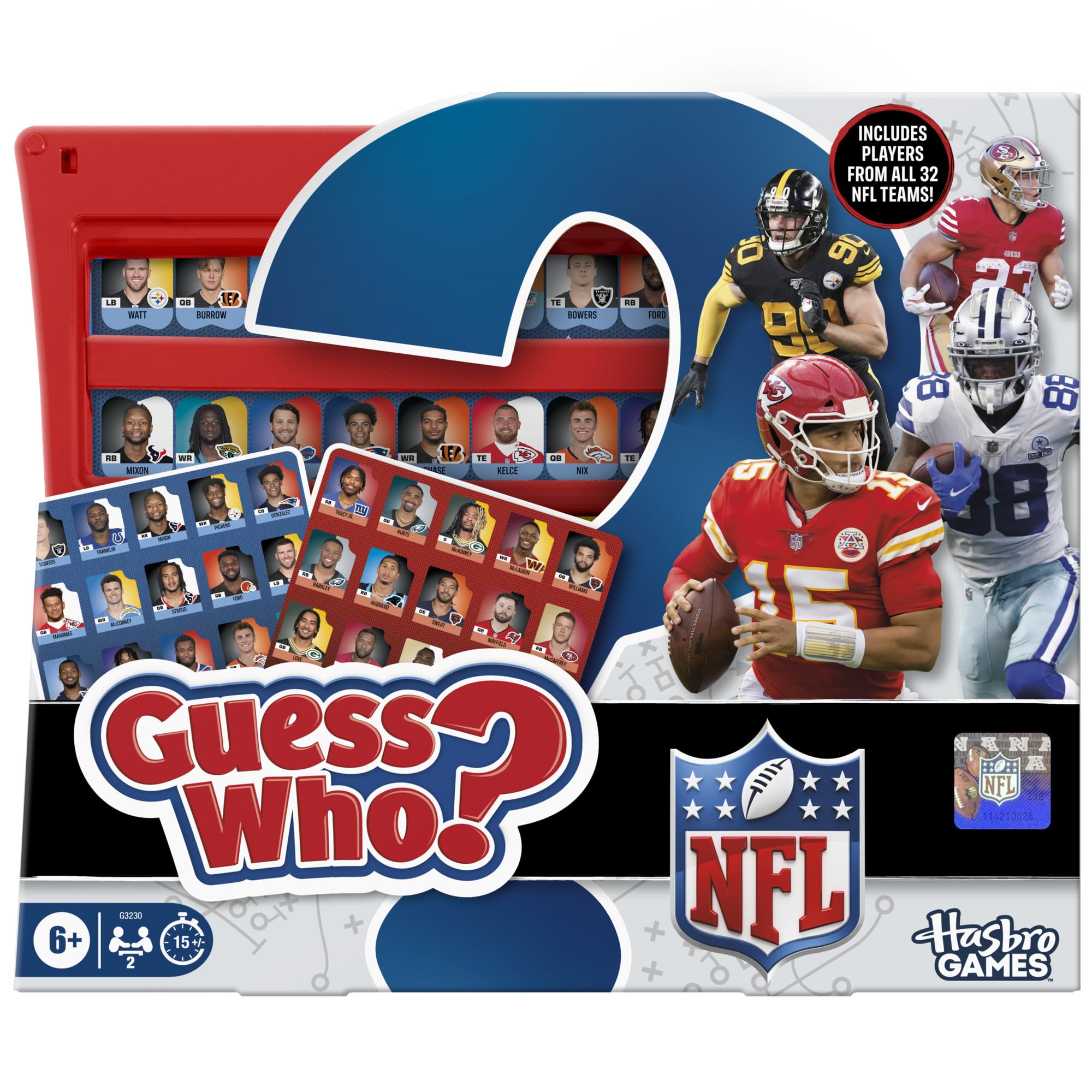
This is a straightforward, well-executed thematic reskin of the classic deduction game *Guess Who?*, perfect for young NFL fans. Instead of generic characters, players try to deduce their opponent’s mystery player from a roster of 48 current NFL stars, divided into AFC and NFC sheets. The gameplay is identical: ask yes-or-no questions about physical attributes, team colors, or position to eliminate possibilities.
Its strength is its accessibility and portability. The two folding cases clip together into a single unit, making it an excellent travel game for road trips or tailgates. It’s very easy to learn and plays quickly, providing a fun, low-stakes activity that also helps develop logical reasoning and process-of-elimination skills in younger players.
The component quality is solid, and the inclusion of recognizable players adds immediate appeal for sports-loving kids and families. While it offers no strategic depth for experienced gamers, it perfectly serves its purpose as a light, engaging, and thematic entry-level game for its target audience.
Why it’s great
- Perfect for young NFL fans, making the classic game immediately relevant.
- Extremely portable and easy to set up and play anywhere.
- Teaches basic deduction and logical reasoning in a fun, approachable way.
Good to know
- Zero strategic depth; purely a children’s/family light deduction game.
- Player rosters will become dated as NFL rosters change over time.
Understanding the Specs
Player Count & Age
While this list focuses on games that are specifically designed or excel with two players, always check the official player count. “2” means only two can play. “2+” often means it supports more but is still great at two. The age recommendation is a guideline for complexity, not just safety. A game rated 10+ or 12+ will involve more strategic thinking and longer rules than one rated 6+ or 8+.
Playtime & Weight
Playtime is usually an average for experienced players. Add 25-50% for your first few games. “Weight” refers to a game’s complexity, combining rules depth, strategic depth, and mental load. Light games (like BOOP. or Guess Who?) are easy to jump into. Medium games (like Splendor Duel or 7 Wonders Duel) offer more strategic meat. Heavy games (like some advanced war games) are immersive projects.
FAQ
What makes a board game good for just two players?
Are cooperative two-player games less competitive?
How important is a game’s theme?
Can a beginner start with a medium-weight strategy game?
Final Thoughts: The Verdict
For most people, the best board games for 2 players winner is the Splendor Duel because it perfectly marries accessible rules with deep strategy and premium components in a tight 30-minute package. If you want the ultimate cooperative experience, grab the Sky Team. And for a timeless, pure test of strategic skill, nothing beats the Yinsh. Each game on this list serves a distinct purpose, so consider the experience you and your gaming partner crave most.

Mo Maruf
I created WellFizz to bridge the gap between vague wellness advice and actionable solutions. My mission is simple: to decode the research and give you practical tools you can actually use.
Beyond the data, I am a passionate traveler. I believe that stepping away from the screen to explore new environments is essential for mental clarity and physical vitality.