Our readers keep the lights on and my smoothie glass nicely filled. As an Amazon Associate, I earn from qualifying purchases.
Capturing stunning aerial footage has never been more accessible, but sifting through countless options to find a drone that truly delivers on its promises can feel overwhelming. You want crisp video, stable flight, and smart features without venturing into pro-sumer price territory.
I’m Mohammad Maruf — the founder and writer behind WellFizz. My approach involves deep market research, analyzing specification sheets against real-world user data to identify which features actually impact your flying experience and which are just marketing fluff.
Through a detailed evaluation of camera specs, flight performance, and intelligent systems, this guide highlights models that excel where it counts. best affordable drone with camera options exist that provide professional-grade features without the intimidating cost or complexity.
How To Choose The Best Affordable Drone With Camera
Selecting the right drone is about balancing capability with cost. The most rewarding models offer a solid core experience—good image quality, stable flight, and user-friendly controls—while smartly incorporating features that enhance safety and creativity.
Prioritize Camera Sensor and Stabilization
Look beyond the “4K” label. A larger sensor (like a 1/1.3-inch CMOS) captures more light for better detail, especially in low light. Electronic or mechanical gimbal stabilization is crucial for smooth, watchable video, far outperforming digital cropping alone.
Evaluate Real-World Flight Performance
Advertised flight times are often optimal figures. Focus on models with brushless motors for durability and wind resistance, and consider total battery life from included packs. GPS isn’t just for navigation; it enables precise hovering, return-to-home safety, and automated flight paths.
Consider Weight and Regulations
Drones under 249 grams are exempt from FAA registration in the U.S., a significant advantage for casual flyers. This lightweight design also boosts portability, especially when paired with a foldable frame and a carrying case.
Assess Intelligent Flight Modes
Features like Follow Me, Waypoint Flight, and Gesture Control can transform your filming from simple point-and-shoot to dynamic storytelling. However, ensure these modes are reliably executed through GPS and vision systems, not just software gimmicks.
Quick Comparison
On smaller screens, swipe sideways to see the full table.
| Model | Type | Best For | Key Feature | Amazon |
|---|---|---|---|---|
| ScharkSpark 4K GPS Drone | GPS Drone | Beginners wanting a built-in screen | 4.5″ HD Screen Controller | Amazon |
| DJI Neo Three-Battery Combo | Mini Drone | Ultra-portable, controller-free flying | Palm Takeoff & Subject Tracking | Amazon |
| Holy Stone Sentinel HS600D | Prosumer Drone | Windy conditions & advanced filming | 3-Axis Gimbal & Level-6 Wind Resist | Amazon |
| SKYROVER X1 Fly More Combo | Advanced Drone | Long-range exploration & obstacle avoidance | 360° Sensing & 96-Min Flight | Amazon |
| DJI Flip (RC-N3) | Compact Drone | High-quality imagery in a portable package | 4K/60fps HDR & 1/1.3-inch CMOS | Amazon |
| Oddire Drones with Camera 4K | GPS Foldable | Creative automated flight modes | Waypoint Flight & Gesture Control | Amazon |
| KINGULL G9 GPS Drone | Foldable Quadcopter | Beginners seeking GPS safety | Remote Control Display Screen | Amazon |
| REDRIE HK33 Drone | Foldable GPS Drone | Stable aerial photography | 2-Axis Gimbal & Brushless Motors | Amazon |
| Scrubuz HK22 GPS Drone | Lightweight GPS Drone | Entry-level GPS functionality | Under 249g & Brushless Motor | Amazon |
| Ameta S20 Pro GPS Drone | GPS Drone | Beginners needing long flight time | 50-Min Flight & Sony Sensor | Amazon |
| Black Falcon 4k Drone | Foldable Drone | Kids and first-time flyers | 360° Flip & One-Button Controls | Amazon |
In‑Depth Reviews
1. ScharkSpark 4K GPS Drone with 4.5” HD Screen
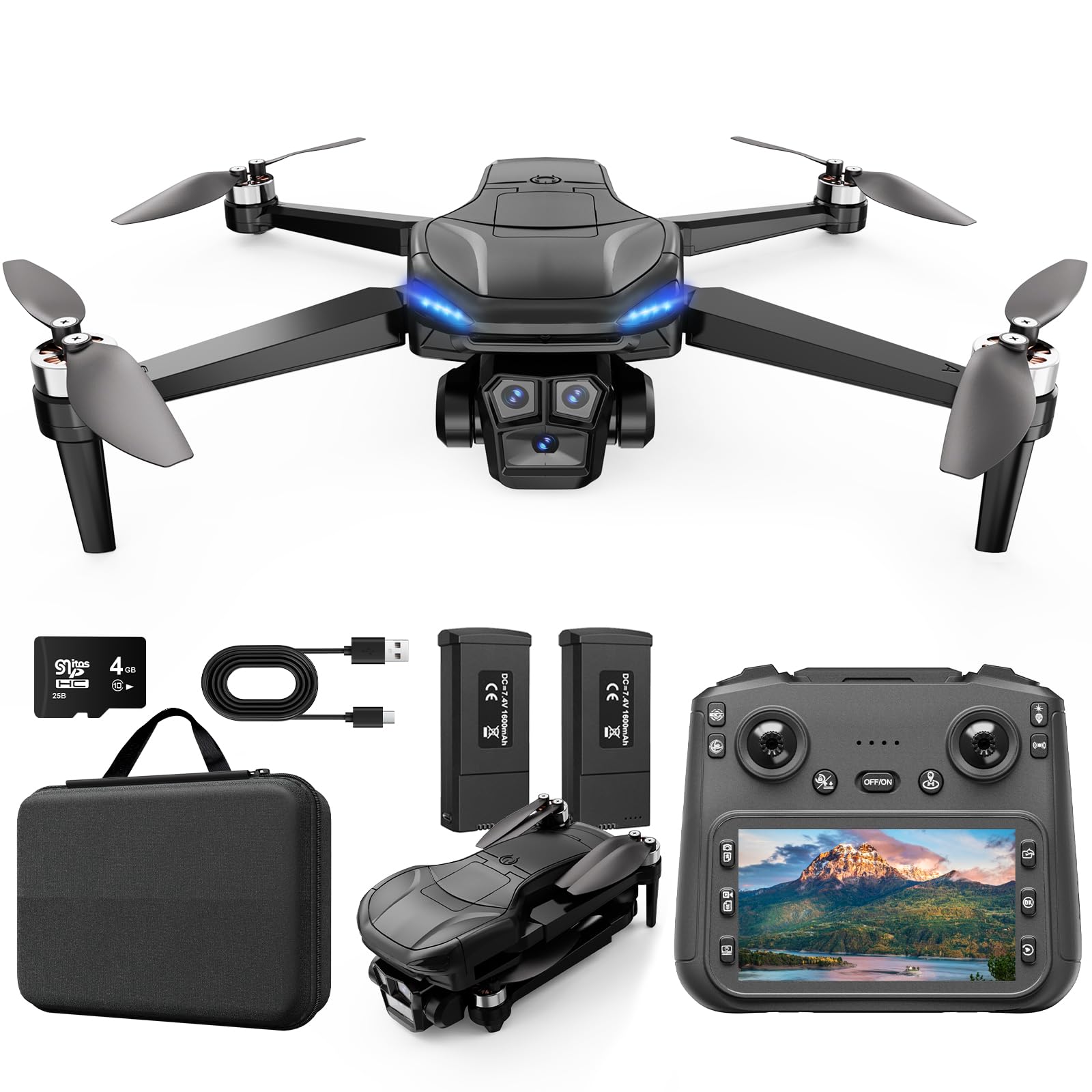
The ScharkSpark drone eliminates a major hassle for beginners: fumbling with your phone for a live feed. Its integrated 4.5-inch HD screen controller provides a clear, dedicated view of what the camera sees, with 5GHz transmission for low-latency video. This means you can focus on flying and framing your shot without draining your smartphone’s battery or dealing with Wi-Fi dropouts.
Powered by brushless motors, it offers smoother and quieter operation with a longer lifespan than brushed alternatives. The inclusion of two batteries aims for up to 60 minutes of total flight time, which is generous for practice sessions or short filming outings. GPS modes like auto-return and Follow Me add a layer of safety and creativity, making it a confident choice for new pilots.
User feedback highlights its stable hover and easy controls, with the auto-return function working reliably to prevent flyaways. The package is thoughtful, including an SD card and reader, spare propellers, and a carrying case. While it sits at a mid-range point, the convenience of the built-in screen and comprehensive feature set delivers standout value for those who want a straightforward, capable aerial camera.
Why it’s great
- No phone required for FPV thanks to the built-in HD screen.
- Brushless motors ensure stable, durable performance.
- GPS auto-return and intelligent flight modes enhance safety and fun.
- Comes with an SD card and case for immediate use.
Good to know
- As with many Wi-Fi drones, range can be affected by interference.
- The camera, while 4K, uses electronic stabilization rather than a mechanical gimbal.
2. DJI Neo Three-Battery Combo

DJI brings its renowned stabilization and software intelligence to the ultra-portable category with the Neo. Weighing just 135 grams, it’s incredibly lightweight, skipping FAA registration and fitting easily into a pocket. The standout feature is its controller-free operation; you can take off from your palm, use voice commands, or control it entirely via your smartphone for ultimate spontaneity.
The 4K video is stabilized using DJI’s proven technology, delivering smooth footage even in breezy conditions. Smart features like Subject Tracking and eight QuickShots modes allow you to capture professional-looking dynamic shots with minimal effort. The three-battery combo is a significant advantage, potentially tripling your air time and making it perfect for extended adventures.
Reviews praise its fun, intuitive nature and the impressive video quality for its size. The self-flying features work reliably, making it excellent for vloggers or families. While it represents a higher investment, you’re paying for DJI’s ecosystem reliability, compact form factor, and intelligent automation that simplifies high-quality aerial photography.
Why it’s great
- Extremely portable and regulation-friendly at 135g.
- Offers multiple control methods, including palm takeoff and voice.
- DJI’s subject tracking and stabilization produce pro-level results.
- Three-battery combo dramatically extends flight opportunities.
Good to know
- Controller-free flying relies on smartphone connectivity and has range limitations.
- Premium brand comes with a higher price point.
3. Holy Stone Sentinel HS600D

The Holy Stone HS600D bridges the gap between enthusiast and professional gear. Its core strength is a 3-axis mechanical gimbal paired with electronic image stabilization, which is crucial for buttery-smooth 4K HDR video and 8K photos. This hardware-based stabilization is far superior to software-only solutions, especially when paired with its level-6 wind resistance for flying in challenging conditions.
It uses a wired-relay transmission system instead of standard Wi-Fi, promising a more stable, low-latency HD feed over distances up to 6KM with reduced interference. With two batteries offering up to 80 minutes of total flight, it’s built for extended shooting sessions. Smart tracking modes and multi-sensor positioning (GPS, optical flow, TOF) make it both capable and safe for pilots looking to step up their aerial filmmaking.
Users report exceptional stability even in strong winds, and the image quality is consistently praised. The included case and comprehensive accessory kit add to its ready-to-fly appeal. It’s a heavier drone over 250g, so FAA registration is required, but for those seeking pro-level stabilization and transmission in a robust package, it delivers significant performance.
Why it’s great
- Professional 3-axis gimbal delivers cinema-quality stable footage.
- Wired-relay transmission offers a reliable, long-range video feed.
- Exceptionally durable and capable in windy environments.
- Long total flight time with two high-capacity batteries.
Good to know
- Weighs over 250g, requiring FAA registration.
- The advanced feature set comes with a steeper learning curve and cost.
4. SKYROVER X1 Fly More Combo

The SKYROVER X1 is a feature-packed powerhouse that competes directly with top-tier models. Its 360-degree obstacle sensing is a game-changer for safety, allowing confident flight in complex environments and making it remarkably beginner-friendly despite its advanced capabilities. Weighing under 249g, it maintains that crucial regulatory advantage while packing in a 1/1.32-inch sensor for excellent 4K/60fps video and 8K photos.
The “Fly More Combo” is aptly named, including three batteries for a staggering 96 minutes of potential flight time. Its SkyBridge transmission claims a 15KM range for a stable 1080p live feed, and features like Smart Spotlight tracking and vertical shooting mode cater specifically to content creators. This drone is designed for those who want maximum air time and intelligent features without stepping into the heaviest professional brackets.
Feedback compares its performance favorably to flagship models, noting its precise controls, quiet operation, and effective obstacle avoidance. The inclusion of a shoulder bag and multiple batteries makes it an all-in-one exploration kit. It represents a premium investment, but for extended adventures and worry-free flying, the value proposition is compelling.
Why it’s great
- Comprehensive 360-degree obstacle avoidance for safe flights.
- Massive total flight time with three included batteries.
- High-end camera sensor capable of 4K/60fps and 8K photos.
- Long-distance, stable transmission system.
Good to know
- Positioned at the higher end of the market.
- Some users note the battery charging hub can be unintuitive.
5. DJI Flip (RC-N3)

The DJI Flip focuses on delivering exceptional image quality in a compact, sub-250g form factor. Its large 1/1.3-inch CMOS sensor is the key, capturing more light for clearer, more detailed 4K/60fps HDR video and 48MP photos. This sensor size is typically found in more expensive drones, giving the Flip a significant imaging advantage for its weight class.
It includes full-coverage propeller guards as standard, boosting confidence for flying near objects. Features like subject tracking, auto-return, and up to 31 minutes of flight time make it a versatile tool for travelers and hobbyists. The O4 transmission system provides a strong, stable connection for FPV flying, and its portable design with a foldable frame is ideal for tossing in a backpack.
Users highlight its stable flight performance, ease of use, and the noticeable jump in image clarity compared to drones with smaller sensors. It comes with the reliable DJI RC-N3 controller, offering a familiar and responsive piloting experience. For photographers who prioritize image quality above all else in a portable package, the Flip is a top contender.
Why it’s great
- Large sensor delivers superior image quality, especially in varied lighting.
- Includes propeller guards for added safety during creative flights.
- Reliable DJI transmission and flight stability.
- Compact and portable while staying under 249g.
Good to know
- Comes at a higher price point within the affordable range.
6. Oddire Drones with Camera 4K

The Oddire HK11 stands out for its suite of creative and automated flight modes, making advanced aerial cinematography accessible. Features like Waypoint Flight, Orbit Fly, and GPS Follow allow you to plan complex shots through the app, while gesture control lets you trigger photos and videos with a simple hand signal. This focus on intelligent automation is impressive for a mid-range model.
It’s built around a capable 4K camera with a 90-degree adjustable lens and powered by brushless motors for stability. The dual 1800mAh 7.7V batteries aim for up to 48 minutes of total flight, and the 5G WiFi transmission with a signal repeater in the controller helps maintain a solid connection. Weighing exactly 249g, it cleverly stays within the registration-free limit.
Users find it easy to sync and operate, with the automated modes working as advertised. The included carrying case and spare parts add to its value. While the video resolution is 2.7K (not 4K), the still photos are 4K, and the overall package delivers significant creative potential for those who want to experiment with more than just manual flying.
Why it’s great
- Rich set of automated flight modes for creative filming.
- Gesture control adds fun and convenience for solo shots.
- Brushless motors and sub-250g design offer a good balance.
- Includes a signal repeater for enhanced transmission range.
Good to know
- Video capture is 2.7K, not 4K, despite the product title.
- Some automated modes require a learning curve to master fully.
7. KINGULL G9 GPS Drone

The KINGULL G9 is a strong contender for beginners who prioritize the safety net of GPS. Its remote controller features a built-in display screen that shows vital flight data like battery level, distance, and speed, giving you clear situational awareness without needing to look at your phone. This is a simpler, more dedicated alternative to a full smartphone screen.
It captures 4K UHD footage with a 120-degree wide-angle lens and includes two batteries for extended flight sessions. The brushless motors provide reliable power and wind resistance. Smart functions like Follow Me, auto-return, and waypoint flight are all present, packaged in a foldable, sub-250g frame that comes with a handy storage bag.
Feedback consistently mentions its stability, ease of control for first-time flyers, and the reliable performance of its auto-return function. The included hard case is a appreciated bonus. While the instruction manual could be clearer, the overall value—combining core GPS features, a display remote, and good flight time—makes it a very sensible choice for building pilot confidence.
Why it’s great
- Remote control display provides key flight info at a glance.
- Reliable GPS auto-return and Follow Me modes enhance safety.
- Foldable and lightweight with a included carrying case.
- Good total flight time with two batteries.
Good to know
- Instructions can be sparse, requiring some trial and error.
- Camera stabilization is electronic, not mechanical.
8. REDRIE HK33 Drone
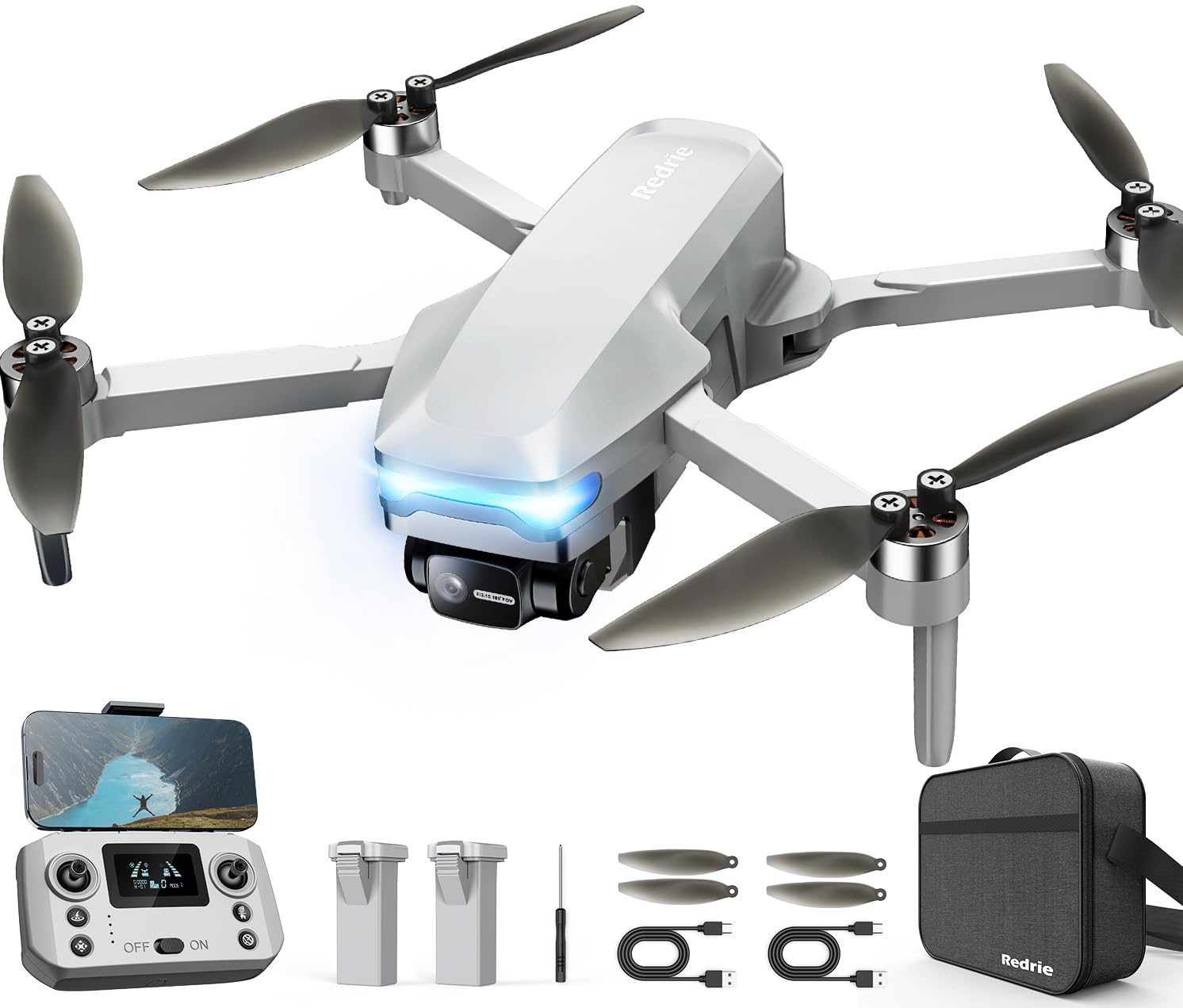
The REDRIE HK33 addresses a key need for smoother video: a 2-axis mechanical gimbal. This hardware feature actively compensates for drone tilt and movement, resulting in noticeably more stable 4K photos and 2K videos compared to drones relying solely on electronic stabilization. The gimbal, combined with an upgraded brushless motor system, makes it a solid choice for aspiring aerial photographers.
It boasts a strong transmission range thanks to a 5G WiFi system and an integrated signal repeater, and the dual 1800mAh batteries target 40-45 minutes of air time. GPS functionality enables auto-return and smart flight modes like follow and waypoint. Weighing under 250g, it remains portable and regulation-friendly.
Users praise its image stability and quality for the category, noting it handles light wind well. The setup is generally straightforward, and the inclusion of a compact case is a plus. For those whose primary goal is capturing watchable, shake-free footage without stepping into the premium tier, the HK33’s gimbal is a significant differentiating feature.
Why it’s great
- 2-axis mechanical gimbal provides superior video stabilization.
- Powerful brushless motors offer good performance and durability.
- Strong claimed transmission range with signal repeater technology.
- Good balance of imaging capability and portability.
Good to know
- The gimbal adjusts on two axes (tilt and roll), not three.
- Video recording resolution is 2K, not 4K.
9. Scrubuz HK22 GPS Drone
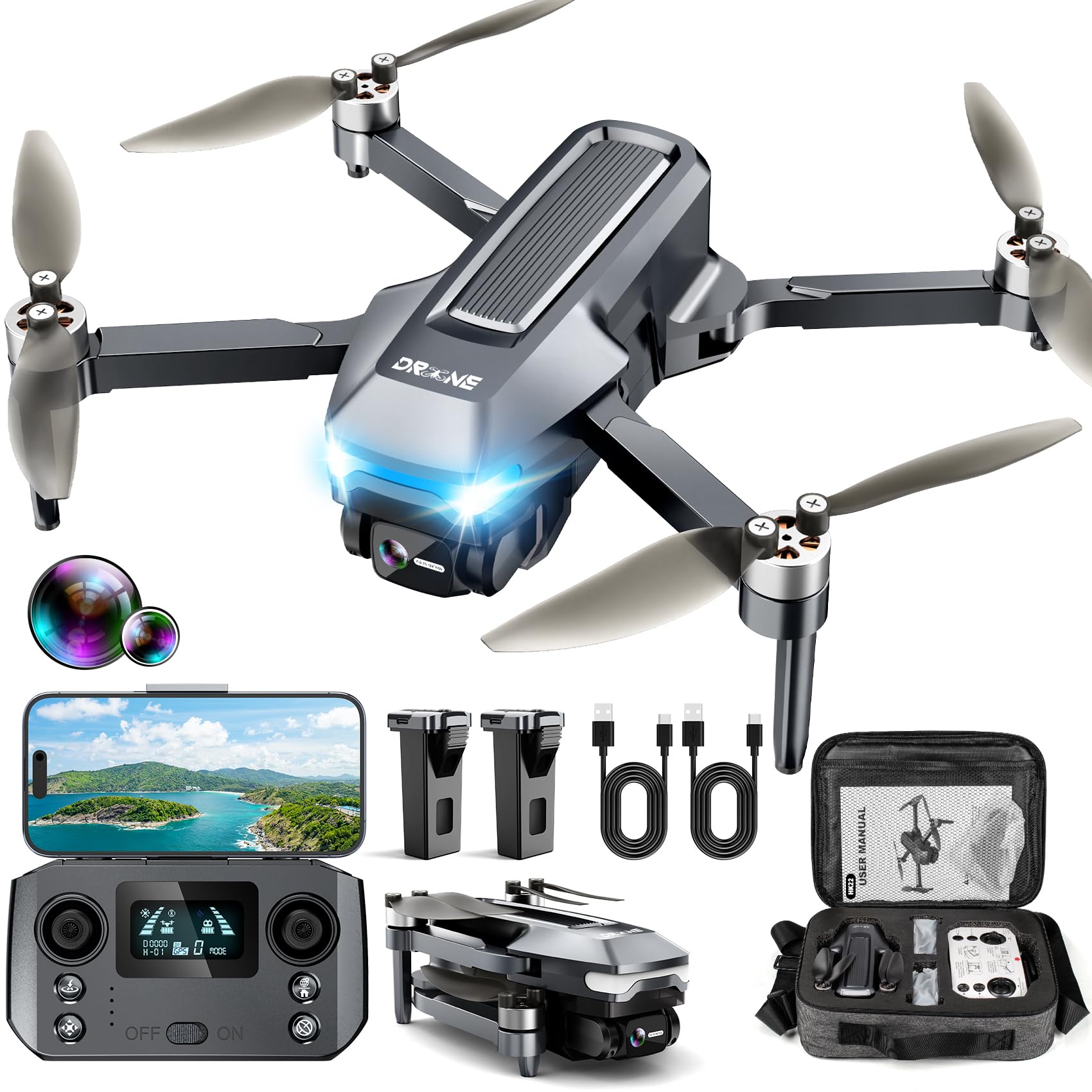
The Scrubuz HK22 is a well-rounded entry point into the world of GPS-equipped drones. It packs essential intelligent features like auto-return, follow me, and waypoint flight into a lightweight (248g) foldable frame. The inclusion of brushless motors is a notable advantage at this point, providing better efficiency and wind resistance than brushed motors often found in entry-level models.
It captures 4K photos and 2K video, storing them directly on your phone or a microSD card. The controller has an LED screen displaying basic flight data, which is helpful. With two batteries offering around 50 minutes of total flight, it provides ample time for learning and exploration. The setup process is documented with clear tips for calibration and stable takeoff.
Reviews highlight its ease of use, stable flight characteristics, and the value of having GPS safety features from the start. It’s frequently described as a great “starter drone” that doesn’t feel overly simplistic. For newcomers who want the reassurance of auto-return and the creative options of automated flight without complexity, the HK22 hits a sweet spot.
Why it’s great
- Includes vital GPS safety features at an accessible point.
- Brushless motors offer a better, more durable flight experience.
- Lightweight, foldable, and comes with a portable bag.
- Controller screen provides helpful real-time data.
Good to know
- Video recording is in 2K resolution, not 4K.
- Requires proper calibration for GPS features to work accurately.
10. Ameta S20 Pro GPS Drone
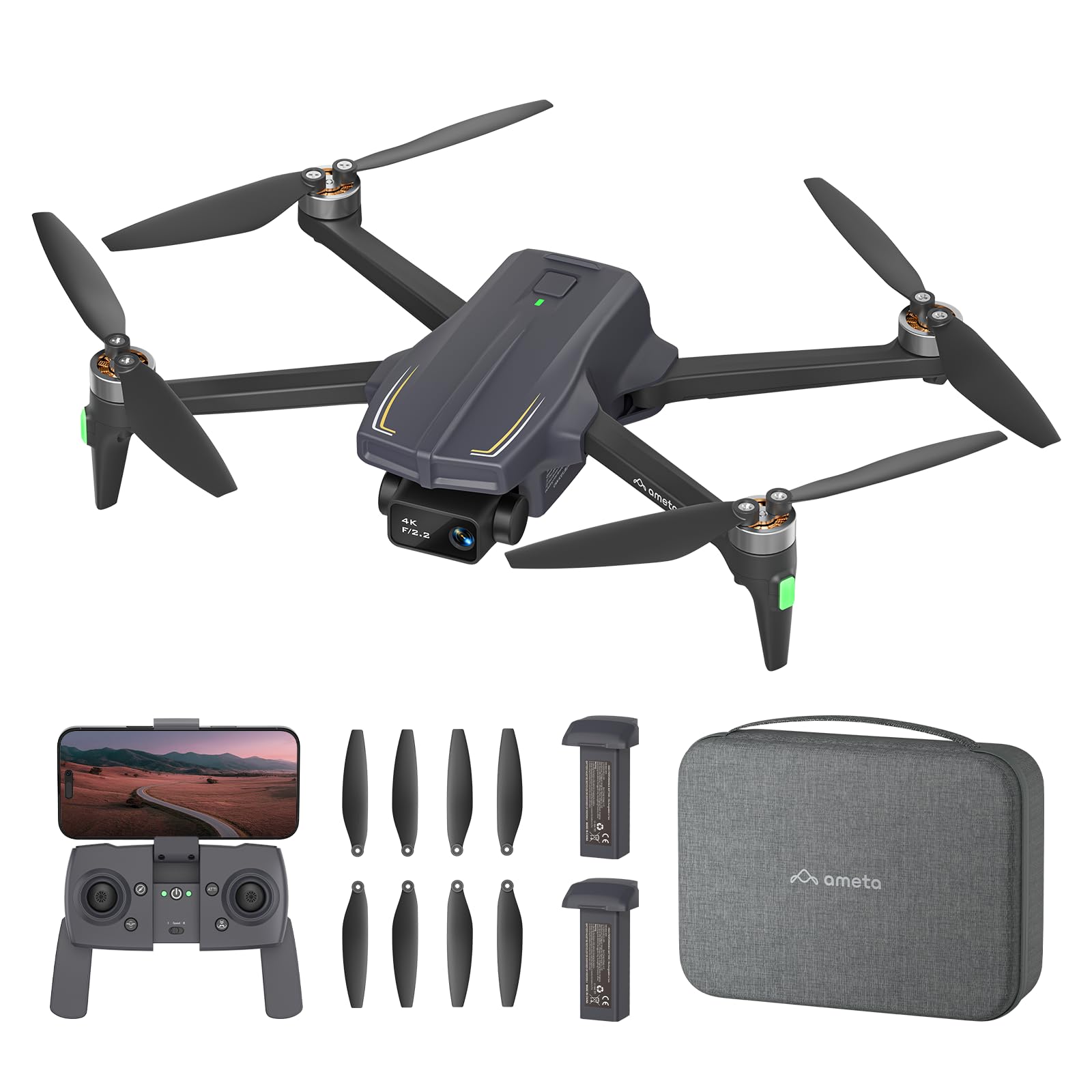
The Ameta S20 Pro’s headline feature is its extended flight time, with two 3000mAh batteries aiming for a combined 50 minutes in the air. This is a substantial amount of time for practice or filming, reducing the frequency of landings to swap batteries. It pairs this longevity with a camera built around a Sony IMX258 sensor, which typically promises better color and light sensitivity.
As a full-featured GPS drone, it offers one-tap return-to-home, follow-me modes, and a variety of creative shooting options like rocket and orbit modes. Weighing 181g, it’s notably light and avoids registration requirements. The overall package feels premium for its category, including a well-packaged carrying case.
Users are often pleasantly surprised by its build quality, stable flight, and the clarity of its 4K output. The extended battery life is consistently praised. It’s important to note a rare but serious safety concern mentioned in a review regarding a charging incident; always use the provided charger and monitor devices during charging.
Why it’s great
- Exceptional total flight time with two high-capacity batteries.
- Sony sensor camera aims for better image quality.
- Very lightweight and portable at 181g.
- Includes a wide range of intelligent flight and creative modes.
Good to know
- Batteries charge only inside the drone, which can be slow.
- As with any electronics, practice safe charging habits and supervision.
11. Black Falcon 4k Drone

The Black Falcon is positioned as an entry-level, fun-first drone, ideal for younger users or absolute beginners getting a feel for the controls. It emphasizes ease of use with features like one-button takeoff/landing, headless mode (where controls are relative to the pilot, not the drone’s orientation), and 360-degree flips. It’s foldable and comes with a case, making it a portable toy.
It’s important to manage expectations regarding its camera; while marketed with 4K, the technical specifications and reviews indicate it captures 720p video. This is sufficient for basic fun and learning but not for serious aerial photography. The package often includes helpful extras like propeller guards, spare propellers, and an extra battery.
Feedback is mixed, with many users finding it durable and entertaining for backyard flying, while others have experienced quality control issues. It serves a specific purpose: a low-stakes, budget-friendly introduction to drone piloting where the primary goals are learning basic controls and having fun, not producing broadcast-quality footage.
Why it’s great
- Extremely beginner-friendly with simple, assisted controls.
- Fun features like 360-degree flips add entertainment value.
- Comes with a case, guards, and spares—ready to fly.
- A very accessible starting point.
Good to know
- Camera video quality is 720p, not 4K.
- Build quality and consistency can vary, as with many entry-level toys.
- Lacks advanced features like GPS or brushless motors.
Understanding the Specs
Brushless vs. Brushed Motors
This is a critical differentiator. Brushless motors are more efficient, powerful, and durable, offering longer life, better wind resistance, and smoother operation. Brushed motors are cheaper but wear out faster and provide less thrust. For any serious flying, brushless motors are a worthwhile investment.
Stabilization: Gimbal vs. EIS
A mechanical gimbal (2-axis or 3-axis) uses motors to physically keep the camera level, providing the smoothest possible video. Electronic Image Stabilization (EIS) uses software to crop and digitally stabilize the image, which can work well but often at the cost of some image quality and field of view. For professional-looking footage, a gimbal is superior.
The 249-Gram Rule
In the United States and many other countries, drones weighing less than 250 grams (0.55 lbs) are exempt from mandatory FAA registration for recreational flyers. This makes sub-250g drones highly appealing for casual users, as they simplify legal compliance and enhance portability.
GPS & Return-to-Home (RTH)
A GPS module allows the drone to know its precise location. This enables crucial safety features like automatic return-to-home if the battery is low or the signal is lost, precise hovering in place, and intelligent flight modes like Follow Me and Waypoint Flight. For beginners, GPS RTH is a valuable safety net.
FAQ
Do I need to register my drone with the FAA?
What is the real difference between 2K and 4K video on a drone?
How important is a follow me mode?
Can I fly these drones indoors?
Final Thoughts: The Verdict
For most people, the best affordable drone with camera winner is the ScharkSpark 4K GPS Drone with 4.5” HD Screen because it removes the phone-setup hassle for beginners while delivering stable flight, useful GPS features, and great overall value. If you want ultimate portability and intelligent automation, grab the DJI Neo Three-Battery Combo. And for budget-conscious newcomers seeking essential GPS safety, nothing beats the Scrubuz HK22 GPS Drone.

Mo Maruf
I created WellFizz to bridge the gap between vague wellness advice and actionable solutions. My mission is simple: to decode the research and give you practical tools you can actually use.
Beyond the data, I am a passionate traveler. I believe that stepping away from the screen to explore new environments is essential for mental clarity and physical vitality.