Our readers keep the lights on and my smoothie glass nicely filled. As an Amazon Associate, I earn from qualifying purchases.
Choosing an adventure board game can feel like navigating a labyrinth blindfolded. With countless boxes promising epic journeys, how do you find the one that delivers genuine exploration, strategic depth, and memorable moments for your specific group? It’s not just about flashy art; it’s about the mechanics that create a story.
I’m Mohammad Maruf — the founder and writer behind WellFizz. Over the last decade, I’ve specialized in parsing market data and technical specifications for lifestyle products, drilling down into gameplay mechanics and player feedback to separate truly engaging adventures from merely thematic experiences.
This guide is built from analyzing thousands of data points, from player counts and win conditions to component quality and replayability drivers. Our goal is to help you identify the perfect game that matches your group’s appetite for strategy, cooperation, and narrative. The right choice transforms your table into a portal for unforgettable journeys with the best adventure board games.
How To Choose The Best Adventure Board Game
Adventure games are defined by a sense of progression, discovery, and overcoming challenges. The best ones make you feel like you’ve been on a journey, not just solved a puzzle. Before diving into specific titles, consider these core aspects to find your ideal match.
Player Count & Group Dynamics
This is the most critical filter. A brilliant four-player game can fall flat with two. Cooperative games, where players work against the board, foster teamwork and are excellent for mixed-skill groups. Competitive games involve more direct interaction, like blocking routes or claiming resources first. Also, verify the supported player range; some games scale beautifully, while others have a definitive “sweet spot.”
Weight & Playtime
“Weight” refers to strategic complexity and rules overhead. A lighter game is easy to teach and play in under 45 minutes, perfect for family nights or casual gatherings. Medium-weight games offer deeper strategy and longer sessions (60-90 mins), ideal for dedicated game nights. Consider your group’s patience for learning rules and their appetite for complex decision-making.
Core Mechanics & Replayability
The engine of the game defines the adventure. Tile-laying (like building a map) creates discovery. Set collection and hand management drive strategic planning. Look for variable setup, multiple paths to victory, and modular elements. A game with static goals and a single strategy gets old fast; true replayability comes from systems that create a new puzzle each time you play.
Theme & Component Quality
The theme should be integrated into the mechanics, not just pasted on. Does collecting gems feel like building a trade empire, or does placing a tile feel like exploring a forest? High-quality components—substantial cards, wooden tokens, a sturdy board—enhance immersion and longevity, making the physical act of playing more pleasurable.
Quick Comparison
On smaller screens, swipe sideways to see the full table.
| Model | Type | Best For | Key Feature | Amazon |
|---|---|---|---|---|
| Cascadia | Tile-Laying | Calm, strategic puzzling | Create habitats for wildlife | Amazon |
| Ticket to Ride Europe | Route-Building | Classic, accessible strategy | Claim railway routes across Europe | Amazon |
| Harmonies | Pattern-Building | Creative, tactile gameplay | Build 3D dream landscapes | Amazon |
| Splendor | Engine-Building | Fast-paced gem empire building | Collect gems to buy developments | Amazon |
| Carcassonne | Tile-Laying | Family-friendly kingdom building | Draw and place map tiles | Amazon |
| Ticket to Ride (2025) | Route-Building | Updated classic North American adventure | Cross-country train network | Amazon |
| Forbidden Desert | Cooperative | Intense teamwork under pressure | Uncover a flying machine in a sandstorm | Amazon |
| Trekking The National Parks | Set Collection | Educational family exploration | Visit and collect National Park cards | Amazon |
| Forest Shuffle | Card Game | Eco-friendly, clever combos | Build a balanced forest ecosystem | Amazon |
| Forbidden Island | Cooperative | Introductory cooperative strategy | Retrieve treasures from a sinking island | Amazon |
| Here to Slay | Card Game | Quick, humorous “take-that” battles | Build a party of heroes, slay monsters | Amazon |
In‑Depth Reviews
1. Cascadia

Cascadia stands out as a masterclass in elegant design, earning its Spiel des Jahres award for good reason. The adventure here is one of creation and balance, as you draft habitat tiles and wildlife tokens to build the most thriving ecosystem in the Pacific Northwest. The core loop is simple—choose one of four paired tile/token sets each turn—but the strategic depth is immense, as you juggle multiple scoring objectives that change with every game.
The game’s components are a significant part of its appeal. The thick habitat tiles and 100 deluxe wooden animal tokens (bear, salmon, hawk, elk, and fox) feel wonderful to handle. The spatial puzzle of arranging your growing landscape, trying to maximize habitat corridors while placing animals in optimal patterns according to your unique wildlife scoring cards, is deeply satisfying. It creates a calm, focused atmosphere where you’re competing against the puzzle as much as the other players.
This is an adventure in peaceful strategy. It supports solo play beautifully and scales flawlessly from two to four players. The “Family Variant” scoring card offers a simplified way to play, making it genuinely accessible for younger players or gaming newcomers, while the standard mode provides a rich challenge for experienced gamers. Its blend of approachability, tactical depth, and superb production makes it the top choice for a wide range of groups.
Why it’s great
- Award-winning, elegant design that’s easy to learn but strategically deep.
- Beautiful, high-quality components that enhance the tactile experience.
- Excellent scalability and includes a well-integrated solo mode.
- High replayability due to variable scoring goals and random tile draws.
Good to know
- Player interaction is indirect (drafting); not for those who prefer direct conflict.
- The puzzle can lead to analysis paralysis for some players on their turn.
2. Ticket to Ride Europe

Ticket to Ride Europe is often considered the refined, strategic big brother to the original. It takes the classic formula of collecting train cards to claim routes on a map and elevates it with new mechanics that add meaningful layers of decision-making. The map of turn-of-the-century Europe introduces Ferries, which require locomotive cards, and Tunnels, which add an element of risk, making route planning more engaging and tense.
The addition of Train Stations is a brilliant balancing mechanism. They allow you to use an opponent’s route once per game to complete a destination ticket, mitigating the potential for being completely blocked in a key city—a common frustration in the base game. This makes the experience feel more strategic and less punishing by chance, appealing to gamers who enjoy planning multiple contingencies. The components are first-class, with larger cards and a lavishly illustrated board.
This version offers a more gamer-centric adventure. The competition for key routes, especially through the Alps and across the English Channel, is fierce and requires careful observation of your opponents’ strategies. It retains the easy-to-learn core that makes Ticket to Ride a classic, but the added depth provides a more satisfying and replayable challenge for groups that enjoy a healthy dose of strategy with their cross-continental journey.
Why it’s great
- Enhanced strategic depth with Tunnels, Ferries, and Train Station mechanics.
- Beautifully produced with a large, detailed board and full-sized cards.
- Mitigates “bad luck” blocking with the Station mechanic.
- Perfect blend of accessibility for new players and depth for veterans.
Good to know
- Slightly more complex rules overhead than the very original game.
- The European geography might be less familiar to some players initially.
3. Harmonies

Harmonies is an adventure in aesthetics and peaceful construction. From the publisher Libellud, known for stunning art, this game tasks you with creating serene, dreamlike landscapes by combining terrain tokens and animal cards. The adventure is one of creative expression intertwined with a clever spatial puzzle. On your turn, you take tokens from a shared board and place them on your personal play area, stacking them to create a beautiful 3D tableau that grows throughout the game.
The gameplay is deceptively simple but offers satisfying tactical depth. You must balance collecting the right colors and types of tokens to fulfill the requirements of your animal cards, which score points based on specific patterns and adjacencies in your landscape. The components are a major highlight—120 wooden tokens in soft, natural colors and thick, linen-finish cards with gorgeous illustrations. The act of playing is genuinely tactile and calming.
This game excels as a “multiplayer solitaire” experience with just enough interaction via the drafting of tokens. It’s perfect for players who enjoy thoughtful, puzzly games like Azul or Calico but want a more organic, nature-themed adventure. The included solo mode is also exceptionally well-designed, providing a challenging and meditative experience. Harmonies is a premium-feeling game that offers a unique, visually stunning journey.
Why it’s great
- Breathtakingly beautiful artwork and premium, tactile components.
- Unique 3D landscape building that is visually rewarding.
- Easy to learn with a satisfying, thinky puzzle at its core.
- Includes an excellent and challenging solo mode.
Good to know
- Very low direct player interaction; focus is on your own puzzle.
- The game can end a touch abruptly as the token supply depletes.
4. Splendor

Splendor offers a sleek and strategic adventure in Renaissance gem trading. The goal is to build the most prestigious jewelry empire by collecting poker-style gem tokens, using them to acquire development cards that provide permanent gem discounts, and ultimately attracting the favor of noble patrons. The rules can be taught in two minutes, but the strategic possibilities are deep and engaging, making it a quintessential “gateway” game that hardcore gamers also respect.
The core thrill is in engine-building. Your early purchases of low-value cards create a foundation, permanently reducing the cost of more valuable cards later. You must constantly weigh short-term gains against long-term strategy, while also keeping a close eye on what your opponents are collecting to potentially block them. The component quality is notable, especially the weighty, clinking gem tokens which add a immensely satisfying tactile element to the economic gameplay.
This game provides a focused, competitive adventure with almost zero luck after setup. It plays quickly (about 30 minutes) and scales perfectly from two to four players. The constant decisions about whether to hoard tokens, buy a card, or reserve a card create a compelling tension every turn. Splendor is a modern classic for a reason—it delivers a pure, elegant, and deeply strategic experience in a compact package.
Why it’s great
- Elegant, easy-to-learn rules with profound strategic depth.
- Superb component quality, especially the weighted gem tokens.
- Fast gameplay with excellent replayability and player scaling.
- Perfect blend of engine-building and tactical opponent observation.
Good to know
- The theme is somewhat abstract (“pasted on”) despite the lovely art.
- Can encourage “multiplayer solitaire” play if players don’t engage in blocking.
5. Carcassonne
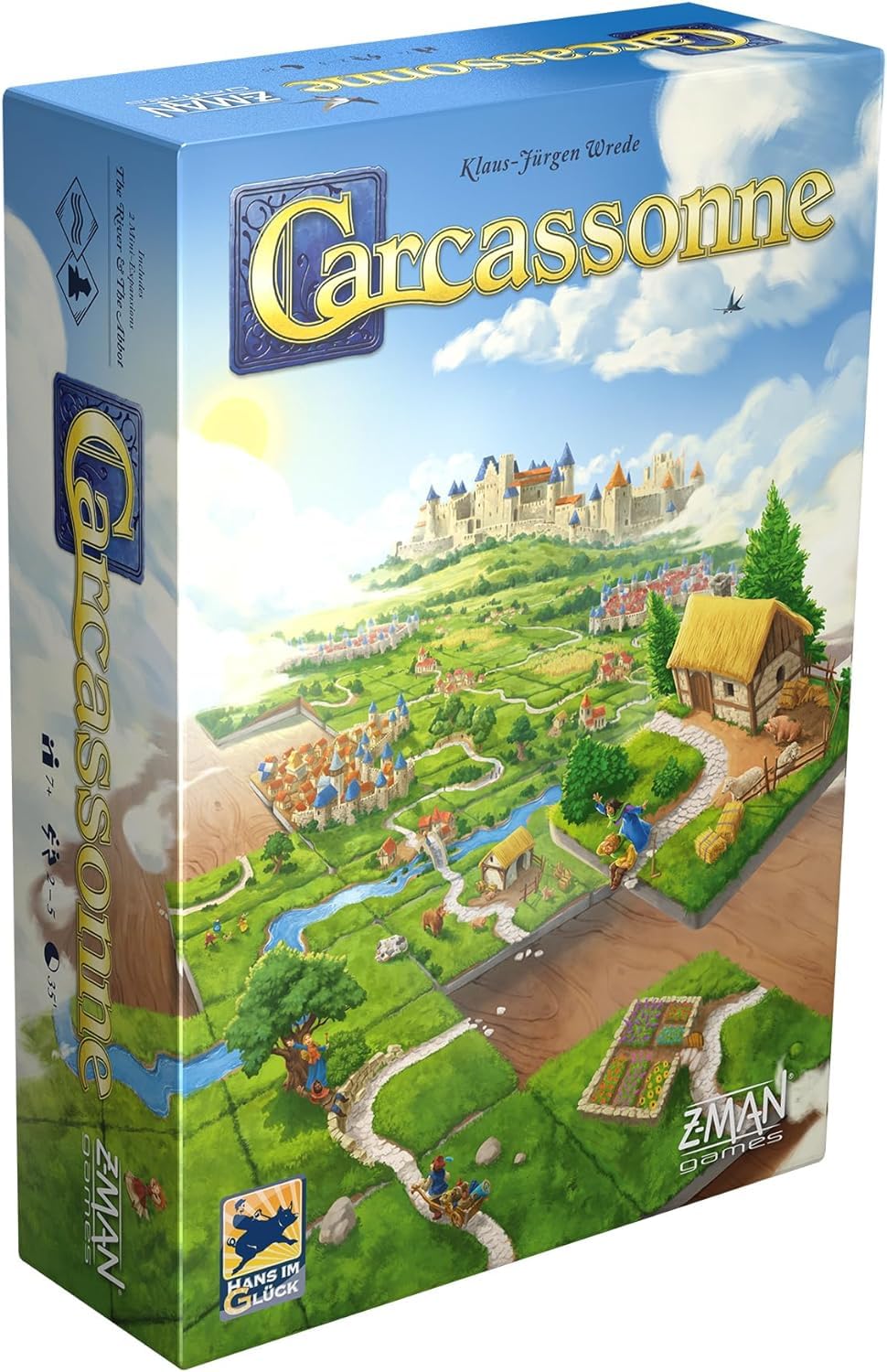
Carcassonne invites you on an adventure of building a medieval French landscape, one tile at a time. On your turn, you draw a new land tile and place it adjacent to tiles already played, expanding cities, roads, fields, and cloisters. After placing a tile, you can choose to deploy one of your wooden “meeple” followers to claim a feature, scoring points when it’s completed. The simple rules create an endlessly variable and engaging puzzle.
The genius of Carcassonne lies in its emergent strategy. Do you work on completing your own small city quickly, or do you start a massive metropolis that you try to keep for yourself? Do you place a tile to help an opponent complete their feature to get your meeple back, or do you sabotage their plans by making a feature harder to finish? This gentle interaction is perfect for families, and the included River and Abbot mini-expansions in this edition add nice variety without complexity.
It’s an adventure of shared creation and friendly competition. The game board is different every single time, and the short playtime encourages immediate replays. It works wonderfully with two players as a head-to-head duel and is equally great with a full group of five. Carcassonne is a timeless tile-laying classic that belongs in every collection for its sheer accessibility and clever design.
Why it’s great
- Timeless, easy-to-learn gameplay with immense strategic variety.
- Perfect for all ages and player counts, especially as a family game.
- High replayability due to random tile draws and an ever-changing board.
- This edition includes two great mini-expansions at no extra cost.
Good to know
- Scoring, particularly for farmers, can be confusing for first-time players.
- Component quality (cardboard tiles) is good but not premium.
6. Ticket to Ride (2025 Refresh)
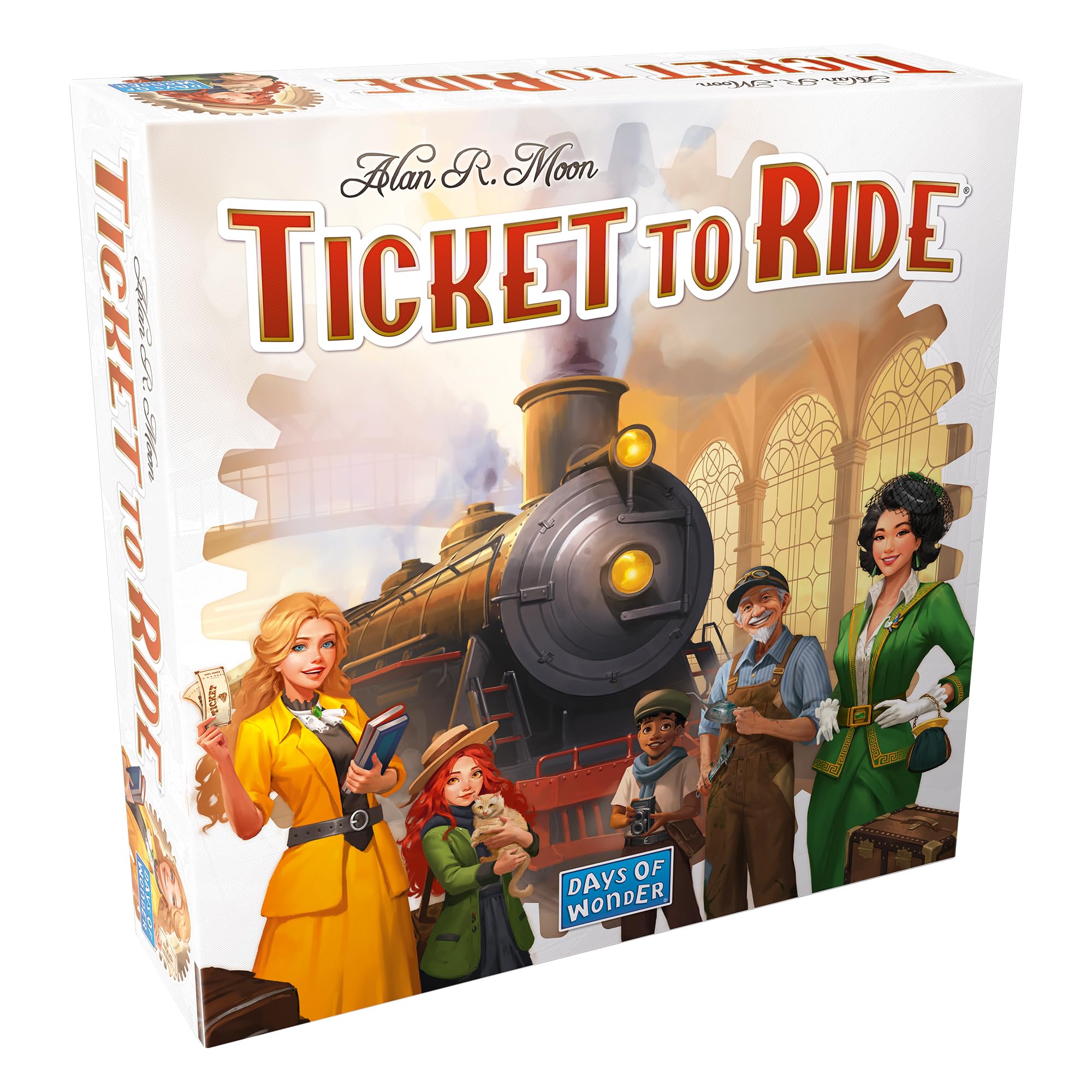
This 2025 refresh of the original Ticket to Ride is the definitive way to experience the cross-country train adventure that started it all. It features a giant, beautifully updated map of North America with refreshed, vibrant artwork. The components have been given a modern polish, making this the most visually appealing and durable version of the classic game to date. The core, award-winning gameplay remains untouched: collect train cards, claim routes, connect cities, and complete destination tickets for points.
The adventure here is one of continental ambition. You might be struggling to connect Los Angeles to Miami while your opponent is weaving a network through the Northeast. The tension comes from watching the board fill up, potentially blocking your critical path, and deciding when to draw more tickets or commit to building. This edition maintains the perfect balance that made the original a phenomenon—simple enough for an 8-year-old to grasp, but with enough strategic nuance to keep adults fiercely engaged.
If you don’t own Ticket to Ride yet, this is the version to get. It’s the perfect centerpiece for a family game night or a casual gathering with friends. The 30-60 minute playtime is ideal, and the sheer number of possible routes and strategies ensures no two games are the same. It’s a modern classic, polished to a shine for a new generation of tabletop adventurers.
Why it’s great
- The classic, accessible gameplay in its most visually updated form.
- Perfect introductory game for new board gamers of any age.
- High-quality components and a durable, well-designed box.
- Consistently engaging with direct but friendly player interaction.
Good to know
- Does not include the extra mechanics (Stations, Tunnels) of the Europe version.
- Some purists note the cards in this edition are still on the smaller side.
7. Forbidden Desert

Forbidden Desert is a tense, thematic cooperative adventure that pits you and your team against a relentless desert. Your goal is to locate and excavate the pieces of a legendary flying machine before you either die of thirst or are buried by shifting sands. Unlike its predecessor, Forbidden Island, this game introduces a moving storm mechanism and a crucial thirst meter, raising the stakes and creating a truly dynamic and challenging puzzle.
The adventure is one of frantic coordination and resource management. Each player has a unique role with a special ability, like the Navigator who can move others or the Water Carrier who can share water. You must communicate constantly, planning several moves ahead as the storm rearranges the desert tiles, uncovering new areas or burying critical ones. The game creates genuine “oh no!” and “we did it!” moments, making victory feel hard-earned and collaborative.
This is a mid-range cooperative game that offers more mechanical depth than Forbidden Island but remains more accessible than the complex Pandemic. The components are fantastic, including a neat miniature for the flying machine. It’s an excellent choice for groups that enjoy working together under pressure, offering a compelling narrative arc and scalable difficulty that will challenge both new and experienced players.
Why it’s great
- Intense, thematic cooperative play with a unique moving storm mechanic.
Understanding the Specs
Player Count & Scaling
This isn’t just a minimum and maximum. A game that “scales well” means its core tension and balance remain intact across its player range. For example, a drafting game with open information might be more predictable with two players but become a chaotic free-for-all with five. Cooperative games often get harder with more players, as the board state changes more between your turns. Always check the “best for” player count in community reviews.
Game Weight & Playtime
“Weight” is a community-aggregated measure of a game’s complexity, from light (1.0) to heavy (4.0+). It considers rule density, strategic depth, and cognitive load. Playtime is often listed as a range (e.g., 30-60 mins). The lower end is for experienced players; your first game will likely hit the upper limit. Matching weight and playtime to your group’s preference is crucial for a satisfying adventure—no one wants a light game that drags or a heavy game that feels rushed.
FAQ
What is the main difference between cooperative and competitive adventure games?
How important is theme in an adventure board game?
Can a two-player adventure game still feel epic?
What does “replayability” mean for these games?
Final Thoughts: The Verdict
For most people, the best adventure board games winner is the Cascadia because it masterfully blends approachability, deep strategy, and beautiful components into a consistently rewarding experience for all ages and skill levels. If you want a classic, interactive strategy adventure that has stood the test of time, grab the Ticket to Ride Europe. And for a truly immersive and tense cooperative experience where teamwork is everything, nothing beats the Forbidden Desert.

Mo Maruf
I created WellFizz to bridge the gap between vague wellness advice and actionable solutions. My mission is simple: to decode the research and give you practical tools you can actually use.
Beyond the data, I am a passionate traveler. I believe that stepping away from the screen to explore new environments is essential for mental clarity and physical vitality.