Our readers keep the lights on and my smoothie glass nicely filled. As an Amazon Associate, I earn from qualifying purchases.
Choosing your first serious telescope is thrilling, but the sea of specifications can be overwhelming. Dobsonian telescopes, with their simple mounts and large light-gathering mirrors, are the undisputed champion for deep-sky viewing on a budget. However, not all 10-inch Dobs are created equal, and the wrong choice can lead to frustration instead of cosmic wonder.
I’m Mohammad Maruf — the founder and writer behind WellFizz. My approach involves deep-dive market analysis, parsing thousands of spec sheets and user experiences to decode what truly matters for your stargazing journey, separating marketing hype from optical reality.
This guide cuts through the noise, presenting a strategically sorted list from capable mid-range performers to premium giants, ensuring you find an instrument that matches your ambition and lifestyle. best 10 dobsonian telescope for your needs balances aperture with practical features like collapsible design or smart navigation.
How To Choose The Best 10 Dobsonian Telescope
Investing in a 10-inch Dobsonian is a commitment to incredible views, but it requires thoughtful consideration beyond just the mirror size. The right choice blends optical performance with your practical reality—where you’ll observe, how you’ll move it, and what you most want to see.
Aperture is King, but Portability is Queen
The 10-inch (254mm) aperture is a celebrated sweet spot, gathering over 70% more light than an 8-inch scope. This translates to brighter, more detailed views of galaxies, nebulae, and planets. However, a solid tube of this size is bulky. If you have stairs to navigate or a small car, a collapsible “truss-tube” design can be a game-changer, shrinking the tube length for transport without sacrificing that precious aperture.
Mount and Movement Matter
The classic Dobsonian mount is a simple, stable alt-azimuth rocker box. Look for models with smooth Teflon or bearing-based movement and adjustable tension controls. These allow you to effortlessly nudge the telescope to follow objects. Some premium models now integrate “push-to” or even fully computerized GoTo systems, which use encoders or motors to help you find thousands of celestial objects automatically—a huge benefit under light-polluted skies.
The Accessory Ecosystem
What comes in the box sets your starting point. A 2-inch focuser is preferred for wider-field eyepieces. A right-angle finder scope is much easier on the neck than a straight-through model. The included eyepieces are often basic; plan for upgrading to a quality low-power wide-field eyepiece and a planetary eyepiece. Also, consider a cooling fan for the primary mirror to reduce thermal stabilization time, crucial for achieving sharp views.
Quick Comparison
On smaller screens, swipe sideways to see the full table.
| Model | Type | Best For | Key Feature | Amazon |
|---|---|---|---|---|
| Celestron StarSense 10″ | Smart Dob | Beginners wanting easy finding | Smartphone navigation app | Amazon |
| Sky-Watcher Flextube 250 | Collapsible | Observers needing portability | Truss-tube collapses for transport | Amazon |
| Celestron NexStar 8SE | GoTo SCT | Automated tracking & finding | Full computerization, compact design | Amazon |
| Sky-Watcher Classic 250 | Solid Tube | Traditionalists, max stability | Simple, robust classic design | Amazon |
| Celestron NexStar 127SLT | GoTo Mak | Planetary & lunar viewing | Maksutov optics, computerized mount | Amazon |
| Sky-Watcher Flextube 300 | Collapsible | Ultimate light gathering | Massive 12″ collapsible aperture | Amazon |
| Sky-Watcher Classic 200 | Solid Tube | Stepping up from beginners | Excellent 8″ entry to large apertures | Amazon |
| NATIONAL GEOGRAPHIC 114mm | Reflector | Younger beginners, first scope | Carbon fiber tube, complete kit | Amazon |
| Gskyer 70mm Refractor | Refractor | Lunar & terrestrial viewing | Includes phone adapter, full kit | Amazon |
| Usogood 10×42 Monocular | Monocular | Daytime wildlife, hiking | Extremely compact and lightweight | Amazon |
| Celestron USB Cooling Fan | Accessory | Improving mirror performance | Cools mirror faster for sharper views | Amazon |
In‑Depth Reviews
1. Celestron StarSense Explorer 10-inch Dobsonian

The Celestron StarSense Explorer represents a brilliant fusion of classic Dobsonian light-gathering power with modern, accessible technology. It solves the single biggest hurdle for beginners: finding things in the sky. By docking your smartphone in the included holder, the patented app uses your phone’s camera to analyze star patterns and pinpoint your telescope’s exact position.
You are then guided to thousands of celestial objects with simple on-screen arrows. This removes the frustration of star-hopping and lets you focus on the wonder of observation. The 10-inch parabolic mirror with StarBright XLT coatings delivers exceptionally bright and crisp views of deep-sky objects like the Orion Nebula, while also providing stunning detail on the Moon and planets.
The build quality is solid, featuring a stable Dobsonian rocker box with smooth bearings. The setup retains the manual push-to operation, making it intuitive and power-free, but the smartphone guidance system dramatically shortens the learning curve. It’s a premium package that genuinely makes serious astronomy accessible from the first night out.
Why it’s great
- Revolutionary smartphone app eliminates the guesswork in finding objects.
- Massive 10-inch aperture provides breathtakingly bright and detailed views.
- No motors or external power required, maintaining classic Dob simplicity.
- Excellent build quality with a stable mount and smooth motion.
Good to know
- The tube is large and requires a two-part transport strategy.
- App performance can depend on your specific smartphone model.
- Like all large reflectors, it requires periodic collimation.
2. Sky-Watcher Flextube 250 10-inch Collapsible Dobsonian

The Sky-Watcher Flextube 250 is the ingenious solution for astronomers who crave a large 10-inch aperture but have limited storage space or need to transport their scope to dark-sky sites. Its unique strut design allows the upper tube section to collapse down over the lower section, significantly reducing the overall length for transport and storage.
A key advantage of this design is that it maintains collimation (optical alignment) when extended and locked into place. This means you can set up and be observing much faster than with traditional solid-tube Dobs that may shift during transport. The included 8×50 right-angle correct-image finder scope is a notable upgrade, making star-hopping far more comfortable than a straight-through finder.
The mount features proprietary Teflon bearings and tension control handles for smooth, precise movement. The 2-inch Crayford-style focuser accepts both 2-inch and 1.25-inch eyepieces. This scope delivers all the deep-sky prowess of a 10-inch aperture in a much more manageable package.
Why it’s great
- Collapsible design is a game-changer for storage and car transport.
- Holds collimation well when properly set up and extended.
- Includes a superior right-angle finderscope for comfortable use.
- Smooth bearing system with adjustable tension control.
Good to know
- The open truss design can allow stray light in; a light shroud is a recommended add-on.
- Requires a bit more care during assembly to ensure struts are locked.
- Slightly more involved initial collimation process compared to solid tubes.
3. Celestron NexStar 8SE Computerized Telescope

While not a traditional Dobsonian, the Celestron NexStar 8SE is a premier alternative for those who prioritize automated finding and tracking above all else. Its 8-inch Schmidt-Cassegrain optical tube is incredibly compact, housing a long 2032mm focal length in a short tube, making the entire system highly portable. The fully computerized single-fork arm mount is the star here.
With a database of over 40,000 celestial objects, you can select a target on the hand control, and the telescope will automatically slew to it and track it as it moves across the sky. This is invaluable for observing planets, lunar details, and deep-sky objects without constant manual adjustment. The SkyAlign technology makes initial setup straightforward, even if you can’t name a single star.
The optics are excellent for planetary and lunar observation, providing high-contrast, sharp images. This system is perfect for the enthusiast who wants to spend more time observing and less time searching, and who may have an interest in eventually trying basic astrophotography of brighter objects.
Why it’s great
- Full GoTo and tracking automates the observing experience.
- Extremely compact and portable design for an 8-inch system.
- Excellent for planetary, lunar, and smaller deep-sky objects.
- Massive object database and easy SkyAlign setup.
Good to know
- Requires a steady external power source (PowerTank recommended).
- The tripod, while adequate, can show vibrations at high magnification.
- The 8-inch aperture gathers less light than a 10-inch Dob for faint fuzzies.
4. Sky-Watcher Classic 250 10-inch Dobsonian

The Sky-Watcher Classic 250 is the embodiment of the traditional, no-frills, large-aperture Dobsonian. It’s a workhorse telescope built for one purpose: to deliver maximum photons to your eyepiece with robust simplicity. The solid fiber tube construction provides excellent rigidity and helps shield the optics from stray light and dew.
It features the same quality 10-inch parabolic mirror with high-reflectivity coatings as the Flextube model, paired with a 2-inch Crayford focuser. The rocker box utilizes Teflon bearings and the patented tension control handles, allowing for incredibly smooth altitude movement that stays put when you let go. This is a telescope that feels solid and reliable.
For the purist who has the space to store and move a full-length tube and values absolute stability and classic design, the Classic 250 is an outstanding choice. Its performance is all about the optics, offering a direct, uncomplicated path to breathtaking deep-sky views.
Why it’s great
- Superior solid-tube stability and stray light protection.
- Exceptional 10-inch mirror delivers incredibly bright, crisp images.
- Very smooth altitude movement with adjustable tension.
- Simple, durable, and time-tested design.
Good to know
- Tube is long (~49 inches) and requires significant storage space.
- Can be awkward to transport in smaller vehicles.
- Includes a straight-through finderscope, which can be hard on the neck.
5. Celestron NexStar 127SLT Computerized Maksutov

The Celestron NexStar 127SLT offers a different kind of premium experience: a compact, computerized system optimized for lunar and planetary observation. Its 127mm Maksutov-Cassegrain optical design is renowned for producing extremely high-contrast, sharp images with virtually no optical aberrations, making it ideal for resolving details on Jupiter’s cloud belts or Saturn’s rings.
The computerized altazimuth mount provides full GoTo capability and tracking from a database of 40,000+ objects. While its 5-inch aperture can’t match a 10-inch Dob on faint galaxies, its optical precision and the convenience of automated tracking make it a formidable tool for solar system exploration. The entire setup is relatively lightweight and quick to assemble.
This is an excellent choice for an urban astronomer primarily interested in the moon and planets, or as a highly portable, grab-and-go scope that still offers serious performance and the ease of computer-assisted finding.
Why it’s great
- Maksutov optics provide superb contrast and detail on planets.
- Full GoTo functionality in a relatively compact package.
- Fast setup with SkyAlign technology.
- Long 1500mm focal length is great for high-power viewing.
Good to know
- Aperture is smaller, limiting performance on faint deep-sky objects.
- The stock tripod can be somewhat lightweight, benefiting from added stability.
- Like all compound scopes, it needs time to acclimate to outdoor temperatures.
6. Sky-Watcher Flextube 300 12-inch Dobsonian

For the observer who wants the ultimate in light-gathering power and is ready to handle a larger instrument, the Sky-Watcher Flextube 300 is a compelling option. Its massive 12-inch (304.8mm) primary mirror collects over 40% more light than a 10-inch, revealing fainter details in galaxies and nebulae and allowing for higher useful magnification on planets.
Remarkably, it retains the collapsible truss-tube design of its smaller sibling. While the components are heavier, the ability to break down the tube makes this colossal aperture more manageable than a solid-tube 12-inch would be. It features steel needle bearings for azimuth movement, designed to handle the increased weight smoothly.
This is a serious telescope for a dedicated amateur who has access to dark skies and the physical space for it. The views through a well-collimated 12-inch scope under a dark sky are transformative, showing structure and detail in deep-sky objects that smaller scopes simply cannot reach.
Why it’s great
- Colossal 12-inch aperture provides breathtaking deep-sky views.
- Collapsible design is essential for managing this size of scope.
- Steel needle bearings ensure smooth movement under heavy load.
- The ultimate step up in visual astronomy for a dedicated observer.
Good to know
- Heavy and bulky; moving it is a two-person task for many.
- Requires more frequent and careful collimation.
- Needs significant cooldown time for the large mirror to stabilize.
7. Sky-Watcher Classic 200 8-inch Dobsonian

The Sky-Watcher Classic 200 is the quintessential recommendation for a first “real” telescope and remains a fantastic choice. The 8-inch aperture is a major step up from entry-level models, providing excellent views of the planets and a wide range of deep-sky objects, all while remaining relatively portable and manageable for one person.
It shares the same quality construction principles as the larger Classic models: a solid tube, parabolic primary mirror, 2-inch Crayford focuser, and smooth Teflon bearing movement with tension control. The 8-inch size is often the perfect compromise, offering substantial performance without the bulk and weight of a 10-inch, making it easier to take out on a whim.
For many astronomers, an 8-inch Dobsonian is a lifetime telescope. It provides more than enough capability to explore the night sky for years, and its mid-range position makes it a superb value for the optical performance delivered.
Why it’s great
- Perfect balance of aperture, portability, and affordability.
- Excellent “first serious scope” with room to grow.
- Same high-quality build and smooth mechanics as larger models.
- Light enough for one person to move and set up comfortably.
Good to know
- Aperture is smaller than a 10-inch, so deep-sky views are less bright.
- Still a sizable tube that requires dedicated storage space.
- Included eyepieces are basic; upgrades are recommended over time.
8. NATIONAL GEOGRAPHIC Explorer 114mm Reflector

This National Geographic scope serves as an accessible entry point into reflector telescopes. With a 114mm (4.5-inch) aperture on a full-height tripod with an altazimuth mount, it’s designed to be a complete starter package. The carbon-fiber wrap on the optical tube is a nice touch, aiding in thermal stability and giving it a sleek look.
It comes with a useful set of accessories, including two Plössl eyepieces, a 2x Barlow lens, a red-dot finder, and even a smartphone adapter. This allows a complete beginner to start observing the Moon, Jupiter’s moons, and Saturn’s rings right out of the box. The tripod provides an eyepiece height suitable for standing or seated viewing.
While its aperture can’t compete with larger Dobs on deep-sky objects, it’s a capable and educational instrument for a younger beginner or someone wanting to test the waters of astronomy without a major initial commitment.
Why it’s great
- Excellent all-in-one starter kit with essential accessories.
- Carbon fiber tube is lightweight and helps with thermal management.
- Full-height tripod is user-friendly for beginners.
- A great gift option to spark an interest in astronomy.
Good to know
- The mount and tripod, while functional, are not as stable as a Dobsonian base.
- 114mm aperture is limited for viewing faint deep-sky objects.
- The red-dot finder’s quality can be inconsistent.
9. Gskyer 70mm AZ Refracting Telescope

The Gskyer 70mm is a classic entry-level refractor telescope, ideal for lunar observation, terrestrial viewing, and getting acquainted with basic astronomy. Its 70mm aperture and 400mm focal length provide good views of the Moon’s craters and can show Jupiter’s moons and Saturn’s rings as tiny discs.
A significant strength is its included accessory pack. It comes with multiple eyepieces, a 3x Barlow lens, a smartphone adapter, and a wireless camera remote, making it a fun kit for simple astrophotography attempts of the Moon. The adjustable aluminum tripod and altazimuth mount are typical for this category.
This scope is best suited for beginners, families, or as a portable option for daytime use. It’s low-maintenance (no mirrors to collimate) and ready to use, providing a straightforward introduction to the hobby.
Why it’s great
- Excellent, complete kit for a first-time user, especially a child.
- Includes smartphone adapter for basic lunar photography.
- Low-maintenance refractor design, good for terrestrial and lunar viewing.
- Lightweight and relatively portable.
Good to know
- Small aperture severely limits views of planets and deep-sky objects.
- The mount is lightweight and can be shaky, especially with accessories attached.
- Marketing magnification claims are often exaggerated; manage expectations.
10. Usogood 10×42 Monocular
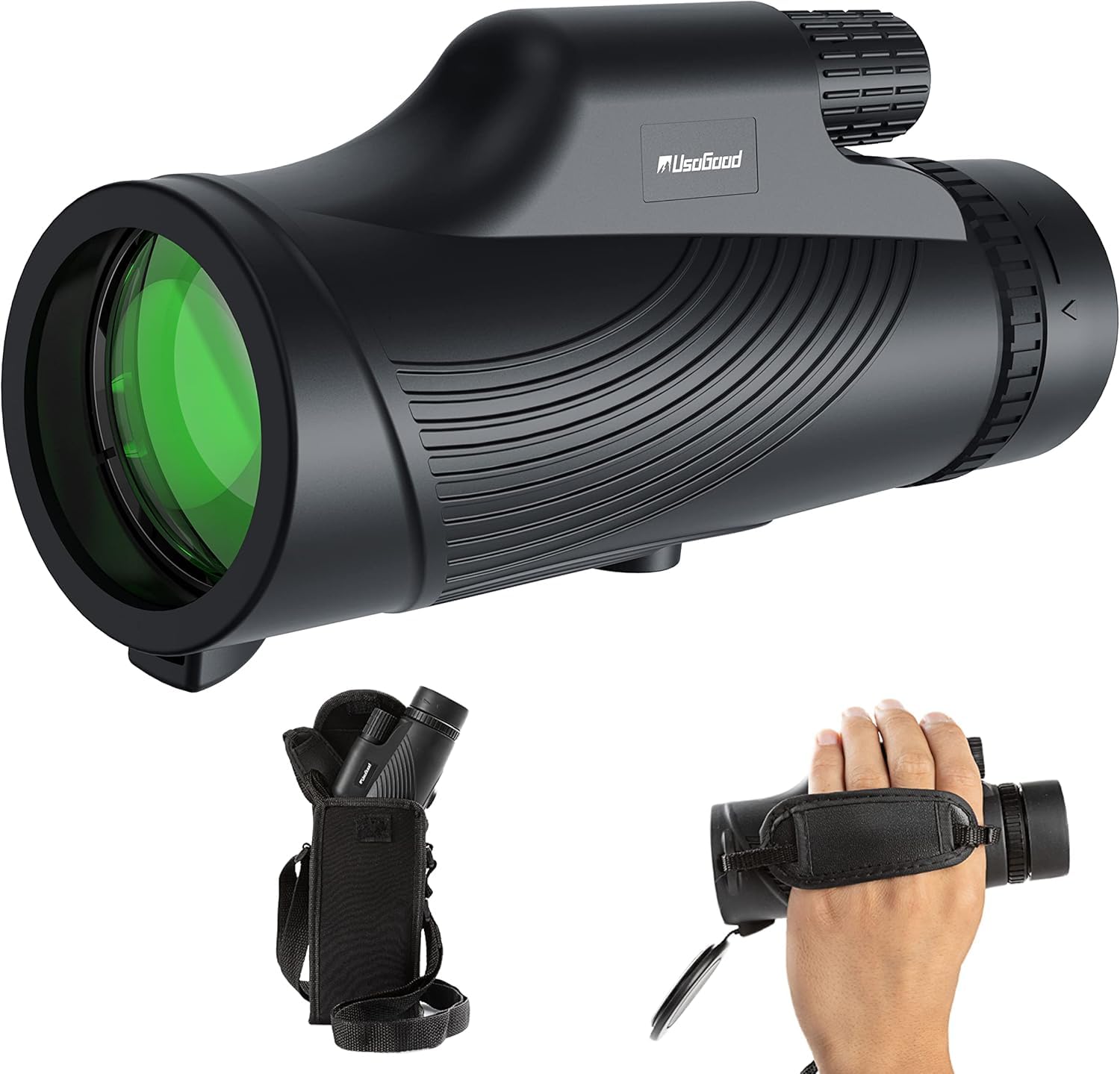
This is not a telescope for astronomy, but it’s included as a compelling tool for nature observation and as a testament to ultra-portable optics. The Usogood 10×42 monocular is incredibly compact, fitting in a jacket pocket, and provides stabilized 10x magnification with a 42mm objective lens for daytime use.
It’s ideal for birdwatching, hiking, sporting events, or any situation where carrying a telescope or binoculars is impractical. The fully multi-coated lenses and BAK-4 prism offer a bright, clear image for its size. It’s also waterproof and comes with a handy case and strap.
For an astronomer, this could serve as a superb wide-field, quick-look companion to a large telescope or as a travel optic when a telescope isn’t feasible. It reinforces the principle that the best optical tool is often the one you actually have with you.
Why it’s great
- Extremely lightweight and pocketable for spontaneous observation.
- Good image quality for daytime terrestrial viewing.
- Waterproof construction and included case make it durable for outdoors.
- Excellent value for a casual, on-the-go optical device.
Good to know
- Not designed or suitable for astronomical viewing beyond the moon.
- Hand-shake is noticeable at 10x magnification without support.
- Small field of view compared to binoculars.
11. Celestron USB Cooling Fan for Dobsonian Telescopes
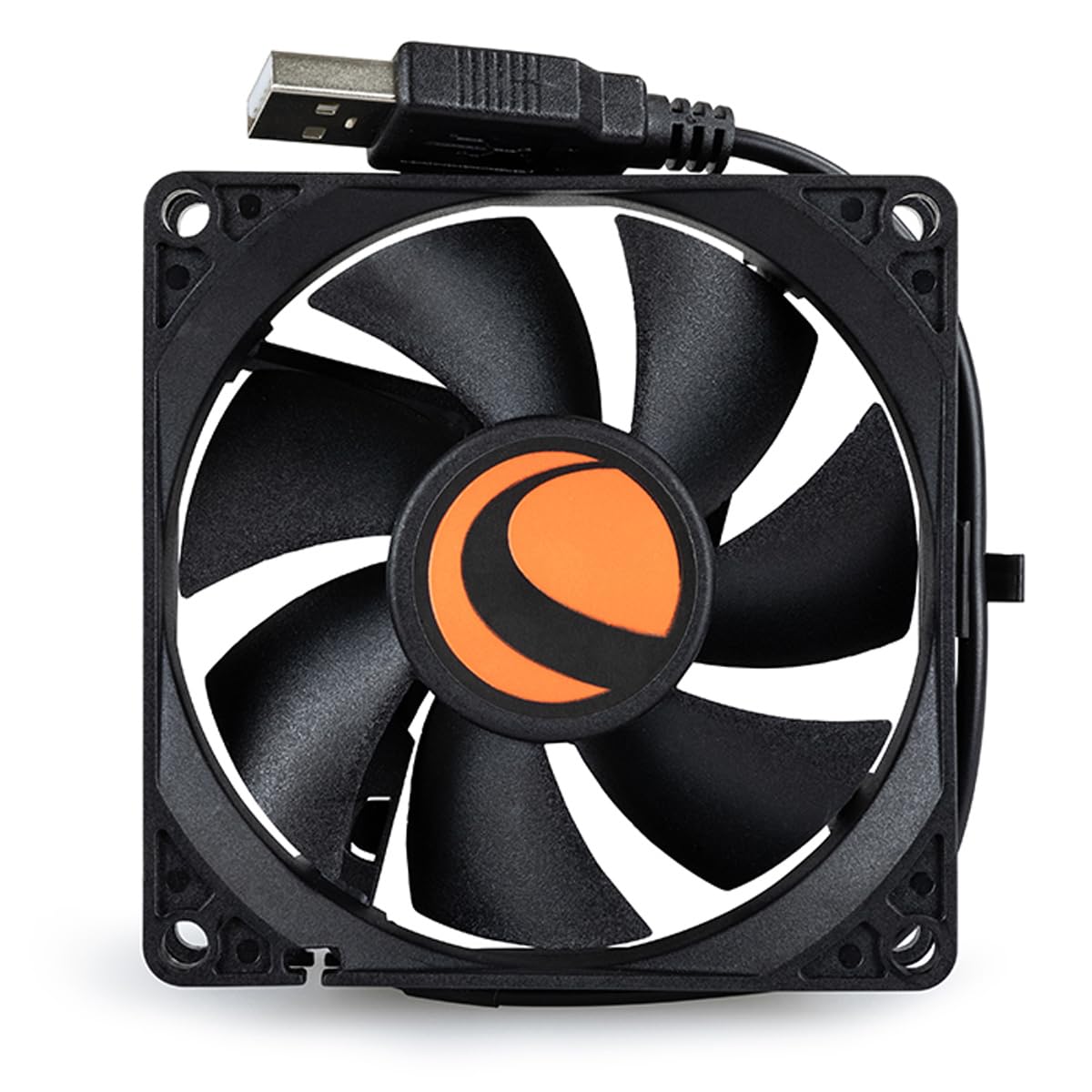
This simple accessory is one of the most impactful upgrades you can make for a large Dobsonian reflector. When you bring a telescope from a warm indoors to a cool outdoors, the primary mirror creates thermal currents that blur the image, sometimes for over an hour. This USB-powered fan mounts to the rear cell of compatible Dobs and actively draws air across the mirror.
By accelerating the mirror’s temperature equalization with the ambient air, it dramatically reduces this cooldown time, allowing you to achieve crisp, steady views in minutes rather than an hour. This means more productive observing sessions, especially on nights when clear skies are limited.
It’s a quiet, efficient, and brilliantly simple solution to a fundamental problem in Newtonian reflector telescopes. For any serious observer with an 8-inch or larger Dob, this is a highly recommended addition to your kit.
Why it’s great
- Significantly reduces mirror cooldown time for sharper views faster.
- Simple USB power from a power bank or wall adapter.
- Quiet operation and easy installation on compatible scopes.
- Inexpensive way to improve the performance of your existing telescope.
Good to know
- Only compatible with specific models that have a fan port (like Celestron StarSense Dobs).
- Requires an external USB power source.
- Check your telescope’s rear cell for compatibility before purchasing.
Understanding the Specs
Aperture (Diameter)
This is the most important number. Measured in millimeters or inches, it’s the diameter of the primary mirror or lens. Larger aperture gathers more light, allowing you to see fainter objects and finer detail. A 10-inch (254mm) aperture collects over 70% more light than an 8-inch, making a dramatic difference in deep-sky viewing.
Focal Length & Ratio
Focal length (e.g., 1200mm) determines the telescope’s native magnification power with a given eyepiece. The focal ratio (focal length ÷ aperture, e.g., f/4.7) indicates the “speed” of the scope. Lower f-ratios (f/4 to f/5) provide wider fields of view and are better for deep-sky objects; higher f-ratios (f/8+) offer higher magnification and are often better for planets.
Mount Type
Dobsonian mounts are simple, stable alt-azimuth rocker boxes that move up/down (altitude) and left/right (azimuth). They are manual but often feature smooth bearings and tension controls. GoTo or computerized mounts use motors to automatically find and track objects, requiring power but simplifying navigation immensely.
Finder Scope
This is your aiming device. A red-dot finder projects a dot onto the sky. An optical finder scope (like an 8×50) magnifies a small area. Right-angle finders are much easier to use than straight-through models when pointing near the zenith. A good finder is critical for locating objects.
FAQ
Is a 10-inch Dobsonian too big for a beginner?
What can I see with a 10-inch Dobsonian telescope?
Do I need a computer or GoTo mount to find things?
What essential accessories should I budget for?
Final Thoughts: The Verdict
For most people, the best 10 dobsonian telescope winner is the Celestron StarSense Explorer 10-inch because it masterfully combines massive light-gathering power with revolutionary smartphone guidance that eliminates the beginner’s biggest hurdle. If you want ultimate portability without sacrificing aperture, grab the Sky-Watcher Flextube 250. And for fully automated finding and tracking, nothing beats the convenience of the Celestron NexStar 8SE. Your journey under the stars awaits.

Mo Maruf
I created WellFizz to bridge the gap between vague wellness advice and actionable solutions. My mission is simple: to decode the research and give you practical tools you can actually use.
Beyond the data, I am a passionate traveler. I believe that stepping away from the screen to explore new environments is essential for mental clarity and physical vitality.