Our readers keep the lights on and my smoothie glass nicely filled. As an Amazon Associate, I earn from qualifying purchases.
Upgrading to a gigabit internet plan is a game-changer, but that lightning-fast speed often gets bottlenecked by an outdated or underpowered router. The right device doesn’t just distribute bandwidth; it creates a stable, secure, and responsive network foundation for everything from 4K streaming to video calls and smart home devices.
I’m Mohammad Maruf — the founder and writer behind WellFizz. My focus is on deep market research, analyzing specifications and real-world performance data to cut through the marketing hype and identify which hardware genuinely delivers on its promises.
This guide will help you navigate the crowded market and select a router that fully unleashes your internet’s potential, ensuring a smooth and reliable connection for every corner of your home and every device you own. The right choice will future-proof your network and stop paying monthly rental fees for your best 1 gig router.
How To Choose The Best 1 Gig Router
Selecting a router isn’t about finding the most expensive model with the most antennas. It’s about matching the router’s capabilities to your specific home layout, device count, and online activities. A well-chosen router becomes an invisible asset, while a poor choice leads to constant frustration.
Wi-Fi Generation: The Foundation of Speed
This is the single most important specification. Wi-Fi 5 (802.11ac) is the previous standard and is perfectly capable for many homes, offering a solid, budget-friendly path to gigabit speeds on wired connections and strong wireless performance. Wi-Fi 6 (802.11ax) is the current sweet spot, designed to handle many devices simultaneously with technologies like OFDMA, reducing lag and improving efficiency. Wi-Fi 7 is the bleeding edge, offering incredible potential speeds and stability for future-proofing, but requires compatible devices to unlock its full benefits.
Coverage and Antenna Design
A router’s coverage is influenced by antenna design, transmit power, and your home’s construction. Models with multiple external, high-gain antennas generally offer better range and signal direction than those with internal antennas. For homes over 1,500 sq. ft., or those with challenging layouts (multiple floors, thick walls), a mesh router system is often the best solution to eliminate dead zones by using multiple satellite units to blanket your space in a single, seamless network.
Ports and Wired Connectivity
Don’t overlook the physical ports. For a true gigabit experience, ensure the router has Gigabit LAN ports (10/100/1000 Mbps). Some premium and mesh models now include 2.5 Gigabit ports, which are ideal for multi-gig internet plans or creating a super-fast wired backbone between devices. If you have gaming consoles, desktop PCs, or network-attached storage, a wired connection via these ports will always be faster and more stable than Wi-Fi.
Security and Management
Modern routers come with robust security suites. Look for WPA3 encryption, which is the latest and most secure protocol for protecting your Wi-Fi password. Many routers also offer built-in features like guest networks, parental controls with scheduling, and malware protection. Consider how you want to manage the router—simple mobile apps are great for most users, while web interfaces offer more advanced controls for tech enthusiasts.
Quick Comparison
On smaller screens, swipe sideways to see the full table.
| Model | Type | Best For | Key Feature | Amazon |
|---|---|---|---|---|
| TP-Link Deco 7 BE23 | Mesh Router | Future-proofing & large homes | Wi-Fi 7, Dual 2.5G Ports | Amazon |
| Amazon eero 6+ | Mesh Router | Simplicity & smart homes | Gigabit speed, Zigbee hub | Amazon |
| ASUS RT-AX1800S | Traditional Router | Gamers & security-focused users | AiProtection, AiMesh compatible | Amazon |
| TP-Link Archer AX21 | Traditional Router | Balanced Wi-Fi 6 performance | Certified for Humans, VPN Server | Amazon |
| NETGEAR Nighthawk RAX30 | Traditional Router | Reliable brand performance | Wi-Fi 6, Up to 2,000 sq. ft. | Amazon |
| TP-Link ER605 V2 | Wired VPN Router | Small business / advanced home labs | Multi-WAN, 20x VPN tunnels | Amazon |
| Tenda RX12Pro | Traditional Router | Mid-range Wi-Fi 6 feature set | AX3000, OpenVPN support | Amazon |
| TP-Link Archer A6 | Traditional Router | Value with gigabit ports | OneMesh, Full Gigabit LAN | Amazon |
| Amazon eero 6 | Mesh Router | Easy whole-home coverage | TrueMesh, Automatic updates | Amazon |
| Tenda RX2Pro | Traditional Router | Budget Wi-Fi 6 entry point | AX1500, 5 high-gain antennas | Amazon |
| TP-Link Archer A54 | Traditional Router | Essential connectivity | EasyMesh, WPA3 security | Amazon |
In‑Depth Reviews
1. TP-Link Deco 7 BE23

The TP-Link Deco 7 BE23 is a forward-thinking choice that brings next-generation Wi-Fi 7 technology into a surprisingly accessible package. It’s not just about raw speed, but about creating a more intelligent and stable network. Features like Multi-Link Operation (MLO) allow the router to bond frequencies for a stronger connection, while the dual 2.5 Gigabit ports ensure your wired devices and internet backbone aren’t left in the past.
As a single-unit mesh router, it offers expansive coverage right out of the box, with the clear path to add more nodes if your space demands it. The Deco app remains one of the most user-friendly management interfaces, making advanced features like setting up a separate IoT network for your smart devices or configuring a VPN for your entire home network straightforward tasks rather than IT chores.
This model is ideal for the user who wants to invest once and be done for years to come. It fully supports current Wi-Fi 6 devices while laying the groundwork for the Wi-Fi 7 laptops and phones that will become commonplace. The combination of future-proof wireless tech, high-speed wired ports, and excellent mesh capabilities makes it a versatile and powerful foundation for any modern home.
Why it’s great
- Pioneering Wi-Fi 7 features for future-proof performance.
- Includes two 2.5 Gigabit ports for multi-gig internet or wired backhaul.
- Simple mesh system that’s easy to expand for whole-home coverage.
- Excellent IoT network segregation for better smart device stability.
Good to know
- Wi-Fi 7 benefits require compatible client devices.
- As a dual-band system, wired backhaul is recommended for best multi-node performance.
2. Amazon eero 6+
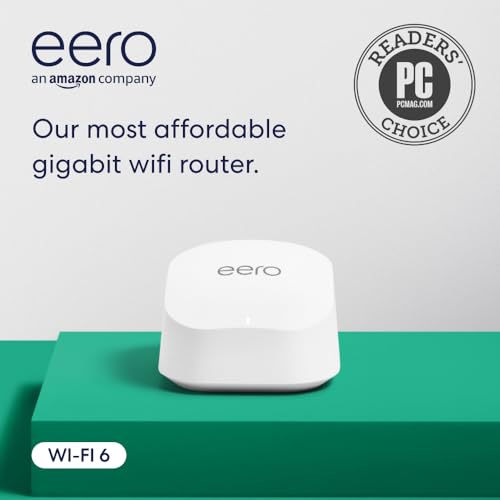
The Amazon eero 6+ is designed for one thing: delivering a rock-solid, gigabit-capable Wi-Fi experience with zero hassle. It leverages a 160 MHz channel width—a feature often reserved for more premium routers—to maximize the speed potential of your internet plan. The setup process through the eero app is famously intuitive, guiding you step-by-step and making network management accessible from anywhere.
Beyond just Wi-Fi, this device includes a built-in Zigbee smart home hub. This is a significant value-add, as it can directly connect compatible devices like smart lights, locks, and sensors without requiring separate hubs from each manufacturer. It simplifies your smart home setup and can reduce wireless clutter on your main network.
Performance is consistent and reliable, thanks to eero’s TrueMesh technology that efficiently routes traffic between nodes. For households that want a powerful, “set-it-and-forget-it” mesh system that also serves as the brain of their smart home, the eero 6+ is an exceptionally compelling and user-friendly option.
Why it’s great
- Extremely simple setup and daily management via a polished app.
- Includes a Zigbee smart home hub, eliminating the need for separate hubs.
- TrueMesh technology provides reliable whole-home coverage.
- Supports the wider 160 MHz channel for faster gigabit speeds.
Good to know
- Advanced security and network insights require a paid subscription.
- Limited number of Ethernet ports on each unit.
3. ASUS RT-AX1800S

The ASUS RT-AX1800S packs a robust feature set typically found in more expensive routers, with a strong emphasis on network security. Its standout feature is AiProtection Classic, powered by Trend Micro, which provides commercial-grade security for your home network at no additional subscription cost. This includes malicious site blocking, infected device prevention, and vulnerability checks.
Performance is solid for a mid-range Wi-Fi 6 router, with OFDMA and MU-MIMO ensuring smooth operation even with multiple devices online. The router also supports ASUS’s AiMesh ecosystem, allowing you to add compatible ASUS routers later to create a seamless mesh network, providing a flexible upgrade path without replacing your entire system.
For users who are conscious about cybersecurity and want advanced protection baked directly into their network hardware without ongoing fees, the ASUS RT-AX1800S is an outstanding value. It offers peace of mind alongside reliable Wi-Fi 6 performance.
Why it’s great
- Lifetime free AiProtection security suite with automatic updates.
- Can be integrated into a flexible AiMesh system later.
- Strong, stable Wi-Fi 6 performance with four external antennas.
- Intuitive web interface and mobile app for detailed control.
Good to know
- The design is larger than some contemporary routers.
- Some very advanced features are reserved for higher-end ASUS models.
4. TP-Link Archer AX21

The TP-Link Archer AX21 is consistently a top-seller for a very good reason: it delivers an exceptional balance of modern Wi-Fi 6 performance, useful features, and reliable operation at a mid-range point. As a “Certified for Humans” device, it prioritizes an easy setup process, making it approachable for users of all technical levels.
It excels in real-world usage, providing stable connections for streaming, gaming, and video calls across a typical home. A particularly useful feature is its built-in VPN server support (OpenVPN and PPTP), allowing you to securely access your home network while you’re away—a feature often missing in routers at this tier.
For the majority of households upgrading from an older router or a basic ISP rental, the Archer AX21 represents the sweet spot. It provides a tangible leap in speed and device-handling capability without venturing into premium price territory, all wrapped in a user-friendly package.
Why it’s great
- Excellent value for Wi-Fi 6 performance and reliability.
- Simple setup and management via the Tether app.
- Includes VPN server functionality for remote access.
- Works with all major ISPs and supports OneMesh for expansion.
Good to know
- A dual-band system, so heavy multi-node mesh performance benefits from a wired connection.
- Design is functional but not as sleek as some alternatives.
5. NETGEAR Nighthawk RAX30

The NETGEAR Nighthawk RAX30 offers a way to access trusted brand performance and robust Wi-Fi 6 features from a recognized name in networking. This renewed model provides the core functionality of a reliable, capable router that can easily handle gigabit internet plans and the demands of a connected household.
It delivers fast AX2400 speeds, sufficient coverage for most homes, and includes NETGEAR’s standard security features like automatic firmware updates. The four Gigabit Ethernet ports provide ample connectivity for wired devices. For users who prefer the familiarity and proven track record of the Nighthawk line, this represents a sensible value proposition.
Choosing a certified renewed product like this is an eco-friendly and budget-conscious decision. It’s important to note that it comes with a shorter warranty period, but it allows you to get a higher-tier model’s performance at a more accessible level.
Why it’s great
- Access to NETGEAR’s reliable Nighthawk performance at a lower cost.
- Solid Wi-Fi 6 speeds and coverage for typical homes.
- Four Gigabit LAN ports for wired connections.
- Environmentally friendly choice through renewal.
Good to know
- Comes with a limited 90-day warranty as a renewed product.
- May arrive in generic packaging without original accessories.
6. TP-Link ER605 V2

The TP-Link ER605 V2 is not a typical wireless router; it’s a dedicated wired VPN router designed for small businesses, prosumers, and advanced home lab enthusiasts. Its superpower is flexibility: it supports up to three WAN internet connections for load balancing or automatic failover, ensuring your network stays online even if one ISP has an outage.
It’s also a VPN powerhouse, capable of handling multiple simultaneous site-to-site or remote access VPN tunnels (IPsec, OpenVPN, L2TP). This allows for secure connections between home and office or secure remote access to your home network. For maximum control, it integrates seamlessly with the TP-Link Omada SDN platform for centralized management of switches and access points.
This router has no Wi-Fi of its own. It’s meant to be the brain of your network, to which you add separate wireless access points. If you need rock-solid reliability, internet redundancy, or serious VPN capabilities, the ER605 is an incredible tool that outperforms consumer all-in-one units in its specific domain.
Why it’s great
- Multi-WAN support for load balancing and internet failover.
- Powerful VPN server capabilities for secure remote access.
- Enterprise-grade features and stability at a budget-friendly cost.
- Omada SDN integration for professional network management.
Good to know
- Does not include Wi-Fi; requires separate access points.
- Configuration has a steeper learning curve than consumer routers.
7. Tenda RX12Pro
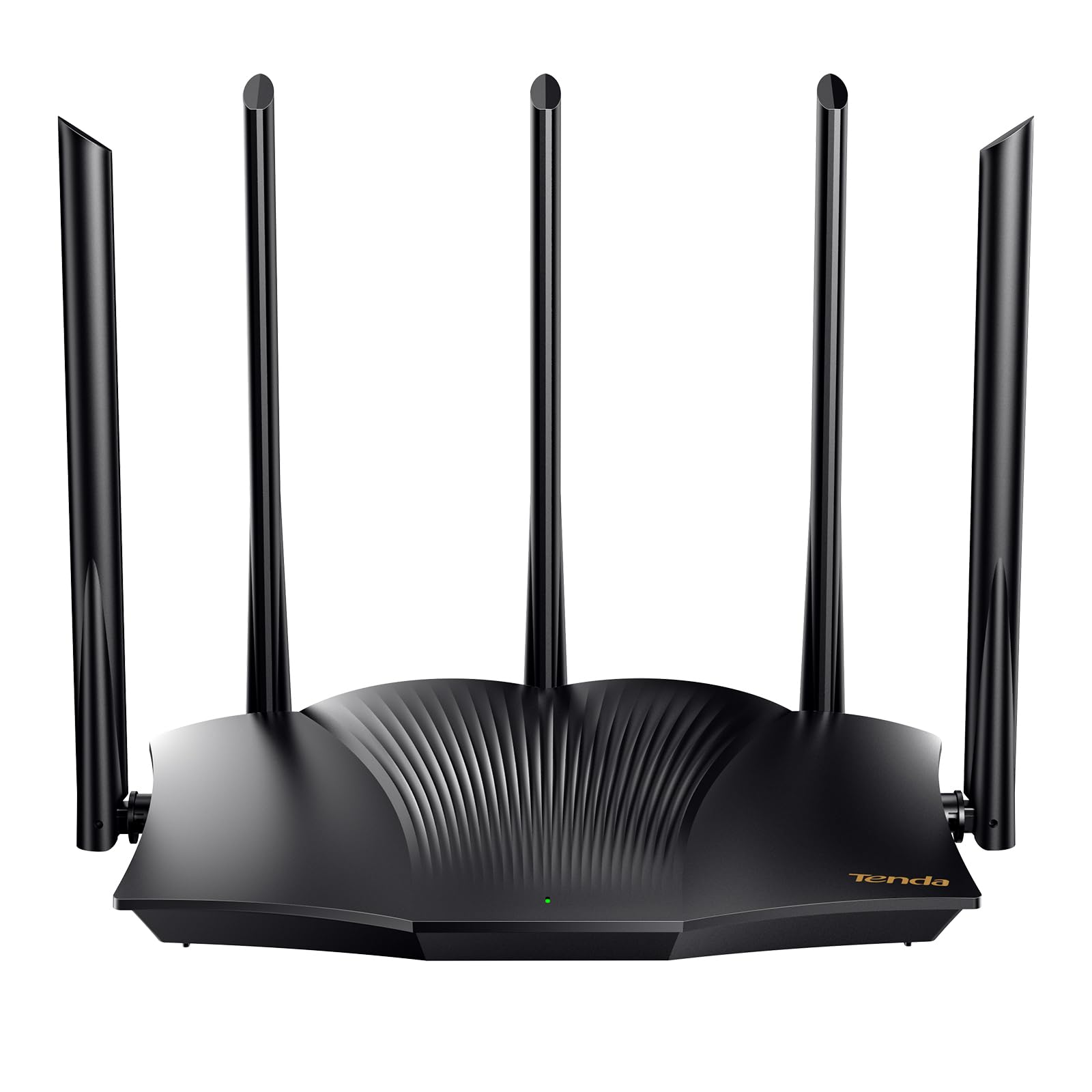
The Tenda RX12Pro steps up the Wi-Fi 6 game with an AX3000 rating, meaning higher potential speeds on the 5 GHz band compared to basic AX1800 models. This translates to better performance for 4K streaming, large file downloads, and latency-sensitive tasks. It’s equipped with five external high-gain antennas, which help in delivering strong and consistent coverage throughout larger spaces.
A notable feature for the price is its support for OpenVPN and WireGuard protocols, giving you the flexibility to set up a secure VPN connection for your entire home network or connect to a commercial VPN service at the router level. The Wi-Fi+ function also allows multiple RX12 Pro units to be linked easily for whole-home coverage without complex configuration.
This router is for the user who wants a performance bump from entry-level Wi-Fi 6 and values advanced features like VPN integration, all while maintaining a very competitive mid-range position.
Why it’s great
- Higher-tier AX3000 Wi-Fi 6 speeds for demanding applications.
- Includes OpenVPN and WireGuard support for advanced networking.
- Five high-gain antennas for improved range and signal stability.
- Can be meshed with other units via Wi-Fi+ technology.
Good to know
- Tenda’s brand recognition is less established than some competitors.
- The app and interface may feel less polished than market leaders.
8. TP-Link Archer A6

The TP-Link Archer A6 is a workhorse that proves you don’t need the latest Wi-Fi standard to build a highly capable home network. As a Wi-Fi 5 (AC1200) router, it provides more than enough speed for most daily activities, and its key advantage lies in its full suite of Gigabit Ethernet ports. This ensures any device you connect via cable—like a gaming PC, NAS, or smart TV—can achieve the full speed of your internet plan.
It also supports TP-Link’s OneMesh technology, allowing you to add compatible range extenders to create a seamless mesh-like network for better coverage. With MU-MIMO on the 5 GHz band and Beamforming technology, it does an excellent job of managing multiple connected devices efficiently.
For budget-conscious users who rely on wired connections or have a modest number of wireless devices, the Archer A6 delivers exceptional value, robust performance, and a clear path for expanding coverage without needing to replace the core router.
Why it’s great
- All four LAN ports are full Gigabit, a rarity at this tier.
- Reliable Wi-Fi 5 performance with MU-MIMO support.
- Compatible with OneMesh for easy whole-home coverage expansion.
- Proven stability and easy-to-use management.
Good to know
- Uses the older Wi-Fi 5 (802.11ac) standard.
- Maximum wireless speeds are lower than Wi-Fi 6 models.
9. Amazon eero 6

The single-pack Amazon eero 6 is the gateway to the eero ecosystem. It can serve as a powerful standalone router to replace your ISP’s hardware, immediately benefiting from eero’s intuitive app and TrueMesh intelligence. Its compact, low-profile design allows it to blend into any room discreetly.
Like its 6+ sibling, it includes a built-in Zigbee smart home hub, making it a dual-purpose device from day one. While its maximum speed rating is slightly lower than the 6+, it still fully supports Wi-Fi 6 features like OFDMA, which improves performance in homes with many connected devices. The primary appeal is the seamless experience: easy setup, reliable coverage, and the ability to effortlessly add more eero units later to form a full mesh network.
This is the ideal starting point for someone who wants to ditch their rental equipment and step into a modern, easy-to-manage mesh system, with the added bonus of smart home integration.
Why it’s great
- Provides the core eero mesh experience and app simplicity.
- Includes a Zigbee smart home hub for device compatibility.
- Perfect first step into a scalable whole-home Wi-Fi system.
- Automatic security updates keep the network protected.
Good to know
- Maximum throughput is lower than the eero 6+ model.
- As a single unit, coverage is limited compared to multi-packs.
10. Tendathe most affordable path to experiencing Wi-Fi 6 technology. While it won’t match the speeds of higher-tier AX models, it introduces the core efficiency benefits of the standard, like better handling of multiple devices, at a truly entry-level cost.
Why it’s great
- Extremely affordable introduction to Wi-Fi 6 efficiency.
- Five external antennas for solid coverage in medium-sized homes.
- Includes WPA3 security and basic parental controls.
- Easy setup and management through the Tenda app.
Good to know
- AX1500 speed is on the lower end of the Wi-Fi 6 spectrum.
- Build quality is lightweight and may feel less substantial.
Why it’s great
- Extremely affordable introduction to Wi-Fi 6 efficiency.
- Five external antennas for solid coverage in medium-sized homes.
- Includes WPA3 security and basic parental controls.
- Easy setup and management through the Tenda app.
Good to know
- AX1500 speed is on the lower end of the Wi-Fi 6 spectrum.
- Build quality is lightweight and may feel less substantial.
11. TP-Link Archer A54

The TP-Link Archer A54 is the definition of a no-frills, reliable workhorse for basic connectivity needs. It delivers stable dual-band Wi-Fi 5 (AC1200) performance, which is sufficient for everyday browsing, streaming, and connecting a moderate number of devices. Its standout feature in this category is support for EasyMesh, allowing you to pair it with other compatible TP-Link devices to create a more extensive coverage system later.
It includes modern security with WPA3 protection and offers essential features like access point mode and guest networking. The four external antennas help in providing stable connections throughout an apartment or smaller home. For users on a tight budget who need to replace a failing router or want to stop renting equipment from their ISP, this model gets the job done effectively.
This router is best viewed as a foundational device. It provides solid, basic performance today with a clear, inexpensive upgrade path via mesh compatibility, making it a pragmatic choice for cost-sensitive situations.
Why it’s great
- Extremely budget-friendly for essential wireless routing.
- EasyMesh compatibility offers a future path to whole-home coverage.
- Includes modern WPA3 security protocol.
- Simple setup and reliable performance for basic needs.
Good to know
- LAN ports are 10/100 Mbps, not Gigabit, limiting wired speeds.
- Wi-Fi 5 technology with lower maximum speeds than newer standards.
Understanding the Specs
Wi-Fi Generation (5, 6, 7)
This indicates the underlying wireless protocol. Wi-Fi 5 (802.11ac) is capable and cost-effective. Wi-Fi 6 (802.11ax) improves efficiency and handles more devices simultaneously. Wi-Fi 7 (802.11be) is the latest, offering groundbreaking speeds and stability features like Multi-Link Operation, but requires new devices to fully benefit.
LAN Port Speed
The speed of the physical Ethernet ports on the router. For a 1 Gig internet plan, you need Gigabit (10/100/1000 Mbps) ports to avoid a bottleneck on wired connections. Some advanced routers feature 2.5 Gigabit or higher ports for multi-gig internet plans or creating a faster internal network backbone.
MU-MIMO & OFDMA
Technologies that manage multiple devices. MU-MIMO (Multi-User, Multiple Input, Multiple Output) allows the router to communicate with several devices at the same time, rather than sequentially. OFDMA (Orthogonal Frequency-Division Multiple Access) efficiently splits a channel to serve many devices with small data requests simultaneously, reducing latency.
Mesh vs. Traditional
A traditional router is a single point of coverage. A mesh system uses multiple units (nodes) that work together to create a single, seamless network with broader coverage. Mesh is superior for eliminating dead zones in large or multi-story homes, while a powerful traditional router may suffice for smaller, open floor plans.
FAQ
Do I need a Wi-Fi 6 router for gigabit internet?
What is the difference between a router and a modem?
Final Thoughts: The Verdict
For most people, the best 1 gig router winner is the TP-Link Deco 7 BE23 because it expertly balances cutting-edge Wi-Fi 7 future-proofing with practical features like high-speed ports and easy mesh expansion at a compelling price point. If you want absolute simplicity and smart home integration, grab the Amazon eero 6+. And for advanced users needing VPN power and internet redundancy, nothing beats the TP-Link ER605 V2 as the foundation of a pro-level network.

Mo Maruf
I created WellFizz to bridge the gap between vague wellness advice and actionable solutions. My mission is simple: to decode the research and give you practical tools you can actually use.
Beyond the data, I am a passionate traveler. I believe that stepping away from the screen to explore new environments is essential for mental clarity and physical vitality.