Our readers keep the lights on and my smoothie glass nicely filled. As an Amazon Associate, I earn from qualifying purchases.
Finding clarity in the overwhelming world of ADHD literature can feel like trying to focus in a room full of distractions. The right book doesn’t just explain symptoms; it provides a roadmap for navigating relationships, work, and self-acceptance, tailored to your specific stage of life.
I’m Mohammad Maruf — the founder and writer behind WellFizz. For years, my work has involved deep market research into wellness literature, analyzing data, reader feedback, and expert frameworks to understand which resources offer genuine, actionable value beyond surface-level advice.
This guide sorts through the noise, comparing foundational classics, modern workbooks, and niche perspectives to connect you with the resource that will make the most significant difference in your life. The definitive path to understanding and managing your symptoms begins with the best adhd books for your unique journey.
How To Choose The Best ADHD Book
Selecting an ADHD book isn’t a one-size-fits-all process. The most effective resource aligns with your current needs, whether that’s understanding a new diagnosis, finding practical daily strategies, or healing deep-seated emotional patterns.
Identify Your Primary Goal
Are you seeking validation and understanding of a recent diagnosis, or are you looking for concrete, step-by-step organizational tools? Foundational texts offer broad understanding and historical context, while workbooks provide interactive exercises. Books focused on relationships or specific demographics (like women) address unique, nuanced challenges.
Consider the Format and Style
The ADHD brain often engages better with certain formats. Look for books with clear headings, bullet points, case studies, and short chapters that are easy to digest. Workbooks with writing prompts can be powerful for internalizing concepts, but require a commitment to active participation. Narrative-driven books with relatable stories can be less intimidating and more absorbing.
Match the Author’s Perspective
Books written by clinicians offer research-backed frameworks, while those written by individuals with lived ADHD experience provide profound empathy and relatable anecdotes. Some of the most impactful texts combine both—expertise paired with personal insight. Consider what will resonate with you most: clinical authority or peer-level understanding.
Quick Comparison
On smaller screens, swipe sideways to see the full table.
| Model | Type | Best For | Key Feature | Amazon |
|---|---|---|---|---|
| Driven to Distraction (Revised) | Foundational Guide | First-time understanding | Classic case studies & hope | Amazon |
| Thriving with Adult ADHD | Skills Workbook | Building executive function | Practical daily strategies | Amazon |
| Scattered Minds | Deep-Dive Analysis | Healing & root causes | Attachment & trauma perspective | Amazon |
| A Radical Guide for Women with ADHD | Niche Workbook | Women’s experience & acceptance | Embrace neurodiversity boldly | Amazon |
| Dirty Laundry | Modern Perspective | Couples & reducing shame | Dual-perspective, relatable stories | Amazon |
| Your Brain’s Not Broken | Guide & Workbook | Emotional navigation | Four-color task system | Amazon |
| Healing ADD Revised Edition | Clinical Framework | Understanding 7 brain types | SPECT imaging insights | Amazon |
| You Mean I’m Not Lazy, Stupid or Crazy?! | Classic Self-Help | Adult validation & basics | Title says it all | Amazon |
| Delivered from Distraction | Updated Companion | Modern strategies after diagnosis | Sequel to ‘Driven to Distraction’ | Amazon |
| ADHD & Us: A Couple’s Guide | Relationship Focus | Partners of those with ADHD | Exercises for communication | Amazon |
| Thriving with ADHD Workbook for Teens | Teen Workbook | Teens building independence | Age-appropriate interactive tasks | Amazon |
In‑Depth Reviews
1. Driven to Distraction (Revised)

Often called the seminal work that brought adult ADHD into public consciousness, this revised edition by Dr. Edward Hallowell remains the gold standard for foundational understanding. Its power lies in the relatable case studies that illustrate how ADHD manifests across different lives, making complex neurological concepts feel personal and understandable.
Readers consistently report moments of profound recognition, finally seeing their lifelong struggles reflected back at them with compassion rather than judgment. Hallowell, who has ADHD himself, writes with an empathetic authority that dismantles shame, framing the condition not as a deficit but as a differently wired brain with unique strengths and challenges.
The book provides a comprehensive roadmap covering diagnosis, treatment options (both medication and non-medication), and practical coping strategies for work, home, and relationships. It’s the book to start with if you’re new to the topic, offering hope and a clear path forward that has stood the test of time.
Why it’s great
- Provides the essential historical and clinical foundation for understanding ADHD.
- Extremely relatable case studies create powerful “aha” moments of self-recognition.
- Offers a balanced, hopeful perspective that combats stigma and shame.
Good to know
- As a foundational text, it’s broad; you may need more specific books for targeted strategies.
- Some examples may feel slightly dated, though the core concepts are timeless.
2. Thriving with Adult ADHD

This book is for the person who is past the initial “why” and ready for the “how.” It’s a masterclass in building executive function skills, breaking down overwhelming concepts like organization, time management, and task initiation into digestible, actionable steps. The format is specifically designed for the ADHD brain, with clear lists and end-of-chapter takeaways.
Reviewers, including therapists who recommend it to clients, praise its practicality above all else. The strategies—like using rituals and routines to create external structure—are immediately applicable to daily life. It moves beyond theory into the realm of tangible change, helping readers develop systems that work with their neurology, not against it.
The book acknowledges the frustration of living with ADHD while steadfastly focusing on empowerment. It doesn’t just help you manage symptoms; it provides a framework for constructing a more manageable, less chaotic life. For many, the tools here have been as impactful as medication.
Why it’s great
- Extremely practical, with skills that can be implemented immediately.
- Format is ADHD-friendly with clear lists and concise chapter summaries.
- Focuses on building life-long systems, not quick fixes.
Good to know
- Requires active participation and practice, which can be challenging during low-motivation periods.
- Some may find the conversational asides in the text a bit distracting.
3. Scattered Minds
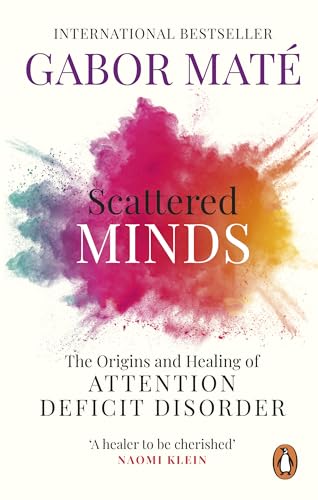
Gabor Maté’s “Scattered Minds” is a paradigm-shifting work that explores the developmental and environmental origins of ADHD. Moving beyond a purely genetic or deficit-based model, Maté compassionately argues that attentive disruptions often stem from early childhood attachment and adaptive mechanisms within a stressed family system.
This book resonates deeply with readers who have felt that standard explanations were incomplete. It provides a powerful lens for understanding the “why” behind emotional sensitivity, rejection sensitivity, and that persistent inner sense of being somehow different or flawed. The approach is non-blaming, focusing on understanding as the first step toward genuine healing.
While it includes practical advice, its greatest strength is in fostering self-compassion and a holistic view of recovery. Readers report that it connects crucial dots in their personal history, offering not just management strategies but a path to integrating past experiences and moving forward with greater wholeness.
Why it’s great
- Offers a unique, compassionate perspective on the emotional roots of ADHD.
- Promotes deep healing and self-compassion, reducing internalized shame.
- Brilliantly connects childhood attachment patterns with adult attentional styles.
Good to know
- Its perspective is different from mainstream medical models, which some may find controversial.
- Less focused on immediate, day-to-day organizational tips than other books.
4. A Radical Guide for Women with ADHD
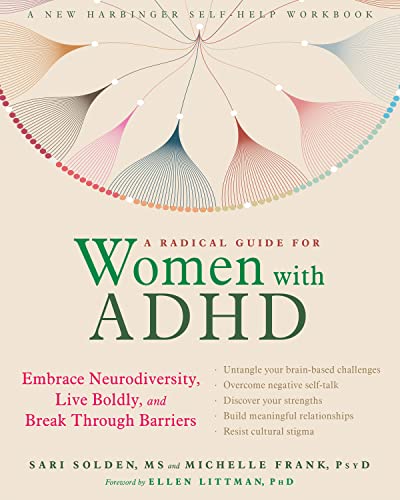
This workbook directly addresses the unique, often overlooked experience of women with ADHD. Authors Sari Solden and Michelle Frank move beyond trying to “fix” the reader, instead championing a radical acceptance of neurodiversity. The book challenges internalized societal “shoulds” and guides women toward building a life that honors their authentic selves.
The interactive format—filled with reflective prompts, exercises, and journaling space—is designed to foster active self-discovery. It helps readers untangle ADHD symptoms from personality, address issues of shame and masking, and identify personal strengths. Women report feeling profoundly seen, as the book validates experiences like emotional overwhelm, social anxiety, and the pressure of camouflaging symptoms.
It’s less about forcing yourself into a neurotypical mold and more about designing a life that fits your brain. This focus on self-acceptance as the foundation for change is its most powerful and transformative aspect, making it a vital resource for any woman navigating an ADHD diagnosis.
Why it’s great
- Specifically targets the nuanced presentation and social pressures faced by women.
- Powerful neurodiversity-affirming approach that builds self-acceptance.
- Interactive workbook format promotes deep, personal engagement.
Good to know
- Requires a commitment to doing the written exercises to get full value.
- Primarily focused on mindset and self-concept over concrete organizational systems.
5. Dirty Laundry
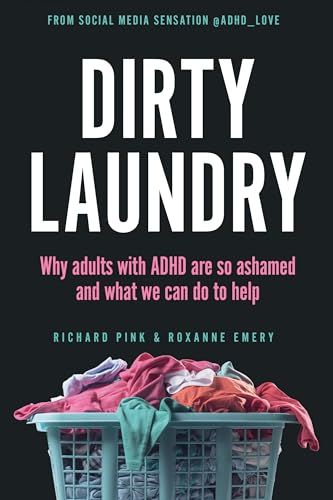
Written by ADHD influencer Roxanne Emery and her neurotypical partner Rich, “Dirty Laundry” is a disarming and heartfelt book that tackles the everyday frustrations and hidden shames of ADHD in relationships. Its genius is in its dual-perspective format, explaining common conflicts from both the ADHD and non-ADHD partner’s viewpoints.
The tone is compassionate, humorous, and utterly relatable, feeling like a conversation with understanding friends. It normalizes struggles with object permanence, emotional dysregulation, and household chaos, transforming them from character flaws into understandable neurobiological traits. This normalization is powerfully effective at dissolving guilt and fostering mutual understanding.
It’s an excellent, low-barrier entry point for couples or for individuals who feel isolated in their experiences. The book provides simple strategies for communication and support, but its primary gift is the profound sense of being seen and the reassurance that you’re not alone in the mess.
Why it’s great
- Incredibly relatable and destigmatizing, using humor and real-life examples.
- Dual-perspective format is brilliant for fostering empathy in relationships.
- Easy to read in short bursts, perfect for the ADHD attention span.
Good to know
- More of an empathetic guide than a deep clinical or strategic manual.
- Focused primarily on interpersonal dynamics and self-acceptance.
6. Your Brain’s Not Broken

Dr. Tamara Rosier focuses on one of the most challenging aspects of ADHD: navigating intense emotions. This book provides a clear framework for understanding emotional dysregulation, rejection sensitive dysphoria, and the subsequent behavioral patterns. It’s both a guide and a workbook, offering actionable tools to create space between feeling and reaction.
A standout feature is the “four-color system” for task management, which readers find exceptionally useful for prioritizing and overcoming paralysis. The author, who has ADHD and is an academic coach, writes with clinical knowledge and deep personal empathy, offering strategies that are both psychologically sound and pragmatically tested.
It excels at helping readers develop self-awareness around their emotional triggers and building skills for self-regulation. This focus makes it an ideal companion for those who feel their emotions control their lives, providing a pathway to greater stability and self-compassion.
Why it’s great
- Excellent, focused resource for managing emotional dysregulation.
- Includes highly practical tools like the four-color task system.
- Blends personal experience, coaching expertise, and psychological research.
Good to know
- As a hybrid guide/workbook, it requires engagement with the exercises.
- Some may prefer a book focused purely on narrative or purely on skills.
7. Healing ADD Revised Edition
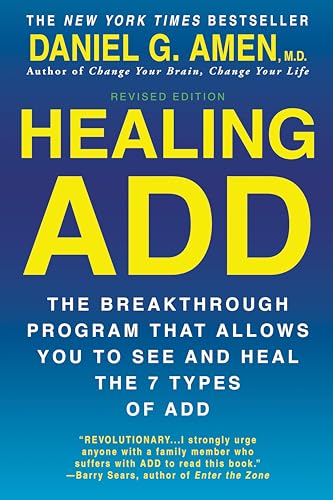
Dr. Daniel Amen’s controversial yet influential work introduces the concept of seven distinct types of ADD, based on patterns observed in SPECT brain imaging. This book is for the reader who feels that standard ADHD descriptions don’t fully capture their experience and who is interested in a more granular, biologically-based framework.
The “types” (like “Limbic ADD” or “Overfocused ADD”) help explain why some people with ADHD are prone to negativity while others get stuck in loops, and why treatments that work for one person may not for another. It provides tailored recommendations for each type, including dietary changes, supplements, and specific medication considerations alongside traditional strategies.
While the brain imaging aspect is debated in mainstream psychiatry, many readers find the typology itself incredibly validating. It offers a nuanced language for their symptoms and a more personalized approach to exploring treatment options, making it a fascinating and potentially very helpful resource for the detail-oriented seeker.
Why it’s great
- Provides a highly personalized framework via the 7-type model.
- Offers a wide range of intervention options, from diet to supplements to medication.
- Validates the experience of those who don’t fit the “standard” ADHD profile.
Good to know
- Its core premise (SPECT imaging for diagnosis) is not widely accepted in psychiatry.
- Can feel overwhelming due to the volume of detailed recommendations.
8. You Mean I’m Not Lazy, Stupid or Crazy?!
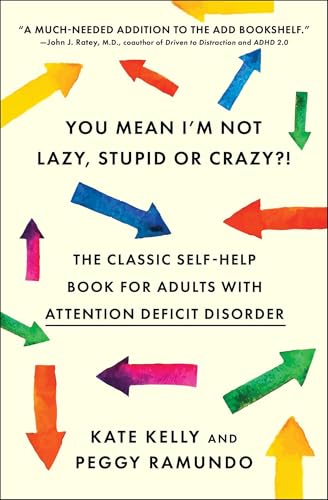
The title alone has provided a life-changing revelation for countless adults diagnosed later in life. This book serves as a warm, comprehensive welcome into the community for those who have spent decades internalizing failure. It meticulously explains how ADHD impacts adult life—careers, relationships, self-esteem—in an accessible, reassuring tone.
It functions as an excellent “ADHD 101” for adults, covering the basics of diagnosis, treatment, and daily management without overwhelming clinical jargon. The authors normalize the struggle while providing a solid foundation of knowledge and beginner-level strategies. Readers often describe finishing the book with a profound sense of relief and a lifting of lifelong shame.
While it may not have the depth of some newer, more specialized texts, its enduring power is in its mission of validation. It’s the book that hands you a new, compassionate identity to replace the old, critical one, making it an essential first step on the path to self-understanding.
Why it’s great
- The title and content are powerfully validating for late-diagnosed adults.
- Excellent, clear primer on adult ADHD basics and initial coping strategies.
- Effectively dismantles decades of internalized criticism and blame.
Good to know
- Some may find the tone or examples slightly dated compared to newer books.
- Offers a solid foundation but less depth on advanced or niche strategies.
9. Delivered from Distraction

Think of this as the updated, expanded sequel to “Driven to Distraction.” Written years later, it incorporates the latest research, insights, and stories from Dr. Hallowell’s continued work. It addresses the evolving understanding of ADHD, including more on neurodiversity, and provides a refreshed toolkit for thriving in the modern world.
The book retains the empathetic, case-study-driven approach of its predecessor but delves deeper into specific life areas like marriage, parenting, and career. It’s ideal for someone who has the foundational knowledge and wants to explore more nuanced applications or for those who connected with Hallowell’s voice and want more of his wisdom.
It acknowledges mistakes and updates perspectives from the earlier book, modeling a growth mindset. Readers appreciate its comprehensive nature and the way it builds upon a trusted source, offering both continuity and new, relevant strategies for managing adult ADHD today.
Why it’s great
- Provides updated strategies and perspectives from a trusted authority.
- Expands on life-area specifics like relationships and work.
- Maintains the hopeful, strengths-based tone of the original.
Good to know
- Best read after or alongside “Driven to Distraction” for full context.
- Large and comprehensive, which can be daunting for some.
10. ADHD & Us: A Couple’s Guide
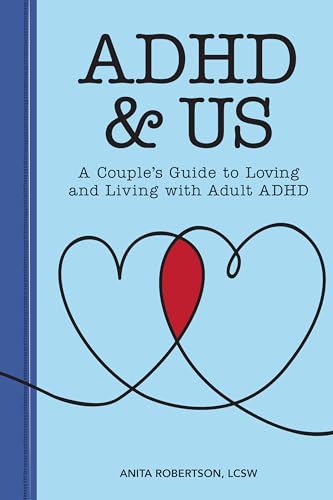
This is a targeted resource for couples where one partner has ADHD. It’s structured to be accessible for both the neurotypical and neurodivergent partner, with clear explanations of how the ADHD brain works in the context of relationship dynamics like communication, household responsibilities, and emotional connection.
The book is praised for its practical exercises and conversation starters designed to foster understanding and reduce conflict. It helps the non-ADHD partner move from frustration to empathy and provides the ADHD partner with frameworks to explain their experience. The ADHD-friendly formatting with bullet points and clear sections makes it easy to engage with.
While some reviewers note that a few suggested activities might feel simplistic, the core value is in providing a structured, neutral space for couples to address ADHD-related friction. It’s a valuable tool for turning recurring arguments into productive dialogues and rebuilding connection.
Why it’s great
- Directly addresses common relationship conflicts with ADHD in the mix.
- Provides structured exercises to improve communication and teamwork.
- Written in an accessible, ADHD-friendly format.
Good to know
- Primarily for couples where only one partner has ADHD.
- Some of the suggested “games” or activities may not resonate with all couples.
11. Thriving with ADHD Workbook for Teens

Empowering teens to understand and manage their own ADHD is the goal of this interactive workbook. It speaks directly to adolescents, helping them build self-awareness about their strengths and challenges related to focus, organization, and school success. The tone is supportive and normalizing, reducing the stigma teens often feel.
The workbook format encourages active participation through writing and reflection, which can be more effective for learning than passive reading. It covers practical topics like study skills, time management, and emotional regulation in an age-appropriate way. Parents note it’s excellent for sparking productive conversations,helping them transition toward greater independence.
Why it’s great
- Speaks directly to teens in an empowering, non-patronizing way.
- Interactive format promotes self-discovery and ownership of strategies.
- Excellent catalyst for parent-teen discussions about ADHD management.
Good to know
- Teens may need external encouragement or a shared activity to engage with it fully.
- Focused on the teen experience, not a resource for parents seeking to understand their child.
Understanding the Categories
ADHD literature generally falls into a few key categories. Knowing which type you need can streamline your search and ensure you get the help you’re looking for.
Foundational Guides
These are the classics that explain what ADHD is, using case studies and clinical overviews. They’re ideal for anyone new to the diagnosis, providing the “big picture” understanding, historical context, and hope. Examples include “Driven to Distraction” and “You Mean I’m Not Lazy, Stupid or Crazy?!”
Skills & Strategy Workbooks
Focused on the “how,” these books provide actionable exercises to build executive function, organizational habits, and emotional regulation. They are interactive and structured for gradual implementation. “Thriving with Adult ADHD” and “Your Brain’s Not Broken” are prime examples of this hands-on approach.
Niche & Perspective-Based
This category addresses specific audiences or explores unique angles. It includes books for women, couples, teens, or those interested in particular frameworks like brain typing (“Healing ADD”) or attachment theory (“Scattered Minds”). They offer deep dives into particular facets of the ADHD experience.
Modern & Narrative-Driven
These books use personal stories, humor, and relatable anecdotes to normalize and destigmatize ADHD. They often come from influencers or individuals sharing their lived experience, like “Dirty Laundry.” Their strength is in building community and reducing isolation and shame.
FAQ
What is the single best ADHD book to start with?
Are ADHD workbooks actually helpful?
Which book is best for someone who feels deep shame about their ADHD?
Can these books replace therapy or medication?
Final Thoughts: The Verdict
For most people, the adhd books winner is the Driven to Distraction (Revised) because it provides the indispensable foundation of understanding, hope, and recognition that every journey needs. If you want actionable skills to rebuild your daily life, grab the Thriving with Adult ADHD. And for healing deep-seated shame and understanding emotional roots, nothing beats the Scattered Minds approach.

Mo Maruf
I created WellFizz to bridge the gap between vague wellness advice and actionable solutions. My mission is simple: to decode the research and give you practical tools you can actually use.
Beyond the data, I am a passionate traveler. I believe that stepping away from the screen to explore new environments is essential for mental clarity and physical vitality.