Our readers keep the lights on and my smoothie glass nicely filled. As an Amazon Associate, I earn from qualifying purchases.
Finding the right chapter books for a sixth grader can feel like a high-stakes mission. You’re looking for stories that hold their attention against a tide of screens, challenge them just enough, and maybe even sneak in a life lesson or two. This isn’t just about reading levels; it’s about connecting with stories that reflect their growing complexity and curiosity.
I’m Mohammad Maruf — the founder and writer behind WellFizz. For over a decade, I’ve analyzed market trends and consumer data to understand what makes a book truly resonate with this pivotal age group, going beyond plot summaries to examine the themes, emotional depth, and readability that keep young readers turning pages.
We’ve researched and compiled this list based on critical acclaim, educator recommendations, and thousands of reader reviews to bring you a curated selection that builds empathy, resilience, and a genuine love for reading. The goal is to help you confidently choose the very best 6th grade books that will become favorites on the shelf, not just assignments to be checked off.
How To Choose The Best 6Th Grade Books
Selecting books for a sixth grader isn’t a one-size-fits-all process. This is a transitional year where reading abilities, interests, and emotional maturity vary widely. The ideal book should offer enough depth to be engaging but not so much complexity that it becomes frustrating.
Consider the Reader’s Journey
Think beyond grade-level designations. A voracious reader might be ready for sophisticated themes and longer chapters, while another might need a gripping, fast-paced plot to build confidence. The key is engagement—a book they look forward to picking up. Pay attention to what has captivated them before: adventure, humor, realistic school drama, or fantasy.
Balance Entertainment with Substance
Sixth grade is a prime time for books that do “double duty.” The best options tell a compelling story while naturally exploring larger ideas like justice, identity, friendship, and perseverance. These narratives provide safe ground for kids to process their own worldviews and emotions. Award winners, like Newbery Medal recipients, are often a reliable guide here, as they’re recognized for literary merit and child appeal.
Don’t Shy Away from Emotional Depth
Readers at this age are developing greater empathy and can handle—and often benefit from—stories that deal with challenging emotions or situations. Books about overcoming adversity, dealing with loss, or understanding differences can be profoundly impactful. The crucial element is how these themes are handled; look for stories that ultimately offer hope, resilience, and understanding.
Quick Comparison
On smaller screens, swipe sideways to see the full table.
| Model | Type | Best For | Key Feature | Amazon |
|---|---|---|---|---|
| Wonder | Contemporary | Multiple perspectives | Amazon | |
| The Girl Who Drank the Moon | Fantasy | Newbery Medal winner | Amazon | |
| Holes | Adventure/Mystery | Masterful storytelling | Amazon | |
| Fish in a Tree | School Story | Dyslexia awareness | Amazon | |
| Because of Winn-Dixie | Heartwarming | The healing power of friendship | Amazon | |
| Where the Red Fern Grows | Classic Adventure | Deep bond with animals | Amazon | |
| The One and Only Ivan | Animal Narrative | Based on a true story | Amazon | |
| Restart | School Drama | Amnesia & second chances | Amazon | |
| Hatchet | Survival | Pure, gripping survival tale | Amazon | |
| Wish | Coming-of-Age | Finding family | Amazon | |
| Matilda | Classic Humor | Quirky, triumphant heroine | Amazon |
In‑Depth Reviews
1. Wonder

R.J. Palacio’s Wonder has earned its status as a modern classic for a profound reason: it masterfully tackles the universal middle school experiences of fitting in, facing cruelty, and finding friendship through the specific lens of Auggie Pullman, a boy with a facial difference. The story doesn’t just preach kindness; it immerses the reader in the emotional worlds of Auggie, his sister, his friends, and even his detractors, showing how everyone has their own struggles.
The narrative’s genius lies in its rotating points of view. Just as a sixth grader might only see one side of a schoolyard situation, the book starts with Auggie’s voice, then shifts to show how his sister Via feels invisible, how friend Jack grapples with social pressure, and others. This structure is a powerful tool for building empathy, allowing readers to understand that everyone has a story behind their actions. It makes complex social dynamics tangible and discussable.
Beyond its social-emotional lessons, Wonder is simply a page-turner. Auggie’s voice is funny, sharp, and deeply relatable. The challenges he faces at school—the stares, the whispers, the betrayal—are portrayed with honesty but never hopelessness. It’s a story that widens the heart, as one reviewer noted, and its message of choosing kindness resonates long after the final page, making it a cornerstone for any sixth-grade library.
Why it’s great
- Exceptionally effective at teaching perspective and empathy.
- Engaging, relatable writing that appeals to a wide range of readers.
- Provides a natural springboard for crucial conversations about bullying and inclusion.
Good to know
- Deals directly with emotional cruelty, which may be intense for some sensitive readers.
- Some pop-culture references may date the book slightly for future readers.
2. The Girl Who Drank the Moon

Kelly Barnhill’s Newbery Medal-winning novel is a testament to the power of sophisticated fantasy for middle-grade readers. It weaves together multiple storylines—a kind witch, a magical child, a sorrowful town, and a young man fighting a corrupt system—into a luminous tapestry about the true sources of magic: hope, love, and story itself. This is for the reader ready for beautiful, descriptive prose and a plot that demands a bit more attention.
The world-building is exceptional, creating a realm where magic is as natural as breathing for some and a source of terror for others. Characters like the ancient witch Xan, the poetic swamp monster Glerk, and the tiny dragon Fyrian are instantly memorable and full of heart. The book thoughtfully explores themes of sacrifice, the burden of sorrow, and the courage to defy tyrannical narratives, all within an enchanting, fairy-tale-like framework.
While the vocabulary and intertwined narratives place it at a more advanced reading level, the emotional core is deeply accessible. It’s a thinking book that challenges readers to look beneath the surface of the story they are being told, both in the book and in life. For a sixth grader with a strong imagination and a love for language, this book is a truly magical and rewarding experience that stands up to multiple readings.
Why it’s great
- Exquisite, literary writing that elevates the fantasy genre.
- Complex, interwoven plot that is satisfying to unravel.
- Features a diverse cast of characters across age ranges, each with depth.
Good to know
- Denser prose and slower initial pace may challenge reluctant readers.
- Thematic depth might be best appreciated with some light discussion.
3. Holes

Louis Sachar’s Holes is a masterclass in plotting, effortlessly blending laugh-out-loud humor with mystery, social commentary, and a touch of magical realism. The story of Stanley Yelnats (his name is a palindrome) sent to a juvenile detention camp where boys dig holes all day is instantly bizarre and compelling. Sachar’s straightforward, accessible writing pulls readers in, while the intricate puzzle of the plot keeps them hooked.
The genius of Holes is how it connects Stanley’s present-day ordeal with two historical storylines: that of his “no-good-dirty-rotten-pig-stealing-great-great-grandfather” and the outlaw Kissin’ Kate Barlow. Watching these threads slowly weave together to explain the curse on Stanley’s family and the true purpose of the holes is immensely satisfying. It teaches young readers to pay attention to detail and trust that a skilled author will tie everything together.
Themes of fairness, friendship, and perseverance are baked into the adventure. Stanley’s transformation from a bullied, overweight kid to a resilient leader is organic and inspiring. His friendship with the silent “Zero” is one of the most touching in children’s literature. Holes proves that a book can be wildly entertaining while also being exceptionally smart and full of heart.
Why it’s great
- Brilliantly constructed plot that rewards attentive readers.
- Perfect balance of humor, adventure, and deeper meaning.
- Short chapters and fast pace make it ideal for building reading stamina.
Good to know
- The desert detention camp setting involves some cruelty from authority figures.
- Some minor character backstories include period-typical racial elements.
4. Fish in a Tree
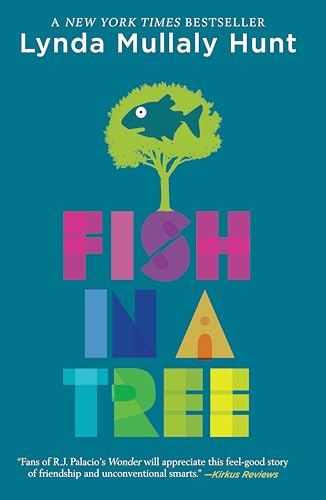
Lynda Mullaly Hunt gives voice to the countless kids who struggle in silence with Fish in a Tree. The protagonist, Ally, is clever and creative but has mastered the art of deflection—causing disruptions to hide the fact she can’t read. The book powerfully captures the frustration, shame, and loneliness of feeling like you don’t fit the mold of a “smart student,” all because your brain works differently.
The arrival of a perceptive substitute teacher, Mr. Daniels, is the turning point. His recognition of Ally’s dyslexia and his patient, creative approach to teaching her is a blueprint for empathy in education. The story is as much about Ally learning to read as it is about her learning to trust an adult and believe in her own worth. Her journey from a defensive, isolated girl to a confident friend and learner is deeply moving.
This book is invaluable for two audiences: for children who see themselves in Ally, it’s a message of hope and validation. For their peers, it’s a window into a different learning experience, fostering understanding and patience. Hunt handles the topic with authenticity and warmth, making it an inspiring, must-read story about the power of a great teacher and the potential in every child.
Why it’s great
- Provides profound validation for students with learning differences.
- Fosters classroom empathy and understanding in an accessible way.
- Features a positive, impactful student-teacher relationship.
Good to know
- Focuses heavily on school-based anxiety and academic struggle.
- The bullying Ally faces before her diagnosis can be painful to read.
5. Because of Winn-Dixie

Kate DiCamillo has a gift for crafting stories that are deceptively simple yet brimming with heart, and Because of Winn-Dixie is a perfect example. It follows ten-year-old Opal as she adopts a scruffy, smiling dog who helps her navigate a new town and the quiet grief of her absent mother. The plot is gentle, but the emotional landscape it explores is rich and relatable.
The magic of the story is in how Winn-Dixie acts as a bridge between Opal and the quirky, lonely residents of Naomi, Florida—from the elderly librarian Miss Franny Block to the ex-convict musician Otis. Each character carries a past sorrow, and through her growing friendships with them, Opal (and the reader) learns that everyone has a story and everyone deserves compassion and a second chance.
This is an ideal book for a sixth grader who may be facing their own transitions or feelings of loneliness. It’s emotionally resonant without being heavy, beautifully written, and ultimately uplifting. It teaches that friendship and community can be found in the most unexpected places, all “because of” a little kindness and an open heart—often facilitated by a lovable pet.
Why it’s great
- Gentle, accessible story with profound themes of loss and connection.
- Wonderful for animal lovers and readers who prefer realistic fiction.
- Celebrates the forming of a chosen family and community.
Good to know
- Pacing is character-driven rather than action-packed.
- Deals peripherally with adult issues like alcoholism and incarceration.
6. Where the Red Fern Grows

Wilson Rawls’ timeless novel is a rite of passage for a reason. It is a deeply immersive tale of determination, devotion, and the bittersweet passage from childhood. Billy’s relentless two-year effort to save money for two coonhound puppies teaches powerful lessons about hard work and delayed gratification. His bond with Old Dan and Little Ann is depicted with such authenticity that readers feel they are right there in the Ozarks with them.
The book is a thrilling adventure, full of detailed coon hunts, encounters with wildlife, and the rivalry of a championship hunt. However, its enduring power lies in its emotional honesty. It doesn’t shy away from the harsher realities of life, including injury, poverty, and ultimately, profound loss. The story guides young readers through these difficult emotions within the safe container of a narrative, helping them process themes of grief and sacrifice.
This is more than a “dog book”; it’s a coming-of-age story that respects its reader’s capacity to handle deep feeling. The ending is famously heart-wrenching, but it’s also poetic and meaningful, symbolized by the legendary red fern. It’s a book that stays with you, fostering a lasting appreciation for loyalty and the price of love.
Why it’s great
- Unforgettable portrayal of the human-animal bond.
- Teaches resilience, responsibility, and the realities of life and death.
- Rich, descriptive writing that fully transports the reader to its setting.
Good to know
- The ending is intensely sad and may be very difficult for sensitive readers.
- Contains some period-typical attitudes and hunting scenes.
7. The One and Only Ivan

Katherine Applegate’s Newbery Medal-winning novel is a masterpiece of concise, poetic storytelling. Narrated by Ivan, a silverback gorilla who lives in a cage at a run-down mall arcade, the book uses short, powerful chapters and poignant language to explore themes of art, memory, freedom, and friendship. Ivan’s voice is gentle, observant, and touched with a dignified sadness that immediately captures the heart.
The plot is set in motion by Ivan’s promise to his dying elephant friend, Stella, to protect a new, young elephant named Ruby. This promise awakens something in Ivan, pushing him to use his artistic skills (he is a painter) to imagine a better future. The story is a beautiful testament to the power of empathy and the idea that everyone, no matter how small or confined, can be a protector and a catalyst for change.
Knowing that Ivan was based on a real gorilla who spent 27 years in a similar enclosure adds a layer of gravity to the reading experience. Applegate handles the subject of animal captivity with nuance, focusing on Ivan’s rich inner life and resilience. It’s a deeply moving, hopeful story that encourages readers to consider the world from perspectives very different from their own.
Why it’s great
- Unique, first-person animal narrator with a compelling voice.
- Economical, beautiful writing that is easy to read but emotionally deep.
- Inspires discussions about animal welfare, art, and advocacy.
Good to know
- Central themes of confinement and loss may be sad for some.
- The format uses very short chapters, which some readers may find disjointed.
8. Restart

Gordon Korman’s Restart tackles the provocative question: If you lost your memory, would you still be the same person? Chase Ambrose wakes up from a fall with no recollection of his past life, only to discover he was the school’s most notorious bully. The book’s multi-perspective format allows the reader to piece together Chase’s former identity alongside him, creating a fascinating narrative puzzle.
As the “new” Chase, free from the social pressures and habits of his old self, begins to form genuine friendships with kids he used to torment, the story explores nature versus nurture and the possibility of true change. It brilliantly captures the confusion and horror Chase feels as he learns about his own past actions, making it a powerful empathy exercise for readers who may have been either the bully or the target.
Korman keeps the tone accessible and engaging, balancing serious themes with humor and school drama. It’s a page-turner that naturally leads to discussions about reputation, forgiveness, and whether people are capable of starting over. For sixth graders navigating complex social hierarchies, it’s a thought-provoking and ultimately hopeful read.
Why it’s great
- Innovative premise that sparks great conversations about identity.
- Fast-paced and engaging, with short chapters from different characters.
- Provides insight into the dynamics of bullying without being preachy.
Good to know
- The amnesia device, while effective, is a fictionalized simplification of TBI.
- Some of Chase’s pre-amnesia actions are quite cruel.
9. Hatchet

Gary Paulsen’s Hatchet is the quintessential survival story and a proven hook for reluctant readers, particularly boys. From the shocking first chapter where the pilot has a heart attack, the narrative is one long, gripping adrenaline rush. With nothing but the hatchet his mother gave him, 13-year-old Brian must learn to secure food, make fire, and build shelter in the Canadian wilderness.
The book’s power lies in its intense focus and meticulous detail. Readers learn alongside Brian as he experiments, fails, and gradually masters the skills needed to stay alive. This problem-solving journey is utterly compelling. It’s also a story of profound internal growth, as Brian grapples with painful family secrets (“The Secret”) and transforms from a scared city boy into a resourceful, observant survivor.
Its straightforward prose, relentless pace, and universal theme of man versus nature make it incredibly accessible. Hatchet validates a young person’s desire for independence and competence, showing that intelligence and perseverance are the ultimate tools for overcoming adversity. It’s a book that makes readers feel capable.
Why it’s great
- Nearly unmatched for pure, page-turning action and suspense.
- Celebrates practical intelligence, resilience, and problem-solving.
- Often credited with turning non-readers into readers.
Good to know
- Contains intense, life-threatening situations and injuries.
- Minimal female characters; often perceived as a “boys’ book.”

Barbara O’Connor’s Wish is a tender, character-driven story about an 11-year-old girl named Charlie Reese who is sent to live with relatives in the Blue Ridge Mountains. Filled with anger and confusion over her broken family, Charlie holds tight to a single, secret wish that she believes will fix everything. The novel excels at portraying a child’s complex emotions in a raw and authentic way.
The heart of the story is Charlie’s gradual transformation as she’s slowly embraced by the stability and quiet love of her aunt and uncle, the steadfast friendship of a neighbor boy named Howard, and the loyalty of a stray dog she names Wishbone. O’Connor’s writing is deceptively simple, packed with emotional truth and small, telling details that build a world and characters that feel incredibly real.
This is a book about how healing often comes not from a dramatic change in circumstances, but from the accumulation of small kindnesses and reliable relationships. It teaches that family can be found, and that sometimes what we wish for isn’t what we actually need. For sixth graders navigating their own emotional growing pains, Charlie’s journey offers a powerful model of resilience and the courage to open one’s heart.
Why it’s great
- Authentic, relatable portrayal of a child’s anger and longing.
- Uplifting story about found family and the healing power of community.
- Accessible writing with strong Southern atmosphere and voice.
Good to know
- Pacing is gentle and character-focused, with less external action.
- Charlie’s initial anger and lashing out may be challenging for some readers.
11. Matilda

Roald Dahl’s Matilda remains a perennial favorite because it is the ultimate wish-fulfillment story for any child who has ever felt underestimated or mistreated by adults. Matilda Wormwood is a genius born into a family of crass, neglectful parents and later subjected to the tyrannical headmistress, Miss Trunchbull. Her journey is a cathartic and hilarious rebellion of intellect and subtle power against brute ignorance.
Dahl’s signature style—darkly comic, wildly imaginative, and squarely on the side of the child—is in full force. The outrageous villainy of the Trunchbull and the Wormwoods provides a safe space to explore feelings of injustice, while Matilda’s quiet intelligence and the sanctuary she finds with the gentle Miss Honey offer a blueprint for resilience. The addition of Matilda’s telekinetic powers is a delightful metaphor for the inner strength of clever children.
For a sixth grader, especially one who might be a bit of a bookworm, Matilda is a validating and empowering heroine. The chapters are short, the language is lively, and the victory is tremendously satisfying. It’s a classic that reinforces the idea that being smart and kind is its own form of magic, and that even the smallest person can stand up to bullies.
Why it’s great
- Hilarious, fast-paced, and deeply satisfying story of underdog triumph.
- Celebrates intelligence, reading, and quiet resilience.
- Accessible entry point to classic children’s literature.
Good to know
- Portrays extreme, cartoonish cruelty from adult authority figures.
- Some editions have different cover art than what is shown online.
Understanding the Specs
When evaluating books for this age group, technical specs like page count are less important than literary elements that match a child’s development. Here’s what to look for in the “specifications” of a great sixth-grade book.
Lexile & Reading Level
This is a measure of text complexity, not content maturity. A Lexile score (often found online) can help match a book to a child’s decoding ability. For sixth graders, scores typically range from 800L to 1000L+, but interest and thematic appropriateness are far more critical. A high-interest book slightly above level can be motivating with support.
Narrative Structure & Pacing
Books with multiple perspectives (like Wonder or Restart) help develop critical thinking and empathy. Fast-paced, plot-driven stories (like Hatchet or Holes) are great for building reading stamina. Slower, character-driven novels (like Wish) help deepen emotional understanding. A mix is ideal for a balanced reading diet.
FAQ
My sixth grader hates reading. What book should I start with?
Are these books appropriate for classroom use?
How do I handle a book with sad or difficult themes?
Should I prioritize classics or contemporary books?
Final Thoughts: The Verdict
For most people, the 6th grade books winner is the Wonder because its masterful handling of empathy, kindness, and multiple perspectives makes it an essential, life-changing read for the age group. If you want a richly woven fantasy that will captivate an imaginative reader, grab the The Girl Who Drank the Moon. And for a guaranteed page-turner that turns a reluctant reader into an avid one, nothing beats the Hatchet.

Mo Maruf
I created WellFizz to bridge the gap between vague wellness advice and actionable solutions. My mission is simple: to decode the research and give you practical tools you can actually use.
Beyond the data, I am a passionate traveler. I believe that stepping away from the screen to explore new environments is essential for mental clarity and physical vitality.