Our readers keep the lights on and my smoothie glass nicely filled. As an Amazon Associate, I earn from qualifying purchases.
Finding the right book on adult ADHD can feel like searching for a flashlight in a dark, cluttered room. The sheer number of titles, each promising clarity and solutions, can be its own source of overwhelm. But the right book isn’t just about information; it’s about finding a resonant voice that makes you feel understood and gives you a tangible path forward.
I’m Mohammad Maruf — the founder and writer behind WellFizz. My research process involves deep-dive analysis into clinical foundations, author expertise, and synthesizing thousands of data points from real user experiences to separate foundational guides from niche-specific tools.
This guide is the result of that analysis, structured to help you match your specific needs—whether seeking validation, clinical strategies, or a fresh perspective—with the most effective text. The goal is to help you find the most supportive and actionable best adhd books for adults tailored to your unique journey.
How To Choose The Best Adhd Books For Adults
Not all ADHD books serve the same purpose. Your choice should depend heavily on where you are in your journey—newly diagnosed, seeking advanced strategies, or looking for a specific perspective like women’s experiences or natural treatments.
Authoritative Foundation vs. Actionable Skills
Foundational books, often written by leading clinicians like Dr. Russell Barkley or Dr. Edward Hallowell, provide the essential “why” and “what” of ADHD. They build your understanding, validate your experience with science, and destigmatize the diagnosis. Skill-based workbooks, on the other hand, are for the “how.” They provide structured exercises, worksheets, and week-by-week plans to directly tackle organization, procrastination, and emotional regulation. Ideally, you’ll want one of each type.
The Author’s Lens and Approach
Pay close attention to the author’s background and philosophy. A psychiatrist like Dr. Gabor Maté offers a trauma-informed, attachment-focused perspective. A duo with lived experience, like in “Dirty Laundry,” provides relatable, peer-to-peer insight. Some authors focus heavily on medication management within a clinical framework, while others emphasize complementary strategies like nutrition, mindfulness, and cognitive-behavioral techniques. Choose the lens that aligns with your personal beliefs and treatment goals.
Format and Readability for the ADHD Brain
A book about focus needs to be consumable by a brain that struggles with it. Look for features like short chapters, clear subheadings, bullet points, summary boxes, and a conversational tone. Workbooks should have ample space for writing and exercises that are broken into manageable steps. Audiobook availability can also be a major benefit for many.
Quick Comparison
On smaller screens, swipe sideways to see the full table.
| Model | Type | Best For | Key Feature | Amazon |
|---|---|---|---|---|
| Taking Charge of Adult ADHD | Clinical Guide | Comprehensive science-backed strategies | Step-by-step treatment plans from a leading expert | Amazon |
| The Smart but Scattered Guide to Success | Skills Workbook | Building specific executive function skills | Focuses on 12 core skills with actionable plans | Amazon |
| A Radical Guide for Women with ADHD | Workbook | Women seeking acceptance & identity | Neurodiversity-affirming, journal-style exercises | Amazon |
| Scattered Minds | Perspective Shift | Understanding ADHD through attachment & trauma | Compassionate, holistic view on origins and healing | Amazon |
| Finally Focused | Natural Treatment | Exploring non-pharmaceutical interventions | Evidence-based plan using diet & supplements | Amazon |
| Mastering Your Adult ADHD | Clinical Workbook | Structured CBT program | Evidence-based, week-by-week cognitive therapy | Amazon |
| Thriving with Adult ADHD | Practical Guide | Quick, actionable skill-building | Easy-to-digest tips and exercises | Amazon |
| Delivered from Distraction | Foundational Update | Updated classic with modern strategies | Hopeful, comprehensive look at life with ADHD | Amazon |
| Dirty Laundry | Relatable Insight | Partners & individuals seeking everyday understanding | Dual-perspective (ADHD & partner) on common struggles | Amazon |
| Driven to Distraction (Revised) | Classic Foundation | First-time understanding of adult ADHD | The seminal book that defined adult ADHD for many | Amazon |
| You Mean I’m Not Lazy, Stupid or Crazy?! | Self-Help Classic | Immediate validation and relief | Title says it all; focuses on dismantling shame | Amazon |
In‑Depth Reviews
1. Taking Charge of Adult ADHD

Authored by Dr. Russell Barkley, a preeminent authority in the field, this book is often considered the definitive clinical guide. It moves beyond simple description to deliver a masterclass in evidence-based management. Readers consistently note it’s the first book that doesn’t just explain *what* ADHD is, but provides a clear, sequential “how-to” manual for tackling it.
The structure is exceptionally ADHD-friendly, with visual highlights, bullet-point summaries, and a layout that allows for non-linear reading. It covers the full spectrum: from navigating diagnosis and understanding treatment options (including detailed medication pros/cons) to implementing concrete strategies for time management, organization, and reducing overwhelm in both professional and personal spheres.
This is not a book that romanticizes ADHD as a “gift”; it treats it with the seriousness of a chronic condition that requires effective management. Its depth, authority, and practical utility make it an indispensable resource for anyone ready to engage in structured, science-backed self-improvement.
Why it’s great
- Unmatched authority and reliance on rigorous scientific research.
- Exceptionally practical, with step-by-step strategies for real-world problems.
- Format is designed for easy comprehension and reference.
Good to know
- Primarily focused on combined/hyperactive-impulsive type, with less for primarily inattentive types.
- The clinical tone, while precise, may feel less emotionally warm than other books.
2. The Smart but Scattered Guide to Success
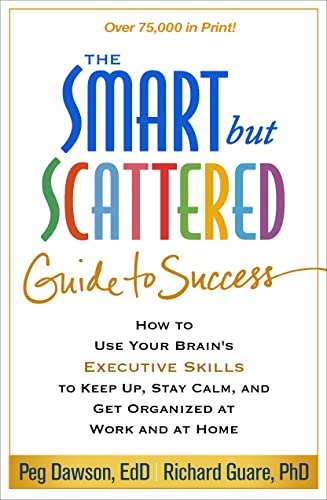
This book brilliantly operationalizes the vague concept of “executive function” into 12 distinct, manageable skills—like task initiation, sustained attention, working memory, and emotional control. It begins with insightful self-assessment questionnaires (for both work and home) that help you pinpoint your precise strengths and weaknesses, a step many find revelatory.
The approach is respectful and empowering, treating the reader as a capable adult who needs a better toolkit, not condescending “life hacks.” Each skill chapter follows a consistent format: explanation, real-world examples, and a multitude of targeted strategies. The included action plan forms, also available online, translate insight into a customizable blueprint for change.
For those who have felt frustrated by generic advice, this book’s precision is a game-changer. It helps you stop working on the wrong problem (e.g., trying time management tricks when your real issue is task initiation) and directs your energy effectively.
Why it’s great
- Breaks down executive function into actionable, specific components.
- Provides downloadable tools and forms for practical implementation.
- Written in a clear, adult-focused tone without oversimplification.
Good to know
- Requires active engagement and time to complete the assessments and plans.
- More of a manual than a narrative; it’s for doing, not just reading.
3. A Radical Guide for Women with ADHD
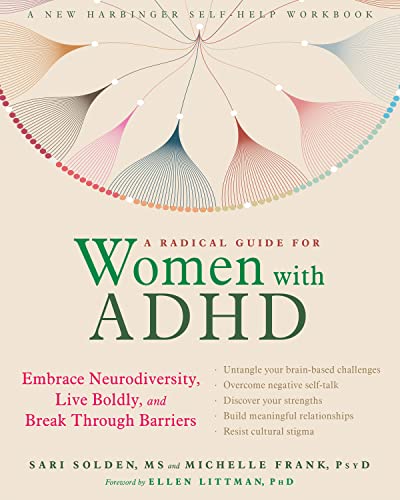
This is not a traditional advice book; it’s a transformative workbook designed to guide women on a journey of self-acceptance and identity reclamation. Written by experts who are women with ADHD themselves, it directly addresses the unique societal pressures, masking, and shame that often accompany a late diagnosis.
The core philosophy is radical self-acceptance. It encourages you to question internalized “shoulds,” embrace neurodiversity, and build a life that works with your brain, not against it. Through reflective exercises, journaling prompts, and compassionate commentary, it helps you unpack your personal history, recognize your strengths, and break through barriers of self-doubt.
Many readers describe it as more impactful than years of therapy. It’s particularly powerful for those who are tired of trying to “fix” themselves into a neurotypical mold and are ready to explore who they are beneath the symptoms.
Why it’s great
- Addresses the unique emotional and social experience of women with ADHD.
- Powerful, journal-based approach fosters deep self-discovery and acceptance.
- Authors write from lived experience with immense compassion and authority.
Good to know
- Is a workbook requiring active participation; not a passive read.
- Focuses more on mindset and identity than on specific organizational tactics.
4. Scattered Minds
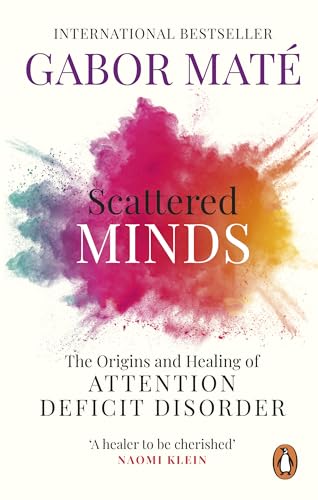
Dr. Gabor Maté, a physician with ADHD, presents a paradigm-shifting view that links ADHD to early childhood attachment and emotional regulation. He argues that a genetic predisposition interacts with environmental stressors (like a distracted or stressed parenting environment) to shape the ADHD brain’s development.
This book is profoundly compassionate, destigmatizing symptoms as adaptations rather than moral failings. It moves the focus from “what’s wrong with you” to “what happened to you,” offering a powerful framework for healing through self-understanding and addressing underlying emotional wounds. The writing is eloquent and accessible, making complex ideas about attachment and neurobiology relatable.
While it includes practical advice, its greatest strength is in providing a healing narrative. It’s essential reading for anyone who feels traditional models are incomplete and seeks to understand their ADHD in the broader context of their life story and emotional world.
Why it’s great
- Offers a unique, compassionate, and trauma-informed lens on ADHD origins.
- Powerfully reduces shame and provides a path for emotional healing.
- Beautifully written with short chapters suitable for an ADHD attention span.
Good to know
- Focuses more on understanding and healing than on behavioral “toolkit” strategies.
- Its perspective on parenting may be emotionally challenging for some readers.
5. Finally Focused
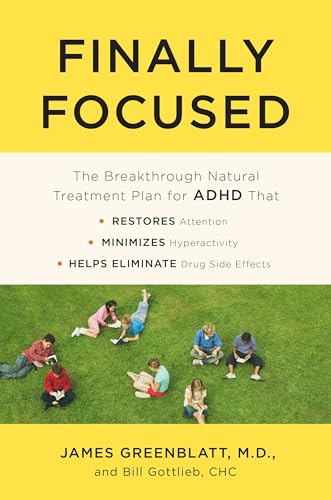
Dr. James Greenblatt integrates psychiatry with functional medicine, providing a meticulously researched, step-by-step plan for addressing ADHD through nutritional and biochemical interventions. This book is for the reader who wants to explore or complement medication with evidence-based natural strategies.
It systematically covers potential root causes often overlooked, such as mineral deficiencies (like magnesium), food sensitivities, gut health imbalances, and amino acid therapies. For each area, Dr. Greenblatt explains the science, suggests possible tests, and provides clear supplementation and dietary protocols, starting with the most impactful and common interventions.
Parents of children with ADHD have found this book revolutionary, but its principles apply equally to adults. It empowers you with knowledge about how your body’s biochemistry influences your brain, offering a complementary path to better focus and regulation.
Why it’s great
- Comprehensive, evidence-based guide to non-drug interventions.
- Clear, sequential protocol helps avoid overwhelm when starting.
- Fills a major gap for those seeking integrative health approaches.
Good to know
- Implementing the full protocol can involve costs for tests and supplements.
- Best used in consultation with a knowledgeable healthcare provider.
6. Mastering Your Adult ADHD

This is a formal client workbook from the acclaimed “Treatments That Work” series, designed to be used as part of a cognitive-behavioral therapy (CBT) program, either with a therapist or as a self-guided course. Its structure is its superpower: a week-by-week, skill-by-skill progression that systematically addresses procrastination, disorganization, and mood challenges.
Each module introduces a concept, provides psychoeducation, and leads you through written exercises to apply the strategies to your own life. It’s based on solid clinical research and mirrors the structured approach used in successful therapy trials for adult ADHD. For those who need external scaffolding to build skills, this workbook provides it.
It is highly actionable and focused on changing unhelpful thought patterns and behaviors. This is a premium, professional-grade tool for those committed to a rigorous, evidence-based self-improvement regimen.
Why it’s great
- Gold-standard, research-backed CBT approach in a accessible workbook format.
- Provides the structure of therapy in a self-paced format.
- Extremely focused on changing specific, problematic behaviors and thoughts.
Good to know
- The clinical, workbook style requires significant discipline and commitment.
- The tone is more academic and less narrative-driven than other books.
7. Thriving with Adult ADHD

This book is a fantastic entry point for newly diagnosed adults or those who want straightforward, immediately usable strategies without a dense theoretical dive. It’s concise, clearly written, and formatted with lists, exercises, and key takeaways that respect the reader’s attention span.
It covers the core areas of challenge—organization, time management, focus, and emotional regulation—with practical, bite-sized tips. The exercises at the end of each section are designed to help you personalize the advice and start implementing changes right away. Many readers appreciate its validating tone and the way it normalizes common struggles.
While it may not have the depth of more comprehensive guides, its strength lies in its accessibility and action-orientation. It’s the book you can actually finish and feel you’ve gained concrete tools from, which is a huge win for an ADHD reader.
Why it’s great
- Short, digestible format perfect for building momentum and confidence.
- Filled with immediate, practical exercises and tips.
- Very affordable and accessible for beginners.
Good to know
- Less comprehensive on the science and theory behind ADHD.
- Some exercises rely on consistent note-taking, which can be a hurdle.
8. Delivered from Distraction

This is the modern update to the classic “Driven to Distraction,” written by Dr. Edward Hallowell, who himself has ADHD. The book is infused with a hopeful, strengths-based perspective, emphasizing the positive traits often associated with ADHD—like creativity, energy, and originality—while providing a full picture of the challenges.
It’s comprehensive, covering diagnosis, treatment, and strategies for success in relationships, work, and parenting. Hallowell’s writing is engaging and anecdotal, filled with relatable stories from his practice. The book is structured to allow for non-linear reading, encouraging you to jump to the sections most relevant to you.
It serves as both a validating mirror (“that’s me!”) and an encouraging coach. For anyone who feels defined by their deficits, this book helps reframe the narrative towards one of potential and management.
Why it’s great
- Hopeful, positive tone that reduces shame and builds confidence.
- Covers a wide range of life domains with relatable case studies.
- Written by a founding figure in adult ADHD understanding.
Good to know
- Less structured as a step-by-step plan compared to workbooks.
- The breadth of coverage means less depth on specific skill-building.
9. Dirty Laundry
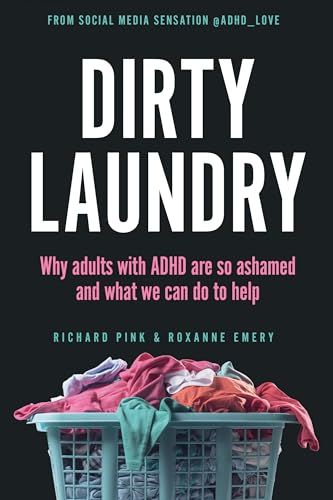
Born from a popular social media platform, this book by ADHDer Roxanne Emery and her neurotypical partner Rich offers a unique, practical, and deeply relatable look at how ADHD manifests in daily life and relationships. Each short chapter tackles a specific scenario (like losing things, emotional dysregulation, or housekeeping struggles) from both perspectives.
Rox explains the internal ADHD experience, while Rich explains the neurotypical partner’s viewpoint and offers supportive strategies. The result is a book that fosters immense understanding, reduces conflict, and provides simple, compassionate solutions. It’s written with humor, warmth, and zero judgment.
This is an excellent book for couples, but also for any individual with ADHD who wants to feel seen in their daily quirks and struggles. It’s a quick, engaging read that delivers powerful “aha” moments and practical relationship advice.
Why it’s great
- Unique dual-perspective format builds empathy and understanding.
- Extremely relatable, focusing on real-life, everyday challenges.
- Short, engaging chapters perfect for limited attention spans.
Good to know
- More focused on insight and understanding than deep skill-building.
- The social media-inspired style may not appeal to those seeking a clinical tone.
10. Driven to Distraction (Revised)

This is the book that first brought widespread recognition to adult ADHD. The revised edition updates the original groundbreaking work with new insights. Its primary strength is in its extensive use of case studies—real stories of children, adolescents, and adults with ADHD—that make the condition vividly understandable.
Reading it is often a profoundly validating experience, as you see your own life reflected in the stories of others. It provides a clear explanation of symptoms, the diagnostic process, and a broad overview of treatment options. While some of the specific advice may feel dated compared to newer workbooks, its role in building foundational understanding and combating stigma is timeless.
For anyone wanting to understand the history and core concepts of adult ADHD, starting here provides essential context. It’s the book that made millions feel seen for the first time.
Why it’s great
- The seminal work that defined and validated adult ADHD for a generation.
- Powerful, relatable case studies that normalize the experience.
- Excellent for building a foundational knowledge base.
Good to know
- Less focused on modern, structured skill-building techniques.
- Some sections may feel less current than newer publications.
11. You Mean I’m Not Lazy, Stupid or Crazy?!
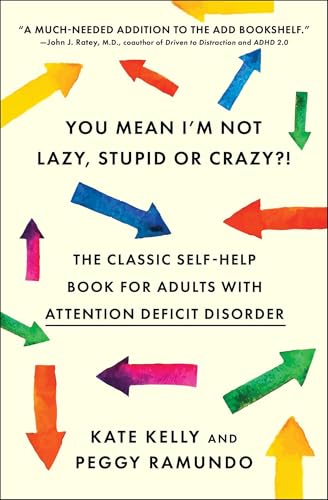
The title captures the core mission of this self-help classic: to dismantle the decades of accumulated shame and negative self-talk thataccompany a late diagnosis. It delivers immediate, powerful validation by clearly explaining how core ADHD symptoms manifest as perceived character flaws.
The book is packed with personal anecdotes, checklists, and compassionate explanations that help reframe a lifetime of struggles. It covers a wide range of topics from diagnosis to treatment to daily coping mechanisms, all in an accessible, reassuring tone. For many, this is the first book they read post-diagnosis, and it often provides the emotional relief needed to embark on further learning and skill-building.
While it includes practical tips, its greatest value is in its therapeutic effect on self-esteem. It’s a foundational text for healing the emotional wounds of undiagnosed ADHD, making it easier to then engage with more strategy-focused books.
Why it’s great
- Unparalleled at reducing shame and providing immediate emotional validation.
- Accessible writing style with relatable examples and checklists.
- Covers a broad range of life impacts from a self-help perspective.
Good to know
- Some readers find the tone or advice somewhat dated or simplistic.
- Less focused on structured, modern executive function training.
Understanding the Specs
Book Type & Purpose
ADHD books generally fall into three categories: Foundational Guides explain the condition and provide validation; Skill-Based Workbooks offer exercises and plans for behavioral change; and Specialized Perspectives focus on niches like women’s experiences or natural treatments. Identifying which type you need most—understanding, doing, or a specific lens—is the first step to a successful choice.
Author Credibility & Approach
Consider the author’s background: a clinician (Barkley, Hallowell) offers medical authority and research-based strategies; an author with lived experience (Emery, Solden) provides deep relatability; a holistic practitioner (Greenblatt, Maté) introduces complementary paradigms. The author’s lens shapes the entire content, so align it with your personal beliefs about treatment and management.
FAQ
What is the first ADHD book I should read?
Are workbooks or narrative guides more helpful?
Final Thoughts: The Verdict
For most people seeking the best adhd books for adults, the winner is the Taking Charge of Adult ADHD because it combines unparalleled clinical authority with a practical, actionable plan for every major life domain. If you want a structured, skill-building approach to executive function, grab the The Smart but Scattered Guide to Success. And for women seeking deep self-acceptance and identity work, nothing beats the A Radical Guide for Women with ADHD.

Mo Maruf
I created WellFizz to bridge the gap between vague wellness advice and actionable solutions. My mission is simple: to decode the research and give you practical tools you can actually use.
Beyond the data, I am a passionate traveler. I believe that stepping away from the screen to explore new environments is essential for mental clarity and physical vitality.