Our readers keep the lights on and my smoothie glass nicely filled. As an Amazon Associate, I earn from qualifying purchases.
Finding a heart rate monitor that’s both reliable and easy on your wallet can feel like a high-stakes guessing game. You need data you can trust to train effectively, but you don’t want to overspend for features you’ll never use. The good news is that the affordable market is packed with serious contenders that deliver precision without the premium price tag.
I’m Mohammad Maruf — the founder and writer behind WellFizz. My process involves dissecting manufacturer specifications and analyzing thousands of data points from real-world user experiences to separate marketing hype from genuine performance.
After evaluating the latest models, I’ve identified the key performers that balance cost, comfort, and connectivity. The goal is to match you with a device that provides clinical-grade feedback for your training, ensuring every beat counts toward your fitness goals. best affordable heart rate monitor is the one that disappears during your workout while delivering data you can absolutely trust.
How To Choose The Best Affordable Heart Rate Monitor
Navigating the world of heart rate tech doesn’t require an engineering degree, but understanding a few core principles will prevent disappointment. Your choice fundamentally comes down to the trade-off between absolute accuracy and all-day convenience, filtered through your primary activity and tech ecosystem.
Sensor Type: The Accuracy Divide
The most significant decision is between an electrocardiogram (ECG/EKG) chest strap and an optical sensor found on wristbands or armbands. Chest straps use electrodes to detect the heart’s electrical activity, the same method used in medical settings. This provides superior accuracy, especially during rapid changes in intensity (like HIIT or interval training). Optical sensors use light (PPG) to measure blood flow under the skin, which can be affected by motion, skin tone, and temperature, leading to potential lag or errors during intense exercise. For pure, unshakeable data, a chest strap is the gold standard.
Connectivity & Compatibility
Check how the device talks to your other gear. Bluetooth is ubiquitous and connects to smartphones and most modern apps. ANT+ is a leaner protocol favored by dedicated sports gear like Garmin watches, Wahoo bike computers, and gym equipment. Many mid-range monitors offer dual ANT+/Bluetooth, which is ideal for future-proofing. Ensure it’s compatible with the specific apps (Strava, Peloton, Zwift) or watches you use.
Battery & Durability
Consider the upkeep. Chest straps typically use a user-replaceable coin cell battery (CR2032) that can last 6-12 months of regular use. Optical armbands and smartwatches usually have rechargeable batteries, lasting from a day to a week per charge. For durability, look for an IP67 or IP68 rating for sweat and rain resistance; very few are truly designed for swimming. A comfortable, machine-washable strap is a major plus for long-term hygiene and use.
Quick Comparison
On smaller screens, swipe sideways to see the full table.
| Model | Type | Best For | Key Feature | Amazon |
|---|---|---|---|---|
| Polar H9 | Chest Strap | Gold-Standard Accuracy | Trusted brand, works with everything | Amazon |
| COROS Heart Rate Monitor | Armband | Comfort & Multi-Device | Connects to 3 devices at once | Amazon |
| Wahoo TICKR FIT | Armband | Armband Comfort Leader | Dual ANT+/Bluetooth, proven design | Amazon |
| Scosche Rhythm+ 2.0 | Armband | HRV & Recovery Data | Advanced RRi data for HRV apps | Amazon |
| Powr Labs Chest Strap | Chest Strap | Long Battery Life | 400+ hour battery, all-day comfort | Amazon |
| Fitbit Inspire 3 | Smart Tracker | All-Day Health & Fitness | Sleep, stress, readiness scores | Amazon |
| COOSPO H6M Chest Strap | Chest Strap | Budget Dual-Protocol | Bluetooth & ANT+ at entry-level | Amazon |
| Magene H303 | Chest Strap | Gym Equipment Compatibility | Works with Peloton, treadmills | Amazon |
| Fitpolo Fitness Tracker | Smart Watch | Large Screen Smartwatch | 1.8″ color touchscreen, 100 modes | Amazon |
| FITVII Smart Watch | Smart Tracker | Health Metric Curiosity | Shows blood pressure & blood oxygen | Amazon |
| LIVIKEY Fitness Tracker | Smart Tracker | Entry-Level Basics | Week-long battery, IP68 waterproof | Amazon |
In‑Depth Reviews
1. Polar H9 Heart Rate Sensor

The Polar H9 represents the sweet spot in the heart rate monitor market: it delivers the trusted accuracy of the renowned Polar brand at a mid-range point that makes professional-grade data accessible. It uses a soft, comfortable chest strap with textile electrodes and connects effortlessly via both ANT+ and Bluetooth to virtually any device or app you own, from Garmin watches to Peloton bikes and smartphone fitness apps.
What sets the H9 apart is its no-nonsense reliability. It powers on automatically when you put it on and shuts off when you take it off, so you never fumble with buttons. The data transmission is stable and immediate, capturing every heartbeat with the precision chest-strap ECG technology is known for. This is critical for interval training, where rapid heart rate changes need to be tracked faithfully.
The value proposition is clear: you’re investing in a sensor that will last for years. The strap is washable, and the unit uses a standard, replaceable battery that lasts hundreds of hours. While it doesn’t have the onboard memory or extra running dynamics of its pricier sibling, the H10, for pure, unwavering heart rate accuracy, the H9 is exceptionally hard to beat.
Why it’s great
- Industry-respected accuracy and reliability from a leading brand.
- Seamless dual ANT+ and Bluetooth connectivity for maximum compatibility.
- Automatic on/off detection simplifies the user experience.
- Comfortable, washable soft strap that resists chafing.
Good to know
- Strap may show wear at adjustment buckles over extended time.
- Lacks advanced metrics like running cadence or cycling dynamics.
2. COROS Heart Rate Monitor
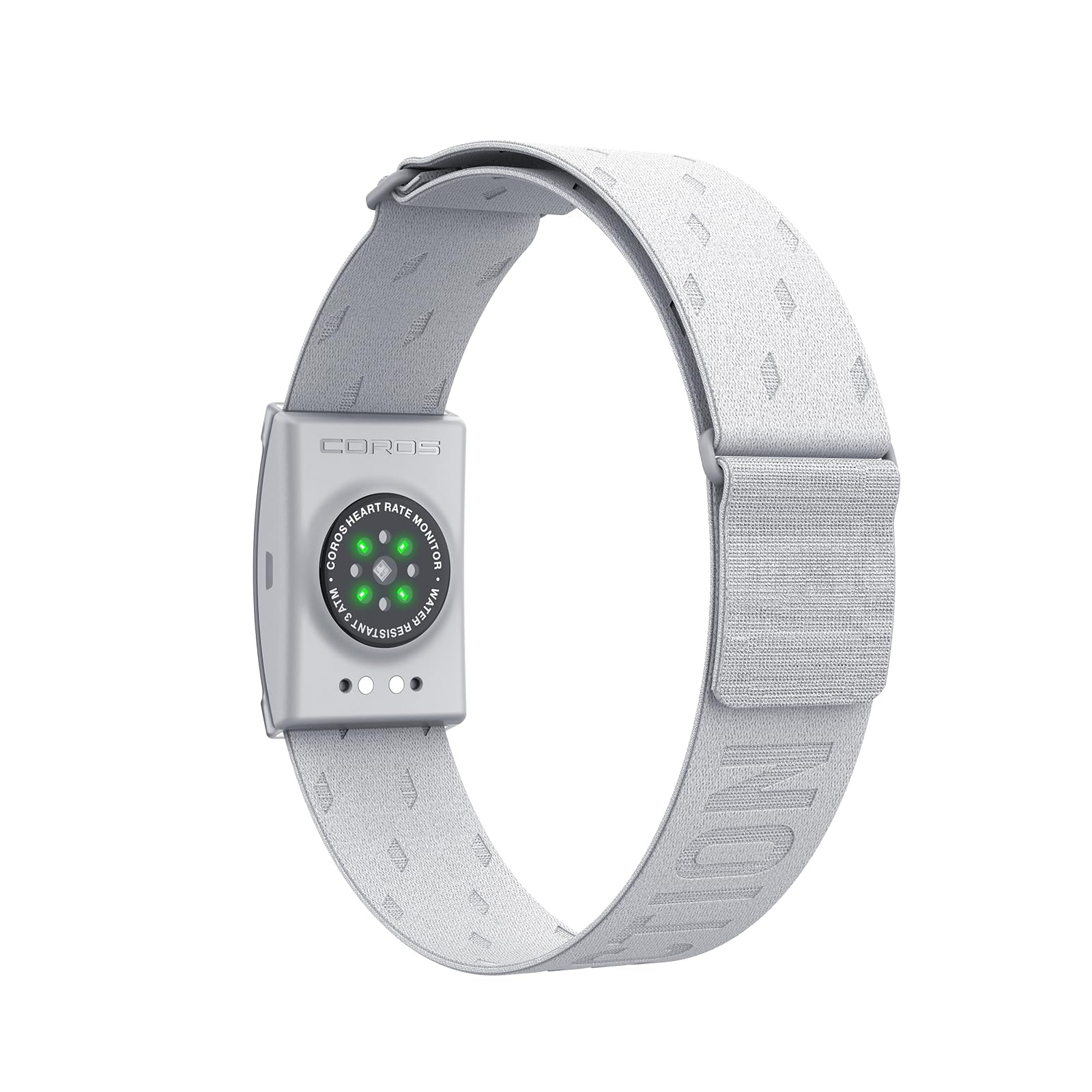
For those who want chest-strap accuracy but can’t stand the feel of one, the COROS armband is a revelation. This optical sensor sits snugly on your upper arm, a location that often provides more consistent readings than the wrist and is far more comfortable than the chest for many users. Its standout technical feature is the ability to connect to up to three devices simultaneously via Bluetooth, perfect for triathletes or anyone who trains with a watch, a bike computer, and a phone app.
The design is thoughtful and user-friendly. It features automatic wear detection, turning on when you put it on and off when you remove it. The nylon band is highly adjustable and lays flat, avoiding the bulk of some older armband designs. The sensor itself is rechargeable via a magnetic cable, offering a substantial 38 hours of continuous use, which means you can forget about charging it for weeks of regular training.
Feedback from endurance athletes is particularly strong, noting its reliability matches or exceeds traditional chest straps during running and cycling, without the hassle of wetting electrodes or dealing with strap slippage. It’s a modern, intelligent solution that prioritizes both data quality and comfort.
Why it’s great
- Superior comfort compared to chest straps, with excellent accuracy.
- Connects to three Bluetooth devices at once for complex setups.
- Automatic power management via wear detection.
- Long battery life and convenient magnetic charging.
Good to know
- Bluetooth-only, lacks ANT+ connectivity for some legacy sports devices.
- The band can retain odor and requires regular cleaning.
3. Wahoo TICKR FIT Heart Rate Armband

The Wahoo TICKR FIT is a veteran in the optical armband category and remains a top choice for its robust dual-band connectivity and proven performance. It offers both ANT+ and Bluetooth Smart, ensuring compatibility with the broadest possible range of devices, from older Garmin units to every modern fitness app. This makes it a incredibly versatile tool for a multi-sport athlete’s kit.
Comfort is a key design principle. It comes with two adjustable bands (small and large) to fit a wide variety of arm sizes. The sensor pod is low-profile, and the soft, breathable material of the band prevents irritation during long sessions. Users report that once the band is adjusted for a secure, slightly snug fit, it stays put remarkably well, even during high-movement activities like CrossFit or tennis.
Its 35-hour battery life is more than ample for weeks of training, and the LED indicator provides clear connection status. While it may not have the multi-device Bluetooth streaming of the COROS, the TICKR FIT’s strength is its rock-solid, no-fuss reliability across the entire ecosystem of fitness technology, backed by Wahoo’s reputable name in the cycling and fitness tech world.
Why it’s great
- Dual ANT+ and Bluetooth ensures universal compatibility.
- Very comfortable and secure fit with two included band sizes.
- Longstanding reputation for reliable performance and good battery life.
- Clear LED status indicator for connection confidence.
Good to know
- The velcro band, while comfortable, may eventually show wear.
- Battery is non-replaceable; the entire unit is rechargeable.
4. Scosche Rhythm+ 2.0 Heart Rate Monitor Armband
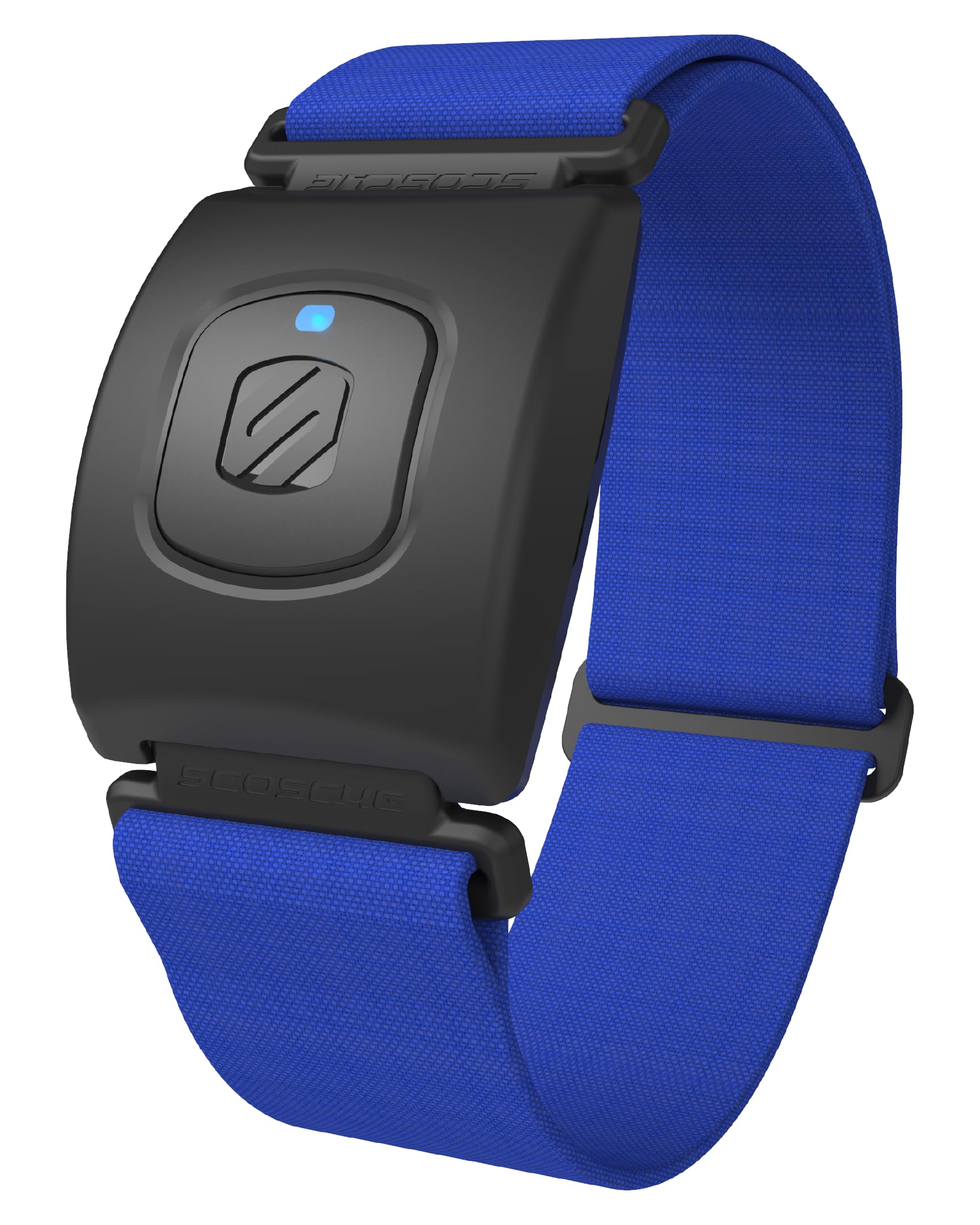
The Scosche Rhythm+ 2.0 is for the data-driven athlete who looks beyond just heart rate during a workout. Its unique selling point is the ability to capture precise RR interval data, which is necessary for calculating Heart Rate Variability (HRV)—a key metric for tracking recovery, sleep quality, and overall stress. This makes it a favorite among users of apps like HRV4Training and Elite HRV.
Beyond its advanced biometric capabilities, it’s simply a excellent optical HRM. The armband design is secure and comfortable for the forearm or bicep, and its dual ANT+/Bluetooth connectivity is flawless. It’s IP68 waterproof, so sweat and rain are non-issues. The 24-hour continuous battery life is ideal for all-day wear or even multi-sport events.
Reviews from serious athletes, including some who have validated its accuracy against clinical EKG equipment, speak volumes about its performance. It’s a tool that bridges the gap between casual fitness tracking and legitimate biofeedback, offering insights that can help you tailor your training to your body’s readiness.
Why it’s great
- Provides accurate RRi data for advanced HRV and recovery tracking.
- Validated by athletes for clinical-grade accuracy during intense exercise.
- Secure, comfortable fit and full IP68 waterproof protection.
- Strong dual-band connectivity for reliable data streaming.
Good to know
- Battery life (24hrs) is shorter than some chest strap options.
- Primarily focused on athletes; overkill for casual step counting.
5. Powr Labs Bluetooth and ANT+ Heart Rate Monitor Chest Strap

Powr Labs delivers a compelling package that undercuts major brands while promising (and often delivering) comparable performance. This chest strap boasts a remarkably long 400-hour battery life from a single, included CR2032 battery, meaning you can train daily for months without a second thought. The strap is notably soft and seamless, designed to prevent chafing during long workouts.
It features the essential dual ANT+/Bluetooth connectivity, making it compatible with a massive list of over 400 apps and devices, from Peloton to Zwift to Garmin. The company emphasizes a clinical ±1 BPM accuracy, and user experiences generally confirm it provides stable, reliable readings that are responsive to changes in intensity.
The value here is exceptional. You get the gold-standard accuracy of a chest strap, the convenience of a long-life replaceable battery, and broad compatibility, all at a very accessible point. For the athlete who wants dependable data without any frills, this is a workhorse option that consistently punches above its weight.
Why it’s great
- Outstanding battery life measured in hundreds of hours.
- Very comfortable, chafe-resistant strap material.
- Wide compatibility with apps and gym equipment.
- Strong performance that rivals more expensive brands.
Good to know
- Some users report occasional pairing hiccups that require a reset.
- Long-term durability of the strap’s connection points can vary.
6. Fitbit Inspire 3 Health & Fitness Tracker

If your goal is 24/7 health insight rather than just workout-specific heart rate data, the Fitbit Inspire 3 is the standout choice. This slender, lightweight tracker is built for constant wear, providing not only heart rate but also sleep staging, stress management scores, and a Daily Readiness Score that suggests when you’re primed for a hard workout or need recovery.
The optical heart rate sensor is tuned for all-day and active use, automatically tracking exercises and providing Active Zone Minutes—a Fitbit metric that encourages you to spend time in heart rate zones that benefit your fitness. The 10-day battery life is a major practical advantage, and the device is swim-proof up to 50 meters. It delivers smart notifications and works within the comprehensive, user-friendly Fitbit app ecosystem.
For the person who wants a holistic view of their health—seeing how sleep, stress, and activity interconnect—the Inspire 3 provides immense value. While its optical sensor may not match a chest strap for high-intensity interval precision, its consistency and the depth of contextual health data are unparalleled in this category.
Why it’s great
- Provides holistic health metrics (sleep, stress, readiness) beyond just HR.
- Excellent 10-day battery life for an always-on device.
- Slim, comfortable design ideal for 24/7 wear and sleep tracking.
- Reliable brand with a robust app and community features.
Good to know
- Wrist-based optical HR can lag during rapid intensity changes.
- Advanced insights require a Premium subscription after the trial period.
7. COOSPO Heart Rate Monitor Chest Strap H6M
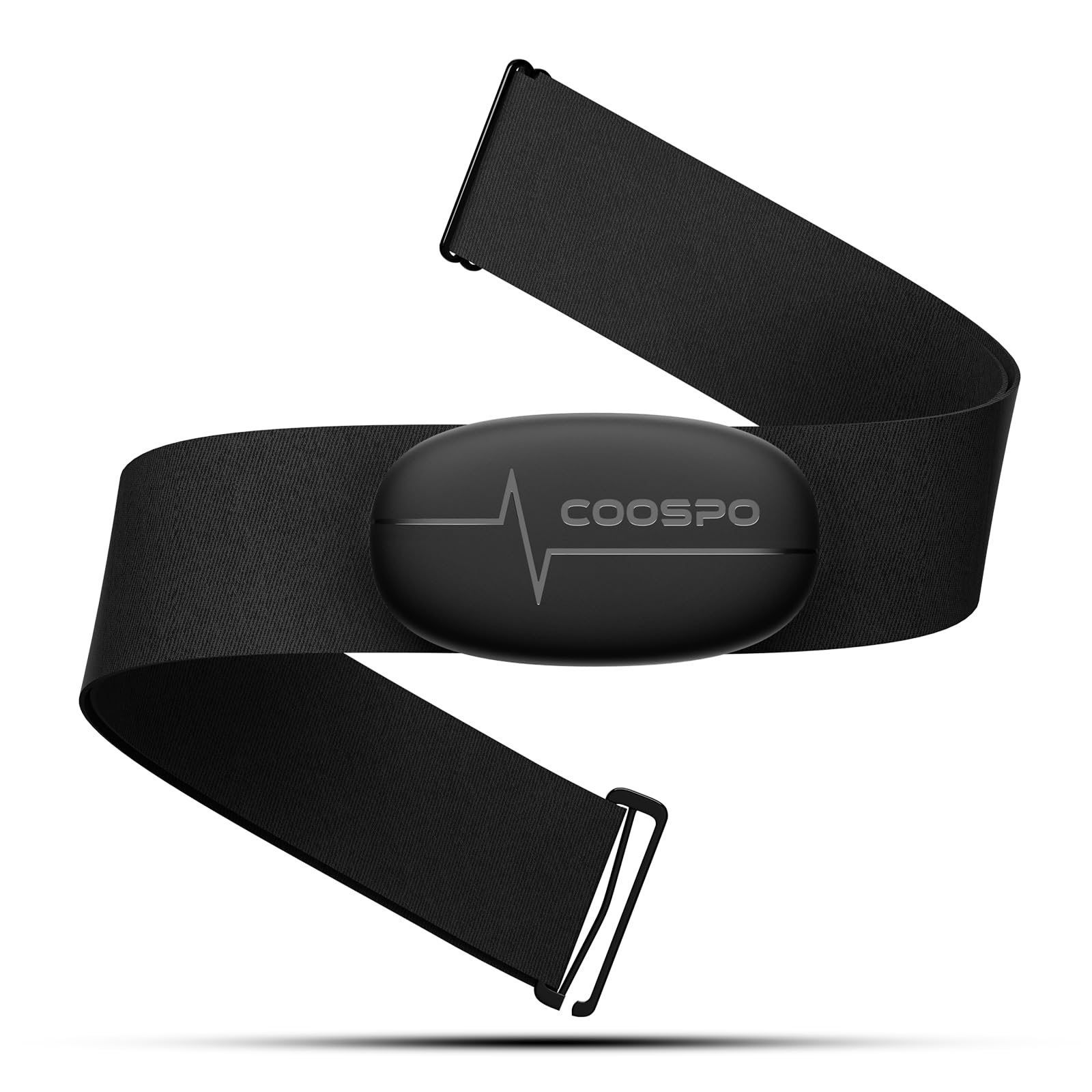
COOSPO’s H6M is a perennial favorite for budget-conscious cyclists and runners seeking reliable dual-protocol connectivity. It offers both Bluetooth and ANT+ transmission right out of the gate, ensuring it will pair with Zwift, Strava, Garmin devices, and more. The design is straightforward: a functional, adjustable strap and a compact sensor module that does its job well.
It boasts an IP67 waterproof rating, making it resistant to sweat and rain, and uses a standard CR2032 battery rated for up to 400 hours. In practice, users find it connects quickly and provides data that aligns well with perceived exertion, though, as with many entry-level straps, long-term durability can be a roll of the dice. For the cost, however, it represents a very low-risk entry point into accurate heart rate training.
This is the monitor you buy when you know you need chest-strap accuracy but aren’t ready to commit to a higher-end brand. It performs admirably for most training scenarios and is an excellent tool for proving the value of heart rate data to a beginner.
Why it’s great
- Provides essential ANT+ and Bluetooth connectivity at a budget-friendly point.
- Good water resistance for sweaty workouts and outdoor training.
- Long battery life from a common, replaceable cell.
- Accurate enough for most training zones and general fitness tracking.
Good to know
- Build quality and long-term reliability are inconsistent.
- The strap is more basic and less comfortable than premium options.
8. Magene H303 Heart Rate Monitor Chest Strap

The Magene H303 is a specialist for a specific use case: connecting to modern smart gym equipment. It’s highlighted for its seamless compatibility with Peloton bikes, NordicTrack and Pro-Form treadmills with iFIT, Echelon bikes, and similar machines. Its dual ANT+/Bluetooth design allows it to broadcast to two devices simultaneously, so you could have it connected to your treadmill display and your personal watch at the same time.
It features a helpful LED light that flashes to confirm it’s on and transmitting, a small but useful touch. The battery life is rated for an impressive 1000 hours, and the IP67 rating handles sweat with ease. For the home gym enthusiast who has invested in connected equipment and wants to bring accurate heart rate data into those workout displays, the H303 is a purpose-built and cost-effective solution.
Outside of the gym, it functions as a competent general-purpose chest strap, though its companion app is very basic. Its primary strength is its proven handshake with popular fitness platforms.
Why it’s great
- Excellent, verified compatibility with Peloton and other smart gym equipment.
- Extremely long theoretical battery life.
- Helpful LED status indicator for connection confidence.
- Can transmit to two devices concurrently.
Good to know
- The proprietary app is limited and not necessary for most users.
- Long-term durability reports are mixed; considered somewhat disposable.
9. Fitpolo Fitness Tracker with Heart Rate Monitor

The Fitpolo tracker is for those who want a large, smartwatch-style display without the associated cost. Its 1.8-inch color touchscreen is bright and easy to read, offering a wide array of customizable watch faces. It functions as a full smartwatch, delivering notifications for calls, texts, and apps, and includes an impressive 100 exercise modes.
As a heart rate monitor, it provides 24/7 optical tracking and sleep monitoring via the companion “VeryFit” app. The IP68 rating means it’s safe for swimming, and the battery can last around a week. For the user who prioritizes a big screen for readability and wants basic smart features alongside fitness tracking, this offers a lot of functionality.
It’s important to temper expectations regarding sensor accuracy; like all wrist-based optical sensors, it can struggle with rapid heart rate changes. However, for general trend tracking, daily step counting, and enjoying a feature-rich watch experience, it represents solid value.
Why it’s great
- Large, vibrant color screen that’s easy to interact with.
- Comprehensive smartwatch features including notifications.
- Swim-proof design and good battery life for a color display watch.
- Extensive list of tracked exercise modes.
Good to know
- Heart rate and sleep accuracy are inconsistent and not for clinical use.
- Long-term reliability and customer support can be challenging.
10. FITVII Smart Watch with Blood Pressure Monitor

The FITVII watch stands out by attempting to measure blood pressure and blood oxygen (SpO2) alongside heart rate, all from the wrist. It features a bright 1.69-inch colordisplay and over 20 sports modes, packaged in a modern design.
It’s crucial to understand that wrist-based blood pressure monitoring is not medically validated and should be treated as a novelty or general trend indicator at best. The heart rate and sleep tracking provide basic insights, but accuracy can vary significantly. This watch is best suited for someone curious about these metrics who understands their limitations, rather than an athlete needing precise training data.
Where it excels is as a full-featured smartwatch at a mid-range point: you get notifications, weather, music control, and a long battery life in an attractive package. If you approach the health metrics with appropriate skepticism, it can be a satisfying all-in-one device for daily wear and general activity awareness.
Why it’s great
- Offers a wide array of health metrics (BP, SpO2, HR) from one device.
- Bright, clear color display with a user-friendly interface.
- Good battery life and solid smartwatch notification features.
- Attractive design that looks more premium than its cost.
Good to know
- Blood pressure and SpO2 readings are not medically accurate.
- Step counting and heart rate accuracy can be inconsistent.
- Primarily a lifestyle smartwatch, not a precision training tool.
11. LIVIKEY Fitness Tracker Watch
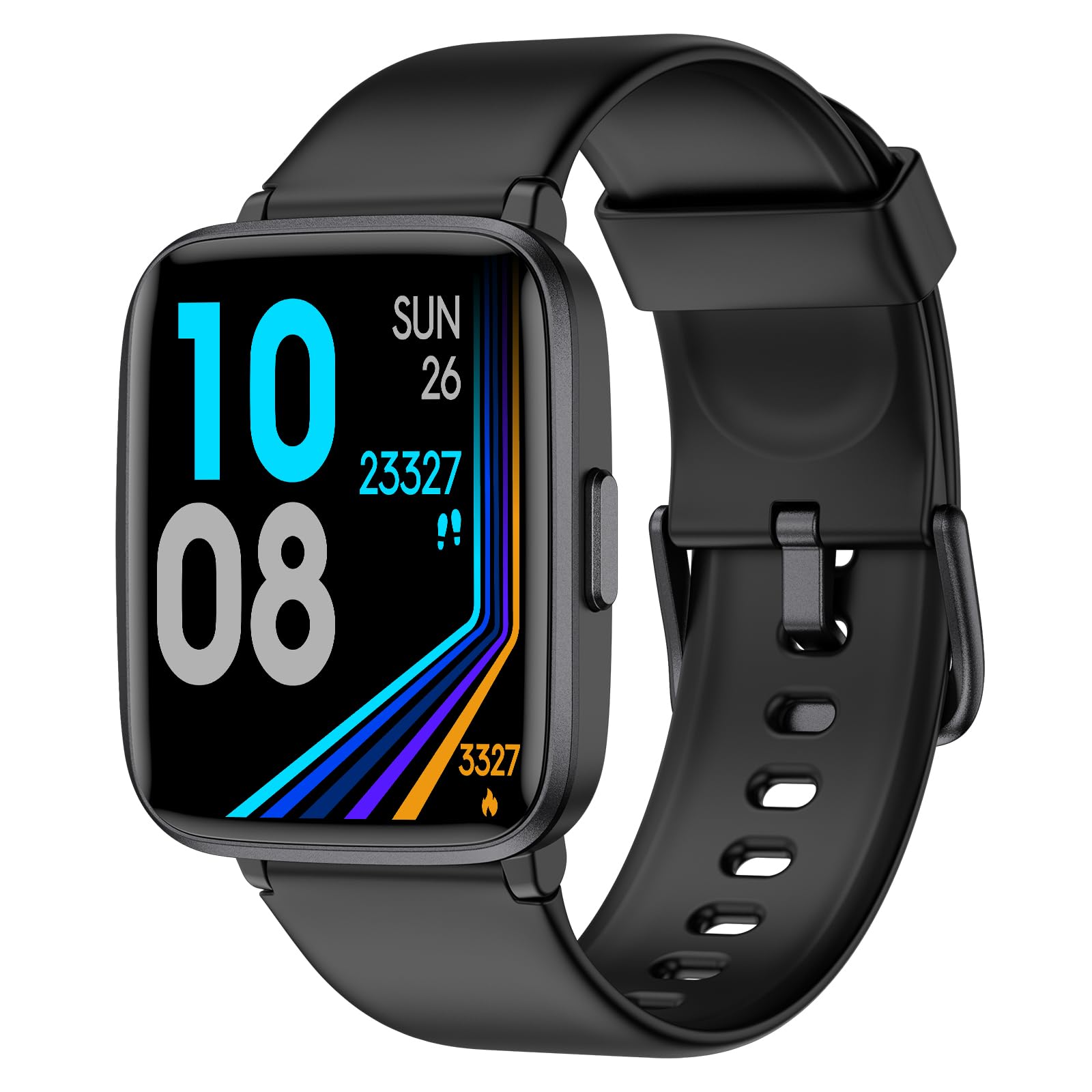
The LIVIKEY tracker is the definition of an entry-level device. For a very accessible outlay, you get the core basics of a fitness tracker: heart rate monitoring, sleep tracking, step counting, and smartphone notifications, all housed in a simple, IP68 waterproof case with a week-long battery life. It’s a straightforward tool for building awareness of daily activity.
Performance reflects its positioning. The optical heart rate sensor provides a general idea of your pulse but isn’t reliable for training zone work. The pedometer is prone to over-counting steps from arm movements (like clapping or typing). Sleep staging offers a basic breakdown but shouldn’t be taken as clinically accurate. It connects via Bluetooth to a companion app that presents your data clearly.
This is an ideal first tracker for a teen, a budget-conscious beginner, or someone who just wants a rough idea of daily movement and sleep patterns without any complexity. It manages expectations well—you’re paying for fundamental awareness, not precision analytics. For that purpose, it represents solid value.
Why it’s great
- Extremely accessible entry point into fitness tracking.
- IP68 waterproofing and long battery life for hassle-free use.
- Delivers basic notifications and activity summaries.
- Simple setup and no-frills operation.
Good to know
- Heart rate and step-count accuracy are low and inconsistent.
- Sleep data is a rough estimate only.
- Build quality and materials are basic, as expected.
Understanding the Specs
Optical (PPG) vs. Electrocardiogram (ECG/EKG)
This is the core accuracy divide. Optical sensors (in wristbands/armbands) use light to detect blood volume changes under your skin. They’re convenient for all-day wear but can be influenced by motion, skin tone, and fit, causing lag or errors. Electrocardiogram sensors (in chest straps) measure the heart’s electrical activity directly, providing medical-grade accuracy and instant response to heart rate changes, making them essential for serious training.
ANT+ vs. Bluetooth
These are wireless communication protocols. Bluetooth is common and connects to phones and most apps. ANT+ is a low-power protocol preferred by dedicated sports gear (Garmin watches, bike computers, gym equipment) for its stability and efficiency. A monitor with dual ANT+/Bluetooth offers maximum compatibility, letting you connect to virtually any device or app in your ecosystem simultaneously.
FAQ
Which is more accurate, a chest strap or an armband?
Do I need to wet the electrodes on a chest strap?
Can I use these heart rate monitors for swimming?
Why does my wrist-based heart rate seem wrong during exercise?
Final Thoughts: The Verdict
For most people, the best affordable heart rate monitor winner is the Polar H9 because it delivers proven, gold-standard accuracy and universal compatibility at a very reasonable mid-range price. If you want superior comfort without sacrificing much precision, grab the COROS Heart Rate Monitor. And for holistic 24/7 health insight and all-day tracking, nothing beats the Fitbit Inspire 3.

Mo Maruf
I created WellFizz to bridge the gap between vague wellness advice and actionable solutions. My mission is simple: to decode the research and give you practical tools you can actually use.
Beyond the data, I am a passionate traveler. I believe that stepping away from the screen to explore new environments is essential for mental clarity and physical vitality.