Our readers keep the lights on and my smoothie glass nicely filled. As an Amazon Associate, I earn from qualifying purchases.
If you’ve ever finished a long day feeling like you’re walking on needles, you know the search for real arch support is personal. The right 3/4 insole can transform your daily comfort, but the wrong one is just an expensive foot-shaped placebo.
I’m Mohammad Maruf — the founder and writer behind WellFizz. My approach involves deep-diving into material specifications, biomechanical claims, and aggregating thousands of user data points to separate marketing hype from clinically sound support.
After methodically evaluating dozens of models, I’ve narrowed the field to the most effective options, from premium podiatrist-designed solutions to entry-level performers that deliver. We analyzed specs and real user experiences to find the best 3/4 arch support insoles for lasting comfort and proper alignment.
How To Choose The Best 3/4 Arch Support Insoles
Selecting an insole isn’t about finding the softest cushion. It’s about finding the structure that correctly positions your foot with each step. The best choice depends on your arch type, pain points, and the shoes you wear most often.
Arch Height & Rigidity
Support is not one-size-fits-all. A truly high arch requires a firm, contoured platform to prevent it from collapsing, while a medium or low arch needs a supportive lift to create a healthy arch position. The material matters immensely—a soft foam will compress under body weight, offering temporary comfort but no lasting correction. Look for semi-rigid or rigid thermoplastics (like polypropylene) that maintain their shape for genuine biomechanical support.
Targeted Features for Pain Relief
Identify your primary issue. A deep heel cup stabilizes the foot, reduces pronation, and is crucial for plantar fasciitis and heel spur relief. A metatarsal pad lifts and separates the ball of the foot, relieving pressure for conditions like Morton’s neuroma or metatarsalgia. A 3/4 length design is specifically engineered to fit into dress shoes, boots, or any footwear where a full-length insole would crowd your toes or simply not fit.
Material Quality & Longevity
Premium insoles use layered materials: a firm support shell, a shock-absorbing middle layer, and a breathable, moisture-wicking top cover. Cheaper options often skimp on the supportive core, leading to rapid breakdown. Consider coverage under Flexible Spending Accounts (FSA/HSA) as an indicator of medical recognition, and pay attention to warranties or durability guarantees from the manufacturer.
Quick Comparison
On smaller screens, swipe sideways to see the full table.
| Model | Type | Best For | Key Feature | Amazon |
|---|---|---|---|---|
| PowerStep Pinnacle 3/4 | Semi-Rigid | All-day wear in tight shoes | Low-profile, contoured arch | Amazon |
| Natural Foot Orthotics | Podiatrist-Designed | Correcting foot alignment | Supports all four foot arches | Amazon |
| Dr. Scholl’s Custom Fit | Adaptive Support | Total lower body pain relief | Triple-layer cushioning system | Amazon |
| Spenco Rx Orthotic | Moldable | Customizable fit & stability | Flexible plastic arch, 4-way fabric | Amazon |
| Footlogics Metatarsalgia | Targeted Relief | Ball of foot pain | Prominent metatarsal raise | Amazon |
| Sof Sole Plantar Fascia | Gel Support | Heel cushioning & PF relief | Integrated gel heel drop | Amazon |
| Pedag Holiday | Leather Orthotic | Low-profile dress shoes | Handmade lambskin, metatarsal pad | Amazon |
| RooRuns Arch Support | Balanced Support | Versatile daily activities | Metatarsal pad & strong arch | Amazon |
| PCSsole Orthotics | Firm Arch | High arches & over-pronation | 3.5cm firm EVA arch, deep heel cup | Amazon |
| DR. POTTER+ Orthotic | Structured Support | Wide feet & flat arches | Sturdy EVA arch, gel heel cushion | Amazon |
| Airplus Plantar Fascia | Budget Starter | Trying orthotics for the first time | APMA certified, gel heel, foam shell | Amazon |
In‑Depth Reviews
1. PowerStep Pinnacle 3/4 Orthotic Insole
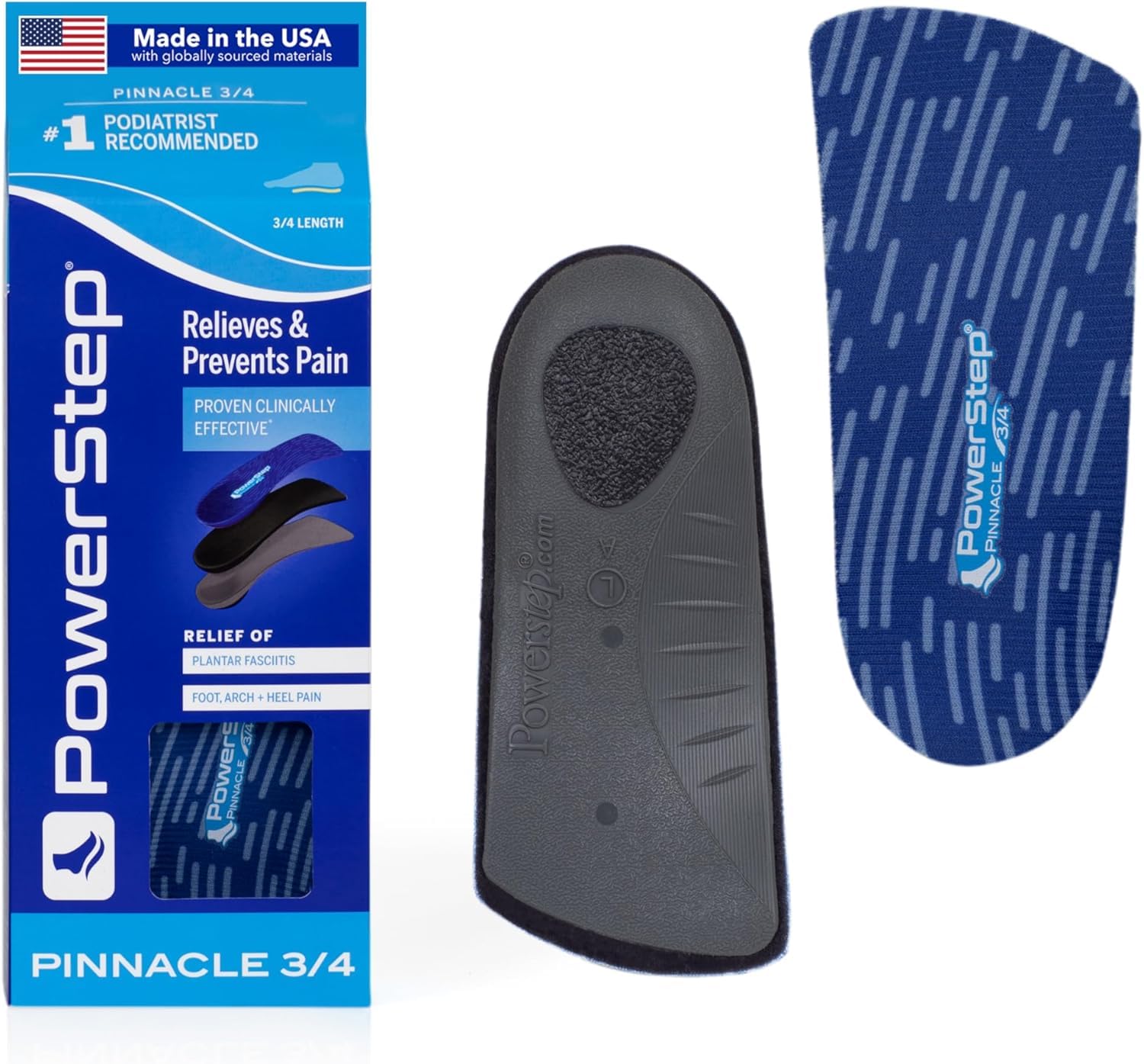
The PowerStep Pinnacle earns the top spot for its masterful balance of genuine support and wearability. It’s engineered with a contoured, firm-yet-flexible arch shell that provides structure without the harsh rigidity of cheaper plastic plates. This semi-rigid design is the sweet spot for most people, offering enough resistance to prevent arch collapse during standing and walking, while remaining comfortable for all-day wear.
Its true genius lies in the low-profile, tapered 3/4 length. This design is specifically crafted for shoes where you can’t remove the factory insole, like many dress shoes, boots, or sleek athletic footwear. It adds meaningful support without making your shoes feel tight, and the non-slip heel pad is effective at minimizing shift. User reports consistently highlight relief from plantar fasciitis pain and a noticeable improvement in foot alignment from the first wear.
As a product made in the USA and eligible for FSA/HSA funds, it carries a level of clinical credibility. It’s not the most aggressive correction on the market, which is precisely why it’s the best overall—it provides substantial, podiatrist-recommended support that a wide range of foot types can adapt to quickly, making it a reliable choice for nearly any shoe in your closet.
Why it’s great
- Perfect blend of support and flexibility for daily adaptation.
- Tapered 3/4 design fits seamlessly into tight-fitting shoes.
- Non-slip heel pad keeps it securely in place.
- Widely recommended by medical professionals for mild to moderate issues.
Good to know
- May not provide enough rigidity for severe over-pronation or very high arches.
- The top fabric cover, while comfortable, may show wear over several months of heavy use.
2. Natural Foot Orthotics 3/4 Stabilizer

This is the orthotic for those who are serious about correcting foot mechanics, not just masking pain. Designed by podiatrists, the Natural Foot Stabilizer targets the root cause of misalignment by supporting all four arches of the foot—the medial longitudinal, lateral longitudinal, transverse, and metatarsal arches. This comprehensive approach aims to reshape foot posture over time, addressing pain that often radiates to the knees, hips, and back.
The semi-rigid construction is substantial and requires a dedicated break-in period, as the instructions wisely advise. This isn’t a negative; it’s a sign of effective, corrective support. Users who commit to the gradual process report transformative results, with many stating it eliminated chronic plantar fasciitis pain that other insoles only temporarily soothed. The 3/4 length is vented for breathability and ends before the ball of the foot for a precise fit.
Positioned at a premium level, it represents a long-term investment in foot health. It’s backed by a lifetime warranty and FSA/HSA eligibility, underscoring its medical-grade intent. If you’ve tried everything else and are considering custom orthotics, this product deserves your attention first.
Why it’s great
- Biomechanically designed to correct alignment, not just comfort.
- Supports all foot arches for whole-body postural benefits.
- Extremely durable construction with a lifetime warranty.
- Effective for severe, chronic foot conditions.
Good to know
- Requires a strict, gradual break-in period (start with 1 hour daily).
- Premium investment; the highest cost option on the list.
- Designed for moderate-height arches; flat feet may need their Slim model.
3. Dr. Scholl’s Custom Fit Orthotics
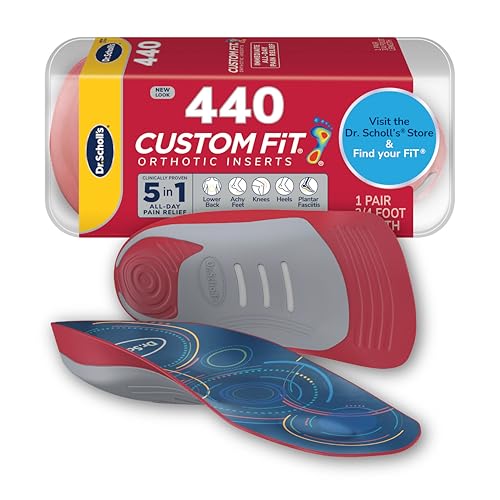
Dr. Scholl’s Custom Fit line represents a data-driven approach to mass-market orthotics. The system uses body weight, arch type, and shoe size to assign a specific model (like the CF440). This 3/4 version employs a sophisticated triple-layer system: shock-absorbing cushioning, adaptive 3D arch support, and a pressure-reducing top cloth. The goal is total lower body pain relief, targeting feet, knees, and back.
The experience is notably different from firmer orthotics. The focus here is on dynamic cushioning and pressure dispersion. Users who spend long hours on hard surfaces (retail, healthcare, hospitality) often report dramatic reductions in end-of-day fatigue and pain. The slip-in design over your shoe’s existing insole makes them incredibly easy to switch between different pairs of footwear, a major plus for those who don’t want to buy multiple insoles.
While not as rigid as podiatrist-designed models, the adaptive arch support is intelligent and effective for a broad audience. The relief is often immediate, and the design elegately solves the problem of adding support without removing original insoles. It’s a premium, tech-forward solution for all-day comfort and systemic pain relief.
Why it’s great
- Clinically proven to relieve pain in feet, knees, and back.
- Easy slip-in design requires no trimming or removal of existing insoles.
- Excellent shock absorption for hard floors and long hours of standing.
- The Custom Fit system tailors support based on key personal metrics.
Good to know
- More cushion-focused than rigidly corrective.
- It’s vital to get the correct CF number for optimal results (use their in-store kiosk if possible).
- The red top fabric can show dirt over time in open shoes.
4. Spenco Rx Orthotic Arch Support

The Spenco Rx stands out for its customizable, moldable design. The core features a flexible plastic arch shell that can be heated (with boiling water or a hairdryer) and molded to the unique contours of your foot. This allows for a personalized fit that bridges the gap between off-the-shelf and custom orthotics, providing superior heel and arch control once shaped.
The foundation is a firm, supportive base, but the top-layer experience is all about comfort and friction management. The 4-way stretch nylon top fabric is a standout feature—it moves with your foot, helping to prevent blisters and control moisture. Underneath, the proprietary Spencore material provides excellent shock absorption, making each step feel cushioned yet stable.
It’s a favorite among those with persistent plantar fasciitis who need both structure and comfort. The 3/4 length offers extra toe room, and the multiple sizing options ensure proper arch placement. While they can be trimmed for width, their profile is best suited for athletic shoes, boots, and roomier casual shoes rather than narrow dress footwear.
Why it’s great
- Heat-moldable for a personalized, custom-like fit.
- Excellent moisture-wicking, blister-preventing top fabric.
- Provides a firm foundation with good shock absorption.
- Long-standing reputation for durability and relief.
Good to know
- The molding process requires careful handling.
- Can feel too wide for many women’s dress shoes.
- The initial feel is quite firm before molding.
5. Footlogics Metatarsalgia Insoles

Developed by Australian podiatrists, Footlogics Metatarsalgia insoles have a singular, effective focus: relieving pain at the ball of the foot. Where other insoles may have a small pad, this model features a prominent, built-in metatarsal raise designed to lift and separate the metatarsal heads. This redistributes pressure away from the painful area, providing direct relief for conditions like Morton’s neuroma, metatarsalgia, and capsulitis.
Beyond the forefoot, it doesn’t skimp on overall support. It includes a strong arch and a deep heel cup to stabilize the rearfoot, addressing over-pronation that often contributes to forefoot issues. The 3/4 length is ideal, as a full-length insole with a metatarsal raise can sometimes feel intrusive or alter your gait; this design targets support precisely where it’s needed while leaving your toes free.
The material is a supportive Q-EVA with added Podflex cushioning in the heel and forefoot. It’s a specialist tool in your foot care arsenal, perfect for slipping into loafers, flats, or casual shoes when that specific burning, aching pain in the forefoot flares up.
Why it’s great
- Specifically engineered for ball-of-foot pain with a pronounced raise.
- Podiatrist-developed with a holistic approach (arch & heel support included).
- 3/4 length prevents crowding and allows natural toe flexion.
- Fits well in flat or low-heeled shoes with or without laces.
Good to know
- The metatarsal raise is pronounced and requires an adjustment period.
- Not intended for high arches; focus is on forefoot relief.
- Must follow sizing guide based on foot measurement, not shoe size.
6. Sof Sole Plantar Fascia Support

Sof Sole’s offering zeroes in on heel-centric pain with a clever integrated gel “drop” in the heel area. This design provides a noticeable cushioning effect directly under the heel bone, which is a primary point of impact and pain for those with plantar fasciitis or heel spurs. The gel is encapsulated within a supportive foam shell that also provides arch lift.
The experience is one of soft landings and reduced shock. Many users report immediate relief from the sharp, stabbing heel pain associated with first steps in the morning. The 3/4 length includes a sticky adhesive patch on the bottom to help keep it positioned at the back of your shoe, which is crucial for maintaining that gel pad right under your heel.
It’s a mid-range option that excels at its primary job: heel cushioning. While it offers decent arch support, its main strength is absorbing impact. It’s an excellent choice for active individuals, workers on concrete floors, or anyone whose pain is concentrated in the heel rather than the arch or forefoot.
Why it’s great
- Targeted gel heel cushioning provides exceptional shock absorption.
- Offers quick relief from morning heel pain associated with plantar fasciitis.
- Adhesive patch helps maintain proper placement in the shoe.
- Well-suited for athletic activities and long periods of standing.
Good to know
- The adhesive patch can lose its stickiness if moved between shoes frequently.
- Arch support is moderate, not as firm as dedicated orthotics.
- Best used in one dedicated pair of shoes for optimal performance and longevity.
7. Pedag Holiday 3/4 Sheepskin Orthotic

The Pedag Holiday is the secret weapon for dress shoes, loafers, and ballet flats. Handmade in Germany from genuine lambskin leather, it represents a different philosophy: thin, firm, and breathable support. Its APMA-accepted design features a low-profile arch lift, a metatarsal pad for forefoot relief, and a heel cushion, all packed into a remarkably slim package.
The leather top is naturally temperature-regulating and moisture-wicking, making it ideal for shoes worn without socks. The rigid plastic base provides surprising structure despite its thinness, effectively combating over-pronation and offering relief from conditions like metatarsalgia and Morton’s neuroma in footwear that typically offers zero support.
This is not a cushy, pillowy insole. It’s a structural reinforcement for minimalist shoes. Users who need arch support but can’t afford the extra volume of a typical orthotic swear by its effectiveness. Its durability is legendary, with many reports of a single pair lasting a decade with regular use.
Why it’s great
- Extremely low profile fits in the tightest dress shoes and flats.
- Premium lambskin leather is durable, breathable, and odor-resistant.
- Combines arch support with a metatarsal pad in a sleek design.
- Exceptionally long-lasting build quality.
Good to know
- Arch height is moderate, not suitable for very high arches.
- Firm feel with minimal cushioning; it’s about support, not softness.
- Size up from your typical shoe size for the correct fit (check chart).
8. RooRuns 3/4 Arch Support Insoles
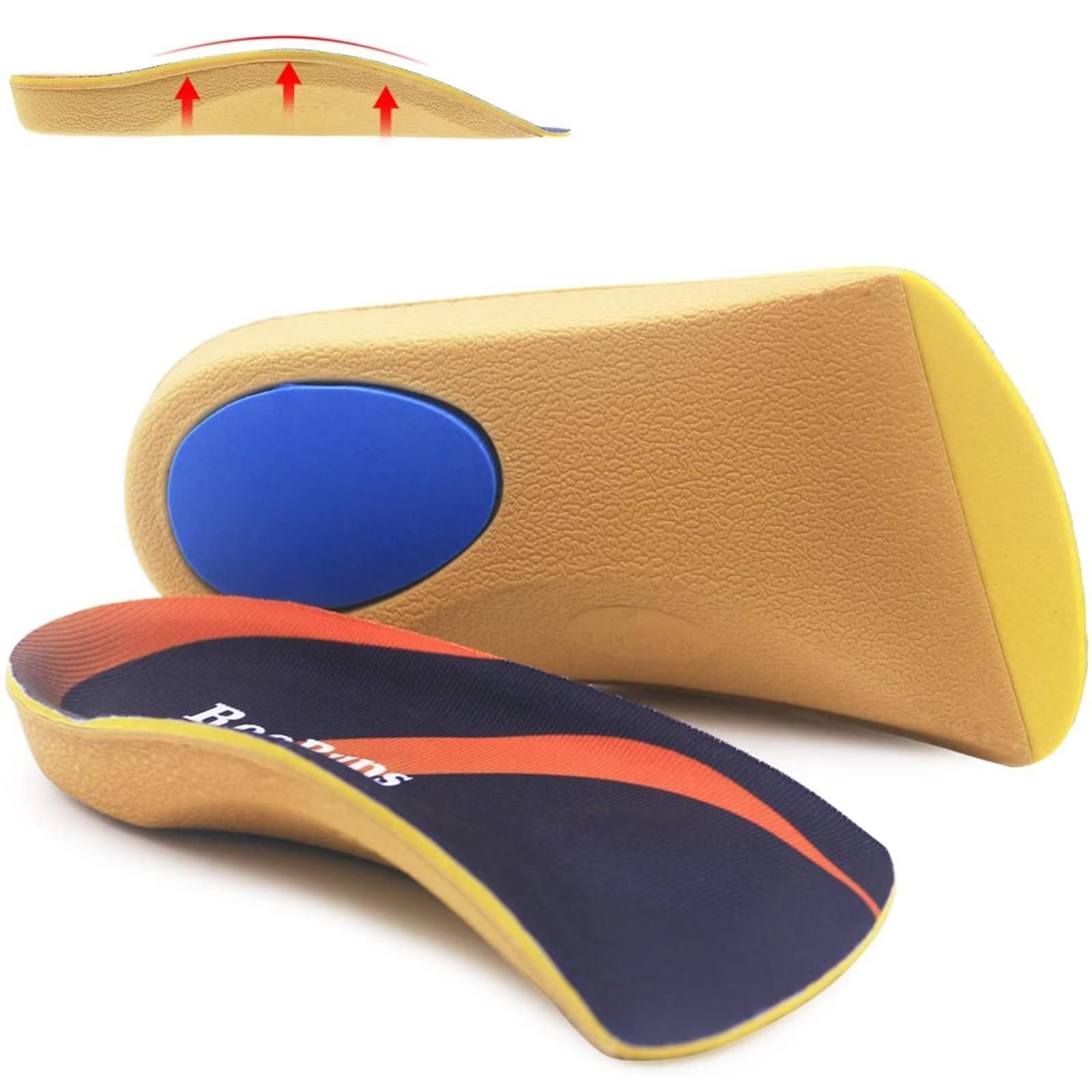
RooRuns delivers a well-rounded feature set at a mid-range point, making it a versatile choice for various activities. It combines a strong arch support with a built-in metatarsal pad and additional cushioning layers under the heel and forefoot. This “all-in-one” approach aims to address multiple common pain points simultaneously.
The support is firm and stabilizing, helping to control over-pronation, while the cushioning takes the edge off hard surfaces. The top fabric is soft and designed to reduce heat and friction, contributing to all-day comfort. Its balanced design means it performs reliably whether you’re walking, standing at work, or engaging in light exercise.
It’s a solid, no-fuss option for someone who wants more than a basic insert but isn’t dealing with severe, specific conditions requiring specialized orthotics. Users appreciate that it offers both the structure of a supportive orthotic and the comfort of added cushioning, fitting well into athletic shoes and casual footwear alike.
Why it’s great
- Excellent value with a combination of arch support, metatarsal pad, and cushioning.
- Firm support structure helps with alignment and fatigue reduction.
- Breathable top fabric enhances comfort for extended wear.
- Fits a wide variety of shoe types effectively.
Good to know
- The arch may be too pronounced for those with very low or flat arches initially.
- Cushioning may compress over many months of heavy use.
- As with many 3/4 designs, it can slide forward if not properly positioned.
9. PCSsole 3/4 Orthotics Shoe Insoles

PCSsole offers a distinctly firm, high-arch experience. With a pronounced 3.5cm arch made from dense EVA material, it’s designed for those who feel other insoles simply don’t lift their arch enough. This rigid support works to actively reposition the foot, reducing pressure on the heel and combating over-pronation and sup
The deep heel cup is notably structured, providing excellent rearfoot stability. This combination makes it particularly effective for those with high arches or moderate flat feet seeking significant correction. The material is hard to the touch, but users report that once weight-bearing, it provides a comfortable, supportive lift rather than a harsh pressure point. It’s a straightforward, no-frills orthotic that prioritizes biomechanical function over plush cushioning.
Why it’s great
- Pronounced, firm arch support ideal for high arches.
- Deep, stabilizing heel cup corrects over-pronation effectively.
- Dense EVA material is durable and maintains its shape.
- Provides immediate, noticeable arch lift and alignment.
Good to know
- The firmness requires a short adaptation period of 1-3 days.
- Can feel too wide for some narrow shoes.
- Minimal cushioning; focus is purely on structural support.
10. DR. POTTER+ 3/4 Orthotic Insoles

DR. POTTER+ addresses a common complaint: orthotics that are too narrow in the heel. This model offers a roomier design through the midfoot and heel, making it a standout option for those with wider feet or who find other brands pinch. The support is robust, featuring a high-density EVA arch and a structured deep heel cup that works to stabilize the foot and correct alignment.
An added gel layer at the bottom of the heel provides a secondary cushioning effect and helps keep the insole from sliding inside the shoe—a clever dual-purpose feature. The top layer is a breathable velvet material that adds to the comfort. Users with a combination of flat feet, plantar fasciitis, and width issues report significant relief, noting that the design doesn’t create new pain points along the sides of their feet.
Positioned as a value-conscious option with a lifetime warranty backing customer service, it’s a serious contender for those who need substantive support but have been sidelined by narrow-fitting orthotics. It effectively bridges the gap between budget and mid-range offerings.
Why it’s great
- Wider design accommodates broader feet comfortably.
- Combines firm arch support with a stabilizing heel cup.
- Integrated gel pad cushions heel and prevents slipping.
- Backed by a responsive lifetime warranty.
Good to know
- The 3/4 length means no cushioning for the ball of the foot/toes.
- May be too bulky for very sleek, low-volume shoes.
- Arch height is significant; may not suit very low arches initially.
11. Airplus Plantar Fascia Orthotic

The Airplus orthotic is the ideal entry point for anyone new to arch support or managing a tight budget. Don’t let its accessible cost fool you—it carries the APMA Seal of Acceptance, meaning it’s recognized by podiatrists as promoting foot health. Its design includes a supportive arch plate, a gel heel insert for cushioning, and a deep heel cup, all packaged in a slim foam shell.
It performs admirably for mild to moderate plantar fasciitis and general arch fatigue. The slim 3/4 profile allows it to fit into a wide array of shoes, from athletic sneakers to dress shoes and boots, without making them feel tight. Being FSA/HSA eligible adds to its value, allowing you to use pre-tax medical funds for the purchase.
While it may not have the multi-year durability or rigid correction of premium models, it provides legitimate, medically-recognized support that can offer substantial relief and serve as a perfect test to see if orthotics help your condition. For the cost, it’s an exceptionally capable product that proves effective support doesn’t have to be complicated or out of reach.
Why it’s great
- APMA certification ensures it meets podiatric standards for support.
- Includes key features: arch plate, gel heel, and deep heel cup.
- Extremely slim design fits almost any shoe style.
- Eligible for FSA/HSA funds, increasing its value.
Good to know
- The foam shell may compress and lose support faster than rigid models.
- Best for mild to moderate issues; may not suffice for severe correction.
- The top cover can be slippery in some shoe materials.
Understanding the Specs
Arch Support Rigidity
This is the cornerstone of function. Semi-Rigid supports (like polypropylene) offer a balance of comfort and correction, flexing slightly with your gait while maintaining structure. Rigid supports (often thermoplastic) provide maximum control for severe over-pronation or high arches but require a break-in period. Cushioned supports focus on shock absorption and are best for impact relief rather than mechanical correction.
Heel Cup Depth
A deep, contoured heel cup is non-negotiable for stability. It cradles the heel fat pad, minimizing side-to-side movement (pronation/supination) and aligning the Achilles tendon. This reduces strain on the plantar fascia and is critical for treating heel pain. Shallow cups offer less control and can allow the foot to slide, undermining the arch support’s effectiveness.
3/4 vs. Full Length
A 3/4 length ends just before the ball of the foot. This design is intentional: it provides targeted arch and heel support without crowding the toes, allowing for natural flexion and a better fit in shoes with limited volume (dress shoes, heels, boots). Full-length insoles offer forefoot cushioning but can make shoes feel tight and are often impossible to use if the factory insole isn’t removable.
Top Cover & Friction
The layer against your skin manages moisture, heat, and friction. Breathable, moisture-wicking fabrics like 4-way stretch nylon or velvet keep feet cooler and reduce blister risk. Leather, like in the Pedag, is durable and naturally temperature-regulating. Some smooth covers can be slippery in certain shoe linings, so a tacky or textured finish is preferable for security.
FAQ
How long does it take to get used to arch support insoles?
Can I use 3/4 insoles if my shoes have removable insoles?
What’s the difference between these and custom orthotics from a podiatrist?
How do I know if I need high arch or low arch support?
How often should I replace my orthotic insoles?
Final Thoughts: The Verdict
For most people, the best 3/4 arch support insoles winner is the PowerStep Pinnacle 3/4 because it delivers professional-grade support in a comfortable, low-profile design that fits the shoes you actually wear. If you want serious, alignment-focused correction, grab the Natural Foot Orthotics Stabilizer. And for ball-of-foot pain relief, nothing beats the specialized design of the Footlogics Metatarsalgia insole. Remember, effective support is an investment in your mobility—choose the structure your feet deserve.

Mo Maruf
I created WellFizz to bridge the gap between vague wellness advice and actionable solutions. My mission is simple: to decode the research and give you practical tools you can actually use.
Beyond the data, I am a passionate traveler. I believe that stepping away from the screen to explore new environments is essential for mental clarity and physical vitality.