Our readers keep the lights on and my smoothie glass nicely filled. As an Amazon Associate, I earn from qualifying purchases.
Choosing the right adult ADHD book can feel like a monumental task, especially when you’re already dealing with overwhelm and a sea of conflicting advice. The truth is, not all guides are created equal; some offer broad science, others focus on daily tactics, and a few provide deep emotional healing. This guide cuts through the noise, presenting only the most impactful, evidence-backed titles to help you understand your brain, develop practical strategies, and foster self-acceptance.
I’m Mohammad Maruf — the founder and writer behind WellFizz. My expertise lies in deep-dive market research, where I analyze thousands of data points, customer testimonials, and expert specifications to separate truly helpful resources from the rest. I focus on what the science and real-world feedback actually say, so you don’t have to.
By exploring the options below, you’ll find a book that resonates with your specific struggles, whether it’s emotional regulation, executive function, or relationship dynamics. Our carefully selected list helps you move from confusion to clarity about best adult adhd books.
How To Choose The Best Adult ADHD Book
Selecting a helpful ADHD book is less about finding the single “best” one and more about identifying the right tool for your current challenge. Think about what you need most right now: foundational knowledge, day-to-day systems, emotional validation, or help with a specific relationship. The following framework will help you narrow down your choice.
Identify Your Primary Need
Start by asking what you hope to gain. Are you newly diagnosed and seeking a broad, positive overview of ADHD? A comprehensive guide might be perfect. If you’re struggling with daily tasks like time management or organization, a skills-based workbook with exercises is more useful. For those dealing with shame, relationship strain, or gender-specific experiences, books focused on emotional healing and acceptance will provide the deepest relief.
Consider the Format and Approach
Your own learning style matters. Some books are dense with science and anecdotes, ideal for deep readers. Others use bullet points, short chapters, and workbook exercises designed for shorter attention spans. Consider whether you want a book to read cover-to-cover or one you can jump around in as needed. Also, note if the author has personal ADHD experience—this often translates to more relatable and practical advice.
Look for Actionable Strategies
A great ADHD book doesn’t just explain *why* you struggle; it gives you clear *how-to* steps. Look for books that provide specific frameworks, templates, or practices you can implement immediately. The most effective titles bridge the gap between neuroscience and real-life application, offering concrete ways to strengthen executive function, regulate emotions, and build supportive systems.
Quick Comparison
On smaller screens, swipe sideways to see the full table.
| Model | Type | Best For | Key Feature | Amazon |
|---|---|---|---|---|
| How to ADHD | Guide | Modern, visual learners | YouTube community wisdom | Amazon |
| The Smart but Scattered Guide to Success | Workbook | Executive function mapping | 12-skill assessment system | Amazon |
| The Couple’s Guide to Thriving with ADHD | Relationships | Partners & spouses | Dual-perspective solutions | Amazon |
| The Mindfulness Prescription for Adult ADHD | Program | Emotional regulation | 8-step mindfulness plan | Amazon |
| A Radical Guide for Women with ADHD | Workbook | Women’s unique experience | Acceptance & bold living | Amazon |
| Your Brain’s Not Broken | Guide & Workbook | Emotional navigation | Four-color task system | Amazon |
| Thriving with Adult ADHD | Skills Workbook | Building daily routines | Practical, list-based exercises | Amazon |
| You Mean I’m Not Lazy, Stupid or Crazy?! | Classic Self-Help | Newly diagnosed adults | Validation & foundational tips | Amazon |
| Driven to Distraction (Revised) | Foundational Guide | Comprehensive understanding | Case studies & action plans | Amazon |
| Dirty Laundry | Personal Narrative | Reducing shame & guilt | Dual ADHD/partner perspective | Amazon |
| ADHD 2.0 | Science & Strategies | Strengths-based perspective | Latest neuroscience updates | Amazon |
In‑Depth Reviews
1. How to ADHD: An Insider’s Guide to Working with Your Brain (Not Against It)
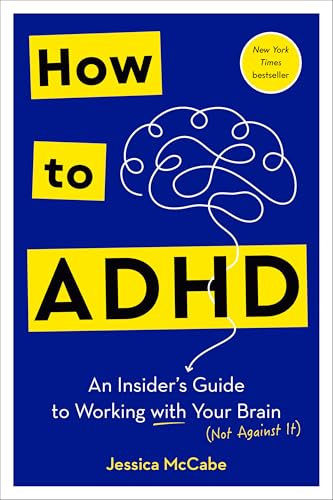
Jessica McCabe transforms her wildly popular YouTube channel into a tangible, expertly crafted guide that feels like a conversation with a wise friend who truly gets it. This book stands out for its intentional design, featuring ample white space, engaging visuals, and pull quotes from her community, making it exceptionally accessible for the ADHD brain. It’s not just a rehash of her videos; it’s a cohesive, empowering manifesto on embracing neurodiversity.
The content systematically covers the ADHD experience—from motivation and memory to emotional regulation and time management—but reframes challenges as differences to work with, not flaws to fight. McCabe’s personal journey from struggle to advocacy provides a powerful narrative backbone, offering both profound validation and a hopeful roadmap. She emphasizes creating environments that suit your brain, a shift from forcing yourself into neurotypical molds.
What makes this a top-tier choice is its balance of warmth, authority, and immediate utility. It respects your intelligence while acknowledging your struggles. The book leaves you with a powerful, actionable sense of self-acceptance and a toolkit of strategies, but perhaps more importantly, it leaves you feeling understood and empowered to advocate for your own needs in all areas of life.
Why it’s great
- Designed with ADHD readability in mind (short sections, visuals).
- Empowering, strengths-based perspective on neurodiversity.
- Packs a lifetime of personal and community wisdom into one guide.
- Offers highly practical, actionable advice for daily life.
Good to know
- As a premium option, it’s an investment.
- If you prefer traditional, text-heavy formats, the style may feel too casual.
2. The Smart but Scattered Guide to Success
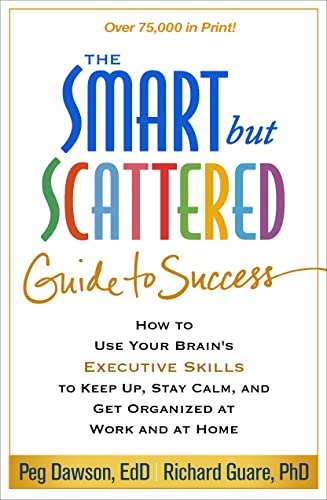
This book is the definitive manual for anyone who needs to move beyond generic advice and get a precise diagnostic of their executive skill profile. The authors break down life management into 12 core executive skills, such as task initiation, sustained attention, and emotional control. The initial self-assessment is revelatory, helping you pinpoint exactly which skills are strengths and which are lagging, preventing you from wasting energy on the wrong fixes.
Unlike many books that offer one-size-fits-all tips, this guide provides tailored strategies for each specific skill deficit. It respects your intelligence by offering a structured, almost clinical framework that you can adapt, which many adults with ADHD find refreshing and empowering. The approach is compassionate but no-nonsense, filled with real-world examples and downloadable planning forms that translate theory into immediate action.
It’s particularly effective for adults who are high-performing in some areas but mystified by their struggles in others. By mapping your executive function landscape, the book gives you the language and the tools to systematically build scaffolding where you need it, leading to tangible improvements in both work and home life without a condescending tone.
Why it’s great
- Provides a personalized framework via the 12-skill assessment.
- Offers highly specific strategies for each identified weakness.
- Written with a respectful, adult-oriented tone.
- Comes with practical, printable planning tools.
Good to know
- The structured approach requires time and commitment to implement fully.
- Can feel somewhat clinical for readers seeking emotional validation first.
3. The Couple’s Guide to Thriving with ADHD
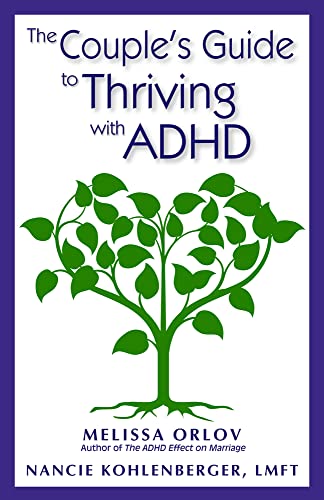
Written from the unique dual perspective of a non-ADHD partner (Melissa Orlov) and an ADHD expert (Dr. Ned Hallowell), this book is a lifeline for relationships strained by misunderstanding and frustration. It moves beyond simply explaining ADHD symptoms to offering a clear, hopeful, and practical roadmap for rebuilding connection and partnership. The book avoids blame, framing ADHD as a shared challenge to be managed together.
The guide is organized around common conflict areas—like communication, household responsibilities, and intimacy—and provides concrete exercises and scripts for both partners. It emphasizes the importance of the non-ADHD partner understanding the neurological underpinnings of behaviors, while the ADHD partner learns actionable skills for follow-through. This balanced approach fosters empathy and replaces cyclical arguments with cooperative problem-solving.
What sets it apart is its forward-looking optimism. It doesn’t just diagnose problems; it provides the tools to create a “better-than-normal” relationship where differences are understood and strengths are leveraged. For couples ready to do the work, this book can transform dynamics from resentful to resilient.
Why it’s great
- Written for both partners, fostering mutual understanding.
- Provides specific dialogue scripts and joint exercises.
- Focuses on building a stronger relationship, not just managing symptoms.
- Offers a hopeful, solution-oriented tone.
Good to know
- Requires buy-in and active participation from both people in the relationship.
- Some readers may want more content dedicated to the sexual dynamics of ADHD.
4. The Mindfulness Prescription for Adult ADHD
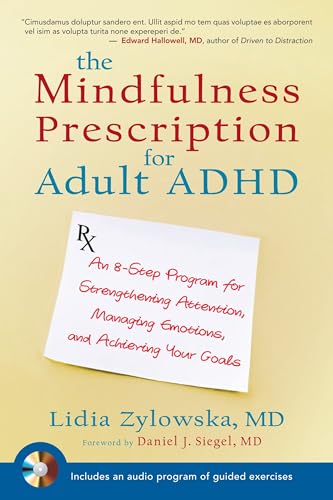
Dr. Lidia Zylowska presents a groundbreaking, evidence-based approach that treats mindfulness as a core skill for managing ADHD, not just an add-on. This book is an 8-step program designed to strengthen attention, manage impulsivity, and regulate the intense emotions that often accompany ADHD. It bridges the gap between ancient practice and modern neuroscience in a highly accessible way.
The program starts simple, with basic breath awareness, and gradually builds to include mindful listening, dealing with distractions, and applying mindfulness to daily activities. The included guided audio exercises are invaluable, providing the necessary structure for beginners. Dr. Zylowska writes with clarity and compassion, using research and patient stories to illustrate how mindfulness literally changes brain function related to focus and emotional control.
This is the ideal resource for those who have tried traditional organizational strategies but still feel at the mercy of their racing thoughts and reactions. It offers a way to develop an inner “pause button,” creating space between stimulus and response that is often missing in the ADHD experience. It’s a complementary practice that can enhance the benefits of other treatments or stand on its own.
Why it’s great
- Structured, gradual program with guided audio support.
- Strong scientific foundation for using mindfulness with ADHD.
- Directly targets emotional dysregulation and reactivity.
- Can be used alongside medication or other therapies.
Good to know
- Requires consistent daily practice to see benefits.
- The mindfulness approach may not appeal to those seeking quick, tactical fixes.
5. A Radical Guide for Women with ADHD
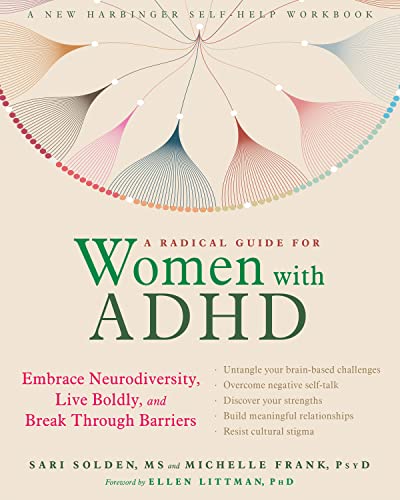
Sari Solden and Michelle Frank address the often-overlooked experience of women with ADHD, where symptoms like inattentiveness and internal restlessness are frequently missed or misdiagnosed. This is not a typical self-help book; it’s a radical workbook focused on self-acceptance and breaking free from the shame of not meeting societal expectations. It challenges you to move from masking and trying to be “normal” to living boldly as your authentic self.
The book is filled with thought-provoking exercises, journaling prompts, and reflections designed to help you unpack a lifetime of internalized messages about productivity, worth, and femininity. It validates the unique struggles women face—from hormonal fluctuations impacting symptoms to the intense pressure to manage households and careers seamlessly—while celebrating the creativity, empathy, and divergent thinking that often accompany ADHD in women.
Its greatest strength is its transformative potential. By working through the exercises, you’re guided to reframe your narrative, identify your strengths, and build a life that works *with* your neurodivergent brain, not against it. It’s a powerful tool for healing and empowerment.
Why it’s great
- Addresses gender-specific challenges and late diagnosis.
- Powerful workbook format promotes active self-discovery.
- Focuses on radical self-acceptance over behavior modification.
- Written by leading experts in women and ADHD.
Good to know
- Requires active engagement with writing exercises to get full value.
- Less focused on day-to-day organizational tactics.
6. Your Brain’s Not Broken

Dr. Tamara Rosier writes with the dual authority of a clinician and someone who lives with ADHD. Her central, reassuring message is right in the title: your brain isn’t broken; it works differently. This book excels at explaining the “why” behind emotional dysregulation—the intense feelings, rejection sensitivity, and overwhelm—and provides a clear, compassionate framework for managing it.
A standout feature is the “Four Color” system for categorizing tasks based on the mental energy they require, a tool many readers find immediately transformative for managing their day. Dr. Rosier blends psychological insight with practical strategies, helping you understand your emotional patterns and then giving you steps to navigate them more effectively. The tone is consistently hopeful and empowering.
While the book incorporates the author’s Christian faith in some sections, the core strategies and psychological insights are universally applicable. It’s an excellent choice for anyone who feels ruled by their emotions and is looking for a kind, knowledgeable guide to help regain a sense of control and self-compassion.
Why it’s great
- Excellent, clear explanation of ADHD-related emotional dysregulation.
- Provides highly practical tools like the Four Color task system.
- Written with deep personal and professional understanding.
- Empowering and compassionate tone throughout.
Good to know
- Contains some Christian references, which may not resonate with all readers.
- Focus is more on emotional management than organizational systems.
7. Thriving with Adult ADHD

This is the quintessential “get things done” workbook for ADHD. Author Phil Boissiere, MFT, strips away theory and delivers concise, bullet-pointed skills and exercises aimed directly at strengthening executive functioning. The book is organized around core challenges like procrastination, distraction, and planning, with each section ending in actionable “takeaways” and practice exercises.
Its greatest strength is its ADHD-friendly format: short, digestible sections with clear headings and lots of lists. It respects the reader’s potential for distraction by making it easy to jump in, absorb a useful tactic, and apply it without wading through lengthy prose. The exercises are designed to help you build rituals and routines, which are foundational for creating external structure when internal structure is lacking.
This is a perfect entry-level, mid-range option for someone who wants to start making practical changes today. It’s like having a patient, knowledgeable coach in book form, providing the scaffolding to help you build better habits one manageable step at a time.
Why it’s great
- Extremely practical and focused on immediate skill-building.
- Format is ideal for shorter attention spans (lists, bullet points).
- Each chapter ends with clear takeaways and exercises.
- Excellent value for a hands-on workbook.
Good to know
- Light on the “why” and deeper emotional exploration.
- The conversational tone in some passages may feel overly simplistic to some.
8. You Mean I’m Not Lazy, Stupid or Crazy?!
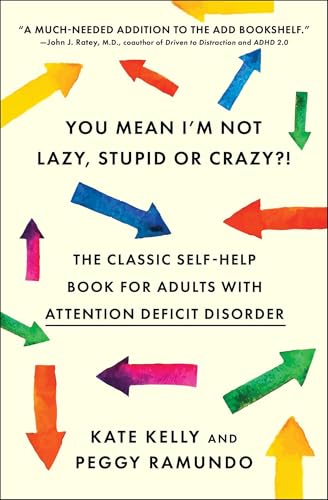
This title alone has provided profound relief to generations of adults discovering their ADHD. As a classic in the field, it serves as a compassionate, comprehensive introduction to adult ADHD. The book meticulously dismantles the damaging labels—lazy, stupid, crazy—that so many undiagnosed adults have internalized, replacing them with understanding and validation.
It covers the full spectrum of the adult ADHD experience, from diagnosis and treatment options to managing relationships and work. The authors write in a reassuring, clear style, using relatable anecdotes and explanations that make complex concepts accessible. For anyone who has spent a lifetime feeling like a mystery to themselves, this book acts as a mirror, reflecting back experiences they thought were unique failings.
While some of the specific resource references may feel dated, the core message of validation and the foundational knowledge it provides remain timeless and powerful. It’s often the first book recommended for a reason: it heals the heart while informing the mind.
Why it’s great
- The title and message offer immediate, powerful validation.
- Comprehensive overview of adult ADHD, ideal for the newly diagnosed.
- Warm, reassuring, and easy-to-understand writing style.
- A time-tested, beloved classic in the ADHD community.
Good to know
- Some content and resources may feel slightly outdated compared to newer books.
- Less focused on cutting-edge neuroscience or specific skill-building systems.
9. Driven to Distraction (Revised)

Dr. Edward Hallowell’s seminal work, now revised, is often considered the book that brought adult ADHD into public awareness. It remains a masterful exploration of the condition through compelling case studies that readers see themselves in. Hallowell’s great gift is his ability to blend medical authority with profound empathy, having ADHD himself.
The book provides a deep, nuanced understanding of how ADHD manifests across the lifespan, in work, school, and relationships. It’s rich with stories that illustrate the vast spectrum of ADHD presentations, which helps readers recognize subtler symptoms they may have dismissed. Each section concludes with concrete action plans and management tips, making the insights practical.
This is the book to read for a thorough, authoritative, and humanizing education on ADHD. It provides the “big picture” context that makes more focused, strategy-based books make greater sense. While it’s a denser read than some modern guides, the depth and wisdom it offers are unparalleled.
Why it’s great
- Authoritative, foundational text by a leading expert with ADHD.
- Uses relatable case studies to illustrate a wide range of symptoms.
- Provides both deep understanding and practical management plans.
- The revised edition updates the classic with current information.
Good to know
- The narrative, case-study format is longer and denser than more modern, concise guides.
- Some may find it less immediately actionable than pure skill-workbooks.
10. Dirty Laundry: Why Adults with ADHD Are So Ashamed
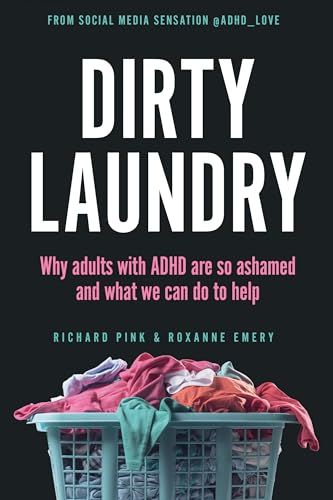
Born from the popular social media presence of ADHD couple Rich and Rox, this book tackles the pervasive sense of shame with disarming humor and raw honesty. Each chapter addresses a common “dirty laundry” issue—like losing things, emotional outbursts, or forgetfulness—from both the ADHD and the partner’s perspective. This dual narration is its genius, providing instant validation for the ADHD reader while offering clarity and compassion to their loved ones.
The tone is conversational, kind, and frequently funny, making heavy topics feel manageable and less isolating. It normalizes experiences that many with ADHD have hidden in shame, effectively saying, “You’re not alone, and this isn’t a moral failing.” The book is short, visually engaging, and broken into tiny sections, making it incredibly easy to read even for those who struggle to finish books.
This is less a book of complex strategies and more a powerful tool for emotional relief and relationship repair. It’s perfect for passing to a partner or family member who wants to understand but doesn’t know where to start, or for anyone with ADHD who needs to replace self-criticism with self-acceptance through shared experience.
Why it’s great
- Dual-perspective format builds incredible empathy and understanding.
- Addresses shame directly with humor and normalization.
- Very short, accessible, and designed for the ADHD attention span.
- Excellent for sharing with partners or family.
Good to know
- Light on detailed, step-by-step management strategies.
- The very casual, social-media-style tone might not appeal to everyone.
11. ADHD 2.0

Drs. Hallowell and Ratey return with an updated take on their classic work, incorporating the last decade of neuroscience and a more pronounced strengths-based lens. “ADHD 2.0” introduces helpful contemporary frameworks like the “VAST” model (Variable Attention Stimulus Trait) and emphasizes concepts like the “interest-based nervous system.” The core message is affirming: ADHD is not a deficit but a different brain wiring with significant potential.
The book is packed with the latest research on how exercise, nutrition, connection, and sleep directly impact the ADHD brain, alongside discussions on medication and therapy. It maintains the authors’ signature engaging, story-driven style, making complex science relatable. The strategies offered are broad but practical, focusing on harnessing the positive traits of creativity, energy, and hyperfocus while managing the challenges.
This is an excellent choice for those who have some baseline knowledge of ADHD and want a refreshed, optimistic, and science-forward perspective. It feels like a hopeful conversation with a wise, encouraging doctor who truly believes in your potential to thrive, not just cope.
Why it’s great
- Presents cutting-edge neuroscience in an accessible way.
- Unwaveringly positive, strengths-based approach.
- Integrates lifestyle factors (sleep, diet, exercise) into management.
- Written by trusted, foundational voices in the field.
Good to know
- Some readers find the extremely positive tone minimizes severe struggles.
- The discussion of medication side effects is considered too light by some.
Understanding the Specs
When evaluating adult ADHD books, think beyond the title. The real “specifications” are found in the author’s approach, the book’s structure, and its intended outcome. Here’s how to decode what you’re really getting.
Author Perspective & Credibility
This is crucial. Books written by clinicians (psychologists, psychiatrists) offer research-backed frameworks and clinical wisdom. Those written by individuals with lived ADHD experience provide unparalleled relatability and “hacks” forged in real life. The most powerful titles often combine both, like a clinician who also has ADHD. Check the author’s background to align the book’s authority with your trust criteria.
Format & Cognitive Load
ADHD-friendly formatting is a non-negotiable spec. Look for books that use short chapters, bullet points, clear headings, white space, and visual elements. Workbooks with exercises demand active participation but can lead to deeper integration. Dense, narrative-heavy texts might offer profound insights but require more sustained focus. The right format minimizes frustration and maximizes your ability to engage with and retain the material.
FAQ
What is the best adult ADHD book for someone just diagnosed?
Are ADHD workbooks actually helpful or just more unfinished projects?
My partner has ADHD. Which book should I read?
Can books really help if I’m already on medication?
Final Thoughts: The Verdict
For most people, the best adult adhd books winner is the How to ADHD because it masterfully blends modern design, community wisdom, and empowering strategies into the most accessible and comprehensive guide available. If you want a systematic, clinical approach to mapping and fixing your executive function, grab the Smart but Scattered Guide. And for couples seeking to transform relationship strain into understanding, nothing beats the Couple’s Guide to Thriving with ADHD.

Mo Maruf
I created WellFizz to bridge the gap between vague wellness advice and actionable solutions. My mission is simple: to decode the research and give you practical tools you can actually use.
Beyond the data, I am a passionate traveler. I believe that stepping away from the screen to explore new environments is essential for mental clarity and physical vitality.