Our readers keep the lights on and my smoothie glass nicely filled. As an Amazon Associate, I earn from qualifying purchases.
When a cardiac emergency strikes in a school, every second counts. Having the right equipment—and knowing how to use it—can mean the difference between life and death. This guide cuts through the noise to help you build a truly effective emergency response plan.
I’m Mohammad Maruf — the founder and writer behind WellFizz. For over a decade, I’ve specialized in dissecting product specifications and market data for wellness and safety gear, translating complex features into clear, actionable insights for institutions.
This resource is the culmination of deep-dive analysis into device capabilities, durability, and real-world application in educational settings. My goal is to equip you with the knowledge to select a solution that offers both reliability and peace of mind for your specific campus needs, from training to actual emergency response with the best aed for schools.
How To Choose The Best Aed For Schools
Selecting emergency equipment for a school isn’t just about buying a device; it’s about building a system of readiness. You need to consider not only the primary defibrillator but also the training tools and storage that support its effective use. The right choice balances immediate lifesaving potential with long-term practicality for staff and students.
Primary Device vs. Training Tools
Your first decision is between a live Automated External Defibrillator (AED) for actual emergencies and an AED trainer for instruction. A real AED is non-negotiable for any school’s emergency response plan; it’s the device that delivers a shock to restart a heart. Training devices, on the other hand, are for practice—they simulate the process without delivering any charge. A comprehensive program needs both: a reliable, easy-to-use live AED placed strategically on campus, and affordable trainers for regular CPR/AED certification classes.
Durability and Ease of Use
In a high-stress emergency, clarity is everything. Look for a live AED with intuitive, step-by-step voice prompts that guide even untrained users. It should perform automatic self-tests and have a long-lasting battery. For trainers, prioritize durable construction and reusable pads to withstand frequent classroom use. Storage cabinets should be sturdy, offer clear visibility of the device, and allow for rapid access without complicated locks.
Supplementary Readiness
An AED is most effective when combined with high-quality CPR. Having barrier devices like CPR masks readily available encourages bystanders to act safely. Consider stocking individual mask kits for key staff or students in high-risk areas like gyms, as well as bulk supplies like gauze for general first aid stations. This layered approach ensures you’re prepared for the full scope of a cardiac emergency response.
Quick Comparison
On smaller screens, swipe sideways to see the full table.
| Model | Type | Best For | Key Feature | Amazon |
|---|---|---|---|---|
| Philips HeartStart OnSite | Live AED | Actual emergency response | SMART Analysis, pre-installed kit | Amazon |
| American Red Cross AED Trainer | Training Device | Official certification classes | 4-pack kit, multi-language | Amazon |
| Prestan Ultratrainer | Training Device | Portable, frequent training | Integrated pad sensors, durable pads | Amazon |
| WNL Practi-Trainer | Training Device | Cost-effective classroom training | Reusable pads, AHA compliant | Amazon |
| XFT-120NB AED Trainer | Training Device | Beginner-friendly instruction | 5 scenarios, 4 languages | Amazon |
| AdirMed AED Cabinet | Storage | Secure, visible wall mounting | Steel construction, large window | Amazon |
| Universal AED Cabinet | Storage | Basic, budget-friendly storage | Snap lock, universal fit | Amazon |
| Adult & Infant CPR Mask Kit | CPR Accessory | Comprehensive rescue kits | 4-pack with adult & infant masks | Amazon |
| DMSKY Gauze Rolls | First Aid Supply | Bulk wound care supplies | 90-pack, individually wrapped | Amazon |
| Archer MedTech CPR Mask | CPR Accessory | Personal, on-the-go readiness | 12-pack keychain shields | Amazon |
| Ever Ready CPR Rescue Mask | CPR Accessory | Entry-level barrier device | Hard case with gloves & wipes | Amazon |
In‑Depth Reviews
1. Philips HeartStart OnSite AED Defibrillator
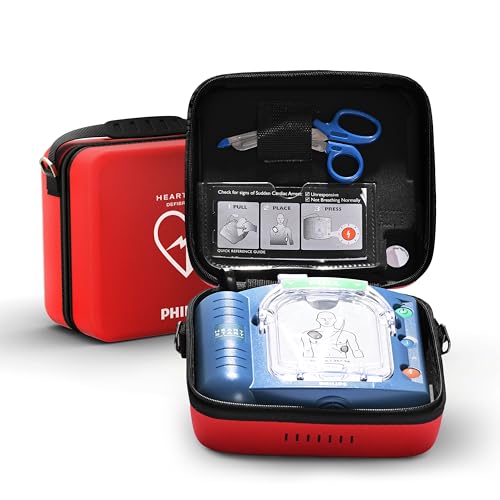
The Philips HeartStart OnSite is the cornerstone of any serious school safety plan. This isn’t a trainer; it’s a fully functional, FDA-cleared defibrillator designed for real cardiac emergencies. Its standout feature is the SMART Analysis technology, which assesses the heart’s rhythm and advises a shock only if needed, paired with a Quick Shock capability that can deliver therapy in seconds.
From a school administrator’s perspective, its daily, weekly, and monthly automatic self-tests are a major advantage, eliminating manual checks and providing confidence that the device is always rescue-ready. The Ready-Pack includes everything pre-installed in a carry case—AED, battery, and spare pads—making initial setup virtually non-existent.
User guidance is exceptionally clear, with calm, step-by-step voice commands and pictorial aids that talk a responder through CPR and defibrillation, even if they’ve never seen the device before. While it represents a significant investment, it’s a premium, set-and-forget solution that offers unparalleled reliability for the moment it’s needed most.
Why it’s great
- True lifesaving device with advanced rhythm analysis.
- Extensive automatic self-testing for constant readiness.
- Extremely intuitive with clear audio and visual prompts.
- Comes as a complete, pre-configured kit.
Good to know
- A premium option that requires a dedicated budget.
- Pads and battery have expiration dates requiring periodic replacement.
2. American Red Cross AED Trainer (4-Pack)
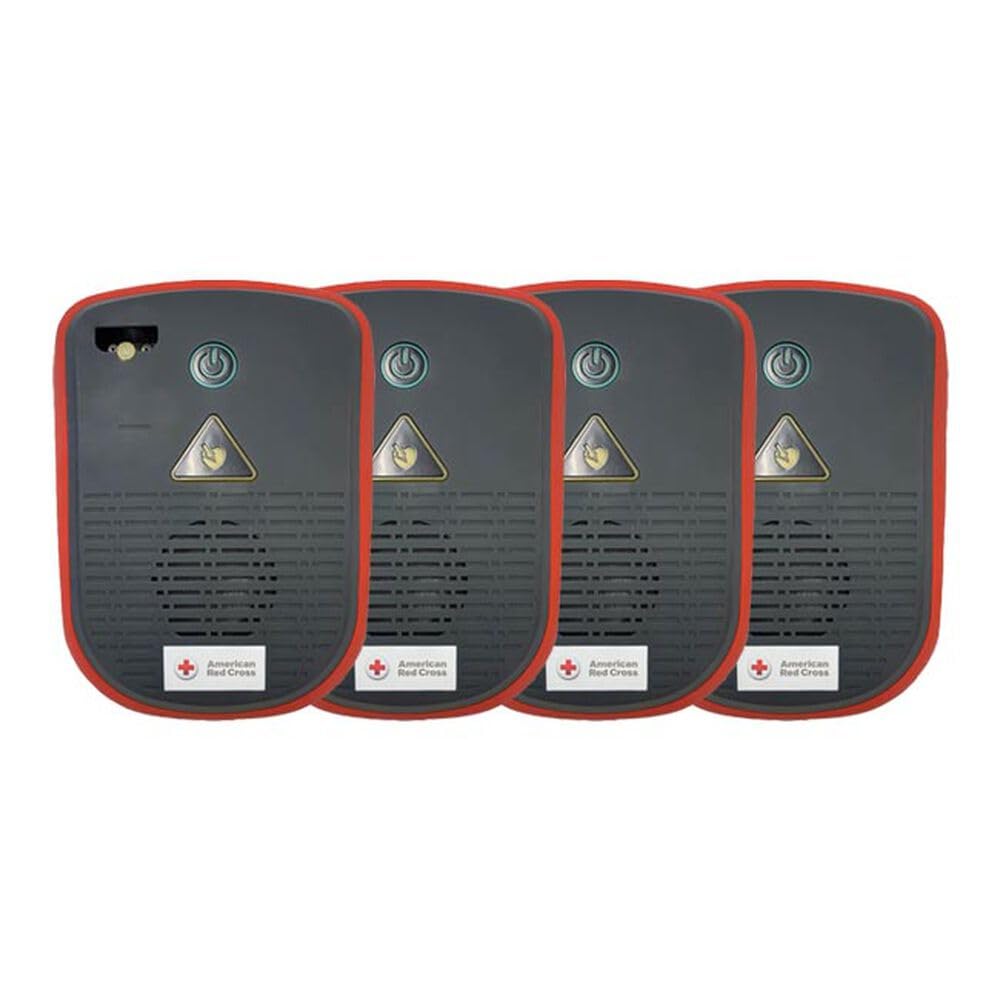
For schools running official Red Cross certification courses or frequent large-group trainings, this 4-pack trainer kit is a powerhouse. The package efficiency is its main draw, providing four complete training units with cases, making it easy to equip multiple small groups simultaneously without sharing devices.
Each unit offers the familiar Red Cross training protocol, with voice prompts in English and Spanish, a metronome for compression pacing, and five different training scenarios. The inclusion of both adult and child gel-adhesive training pads in each kit mirrors real-world preparedness, allowing students to practice pad placement for different age groups.
The clam-shell nylon cases are water-resistant and robust, ideal for storing in a curriculum closet or being carried by instructors. This kit represents a significant volume purchase, but for an institution committed to certifying many staff members per session, the per-unit cost and convenience are compelling.
Why it’s great
- Efficient 4-pack ideal for high-volume certification classes.
- Includes both adult and child training pads in each unit.
- Familiar Red Cross training protocol with dual language support.
- Comes with protective carrying cases and batteries.
Good to know
- The adhesive on training pads may weaken after many uses.
- Primarily valuable for institutions with a high training throughput.
3. Prestan Ultratrainer AED
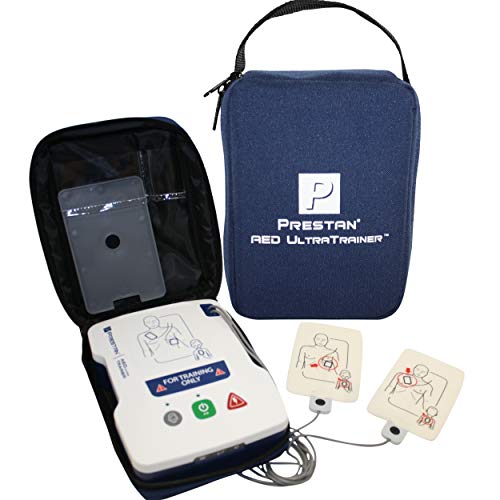
The Prestan Ultratrainer stands out for its clever, durable design that enhances the training experience. Its key innovation is the integrated sensor in the training pads, which detects proper placement on a manikin’s torso before allowing the simulation to proceed. This provides invaluable immediate feedback to students.
Despite its compact size—significantly smaller than a real AED—it doesn’t sacrifice functionality. It features five training scenarios, adult/child mode selection, and language options. The pads are notably durable, rated for 25-30 uses, and leave no messy residue on manikins, simplifying cleanup between classes.
For CPR instructors who travel between schools or need to store many units, its portability is a major benefit. While its small form factor differs from full-size devices, its robust construction and smart feedback mechanisms make it a highly effective and long-lasting training tool.
Why it’s great
- Pad sensors provide real-time feedback on correct placement.
- Extremely durable, reusable pads with high use count.
- Very portable and lightweight for instructors on the move.
- Clean operation with no sticky residue left behind.
Good to know
- Compact size may not fully replicate the feel of a bulkier real AED.
- Sensor placement can be tricky on certain infant manikin models.
4. WNL Products Practi-Trainer Essentials
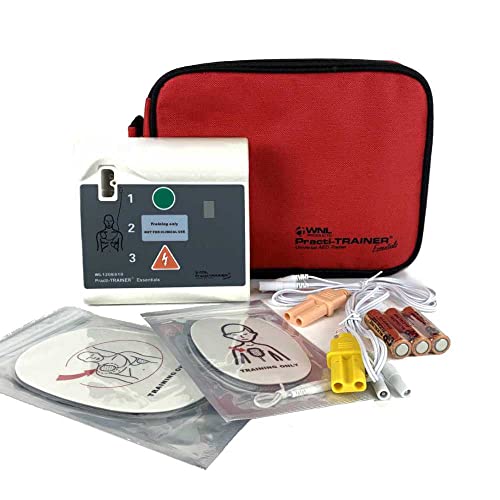
The WNL Practi-Trainer is a workhorse in the world of AED instruction, offering exceptional longevity and value. It’s fully compliant with AHA guidelines and provides a realistic simulation with voice prompts, a metronome, and multiple scenarios (automatic and semi-automatic).
Its greatest strength is long-term cost-effectiveness. The reusable adult and child training pads are incredibly durable, often lasting for years of frequent class use, as noted by many instructor reviews. The unit itself is also robust, with a simple interface and reliable performance that stands up to the rigors of classroom handling.
It comes as a complete kit with a nylon carrying case, making it a ready-to-go solution for any school’s CPR program. For institutions looking to establish or expand a training program without a recurring replacement budget, this model delivers reliable performance over a remarkably long lifespan.
Why it’s great
- Outstanding durability and pad life for long-term value.
- Simple, reliable operation that aligns with AHA protocols.
- Complete kit includes reusable pads and a carrying case.
- Proven track record with CPR instructors over many years.
Good to know
- A more basic model without some advanced feedback features.
- Graphics on pads may fade with extensive use over time.
5. XFT-120NB AED Trainer Set
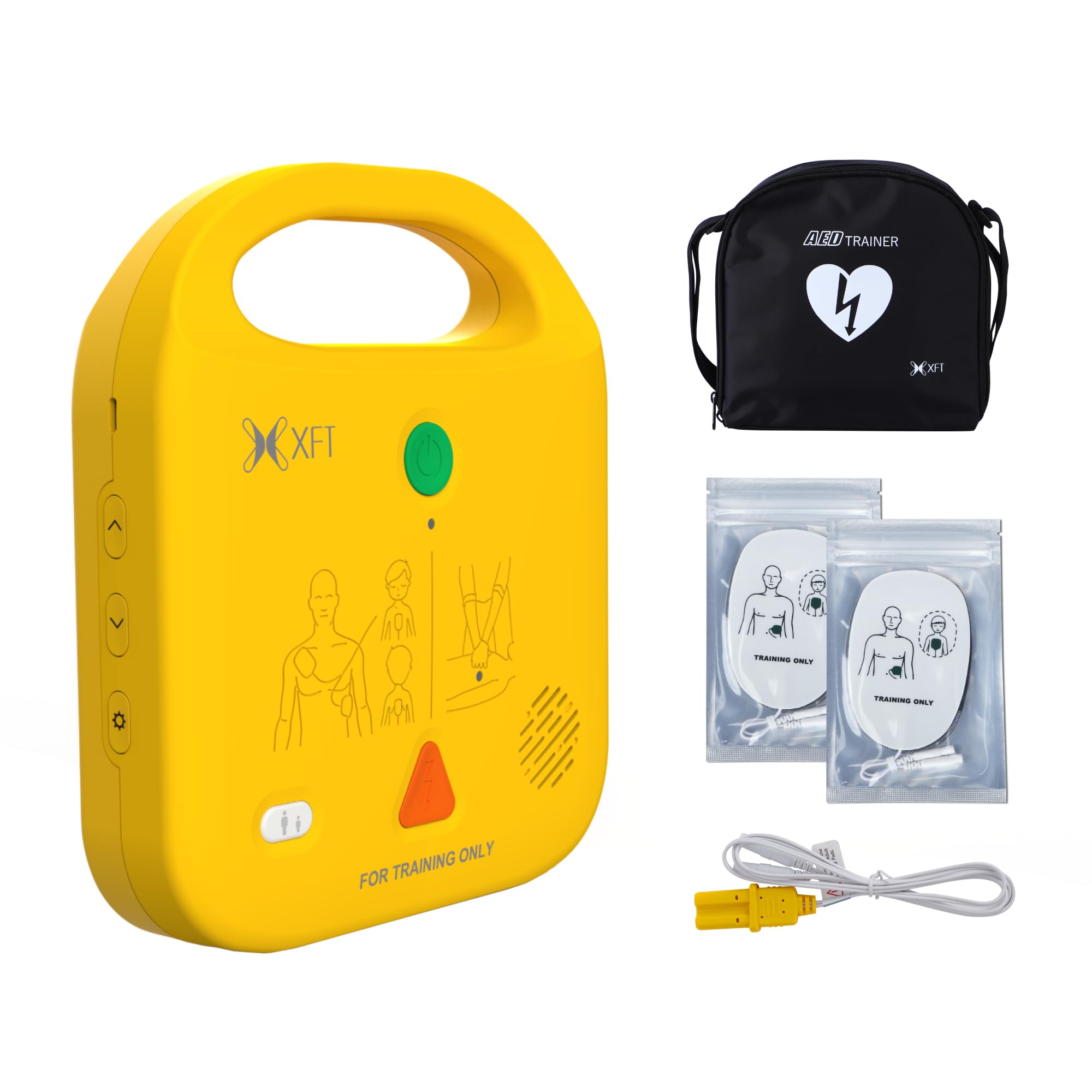
This compact trainer is designed to make AED instruction accessible and straightforward, especially for those new to the process. It features five pre-programmed realistic emergency scenarios and voice prompts in four languages (English, Italian, French, Spanish), which is unique at its price point.
A helpful feature for beginners is the configuration saving function; the device remembers your last selected training mode (CPR ratio, language, volume), so you don’t have to reset it each time. The real-time voice feedback guides users through each step, and the compression metronome can be adjusted or turned off as needed.
While its small size is its most noticeable trait, it performs all the core functions of a larger trainer. The included pads are notably sticky and effective for practice. It’s an excellent, budget-conscious choice for introducing AED concepts in health classes or for supplemental practice stations during larger trainings.
Why it’s great
- Voice prompts in four languages increase accessibility.
- Remembers your settings for convenient repeated use.
- Very sticky training pads that adhere well to manikins.
- Includes a storage shoulder bag for portability.
Good to know
- Its small size may not feel as realistic as bulkier models.
- Designed for training only, with no shock delivery capability.
6. AdirMed AED Cabinet

Proper storage is critical for AED accessibility and protection, and the AdirMed cabinet strikes an excellent balance of sturdiness and simplicity. Made from quality alloy steel, it feels substantial and durable, designed to withstand years of use in a high-trapublic hallway. Its large, clear window allows for immediate visual identification of the AED inside, which is crucial during an emergency.
The door features a simple pull-latch handle that opens with one smooth motion—no fumbling with keys or complex mechanisms when seconds count. The interior is spacious enough to hold not just the defibrillator but also additional supplies like a CPR mask or gloves. For schools that prefer a non-alarmed cabinet to avoid false alerts during monthly checks, this is a top-tier choice.
The build quality is consistently praised in reviews, with notes about easy installation and a strong magnetic closure. It offers professional-grade protection and visibility without unnecessary complexity, making it a reliable long-term home for your lifesaving equipment.
Why it’s great
- Sturdy steel construction built to last in public spaces.
- Large clear window for instant AED identification.
- Easy-open latch allows for rapid access in a crisis.
- Spacious interior can hold extra emergency supplies.
Good to know
- Does not include an alarm for security against theft.
- Requires secure wall mounting into studs for proper installation.
7. Universal AED Cabinet Wall Mount

This universal cabinet offers a no-frills, functional approach to AED storage. Its primary advantage is compatibility; it’s designed to fit most common AED brands, providing a basic layer of protection and a designated, visible spot for the device.
The snap lock is a thoughtful feature—it secures the door lightly but can be popped open instantly under pressure, eliminating any hesitation during an emergency retrieval. The red labeling and icons clearly mark it as an emergency equipment cabinet, which helps with quick location.
While the materials and finish may not feel as heavy-duty as some premium options, it performs its core function reliably. For schools needing multiple cabinets on a tighter budget or for lower-traffic areas, this represents a solid, entry-level solution that gets the job done.
Why it’s great
- Universal fit accommodates a wide range of AED models.
- Simple snap lock allows for very fast emergency access.
- Clear emergency labeling for easy identification.
- A cost-effective way to properly store an AED.
Good to know
- Construction may be lighter than more expensive cabinets.
- Some units may not include a door alarm as expected.
8. Adult and Infant CPR Mask Combo Kit (4-Pack)
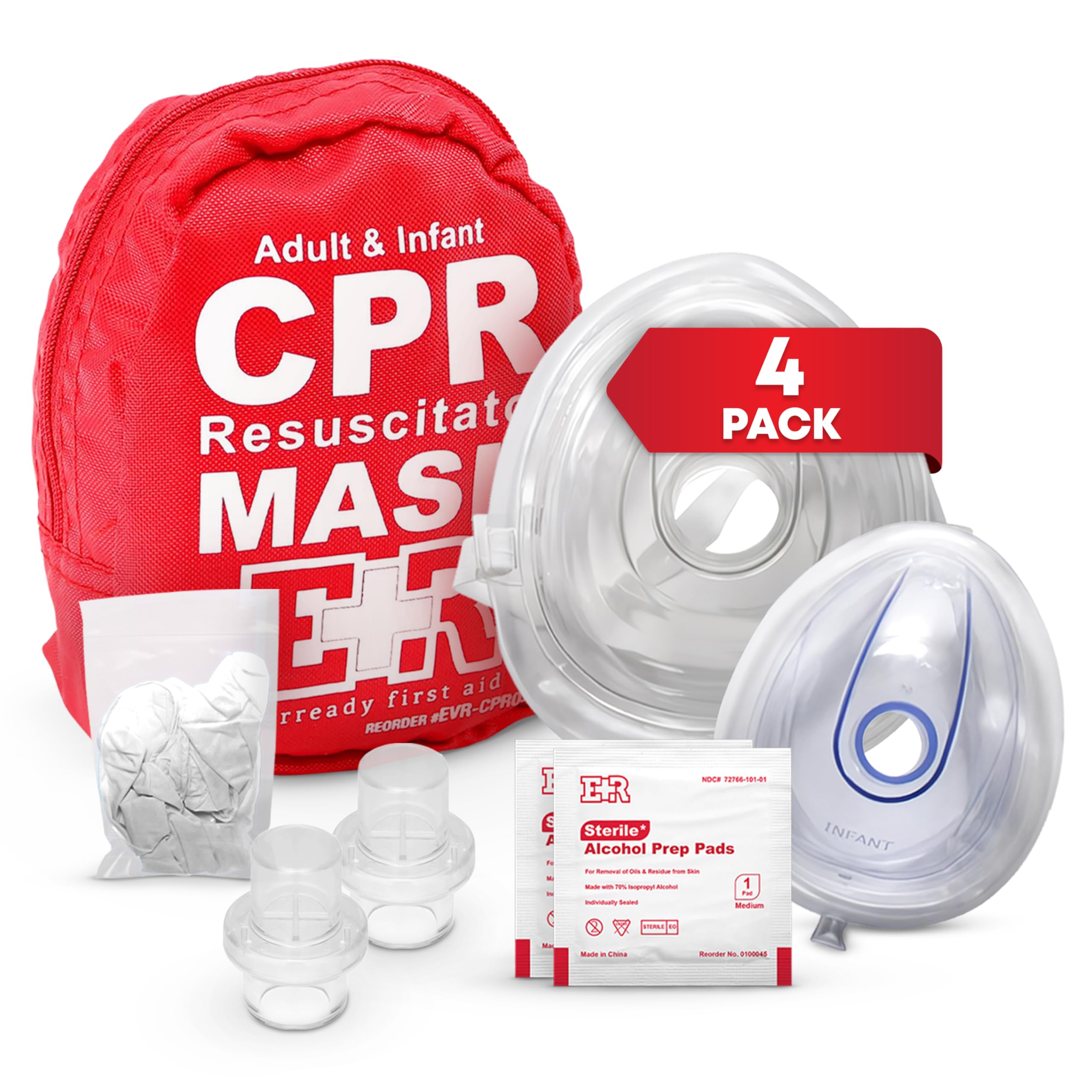
This comprehensive kit addresses a critical need in schools: being prepared for cardiac emergencies involving individuals of any age. Each of the four sets includes both an adult and an infant CPR mask, along with gloves and antiseptic wipes, creating a complete barrier device station.
The inclusion of infant-sized masks is particularly valuable for schools with nurseries, daycares, or early childhood programs. The one-way valve and latex-free design provide essential protection for the rescuer, and the elastic head strap allows for a hands-free, secure seal—a significant advantage during prolonged rescue efforts.
Packaged in individual red pouches with Velcro handles, these kits can be attached to belts, backpacks, or wall hooks near AEDs. For a school nurse’s office, athletic trainer’s bag, or main office, having these ready-to-go kits strategically placed complements your AED program perfectly.
Why it’s great
- Includes both adult and infant masks in each kit.
- Four complete sets allow for multiple strategic placements.
- Elastic head strap enables a secure, hands-free fit.
- Portable pouches with Velcro for easy attachment.
Good to know
- Masks are typically single-use items per emergency.
- Requires proper user training for effective deployment.
9. DMSKY Gauze Rolls (90 Pack)
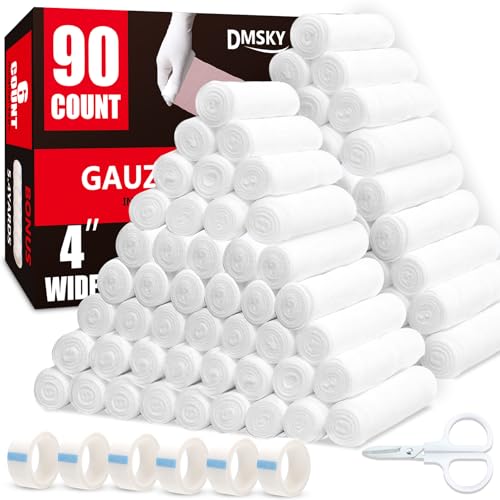
While not directly related to cardiac arrest, a well-stocked first aid supply is a cornerstone of school safety. This bulk pack of 90 gauze rolls is an economical way to ensure you have ample material for wound care, which remains one of the most common school medical responses.
Each roll is individually wrapped in plastic, maintaining hygiene and making it easy to grab exactly what you need without contaminating the rest. The gauze is made from a soft, breathable, and stretchy cotton material that conforms well to limbs for securing dressings.
For a school clinic, athletic training room, or a central supply cabinet, having this volume of a fundamental supply on hand provides significant peace of mind. It allows staff to address injuries promptly without worrying about running out of basic materials.
Why it’s great
- High-volume pack ideal for replenishing multiple first aid kits.
- Individually wrapped rolls maintain cleanliness and portability.
- Soft, stretchy material is comfortable and secure.
- A versatile staple for virtually any minor injury scenario.
Good to know
- Non-sterile, so not for direct application to open wounds without a primary dressing.
- The included medical tape may not be the most effective.
10. Archer MedTech CPR Mask Keychain (12-Pack)
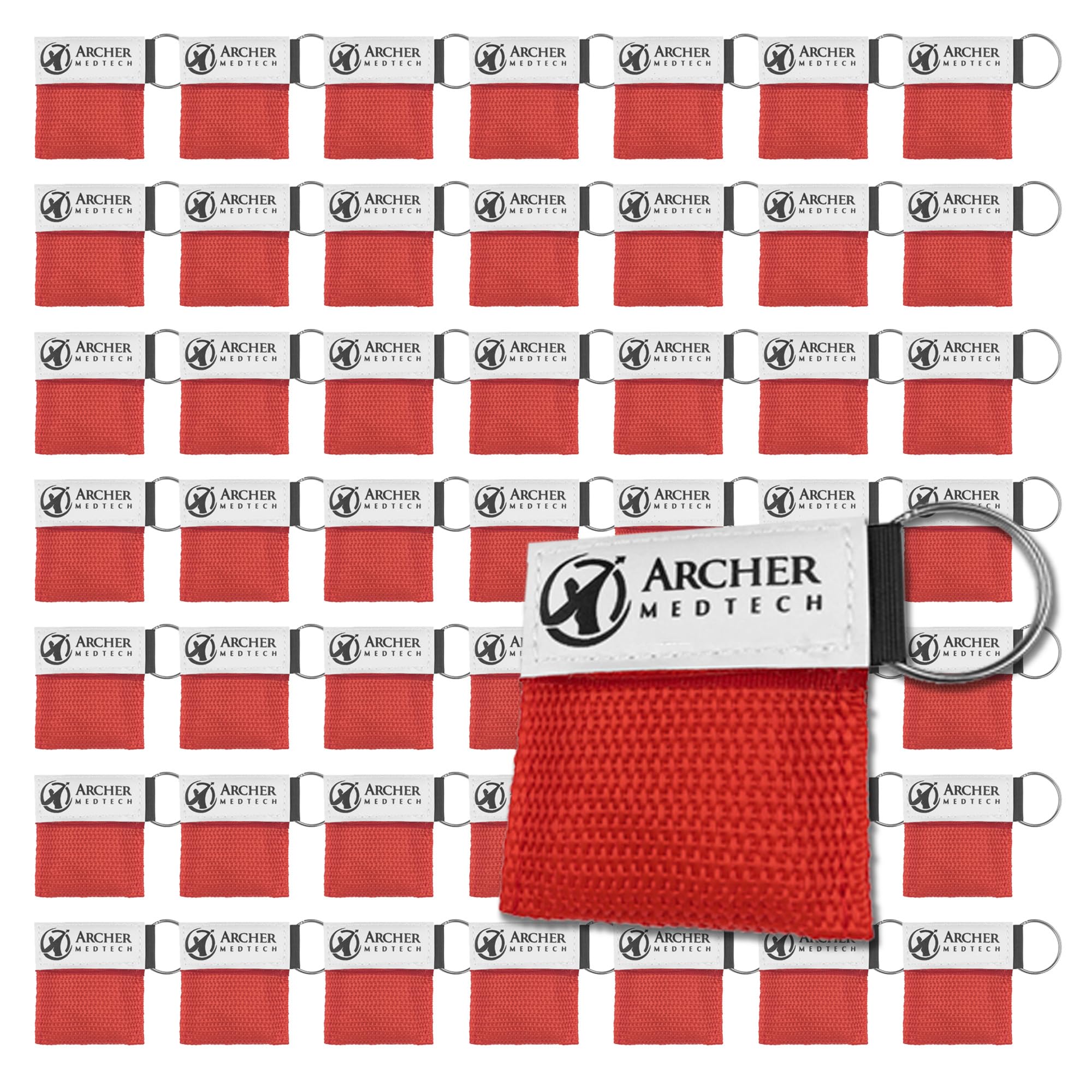
This product embodies the principle of “the best medical device is the one you have with you.” These ultra-compact CPR face shields are designed for personal carry, fitting on a keyring, in a wallet, or attached to a lanyard.
The 12-pack is perfect for equipping key staff members—coaches, security personnel, school nurses, and administrators—with a personal barrier device they always have on hand. The durable nylon pouch protects the mask, which includes ear loops for stability and a one-way valve.
While not as feature-rich as a full CPR mask with a rigid shell, these shields provide a critical hygienic barrier for rescue breaths. Their greatest asset is their constant availability, ensuring that a willing responder is never without at least a basic layer of protection.
Why it’s great
- Extremely compact and portable for personal, everyday carry.
- 12-pack allows for equipping an entire safety team.
- Durable keychain pouch keeps it clean and accessible.
- Includes ear loops to help secure the mask in place.
Good to know
- Single-use design; once removed from the pouch, it’s difficult to repack.
- Offers less rigid structure and seal than a hard-case mask.
11. Ever Ready First Aid CPR Rescue Mask

This basic CPR mask kit serves as an accessible entry point into barrier device protection. It comes in a durable, hard-shell case that organizes all the components: a dual-sized mask, a one-way valve with a filter, gloves, and alcohol wipes.
The hard case is a practical feature, protecting the contents from being crushed in a backpack or first aid kit and making it easy to identify. The mask itself is designed to fit adults and children, providing a versatile option for general use.
It’s a simple, no-fuss option for adding to a wall-mounted first aid station, keeping in a gym bag, or storing in a classroom emergency kit. While it lacks some of the refinements of more advanced masks, it fulfills the core requirement of providing a protective barrier for rescue breathing.
Why it’s great
- Complete kit in a protective, identifiable hard case.
- Includes essential accessories like gloves and wipes.
- Dual-sized mask fits a wide range of potential patients.
- A straightforward, budget-friendly barrier device option.
Good to know
- Basic design without features like a head strap for hands-free use.
- The case, while protective, adds to the overall bulk.
Understanding the Specs
Live AED vs. Trainer
This is the most critical distinction. A Live Automated External Defibrillator (AED) is a medical device that can analyze heart rhythm and deliver an electric shock to treat sudden cardiac arrest. It is for actual emergencies only. An AED Trainer is a simulation device used for practice; it mimics the voice prompts and steps but cannot and will not deliver a shock. Schools need at least one live AED for emergency response and can benefit from trainers for cost-effective staff education.
Voice Prompts & Guidance
Clear, calm, and step-by-step audio instructions are vital for a lay rescuer in a high-stress situation. Look for prompts that guide the user through pad placement, stand clear warnings, CPR instructions, and post-shock care. Many devices also offer multi-language options, which can be valuable in diverse school communities. For trainers, the ability to pause the scenario for instructor commentary is a helpful feature.
Pad Type & Compatibility
Defibrillation pads are specific to the device. Live AEDs use pre-connected gel pads with a shelf life (typically 2-5 years). Trainers use reusable adhesive pads or pads with mild adhesive. Key distinctions are Adult vs. Child/Infant pads; some devices auto-detect which is connected, while others have a button. For schools, having quick access to pediatric pads is non-negotiable.
Self-Testing & Maintenance
A premium feature of live AEDs is automatic self-testing. The device performs daily, weekly, and monthly checks on its battery, circuitry, and pads, indicated by a status light. This removes the burden of manual checks. For storage, cabinets should allow for visible status checks without opening the door. Regular manual inspections of everything—from cabinet latches to training pad adhesive—remain essential.
FAQ
What is the difference between an AED and an AED trainer?
How many AEDs does a school need?
Who should be trained to use an AED?
Do we need a special cabinet for the AED?
What ongoing maintenance does an AED require?
Final Thoughts: The Verdict
For most schools, the best aed for schools program starts with the reliable, premium performance of the Philips HeartStart OnSite for actual emergencies. If you want to build a robust, cost-effective training program for staff, grab the durable WNL Products Practi-Trainer. And for securing your device with professional-grade visibility and access, nothing beats the sturdy AdirMed AED Cabinet. Remember, the goal isn’t just to have equipment—it’s to build a culture of readiness where your community feels empowered to act.

Mo Maruf
I created WellFizz to bridge the gap between vague wellness advice and actionable solutions. My mission is simple: to decode the research and give you practical tools you can actually use.
Beyond the data, I am a passionate traveler. I believe that stepping away from the screen to explore new environments is essential for mental clarity and physical vitality.