Our readers keep the lights on and my smoothie glass nicely filled. As an Amazon Associate, I earn from qualifying purchases.
A “space-saving” car seat is one of those purchases that sounds simple… until you actually try to live with it. Because the real problem isn’t the seat. It’s the tiny daily moments around it: your hand can’t reach the buckle between two seats, your toddler’s shoes keep scraping the front seat, the harness twists when you’re rushing, or you realize your “slim” seat is only slim if you remove cupholders (and then your child throws a cup anyway).
If you’re shopping for a compact convertible car seat, you’re not being picky — you’re being realistic. Tight backseats, three-across setups, smaller cars, grandparents’ vehicles, and travel days all expose the same truth: two seats can both be “safe,” but one will feel calm and predictable… and the other will quietly drain your energy for years.
This guide is built around real-life friction points — the things families obsess about after month three, not day one. You’ll see me talk about how seats behave on sloped cushions, how easy it is to tighten without bracing your entire body, which buckles get buried in three-across setups, how cupholders affect actual width, and what owners consistently praise (or complain about) after thousands of miles: comfort, cleaning, installation confidence, and whether kids can climb in without a wrestling match.
Below are 11 standout compact picks — including rotating models that save your back, ultra-slim three-across “problem solvers,” and travel-friendly seats people use as dedicated airplane/rental-car options. When the same model appeared more than once (usually as different colors), I consolidated to a single listing so your decision stays clean and simple.
In this article
How to Choose the Right Compact Convertible Car Seat
A compact seat isn’t “good” because it has more features on the box. It’s good because it reduces friction in the places that matter: installation, everyday buckling, comfort on real drives, and space you can actually use. Here’s the decision framework I use to help families end up with a seat they love on a random Tuesday — not just on the first day it arrives.
1. Name your “tight space” problem (be specific)
Most people think they’re buying “a slim seat.” What they’re actually buying is a solution to one of these problems:
- The three-across puzzle: You need three car seats in one row without losing buckle access or elbow room.
- The small-car front-to-back squeeze: Rear-facing installs push the front seats forward, and adults feel cramped.
- The grandparent / second car problem: You need something intuitive to use (and hard to mess up) in a vehicle that isn’t yours.
- The daily back-saving problem: You’re lifting, twisting, and reaching multiple times a day and you want the process to feel kinder on your body.
- The travel problem: You want a seat you can move, install, and clean without it turning into a project.
2. Understand “true compactness” (width numbers can lie)
Here’s the sneaky part: the published width is often measured at a point that doesn’t match your real-life bottleneck. A seat can be “narrow” at the base but wide at the shoulders. Or it can be slim until the cupholders stick out. Or it can be narrow but still feel bulky because the seat sits high and blocks access to adjacent buckles.
To predict fit accurately, you want to think in three layers:
- Base footprint: This is the part that sits on your vehicle cushion. A narrow base is great — but it’s only half the story.
- Shoulder/armrest width: This determines whether two seats can “puzzle” together. Seats with rounded shoulders often play nicer than seats with flared sides.
- Real-world protrusions: Cupholders, belt routing hardware, armrests, and even “comfort wings” can steal the inches you thought you had.
That’s why designs like the Graco SlimFit (with rotating cupholders) can feel dramatically slimmer in three-across scenarios, and why ultra-narrow frames like the Diono Radian line are famous for solving tight backseats — even though they can be heavier.
3. Decide if rotation is a “must” or just “nice”
Rotating seats can be life-changing. They can also be overkill if they don’t match your vehicle layout. Here’s the honest breakdown:
- Rotation is a “must” if: you have back pain concerns, a high vehicle where reaching in is awkward, or a child with mobility needs. It turns buckling into a face-to-face motion instead of a twist-and-reach workout.
- Rotation is “nice” if: you mainly want it for convenience, but you have wide door openings and easy access already.
- Rotation can disappoint if: you’re trying to do three-across. Rotating bases add hardware and width where you least want it.
Also: not every “rotating” seat rotates the same way. Some rotate from rear-facing only (still helpful), while others do a true 360° from both rear- and forward-facing modes. That distinction matters more than people think — especially once your child transitions forward-facing and you’re still buckling daily.
4. Choose your install style: LATCH convenience vs seat belt flexibility
Most families start with LATCH because it’s quick and tidy. That’s totally reasonable. But in compact backseats and three-across setups, the seat belt often becomes your best friend — because it allows more positioning flexibility and can help you “shift” a seat slightly to gain buckle access.
What you want in a compact seat:
- Clear belt paths: If the belt path is open and easy to reach, you’ll actually use it confidently.
- A stable angle system: Seats that fight your vehicle’s slope can end up over-reclined or under-reclined, which affects comfort and can drive you crazy.
- Predictable tightening: Some seats tighten smoothly; others require bracing your knee and pulling like you’re starting a lawnmower.
Graco’s SnugLock-style install concepts (on some models here) are popular because they reduce “install strength” requirements — which matters when you’re reinstalling in a second vehicle or traveling.
5. Rear-facing comfort is about geometry, not “extra padding”
Many seats look plush. But comfort isn’t just softness — it’s angle, leg support, and how your child’s posture holds on real drives. If your kid gets fussy on longer rides, it’s often because:
- The recline angle isn’t quite right for your vehicle.
- The harness position is correct but the head support shape doesn’t match your child’s proportions.
- The seat pan is deep or shallow in a way that affects how they sit.
That’s why you’ll see seats like the Graco Extend2Fit show up again and again in “rear-face longer” conversations: it’s not just the higher rear-facing capacity — it’s that extra legroom changes how older rear-facing kids tolerate rides.
6. Cleaning is not a side note — it’s the reason some parents switch seats
Here’s a truth you’ll never unlearn: your love for a seat often lives or dies on cleanup. If the cover is a nightmare, you won’t clean it quickly. If you can’t dry it, you end up with a damp seat. If crumbs get trapped in seams, it starts to feel grimy.
In real reviews, “I bought this because it’s easy to clean” is not rare — it’s constant. Seats like the Safety 1st Grow and Go earn loyalty because the cover removal workflow feels designed for real life, not ideal life.
7. Think about the child who uses it (independence changes everything)
One of the biggest hidden benefits of compact seats is kids can climb in more easily. That matters when you’re buckling two kids and trying to keep a third from running into the street. Owners often report that once kids can climb in and sit correctly on their own, daily loading becomes faster and calmer — especially with slimmer profiles and clear buckle access.
Quick Comparison: 11 Compact Convertible Car Seat Picks
Use this table to spot the models that match your space problem — then jump into the reviews for the “real life” details, like buckle access in three-across setups, how the harness behaves when you’re rushing, and which seats parents say are genuinely easy to live with.
On smaller screens, swipe or scroll sideways to see the full table.
| Model | Seat type | Compact strength | Best match | Amazon |
|---|---|---|---|---|
| Graco SlimFit 3‑in‑1 (Darcie) | Slim 3‑in‑1 | Rotating cup holders reduce “real” width + easy everyday adjustments | Most families who want one space-saving seat for years | Amazon |
| Graco Turn2Me 3‑in‑1 Rotating (Cambridge) | Rotating 3‑in‑1 | Back-saving rotation + long-use modes for families who buckle daily | Parents who want rotation but still want a long-term seat | Amazon |
| Graco EasyTurn360 2‑in‑1 (Cyran) | 360° rotating | True 360° rotation from both modes + quick install workflow | Families who want rotation for rear and forward facing | Amazon |
| Evenflo REO by Revolve360 (Brookline) | Compact rotator | Compact footprint + one-time install concept for secondary cars | Grandparents/caregivers or small cars that need easy access | Amazon |
| Diono Radian 3R (Jet Black) | Ultra‑slim | Legendary 3‑across geometry + foldable travel storage | Three-across families and travel-focused households | Amazon |
| Graco Extend2Fit Convertible (Gotham) | Rear‑face longer | Extension panel adds legroom for older rear-facing kids | Families prioritizing extended rear-facing comfort | Amazon |
| Graco TriRide 3‑in‑1 (Redmond) | Road‑trip 3‑in‑1 | Multiple reclines + comfy “settle-in” feel for long drives | Families who do long drives and want comfort-first usability | Amazon |
| Safety 1st Grow and Go (Black Phantom) | Easy‑clean all‑in‑one | Cover removal workflow is designed for real messes | Parents who refuse to suffer through “impossible” cleanups | Amazon |
| Baby Trend Cover Me 4‑in‑1 (Dark Moon) | Built‑in canopy | Integrated UPF canopy solves the “sun in their eyes” battle | Kids who get irritated by sunlight and need shade control | Amazon |
| Safety 1st Crosstown Slim All‑in‑One (City Storm) | 17″ slim all‑in‑one | True slim profile + simple transitions for growing stages | Three-across value shoppers who still want long use | Amazon |
| Safety 1st Ellaris 3‑in‑1 (Smokey Haze) | Travel-friendly | Lightweight feel + practical travel handling for planes/rentals | Backup/travel seat that’s easier to move and install | Amazon |
In‑Depth Reviews: 11 Compact Convertible Car Seat Models Parents Actually Stick With
Now we go model by model — not like a spec sheet, but like a real-life buyer who wants fewer regrets. I’ll cover where each seat shines, where it annoys people, what “surprises” show up after months of use, and which household type it fits best.
1. Graco SlimFit 3‑in‑1 (Darcie) – The Space Saver That Still Feels Like a “Real” Seat

If you want one seat that can live in a tight backseat for years without making you hate your life, the SlimFit is the most “balanced” answer on this list. It’s not trying to be flashy. It’s trying to remove friction — and it does that through a design detail that matters more than most parents expect: cupholders that rotate out of the way.
That sounds small, but it’s the difference between “we can’t buckle the middle seat” and “this is actually doable.” In three-across and narrow backseats, cupholders are often the widest point — not the shell. The SlimFit’s rotating design gives you the option to run slim when you need the space, and run “snacks accessible” when you don’t. That flexibility is why so many families end up buying multiples for multiple vehicles.
In real owner feedback, you’ll see a repeat theme: “It fits without taking up too much space, and it still feels sturdy.” That’s the sweet spot. Some ultra-compact seats achieve their slimness by feeling minimal or low-comfort. The SlimFit manages to stay supportive, with padding that kids tolerate on longer drives and adjustment mechanisms that don’t require you to uninstall the seat for basic changes.
The other quiet win is everyday buckling. In compact situations, you don’t just want a narrow seat — you want a seat that lets you reach the buckle, tighten the harness smoothly, and not scrape your knuckles on the shell next to it. The SlimFit tends to do well here because it’s not overly flared, and the harness/headrest adjustments are straightforward.
Why you’ll like it
- Rotating cup holders = real space savings – You get slim mode when you need it, convenience mode when you don’t.
- Comfort without bulk – Many kids settle well in it on everyday drives and longer trips.
- No-rethread adjustments – Headrest and harness move together, so fit stays correct as kids grow.
- Trusted “repeat buy” reputation – A common pattern is families adding a second/third seat for other vehicles.
Good to know
- In some three-across puzzles, you still need a strategy (seat belt installs, staggering, or pairing with a truly narrow neighbor seat).
- Like many long-use seats, it’s not a “light travel seat” — it’s an everyday workhorse.
- If your vehicle has very sloped cushions, take your time dialing in recline — it matters for comfort.
Ideal for: most families who want a reliable, space-conscious seat that doesn’t feel like a compromise — and who want a “set it and live” experience for years.
2. Graco Turn2Me 3‑in‑1 Rotating (Cambridge) – Rotation Convenience Without Giving Up Long‑Use Value

Here’s what rotating-seat buyers often learn the hard way: a lot of rotators are convenient, but some don’t feel like good long-term “primary” seats. The Turn2Me avoids that problem by being a true long-use seat concept — it’s built to stay relevant as your child grows, not just to get you through the toddler stage.
In owner feedback, the emotional payoff is consistent: “total back saver.” That’s what rotation does when it’s designed well. Instead of reaching over a fixed shell and buckling blind, you rotate toward you, get a clean harness setup, then rotate back until it clicks secure. Parents who previously dreaded buckling a squirmy child often report a noticeable reduction in daily stress.
Now the practical truth: rotating seats are usually more seat than you need if your only problem is “my backseat is narrow.” Rotation adds structure. It adds base hardware. It adds weight. So this seat is best for families whose “compact” goal is really about access and ease, not maximum three-across efficiency.
Another real-world win is install confidence. Seats that install quickly and firmly tend to get used correctly more consistently. The Turn2Me’s install workflow is designed to reduce the time you spend wrestling, which matters if you’re moving the seat between vehicles, or if you’re installing it in a second row that’s awkward to reach.
Why parents love it
- Rotation changes daily life – Especially for parents who buckle multiple times a day or in tight parking spots.
- Feels sturdy and secure – Owners often describe a “solid, planted” feel once installed.
- Comfort support is strong – Many families report calmer rides and easier naps.
- Long-use design – You’re not buying a convenience seat that you’ll outgrow quickly.
Good to know
- Not a three-across hero — rotating bases can make tight puzzles harder.
- Heavier and bulkier than non-rotating slim seats, which matters if you move seats often.
- Rotation success depends on door clearance; in extremely tight door openings, it can feel less magical.
Ideal for: families who want the back-saving benefit of rotation but still want a seat that feels like a smart long-term purchase — not a short-term convenience tool.
3. Graco EasyTurn360 2‑in‑1 (Cyran) – Full 360° Rotation for Parents Who Buckle Fast (and Often)

The EasyTurn360 is for the parent who wants the rotation benefit to stay useful even after the forward-facing switch. Some rotating seats feel amazing for rear-facing, then lose their magic later. A true 360° seat keeps the “turn toward the door” advantage through the phase when your child is heavier, more independent, and more likely to fight buckling.
Owner feedback tends to focus on the same trio: smooth rotation, sturdy feel, and the sense that it’s “worth it” for day-to-day ease. And that’s exactly what you’re paying for: fewer awkward angles, fewer back twists, and fewer moments where you’re trying to tighten a harness while your child arches.
From a compactness standpoint, the EasyTurn360 is not about being the narrowest seat in a lineup. It’s about being a compact-feeling experience — because rotation reduces how much space you need to operate. In a small car, that can matter. You might not gain inches, but you gain usability.
One important nuance: the most “frictionless” rotating seats are the ones that make the rotation workflow obvious. The click-back-to-locked position is the detail that keeps parents confident. When a seat makes it clear that you’re locked in, you’re more likely to use it correctly without second-guessing.
Why it stands out
- True 360° rotation – Rotation remains useful in both rear- and forward-facing modes.
- Fast, confident daily buckling – “Turn, buckle, click back” becomes a clean routine.
- Sturdy, secure feel – Owners often highlight the build quality and stability.
- Comfort and support – Plush inserts and solid posture support help kids settle on longer rides.
Good to know
- Heavier than slim non-rotating seats; it’s not the pick for frequent seat-swapping between cars.
- Not a three-across specialist — rotation hardware competes with tight spacing.
- If your priority is “narrow as possible,” a fixed ultra-slim seat like Diono will do the puzzle better.
Ideal for: parents who buckle multiple times a day, want rotation to stay useful long-term, and care more about daily ease than absolute minimal width.
4. Evenflo REO by Revolve360 (Brookline) – A Smaller-Footprint Rotator That Makes Caregivers Feel Capable

The REO is a smart pick when your “compact” problem is less about three-across and more about reach. In real households, that shows up as: grandparents doing drop-off, caregivers helping part-time, or a second vehicle where you want installs to be less intimidating and everyday buckling to be less physically demanding.
This seat gets love for a simple reason: it makes hard motions easy. Owners consistently describe rotation as the feature that changes everything — easier in/out, less back strain, less awkward reaching, and a calmer buckling process that doesn’t feel like a workout.
Where it feels especially valuable is with children who need extra positioning help. Some parents specifically mention head support and alignment as a comfort win — the seat’s shape and padding can help kids look centered and settled, which matters on longer drives and for children who fatigue easily.
The “install once” messaging is also telling: Evenflo is clearly aiming this seat at real families who do not want to uninstall, rethread, and reinvent. You install it securely, then rotate the seat instead of reinstalling when you switch orientations (following the seat’s instructions, of course). That’s a big psychological win for caregivers who are anxious about doing things wrong.
Why it works
- Rotation is genuinely practical – Especially for caregivers and grandparents who buckle often.
- Compact footprint mindset – Built to feel more manageable in tighter vehicles.
- Comfort-first padding – Many parents report happier rides compared to basic seats.
- Confidence builder – Clear instructions + “one-time install” framing helps reduce user anxiety.
Good to know
- It’s a rotating seat, so it still has more structure than a fixed ultra-slim seat.
- Like most rotators, it’s not ideal for three-across puzzles.
- As with any car seat, register it so you get important updates and support when needed.
Ideal for: families who want rotation in a more compact-feeling format — especially for grandparents, caregivers, or households where “easy and obvious” matters as much as “slim.”
5. Diono Radian 3R (Jet Black) – The Ultra‑Slim Seat That Makes “Impossible” Backseats Possible

The Diono Radian line has a reputation for one thing: solving tight backseats when other seats fail. If you’ve ever been told “three across won’t work in that car,” this is the seat families often buy to prove otherwise. And the most convincing evidence isn’t marketing — it’s real owners describing three-seat layouts in vehicles people assume can’t do it.
Why it works is geometry, not magic. The Radian has a slim, straight-sided shape that plays well in tight configurations. It’s the opposite of flared shells that steal space at shoulder level. In compact setups, that matters because your real enemy is not the door — it’s the collision of two seats at the widest point.
The second big strength is “built like a tank” stability. People describe it as sturdy, high quality, and confidence-building. That steel-reinforced feel is reassuring for families who want one seat they can use for years without feeling like it’s wearing out.
Now, the honest truth you need before buying: the Radian is heavy. That’s the trade. A lot of owners say the only downside for travel or frequent moving is weight — it’s not the seat you casually pop in and out every weekend. But if you need a seat that stays installed and solves a spacing puzzle, the weight becomes less relevant than the outcome.
One more real-world note: some families mention the seat can sit tall in certain positions and affect sight lines (especially in smaller vehicles or specific seating positions). That’s not universal, but it’s the kind of “living with it” detail that matters. In a tight vehicle, your placement plan matters: center vs outboard, rear-facing vs forward-facing, and whether your vehicle allows the seat to touch the front seat.
Why it’s famous
- Three-across geometry – Slim sides and a straight profile make tight puzzles realistic.
- Sturdy, confidence-heavy build – Owners describe it as extremely solid and well made.
- Travel-friendly storage concept – Foldable design is useful for transport and compact storage.
- Long-use mindset – Many families buy once and use across multiple vehicles and stages.
Good to know
- It’s heavy — great when installed, less fun when carrying through airports or swapping weekly.
- No built-in cupholders on many configurations; this is intentional for slimness, but some kids will miss it.
- In some cars, rear-facing placement needs planning so it doesn’t intrude too far forward.
Ideal for: three-across families, compact sedans, and anyone who needs a true space-solving seat more than they need a lightweight “move it daily” seat.
6. Graco Extend2Fit (Gotham) – The “Rear‑Face Longer” Seat That Makes Older Kids Happier

The Extend2Fit is one of those seats that becomes a “default recommendation” for a reason: it solves a problem families feel most intensely in year two and three — rear-facing comfort for bigger toddlers.
The extension panel isn’t just a feature. It changes posture. When kids have a bit more room, they often look more relaxed and complain less on long rides. That matters because comfort isn’t just a luxury — it affects whether families keep using the seat correctly and consistently. A calm kid is easier to buckle. A calm kid is less likely to wriggle out of position. A calm kid makes your whole car safer simply because you can focus.
In real reviews across the web, this seat’s reputation centers on install consistency and day-to-day usability. People mention the level indicator being easy to read, the install process being less “mystery meat” than some seats, and the fact that it’s so common that help videos and troubleshooting tips are easy to find. That matters more than you’d think: common seats are easier to learn, easier to confirm, and easier to install confidently in a new vehicle.
Now, the compactness nuance: this is not the narrowest three-across seat in existence. It’s a comfort-and-longevity seat with a thoughtful footprint. For families who aren’t doing three-across, it can feel like the ideal “compact enough” option that still gives kids room to grow. If you are doing three-across, you’ll usually pair this with an ultra-slim neighbor seat rather than making it the whole puzzle.
Why it’s a favorite
- Legroom changes rear-facing life – Kids often tolerate longer drives better with the extension panel.
- Strong install reputation – Many families describe it as easier to install than expected for a long-use seat.
- Practical daily adjustments – No-rethread headrest/harness workflow keeps fit correct as kids grow.
- Huge knowledge ecosystem – Because it’s common, it’s easier to find reliable setup help if needed.
Good to know
- Not a dedicated three-across hero; it’s best in roomy two-seat rows or paired with narrow neighbors.
- In very small cars, front-to-back space still requires planning, especially rear-facing.
- If you want “travel light,” this is more of a stay-installed daily driver than a carry-around seat.
Ideal for: families prioritizing extended rear-facing comfort and usability — especially those who do longer drives and want fewer battles as kids grow.
7. Graco TriRide 3‑in‑1 (Redmond) – Built for Road Trips, Reclines, and “Settle In” Comfort

Some seats are bought for tight backseats. The TriRide is often bought for something else: long-drive sanity. Parents describe it as sturdy, well padded, and “my kid actually looks comfortable,” especially once they transition out of an infant seat and start doing longer stretches in the car.
The recline range is a big part of that. More recline options can mean an easier time dialing in a comfortable position across different vehicles — especially when your backseat cushions are angled or when you’re installing in a vehicle that naturally pushes seats too upright. That matters for naps, for head positioning, and for kids who get grumpy when they feel too vertical.
One common real-life comment is that the seat feels deep. That can sound like a negative, but it’s often a comfort positive: deeper seat pans can feel more “secure” for toddlers, and some kids settle better when they feel nestled rather than perched. The key is making sure your harness fit is dialed in so “deep” doesn’t become “hard to buckle.”
The TriRide is also a good reminder that compactness is multi-dimensional. This isn’t the narrowest seat — but it can feel compact in the way it uses space, especially if it installs cleanly and doesn’t force the front seats forward excessively. If your vehicle has decent width but limited comfort tolerance (kids who protest long rides), it can be the smarter “space and comfort” compromise than a super narrow, minimal seat.
Owners do mention small annoyances — like cupholders being a toddler temptation (some kids will try to yank them). That’s not unique to this seat, but it’s part of real-life parenting: the more “interactive” a seat is, the more your child will interact with it.
Why families choose it
- Comfort-first feel – Padding and posture support help on longer drives.
- Recline flexibility – More recline options help across different vehicles and seat angles.
- Sturdy build – Many owners describe it as heavy-duty and secure once installed.
- Long-use value – Designed to grow with your child through multiple stages.
Good to know
- Not the lightest seat to move between vehicles often.
- Not a dedicated three-across seat; it’s better in single-seat positions or wider rows.
- Expect “kid vs cupholder” behavior in the toddler years — it happens.
Ideal for: families who do frequent longer drives and want a seat that kids settle into — especially when comfort and recline flexibility matter as much as space.
8. Safety 1st Grow and Go (Black Phantom) – The Seat Parents Buy After the “Impossible Cleanup” Moment
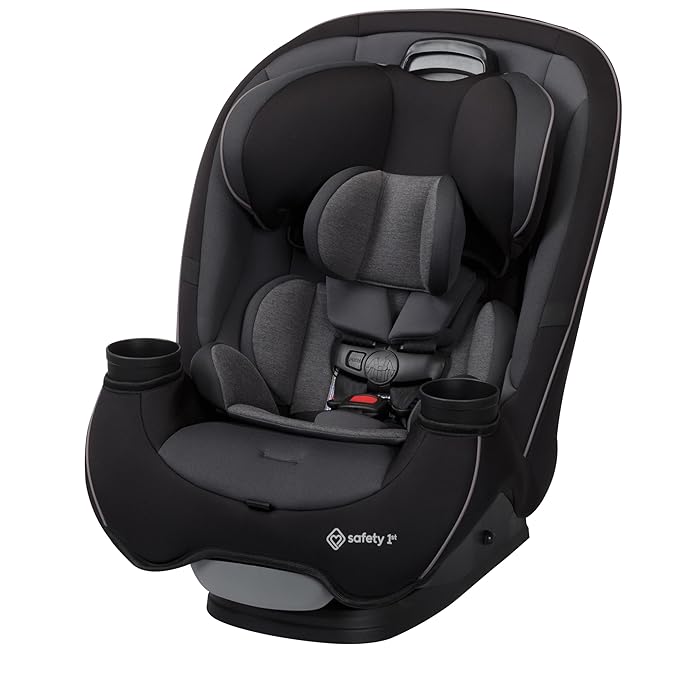
The Grow and Go has a very specific kind of fan: the parent who’s already been burned by a car seat that’s impossible to clean. If you’ve lived through a vomit cleanup, a snack explosion, or the “mystery smell” phase — you understand why this matters. Some parents literally switch seats because cleanup was so miserable they never want to repeat it.
This is where the Grow and Go earns its reputation. Owners repeatedly highlight that the cover workflow is simpler than expected and that being able to properly wash (and dry) the seat fabric is a game-changer for real life. This is not glamorous, but it’s the difference between “we’ll clean it later” and “it’s actually clean.”
Beyond cleaning, the seat’s overall vibe is “simple design that works.” Multiple reviewers specifically describe it as less complicated than more expensive seats they regretted. That’s not a small compliment. When seats become too complex, families either dread adjustments or they make quick changes incorrectly. A simpler seat can be safer in practice because it’s used correctly more consistently.
It also tends to fit well without feeling like it eats the entire backseat — an important note for families in standard sedans and compact SUVs. That said, some users do mention that tightening can require a strong pull and that certain seat belt geometries can be finicky (especially in vehicles with sharply angled shoulder belts). That’s not unique to this seat, but it’s worth knowing: a seat can be great, and still demand a learning curve in your specific vehicle.
This seat is also a great example of how reviews reveal what spec sheets hide: daily usability. Parents often report that their child is noticeably more comfortable compared to their previous seat, especially on longer drives — and that they personally feel less anxious because the seat feels straightforward to use.
Why it’s a real-life winner
- Cleanup workflow is parent-friendly – A common reason people choose (and stick with) this seat.
- Simple design, less frustration – Many parents prefer it to “overcomplicated” higher-priced seats.
- Comfort and padding – Kids often tolerate longer rides better once they switch into it.
- Space-conscious feel – Doesn’t tend to dominate the backseat the way some seats do.
Good to know
- Some vehicles require extra effort to get a super-tight install — practice matters.
- Harness straps can occasionally catch if you tighten unevenly; slow, even tightening helps.
- Like many all-in-ones, it’s not built to be moved daily; it’s best as a stay-installed seat.
Ideal for: families who prioritize easy cleanup and practical everyday use — especially if you’ve ever sworn you’ll never deal with a “trash-the-seat” cleaning situation again.
9. Baby Trend Cover Me 4‑in‑1 (Dark Moon) – The Shade Solution That Stops the Backseat Sun Battle
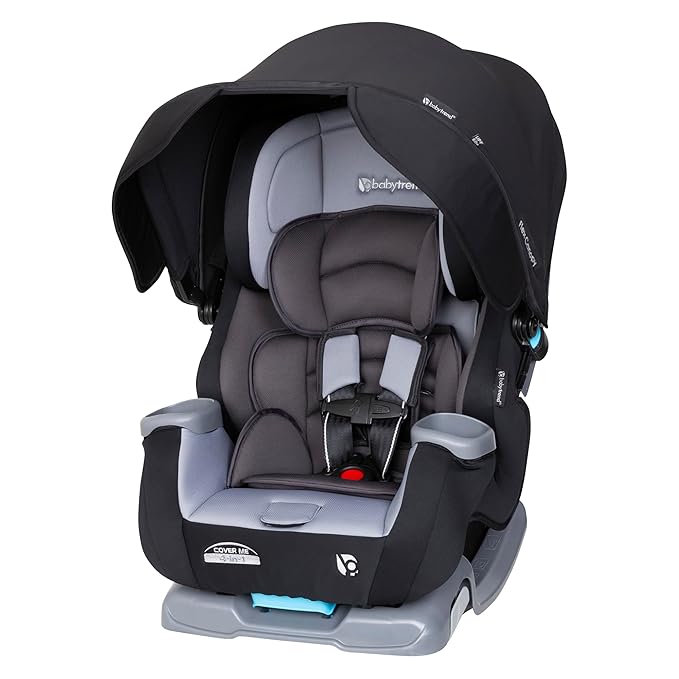
Most car seats treat sunlight as a “not our problem” problem. Baby Trend didn’t. The Cover Me’s integrated canopy is a rare feature that solves a very real daily annoyance: kids getting irritated by sun in their eyes. If you’ve ever watched a peaceful car ride collapse into a meltdown because the sun moved five inches, you already understand why this seat has a cult following.
Owners consistently describe the canopy as the reason they bought it — and the reason they kept it. It’s not just shade; it’s control. Kids can get relief without parents pulling the car over, and the flip-out side visors help when the sun shifts during a drive. It’s one of the few seats where a “convenience” feature genuinely changes family harmony.
What’s equally important: comfort is taken seriously. People mention cushion, softness, and a “secure, sturdy feel.” That matters because a shade feature is useless if the seat feels flimsy or uncomfortable. The Cover Me tends to feel substantial for its category, with deep side wings that add a protected, “nest-like” feeling around the head.
Real-life learning curve note: some parents struggle with the crotch buckle adjustment at first — not because it’s broken, but because the alternate buckle slot is easy to miss. Once they discover the correct slot and how the hardware routes under the cover, the seat suddenly feels much more comfortable and correctly fitted. That’s the kind of detail that makes a huge difference: correct buckle position improves comfort, reduces slouching, and helps harness fit feel “normal.”
Compactness-wise, this seat can work well in tighter setups because it’s designed to fit multiple seats across in many vehicles. But remember: the canopy adds a different kind of “space requirement” — it’s not width, it’s clearance. If your backseat is extremely low or your roofline is tight, test canopy movement so you love it rather than feel cramped by it.
Why it’s unique
- Integrated canopy solves a real problem – Sun irritation is a top backseat complaint, and this directly fixes it.
- Comfort Cabin padding – Kids tend to look cozy and tolerate longer rides well.
- Deep side wings – Adds a secure, protected “shell” feel.
- Practical family features – Cupholders and adjustable recline help daily usability.
Good to know
- Canopy clearance matters; make sure your vehicle layout allows comfortable canopy positioning.
- Some users need a first-week learning curve on buckle slot adjustments.
- Installation can feel “car-seat normal” (meaning: not always fun) — take your time and follow the manual closely.
Ideal for: families whose kids get irritated by sunlight and need shade control built into the seat — without giving up comfort or a sturdy feel.
10. Safety 1st Crosstown Slim All‑in‑One (City Storm) – A True Slim Profile That Still Covers the Big‑Kid Stages

The Crosstown Slim is for the family that wants a genuinely slim seat — without paying “premium slim” prices — and still wants a seat that remains useful as a child grows. That all-in-one promise matters in real life: families don’t want to keep shopping, reinstalling, and learning new buckle systems every year.
Owners regularly praise a familiar set of “this is what we actually care about” qualities: it feels secure, it’s comfortable, it’s easy to adjust for growth, and it doesn’t feel like it takes over the backseat. That’s what slim should mean: more space for passengers, easier access to buckles, and less claustrophobic seating.
The one-hand adjustable harness and headrest system is a quiet usability win. Kids grow in bursts. If adjustments feel annoying, parents delay them. And delayed adjustments often mean the harness is “close enough” rather than correct. A one-hand system makes correct fit more likely because it’s not a project.
Another point that shows up in real-world comments is vehicle compatibility nuance. Some people love it in trucks and SUVs. Others mention certain compact cars with sloped seats can be picky about fit and angle. That’s not a “bad seat” issue; it’s a “vehicle geometry” issue. If your backseat slopes aggressively, take advantage of the seat’s belt path accessibility and base foot adjustments to get a stable install.
The Crosstown is also a strong reminder of why slim seats can be great beyond three-across: they make everyday life feel less cramped. Even if you only have one seat in the row, the extra space around it makes loading groceries, climbing in, and reaching buckles feel easier.
Why it’s a smart pick
- True slim profile – Built to create passenger space and reduce three-across stress.
- Easy growth adjustments – One-hand headrest/harness changes support correct fit over time.
- Comfort-focused padding – Owners often describe kids sleeping comfortably in it.
- Practical cleaning features – Removable, washable seat pad and dishwasher-safe cupholders help real life.
Good to know
- Vehicle seat shape matters — sloped seats may require more careful setup.
- Not as “luxury” feeling as premium seats, but it’s designed to be functional and dependable.
- Three-across success improves when you pair it with similarly narrow neighbors.
Ideal for: families who need a slim seat for spacing and passenger comfort, and want long-use stages without stepping into premium price territory.
11. Safety 1st Ellaris 3‑in‑1 (Smokey Haze) – The Lightweight “Travel Seat” Strategy That Actually Works

A lot of families eventually realize they don’t need one seat that does everything perfectly. They need a main seat that stays installed… and a second seat that makes travel, emergencies, and caregiver swaps easier. That’s where the Ellaris shines: it’s the “backup seat that doesn’t feel like a headache.”
In reviews, parents often describe buying it specifically for travel and being pleasantly surprised by how workable it is. They talk about bringing it onto a plane successfully, attaching it to a dolly/cart for airport movement, and appreciating that it’s lighter than many seats in its category. That matters because travel stress isn’t just parenting stress — it’s carrying stress.
Comfort feedback is also solid for what this seat is: families report kids sleeping well in it and staying comfortable for long stretches. That tells you something important: travel seats don’t have to be “bare bones.” A seat can be practical and still feel supportive enough for real naps.
Installation tends to be described as “car seat normal”: not magical, but doable, especially once installed correctly. Owners also mention straps being easy to adjust and fabric quality being better than expected at this tier. Those are exactly the details that matter in a backup/travel seat — because you want it to feel reliable, not flimsy.
If you’re building a travel strategy, this seat can be the difference between “we can manage this” and “we never want to travel with a car seat again.” Pair it with a simple moving plan (cart/dolly setup, or a suitcase strap strategy), and it becomes a genuinely useful part of your system.
Why travelers like it
- Travel-friendly feel – Lighter than many comparable seats, which matters in airports and rentals.
- Comfort is better than expected – Kids often nap well and tolerate long rides in it.
- Simple adjustment workflow – Straps and fit changes feel straightforward for caregivers.
- Easy-clean practicality – Machine-washable pad and dishwasher-safe parts help after messy travel days.
Good to know
- Not a premium “forever seat”; it’s strongest as a travel/backup strategy.
- Like any seat, it benefits from a practice install before your first trip.
- If your only goal is three-across perfection, a true ultra-slim seat may solve that puzzle better.
Ideal for: families who want a practical travel/backup seat that’s easier to move and still comfortable enough for real rides and real naps.
Why “Compact” Seats Work (or Fail): Buckles, Belt Paths, and the Geometry Nobody Talks About
Most buying guides treat compactness like a number. Real life treats compactness like a system. Here’s what actually decides whether a seat feels “space saving” or “space stealing.”
1) The buckle access test (the #1 three-across killer)
You can have three seats “technically installed” and still hate your setup if you can’t access the vehicle buckle. That’s why straight-sided seats (like the Diono) and cupholder-smart seats (like the SlimFit) earn so much love: they reduce the chances that the adjacent shell buries your buckle.
- Look at the buckle stalk position – If it’s forward and low, bulkier seats can block it fast.
- Plan for “hand room” – You need space to click and tighten, not just space to place the seat.
- Expect different puzzle results by row position – Center vs outboard can completely change buckle access.
2) Sloped seats create “angle drama”
Many compact cars have sloped cushions. That changes the recline outcome. A seat can feel perfect in one car and too upright in another — and that affects comfort, naps, and how “happy” your kid seems on rides. Seats with clearer recline systems and readable level indicators are easier to dial in without guesswork.
3) Rotating seats solve reach… but add structure
Rotation is amazing for access and back strain. But it adds base hardware. That’s why rotating seats are usually not the best “three-across” solution, even when the footprint is marketed as compact. If you want rotation, plan it as a single-seat position strategy rather than a multi-seat puzzle strategy.
4) “Easy install” is a safety feature (because it actually gets used correctly)
The most valuable seat is the one you install tightly and consistently. Families love install systems that feel obvious and repeatable — not because they’re lazy, but because real life is busy and the seat has to work when you’re tired. Graco’s quick-install approaches and Safety 1st’s accessible belt paths are popular because they reduce the chance of “almost tight.”
5) Comfort isn’t plushness — it’s posture
A seat can look padded and still feel annoying for a child if the posture doesn’t match their body. Deep seat pans, headrest shape, recline range, and legroom are the comfort levers that show up in reviews again and again. That’s why the Extend2Fit’s legroom design can be such a quality-of-life upgrade for bigger rear-facing kids.
FAQ: Compact Seats Without the Regret
What does “compact” actually mean for a convertible seat?
Can I realistically do three-across with a rotating seat?
Should I install with LATCH or the seat belt in tight setups?
My child gets uncomfortable on longer rides — what should I prioritize?
Is an “all-in-one” seat always the best value?
Can I use these seats for travel or airplane use?
Final Thoughts: Pick the Seat That Protects Your Space — and Your Patience
The right seat doesn’t just protect your child. It protects your mornings. It protects your back. It protects your mood on the way to daycare. And in a tight vehicle, the best seat is the one that makes buckling feel normal again — not like a daily obstacle course.
Here’s the simplest way to translate this guide into the right purchase:
- Want the most balanced “buy once and live with it” slim pick? Start with the Graco SlimFit 3‑in‑1 (Darcie). It’s a rare mix of space-saving design and long-term everyday comfort.
- Want rotation convenience but still want a long-use seat? Choose the Graco Turn2Me 3‑in‑1 Rotating for the “back saver” benefit with a long-term mindset.
- Want true 360° rotation that stays useful after the forward-facing switch? Look at the Graco EasyTurn360 2‑in‑1. It’s built for frequent buckling and quick in/out.
- Need a compact-feeling rotator for a second vehicle or caregiver use? Consider the Evenflo REO by Revolve360 for rotation convenience in a smaller-footprint mindset.
- Doing three across and need a real space solution? The Diono Radian 3R is the classic “this makes the impossible possible” pick — especially when you need straight-sided slim geometry.
- Prioritizing extended rear-facing comfort for a bigger toddler? The Graco Extend2Fit is the legroom-and-comfort strategy that many families swear by.
- Want a comfort-first seat for longer drives? Try the Graco TriRide 3‑in‑1 for recline flexibility and a “settle in” ride feel.
- Want easy cleaning without complicated seat drama? Go with the Safety 1st Grow and Go for a cover-and-clean workflow designed for real messes.
- Sunlight makes your child miserable in the car? The Baby Trend Cover Me 4‑in‑1 is the built-in canopy solution most seats simply don’t offer.
- Need a slim all-in-one that keeps passenger space open? Consider the Safety 1st Crosstown Slim All‑in‑One for true slim geometry with long-use stages.
- Want a travel/backup seat strategy that’s easier to move and still comfy? The Safety 1st Ellaris 3‑in‑1 is a smart “second seat” that makes travel days and emergency swaps feel doable.
Pick the compact convertible car seat that matches how you actually live — three-across or single seat, rotating convenience or ultra-slim geometry, daily driver or travel strategy — and you’ll feel that rare parenting win: a decision you don’t second-guess every time you buckle up.

Mo Maruf
I created WellFizz to bridge the gap between vague wellness advice and actionable solutions. My mission is simple: to decode the research and give you practical tools you can actually use.
Beyond the data, I am a passionate traveler. I believe that stepping away from the screen to explore new environments is essential for mental clarity and physical vitality.